
What Is a Hyperscale Data Center—and Just How Big Is “Hyperscale”?
Technology companies have a talent for taking an ordinary word and making it sound as though somebody attached a rocket engine to it.
Scale becomes hyperscale.
Computing becomes accelerated computing.
A building full of computers becomes a campus.
So when somebody says:
“They’re building a hyperscale data center.”
it is reasonable to wonder whether hyperscale actually means something—or whether somebody in marketing simply decided the word large wasn’t impressive enough.
It does mean something.
But not quite what many people assume.
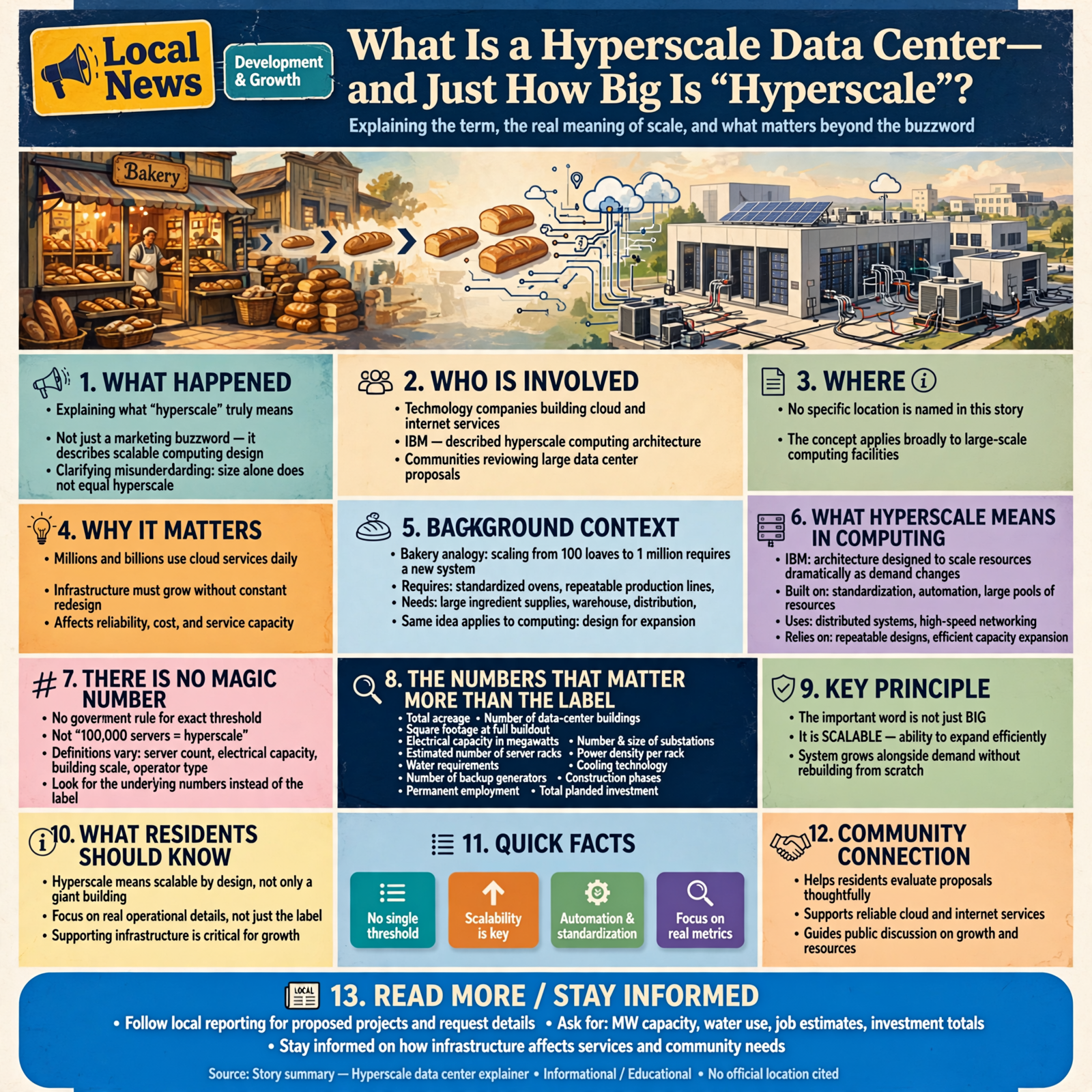
Hyperscale is not simply about having a gigantic building. It is about designing computing infrastructure that can operate and expand at enormous scale.
A hyperscale data center can certainly be enormous.
But square footage alone does not make a facility hyperscale.
Start With the Word “Scale”

Imagine a local bakery.
The baker makes 100 loaves of bread every morning.
Business grows.
So the baker buys another oven and hires another employee.
Now the bakery makes 200 loaves.
That is growth.
Now imagine designing a bakery system capable of going from 100 loaves to one million loaves without rebuilding the entire business every time demand doubles.
Suddenly we are thinking differently.
We need:
- standardized ovens;
- repeatable production lines;
- large ingredient supplies;
- automated handling;
- warehouse space;
- distribution systems;
- redundant equipment;
- industrial utilities; and
- a design that can keep expanding.
That is the idea behind hyperscale computing.
The important word is not just big.
It is scalable.
What Does Hyperscale Mean in Computing?
IBM describes hyperscale computing as an architecture designed to scale computing resources dramatically as demand changes.
Instead of treating every new server as a custom project, hyperscale systems rely heavily on:
- standardization;
- automation;
- large pools of computing resources;
- distributed systems;
- high-speed networking;
- repeatable designs; and
- the ability to add capacity efficiently.
That architecture is common among companies operating enormous cloud and internet services.
If millions or billions of people use your service, you need computing infrastructure that can grow without requiring somebody to reinvent the data center every Tuesday.
There Is No Magic Number Where “Hyperscale” Begins

This is important.
There is no universally accepted government rule saying:
At exactly 99,999 servers, this is a normal data center. Install server number 100,000 and everybody must change the sign to HYPERSCALE.
Different analysts and companies use different thresholds when classifying large facilities.
Some definitions focus on numbers of servers.
Others emphasize electrical capacity.
Others look at building scale, computing capacity or the type of operator.
So when somebody describes a proposed facility as hyperscale, do not become overly attached to the label.
Ask for the underlying numbers.
The Numbers That Matter More Than the Label
If a large data center is being discussed, these numbers are more useful than simply hearing the word hyperscale:
- total acreage;
- number of data-center buildings;
- square footage at full buildout;
- electrical capacity in megawatts;
- number and size of substations;
- estimated number of server racks;
- power density per rack;
- water requirements;
- cooling technology;
- number of backup generators;
- construction phases;
- permanent employment; and
- total planned investment.
Those numbers tell you what the project actually is.
The label is shorthand.
One Building Versus an Entire Campus
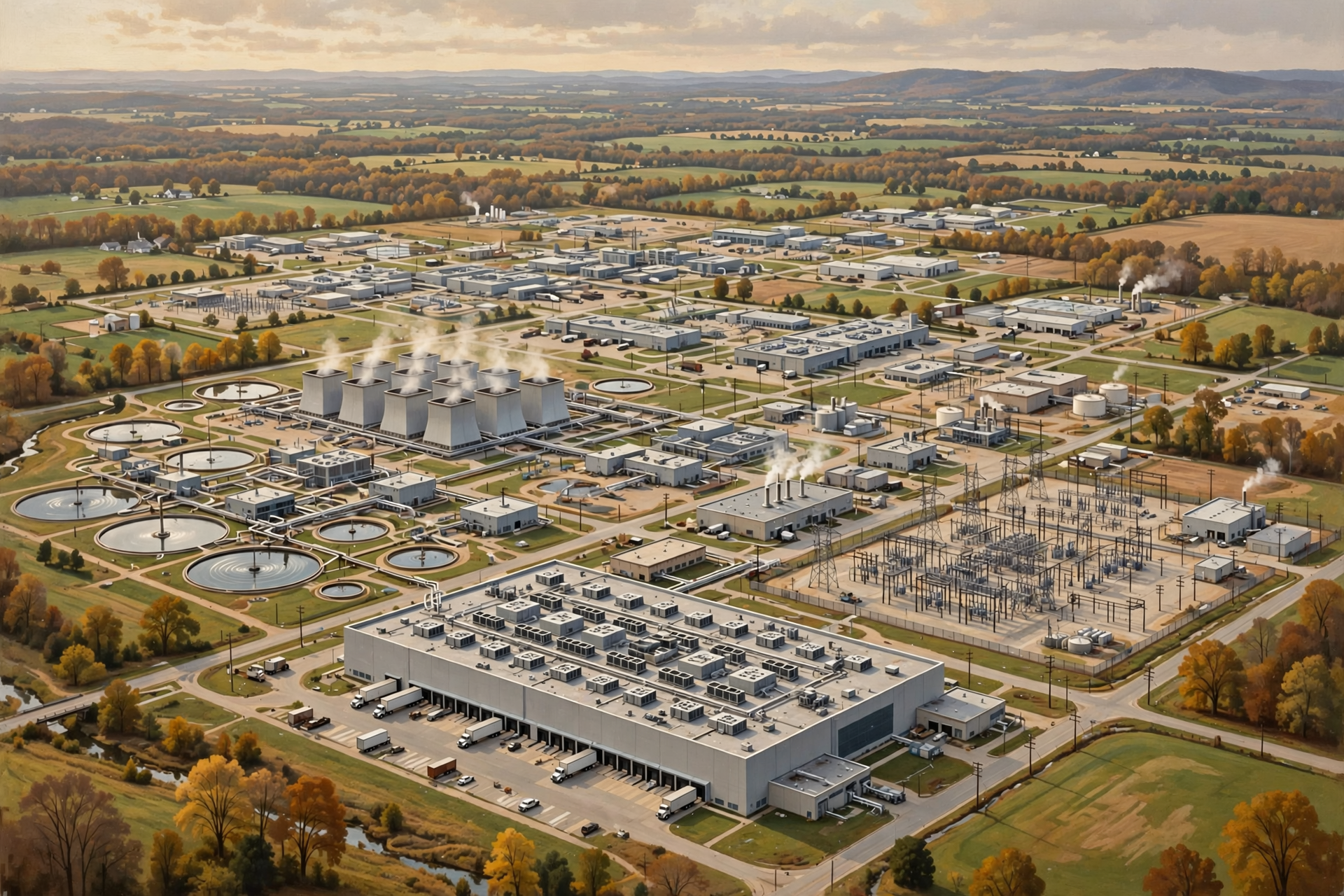
A conventional data center may occupy one building.
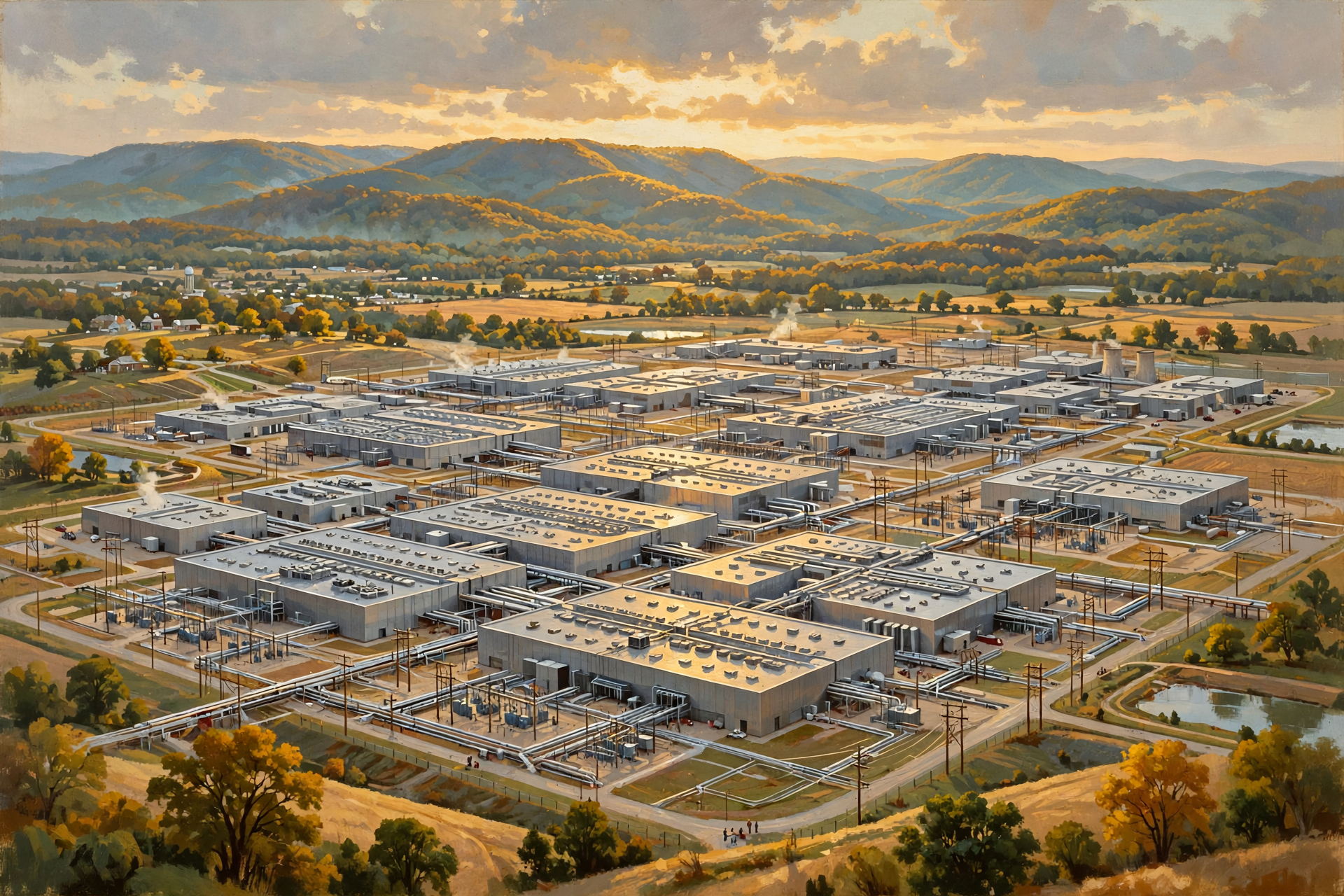
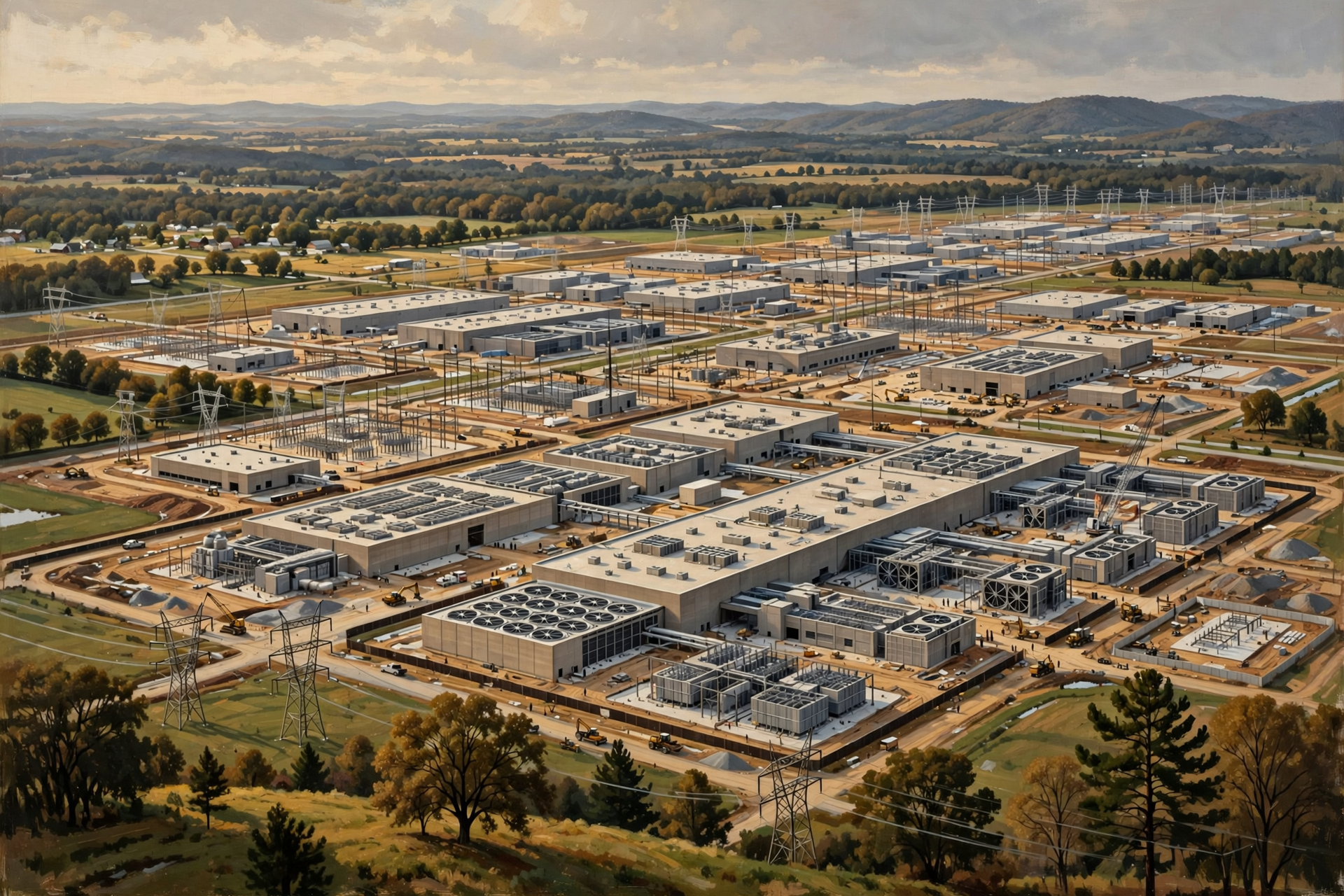
A large hyperscale development can become an entire campus.
That campus may eventually include multiple data-center buildings plus:
- electrical substations;
- transformer yards;
- backup-generator areas;
- cooling equipment;
- water infrastructure;
- fuel systems;
- maintenance buildings;
- security facilities;
- fiber routes;
- internal roads;
- stormwater systems;
- office space; and
- large buffers around equipment.
That is why looking only at the first building can be misleading.
Phase One May Be Only the Beginning
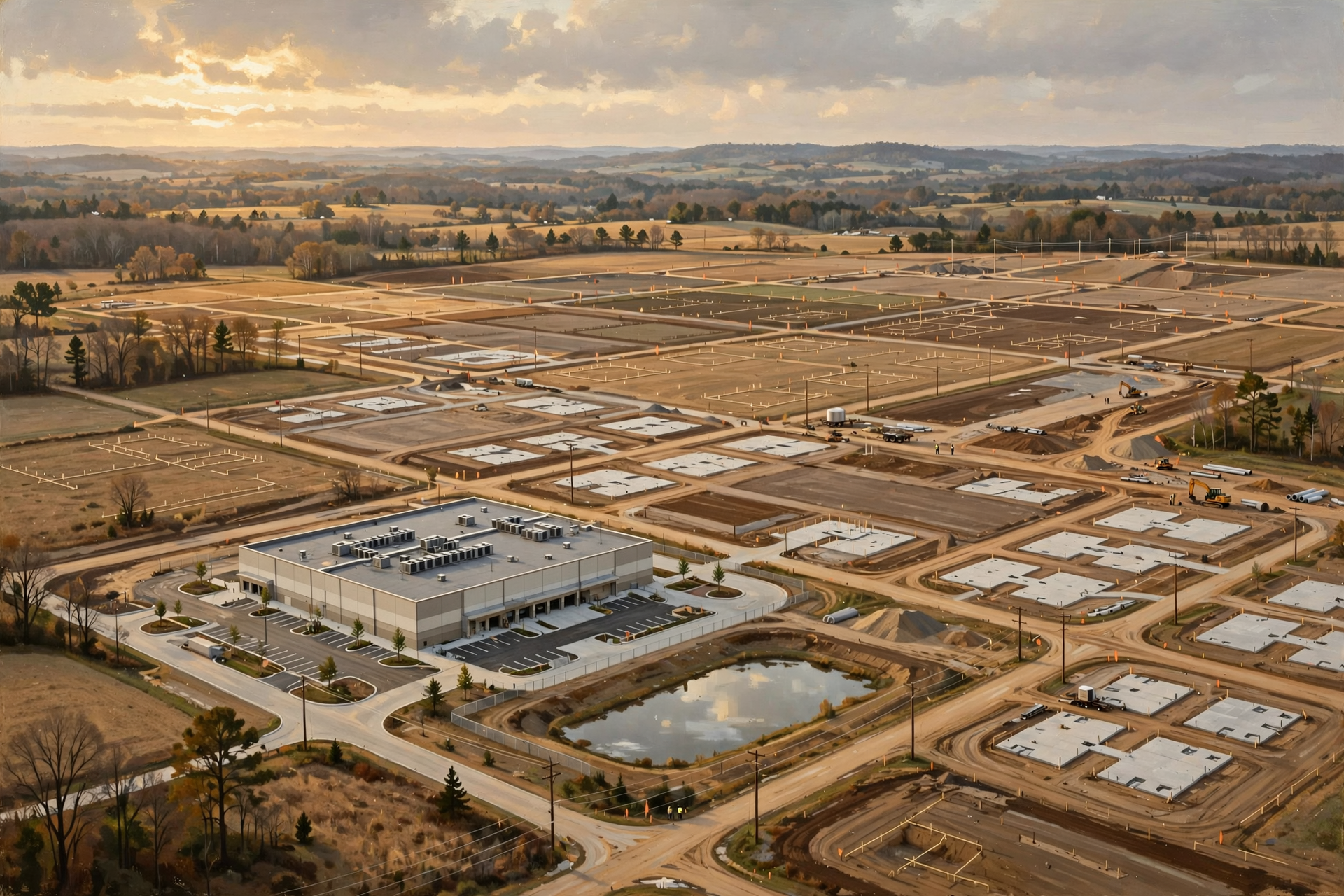
This deserves special attention whenever a community evaluates a proposal.
Large data-center campuses are often built in phases.
Phase One might include one building.
Then another.
Then another.
Electrical infrastructure may be sized for future development.
Land may be acquired for buildings that do not yet exist.
Water and sewer agreements may anticipate future capacity.
So one of the best questions citizens can ask is:
What does this project look like at full buildout?
Not:
How big is the first building?
Not:
How many employees will Phase One have?
But:
If everything currently envisioned gets built, what will eventually be here?
Hyperscale Is Really About Replication

Imagine a farmer building one chicken house.
The design works.
Then another identical house goes beside it.
Then another.
Then supporting infrastructure expands to handle the larger operation.
Hyperscale data centers use some of the same logic.
Operators want repeatable designs.
Standard server configurations.
Standard racks.
Standard electrical systems.
Standard networking.
Standard cooling.
If demand increases, capacity can be added in predictable units.
That standardization makes enormous scale manageable.
Why Do Cloud Companies Need Hyperscale?
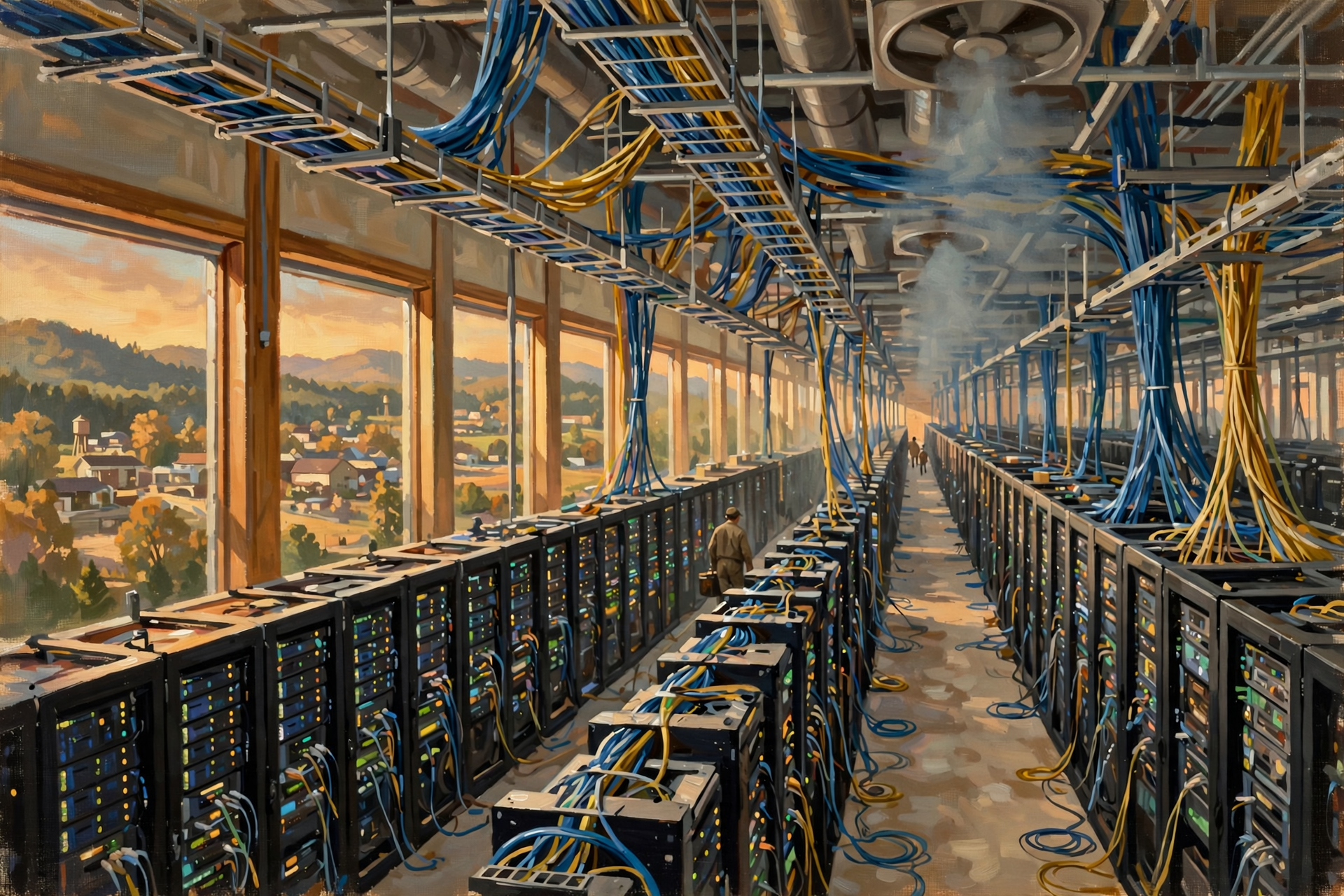
Think about the number of services people now use online.
Cloud providers may host:
- websites;
- databases;
- business applications;
- email;
- file storage;
- streaming;
- online games;
- backups;
- financial services;
- AI systems;
- government applications;
- healthcare systems;
- software-development tools; and
- countless other digital services.
The customer does not necessarily buy a physical server.
The customer rents access to computing capability.
Behind the scenes, the cloud operator needs enormous pools of hardware capable of serving many customers simultaneously.
Hyperscale architecture makes that possible.
Think of a Utility Instead of a Computer Shop
A small business might buy one generator because it needs backup electricity.
A power utility thinks differently.
It operates an entire system designed to serve thousands or millions of customers.
Hyperscale computing has a similar shift in mindset.
Instead of thinking:
Which server should we buy for this customer?
the operator thinks:
How do we maintain an enormous pool of computing that can continuously serve huge numbers of customers?
Computing becomes infrastructure.
What Does a Hyperscale Server Room Look Like?
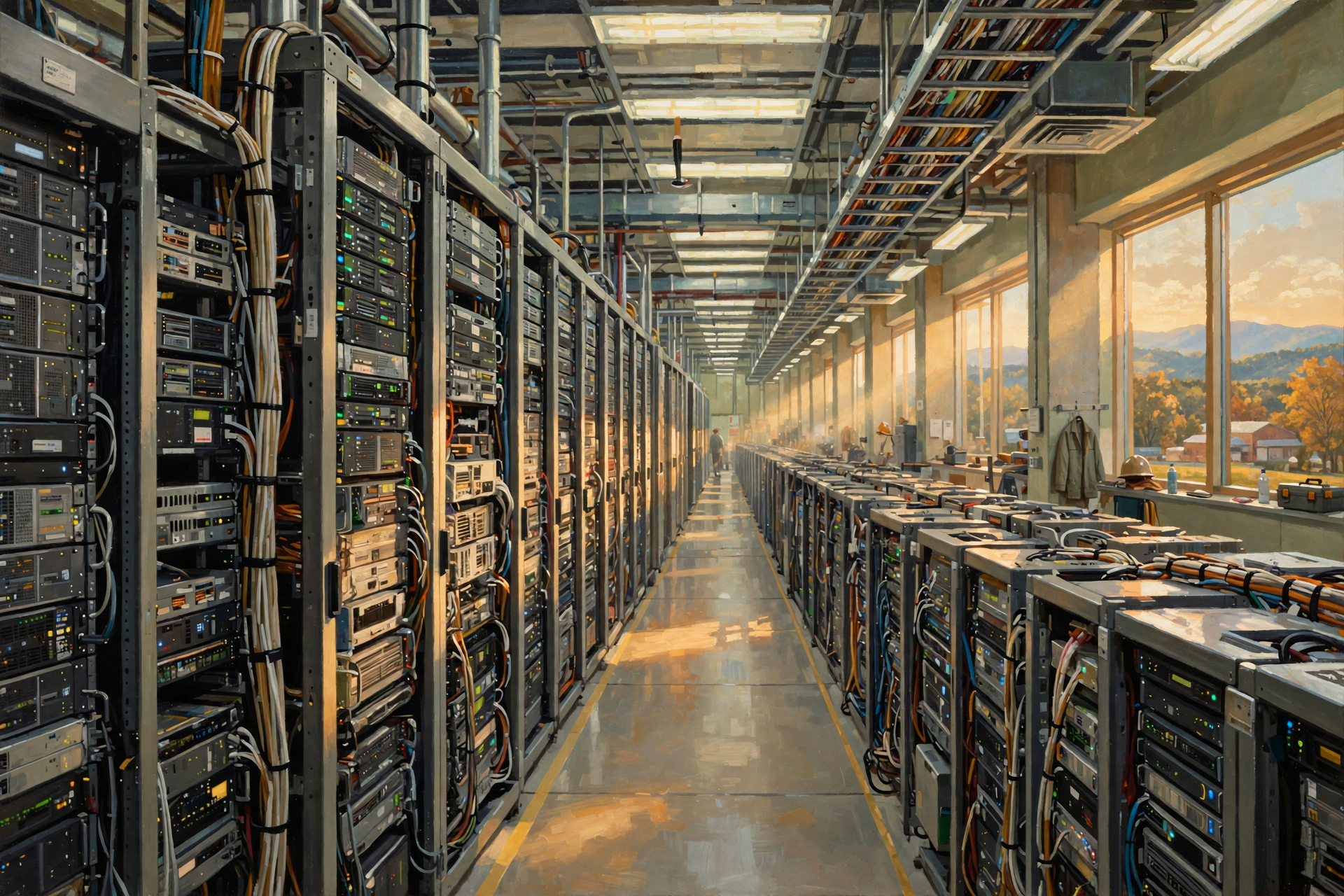
Remember the racks we discussed earlier in this series?
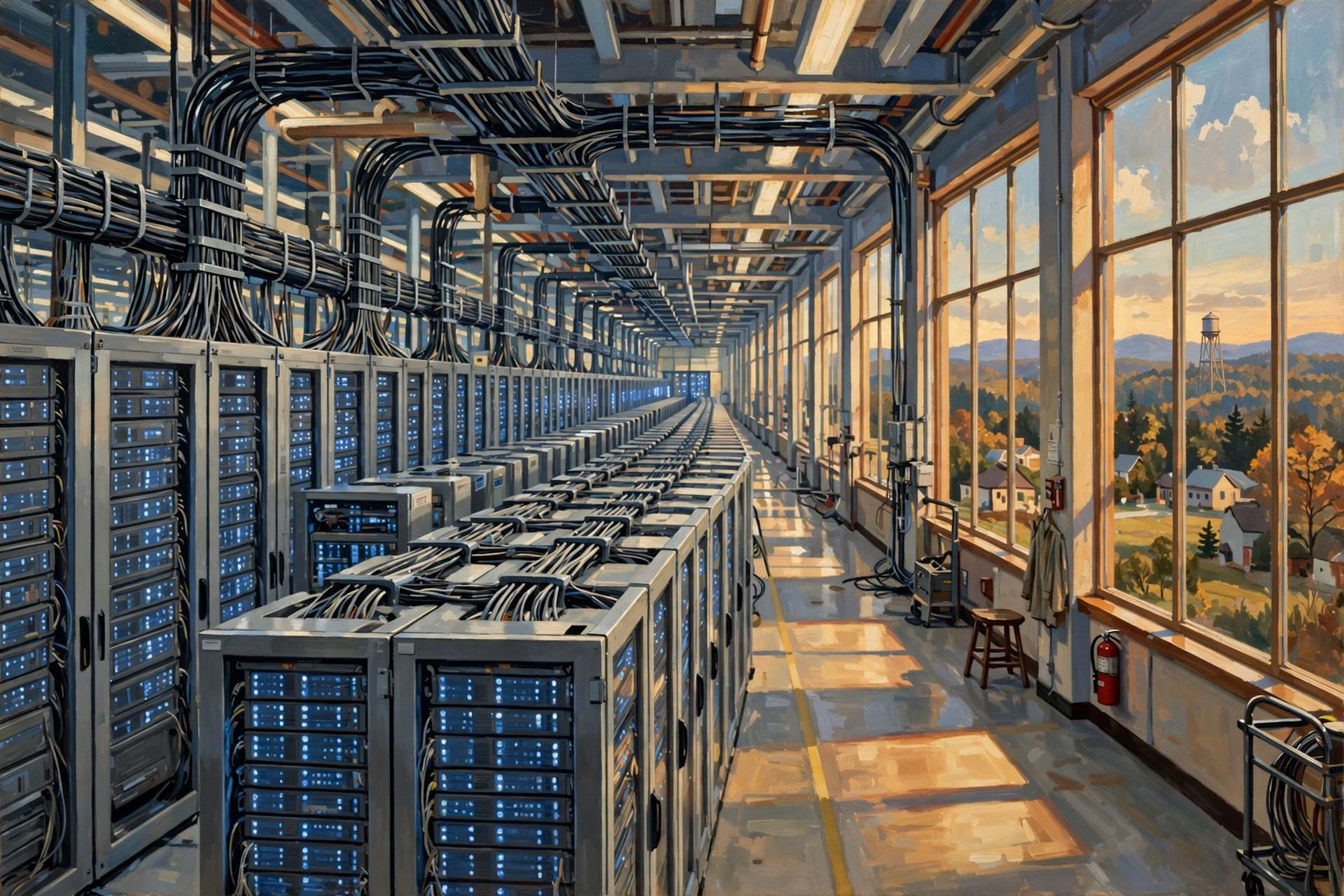
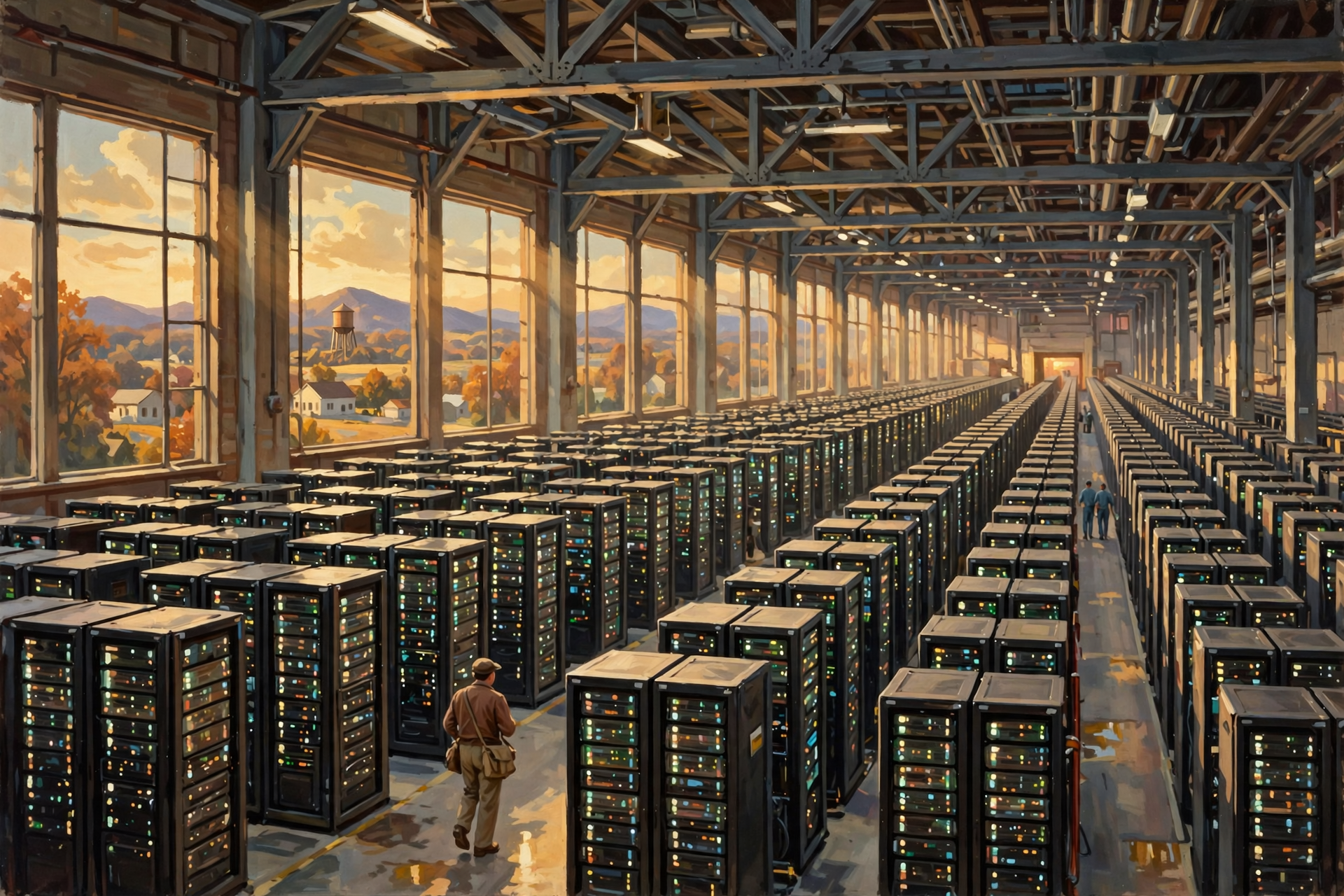
A hyperscale data center can contain rows upon rows of them.
Inside those racks may be:
- general-purpose servers;
- storage systems;
- networking equipment;
- GPU servers;
- AI accelerators;
- power-distribution equipment; and
- other specialized hardware.
Much of the equipment is designed around standardization.
If a server fails, the goal is often not to treat that individual machine as an irreplaceable family heirloom.
The larger system should be designed to continue operating.
Equipment can be repaired or replaced while other machines keep working.
Cattle, Not Pets
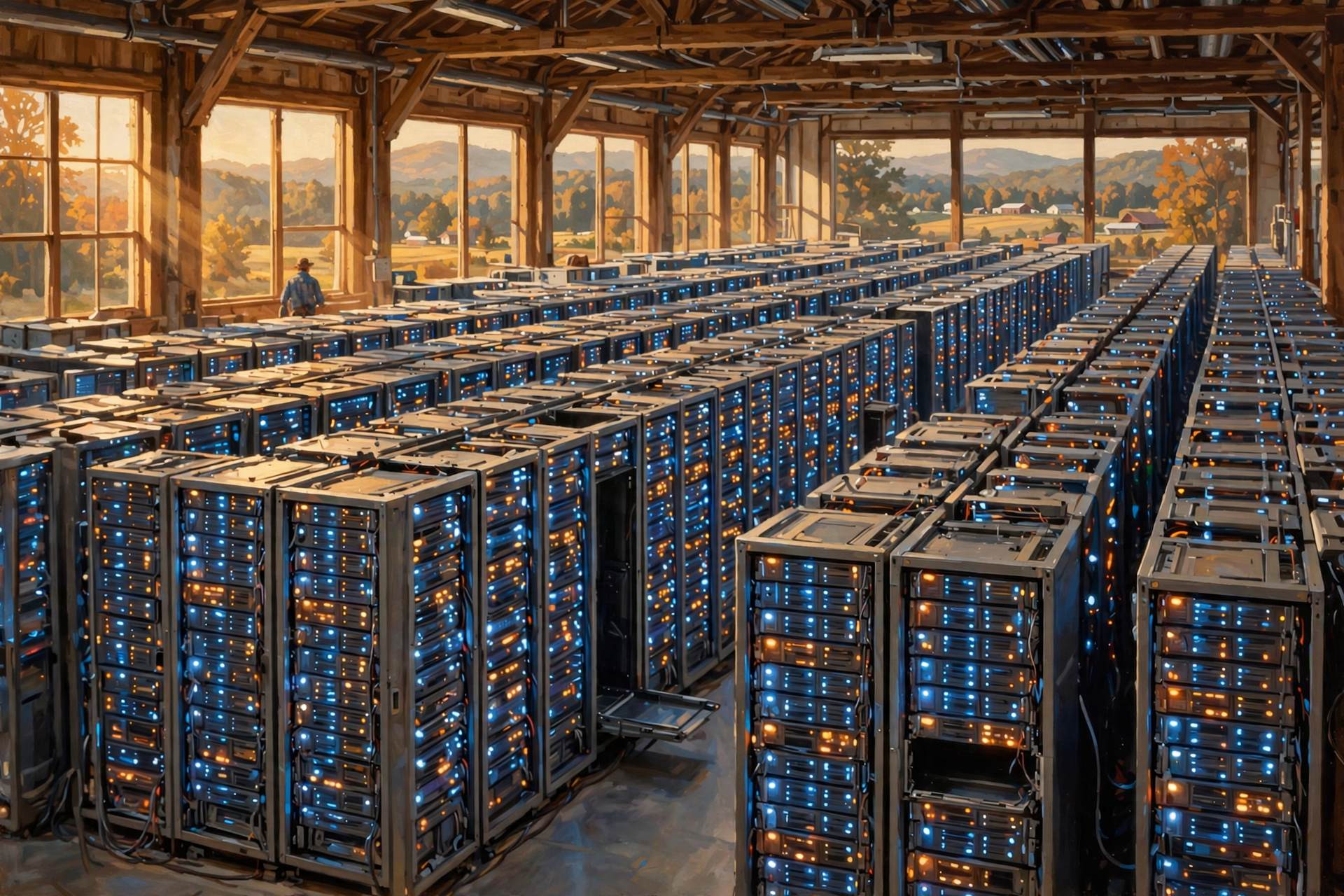
Technology people sometimes use a rather blunt analogy:
Traditional servers can be treated like pets.
They have names.
People know exactly which machine performs which job.
If one becomes sick, everybody gathers around trying to save it.
At very large scale, servers increasingly behave more like livestock within a large operation.
Individual machines matter, but the system is designed around the expectation that machines will occasionally fail and be replaced.
For rural Tennessee readers, perhaps we can put it a little more kindly:
The herd has to keep moving even when one tractor is in the shop.
Automation Is Essential
Imagine manually configuring 100 computers.
That sounds unpleasant but possible.
Now imagine manually configuring hundreds of thousands of machines.
You would finish sometime around the next geological era.
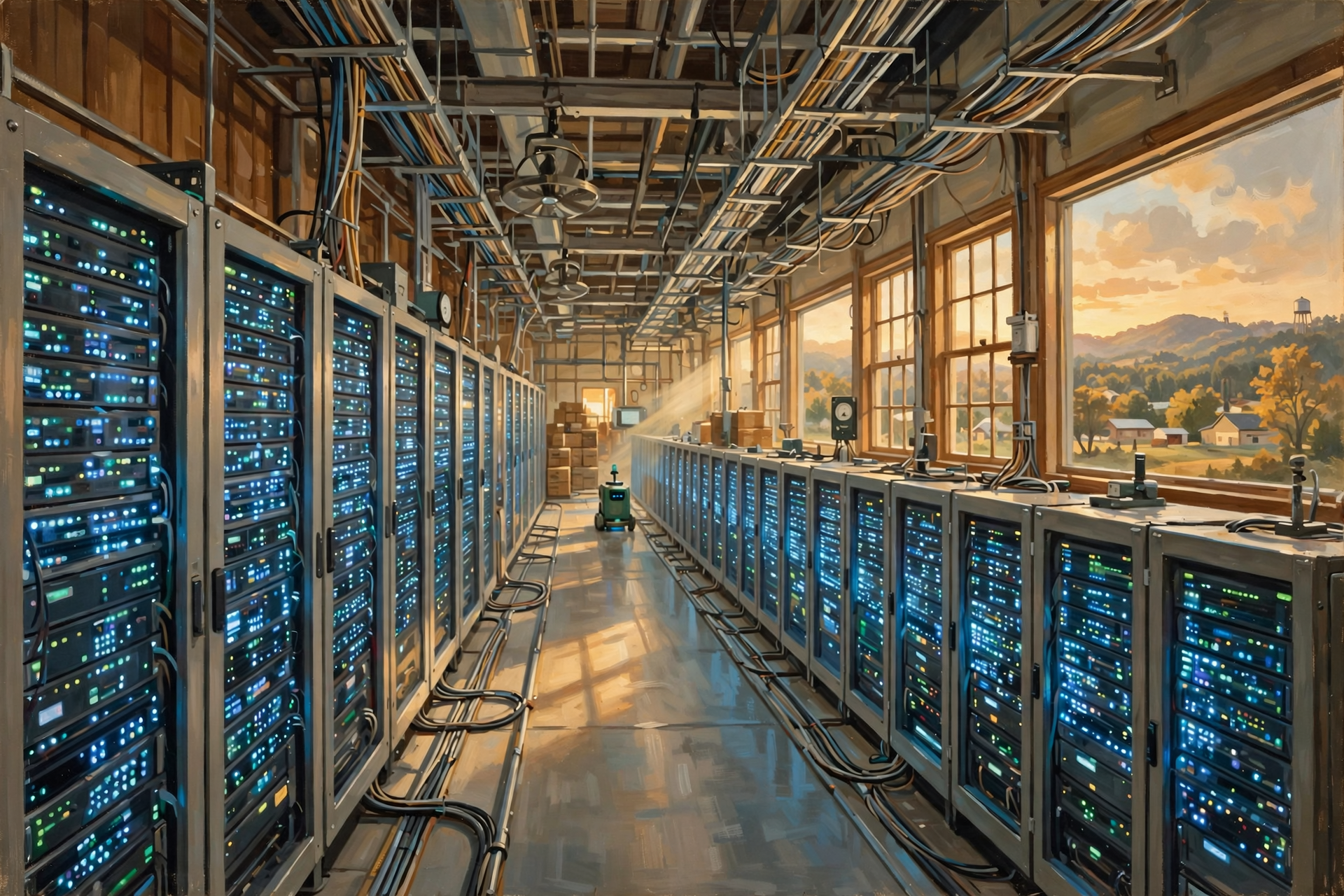
Hyperscale infrastructure therefore depends heavily on software automation.
Software can help:
- deploy applications;
- configure servers;
- monitor hardware;
- move workloads;
- detect failures;
- allocate computing;
- manage storage;
- balance traffic; and
- replace failed resources.
The machines operate the digital services.
Other machines help operate the machines.
Hyperscale Also Means Massive Networking
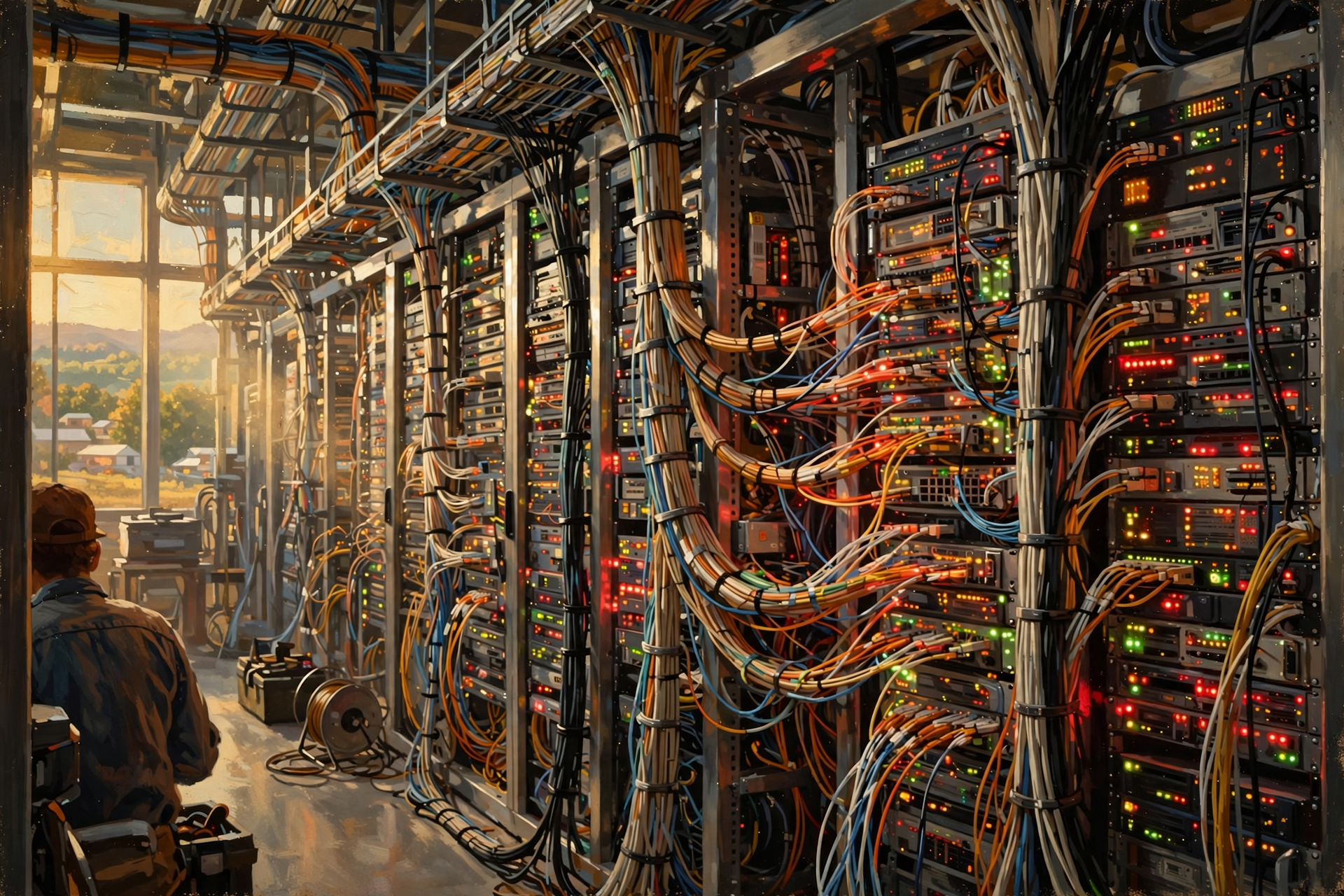
Hundreds of thousands of computers are not useful if they cannot communicate.
A hyperscale facility therefore needs enormous internal networking capacity.
Servers communicate with other servers.
Applications retrieve information from storage.
Customers send requests.
Data moves among facilities.
AI processors exchange huge quantities of information.
The network becomes one of the most important pieces of the computing system.
At this scale, networking is not merely how you get onto the internet.
It is part of the machine.
And Then the Data Center Has to Reach the Rest of the World
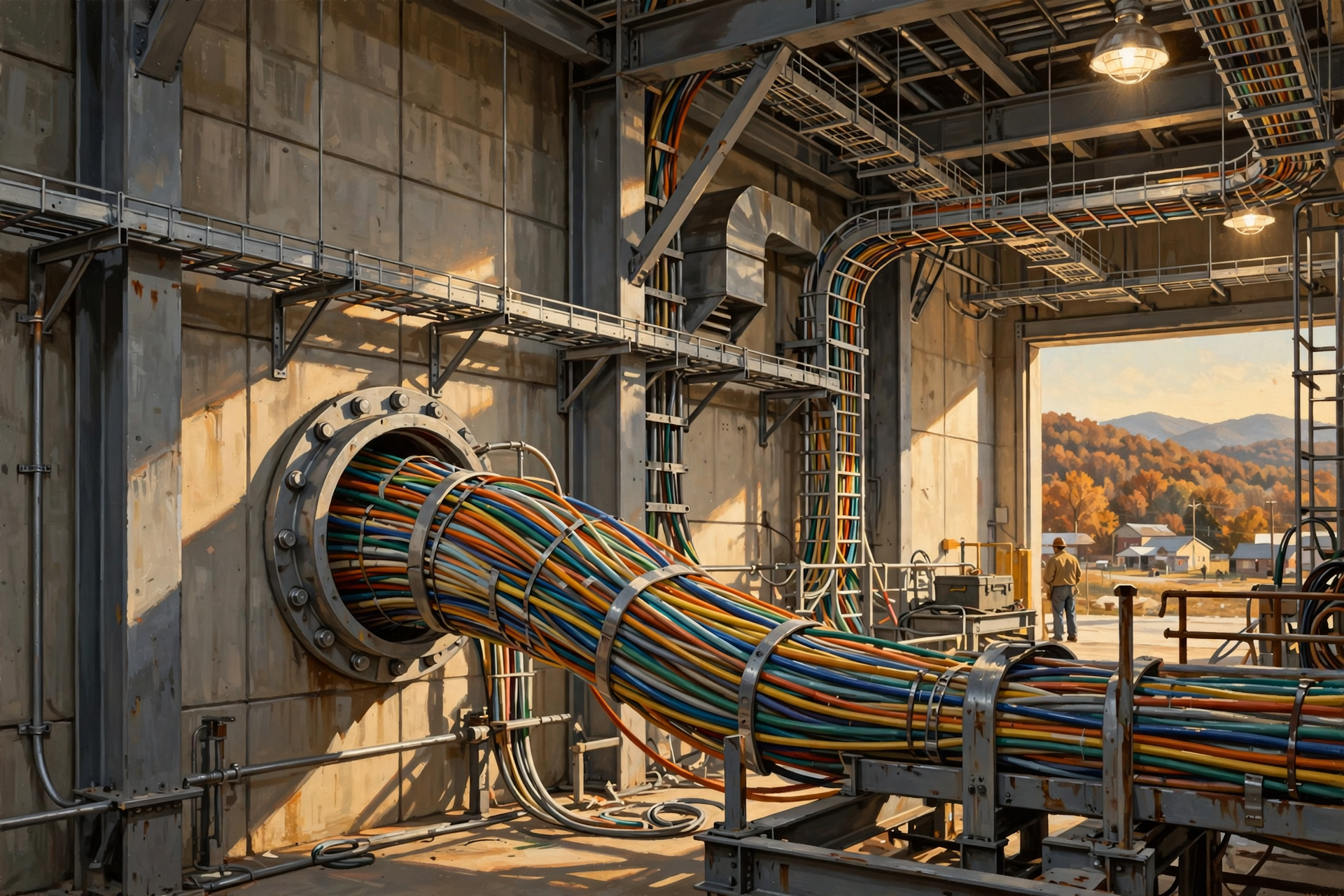
Hyperscale facilities also require very large external network connections.
A cloud service used around the world must move enormous quantities of data in and out.
That makes high-capacity fiber infrastructure essential.
A site with abundant land and electricity but poor fiber connectivity is missing one of the major ingredients.
This is why data-center site selection often involves looking at several infrastructure systems at once.
Power Becomes the Big Number
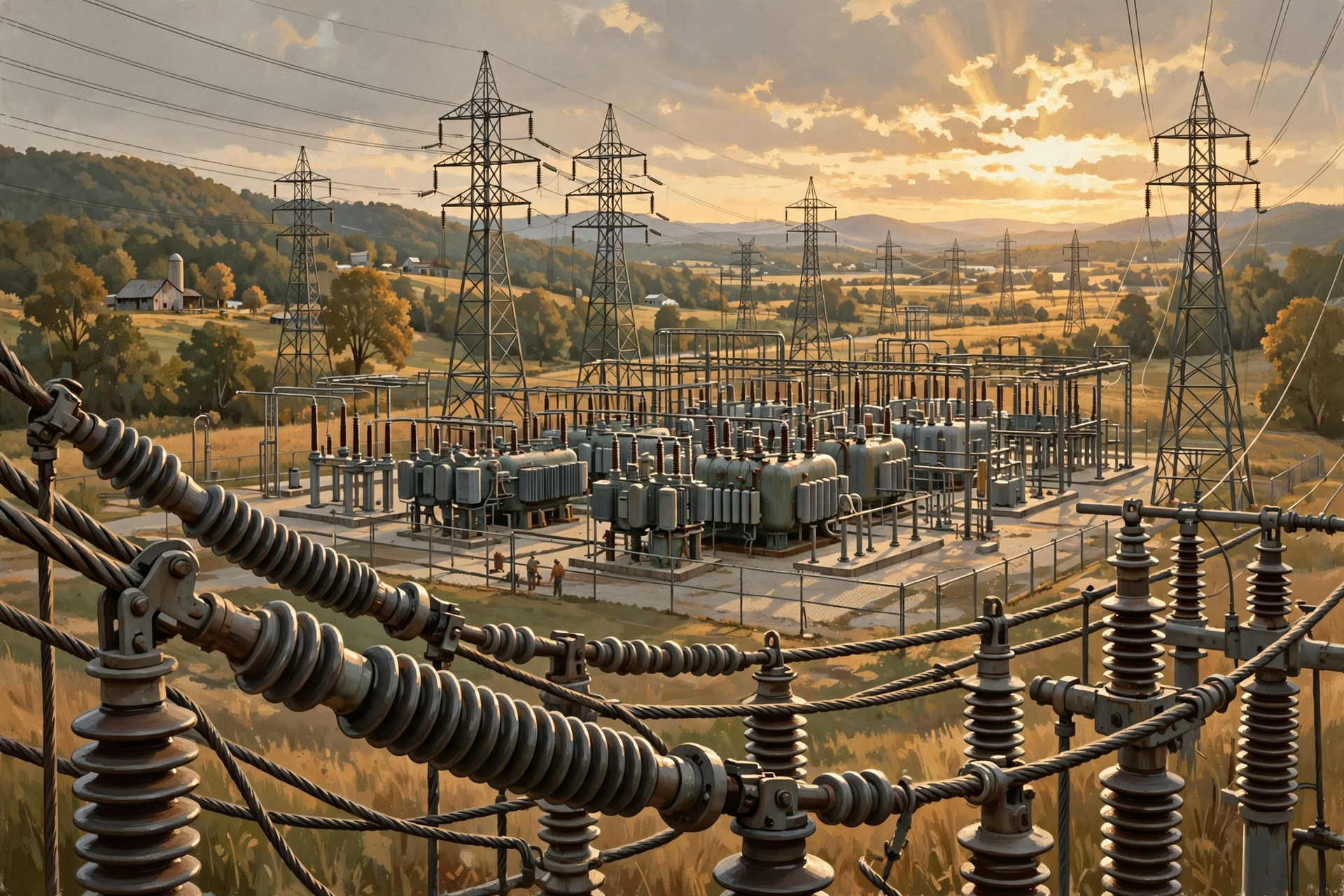
For a conventional commercial building, people often talk about square feet.
For large data centers, one of the more revealing measurements is megawatts.
A megawatt is one million watts of electrical power.
Large hyperscale campuses can require electrical capacity measured in hundreds of megawatts, and some emerging mega-campus proposals can be discussed on even larger scales.
The exact requirement depends on the project.
This is one reason the question:
How many megawatts?
can tell you more about the scale of a proposed data center than:
How many square feet?
Why Megawatts Matter More Than Acres
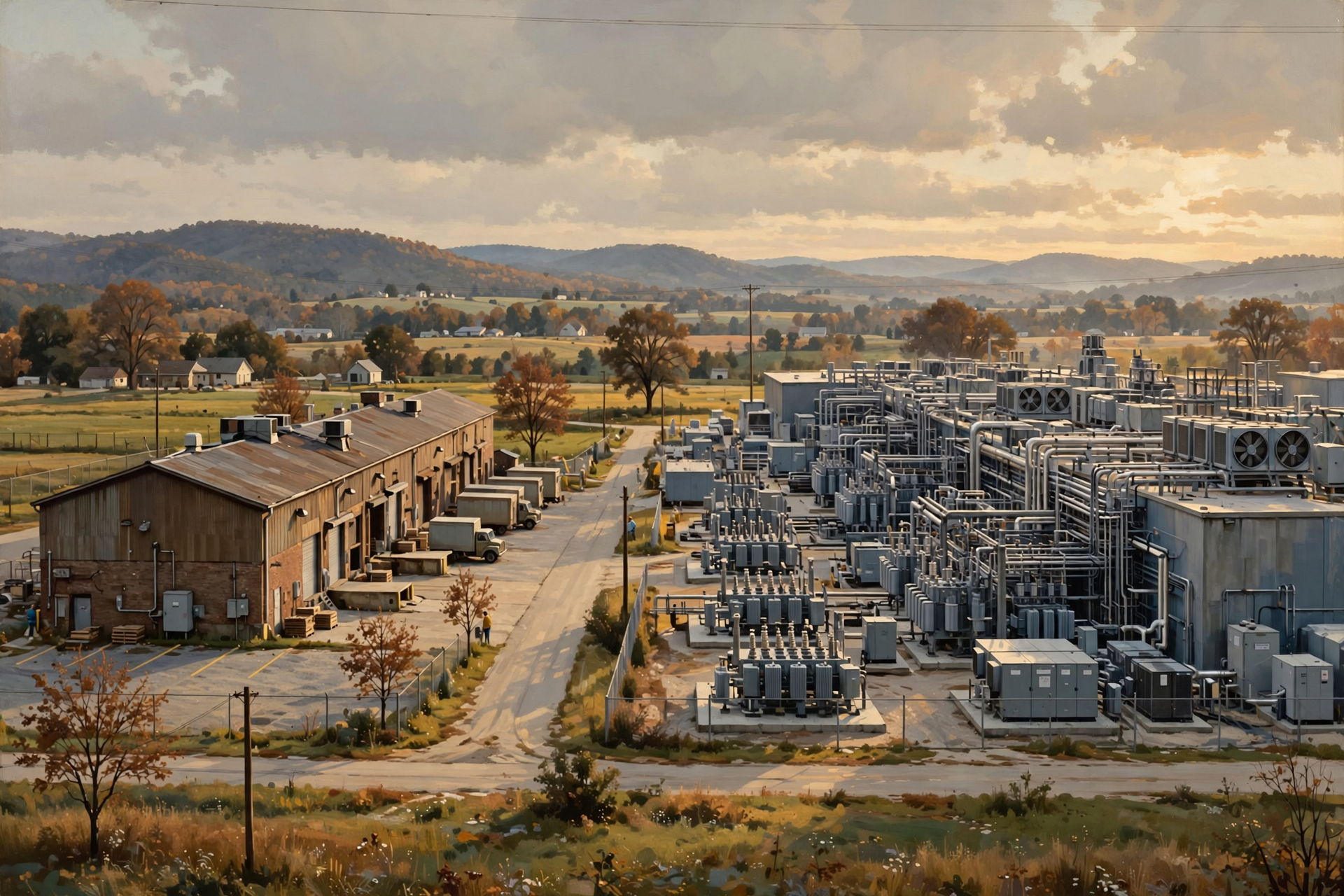
Imagine two 100-acre industrial sites.
One contains warehouses with forklifts and lighting.
The other contains densely packed computing equipment operating around the clock.
Same acreage.
Completely different electrical requirements.
The physical footprint tells you how much land is occupied.
The electrical capacity tells you something about how much computing the site is designed to support.
Both numbers matter.
They answer different questions.
Follow the Electron Into a Hyperscale Campus
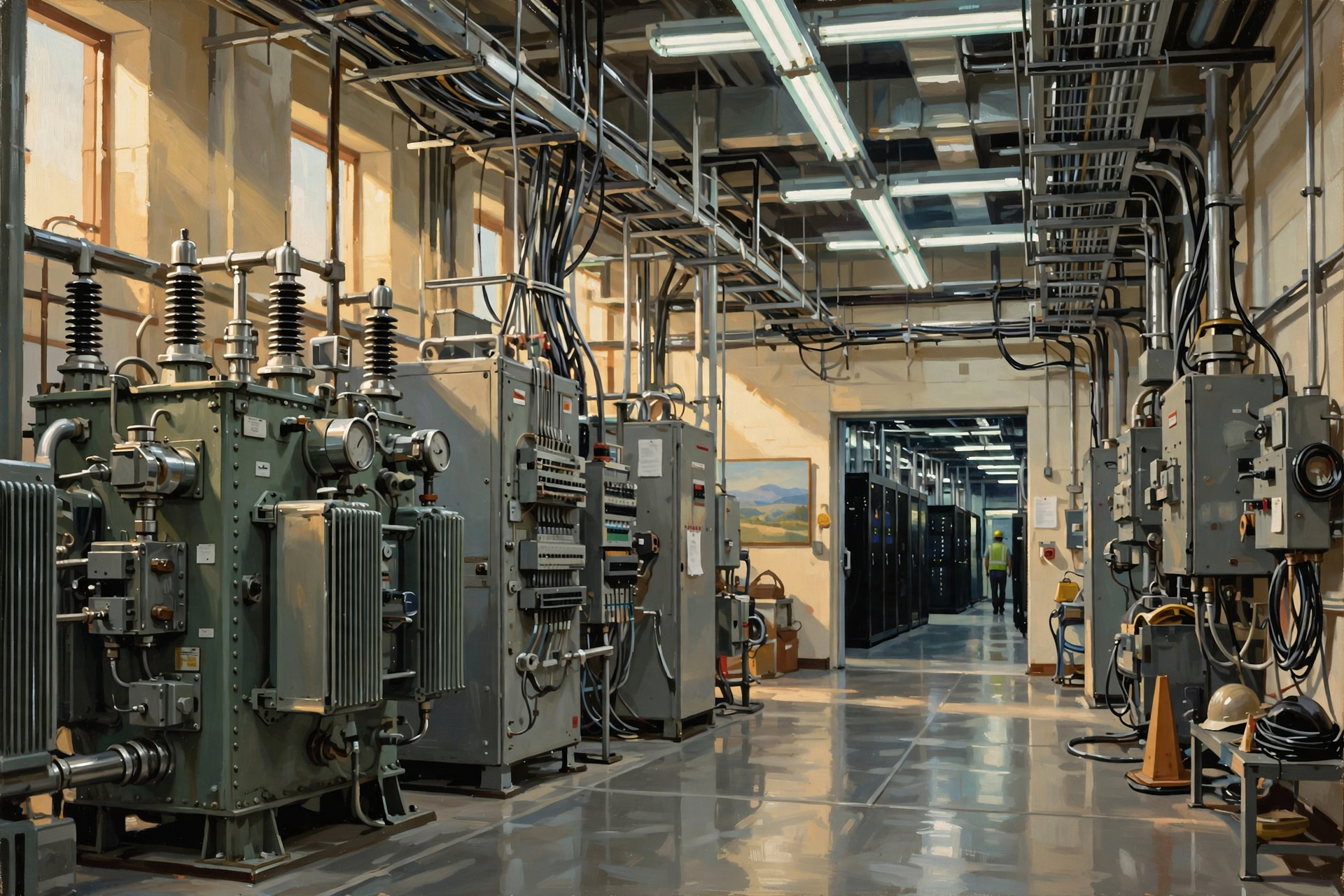
Imagine one tiny portion of electricity entering the campus.
The simplified path could look like this:
- Electricity arrives through the utility grid.
- High-voltage equipment manages the incoming supply.
- Transformers adjust voltage for use within the campus.
- Switchgear distributes power safely.
- Power reaches individual buildings.
- Distribution equipment carries it toward server rooms.
- Rack-level systems deliver electricity to servers.
- Processors use the electricity to perform calculations.
- Nearly all that energy eventually becomes heat.
- Cooling systems move the heat away from the computers.
That means an electrical system serving a hyperscale campus has two jobs hiding inside one number:
Run the computers.
And:
Support everything needed to keep the computers running.
Cooling Gets Bigger With Computing
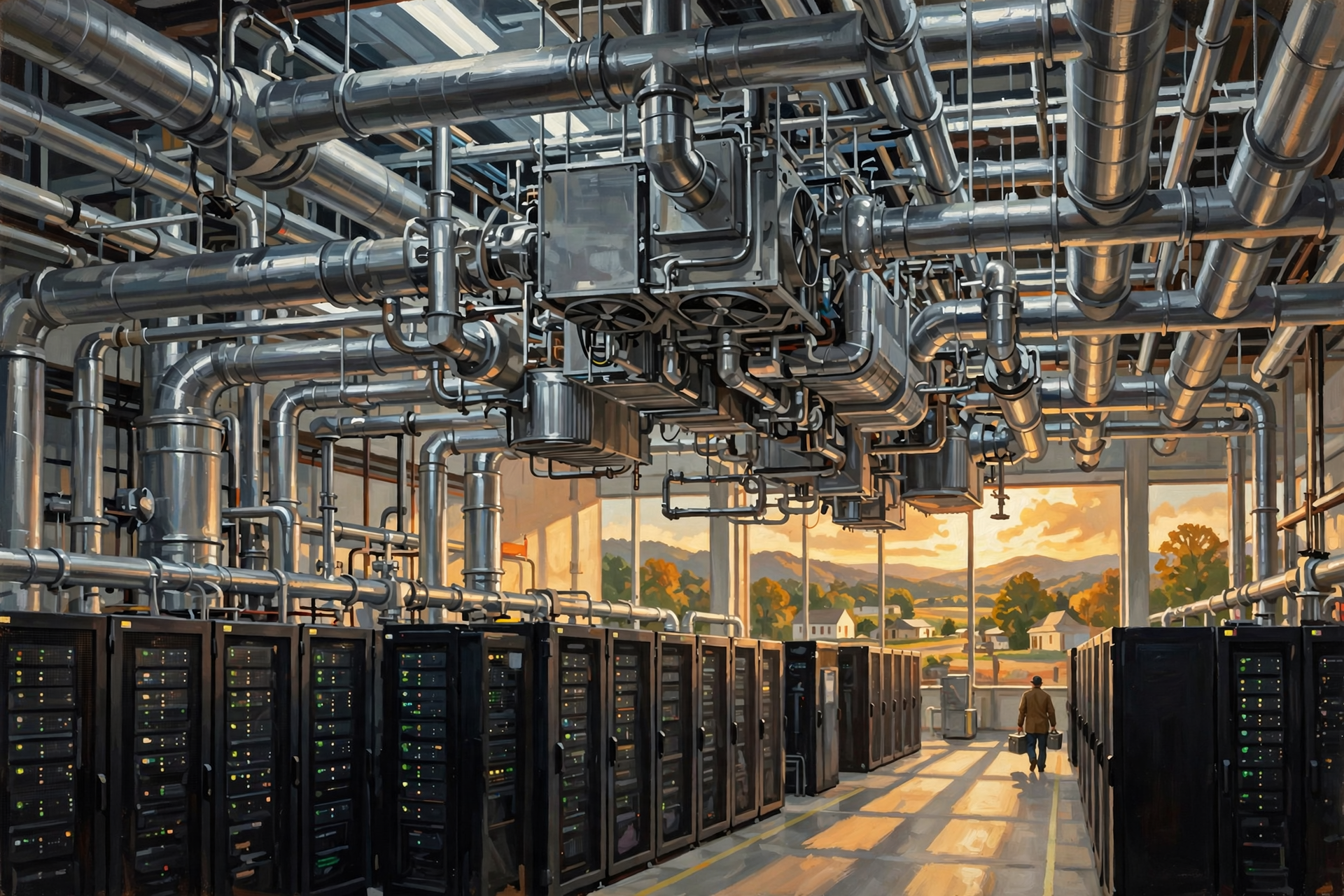
If you put more computing into a building, you generally create more heat.
If you put more powerful computing into each rack, you concentrate that heat into less space.
Hyperscale facilities therefore require carefully engineered cooling.
Depending on design, that might involve:
- large air-handling systems;
- chilled-water loops;
- cooling towers;
- evaporative cooling;
- heat exchangers;
- direct liquid cooling;
- dry coolers; or
- combinations of technologies.
There is no one universal hyperscale cooling system.
That is why questions about water and energy need to be answered for the actual project rather than for an imaginary average data center.
AI Is Making Hyperscale Even More Interesting
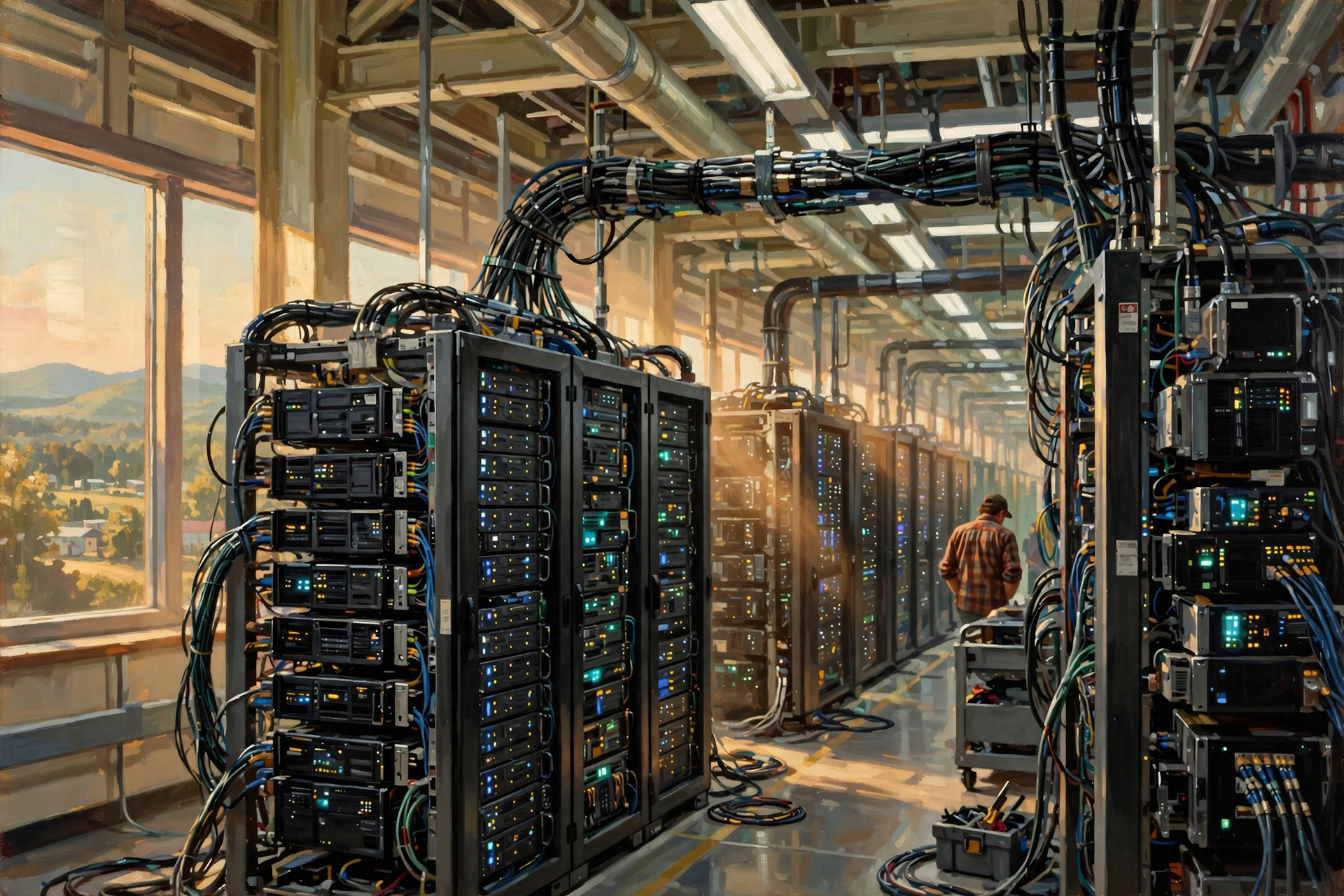
Hyperscale existed before the current generative-AI boom.
Large cloud providers already needed enormous facilities for storage, search, websites, video, databases and business software.
AI changes the equation because modern accelerators can consume much more power per rack than many traditional servers.
That means an AI-heavy hyperscale facility can have unusually high power density.
The building may not need to become twice as large to use twice as much power.
Operators can place dramatically more computing into each rack.
This makes the equipment inside the building just as important as the size of the building itself.
Hyperscale Is Not the Same as AI
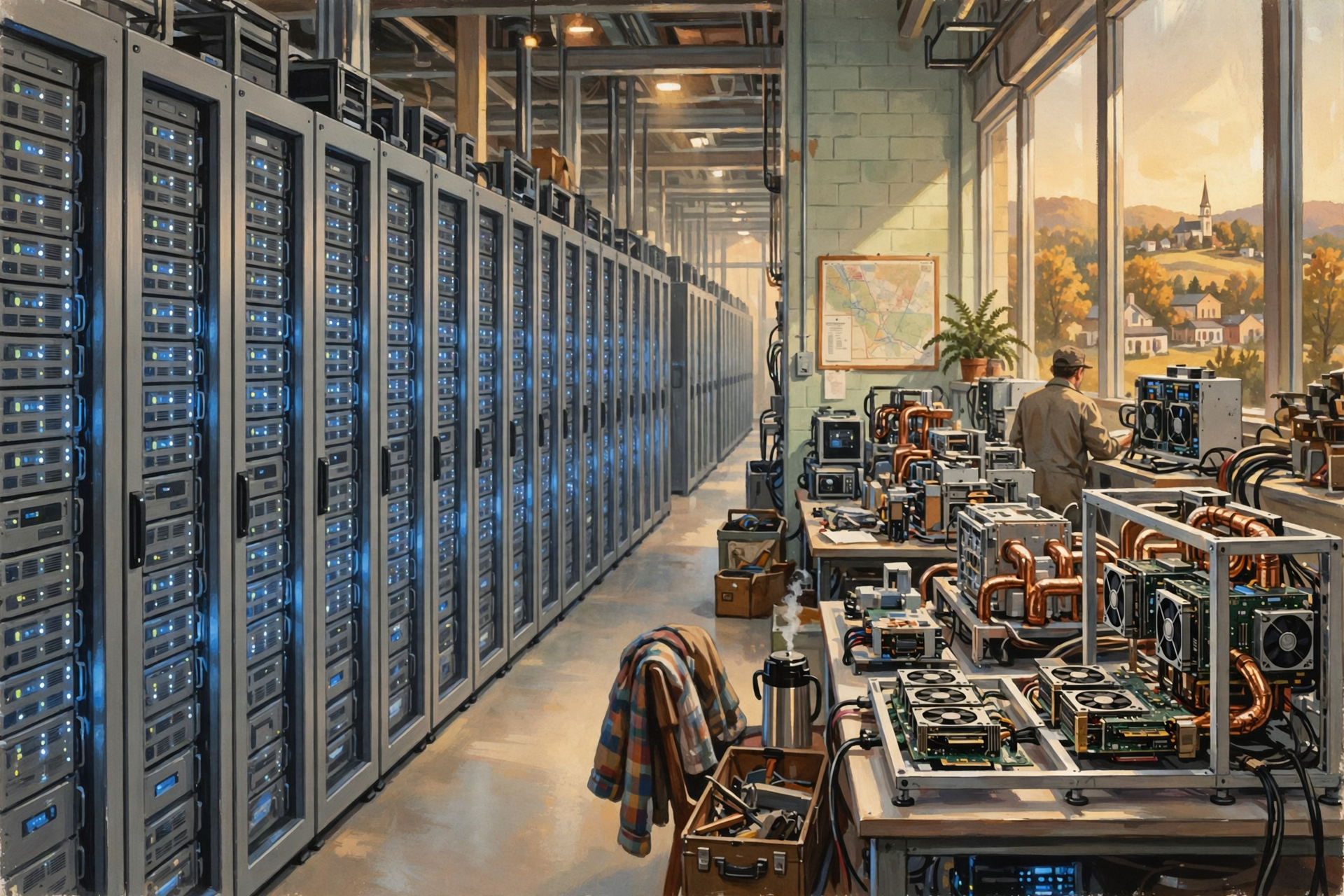
This deserves repeating because the terms are often blurred together.
Hyperscale describes scale and architecture.
AI describes a workload.
A hyperscale facility might support:
- cloud storage;
- search;
- streaming;
- business software;
- databases;
- websites;
- AI; and
- many other services.
An AI data center can be hyperscale.
A hyperscale data center does not have to be exclusively AI.
Hyperscale Is Not the Same as a Mega-Campus Either
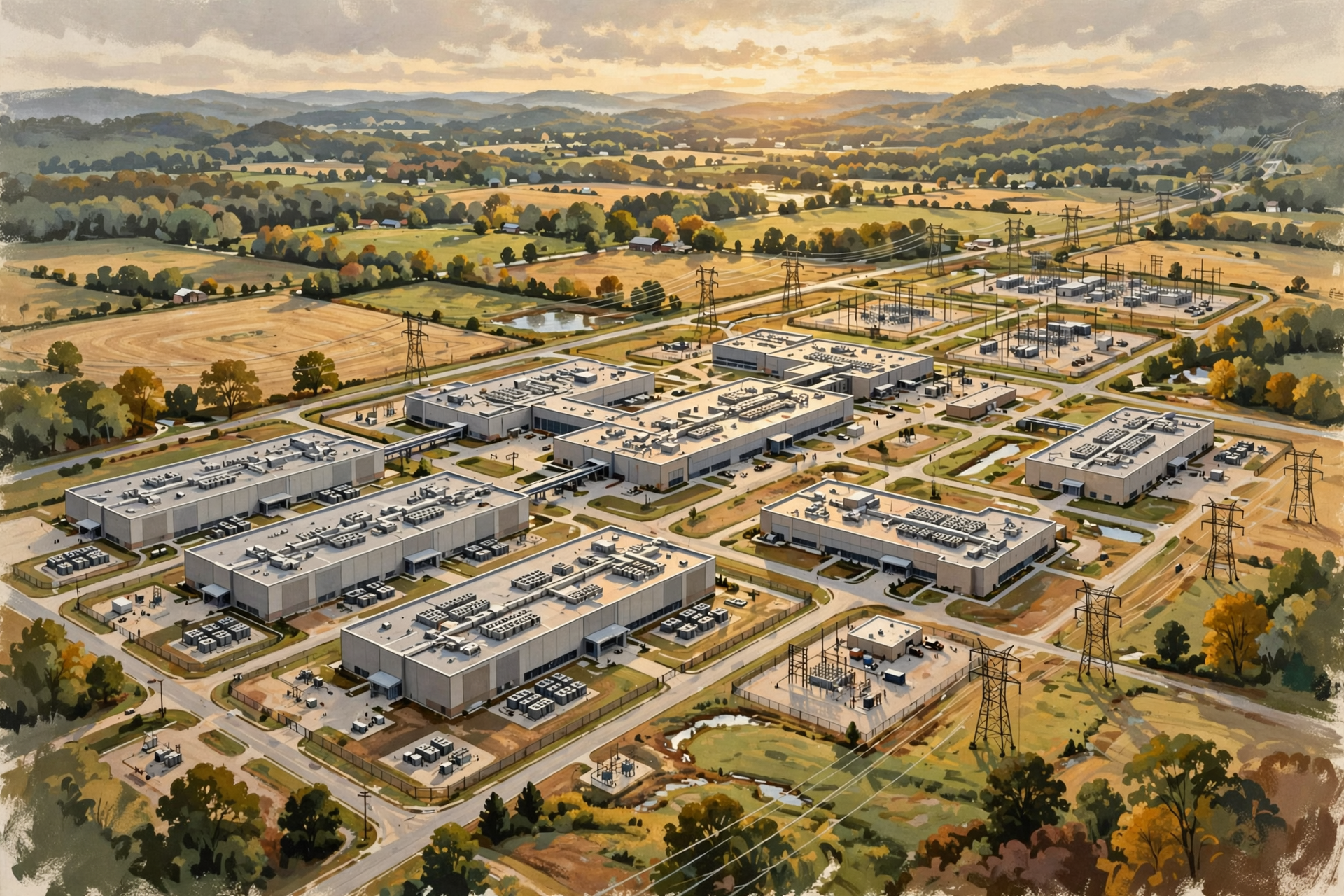
Another useful distinction:
A hyperscale computing operation could exist inside one enormous facility or across multiple facilities.
A mega-campus generally describes a very large physical development consisting of several data-center buildings and associated infrastructure.
Again, one term describes computing architecture.
The other describes physical development.
They often overlap.
They are not identical.
Why Build Several Buildings Instead of One?
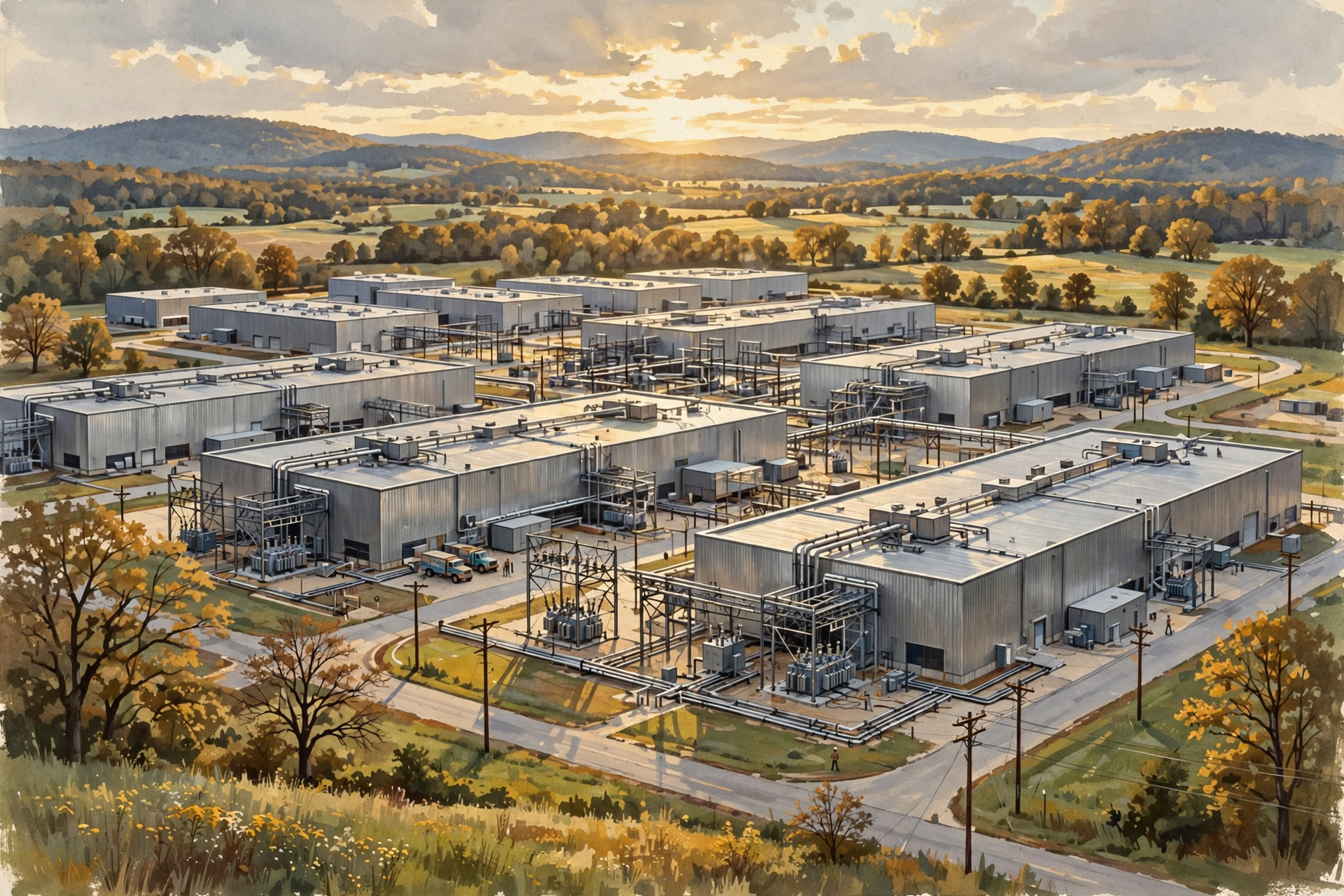
There are practical limits to how large one building should become.
Multiple buildings can help operators:
- construct capacity in phases;
- separate electrical systems;
- manage failures;
- upgrade one building without rebuilding everything;
- use repeatable designs;
- add capacity when customers need it; and
- spread equipment across different operating zones.
The result can look more like an industrial park than one giant warehouse.
Why Hyperscale Operators Love Standardization
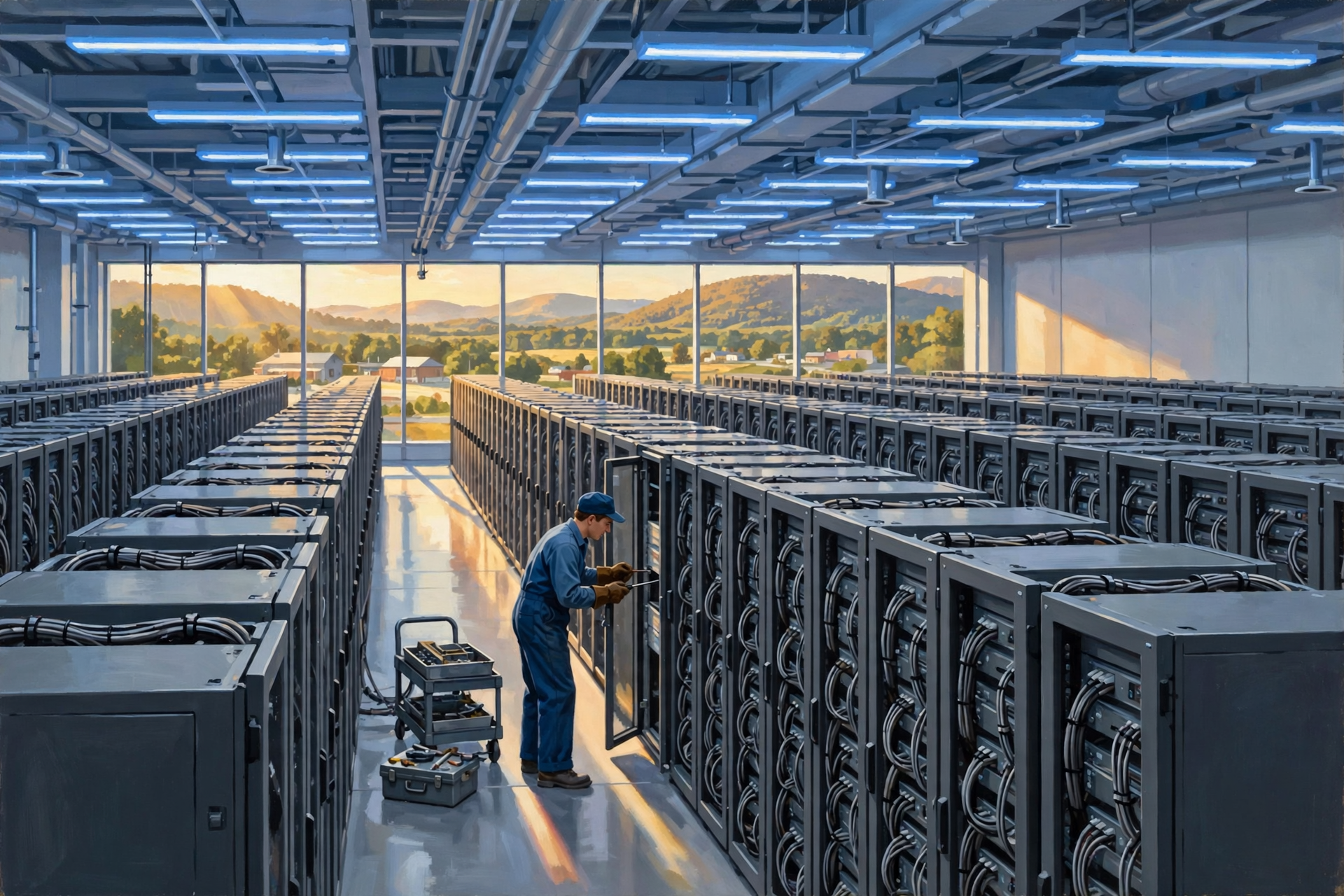
If you operate ten computers, you can tolerate a little improvisation.
If you operate hundreds of thousands, improvisation becomes expensive.
Standardized systems make it easier to:
- buy equipment in large quantities;
- install it consistently;
- train technicians;
- replace failed components;
- automate software deployment;
- predict electrical loads;
- plan cooling; and
- expand capacity.
McDonald’s became scalable partly because a hamburger in one restaurant follows processes similar to a hamburger somewhere else.
Hyperscale computing applies a much more technical version of the same operational principle.
Does Hyperscale Mean Thousands of Employees?
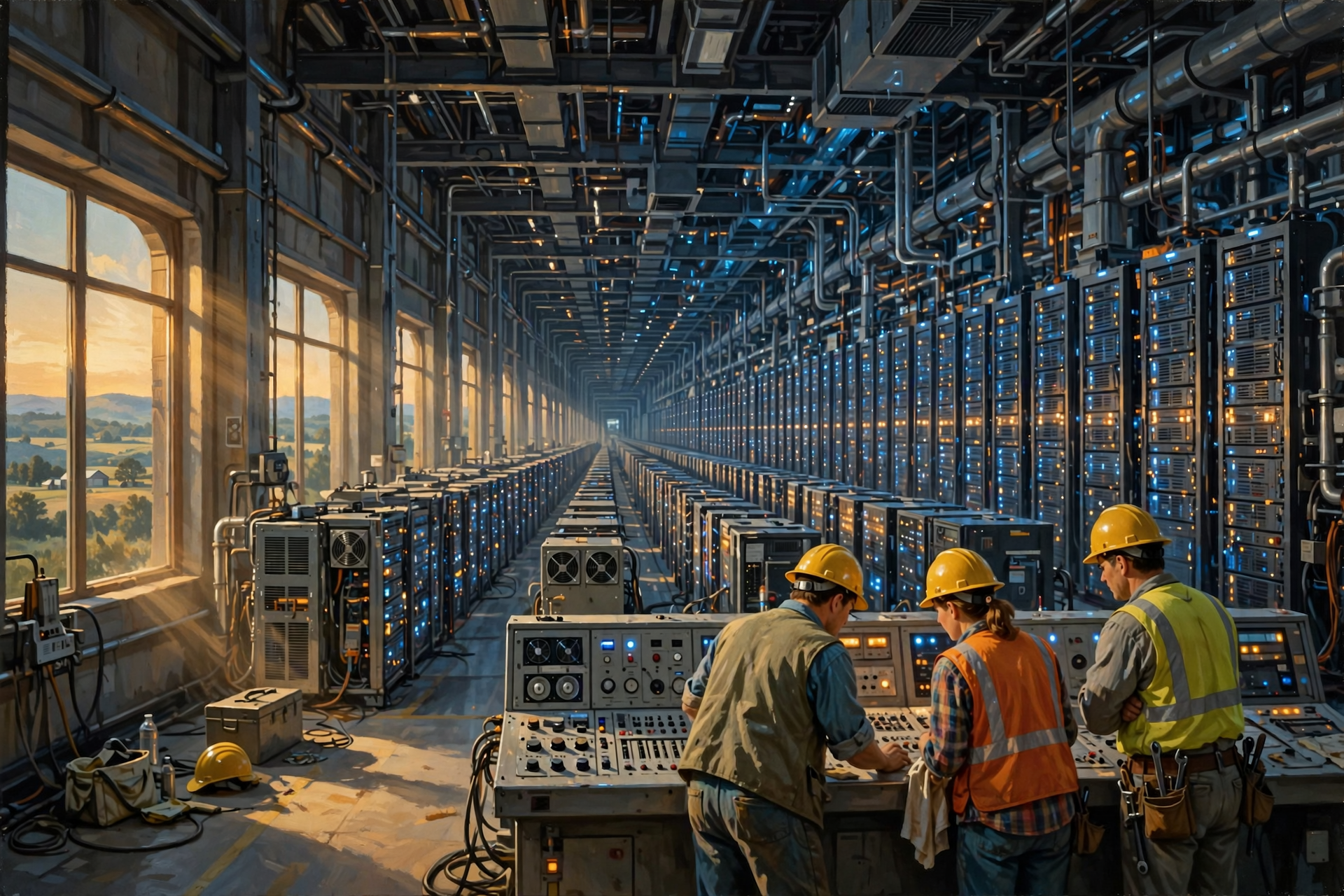
Not necessarily.
This is one of the easiest assumptions to make.
A huge industrial investment feels as though it should mean a huge permanent workforce.
Construction can certainly involve large numbers of workers.
But data centers are highly automated operations.
A large facility may require specialists in:
- electrical systems;
- mechanical systems;
- networking;
- server maintenance;
- security;
- facility operations;
- controls;
- cooling;
- management; and
- other technical fields.
But the number of permanent employees per dollar of capital investment can be much lower than in some traditional factories.
That does not mean the jobs are unimportant.
It means communities should distinguish:
capital investment
from
permanent employment.
Construction Is a Different Employment Story
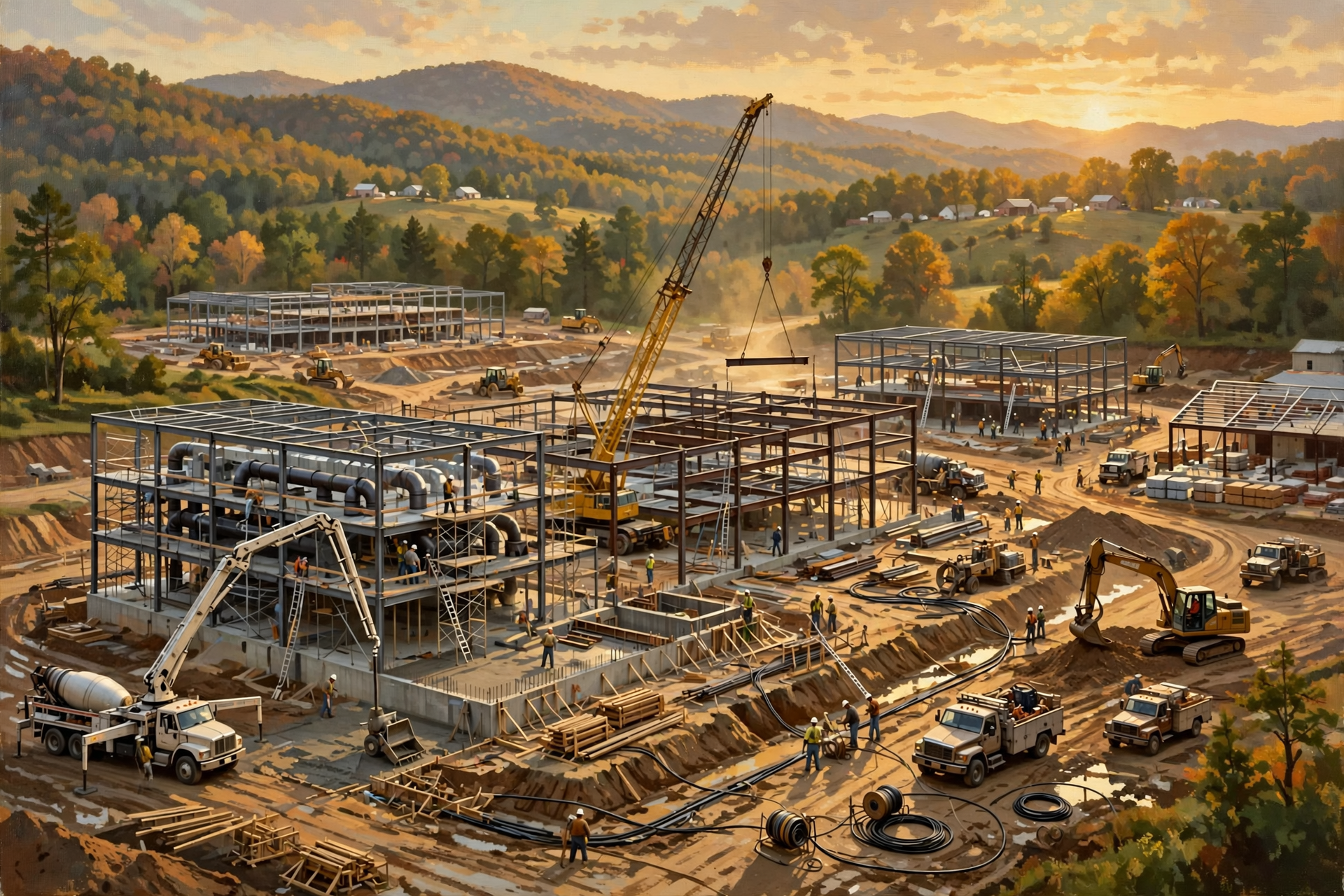
A multi-building hyperscale campus may require years of construction.
That can create demand for:
- electricians;
- concrete contractors;
- equipment operators;
- steel workers;
- plumbers;
- HVAC specialists;
- utility contractors;
- fiber installers;
- engineers;
- surveyors;
- truck drivers; and
- many other trades.
Those construction opportunities can be economically meaningful.
They should simply not be confused with the permanent employment remaining after construction crews leave.
The Same Applies to the Investment Number
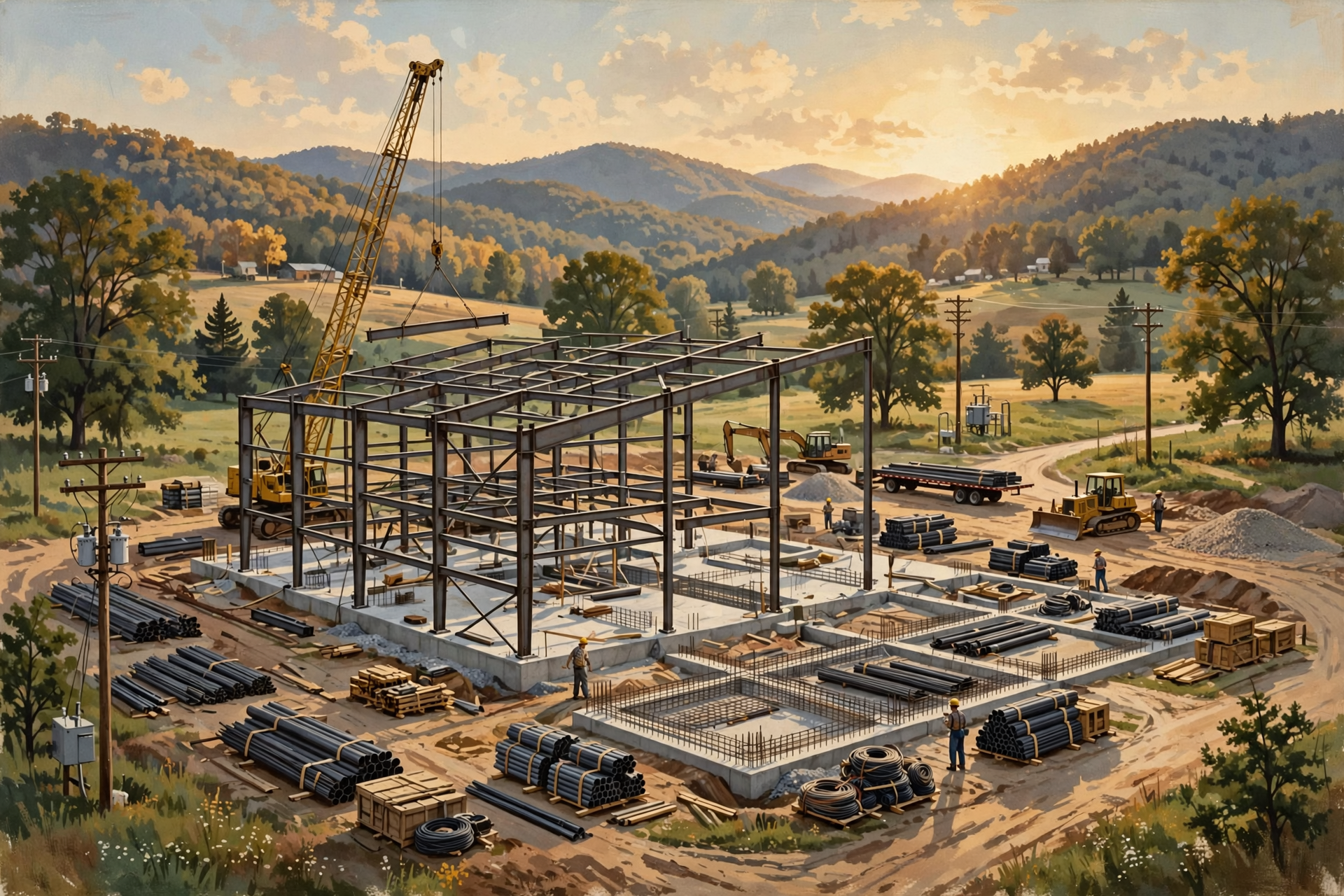
A hyperscale campus may carry an enormous announced investment.
Billions of dollars can make impressive headlines.
But a $5 billion project does not mean the county receives $5 billion.
The investment may include:
- land;
- buildings;
- servers;
- GPUs;
- networking equipment;
- electrical infrastructure;
- cooling systems;
- construction;
- engineering; and
- other project costs.
The local economic benefit depends on a different set of questions.
How much becomes taxable property?
What incentives are granted?
What equipment is taxed?
What permanent payroll remains locally?
What suppliers participate?
Who pays for infrastructure?
We will deal with those questions in later articles.
Hold On—Is That True? “Hyperscale Means a Million Servers”
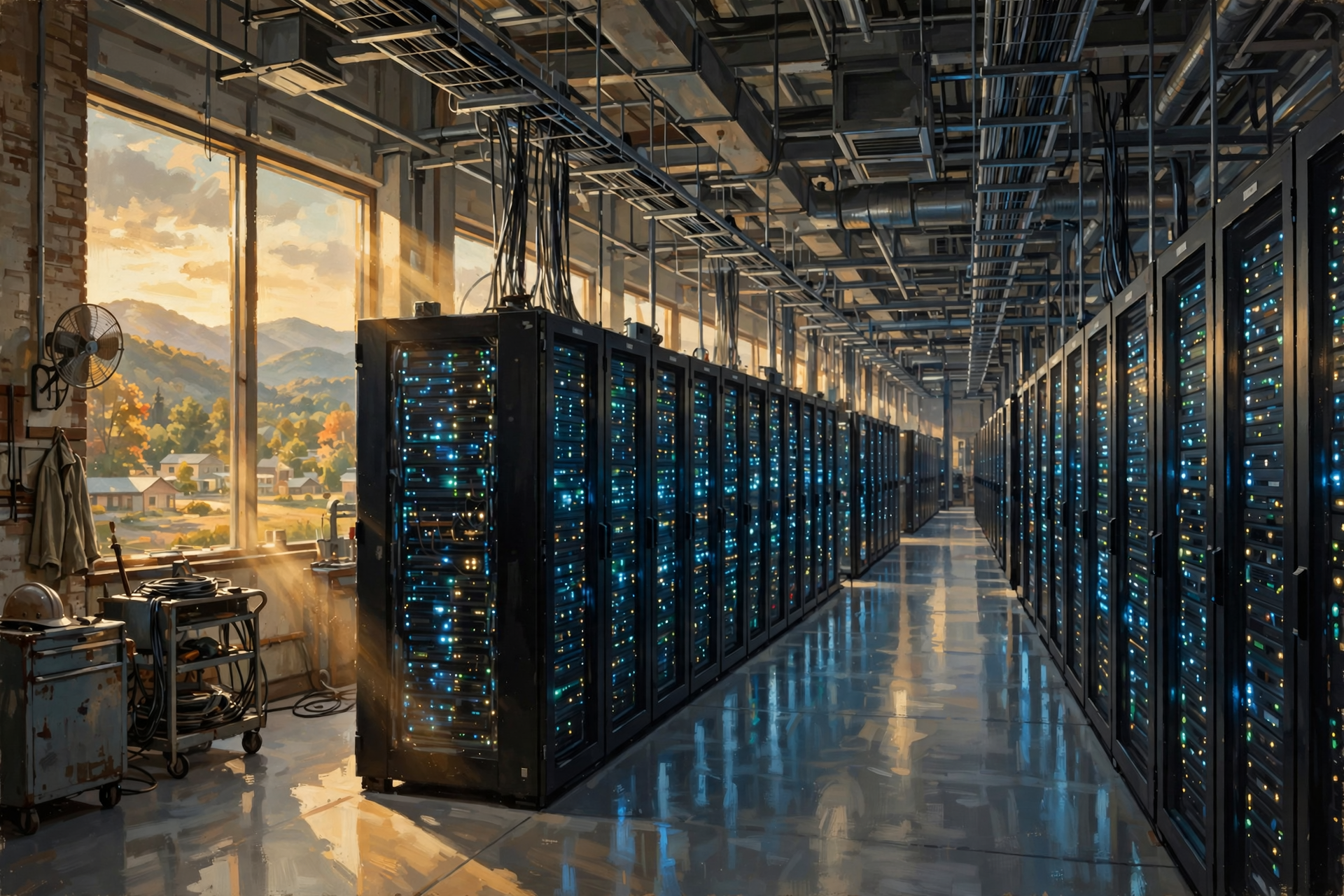
Not as a universal rule.
Different organizations use different criteria for classifying hyperscale facilities.
The better approach is to look at actual computing capacity, power, architecture and expansion plans.
Do not let one threshold become a false dividing line.
Hold On—Is That True? “Hyperscale Means AI”
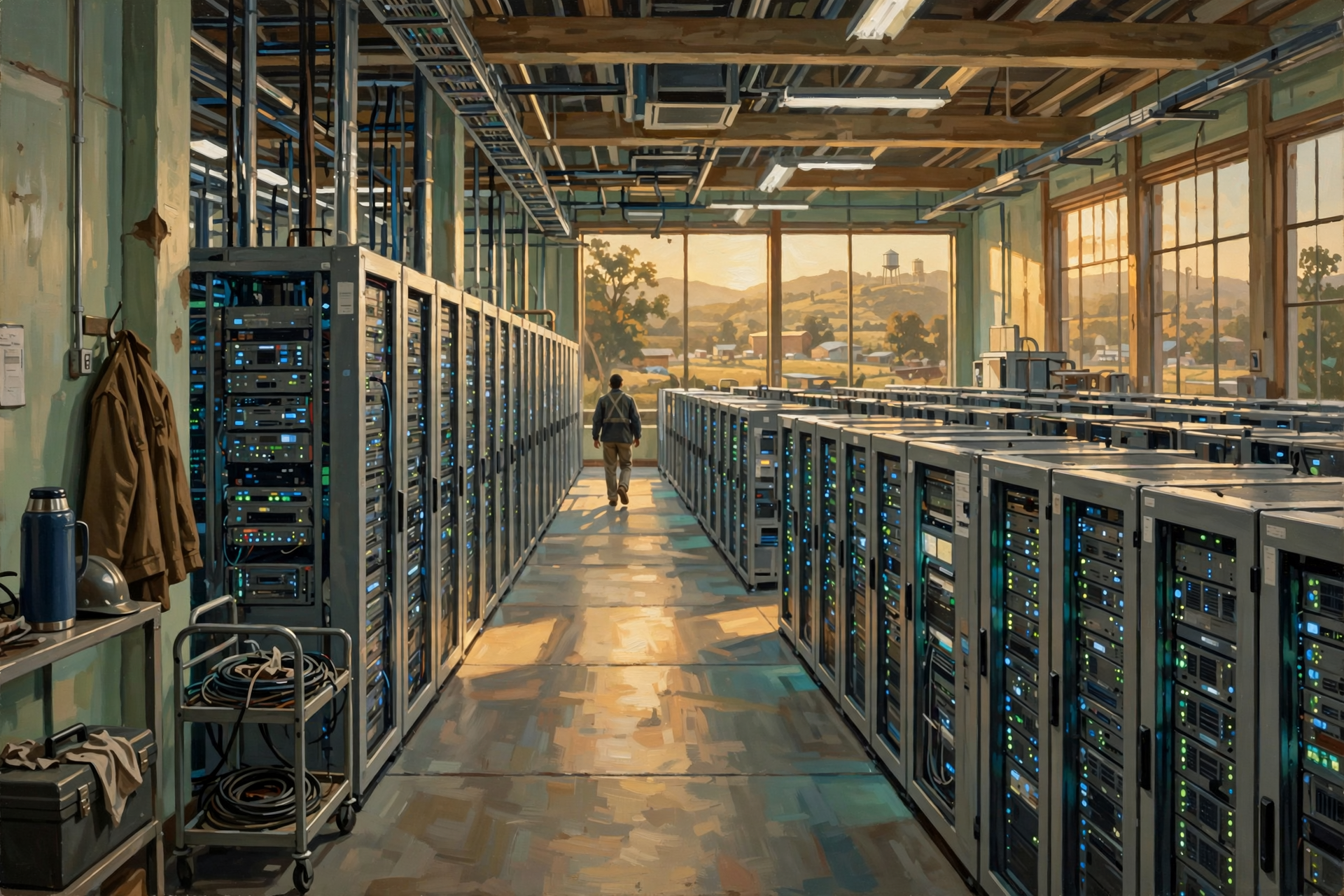
No.
Hyperscale data centers existed before today’s generative-AI boom and support many kinds of cloud and internet workloads.
AI is increasingly becoming an important hyperscale workload, but the terms are not interchangeable.
Hold On—Is That True? “A Hyperscale Facility Is Automatically Bad for a Small Community”

No.
Nor is it automatically good.
Scale makes the questions more consequential.
A good project could potentially bring:
- substantial tax revenue;
- construction activity;
- utility investment;
- fiber infrastructure;
- supplier opportunities;
- high-skilled employment; and
- other economic benefits.
A poorly structured project could create:
- major infrastructure costs;
- land-use conflicts;
- utility strain;
- noise problems;
- water concerns;
- large tax concessions;
- limited permanent employment; or
- risks if projected demand does not materialize.
The scale does not provide the verdict.
The details do.
Why This Matters to Rural Tennessee

A small server room can fit almost invisibly into an existing business.
A hyperscale campus can become one of the largest infrastructure projects a rural county ever considers.
That means the community conversation changes.
Citizens may need to understand:
- hundreds of acres of land;
- large electrical requirements;
- substations;
- transmission capacity;
- fiber construction;
- cooling technology;
- water capacity;
- generator noise;
- air permits;
- stormwater;
- road construction;
- tax arrangements;
- construction employment;
- permanent employment; and
- future expansion rights.
The Tennessee Department of Environment and Conservation specifically recognizes hyperscale facilities as one of several types of data centers and emphasizes that different aspects of a project fall under different state, local and utility responsibilities.
Understanding the word hyperscale therefore matters because the projects carrying that label can be large enough to intersect with nearly every major category of local infrastructure.
The Ten Questions I Would Ask About a Hyperscale Proposal

- What is the total acreage controlled for the project?
- How many data-center buildings are planned at full buildout?
- What is the electrical requirement in megawatts at full buildout?
- How many substations or major utility upgrades are required?
- Who pays for those electrical upgrades?
- What cooling system will be used, and what water does it require?
- How many backup generators are planned?
- How many construction jobs and permanent jobs are expected?
- What tax incentives or special agreements are being requested?
- What happens if the project expands—or if expected computing demand never materializes?
Notice what is missing from that list.
We did not ask:
Are hyperscale data centers good?
That question is too vague to be useful.
We ask about the actual project.
Plain-English Glossary
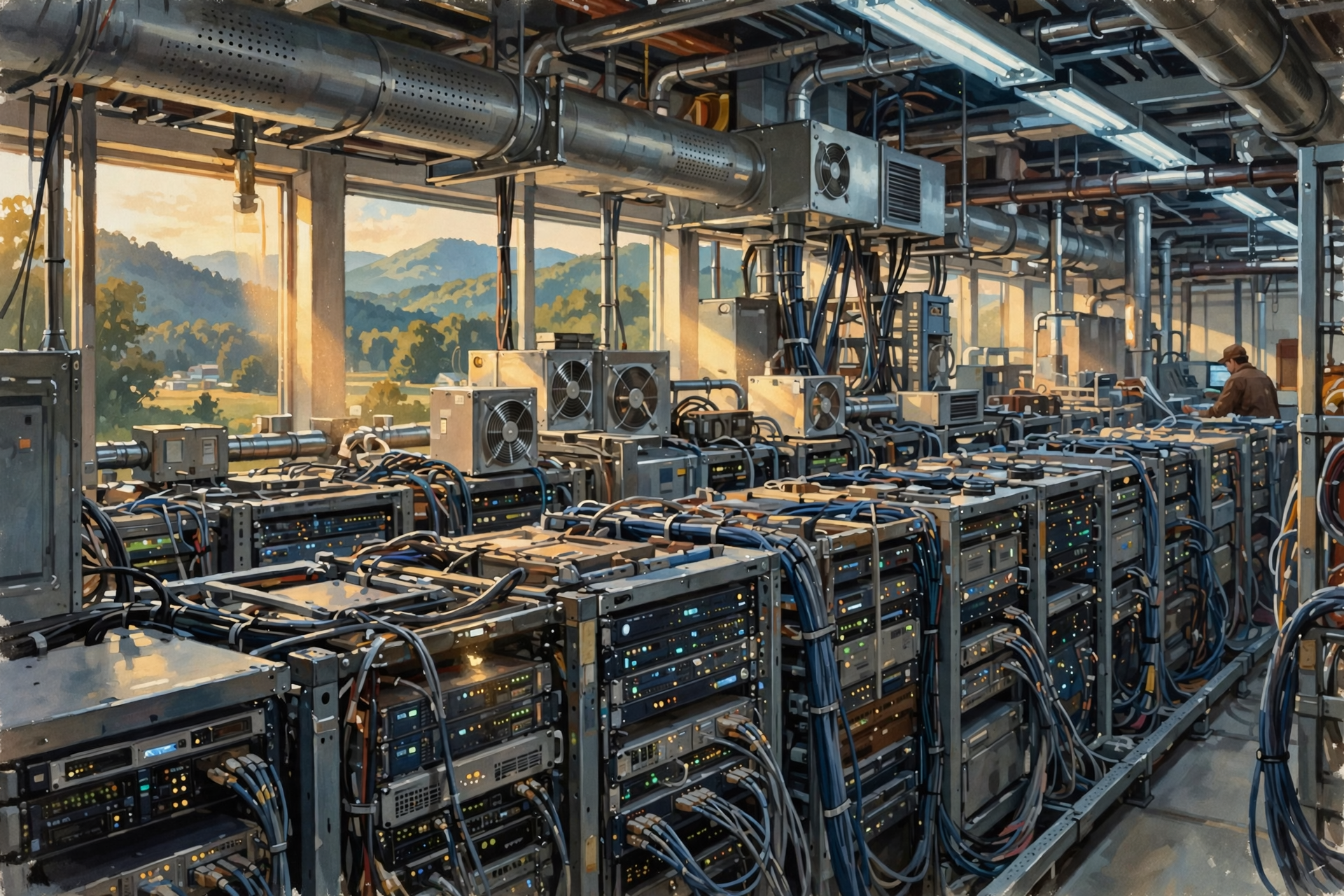
Hyperscale: Computing infrastructure designed to operate and expand efficiently at enormous scale.
Hyperscale data center: A large data center built around massive scalable computing infrastructure, commonly associated with major cloud and internet services.
Data center campus: A site containing multiple data-center buildings and supporting infrastructure.
Full buildout: The complete development anticipated after all planned phases are constructed.
Megawatt: One million watts of electrical power.
Power density: The amount of electrical power required within a given physical area or server rack.
Scalability: The ability of a system to increase or decrease capacity while continuing to operate effectively.
Distributed computing: Using many computers together to provide a larger computing service.
Automation: Using software and machinery to perform operational tasks with reduced manual intervention.
Redundancy: Having additional systems or capacity so one failure does not necessarily stop the overall service.
FAQ

How many servers make a data center hyperscale?
There is no single universally accepted server-count threshold. Definitions vary among analysts and companies. The scale, architecture, computing capacity and ability to expand are more useful ways to understand the concept.
How big is a hyperscale data center?
Sizes vary dramatically. Some occupy very large individual buildings, while hyperscale campuses can include multiple buildings across hundreds of acres. The full project plan is more meaningful than any single generic size.
Are Amazon, Microsoft and Google hyperscale companies?
Large global cloud providers operate infrastructure commonly described as hyperscale because they maintain enormous distributed computing systems serving very large customer populations.
Does hyperscale mean the data center will use huge amounts of water?
Not automatically. Water use depends heavily on cooling technology, climate, facility design and operating conditions. Electrical demand and computing scale do not translate directly into one universal water-use number.
Does hyperscale mean more jobs?
Larger projects can involve extensive construction and specialized permanent employment, but hyperscale facilities are also highly automated. Permanent job counts should be evaluated separately from construction employment and total capital investment.
Could a hyperscale campus expand after it opens?
Expansion is often part of the basic concept. Hyperscale infrastructure is designed to grow. Communities should therefore ask about the full buildout and maximum anticipated utility requirements rather than only the first phase.
Is an AI mega-campus the same as hyperscale?
Not exactly. A large AI campus may use hyperscale architecture, but hyperscale describes the computing system’s ability to operate and expand at enormous scale, while AI describes the workload and mega-campus describes the physical development.
Wisdom From the Front Porch

“Hyperscale” doesn’t just mean somebody built a bigger barn. It means they designed the whole operation so they can keep adding barns without reinventing the farm every time.
That is the central idea.
A hyperscale data center is large.
But the truly important part is that it is designed around enormous, repeatable, expandable computing.
Servers can be added.
Buildings can be added.
Electrical capacity can expand.
Networks can grow.
Computing can be shifted among machines.
Software can automate much of the operation.
And the entire system can behave like one giant pool of computing resources.
That is why communities should not judge a hyperscale proposal by the size of the first building.
The right question is:
What does the entire system eventually become?
Want to Learn More About How Big “Big” Can Get?

If today’s explanation of hyperscale left you thinking less about computer buildings and more about electrical systems, land, fiber, cooling and long-term expansion, you are beginning to see why large data centers become community-infrastructure conversations.
The Van Buren Digital Frontier Symposium on November 19 is an opportunity to learn more about data centers, artificial intelligence and the infrastructure behind increasingly large computing projects.
You do not need to be a computer expert to participate. If you understand land, electric utilities, water systems, construction, local government, business development, taxation or community planning, you already understand parts of the same physical system a hyperscale project depends upon.
The objective is not to decide in advance that hyperscale development is something rural Tennessee should automatically welcome or automatically reject. It is to understand the scale, ask about full buildout, examine who pays for infrastructure, understand potential benefits and identify real tradeoffs before long-term decisions are made.
For more information, visit the Van Buren Digital Frontier Symposium listing on Dunlap.Directory or the Van Buren Digital Frontier Symposium Facebook page. Either resource can be used for additional information and event updates.
Other Articles In This Data Center Series

- CPU, GPU, Server, Storage: What Are All These Machines Actually Doing?
- Why Does Artificial Intelligence Need So Many Data Centers?
- What Happens When You Search Google? Follow One Question Through a Data Center
- What Happens When You Google Something? Follow a Search on a 500-Mile Digital Road Trip
- Not All Data Centers Are the Same: From a Server Closet to an AI Mega-Campus
- If AI Keeps Getting More Efficient, Why Do We Need More Data Centers?
- What Is the Difference Between My PC and an AI PC in a Data Center?
- What Is a Data Center—and What Does It Actually Do?
- A Tour Inside a Data Center: Servers, Racks, Cables and a Whole Lot of Air Conditioning
- Where Does “The Cloud” Actually Live? Inside Buildings Like These




0 Comments