
If AI Keeps Getting More Efficient, Why Do We Need More Data Centers?
Here is a perfectly reasonable question.
Computers keep getting faster.
Chips keep getting more efficient.
Artificial intelligence software keeps improving.
We can now do things on a laptop that once required machines costing a small fortune.
So shouldn’t we eventually need fewer computers?
And if every new generation of computer can accomplish more work with less energy, why are companies building more data centers instead of shutting old ones down?
It sounds like a contradiction.
It isn’t.
The simplest explanation is this:
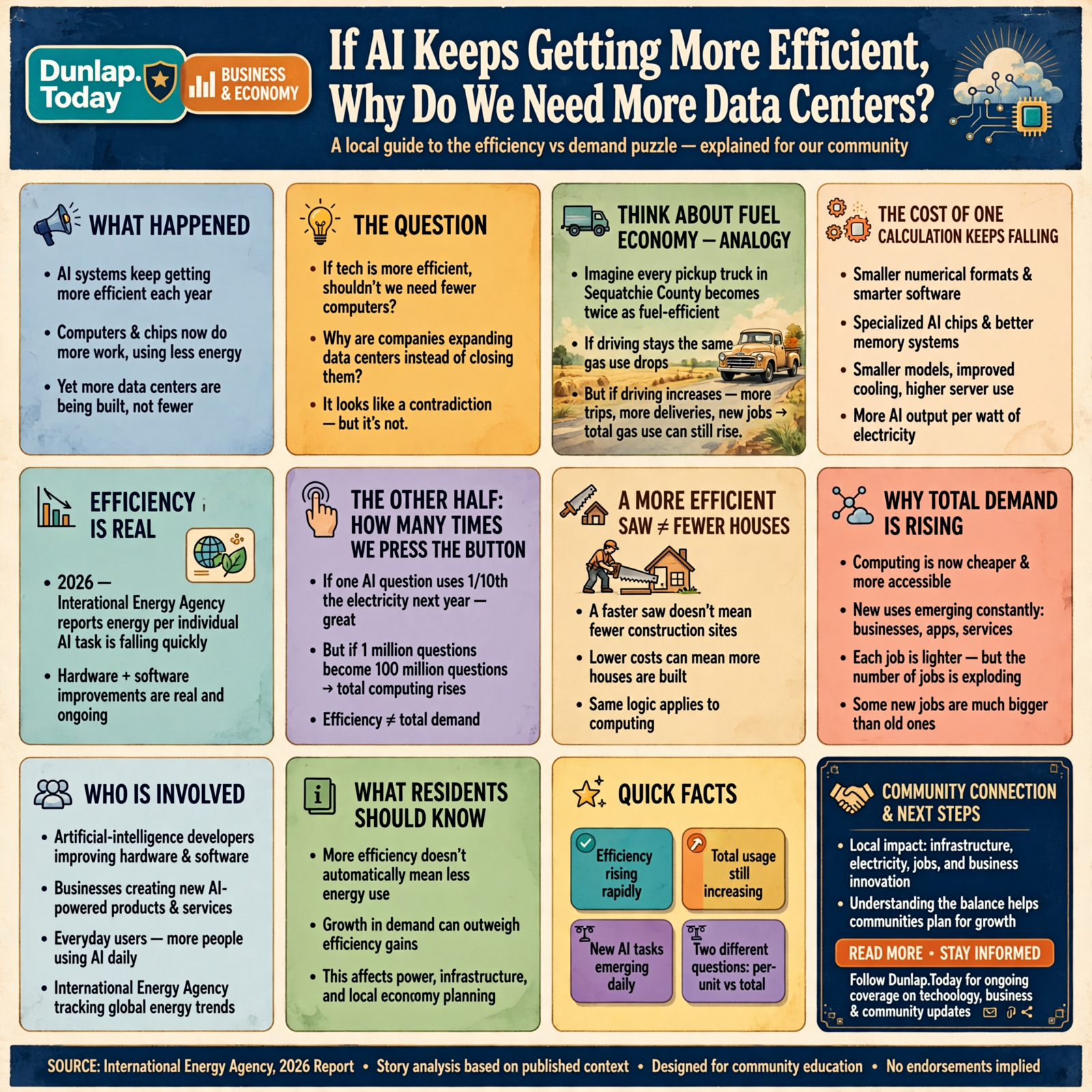
Computing is getting cheaper and more efficient so quickly that we keep finding vastly more things to do with it.
Each individual job may require less energy or less hardware than it once did.
But the number of jobs is exploding.
And some of the new jobs are much bigger than the old ones.
Think About Fuel Economy

Imagine that every pickup truck in Sequatchie County suddenly became twice as fuel-efficient.
If everybody continued driving exactly the same number of miles, total gasoline consumption would fall dramatically.
Simple enough.
Now imagine something else happened at the same time.
Because driving became much cheaper, people started:
- driving more often;
- making longer trips;
- buying additional vehicles;
- starting delivery businesses;
- taking trips they previously skipped; and
- using vehicles for jobs that were not economical before.
Each mile became more efficient.
But we started driving so many more miles that total fuel consumption could still increase.
Computing can behave in much the same way.
The Cost of One Calculation Keeps Falling
The computer industry has spent decades figuring out how to get more useful work from smaller, faster and more efficient hardware.
Modern processors can perform extraordinary amounts of computation compared with machines from only a few decades ago.
Software has improved too.
Artificial-intelligence developers are finding ways to:
- use smaller numerical formats;
- reduce unnecessary calculations;
- build specialized AI processors;
- improve memory systems;
- make models smaller;
- route work more intelligently;
- improve cooling;
- increase server utilization; and
- get more useful AI output from each watt of electricity.
Those are real improvements.
Efficiency is not imaginary.
In fact, the International Energy Agency reported in 2026 that the amount of energy required for an individual AI task has been falling extraordinarily quickly as hardware and software improve.
That sounds like excellent news.
It is.
But it is only half of the story.
The Other Half Is How Many Times We Press the Button

Suppose an AI question requires one-tenth as much electricity next year as it requires today.
Wonderful.
But suppose instead of one million AI questions, people ask one hundred million.
The individual request became far more efficient.
The total amount of computing still went up.
This is the part that is easy to overlook.
Efficiency answers the question:
How much resource does one unit of work require?
Total demand asks:
How many units of work are we asking computers to perform?
Those are very different questions.
A More Efficient Saw Does Not Reduce the Number of Houses Being Built

Imagine a framing crew gets a new saw that cuts lumber twice as fast while using less electricity.
That does not automatically mean the company needs half as many construction sites.
Maybe the faster tool lets the crew build more houses.
Maybe lower costs make projects affordable that previously would not have been built.
Maybe the company expands.
Maybe customers start asking for more complicated work because it is now practical.
Technology often works this way.
Making something cheaper does not necessarily make us consume less of it.
Sometimes it makes us use much more.
We Have Seen This Movie Before

Computers have been getting dramatically more capable for decades.
Yet we did not respond by saying:
“Excellent. We finally have enough computing. Everybody can go home.”
Instead, each improvement opened the door to entirely new uses.
Computers moved from scientific laboratories into businesses.
Then onto desks.
Then into homes.
Then into pockets.
Then into cars.
Then into televisions.
Then into factories.
Then into thermostats, cameras, watches, farm equipment and appliances.
Today we are putting artificial intelligence into many of those systems too.
More efficient computing did not reduce our appetite for computing.
It helped create that appetite.
AI Is Doing Things We Did Not Ask Computers to Do Before

This may be the most important reason data-center demand can grow even while efficiency improves.
For most of computer history, we asked machines to perform relatively structured tasks.
Calculate the payroll.
Store this record.
Retrieve that file.
Display this webpage.
Process this credit card.
Sort this list.
Artificial intelligence adds entirely new categories of work.
Now we ask computers to:
- write documents;
- understand speech;
- translate conversations;
- recognize objects in images;
- generate photographs;
- generate video;
- write computer code;
- analyze medical images;
- search enormous collections of information;
- reason through complicated problems;
- operate software tools;
- help design products;
- simulate physical systems;
- control robots; and
- perform tasks autonomously through AI agents.
Many of those workloads barely existed as commercial activities a few years ago.
Efficiency is improving.
But the list of things we want computers to do is growing too.
A Text Answer and an AI Video Are Not the Same Job

There is another complication.
Not every AI task requires the same amount of computation.
Asking an AI system a simple text question can require relatively modest computation compared with some newer workloads.
Generating images can require more.
Generating video can require much more.
Complex reasoning can require repeated computation.
AI agents may perform many steps, searches and tool operations to complete a single assignment.
The International Energy Agency’s 2026 analysis specifically points to this tension: energy use per individual AI task is falling rapidly, while newer applications such as video generation, reasoning and agentic AI can require hundreds or even thousands of times more energy than a simple text-generation task.
In plain English:
We keep making the engine more efficient, and then we hitch a bigger trailer to it.
Then We Give AI to More People

There is another multiplier.
AI is moving from something used primarily by researchers and technology companies into ordinary life.
Students use it.
Businesses use it.
Programmers use it.
Doctors use it.
Manufacturers use it.
Farmers are beginning to use it.
Governments use it.
Consumers use it.
And increasingly, computer software may use AI automatically without the person sitting at the keyboard specifically asking for it.
An AI feature might summarize an email, clean up a photograph, translate speech, detect fraud or recommend a product without anybody thinking:
“I am now performing an artificial-intelligence operation.”
When billions of devices and applications begin adding little pieces of AI, all those little calculations can add up.
Now Add AI Agents

AI agents make the equation even more interesting.
Traditional computer interaction often looks like this:
You ask one question. The computer performs one task. You receive one answer.
An AI agent can potentially do something more like:
- read your request;
- develop a plan;
- search for information;
- read several documents;
- compare the results;
- call another computer service;
- write an output;
- check its own work;
- revise the output; and
- return the completed result.
One request from you may trigger many computer operations behind the scenes.
That is incredibly useful.
It also means one click can eventually represent considerably more computing than one click used to represent.
Follow the Job: “Plan My Vacation”

Imagine asking an older search engine:
Hotels in Cozumel.
The system searches an index and returns links.
Now imagine telling an advanced AI travel agent:
Plan a seven-day Cozumel trip for my family. Compare flights, identify three hotels, find restaurants within walking distance, build a daily itinerary, estimate the budget, check weather patterns, and revise the plan if one hotel is unavailable.
That one instruction could cause an AI system to perform many separate operations.
Search.
Read.
Reason.
Compare.
Calculate.
Search again.
Generate.
Verify.
Revise.
You entered one request.
The computers may have performed dozens or hundreds of individual pieces of work.
And Then There Is Training
In our previous article, we separated two important concepts:
Training an AI model means developing the model by processing large amounts of information and repeatedly adjusting its internal parameters.
Inference means using that trained model to generate an answer or perform a task.
Training large frontier AI models can require enormous clusters of powerful processors working together.
Then, after the model is trained, millions of people may begin using it.
So the industry faces both:
- large bursts of computing to develop new models; and
- continuous computing to operate those models for users.
Making each generation more efficient helps both sides.
But if the models become more capable, the user base expands and the number of tasks grows, total infrastructure demand can still rise.
The Department of Energy Sees Exactly This Effect

The U.S. Department of Energy’s 2025 update on data-center energy use makes the central point unusually clearly.
Successive generations of computing hardware are becoming more energy-efficient in terms of the computations performed per unit of energy.
Yet DOE’s analysis found that the growth and scale of computing demand more than offset those improvements, producing continued increases in total electricity consumption.
That is almost the entire answer to the question in this article.
Efficiency is winning at the machine level.
Demand is winning at the system level.
The IEA Is Seeing the Same Pattern Globally

The International Energy Agency reported that global data-center electricity demand increased significantly in 2025 even while AI efficiency continued improving.
Its current central outlook sees worldwide data-center electricity consumption roughly doubling between 2025 and 2030, while electricity consumption from AI-focused data centers grows even faster.
These are projections, not guarantees.
The future depends on economic conditions, technology, AI adoption, electricity availability, construction constraints and whether today’s enormous AI investments ultimately produce enough value to justify continued expansion.
That uncertainty matters.
We should not treat every forecast as destiny.
But the underlying trend is understandable:
Computing efficiency and computing demand can rise at the same time.
Better Efficiency Can Actually Make AI More Popular

This seems backwards until you think about the price.
Suppose it costs $10 to have a computer perform a particular AI task.
You probably reserve it for something important.
Now suppose technology improves and the same task costs ten cents.
You may use it a lot more often.
Now suppose it costs a fraction of a penny.
Developers may build the capability invisibly into thousands of applications.
This is an old economic pattern sometimes associated with what economists call the rebound effect: greater efficiency reduces the cost of using a resource or service, which can encourage people to use more of it.
It does not mean efficiency is pointless.
Quite the opposite.
Efficiency makes entirely new uses economically practical.
The Light Bulb Did Not End Electricity Demand

Modern LED bulbs use dramatically less electricity than old incandescent bulbs while producing comparable amounts of light.
That was a major efficiency improvement.
But improving lighting did not cause society to decide it had enough electricity.
We found other uses for electricity.
Air conditioning.
Computers.
Televisions.
Factories.
Electric appliances.
Electric vehicles.
Data centers.
The technology became more efficient while the overall system grew.
Computing is following its own version of that story.
Why Don’t We Just Replace the Old Data Centers With Better Ones?
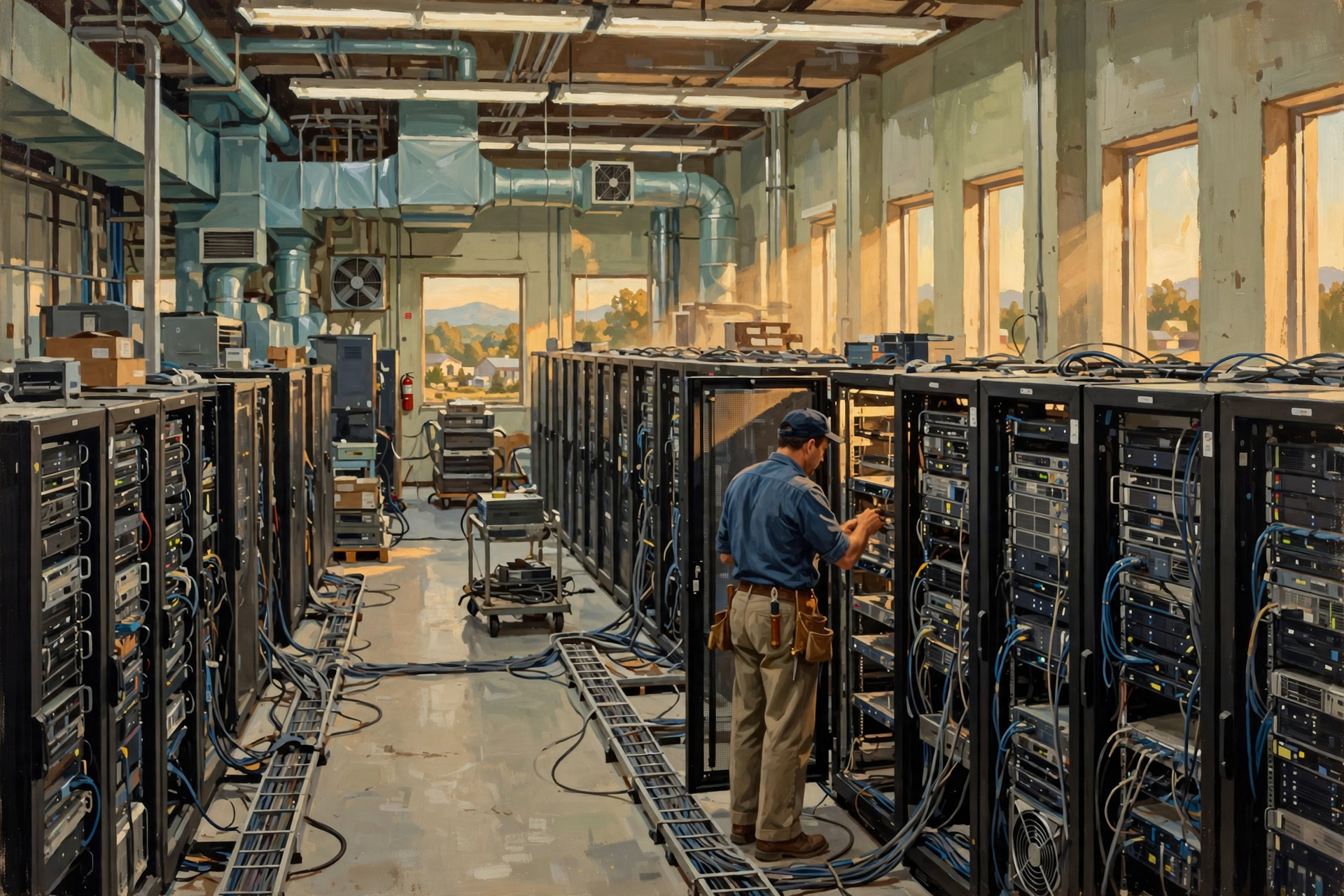
We do replace old equipment.
Data-center operators have strong financial incentives to get more useful computation from each watt because electricity and infrastructure cost money.
But replacing an old server with a machine that can perform ten times as much work does not necessarily mean nine server spaces remain empty.
The operator may immediately fill that new capacity with more work.
Imagine a sawmill installs equipment that can process twice as much lumber per hour.
The owner probably did not spend the money because the plan was to run the mill half as often.
The investment may have been made precisely because there is more lumber to process.
AI Companies Care Enormously About Efficiency
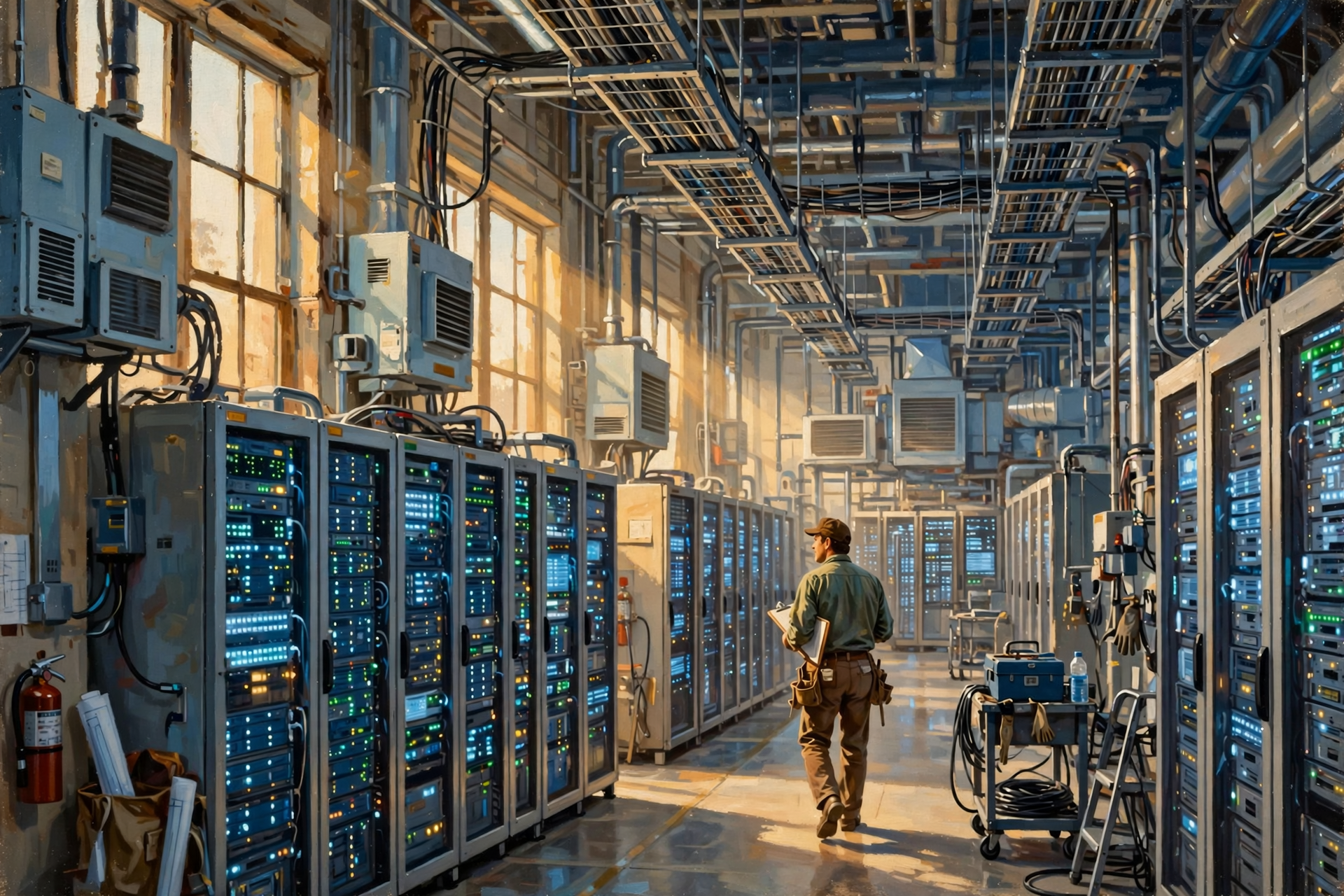
It would also be a mistake to assume that companies building AI data centers do not care how much electricity they consume.
Power is increasingly one of the major constraints on expanding AI infrastructure.
Every watt wasted on inefficient computing is a watt that cannot be used for productive work within the same electrical capacity.
This means developers have powerful financial reasons to improve:
- performance per watt;
- processor utilization;
- cooling efficiency;
- memory efficiency;
- network efficiency;
- software efficiency; and
- the number of useful AI operations produced from the same amount of infrastructure.
Efficiency is therefore not the opposite of data-center expansion.
Efficiency can actually make expansion more useful because each new megawatt can accomplish more work.
That Changes How We Should Ask the Energy Question
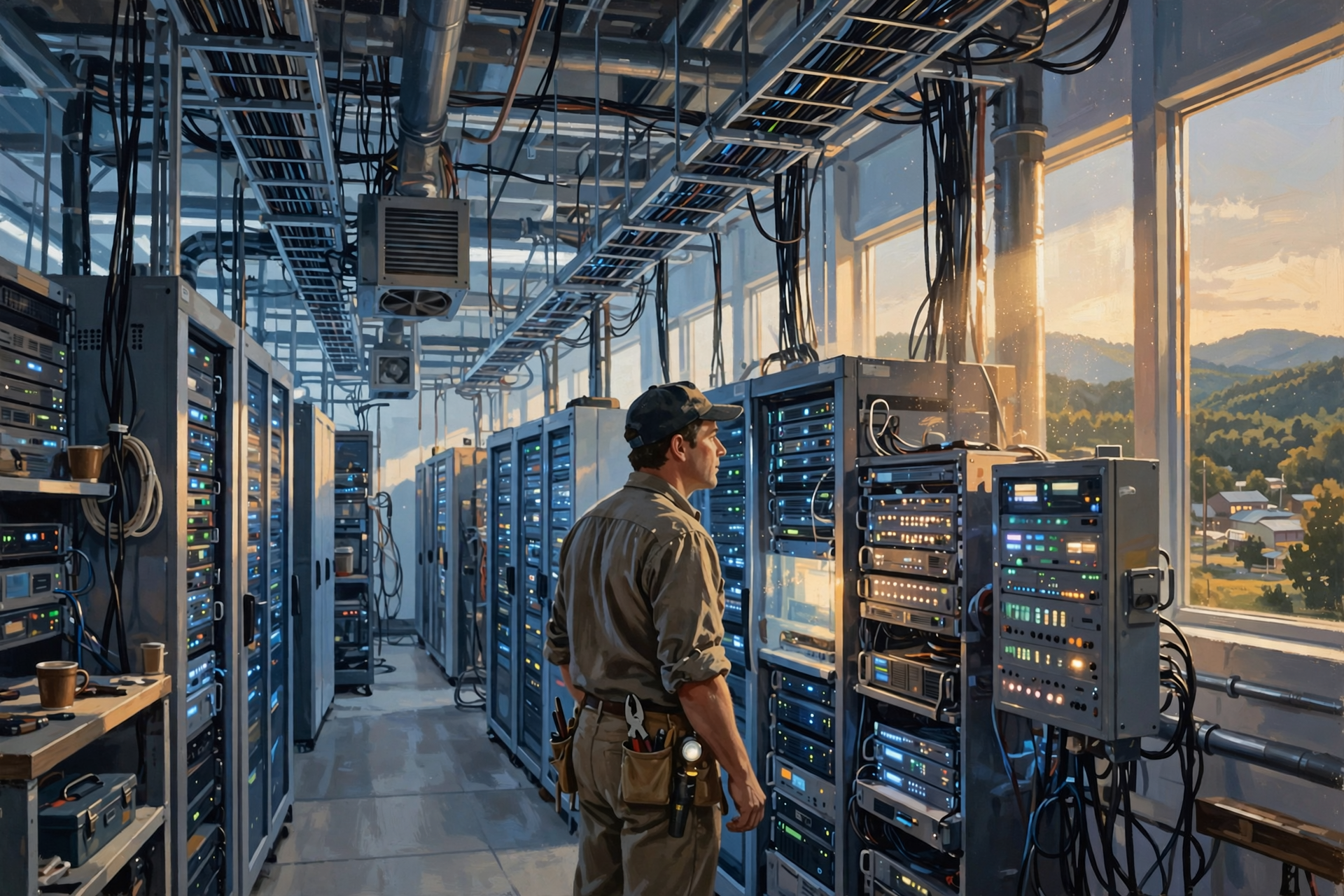
It is tempting to ask:
How much electricity does AI use?
That is important.
But it is incomplete.
We should also ask:
- How much useful work is being produced?
- How quickly is efficiency improving?
- What kind of AI workload is running?
- Is this text generation, video generation, training or something else?
- How heavily is the equipment actually being used?
- How efficient is the cooling system?
- What other economic or community value does the computing produce?
- Who pays for the required infrastructure?
- Does new demand require additional generation or transmission?
- What happens if projected demand never materializes?
Those questions give us a much more useful picture.
Could Efficiency Eventually Reduce the Need for New Data Centers?

Absolutely.
That possibility should not be dismissed.
If efficiency improved faster than total computing demand grew, infrastructure needs could level off or decline.
If companies discovered that today’s AI investment boom greatly exceeded future demand, construction could slow.
If more AI moved onto personal computers, phones and other local devices, some work now performed in data centers could move elsewhere.
If smaller AI models became capable enough for many tasks, fewer gigantic models might be necessary.
If businesses stopped finding profitable uses for more AI, demand could disappoint today’s forecasts.
None of those possibilities violates the laws of technology or economics.
This is why forecasts about data-center demand should be treated as forecasts rather than commandments carved into a server rack.
Local AI Could Change the Equation Too

In the previous article, we looked at the difference between an ordinary PC, an AI PC and the powerful AI servers operating inside data centers.
New computers increasingly contain dedicated AI processors capable of performing useful AI work locally.
That means some tasks that once required a cloud service may eventually happen on:
- your laptop;
- your phone;
- your automobile;
- a factory machine;
- a security camera;
- farm equipment; or
- another device sitting close to where the information is created.
This is often called edge computing when computation moves closer to the user or source of the data.
That could reduce data-center demand for certain jobs.
But again, the story can run both directions.
More capable personal devices may also create entirely new AI applications that connect back to even larger cloud services.
Hold On—Is That True? “More Efficient Chips Mean Lower Total Electricity Use”

Not necessarily.
They mean less energy is required to perform a certain amount of computation, all else being equal.
But all else rarely stays equal.
If the number of computations grows faster than efficiency improves, total electricity demand rises.
For example:
If a new computer uses half as much electricity per job but we ask it to perform ten times as many jobs, total energy consumption still increases substantially.
That is the distinction between efficiency and total consumption.
Hold On—Is That True? “AI Growth Means Electricity Demand Will Rise Forever”

We do not know that either.
Today’s growth rates cannot automatically be extended forever.
Markets change.
Technology changes.
Prices change.
Models change.
Companies fail.
Consumers change behavior.
Electrical constraints can slow construction.
And technologies that look indispensable during an investment boom sometimes turn out to have been overbuilt.
The responsible position is not:
“AI will consume everything.”
Nor is it:
“Efficiency will make the problem disappear.”
The responsible answer is:
Efficiency is improving rapidly, demand is currently growing even faster, and communities should evaluate actual projects using actual numbers rather than assuming either trend will continue forever.
Why This Matters to Tennessee

Once computing demand becomes large enough, this stops being only a technology story.
It becomes an infrastructure story.
A major data-center project can involve:
- electric generating capacity;
- transmission lines;
- substations;
- transformers;
- fiber networks;
- water and cooling systems;
- large parcels of land;
- roads;
- tax policy; and
- local land-use decisions.
The Tennessee Department of Environment and Conservation notes that data-center proposals are increasingly part of Tennessee’s development landscape and that responsibility for the different issues surrounding them is divided among utilities, local governments, state agencies and others.
That makes the efficiency question particularly important.
A community should not merely be told:
“Technology is getting more efficient.”
Nor should it simply be told:
“AI needs enormous amounts of electricity.”
Both can be true.
The questions should be more specific:
- How much electricity will this particular facility require?
- How much computing work will that electricity support?
- How is demand expected to change over time?
- Who is responsible for new electrical infrastructure?
- What happens if the project expands?
- What happens if it does not?
- How efficiently will the facility operate compared with alternatives?
Plain-English Glossary

Efficiency: Getting more useful work from a given amount of energy, equipment, money or another resource.
Computing demand: The total amount of processing, storage, networking and other digital work people and organizations want computers to perform.
Inference: Using an already-trained AI model to answer questions or perform tasks.
Training: The computational process used to build or improve an AI model.
AI agent: An AI system capable of performing multiple steps or using tools to pursue a larger task rather than simply returning one immediate answer.
Edge computing: Performing computation closer to the person, device or place where data originates rather than sending every task to a centralized data center.
Rebound effect: A situation in which improved efficiency lowers the effective cost of using something and encourages increased use, offsetting some of the expected savings.
Performance per watt: A way of comparing how much useful computing work a system can perform for a given amount of electricity.
FAQ

If AI uses less electricity per question, isn’t that good?
Yes. Improving efficiency is extremely valuable. It reduces the electricity and infrastructure needed to perform a given amount of AI work. The issue is simply that the total amount of AI work can grow even faster.
Could AI PCs reduce the number of data centers we need?
They may reduce centralized demand for certain workloads by allowing more AI to run locally. Whether that results in fewer data centers overall depends on how quickly other forms of cloud and AI demand grow.
Why can’t companies just wait for better chips before building?
Because companies generally build infrastructure when they believe current or future customer demand justifies it. Waiting may produce more efficient hardware, but competitors and customers are not necessarily willing to wait for services.
Does a more efficient data center necessarily use less power?
No. A new facility could be much more efficient per unit of computing while using more electricity overall because it performs vastly more computing.
Are forecasts saying data-center electricity consumption will definitely double?
No. Forecasts describe expected outcomes under particular assumptions. Current IEA projections show substantial growth, but economic conditions, technology, infrastructure bottlenecks, AI adoption and efficiency can change the outcome.
Does this mean building more data centers is automatically good?
No. Growing computing demand explains why companies want additional capacity. It does not answer whether a particular facility, location, utility agreement, tax arrangement or infrastructure plan is a good deal for a particular community.
Wisdom From the Front Porch

When you build a tractor that can plow twice as much field on the same gallon of fuel, somebody eventually starts wondering whether they ought to plant twice as much corn.
That is roughly where we are with computing.
We are getting remarkably better at squeezing more work out of every chip and every watt.
Instead of declaring the job finished, we keep inventing new jobs for those chips to do.
That is why two statements that sound contradictory can both be true:
Computers and AI are becoming dramatically more efficient.
We currently need more computing infrastructure than ever.
Whether that continues indefinitely is another question.
And that is exactly why communities should understand both sides before making long-term decisions around land, electricity and infrastructure.
Want to Learn More About Why Data Centers Are Growing?

If this article left you thinking, “All right, I understand why demand can grow—but I still want to know what that means for our electricity, land, utilities and communities,” then you are asking the right next questions.
The Van Buren Digital Frontier Symposium on November 19 is designed to continue that conversation. It is an opportunity for residents, business owners, educators, utility and infrastructure professionals, community leaders and curious neighbors to learn more about data centers and the changing digital economy without needing to arrive as a computer expert.
The goal is not to recruit people to a pro-data-center or anti-data-center side. It is to understand why these facilities are being proposed, what they actually require, which benefits are realistic, which concerns deserve examination, and what questions communities should ask before making decisions that may last for decades.
For more information, visit the Van Buren Digital Frontier Symposium listing on Dunlap.Directory or the Van Buren Digital Frontier Symposium Facebook page. Either resource can be used for additional information and event updates.
Other Articles In This Data Center Series

- What Is the Difference Between My PC and an AI PC in a Data Center?
- What Is a Data Center—and What Does It Actually Do?
- A Tour Inside a Data Center: Servers, Racks, Cables and a Whole Lot of Air Conditioning
- Where Does “The Cloud” Actually Live? Inside Buildings Like These
- What Is a Data Center—and What Does It Actually Do?




0 Comments