
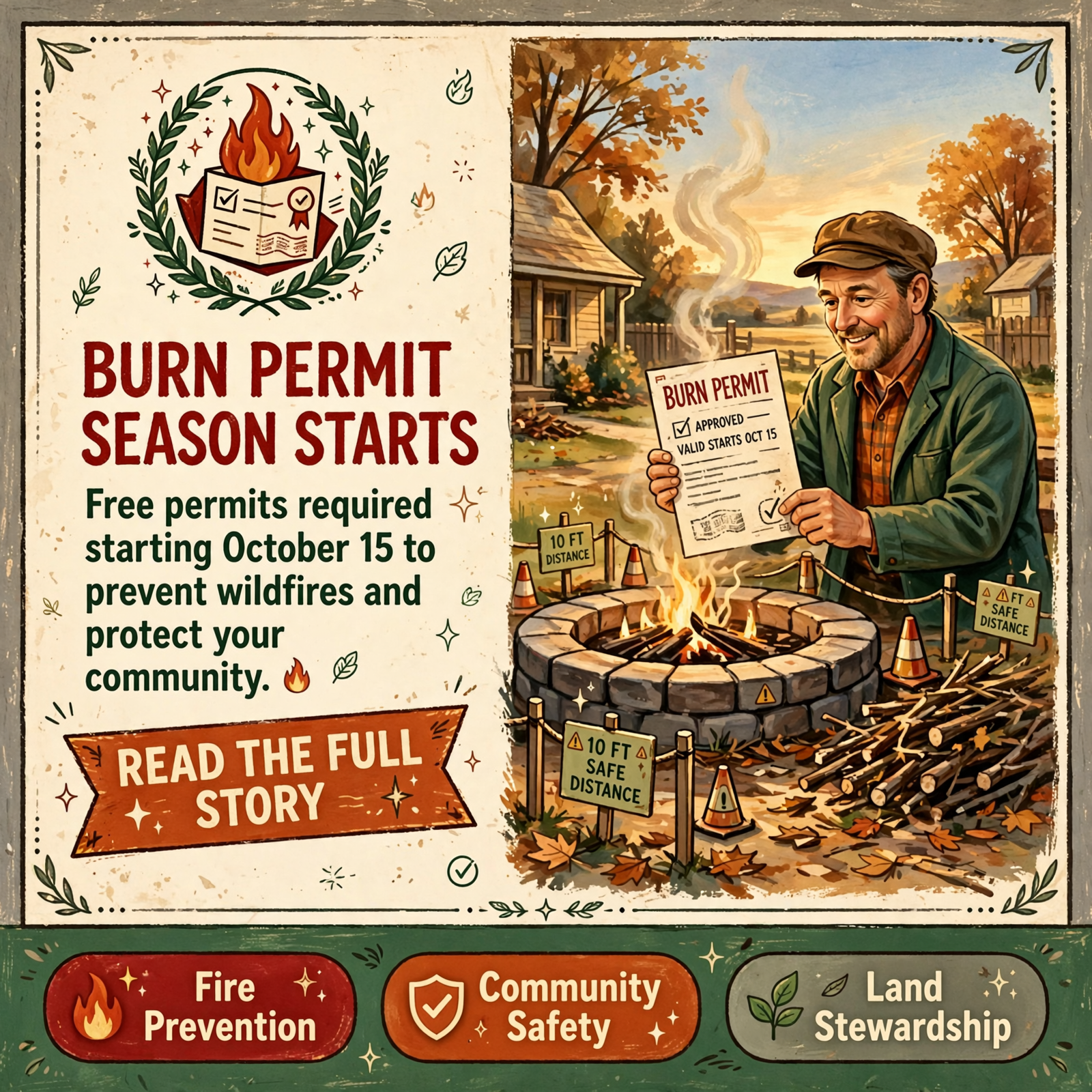
🔥 Tennessee Burn Permit Requirement Begins October 15 – What Residents Need to Know
Starting October 15, anyone in Tennessee planning to burn leaves, yard debris, or conduct prescribed burns must first obtain a free burn permit from the Tennessee Department of Agriculture Division of Forestry. For residents across the Sequatchie Valley and surrounding counties who rely on seasonal burning for land management and cleanup, this annual requirement marks the official start of wildfire prevention season.
📋 Why This Matters
Wildfire prevention is not abstract policy-it affects property safety, air quality, and community resources. Tennessee averages about 1,000 wildfires each year, burning approximately 18,000 acres. More than 90% of those fires are caused by human activities, including escaped debris burns. For rural and semi-rural communities across the region, where land clearing and seasonal burning are common practices, understanding and following permit requirements can mean the difference between a controlled burn and a destructive wildfire that threatens homes, forests, and neighboring properties. 🏡
The permit system exists because conditions matter. High winds, very low humidity, and extremely dry vegetation create dangerous burning windows. When the Tennessee Department of Agriculture Division of Forestry identifies hazardous conditions, it temporarily pauses permit issuance-a safeguard that protects entire communities from preventable fire spread.
🤝 Community Connections
Burning is woven into the seasonal rhythm of rural Tennessee life. Farmers, property owners, and land stewards use controlled burns for debris cleanup, pasture management, and forest health. Volunteer fire departments across the valley-including Dunlap Volunteer Fire Department, Piney Volunteer Fire Department Station 1 in Spencer, and Fall Creek Falls Fire Dept-respond to both permitted and uncontrolled fires. When residents skip the permit process or burn on high-danger days, they create emergency calls that stretch volunteer resources and put firefighters at risk. 🚒
The permit requirement is a direct line of communication between individual property owners and the state’s wildfire agency. It signals respect for shared landscape and shared responsibility.
👥 Human Impact
For property owners and farmers, the permit requirement is straightforward but essential. State Forester Heather Slayton emphasized that individual actions matter: “Choosing to avoid burning on high fire danger days, getting a burn permit, taking steps to burn safely and staying with your fire until it is completely out can make a meaningful difference in preventing destructive wildfires in our state.” 💡
For neighbors, the impact is safety. Escaped burns don’t respect property lines. For volunteer firefighters, the impact is workload and risk. For the broader community, the impact is air quality, forest health, and the preservation of the landscape that defines the region.
📍 What Residents Should Know
Permit Requirement Start Date: October 15, 2026
Who Needs a Permit: Anyone burning leaves, natural debris, or conducting prescribed burns in Tennessee
Cost: Free
How Permits Work: The Tennessee Department of Agriculture Division of Forestry issues permits only when fire danger is at an acceptable level. When hazardous conditions exist-such as high winds, very low humidity, or extremely dry vegetation-permit issuance is temporarily paused until conditions improve. This means a permit issued one day may reflect safe conditions that day, but burning should never proceed if conditions change.
National Fire Prevention Week: The permit announcement coincides with National Fire Prevention Week, a reminder to practice fire prevention and exercise extra caution when burning outdoors. 🌲
🔄 What Happens Next
Beginning October 15, residents planning any outdoor burning should contact the Tennessee Department of Agriculture Division of Forestry to obtain a free burn permit before lighting any fire. The agency will communicate when conditions are safe for burning and when temporary pauses are in effect. Residents should monitor permit availability and plan burns accordingly, avoiding high-danger days even if a permit is available.
Throughout the fall and winter months, the state will track permit issuance, fire incidents, and weather conditions. Any significant wildfire activity or hazardous conditions may trigger temporary permit pauses, so residents should check permit status before burning.
💭 Community Questions Worth Considering
- How many residents in your area are aware of the permit requirement, and how can neighbors help spread the word?
- What role can local volunteer fire departments play in educating property owners about safe burning practices?
- If a neighbor is burning without a permit or on a high-danger day, what’s the best way to raise the concern?
- How can property owners plan their seasonal burning to align with safe conditions and permit availability?
- What resources or training might help residents understand fire danger signs and safe burning techniques?
🌍 Long-Term Community Impact
The permit system reflects a broader shift toward community-based wildfire prevention. As climate patterns shift and fire seasons extend, the relationship between individual property owners and state wildfire management becomes more critical. Communities that embrace permit requirements, practice safe burning, and communicate about fire danger tend to experience fewer destructive wildfires and stronger relationships between residents, firefighters, and land stewards.
For the Sequatchie Valley and surrounding counties, where forests, farms, and homes coexist closely, the permit requirement is an investment in shared safety and landscape resilience. Each permit obtained and each high-danger day respected strengthens the community’s ability to manage fire on its own terms-rather than having fire manage the community. 🛡️
🔗 Community Threads: The Permit as Conversation
The Landowner-Agency Relationship: The burn permit is more than a bureaucratic requirement-it’s a conversation between individual property owners and the Tennessee Department of Agriculture Division of Forestry about what’s safe, when, and where. When residents obtain permits, they’re not just following rules; they’re joining a statewide network of people committed to preventing wildfires. That relationship strengthens when residents understand why permits matter and when they see permit pauses as protection rather than inconvenience.
The Volunteer Fire Department Connection: Local volunteer fire departments depend on residents making safe choices. When residents burn without permits or on high-danger days, they create emergency calls that stretch volunteer resources. When residents obtain permits and follow safety guidance, they reduce preventable fires and allow volunteers to focus on genuine emergencies. The permit system is a way residents can directly support their local firefighters. 🚒
The Seasonal Rhythm of Rural Life: Burning is part of how rural communities manage land-clearing debris, maintaining pastures, and supporting forest health. The permit requirement doesn’t eliminate burning; it aligns burning with safe conditions. For residents who have burned for years without permits, the requirement may feel new, but it’s an opportunity to deepen understanding of fire behavior and seasonal safety. Communities that embrace this shift often find that safer burning practices improve land management outcomes.
🤔Source
Tennessee Department of Agriculture – Beginning October 15th, Tennesseans must obtain a free burn permit before burning leaves or natural debris due to wildfire season.




0 Comments