
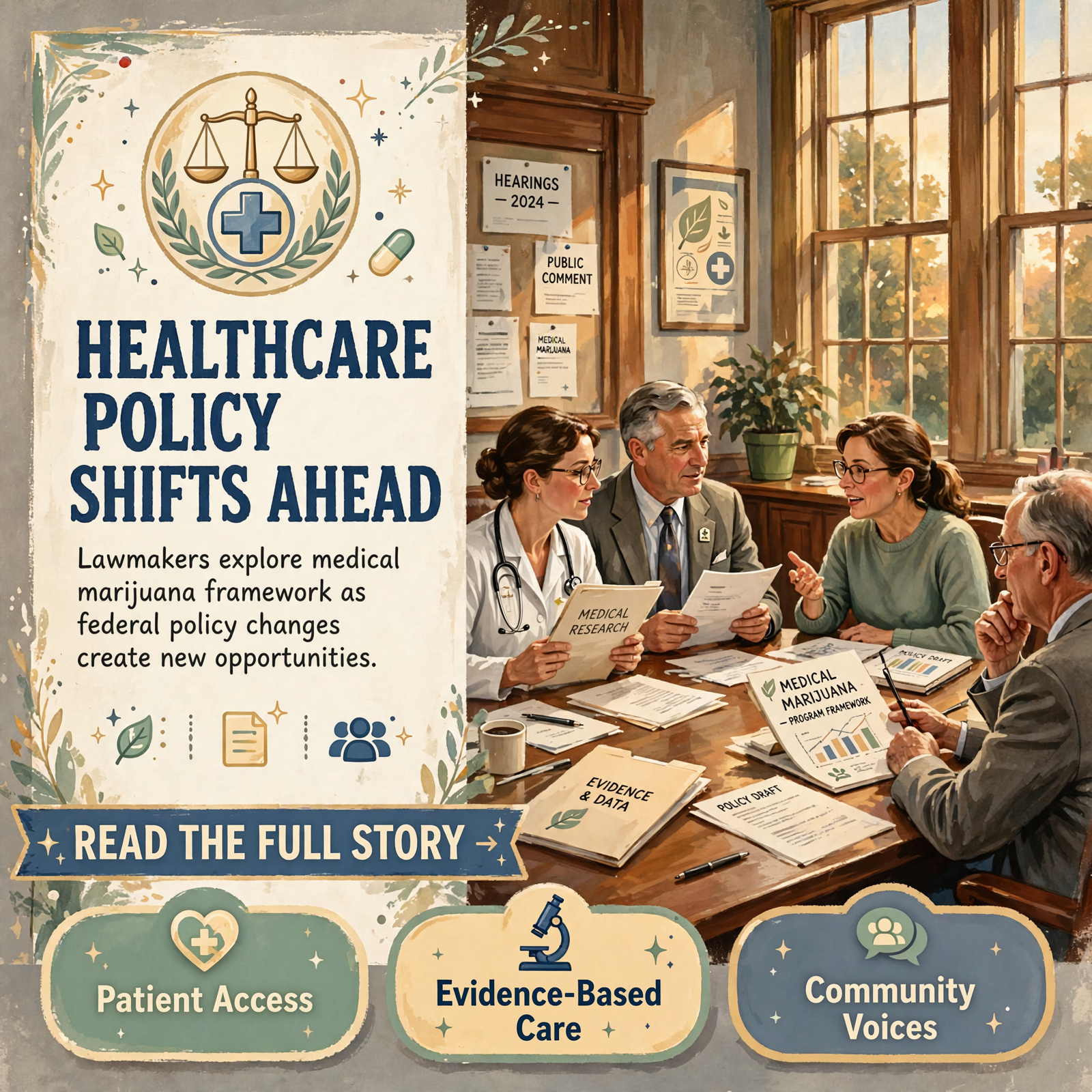
🏛️ Tennessee Lawmakers Examine Framework for Possible Medical Marijuana Program
State legislators are actively developing a potential medical marijuana program framework as federal policy shifts loom on the horizon. For residents across Tennessee and neighboring communities, this policy discussion could reshape healthcare access, patient rights, and local regulatory approaches in the coming years.
📋 What’s Being Considered
Tennessee lawmakers are taking a structured approach to understanding what a medical marijuana program could look like in the state. This examination comes as federal officials signal possible changes to marijuana’s scheduling at the national level-a shift that could open the door for states to establish their own regulated medical programs. The legislative review is exploratory at this stage, focusing on framework design rather than immediate implementation.
💡 Why This Matters Locally
For residents in the Sequatchie Valley and surrounding communities, a state medical marijuana program could affect several aspects of daily life. Patients currently seeking cannabis-based treatments may face new legal pathways for access. Healthcare providers might gain clarity on prescribing options. Local law enforcement and community safety officials would need to understand new regulations. Property owners and business operators may see changes in zoning, licensing, or operational rules. And families managing chronic pain, epilepsy, PTSD, or other conditions may find new treatment possibilities closer to home.
❤️ Who Could Be Affected
Medical marijuana programs typically serve patients with specific conditions-chronic pain, epilepsy, multiple sclerosis, cancer-related symptoms, and other serious illnesses. Caregivers and family members supporting these patients would also be affected by access changes. Healthcare professionals, including doctors and pharmacists, would need training on new prescribing and dispensing protocols. Local governments would face decisions about licensing, regulation, and community standards. And law enforcement would transition from enforcement-focused approaches to regulatory oversight in some cases.
🗓️ What Residents Should Know
This is a framework-development phase, not a final program launch. Lawmakers are studying how other states have structured medical marijuana programs, what safeguards work best, and how to balance patient access with public safety. No specific timeline for implementation has been announced. Residents interested in this issue should monitor state legislative updates and consider reaching out to their representatives to share perspectives on what a responsible program might look like in Tennessee.
🔮 What Happens Next
Lawmakers will likely continue refining the framework over the coming months, potentially introducing draft legislation in future legislative sessions. Federal scheduling changes could accelerate or reshape this timeline. Public hearings, stakeholder input from medical professionals and patient advocates, and regulatory agency planning would typically follow framework approval. Any actual program launch would require legislative passage, regulatory development, and implementation infrastructure-a process that typically takes 12-24 months or longer.
🤝 Community Threads: Healthcare Access and Local Trust
This policy discussion reveals an important community thread: the relationship between state healthcare policy and local patient needs. When lawmakers consider medical marijuana frameworks, they’re responding to real people in real communities-patients, families, and healthcare providers who have been navigating limited options. For residents in the Sequatchie Valley and surrounding areas, understanding this thread means recognizing that healthcare decisions made in Nashville can directly affect neighbors managing serious health conditions. It also highlights the importance of local voices in shaping how state programs are designed and implemented.
💭 Questions for Community Reflection
- How might a regulated medical marijuana program affect healthcare access for patients in your community who currently have limited treatment options?
- What safeguards would be most important to your family or neighbors if such a program were established?
- How should local communities balance patient access with public safety and regulatory oversight?
- What role should healthcare providers, patients, and families have in shaping how Tennessee designs its program framework?
📊 Long-Term Community Impact
If Tennessee establishes a medical marijuana program, the long-term effects could reshape healthcare delivery, patient outcomes, and community relationships across the state. Patients with chronic conditions might experience improved quality of life and reduced reliance on opioids. Healthcare providers would gain a new treatment tool and deeper patient trust. Local economies could see new business opportunities in cultivation, retail, testing, and ancillary services. Communities would need to adapt regulations, licensing processes, and public safety approaches. And families managing serious illnesses would have access to evidence-based treatment options previously unavailable within state law. The framework lawmakers develop now will shape these outcomes for years to come.
🤔Source
WATE 6 On Your Side – A news article discussion regarding Tennessee lawmakers weighing a framework for a medical marijuana program.



0 Comments