
From Power Plant to Server Rack: Follow the Electricity Into a Data Center
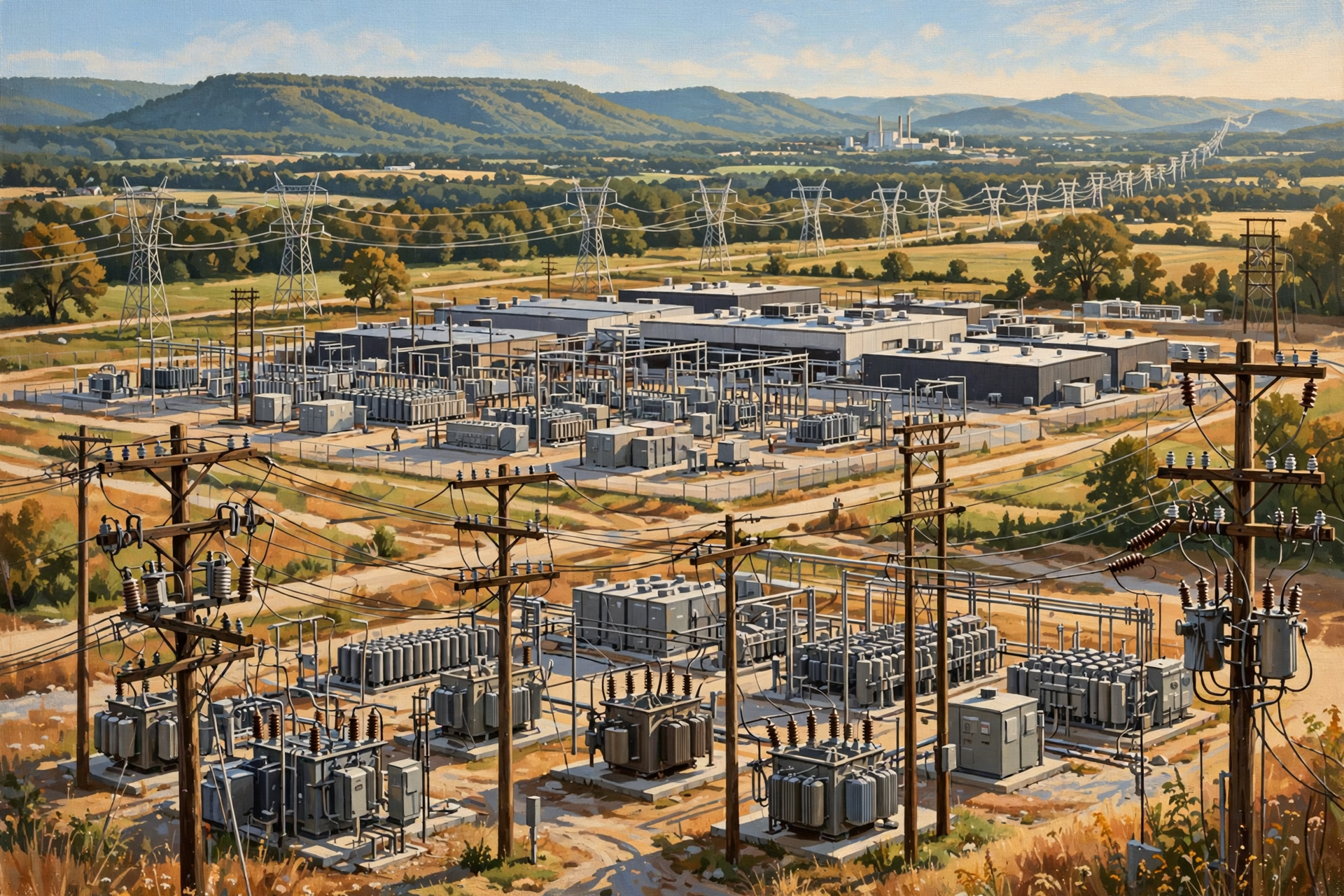
In the last couple of articles, we have been throwing around words like megawatt, substation, transformer and server rack.
Today, let’s connect them.
Suppose you ask an artificial-intelligence service:
Write me a poem about an old red tractor.
Somewhere, computers begin doing mathematical work.
Those computers require electricity.
But where did that electricity come from?
Did TVA run a wire from a power plant straight into the back of an NVIDIA GPU?
Not quite.
Between the machine that generates electricity and the chip performing your calculation is an enormous chain of infrastructure designed to move electrical power safely, efficiently and reliably.
Today we are going to follow that chain.
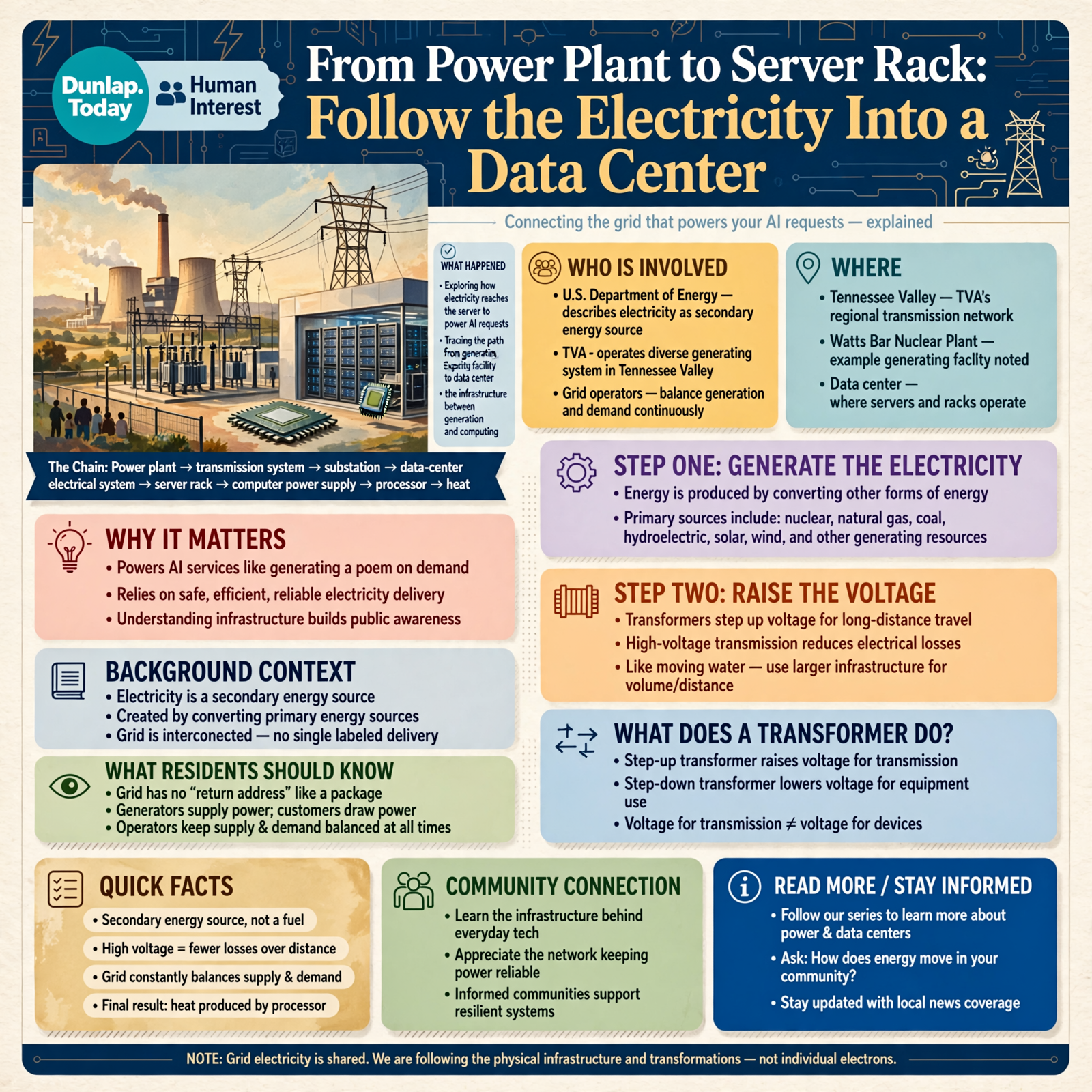
Power plant → transmission system → substation → data-center electrical system → server rack → computer power supply → processor → heat.
That is our road map.
Step One: Somebody Has to Generate the Electricity
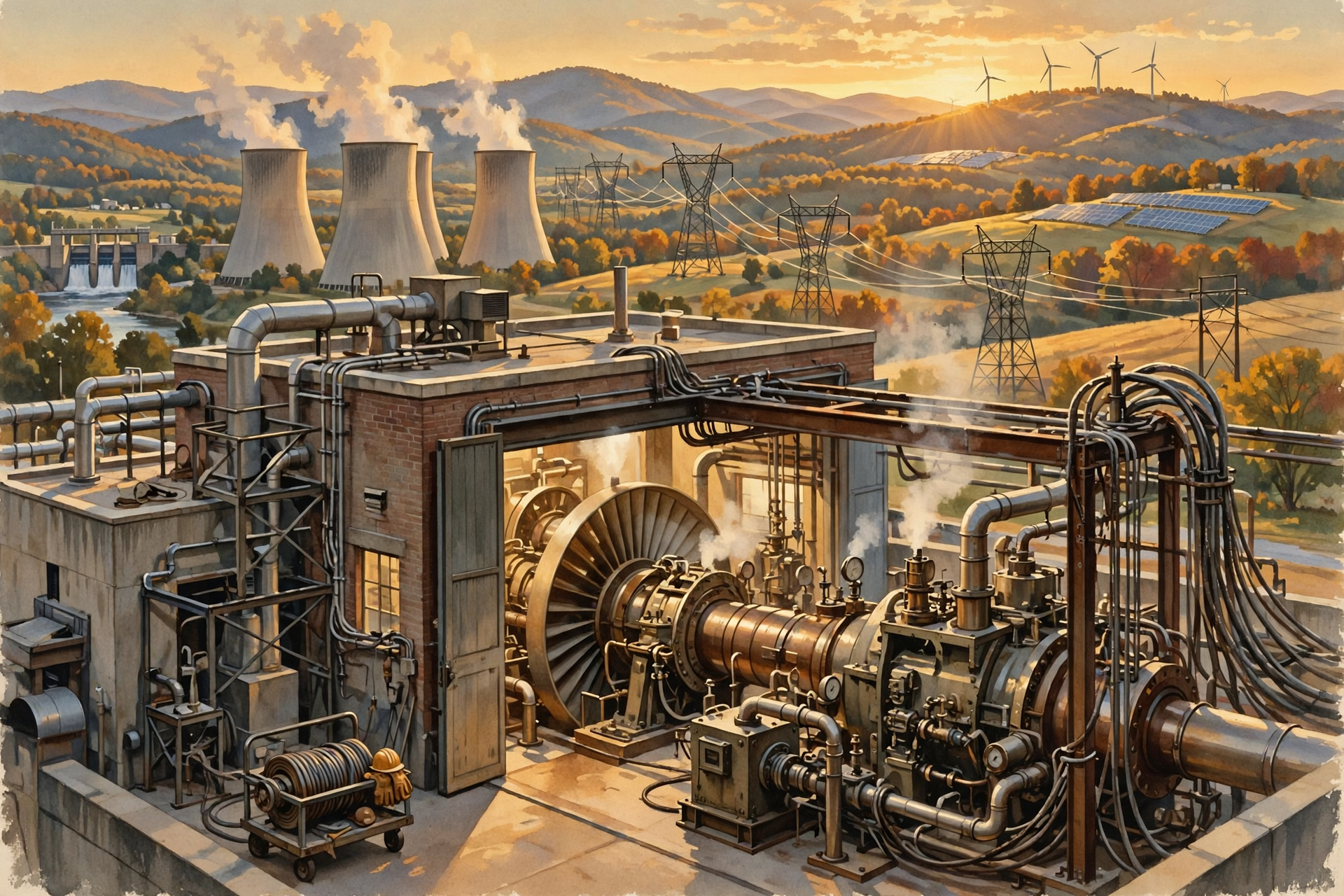
Electricity is not a fuel sitting underground waiting to be pumped into a wire.
It is an energy carrier produced by converting other forms of energy.
The U.S. Department of Energy describes electricity as a secondary energy source because it is produced by converting primary energy sources.
Those sources can include:
- nuclear energy;
- natural gas;
- coal;
- hydroelectric power;
- solar energy;
- wind;
- and other generating resources.
In the Tennessee Valley, TVA operates a diverse generating system and moves electricity across its regional transmission network.
So our imaginary electron begins its story at a generating facility.
But Electricity Doesn’t Really Have a Return Address
Before we continue, we need one important correction to our own analogy.
Electricity on an interconnected grid does not behave like a UPS package with a label saying:
FROM: Watts Bar Nuclear Plant
TO: Server Rack 37, Data Center Building B
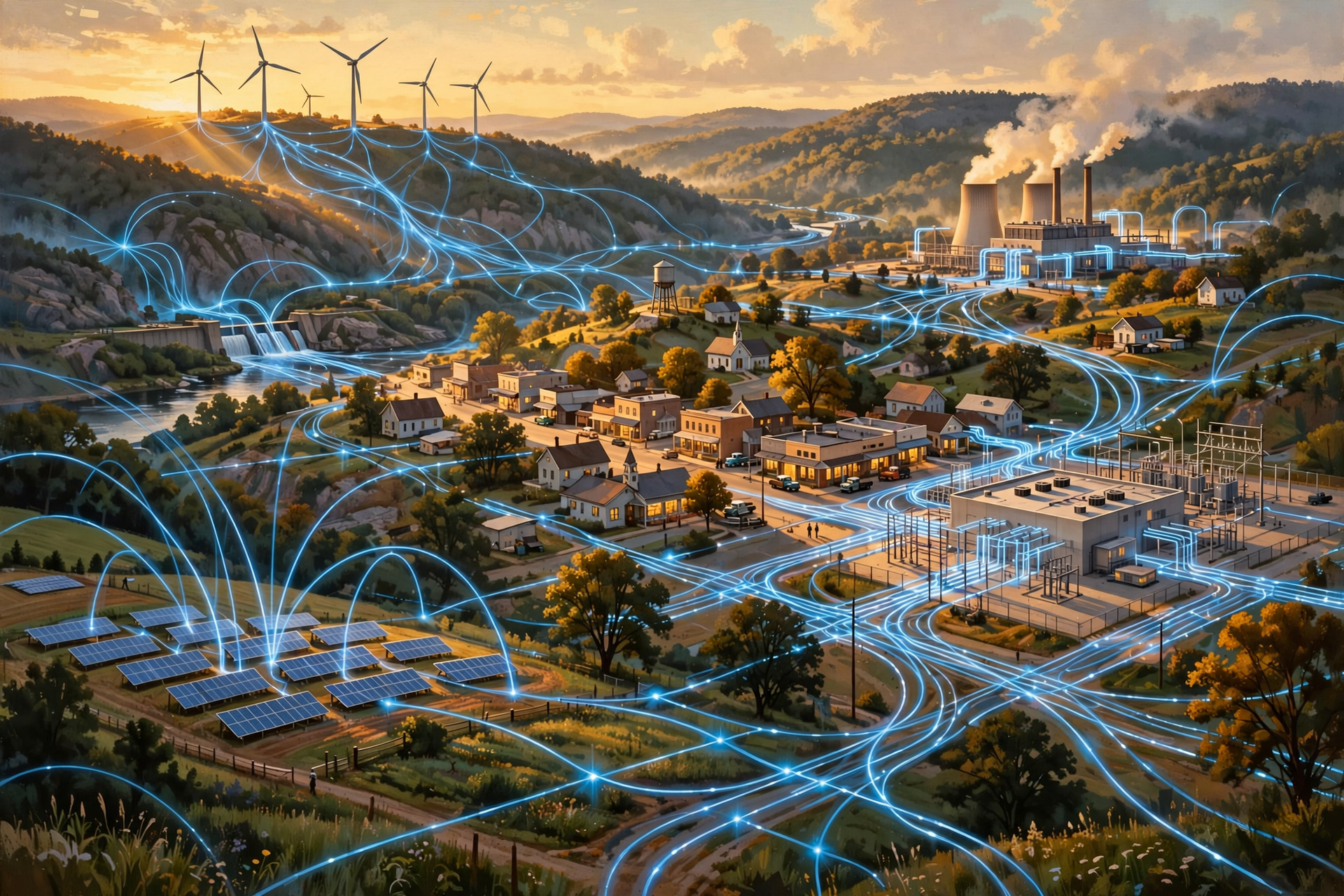
The electric grid is an interconnected system.
Generators supply power into that system while customers draw power from it.
Grid operators continuously work to keep generation and demand balanced.
So when we say we are “following the electricity,” we are really following the physical infrastructure and transformations required to deliver usable electric power from the broader grid to the server.
That distinction keeps our analogy useful without pretending individual electrons have shipping labels.
Step Two: Raise the Voltage
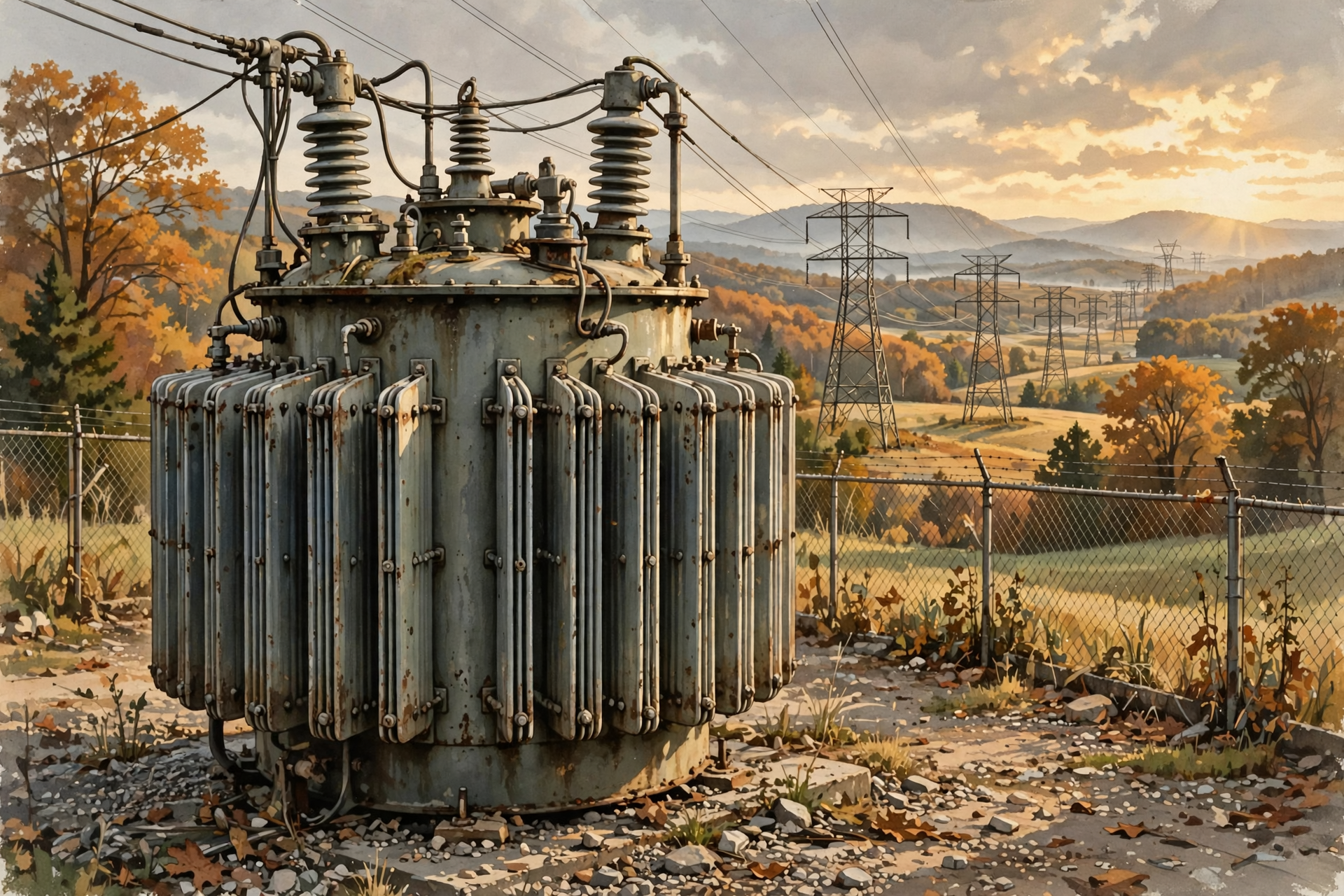
Electricity has to travel substantial distances.
Moving large amounts of power over those distances is more efficient at high voltage.
So electricity leaving a generating facility can pass through transformers that step up the voltage before it enters major transmission lines.
The U.S. Department of Energy explains that high-voltage transmission reduces electrical losses while moving power over long distances.
Think about transporting water.
If you need to move a tremendous amount of water across Tennessee, you do not use a garden hose.
You build infrastructure appropriate to the volume and distance.
Electricity has its own version of that problem.
What Does a Transformer Actually Do?
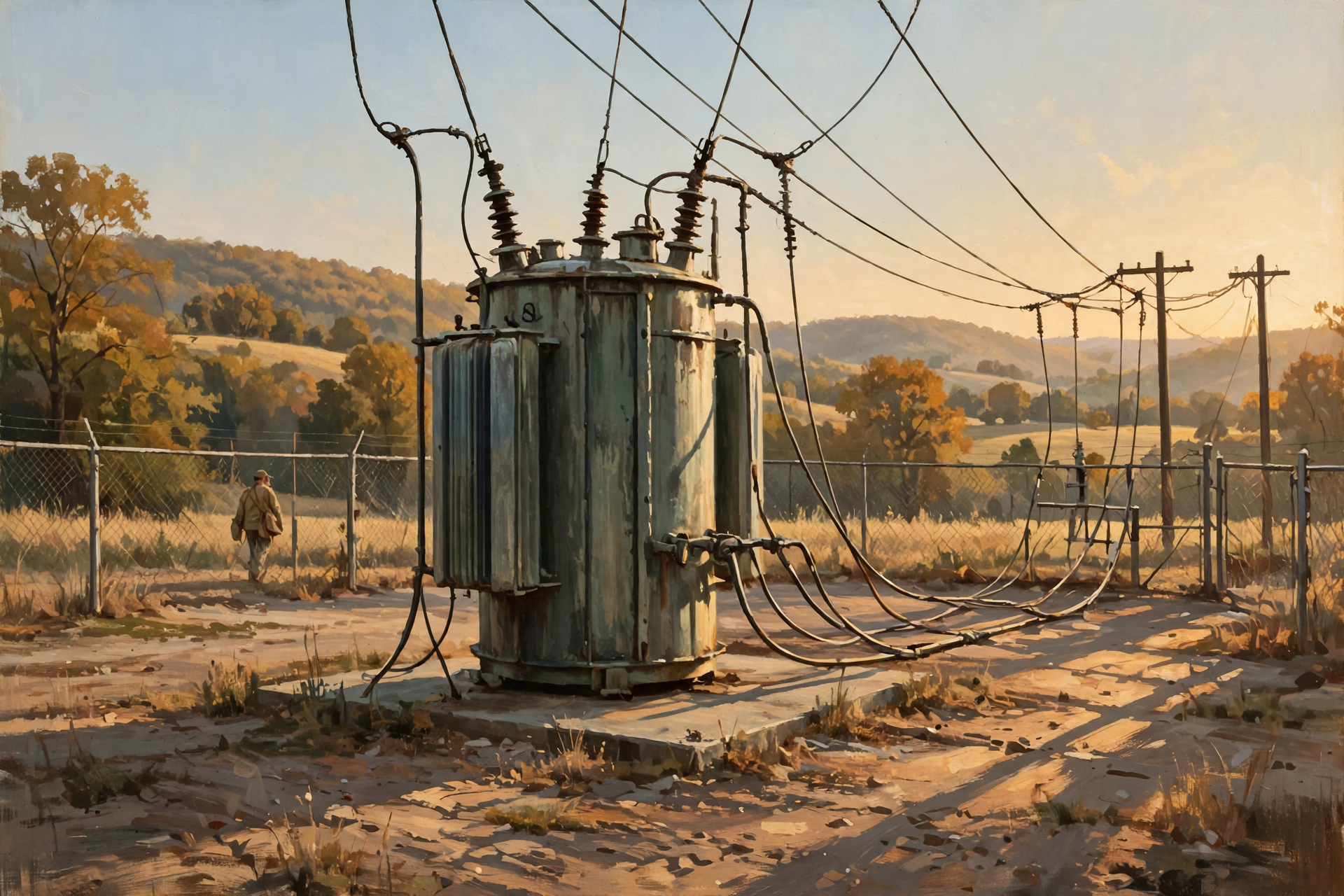
A transformer changes electrical voltage.
That is its basic job.
A step-up transformer raises voltage.
A step-down transformer lowers it.
Why keep changing voltage?
Because the voltage best suited for long-distance transmission is not necessarily the voltage we want entering every piece of equipment at the destination.
Think of a transmission system as the interstate highway.
You want high capacity while moving large quantities over long distances.
Eventually, though, you need an exit ramp.
Step Three: Onto TVA’s Transmission Highway
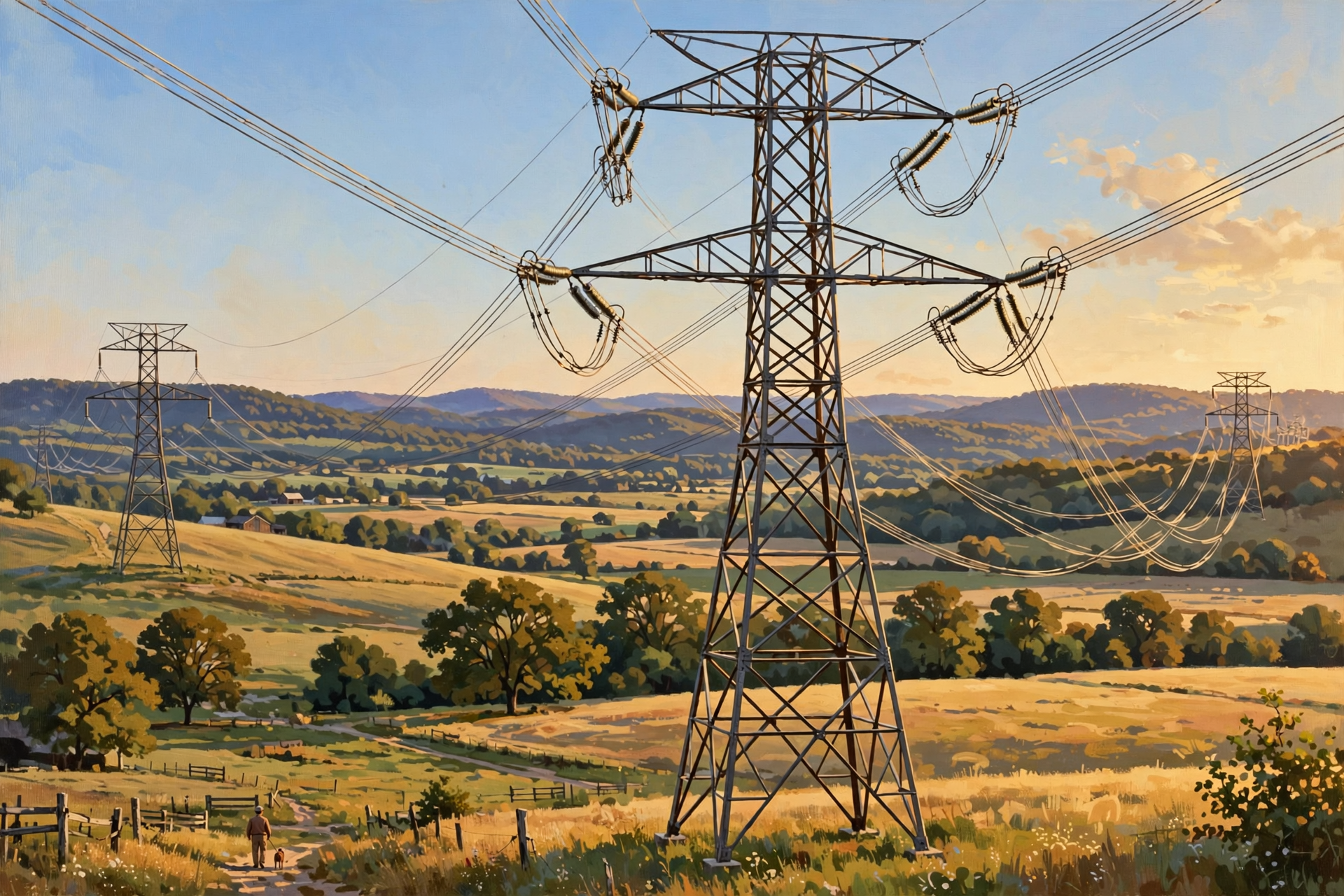
That is the high-voltage network carrying electricity across the Tennessee Valley.
TVA uses a particularly helpful analogy of its own:
The transmission system is like a highway system for electricity.
Power moves across high-voltage lines from generating resources toward communities and large customers.
Those tall towers and large lines crossing the countryside are not simply oversized versions of the wire running to your porch.
They are part of the regional bulk-power system.
Transmission Is Not Distribution
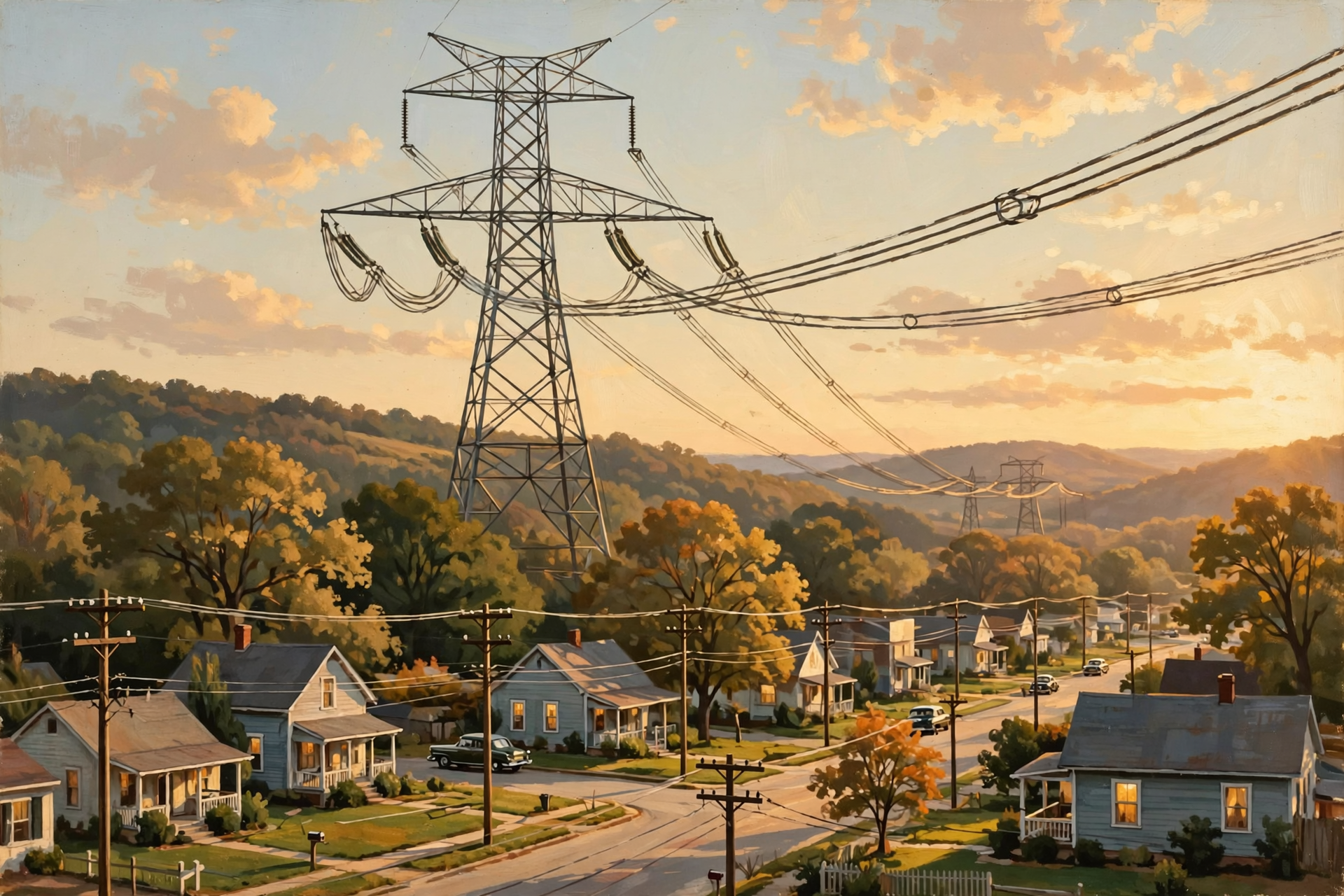
This distinction matters.
Transmission generally refers to moving large amounts of electricity at high voltage across longer distances.
Distribution generally refers to delivering electricity at lower voltages from the broader system to homes and ordinary businesses.
For most households in the Tennessee Valley, TVA transmits electricity to a local power company, and that local power company distributes it to customers.
TVA says it delivers power to 153 local power companies serving homes and businesses across the Valley.
A very large industrial customer or data-center project, however, can require electrical arrangements much more substantial than the normal service running down a residential road.
A House Needs an Electrical Connection. A Huge Data Center May Need a Grid Project.
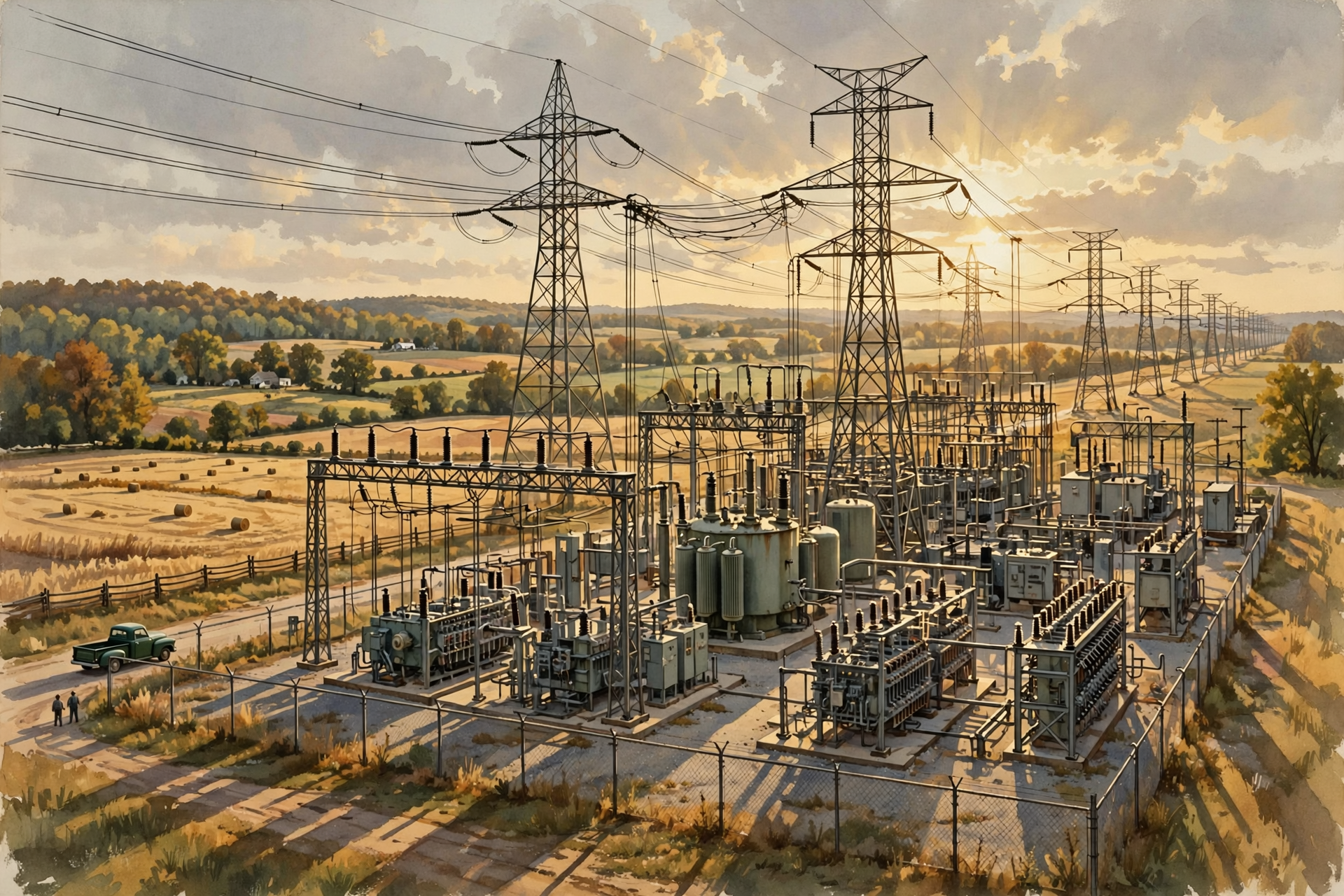
If you build a house, the local utility usually determines how to connect the property to existing distribution infrastructure.
If you propose a data-center campus requiring hundreds of megawatts, the conversation may involve:
- high-voltage transmission;
- new transmission connections;
- one or more substations;
- very large transformers;
- protective equipment;
- additional utility capacity;
- and potentially broader grid upgrades.
This is one of the reasons the project’s megawatt requirement matters so much.
The number begins telling utilities what kind of infrastructure problem they are being asked to solve.
Step Four: Arrive at the Substation
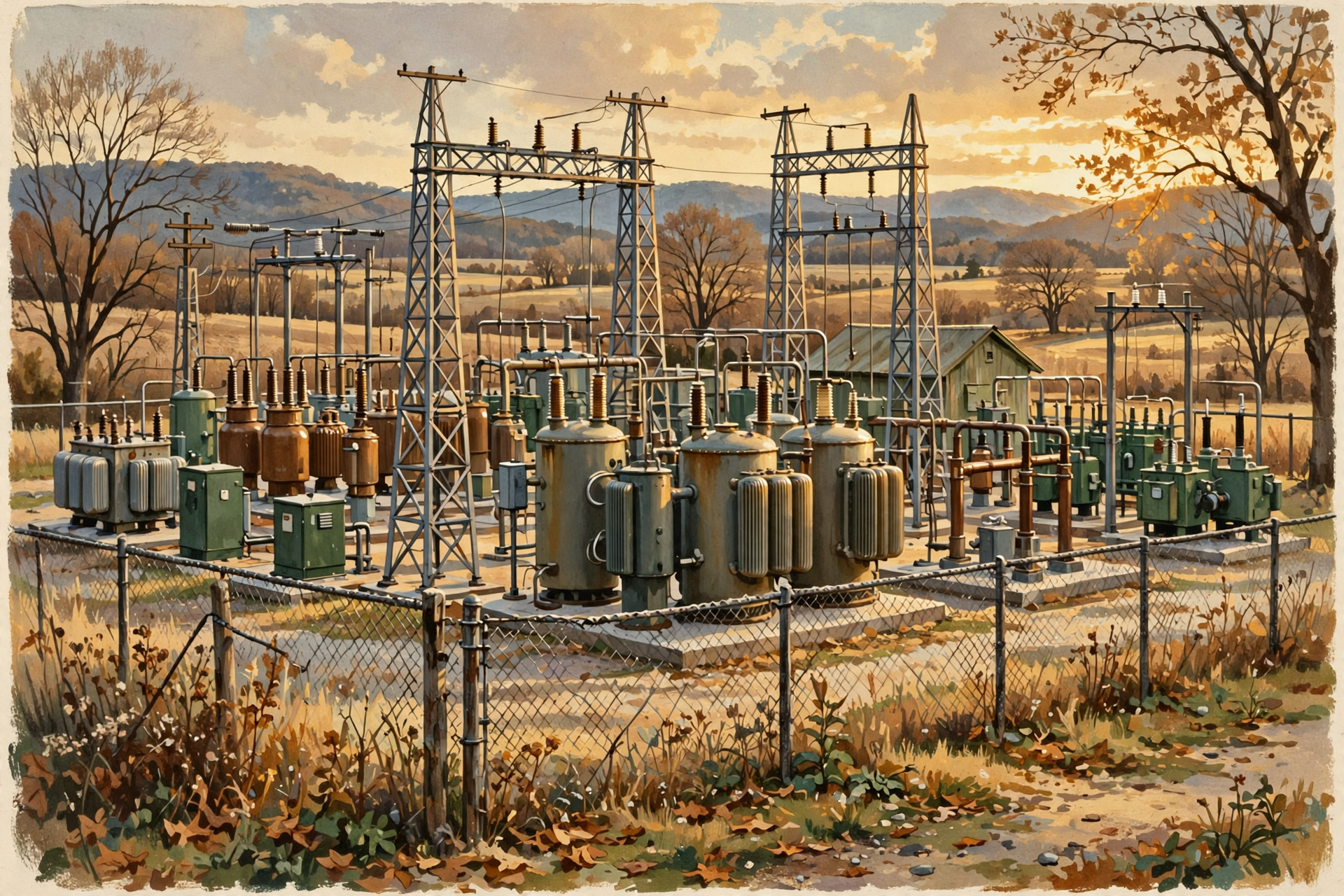
Eventually, our electrical journey reaches one of the most important pieces of equipment in the story:
the substation.
A substation is not simply a big transformer sitting behind a fence.
Substations can contain:
- transformers;
- circuit breakers;
- switches;
- protective relays;
- monitoring equipment;
- bus structures;
- control systems;
- and other electrical equipment.
The substation helps control, protect, transform and route electricity.
If transmission lines are the interstate, a major substation is something like a very complicated interchange.
Why Are Substations Surrounded by Fences?
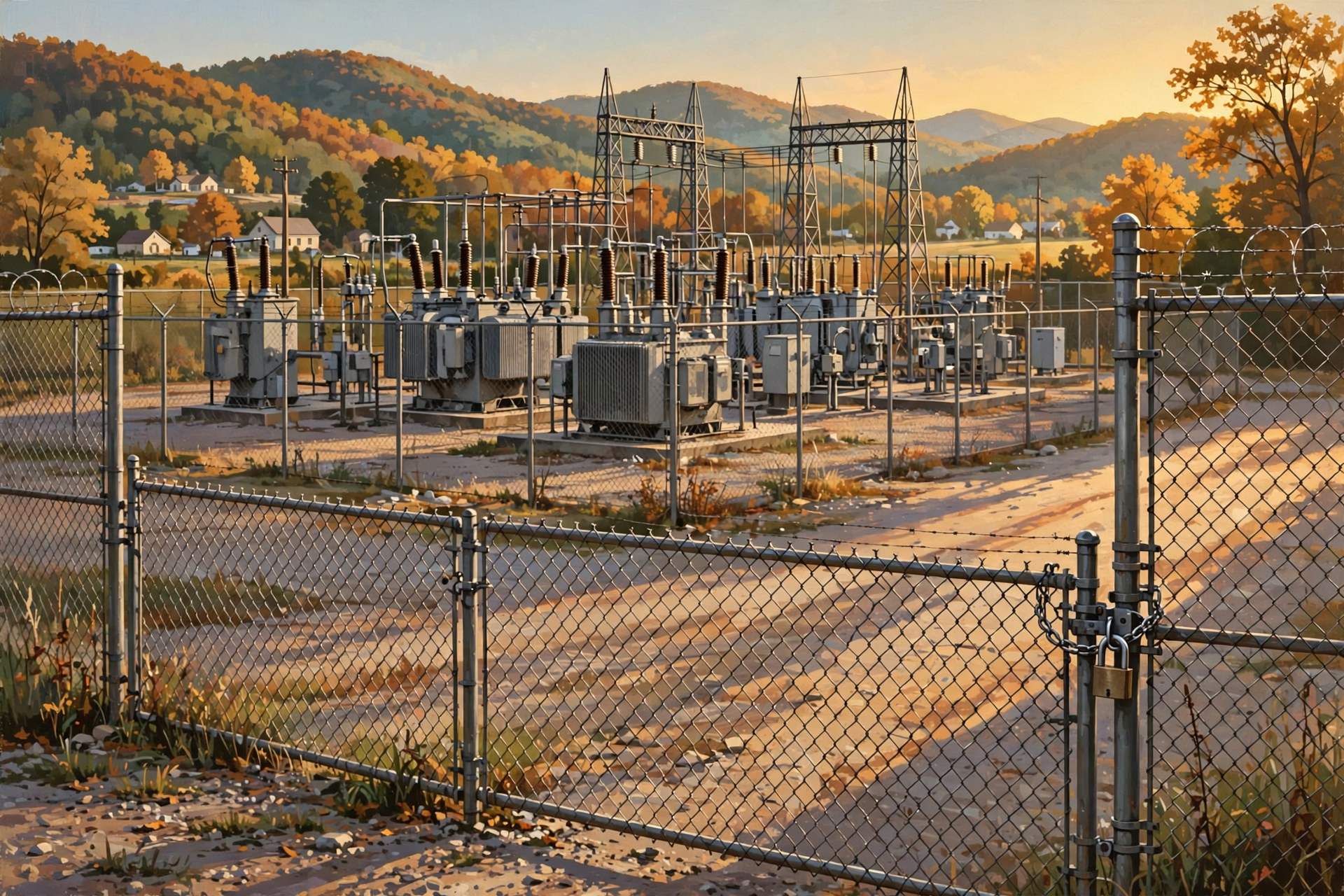
Because the equipment inside operates at voltages capable of doing considerably more than making your hair stand up.
High-voltage substations are serious industrial facilities.
The fencing, clearance distances and restricted access exist for safety and security.
This is why you should never enter a substation or attempt to retrieve an object that has gone inside one.
The equipment is designed for trained utility personnel.
Step Five: Step the Voltage Down
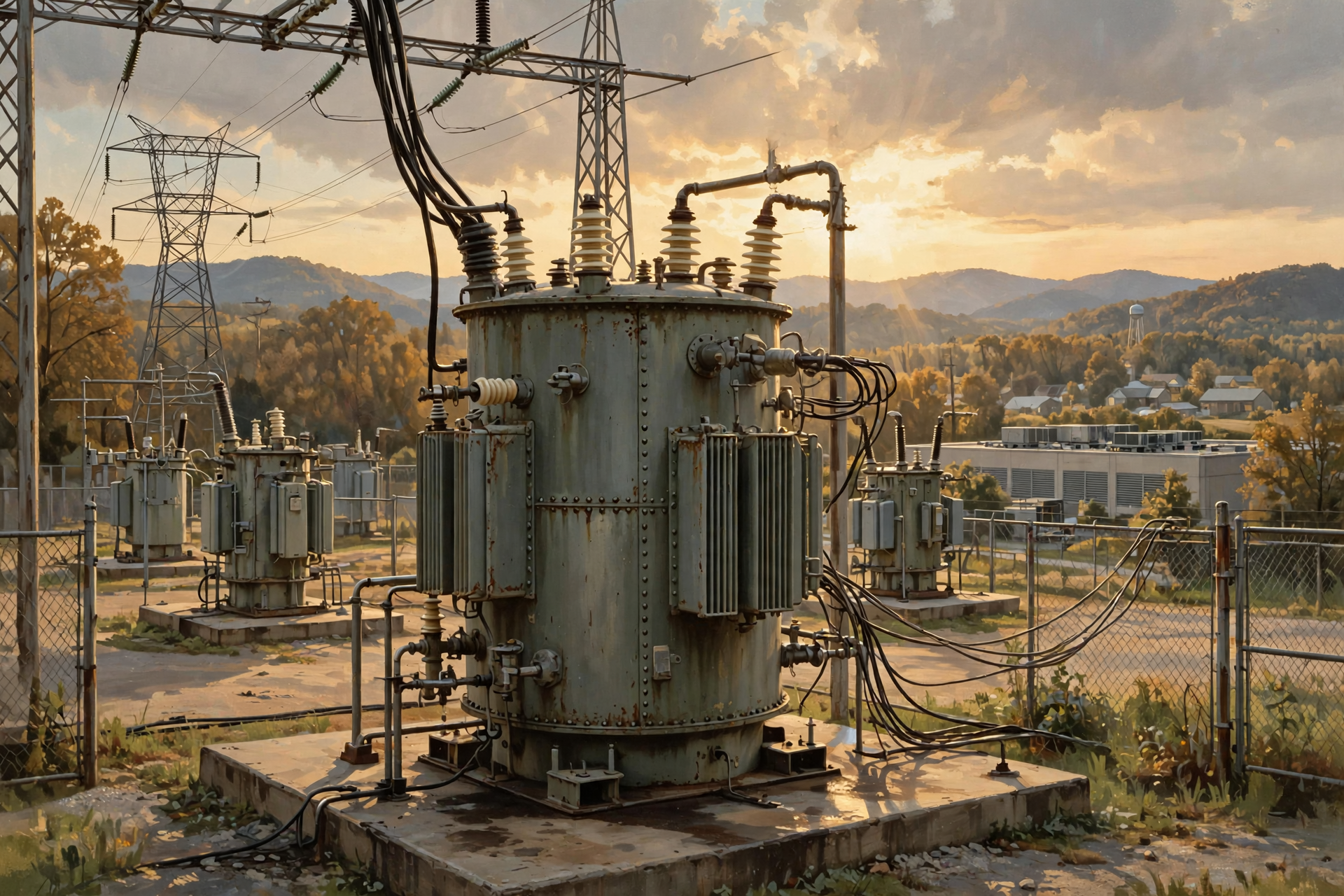
High transmission voltage is excellent for moving power over long distances.
It is not what a server rack needs.
Transformers inside substations therefore reduce voltage as electricity moves closer to its final use.
Depending on the data center and utility connection, there can be several voltage transformations between the regional transmission system and the electronics inside the rack.
Think of it as a series of increasingly smaller roads:
Interstate → highway → local road → driveway → garage.
The electricity keeps getting closer to the equipment that will finally use it.
Large Data Centers May Have Their Own Substations
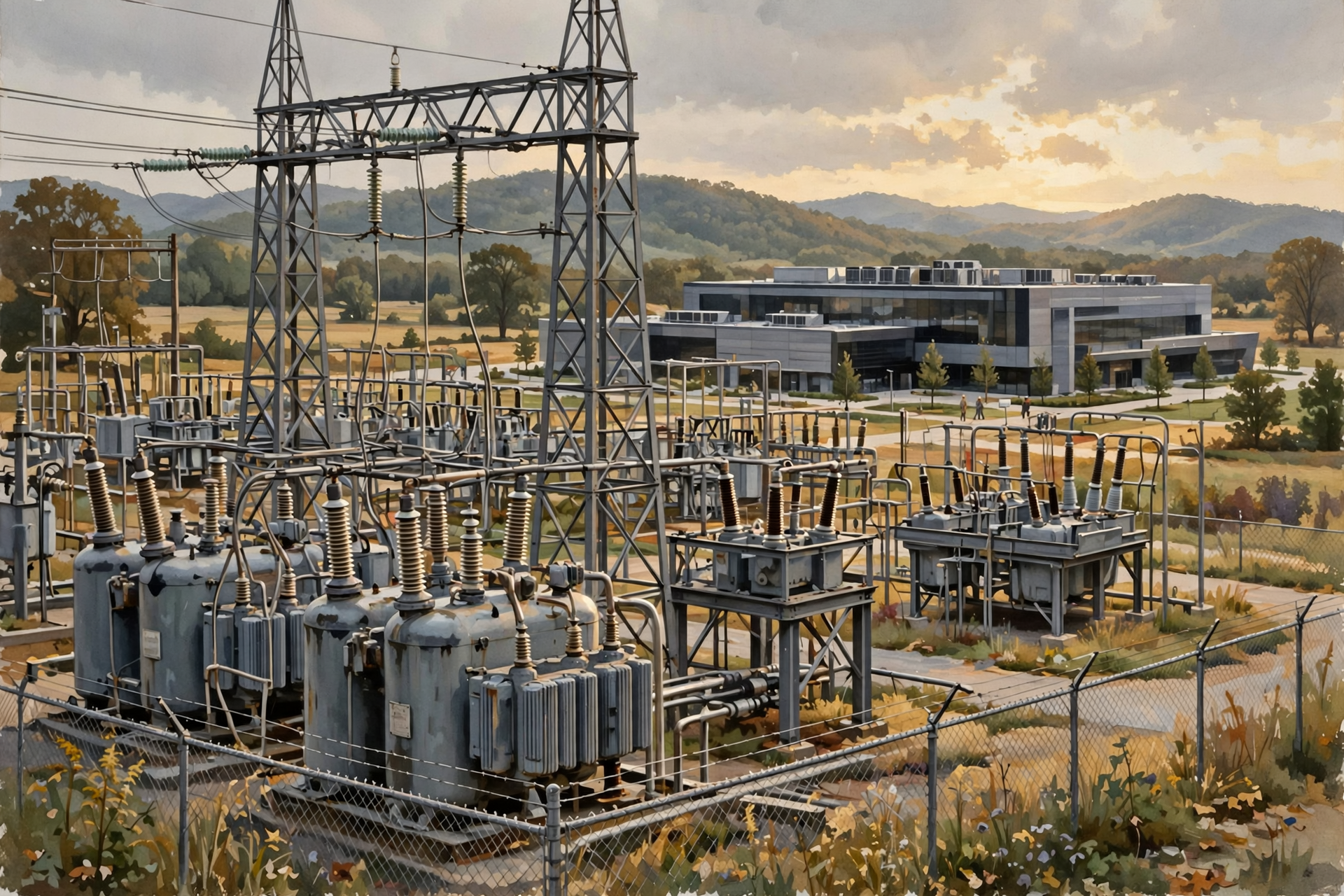
This is where the scale of data centers becomes visible from the road.
A hyperscale or AI campus can require enough electricity that dedicated substation infrastructure becomes part of the site.
If you see a major data-center development beside substantial electrical equipment, that equipment is not scenery.
It is one of the essential ingredients making the computing possible.
A beautiful server building with no adequate electrical connection is simply an extremely expensive warehouse.
Why Can’t We Just Build the Data Center Beside a Power Plant?
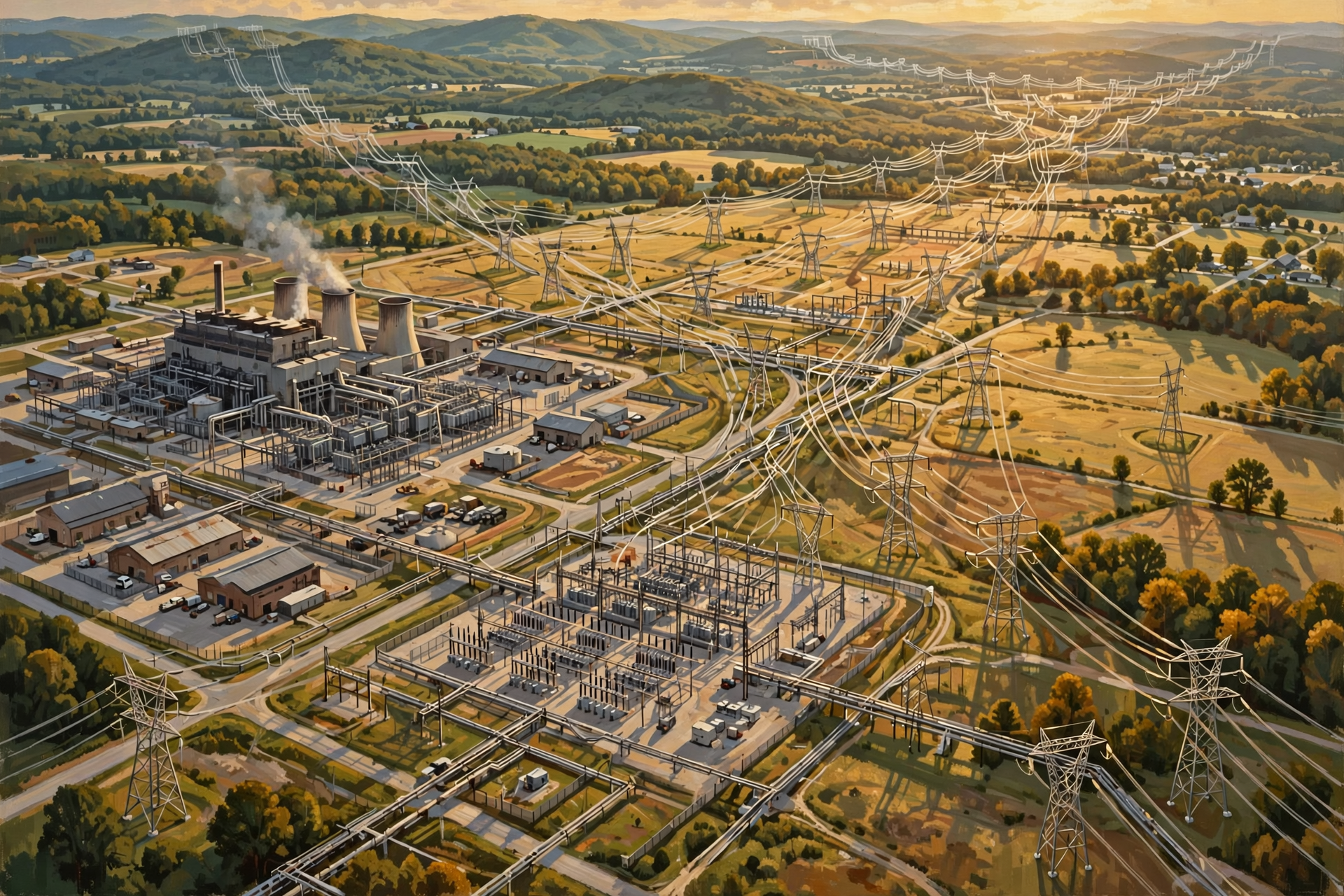
Sometimes proximity to generation can be useful.
But the electric system is more complicated than distance alone.
Site selection can involve:
- available grid capacity;
- transmission configuration;
- reliability;
- land;
- fiber connectivity;
- water or cooling infrastructure;
- environmental considerations;
- construction access;
- and the ability to expand later.
A power plant next door does not automatically guarantee that the existing electrical system can simply hand hundreds of megawatts to a new customer.
The interconnection and transmission system still have to support the load.
Step Six: Enter the Data Center’s Electrical Yard
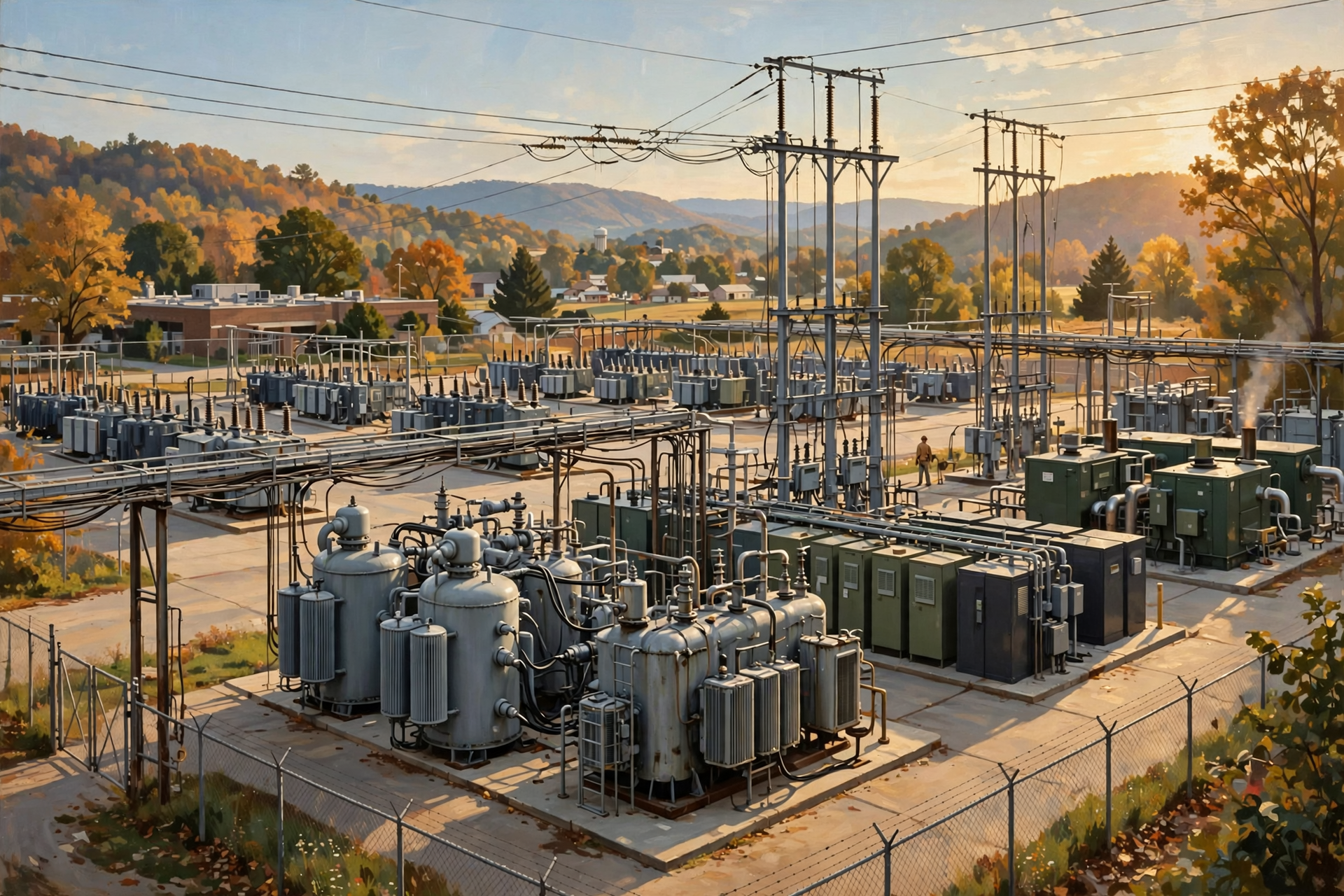
We have crossed the regional grid.
Now we reach infrastructure dedicated more directly to the data center.
A large facility can contain an electrical yard with:
- transformers;
- switchgear;
- circuit breakers;
- disconnect equipment;
- metering;
- protective systems;
- backup generators;
- and other electrical controls.
This is where the enormous utility supply begins being divided into manageable electrical systems serving different parts of the campus.
What Is Switchgear?
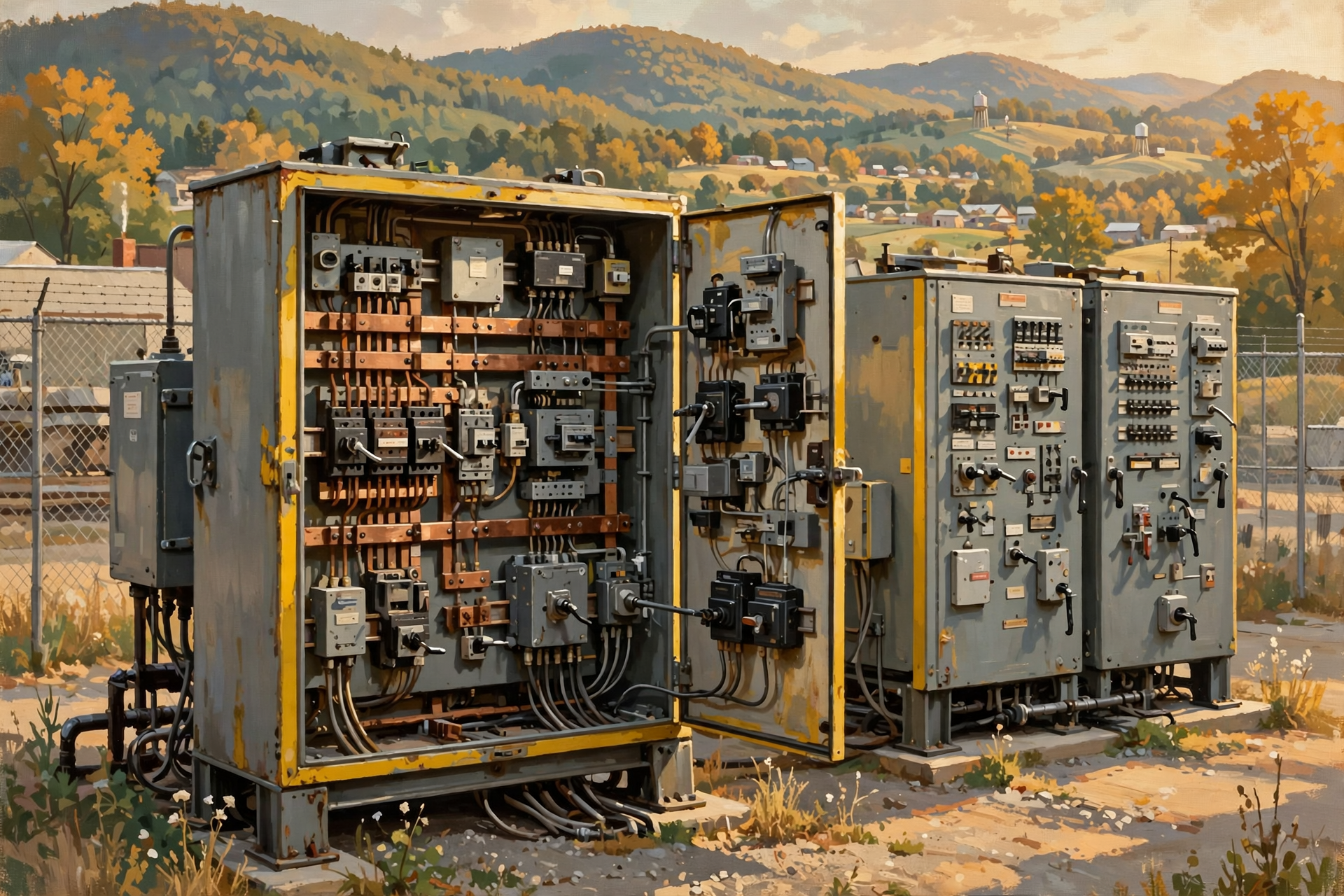
Switchgear is a broad term for electrical equipment used to control, protect and isolate electrical circuits.
It can include switches, circuit breakers and protective equipment.
The basic idea should sound familiar.
Your house has a breaker panel.
If a circuit develops a dangerous problem, a breaker can disconnect it.
A major data center has a vastly more complicated industrial version of the same fundamental need:
Control where electricity goes and safely disconnect equipment when something goes wrong.
You Cannot Afford to Let One Fault Take Down the Building
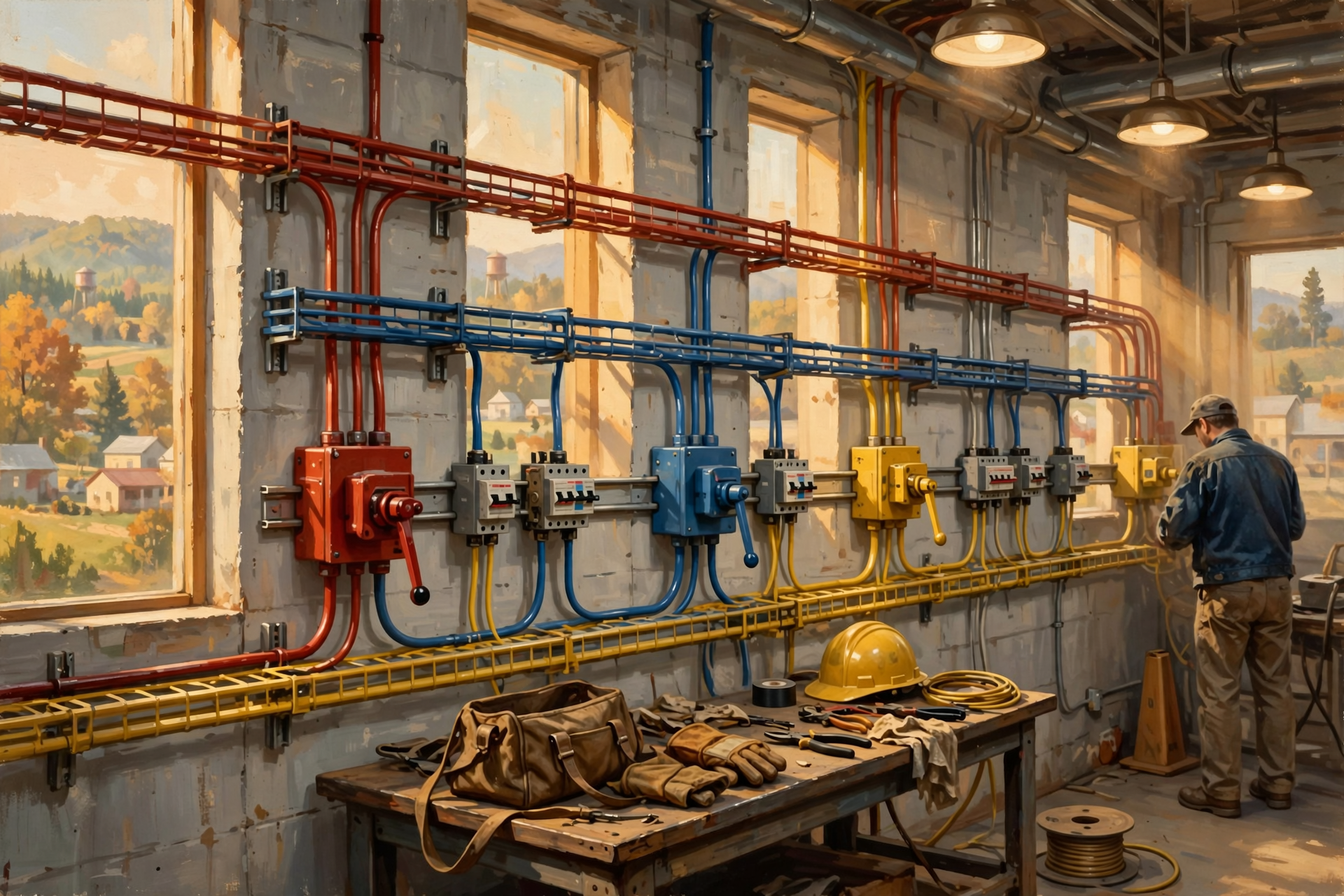
Suppose one electrical component fails.
A well-designed data center does not want that failure automatically shutting down every computer on the property.
Electrical systems can therefore be divided into sections and protected so problems can be isolated.
This connects directly to a recurring data-center concept:
redundancy.
Have another route.
Have another component.
Have another source.
Do not let one failure become everybody’s failure.
Step Seven: The UPS Gets Involved
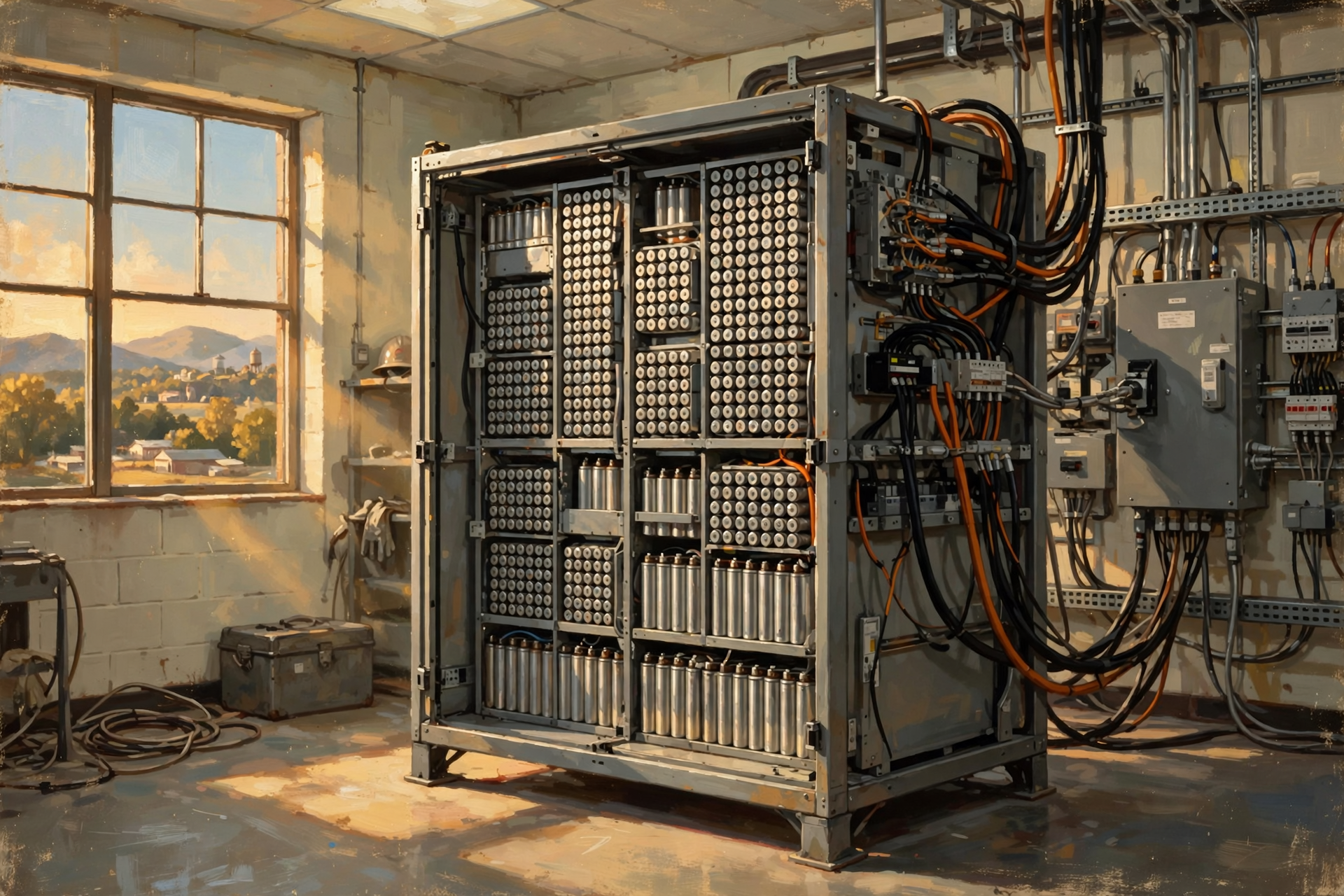
A data center’s computers expect electricity continuously.
If utility power disappears, even briefly, waiting around while somebody starts a generator is not acceptable.
This is where the uninterruptible power supply, or UPS, comes in.
A UPS can provide immediate electrical power when normal supply is interrupted.
Large data centers may use substantial battery systems as part of that design.
Think of the UPS as the bridge between:
“The utility disappeared.”
and:
“The backup system is ready.”
What Happens During an Outage?
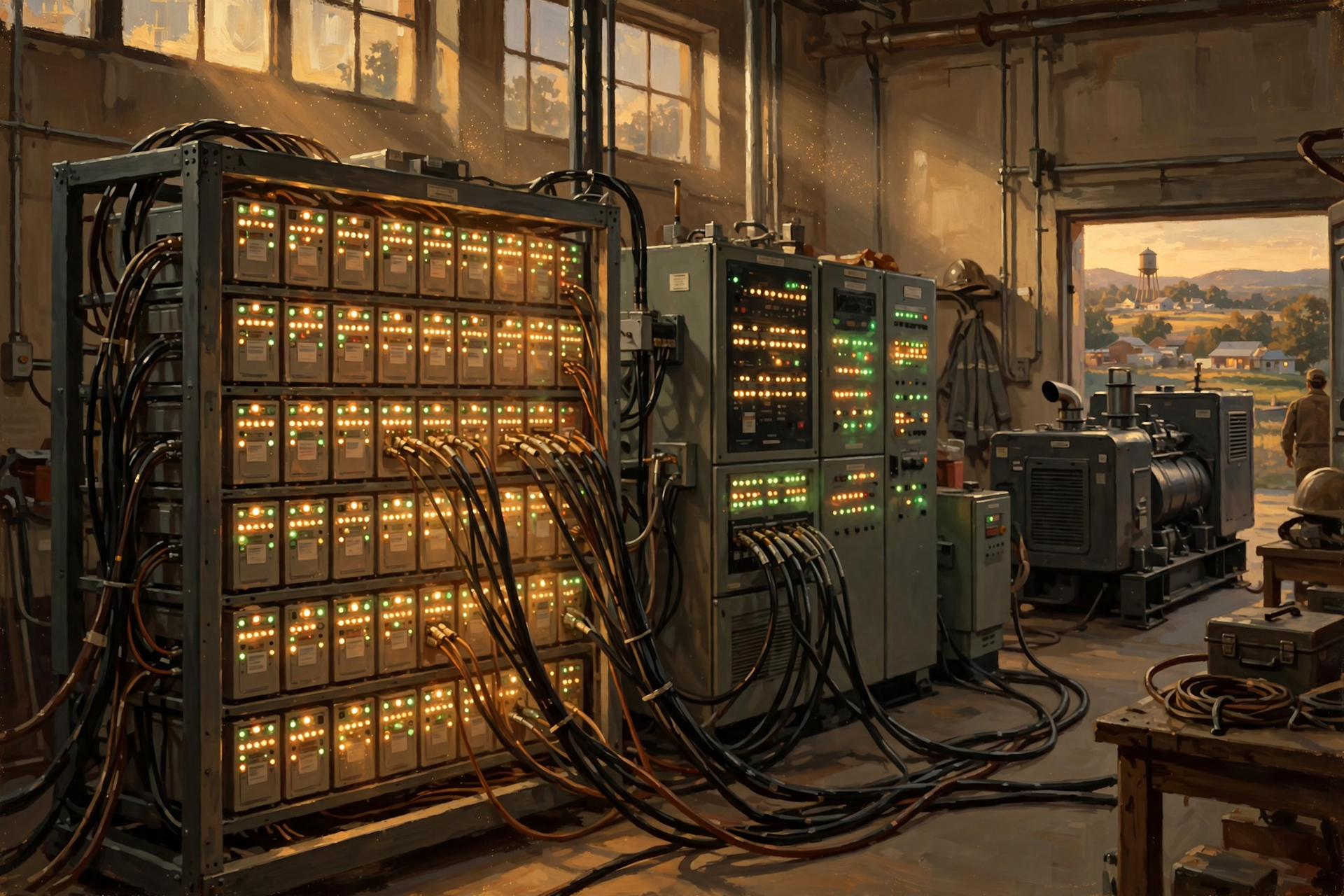
A simplified sequence might look like this:
- Utility power becomes unavailable or unacceptable.
- The UPS continues supplying critical computing equipment without waiting for a human.
- Backup generators receive a start command.
- Generators start and stabilize.
- Electrical controls transfer appropriate loads to backup generation.
- The batteries are no longer carrying the entire burden.
The real engineering can be considerably more complicated.
But the concept is simple:
The computers should not notice the handoff if everything works properly.
The Server Doesn’t Care That a Tree Fell on a Power Line
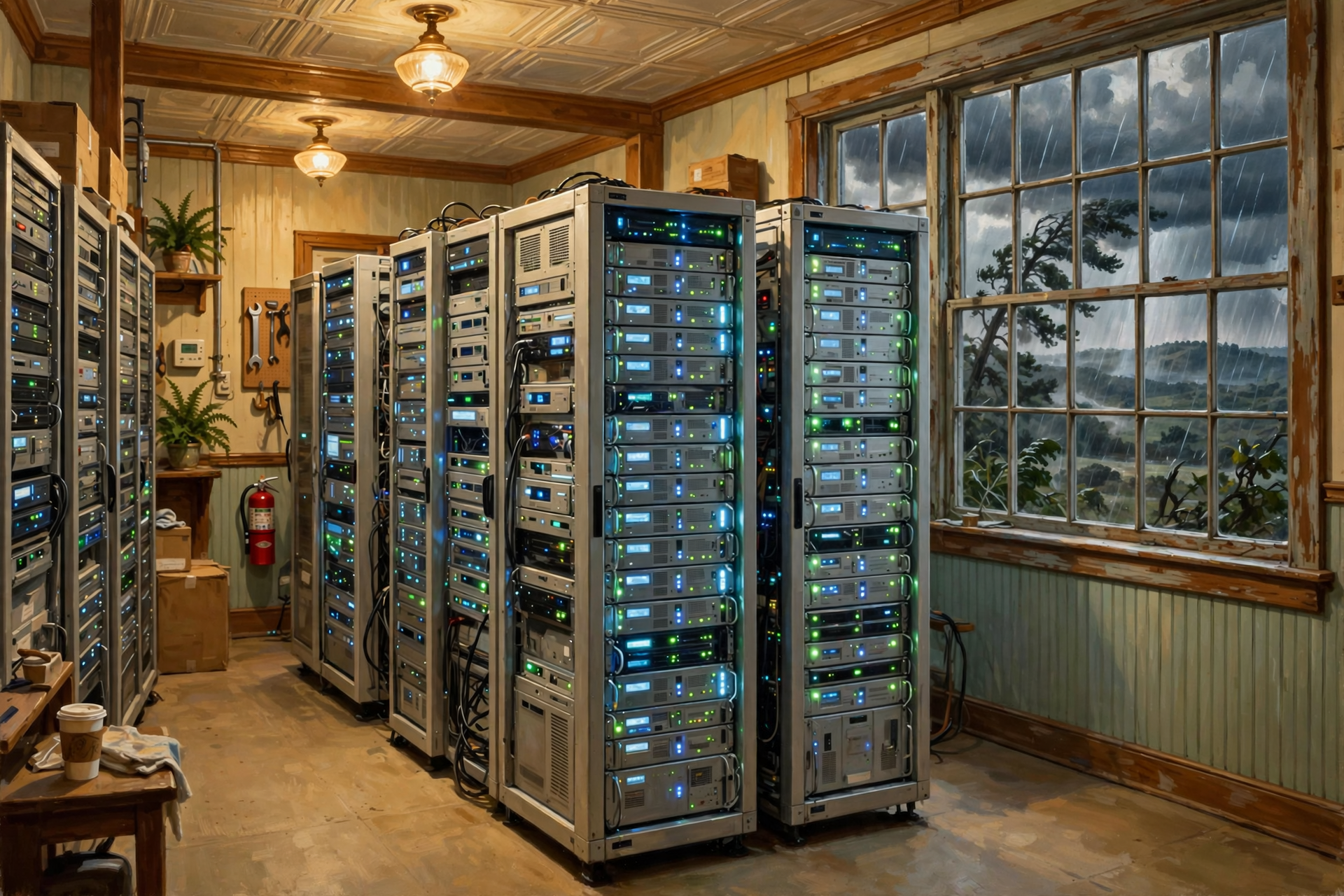
This is the reliability objective.
Somewhere outside, a storm may be doing what Tennessee storms occasionally do.
Trees are down.
Lightning is involved.
Somebody’s trampoline has relocated two counties.
Inside the data center, the application is still supposed to answer:
Your password has been reset successfully.
That requires layers of electrical engineering most users will never see.
Step Eight: Into the Building
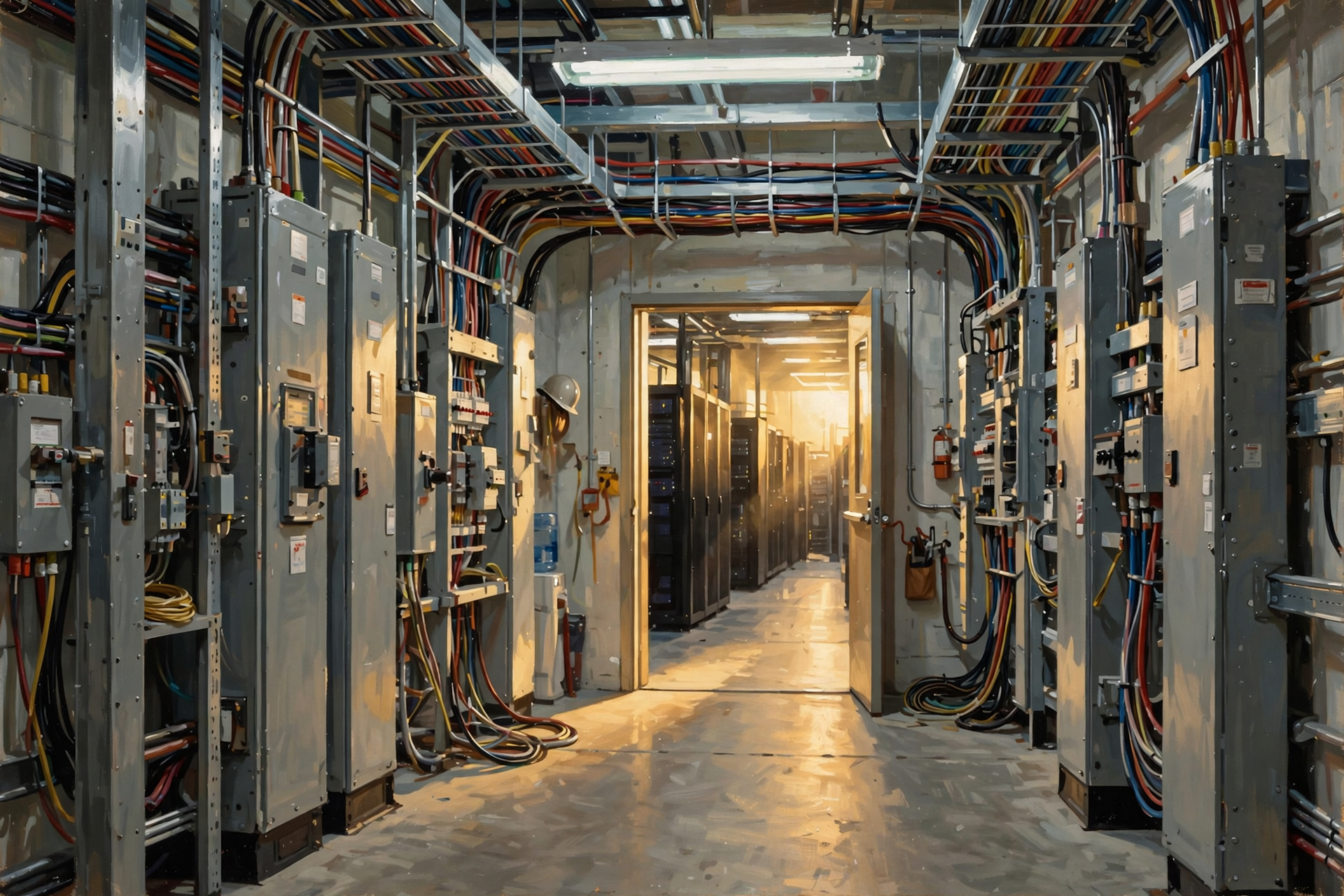
Now the power has made it through:
generation → transmission → substations → site transformers → switchgear → backup systems.
It still has not reached the CPU.
Inside the building, additional electrical-distribution systems route power toward server rooms.
Depending on the facility design, power may pass through:
- additional transformers;
- distribution panels;
- busways;
- power-distribution units;
- remote power panels;
- and rack-level distribution equipment.
Each step gets us closer to the computer.
What Is a Busway?
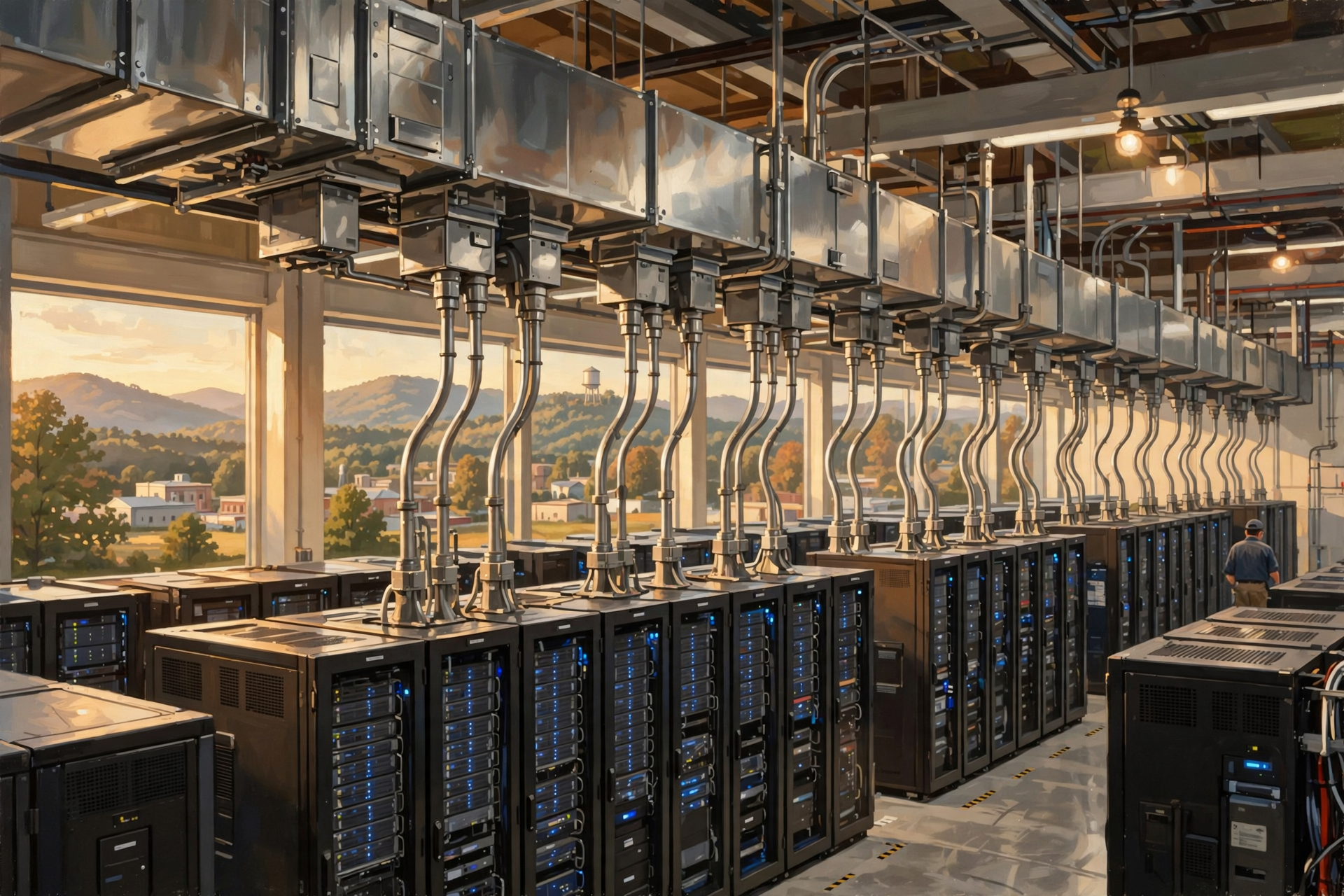
A busway is one method of distributing substantial electrical power through a building.
Instead of relying entirely on bundles of conventional cables running everywhere, busway systems can use enclosed conductive bars to carry electrical power along a route.
Connections can then feed groups of equipment.
Think of it as an electrical main road running through the server hall with exits serving the racks.
Step Nine: Reach the Rack
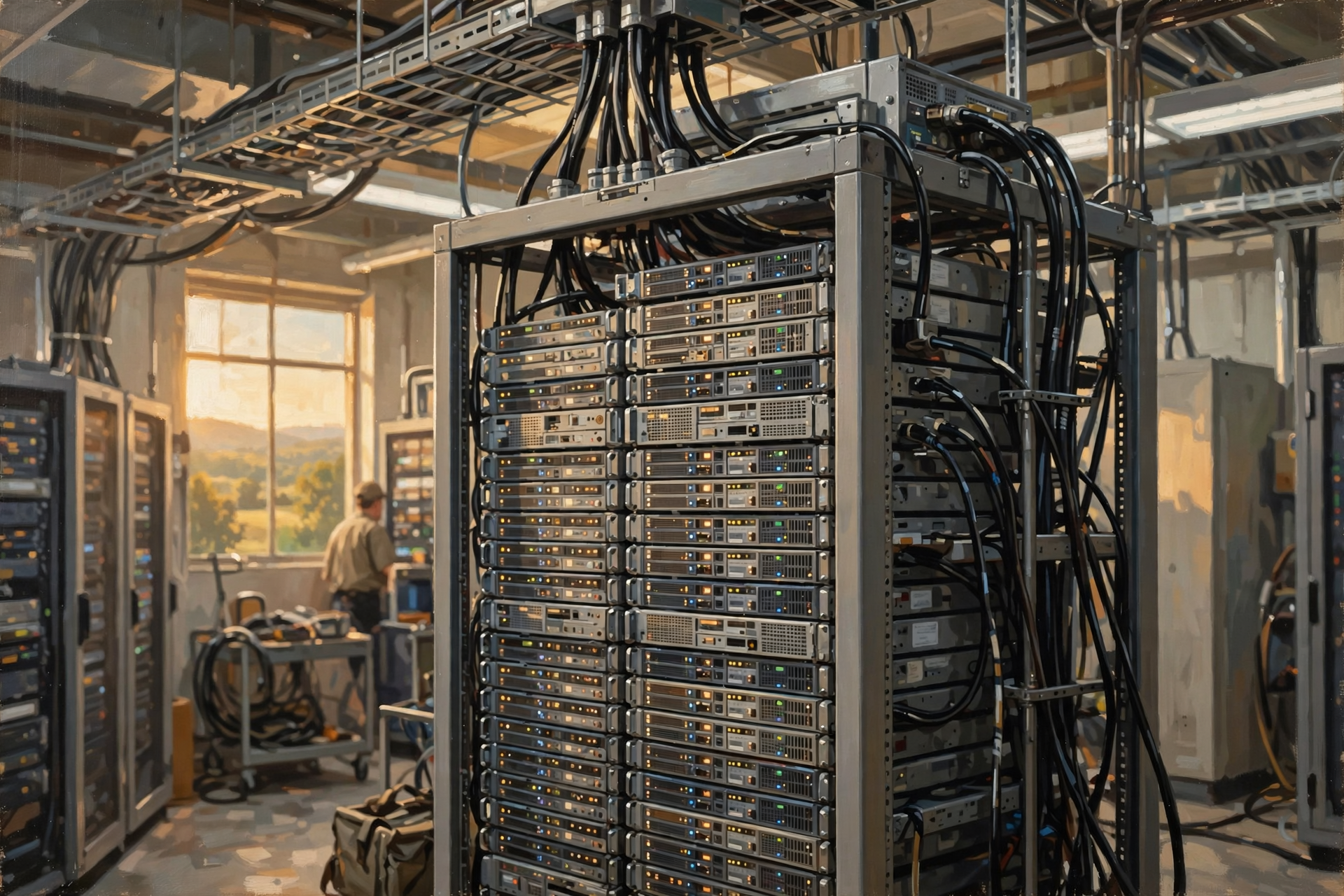
We have finally arrived at the server rack.
Rack-level power-distribution equipment delivers electricity to individual servers and other devices.
But there is still another problem.
The electricity supplied to the rack is not necessarily in the form the microchips themselves use.
We have one more transformation to make.
Step Ten: The Server Power Supply Converts It Again
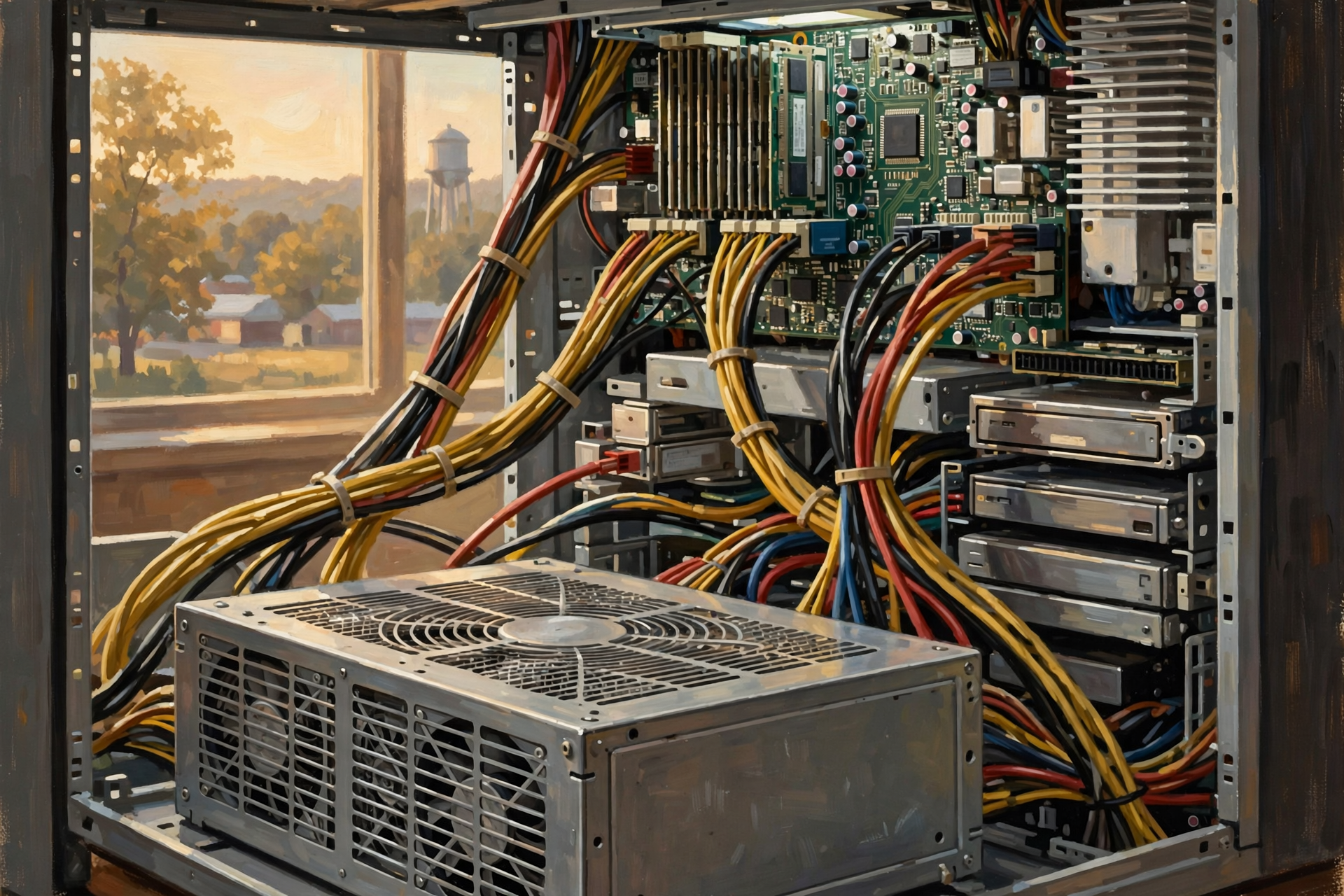
Inside a server is a power supply unit, often abbreviated PSU.
The server power supply converts incoming alternating current into the lower-voltage direct current required by electronic components.
Your desktop PC does essentially the same thing.
The power cord plugs into the wall.
Inside the computer, the power supply converts that electricity into forms the motherboard, processor, memory, storage and other components can use.
A data-center server is simply doing this at industrial scale alongside thousands of neighbors.
AC and DC Without the Engineering Degree
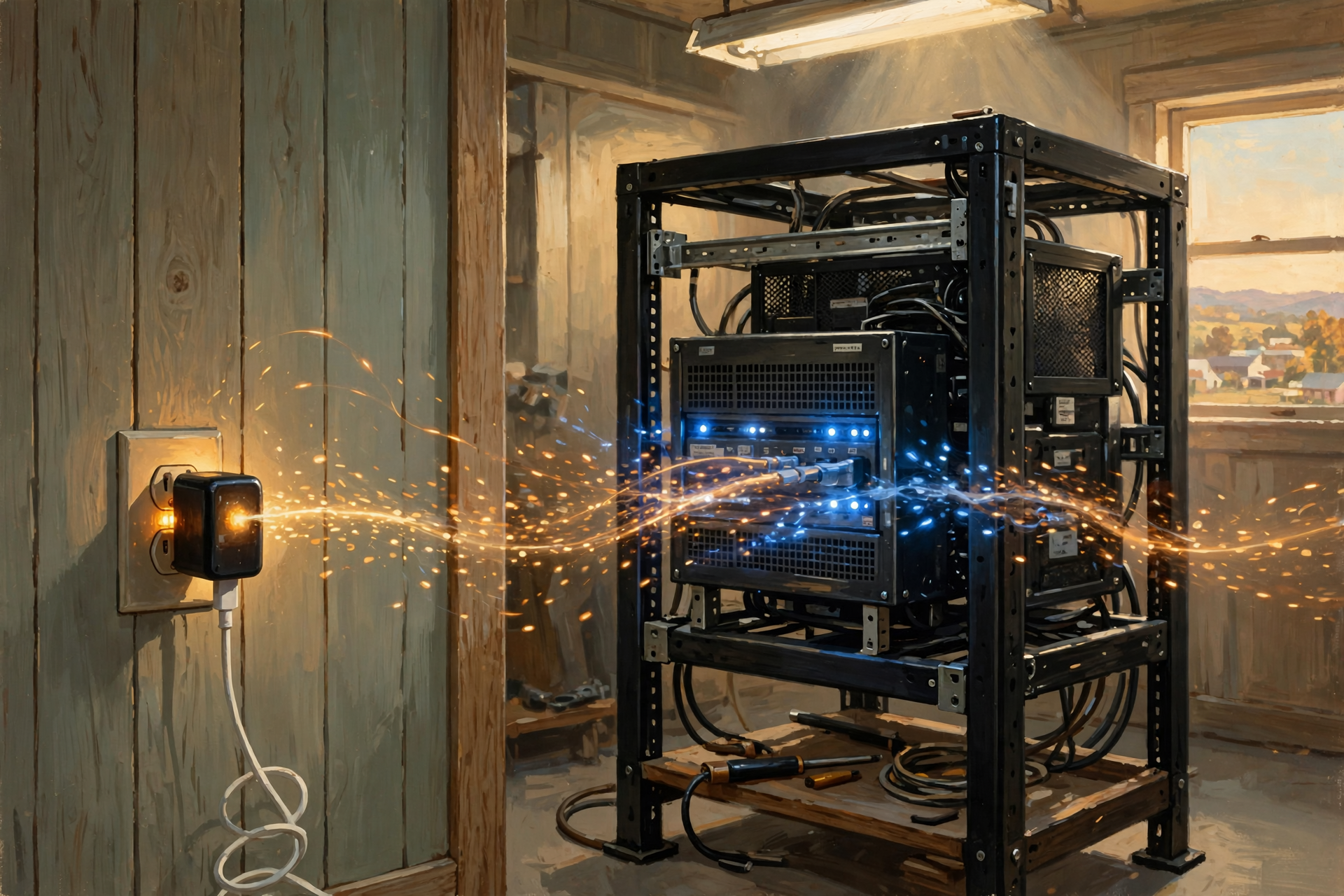
Most electrical grids distribute alternating current, or AC.
Many electronic circuits operate internally using direct current, or DC.
So somewhere along the journey, electricity has to be converted.
Your phone charger does the same basic thing.
Electricity comes from the wall.
The charger converts it into a form suitable for your phone.
Data-center power supplies do that job for servers.
Step Eleven: Finally, the CPU and GPU Get Their Electricity
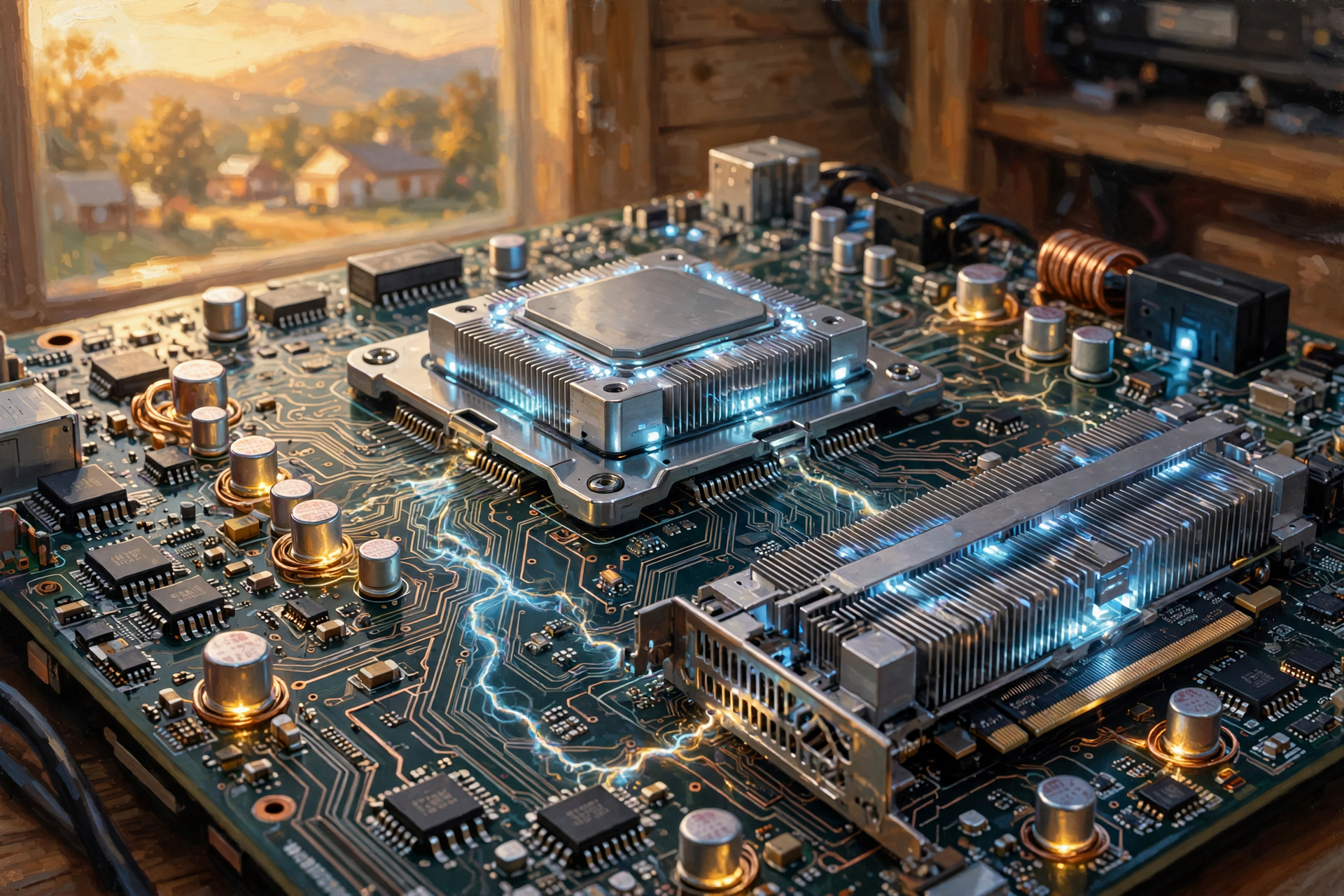
We made it.
The electrical energy has traveled through an astonishing amount of infrastructure before reaching the processors.
Now microscopic transistors inside CPUs and GPUs switch billions of times while performing calculations.
If the server is processing AI, those calculations may include the mathematical operations required to produce an answer.
Our imaginary tractor poem finally begins to emerge.
And Then the Electricity Becomes Heat
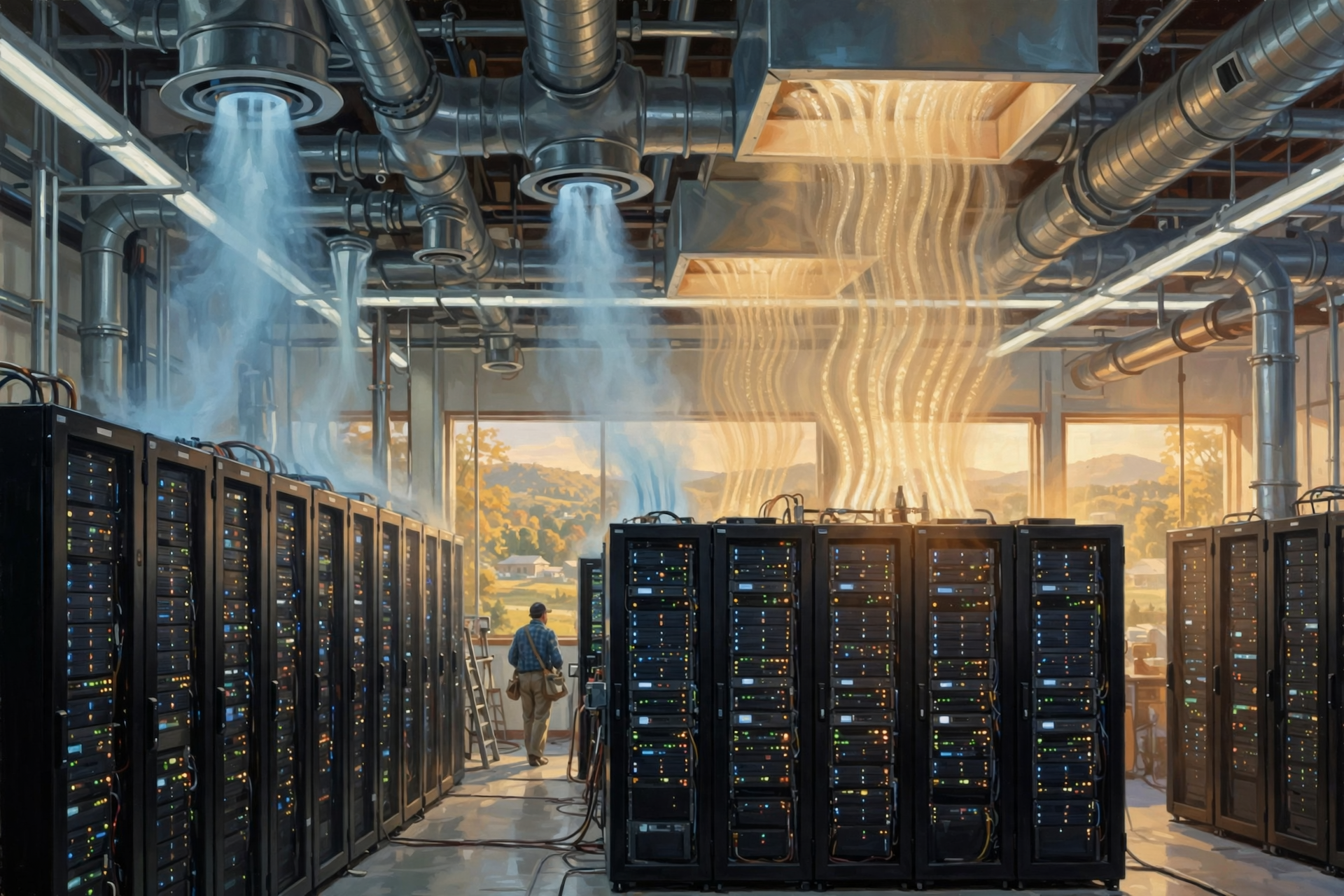
Nearly all electrical energy consumed by the computer eventually becomes heat.
That means our journey has one more major stage.
The data center now has to get rid of the heat we just created.
The processors heat up.
Memory produces heat.
Power supplies produce heat.
Network switches produce heat.
Storage produces heat.
Even electrical conversion creates some losses as heat.
So while the electrical system is busy feeding the servers, the cooling system is busy carrying energy back out of the room.
The Data Center Is an Energy Conveyor Belt
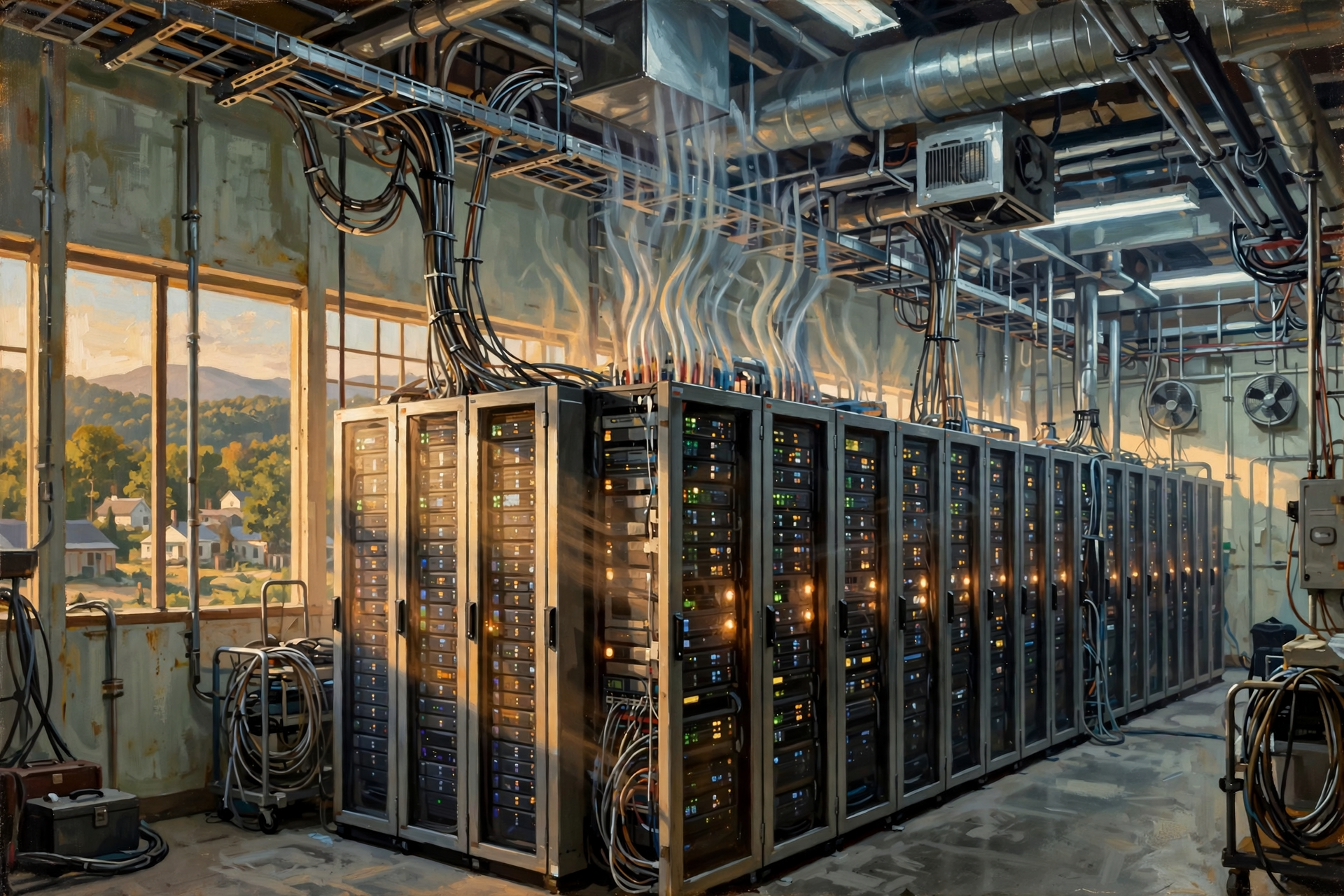
Viewed physically, a data center does something fascinating.
Energy comes in as electricity.
Computers use that energy to perform useful computation.
Information comes out.
Heat also comes out.
That is why a data center can be thought of as a strange kind of factory.
The factory consumes electricity.
The useful product is computation.
The unavoidable byproduct is heat.
Follow the Electron: The Whole Trip
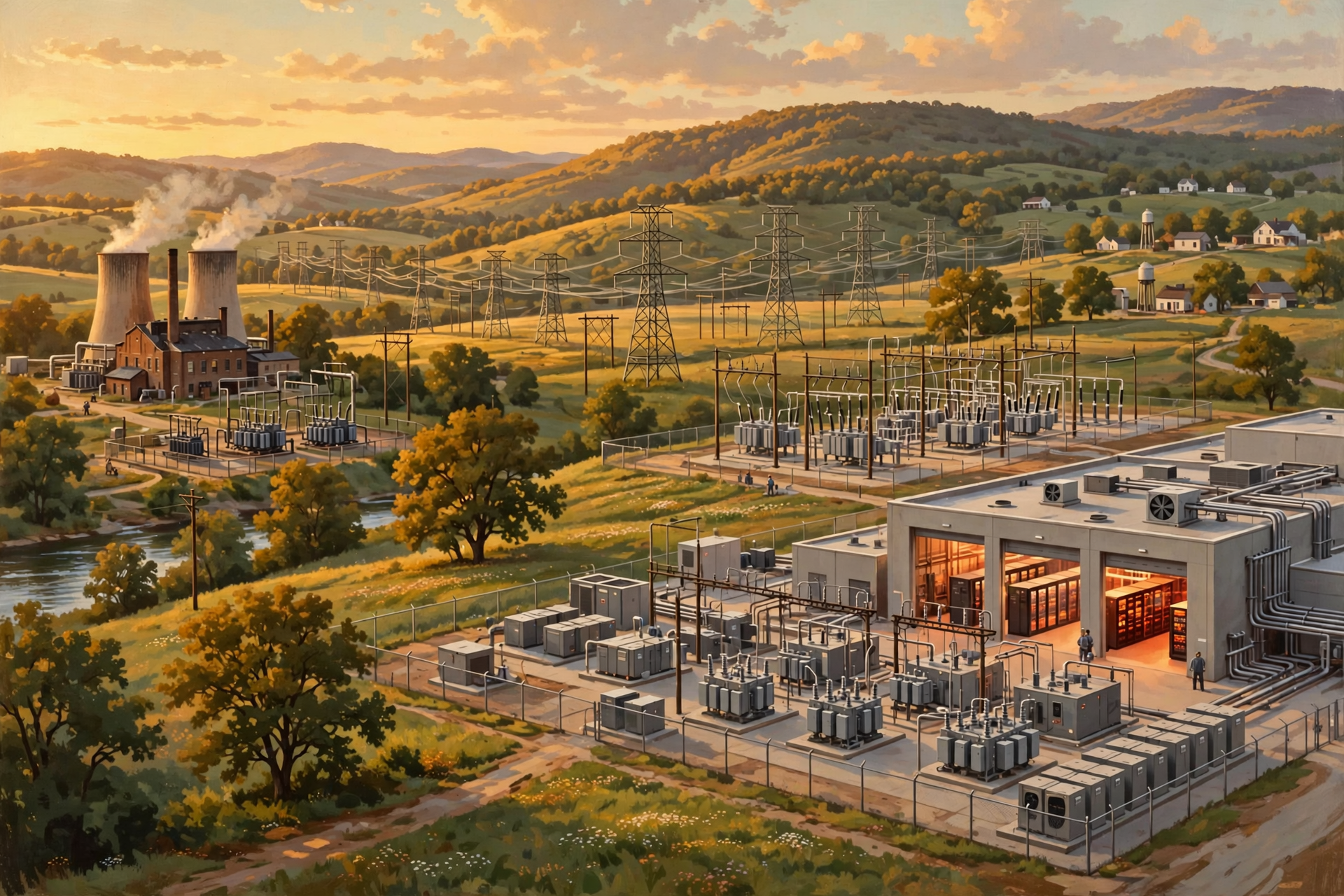
Let’s put our simplified journey in one place.
- Generation: A power plant or other generating resource produces electricity.
- Step-up transformation: Voltage is increased for efficient long-distance transmission.
- High-voltage transmission: Electricity moves across the regional grid.
- Bulk-power substation: Switching, protection and transformation manage the flow.
- Step-down transformation: Voltage is reduced as electricity moves toward the customer.
- Data-center substation or electrical yard: Large transformers and switchgear prepare power for the campus.
- UPS and backup systems: Batteries and redundant systems protect against interruption.
- Building distribution: Electrical systems route power through the data center.
- Rack distribution: Power reaches individual server racks.
- Server power supply: AC electricity is converted into low-voltage DC.
- Processors and electronics: CPUs, GPUs, memory, storage and networking perform useful work.
- Cooling: Heat created by the equipment is removed.
That is a lot of infrastructure standing behind one little box where you typed:
Write a poem about my tractor.
Why Use Such High Voltage on Transmission Lines?
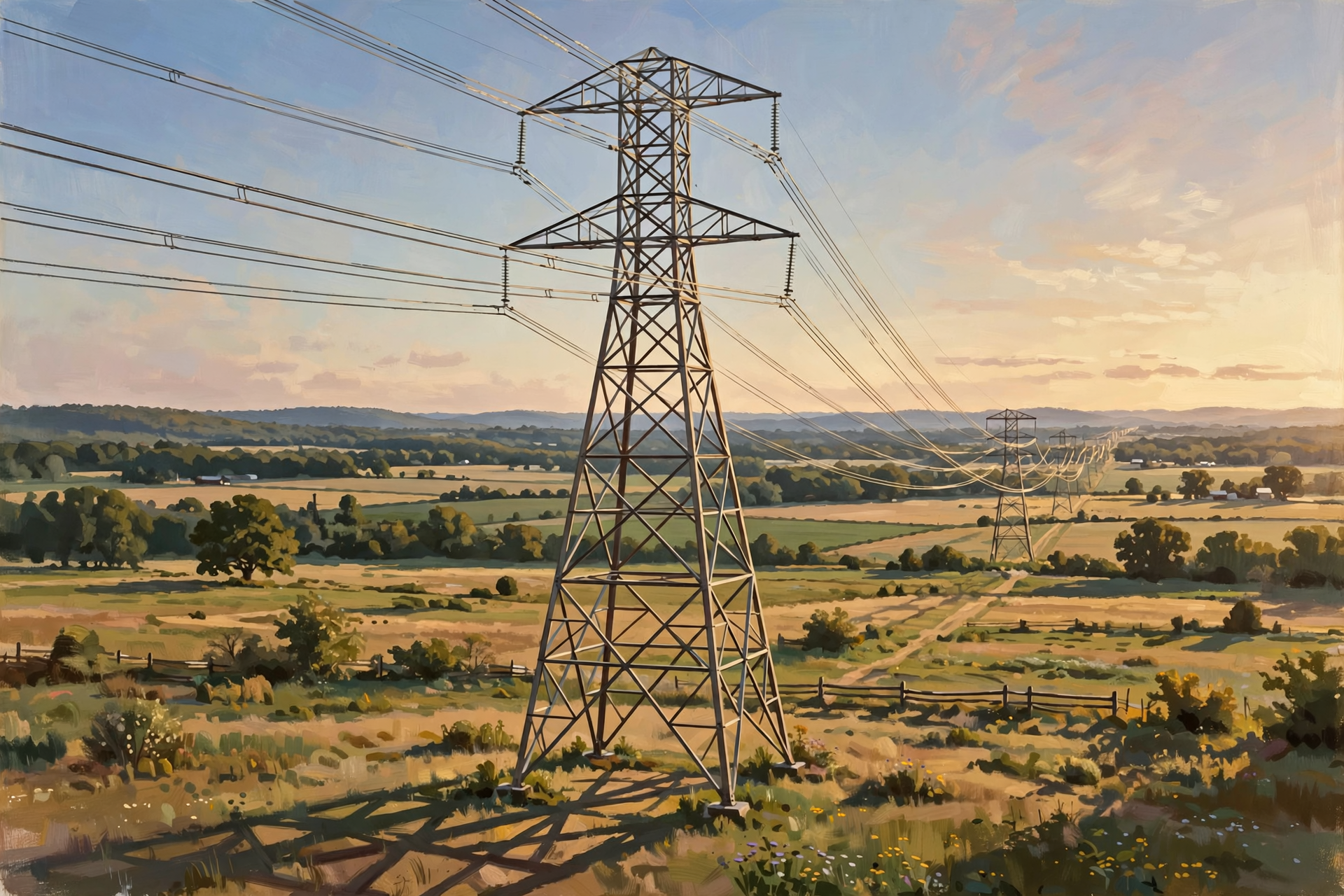
This is worth understanding at least conceptually.
Moving the same amount of power at higher voltage can reduce the current required.
Lower current reduces electrical losses in transmission conductors.
That is one reason transmission systems operate at voltages dramatically higher than household electrical service.
The grid steps voltage up to move power efficiently and steps it back down as electricity approaches the equipment that will use it.
Think Water Pressure—But Only as an Analogy
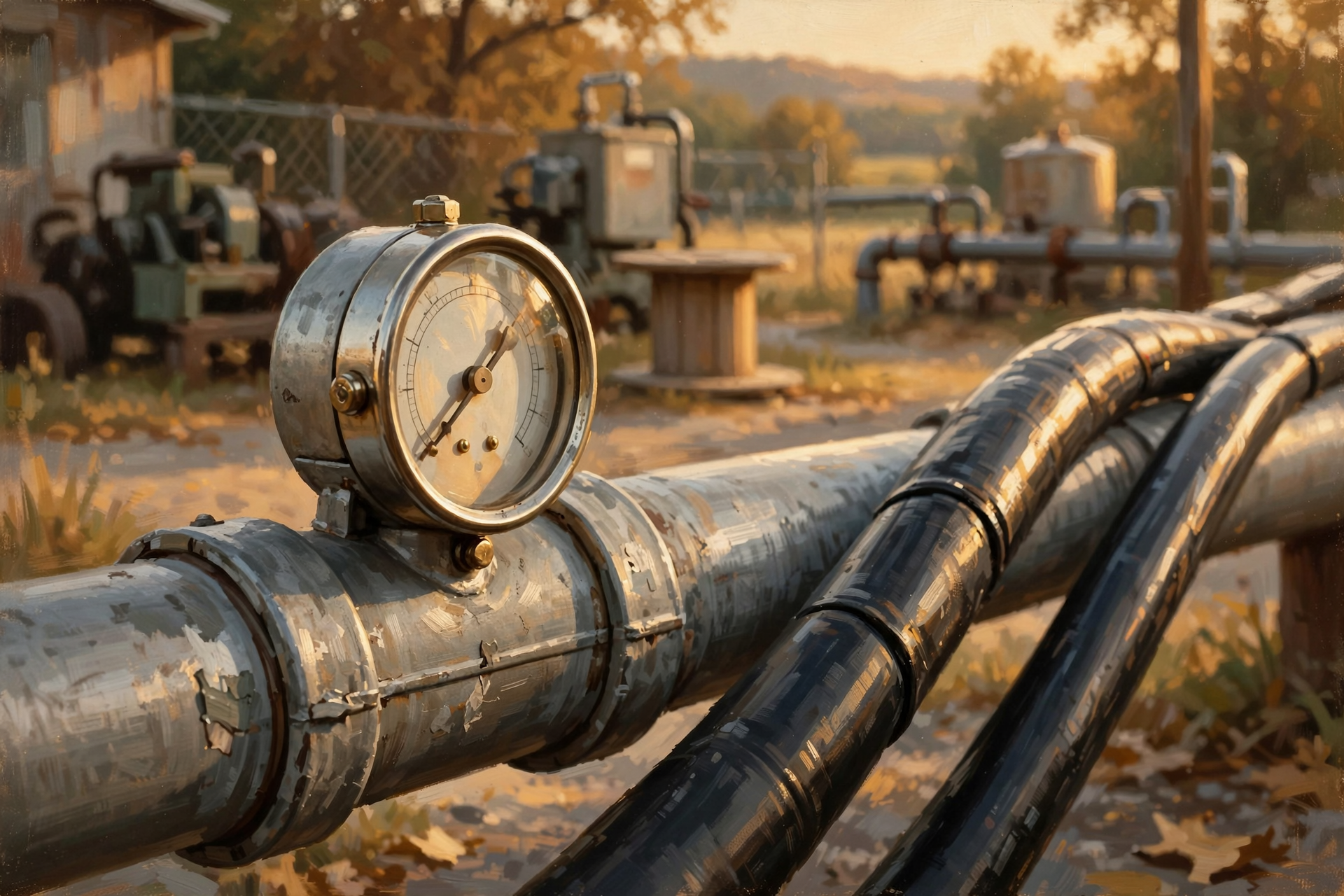
People often compare electrical voltage with pressure in a water system.
That can help build intuition, although electricity and plumbing are not literally the same physics.
The key idea is that we change electrical conditions to move large quantities efficiently through different parts of the system.
The equipment at the destination needs something different from the long-distance transmission system.
How Much Electricity Is Lost on the Way?
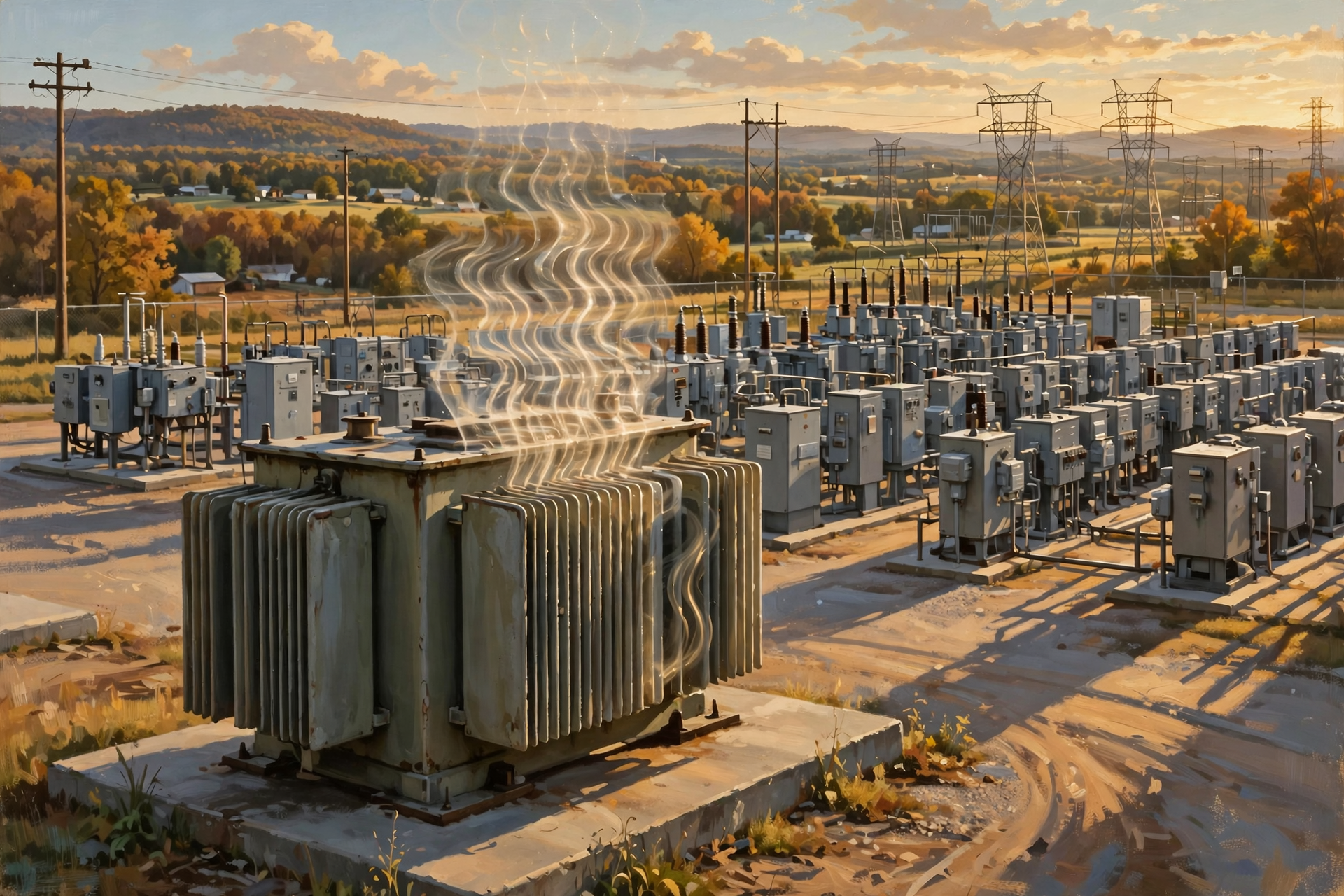
No electrical system is perfectly efficient.
Transmission lines have losses.
Transformers have losses.
Power conversion has losses.
Server power supplies have losses.
Cooling requires additional energy.
But modern electrical equipment can be highly efficient, and at data-center scale even a small percentage improvement matters.
If a huge facility can eliminate one percent of waste, one percent of a very large electrical bill can be worth a great deal of money.
This Is Why Data Center Designers Obsess Over Efficiency
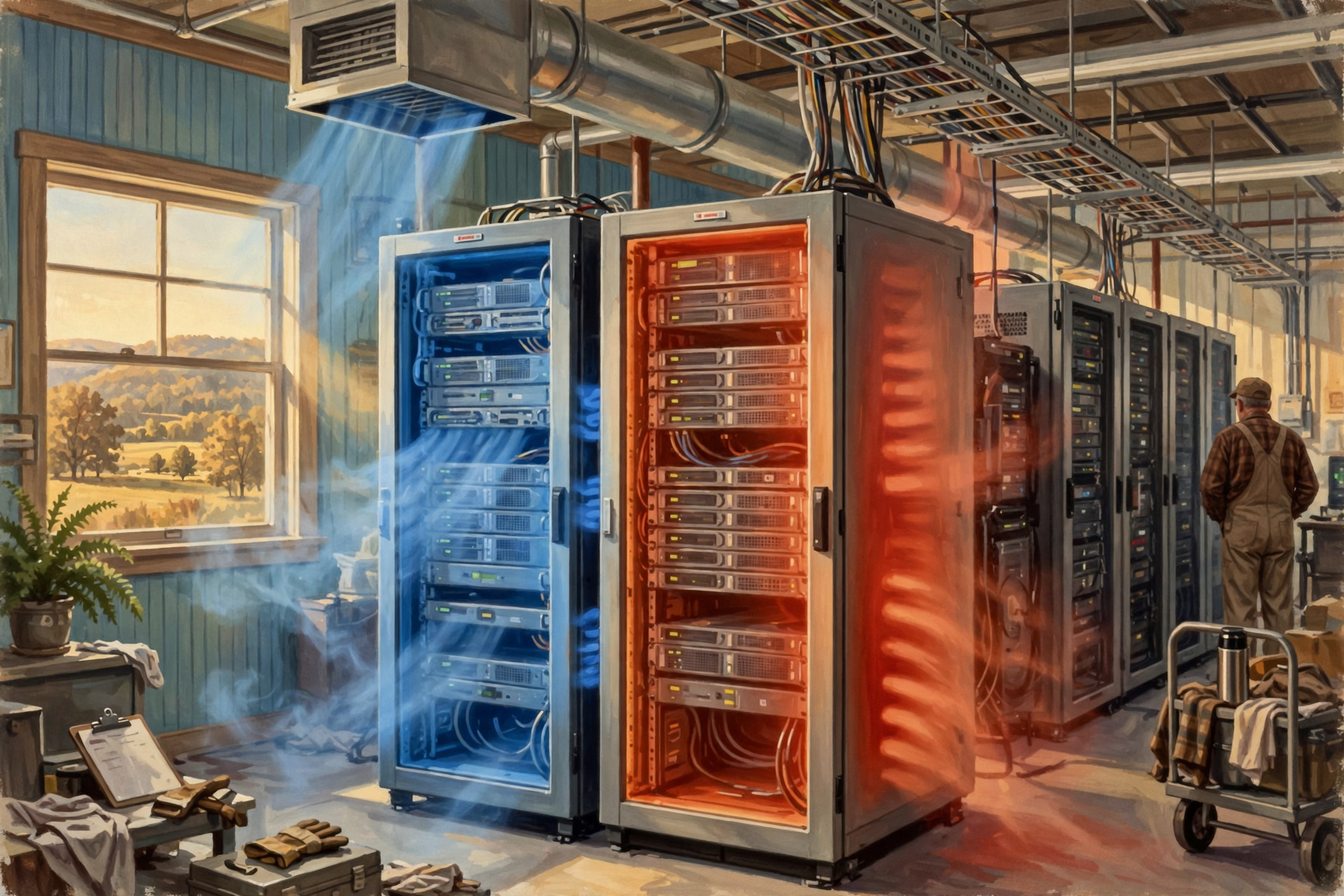
The Department of Energy’s data-center design guidance emphasizes efficiency across both computing and facility infrastructure because savings cascade through the system.
Use a more efficient server and you save electricity at the server.
That server also produces less heat.
Less heat means the cooling system has less work to do.
A watt saved at the processor can therefore reduce demand elsewhere too.
The Reverse Is Also True
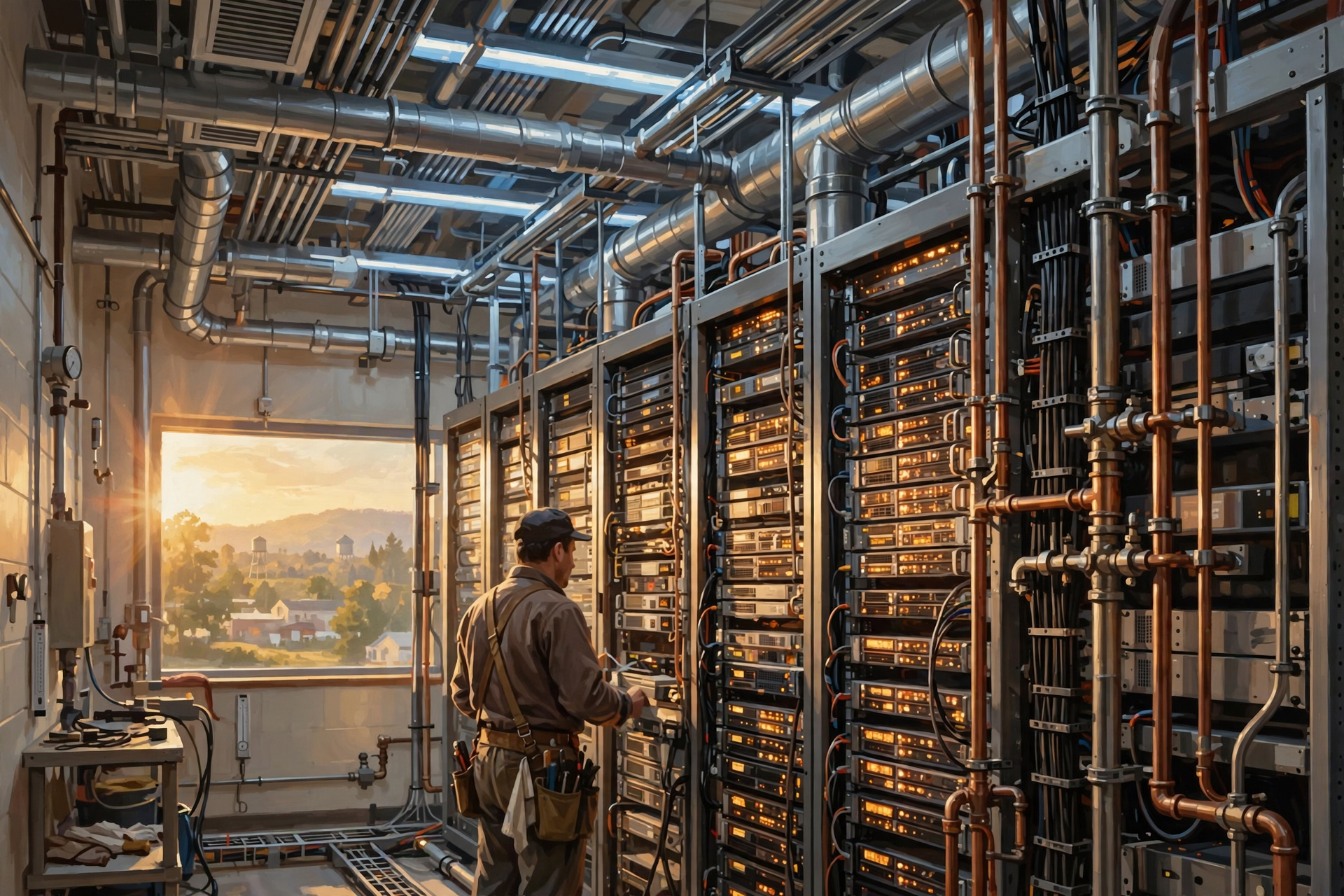
Add a rack full of powerful AI accelerators.
Now you need more electrical capacity at the rack.
That may require larger building distribution.
More electrical equipment may be required upstream.
The processors create more heat.
Cooling capacity increases.
The cooling equipment itself requires electricity.
A change inside a server can ripple all the way back toward the utility infrastructure.
This Is Why AI Changes More Than the Computer
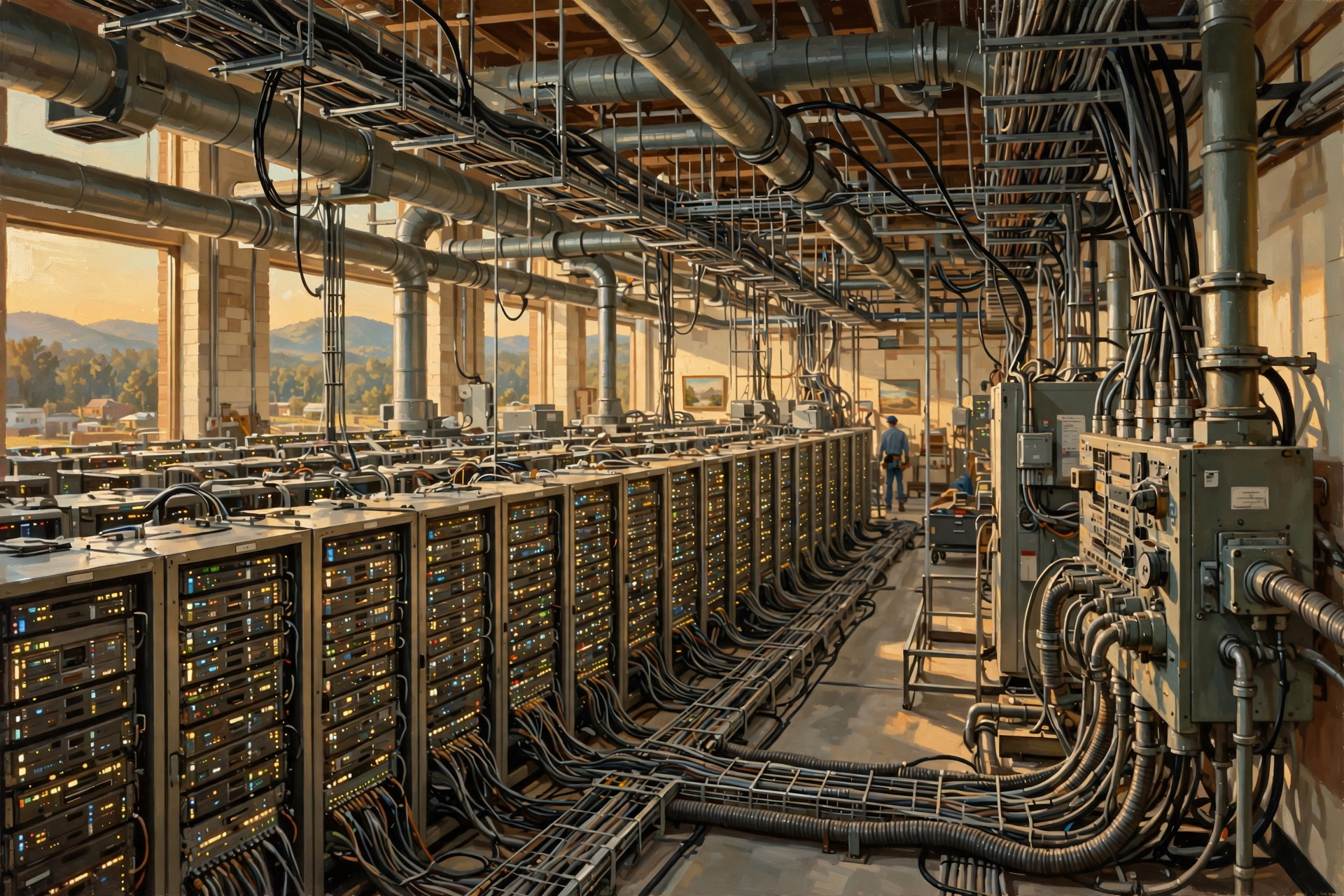
AI is not simply causing companies to buy different processors.
High-density AI hardware can change:
- server design;
- rack design;
- power distribution;
- building electrical systems;
- cooling;
- substation requirements;
- and utility planning.
The chip is tiny.
The infrastructure consequences can be enormous.
What Happens if Demand Suddenly Changes?
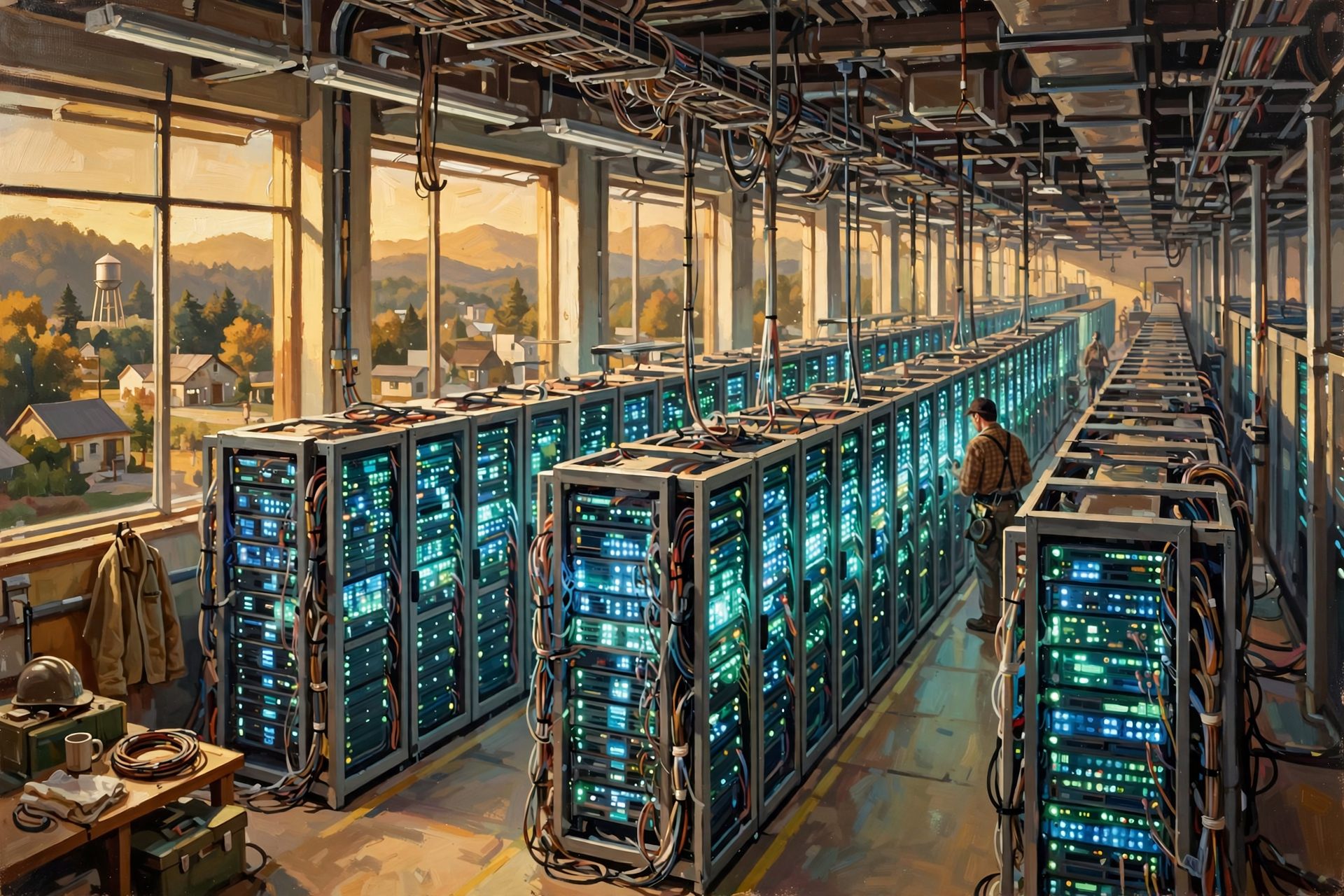
Traditional data centers often have relatively predictable electrical loads.
Large AI training clusters can be more dynamic.
Thousands of processors may begin or finish intensive work at roughly the same time.
The Department of Energy has been studying rapid load changes from large AI facilities because substantial synchronized changes in data-center consumption can affect grid operations.
This means utilities increasingly care not only about:
How much power do you need?
but also:
How quickly can that demand change?
Electricity Has to Be Balanced in Real Time
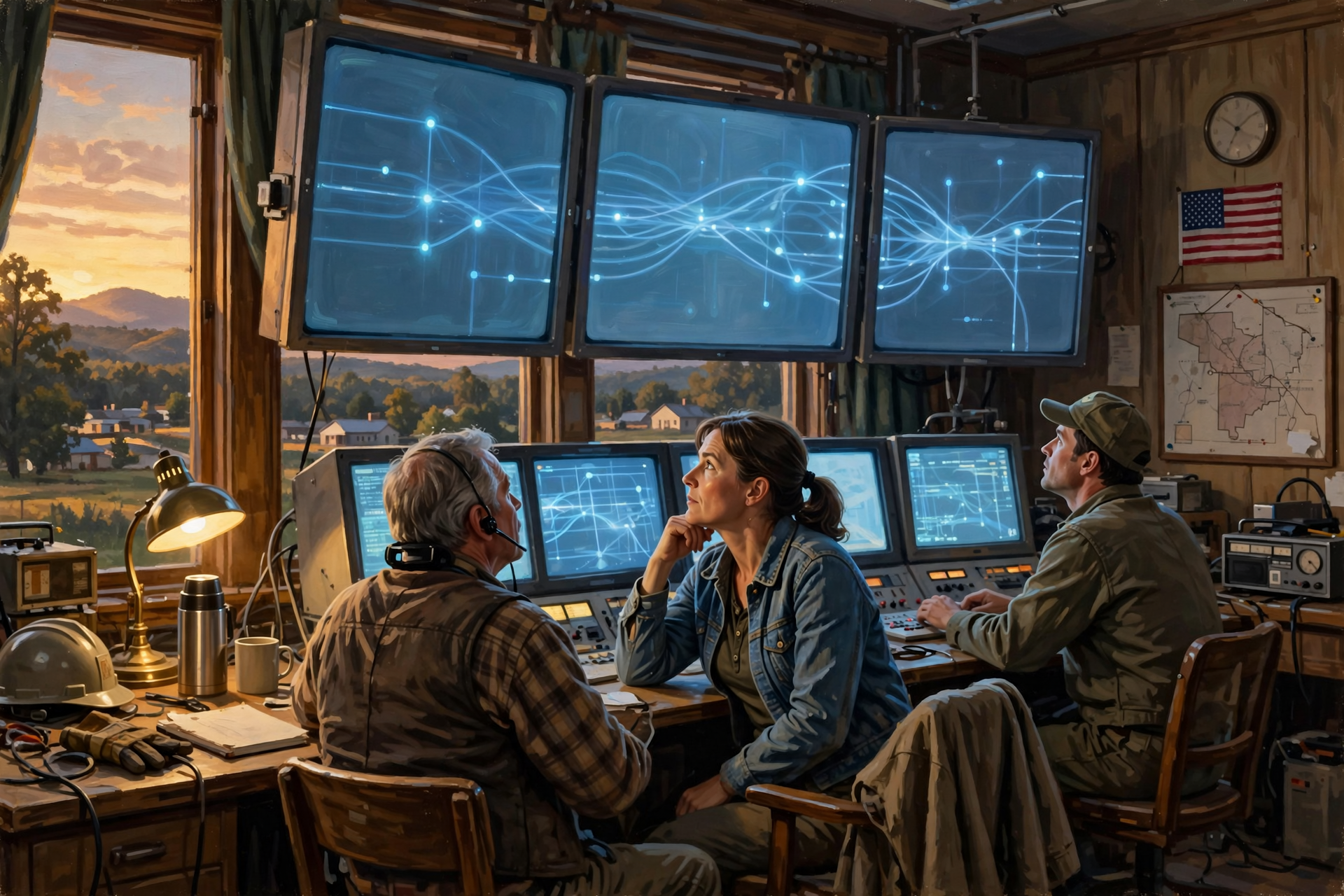
Unlike a pile of firewood, the electric grid does not simply stack up months of ordinary electricity somewhere waiting for customers to need it.
Grid operators continuously balance generation and demand.
The U.S. Department of Energy explains that the power system must constantly balance electricity supply and demand to maintain reliable service.
This is why sudden large changes in customer load can matter.
A data center is not merely buying kilowatt-hours.
It becomes part of an operating electric system that has to remain balanced every second.
Does Electricity Always Come From the Nearest Power Plant?
No.
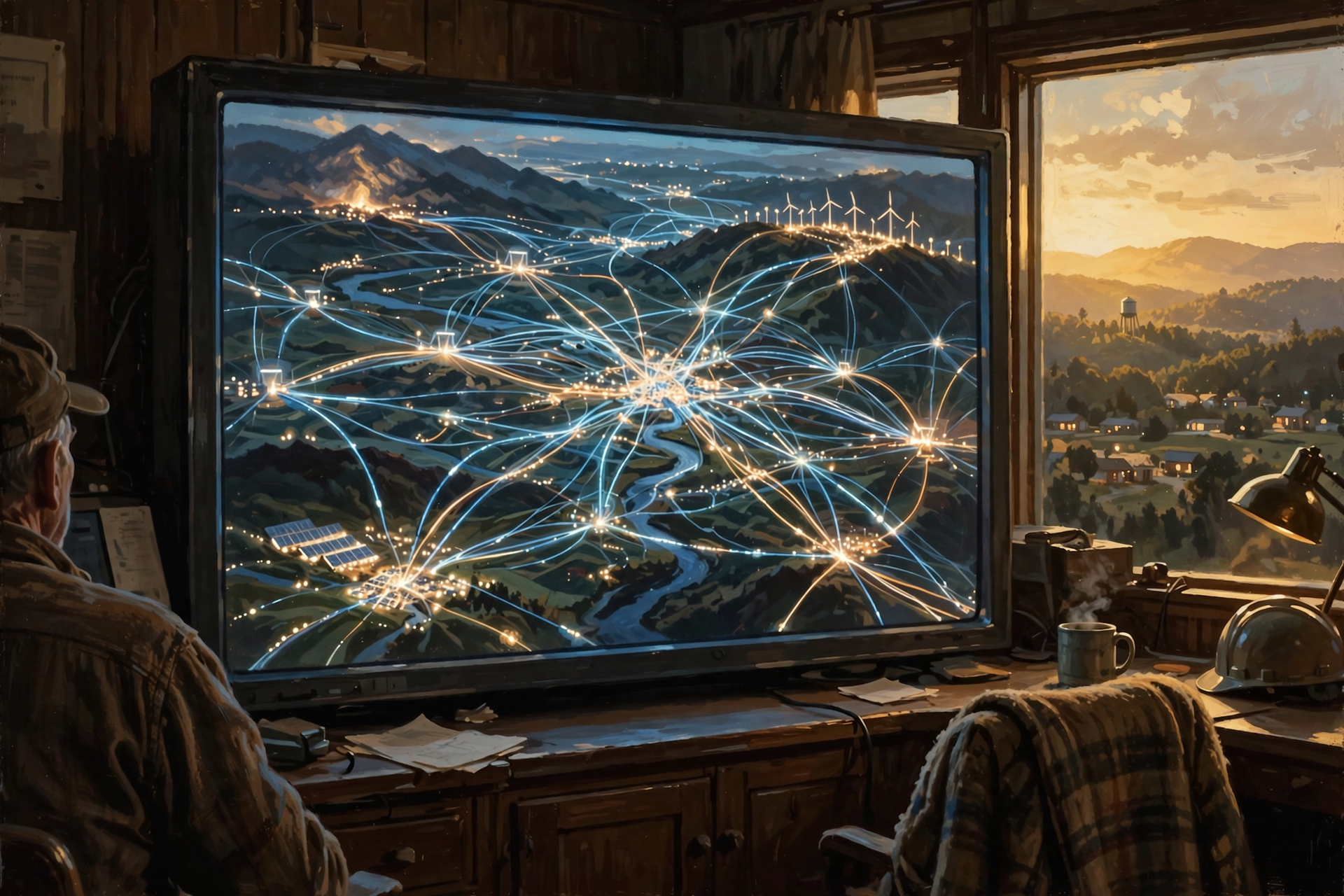
The grid is interconnected.
Electricity follows the physics of the network rather than a simple commercial path from one named generator to one named customer.
A company may contract for particular energy resources or renewable-energy arrangements, but the physical electricity arriving at a facility is part of the broader grid unless the site is operating through dedicated generation and electrical arrangements specifically designed otherwise.
This is an important distinction when companies discuss “powering” facilities with particular resources.
Commercial energy accounting and physical electrical flows are related but not always identical concepts.
Could a Data Center Generate Its Own Electricity?
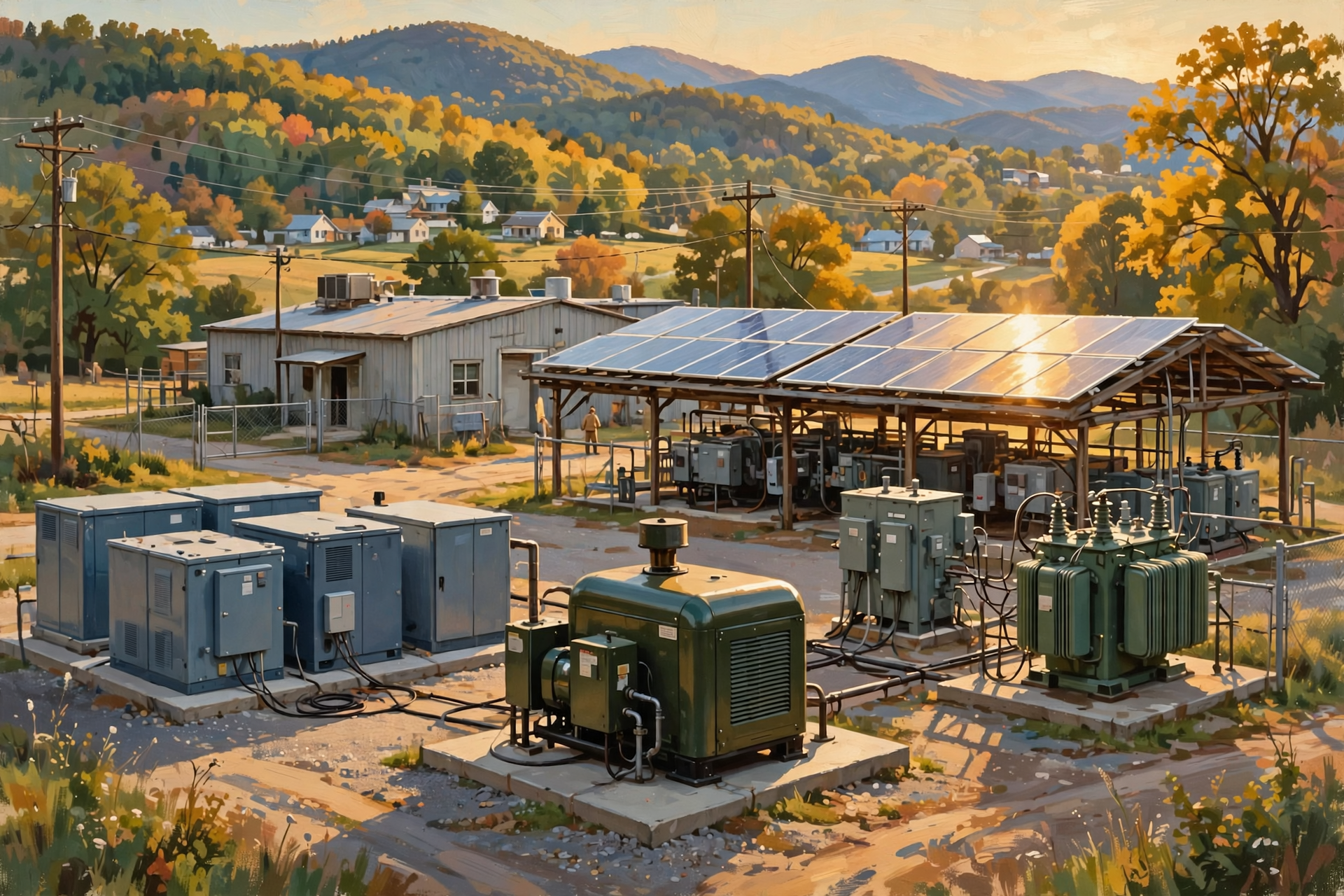
Potentially, at least in part.
Data centers may use or investigate:
- on-site natural-gas generation;
- solar;
- fuel cells;
- geothermal resources;
- battery systems;
- small modular nuclear concepts in future applications;
- and other technologies.
Some systems provide primary energy.
Others provide backup.
Others supplement utility service.
The exact economics and regulatory requirements depend on the project.
But even so-called “behind-the-meter” generation does not magically eliminate every grid question.
The facility may still depend heavily on utility connections for reliability, backup, expansion or energy exchange.
Could Data Centers Make the Electric Grid Stronger?
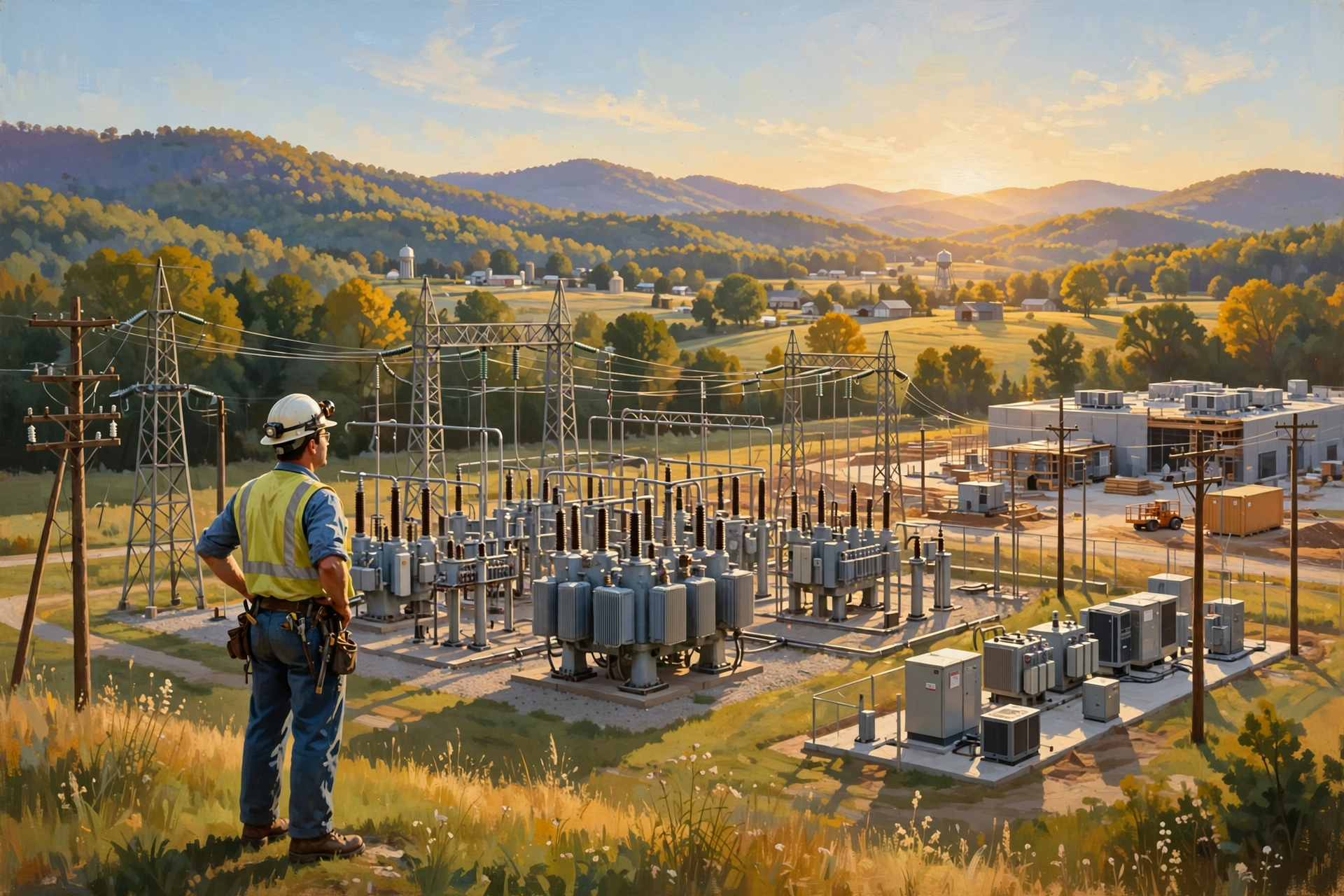
Possibly, under the right arrangements.
A large new customer can help justify infrastructure investment.
A facility may pay for dedicated electrical upgrades.
Battery systems may eventually help support grid operations.
Flexible computing loads could sometimes shift away from periods of system stress.
New transmission built partly for industrial growth may also provide wider system benefits.
But those outcomes are not automatic.
The financial agreements matter enormously.
Could They Leave Other Customers Holding the Bill?
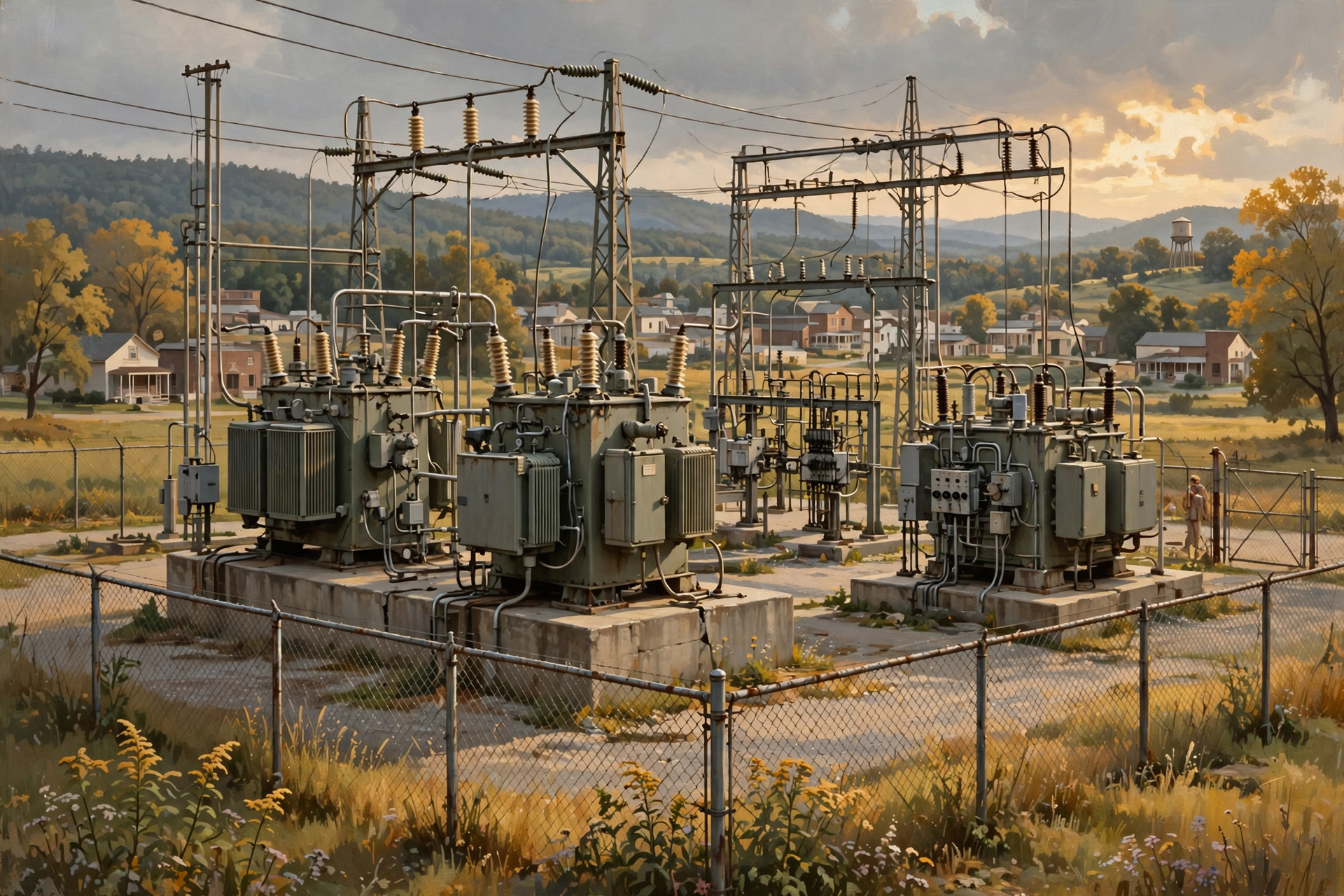
That is also possible if contracts and rate structures are poorly designed.
Imagine a utility spends heavily on:
- a new substation;
- transformers;
- transmission;
- and additional generating capacity
because a customer forecasts enormous demand.
Then the customer never reaches that demand or leaves early.
The infrastructure does not disappear.
The debt does not disappear.
This is why utilities increasingly use tools such as:
- minimum-demand requirements;
- long-term contracts;
- upfront contributions;
- credit protections;
- and special rate structures
when serving extraordinarily large new loads.
This subject deserves its own article later in the series.
Hold On—Is That True? “Electricity Travels From the Power Plant Straight to the Data Center”
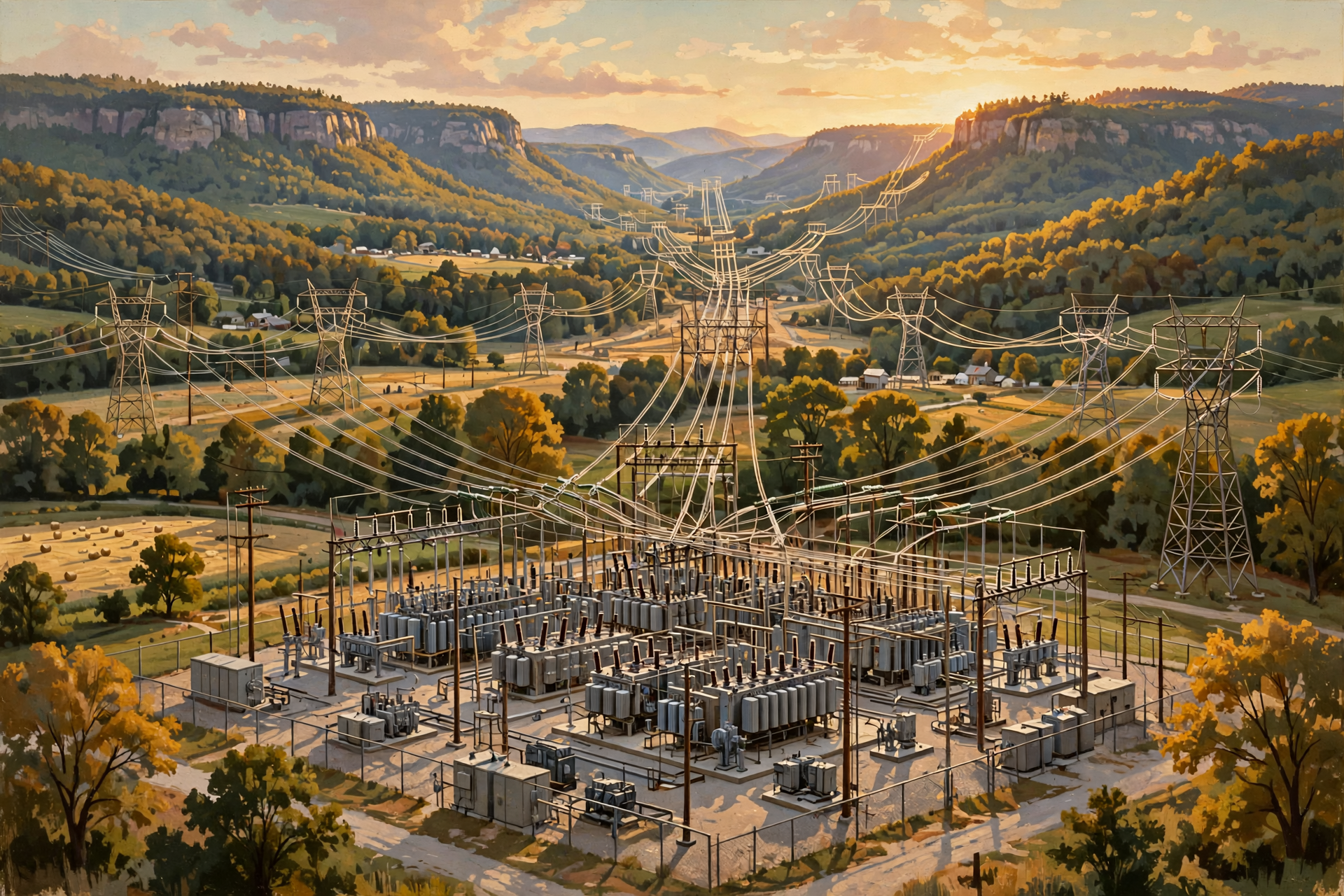
Not usually in the simple way that sentence suggests.
The data center draws electricity from an interconnected grid containing multiple generators, transmission lines and substations.
The physical system continuously balances many generators and many customers.
Hold On—Is That True? “A Data Center Substation Generates Electricity”
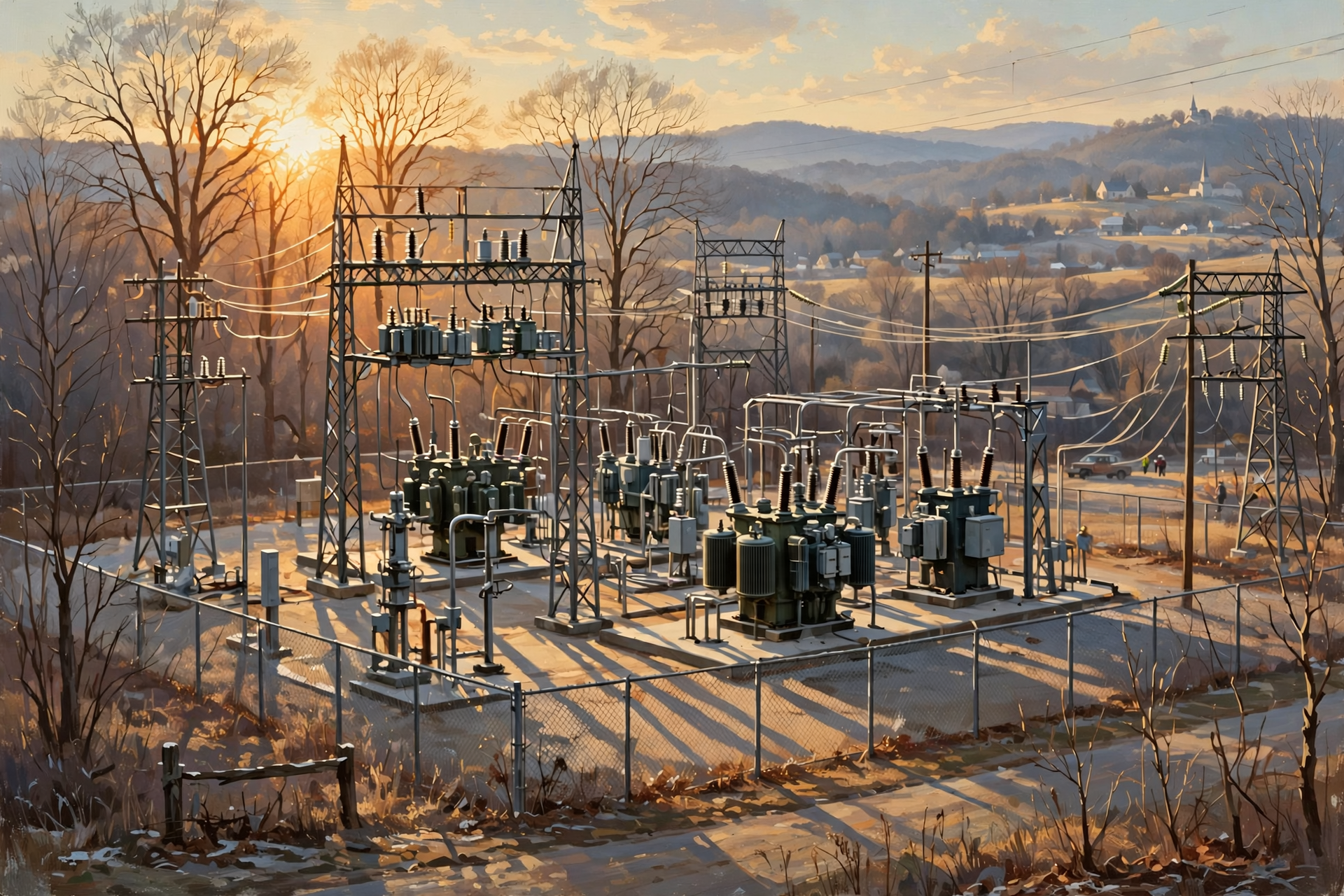
No.
A substation generally transforms, switches, protects and routes electricity.
The electricity is generated elsewhere unless generation equipment is specifically located at the site.
Hold On—Is That True? “Transformers Make Electricity”
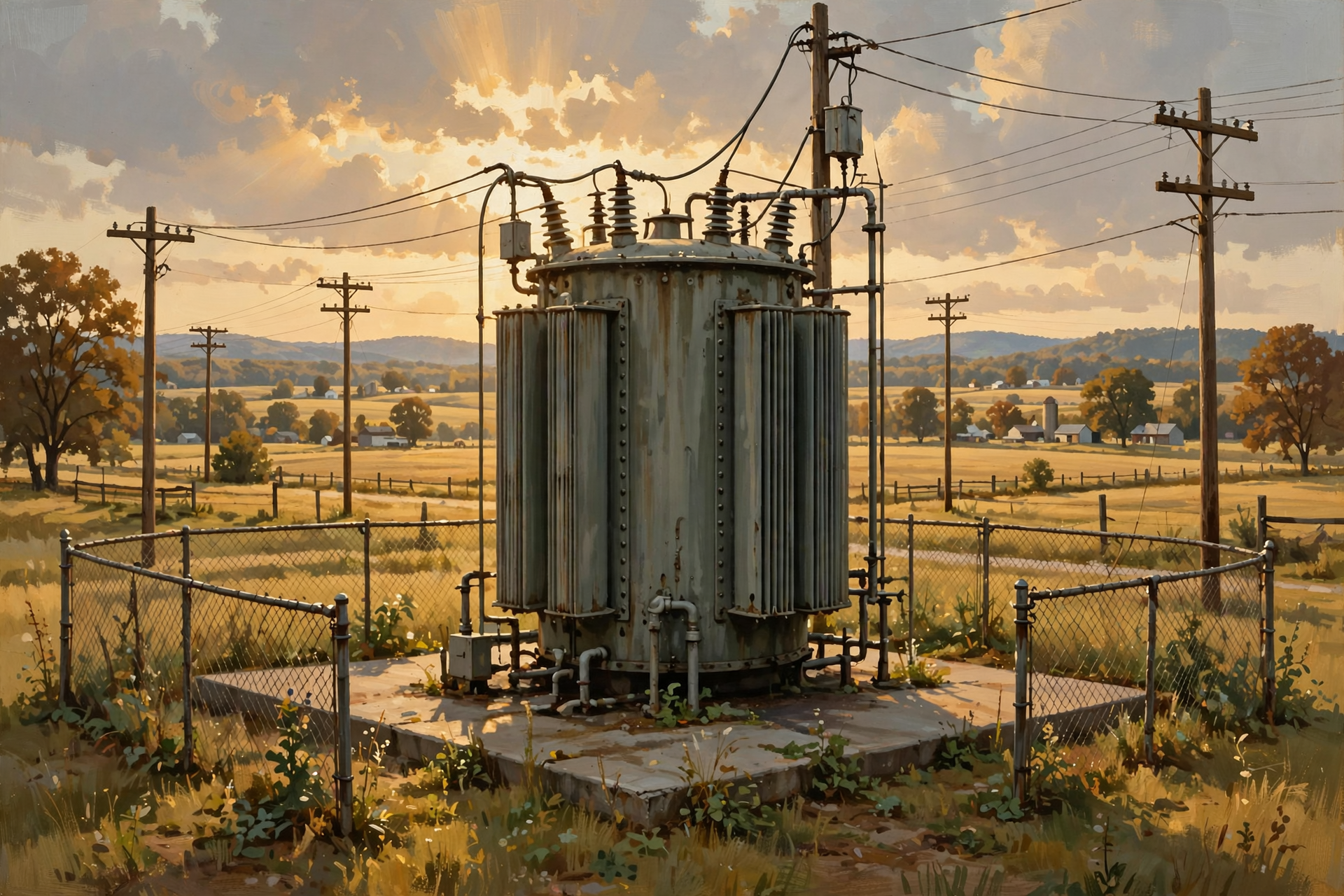
No.
Transformers change voltage.
They are essential for efficiently moving and safely distributing electricity, but they do not create the underlying electrical energy.
Hold On—Is That True? “Backup Generators Run the Data Center All the Time”
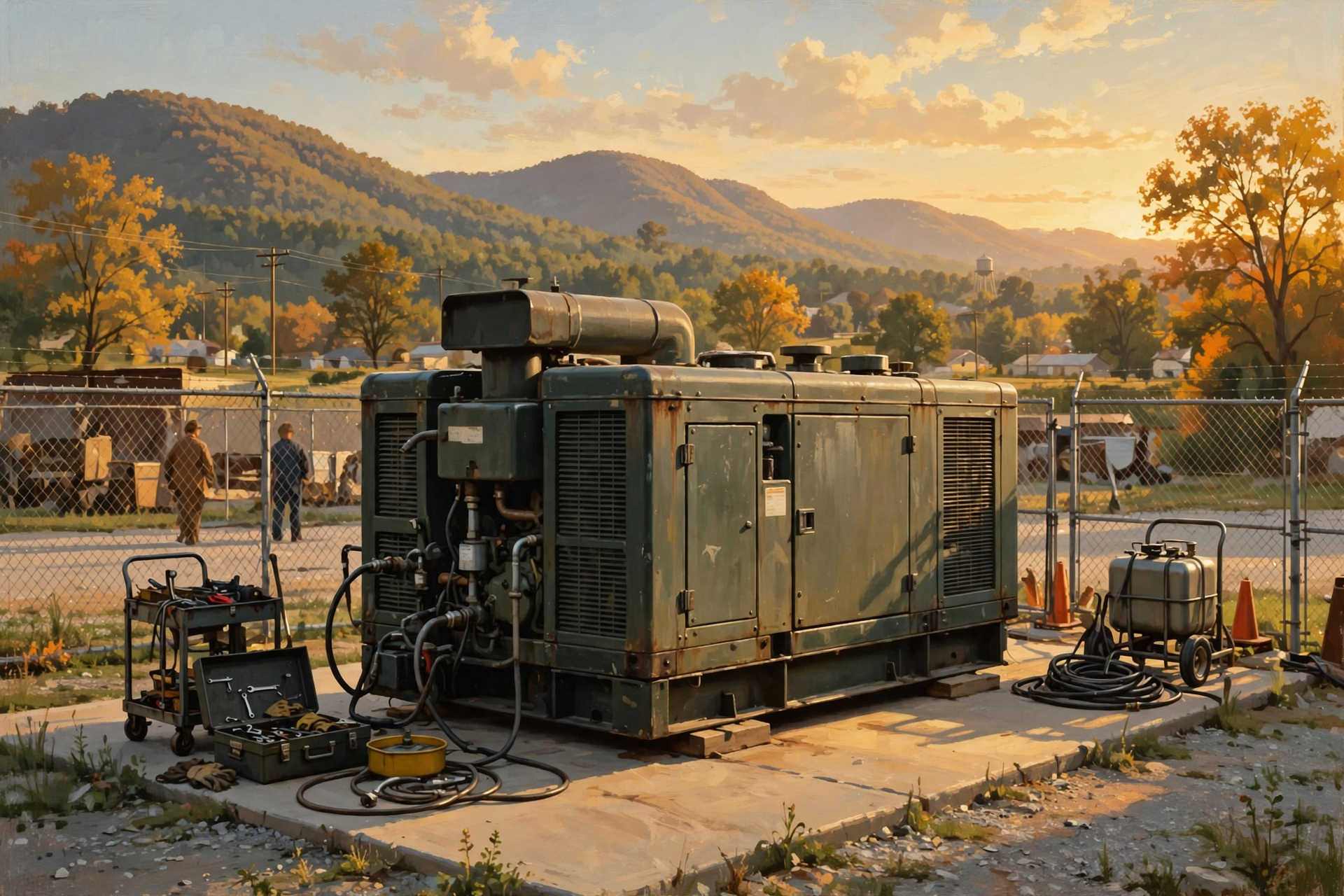
Usually no.
Traditional backup generators are generally installed for emergency or reliability purposes and require periodic testing and maintenance.
Some newer projects may consider on-site generation for broader operating roles, so the actual project design should always be examined rather than assumed.
Why This Matters in Rural Tennessee
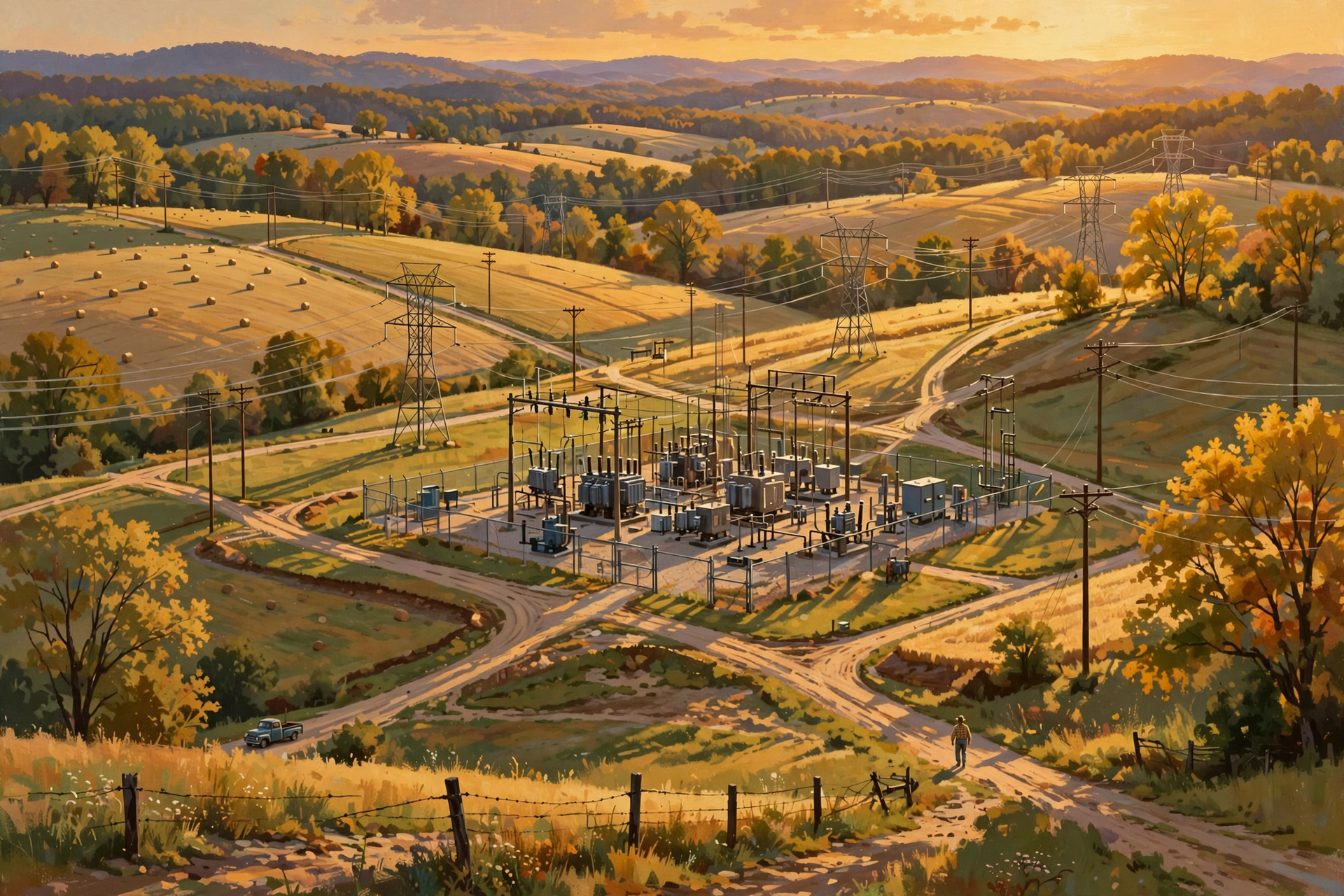
The electrical journey explains why a data center can become a community issue even if the servers themselves sit behind a private fence.
A large facility may require changes to infrastructure extending well beyond the property:
- transmission corridors;
- substations;
- utility rights of way;
- new transformers;
- generation planning;
- road access for oversized equipment;
- and long-term utility investments.
TVA’s transmission network serves the broader Valley, while local power companies generally deliver power to homes and ordinary businesses.
A very large new load therefore sits inside a larger regional system.
That is why the question is not merely:
Can the data center afford its electric bill?
The broader questions include:
What has to be built to serve it?
and:
Who pays for what gets built?
Ten Questions to Ask About the Electrical Connection

- How many megawatts does the project require in Phase One?
- What is the maximum requirement at full buildout?
- Where will the project connect to the electrical system?
- Does it require a new substation?
- Will new transmission lines or upgrades be required?
- Who pays for the connection and grid upgrades?
- What backup generation will be installed?
- How many batteries or UPS systems are planned?
- What happens if the project’s actual electricity demand is much lower than forecast?
- What protections prevent those costs from being unfairly shifted to other customers?
Plain-English Glossary
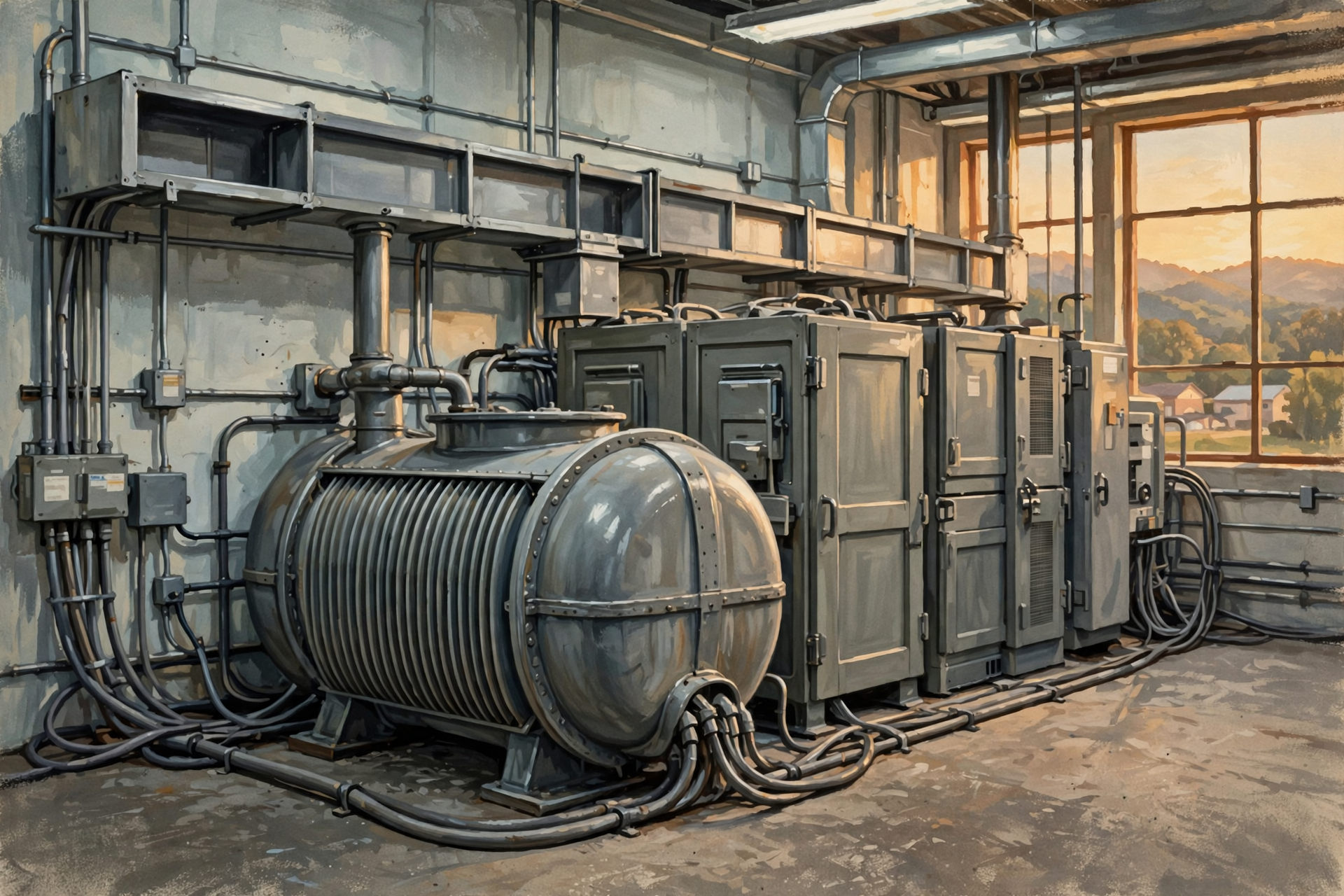
Generation: Producing electricity from another energy source.
Transmission: Moving large quantities of electricity across longer distances at high voltage.
Distribution: Delivering electricity from the broader grid to homes, businesses and other customers at lower voltages.
Transformer: Electrical equipment that raises or lowers voltage.
Substation: A facility containing equipment used to transform, switch, protect and route electricity.
Switchgear: Equipment used to control, protect and isolate electrical circuits.
Circuit breaker: A protective device capable of interrupting electrical current when necessary.
UPS: Uninterruptible power supply; equipment that immediately provides temporary power when normal electricity is interrupted.
Busway: An electrical distribution system using enclosed conductive bars to carry substantial amounts of power through a facility.
PSU: Power supply unit; the component inside a server that converts incoming electrical power into the forms needed by its electronics.
AC: Alternating current, the form of electricity commonly used throughout the power grid.
DC: Direct current, the form used internally by many electronic circuits and components.
FAQ
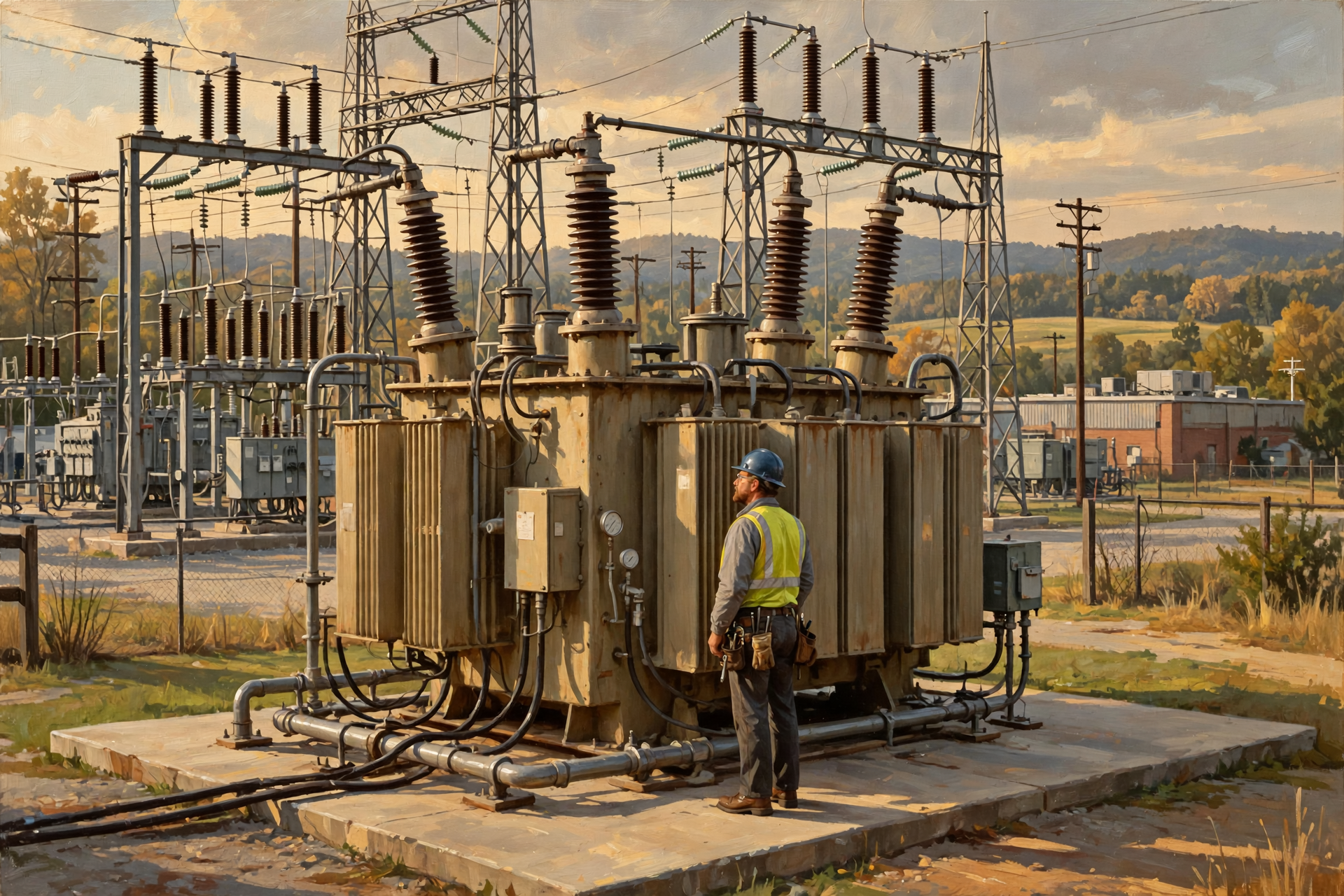
Does a data center receive electricity directly from TVA?
That depends on the facility and utility arrangement. TVA operates the regional transmission system and sells wholesale electricity to local power companies across the Valley. Very large projects can require specialized interconnection and utility arrangements, so the specific project needs to be examined.
Why is transmission voltage so high?
Higher voltage allows large quantities of power to be moved over long distances with lower current and reduced electrical losses.
Why does voltage have to be stepped down?
The voltage useful for efficient long-distance transmission is much higher than the voltage required by building equipment and computer electronics. Transformers reduce it in stages as electricity approaches the final load.
Why does a data center need a UPS if it has generators?
Generators need time to start and stabilize. UPS systems provide immediate power during that transition so computers do not experience an interruption.
Why are there so many transformers?
Electricity can require several voltage transformations as it moves from generation through high-voltage transmission and eventually down to the low voltages used inside electronic equipment.
What happens if one transformer fails?
The answer depends on the facility design. Highly reliable data centers can include redundant transformers, electrical paths and other equipment so a single failure does not necessarily shut down computing operations.
Does all the electricity eventually become heat?
Almost all of the electrical energy consumed by computing and electrical equipment ultimately appears as heat somewhere in the system, which is why data centers require substantial cooling infrastructure.
Wisdom From the Front Porch

The server may be the fancy new tractor, but without the road, fuel tank, electrical shop and somebody keeping the gate open, it isn’t getting much work done.
That is the larger lesson from following electricity into a data center.
The glamorous part is the computer chip.
The essential part is everything required to feed it.
A generating resource produces electricity.
Transformers raise the voltage.
Transmission lines carry power across the region.
Substations route and transform it.
More transformers lower the voltage.
Switchgear protects the system.
Batteries bridge interruptions.
Generators stand ready.
Building electrical systems distribute power.
Server power supplies convert it again.
Finally, microscopic circuits use that energy to perform calculations.
Then the cooling system has to carry the heat away.
Once you understand that chain, it becomes much easier to understand why building a giant AI data center is not merely a matter of buying computers.
It is also an electrical infrastructure project.
Want to Follow the Data Center Conversation Further?

If today’s trip from power plant to processor made you realize how much physical infrastructure sits behind something as ordinary as an online search or AI question, that is exactly why these conversations matter beyond the technology industry.
The Van Buren Digital Frontier Symposium on November 19 offers an opportunity to continue learning about data centers, artificial intelligence, electricity and the infrastructure decisions that can accompany large computing projects in rural Tennessee.
You do not need to be an electrical engineer to participate. People who understand utilities, land, construction, farming, manufacturing, local government, business and household economics already understand many of the practical questions involved when a large new customer connects to the electric grid.
The useful goal is not to decide beforehand that data centers are automatically good or bad. It is to understand what a particular project requires, what infrastructure must be built, who benefits, who carries the costs, what protections exist for existing customers and what questions should be answered before long-term commitments are made.
For more information, visit the Van Buren Digital Frontier Symposium listing on Dunlap.Directory or the Van Buren Digital Frontier Symposium Facebook page. Either resource can be used for additional information and event updates.
Other Articles In This Data Center Series
- Megawatts and Gigawatts Without the Engineering Degree
- Why Do Data Centers Use So Much Electricity?
- What Is a Hyperscale Data Center—and Just How Big Is “Hyperscale”?
- CPU, GPU, Server, Storage: What Are All These Machines Actually Doing?
- Why Does Artificial Intelligence Need So Many Data Centers?
- What Happens When You Search Google? Follow One Question Through a Data Center
- What Happens When You Google Something? Follow a Search on a 500-Mile Digital Road Trip
- Not All Data Centers Are the Same: From a Server Closet to an AI Mega-Campus
- If AI Keeps Getting More Efficient, Why Do We Need More Data Centers?
- What Is the Difference Between My PC and an AI PC in a Data Center?




0 Comments