
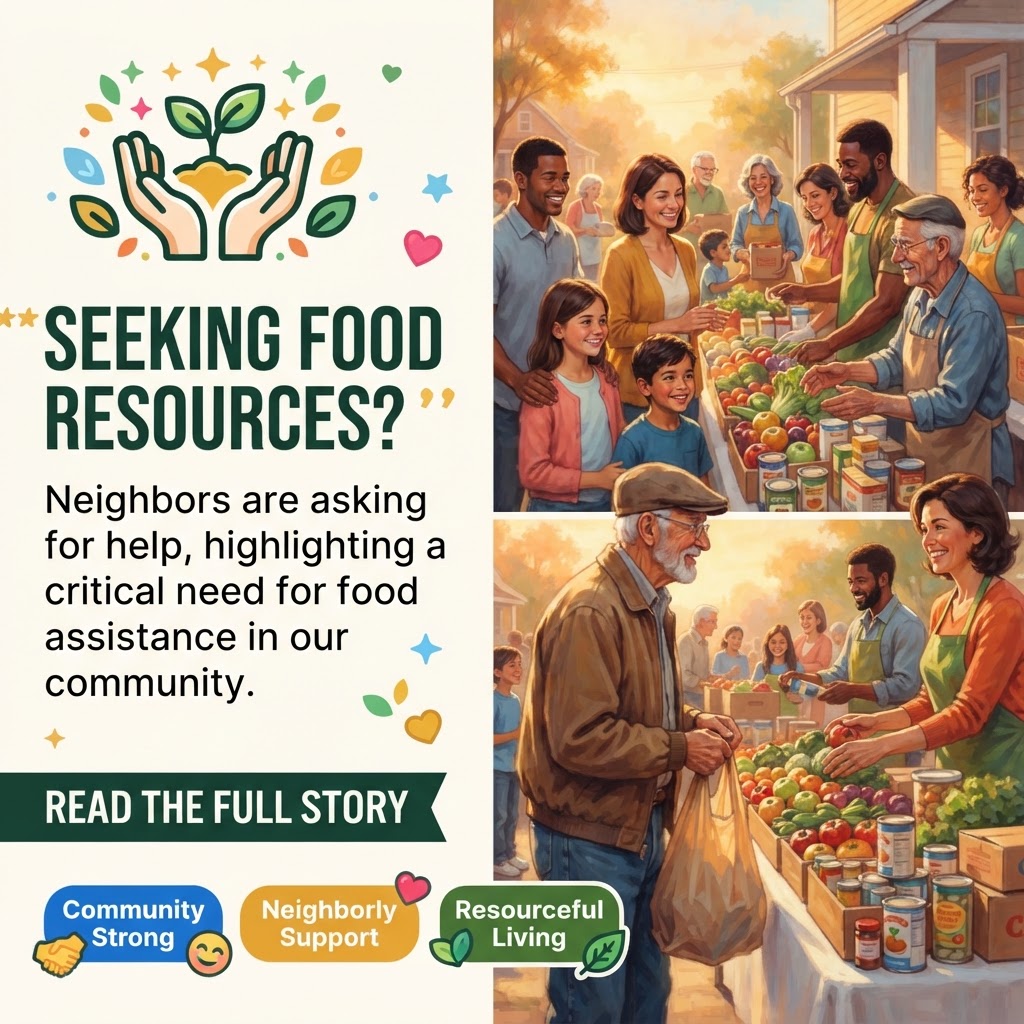
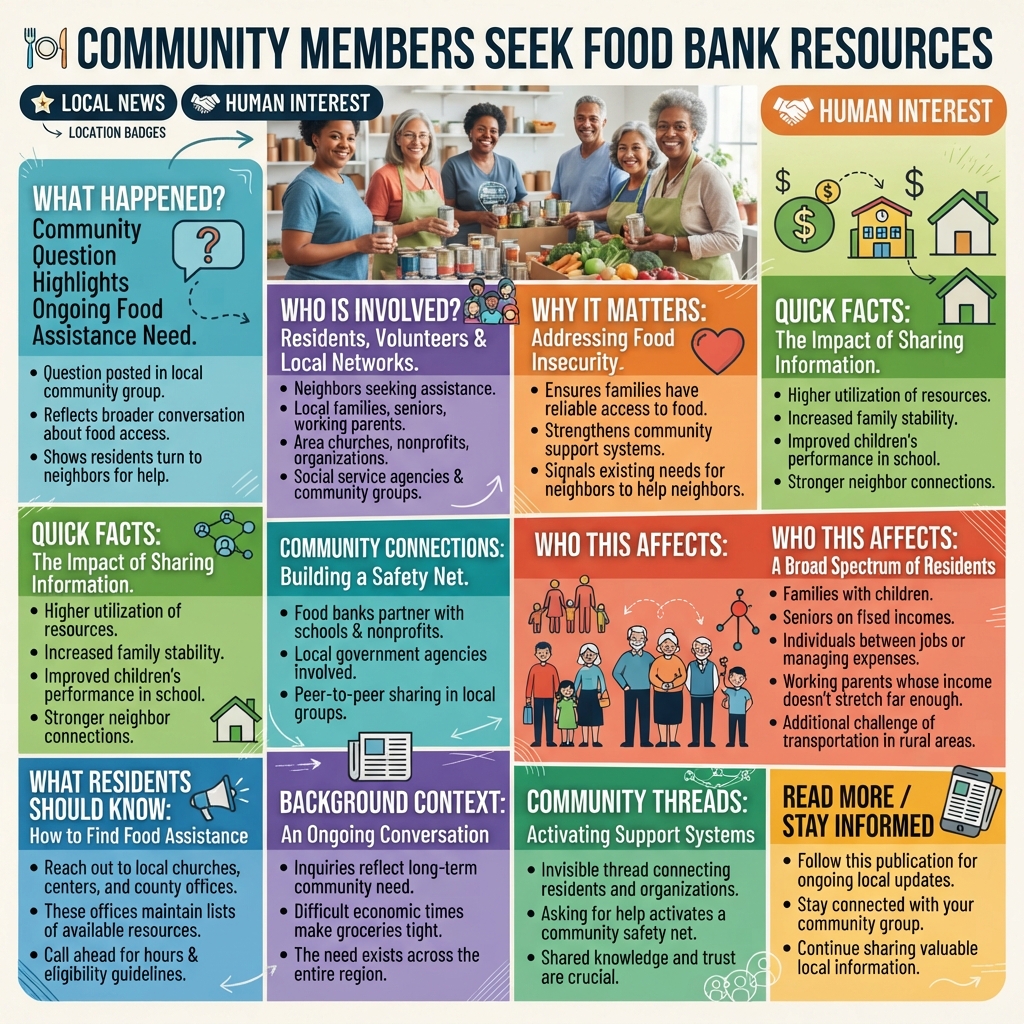
🍽️ Community Members Seek Food Bank Resources in Sequatchie Valley Area
A recent question posted in a local community group highlights an ongoing need many residents face: access to reliable food assistance. The inquiry reflects a broader conversation happening across the Sequatchie Valley about where families and individuals can turn when groceries become tight.
❤️ Why This Matters
Food insecurity affects real families in our community—working parents, seniors on fixed incomes, families between jobs, and households managing unexpected expenses. When someone asks publicly where to find a food bank, it signals that the need exists and that neighbors are willing to help neighbors find solutions. Understanding what resources are available strengthens the entire community’s ability to support one another during difficult times.
🤝 Community Connections
Food banks typically operate as part of a larger network of community support—often connected to churches, nonprofits, civic organizations, and local government programs. These resources frequently partner with schools, community centers, and social service agencies to reach families who need them most. The question itself, posted in a local community group, shows how residents naturally turn to their neighbors and trusted local networks when seeking help.
👥 Who This Affects
Food assistance serves many different people: families with children, elderly residents, individuals experiencing job transitions, people managing medical expenses, and working families whose income doesn’t quite stretch far enough. In rural areas like the Sequatchie Valley, transportation to food resources can be an additional challenge, making proximity and accessibility especially important for those who need support.
💡 What Residents Should Know
If you or someone you know is looking for food assistance in the area between Dunlap and South Pitt, the best first step is to reach out to local churches, community centers, and county social services offices—they often maintain current lists of available resources and can connect you directly. Many food banks have specific hours, eligibility guidelines, and application processes, so calling ahead is typically helpful. Community groups like the one where this question was posted can also be valuable sources of real-time local information and peer recommendations.
🌱 Long-Term Community Impact
When communities understand and use their food assistance resources effectively, it creates a ripple effect: families have more stability, children perform better in school, and neighbors develop stronger connections through mutual support. Over time, communities that actively share information about available resources tend to see higher utilization rates and better outcomes for vulnerable residents. This kind of peer-to-peer information sharing—asking and answering questions in local groups—strengthens the social fabric that holds communities together.
🧵 Community Threads
The Mutual Aid Network: This simple question reveals an invisible thread connecting residents, local organizations, and support systems. When neighbors ask neighbors where to find help, they’re activating a community safety net that depends on shared knowledge and trust. Understanding this thread helps residents realize they’re not alone and that asking for help is part of how communities function.
Local Information Sharing: Community Facebook groups and local networks serve as informal but powerful channels for distributing practical information. The fact that someone felt comfortable asking this question publicly suggests these groups are trusted spaces where residents expect honest, helpful responses from people who know the area.
❓ Questions Worth Considering
- What food assistance resources currently exist in your immediate area, and how well do residents know about them?
- Are there barriers—transportation, hours, eligibility requirements—that might prevent someone from accessing available resources?
- How can community groups, churches, and local organizations work together to make sure information about food assistance reaches everyone who needs it?
- What role can neighbors play in supporting one another beyond just sharing information?
If you have information about food banks or assistance programs in your area, consider responding to community members asking for help. If you’re seeking resources yourself, reaching out to local churches, county social services, or community organizations is a good starting point—and asking in community groups like this one is a valid way to tap into local knowledge.
🤔Source
📰Other Stories
- 🔄 Innovative NFC Solutions Launch in Dunlap : How Local Businesses Can Stay Connected with a Single Tap
- 🍖 Local BBQ Spot Celebrates Community with New Dining Room & Smoky Specialties
- 🌞 New Community Playground & Splash Pad Opens in Sequatchie Valley: What to Expect on Grand Opening Day
- 🍽️ Free School Meals Available for All Students in Sequatchie County Schools
- 🍪 Local Bakery Launches Cookie Dippers—Limited-Time Offer Tempts Sweet Tooths in Sequatchie Valley
- 🍽️ Summer Specials Return at Fix’nz 4 The Soul – Fresh Flavors & Community Vibes
- 🐣 Unlikely Newcomers: Flightless Feathers Join Weakley Hog Farm ’s Unexpected Menagerie

0 Comments