
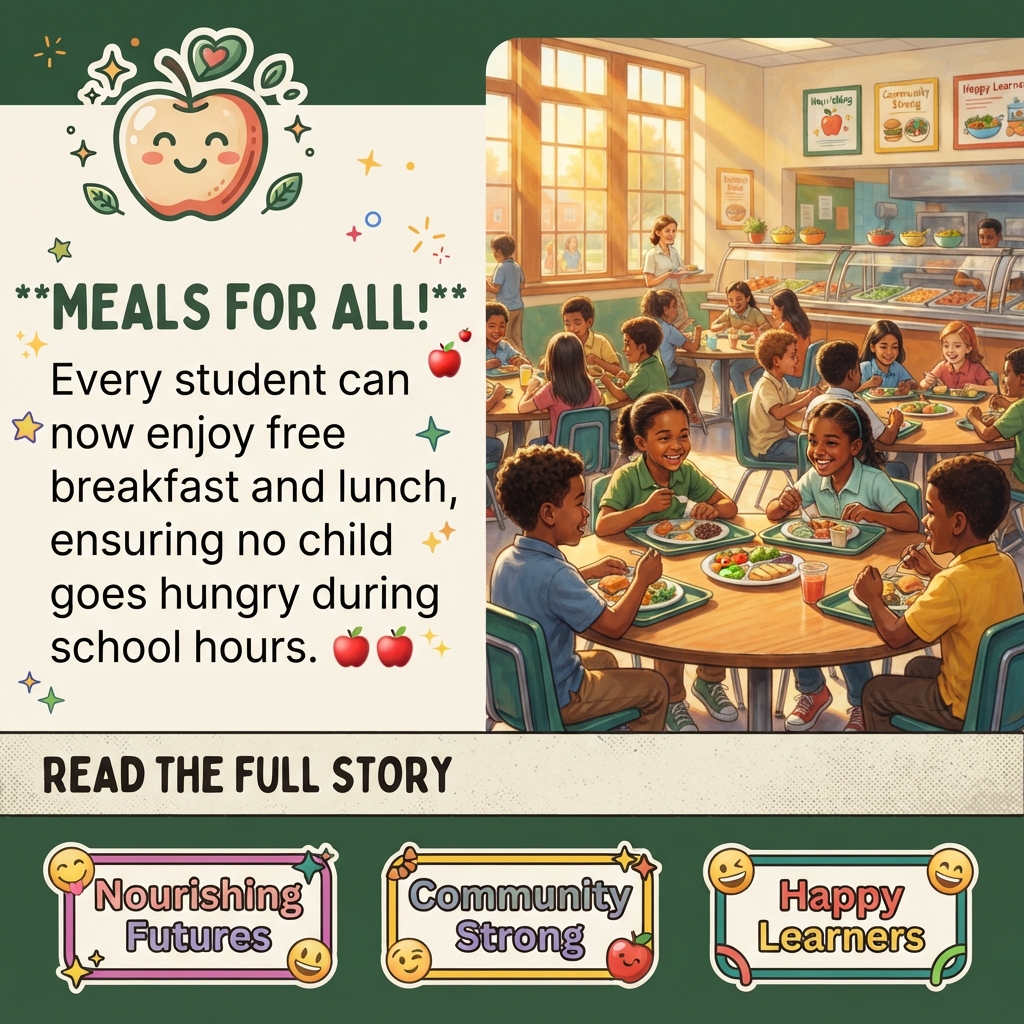
🍽️ Free School Meals Available for All Students in Sequatchie County Schools
As families across the Sequatchie Valley prepare for a new school year, this announcement from Sequatchie County Schools offers a vital lifeline—one that removes financial barriers and ensures every student has access to nourishing meals. With summer winding down and backpacks being packed, the district’s commitment to providing free breakfast and lunch for all students underscores the importance of supporting young learners beyond academics.
💜 WHY THIS MATTERS
The decision to offer no-cost meals to every student in Sequatchie County Schools is more than a logistical detail—it’s a recognition that hunger doesn’t take a summer break, and neither should access to healthy food. For families already managing tight budgets or navigating financial instability, this program eliminates one less stressor as children return to classrooms. It also addresses the well-documented link between nutrition and learning: students who eat regularly are better equipped to focus, retain information, and participate fully in their education.
Beyond individual households, this initiative has ripple effects for the broader community. Local restaurants and food service providers may see shifts in demand as families rely less on school meals during breaks or summer months. For businesses near schools—whether cafés, grocery stores, or community centers—the program could influence foot traffic patterns and highlight opportunities to collaborate with the district on nutrition-related outreach.
Most importantly, this policy sends a powerful message: no child in Sequatchie County should go hungry because of their family’s circumstances. In a region where agriculture and small-town life are deeply rooted in the community’s identity, ensuring that young people have access to sustenance aligns with values of care and resilience.
🏫 COMMUNITY CONNECTIONS
The Sequatchie County Schools’ meal program connects directly to several long-standing community pillars:
- Schools as Community Hubs: Schools are often the heart of local neighborhoods, serving not just as educational centers but also as gathering places for families. By providing meals on-site, the district reinforces its role as a trusted resource that supports the well-being of students and their families.
- Partnerships with Local Organizations: The program may open doors for collaboration with food banks, churches, or nonprofits that already distribute groceries. For example, groups like Sequatchie Valley Community Outreach (if applicable) or local churches could amplify awareness of the meals program among families who might not yet know about it.
- Parental and Student Advocacy Groups: Parents’ Teacher Associations (PTAs), student councils, and youth organizations may take this as an opportunity to promote the program’s benefits, whether through social media campaigns or in-school announcements. Their involvement could help bridge any gaps in communication between the district and families.
- Cultural Traditions of Sharing: In rural Appalachian communities like Sequatchie Valley, traditions of sharing food—whether at potlucks, church dinners, or community picnics—are deeply embedded. This meal program extends that spirit of generosity into the school environment, reinforcing a culture where no one is left behind.
👨👩👧👦 HUMAN IMPACT
The most immediate beneficiaries of this program are the students themselves. For many children, school meals are their primary source of balanced nutrition—providing breakfast, lunch, or both each day. The absence of financial barriers means:
- Students can focus on learning, rather than worrying about whether they’ll have enough to eat.
- Parents and caregivers face less pressure to choose between groceries and other essentials like medication or utilities. This can reduce stress levels and improve overall family stability.
- Younger siblings or older students who might otherwise skip meals due to cost can now rely on the school’s offerings, ensuring consistency in their daily nutrition.
- Newcomers to the area, including families moving for jobs or displaced individuals, gain immediate access to a critical resource without needing to navigate complex application processes.
For some families, this program may also address stigma. In communities where financial hardship is often kept private, the universal nature of free meals removes the need for families to disclose income levels—a relief that can foster greater trust in school systems and local support networks.
🌄 LOCAL PERSPECTIVE
In a region like Sequatchie Valley—where agriculture is both an economic mainstay and a cultural touchstone—the availability of free school meals reflects broader trends in rural America. Across the Southeast, many districts have expanded free meal programs in response to pandemic-era changes or ongoing economic challenges. However, Sequatchie County’s decision to offer meals without qualifications sets it apart as an example of proactive support for families.
Locally, this aligns with the valley’s history of community-driven solutions. From mutual aid networks during natural disasters to grassroots efforts to improve broadband access, residents have repeatedly stepped up to address gaps in services. The meal program continues that tradition by ensuring that education isn’t derailed by basic needs—something that resonates deeply in a region where small-town values prioritize collective care.
That said, the program also raises questions about sustainability. How will the district fund this initiative long-term? Will there be opportunities for community members to volunteer or donate to supplement the meals? These are conversations that may unfold as the school year progresses.
🍽️ OPPORTUNITIES FOR CONNECTION
While the meal program is a district-wide initiative, there are several ways residents can engage with and support it:
- Encourage your student to participate. Many families may not realize that meals are available without restrictions. A simple reminder—whether through text, email, or word of mouth—can ensure no child misses out.
- Volunteer at school meal programs. If the district opens opportunities for community volunteers to help serve meals, this could be a meaningful way to give back while reinforcing the importance of the program. Schools often welcome parent helpers or student ambassadors to promote awareness.
- Partner with local businesses. Cafés, grocery stores, or food producers in Sequatchie County might explore ways to collaborate with schools—whether through donation drives, recipe sharing, or hosting nutrition education events for families.
- Advocate for transparency. Attend school board meetings or PTA gatherings to ask questions about the program’s implementation. Understanding how meals are distributed, monitored, and funded can help build trust in the initiative.
- Spread the word on social media. Share the district’s announcement with friends, neighbors, and local groups (e.g., Facebook pages like “Sequatchie Valley Families” or Nextdoor communities). Highlighting this resource can ensure it reaches families who might not otherwise see it.
📅 WHAT RESIDENTS SHOULD KNOW
The meal program is already in effect for the 2026–2027 school year, meaning families can rely on this resource immediately. Here are key details to keep in mind:
- No applications or income verification are required. Every student—regardless of family situation—is eligible for free breakfast and lunch.
- Meals are served daily at school sites. Students should bring their meal cards (if applicable) or follow their school’s specific process. Some schools may offer grab-and-go options during early mornings or afternoons.
- The district’s website (www.sequatchieschools.net) provides additional information, including menus and contact details for nutrition services.
- Summer meal programs may also be available. While the post focuses on the school year, residents should check with their local schools or the county’s Department of Education to see if extended meal options are offered during breaks.
⏳ WHAT HAPPENS NEXT
The immediate next steps for families are simple: take advantage of the meals as they return to school. However, the district may roll out additional initiatives in the coming months, such as:
- Nutrition education programs. Schools might introduce lessons about healthy eating habits or food sustainability, tying meals to broader learning objectives.
- Community feedback surveys. The district could gather input from families and students to assess the program’s effectiveness and identify areas for improvement.
- Partnerships with local farms or farmers’ markets. There may be efforts to source ingredients locally, supporting Sequatchie Valley’s agricultural economy while providing fresh options for students.
Residents can stay updated by following the district on social media (@SequatchieCoSchools) or subscribing to their newsletter. Watching for announcements about volunteer opportunities, meal distribution changes, or related community events will help families and supporters engage meaningfully.
🤔 COMMUNITY QUESTIONS
The free meal program invites reflection on how our community supports its youngest members:
- How might this initiative change the way families think about school meals—both as a resource and a shared responsibility?
- What other basic needs (e.g., clothing, hygiene products, mental health support) could Sequatchie County schools or community organizations address to further reduce barriers for students?
- How can local businesses or residents collaborate with the district to ensure this program is visible and accessible to all families?
- What role do you see schools playing in addressing food insecurity beyond meals—such as connecting families to grocery assistance programs?
- How might this policy influence other districts in the region to reconsider their own meal programs?
🌱 LONG-TERM COMMUNITY IMPACT
The ripple effects of this program extend far beyond the classroom. Over time, universal free meals could:
- Reduce absenteeism and improve academic performance. Studies show that students who eat regularly are more likely to attend school consistently and engage in their studies.
- Strengthen community trust in schools. By removing financial hurdles, the district fosters a sense that education is truly for everyone—a foundation for deeper community investment in public institutions.
- Encourage economic activity in local food systems. If the program expands to include locally sourced ingredients or partnerships with farms, it could create jobs and support small businesses in Sequatchie County.
- Set a precedent for other services. Success with this initiative might inspire similar universal programs—such as free school supplies, transportation assistance, or mental health resources—for students who need them most.
- Reinforce the value of collective care. In a region where neighborly support is a cornerstone of life, this program embodies the idea that no one thrives alone. It may inspire other community-driven solutions to local challenges.
🧵 COMMUNITY THREADS
The free meal program weaves together several invisible but vital threads in Sequatchie Valley’s social fabric:
- The Thread of Education and OpportunityWhy it matters: Schools are the gateways to future careers, and nutrition is a critical component of that foundation. By ensuring students aren’t distracted by hunger, this program directly supports long-term educational equity. How residents benefit: Parents can feel confident their children are entering classrooms ready to learn, while businesses may see a more engaged student population contributing to the local economy as adults.
- The Thread of Food Security and Rural ResilienceWhy it matters: Sequatchie County’s agricultural heritage is both an economic driver and a cultural identity. This program honors that legacy by ensuring the community’s youth—future farmers, teachers, and leaders—have access to nourishing food. How residents benefit: Local farms and producers may gain new opportunities to supply schools with ingredients, while families gain peace of mind knowing their children are fed consistently.
- The Thread of Stigma and Shared ResourcesWhy it matters: In tight-knit communities, financial hardship can be isolating. By eliminating qualifications for meals, the district removes a source of shame for families while reinforcing that resources should be accessible to all. How residents benefit: Reducing stigma around food insecurity may encourage more families to seek help from other community programs—whether it’s utility assistance or childcare support.
- The Thread of Intergenerational CareWhy it matters: Schools often serve as informal childcare hubs for working parents, especially in rural areas where daycare options are limited. Free meals extend this role by providing a reliable meal source for families juggling multiple responsibilities. How residents benefit: Parents can focus on their own livelihoods knowing their children are cared for and fed, while community organizations may see increased participation in school-based programs.
- The Thread of Community IdentityWhy it matters: Sequatchie Valley’s identity is shaped by its people’s resilience, generosity, and love for their neighbors. This program embodies those values in action—showing that the community chooses to invest in its children collectively. How residents benefit: Highlighting this initiative can foster pride in local institutions and encourage residents to think creatively about other ways to support one another.
🤔Source
📰Other Stories
- 🏡 Modern Stone Veneer Design Inspires New Exterior Trends in Tennessee
- 🍳 Breakfast & Overnight Getaway at Sweetwater’s Whistlestop Manor – A Hidden Gem Between Chattanooga and Knoxville
- 🌱 Local Family Farm Expands Access to Fresh Organic Produce Across Sequatchie Valley
- 🐖 Farm Fresh Raw Pork Blend Pet Food Launches: A Local Twist on Reducing Waste and Supporting Sequatchie Valley Agriculture
- 🏰 Local Travel Advisor Earns Prestigious Disney Recognition—Bringing Insider Magic Back Home
- 🛢️ Local Gas Station Now Offers 100% Premium Fuel Grades After Community Demand
- 🎉 Pop Pop’s Trim Shop Owner Chris Langley Celebrates a Lifetime of Craftsmanship in Sequatchie Valley




0 Comments