
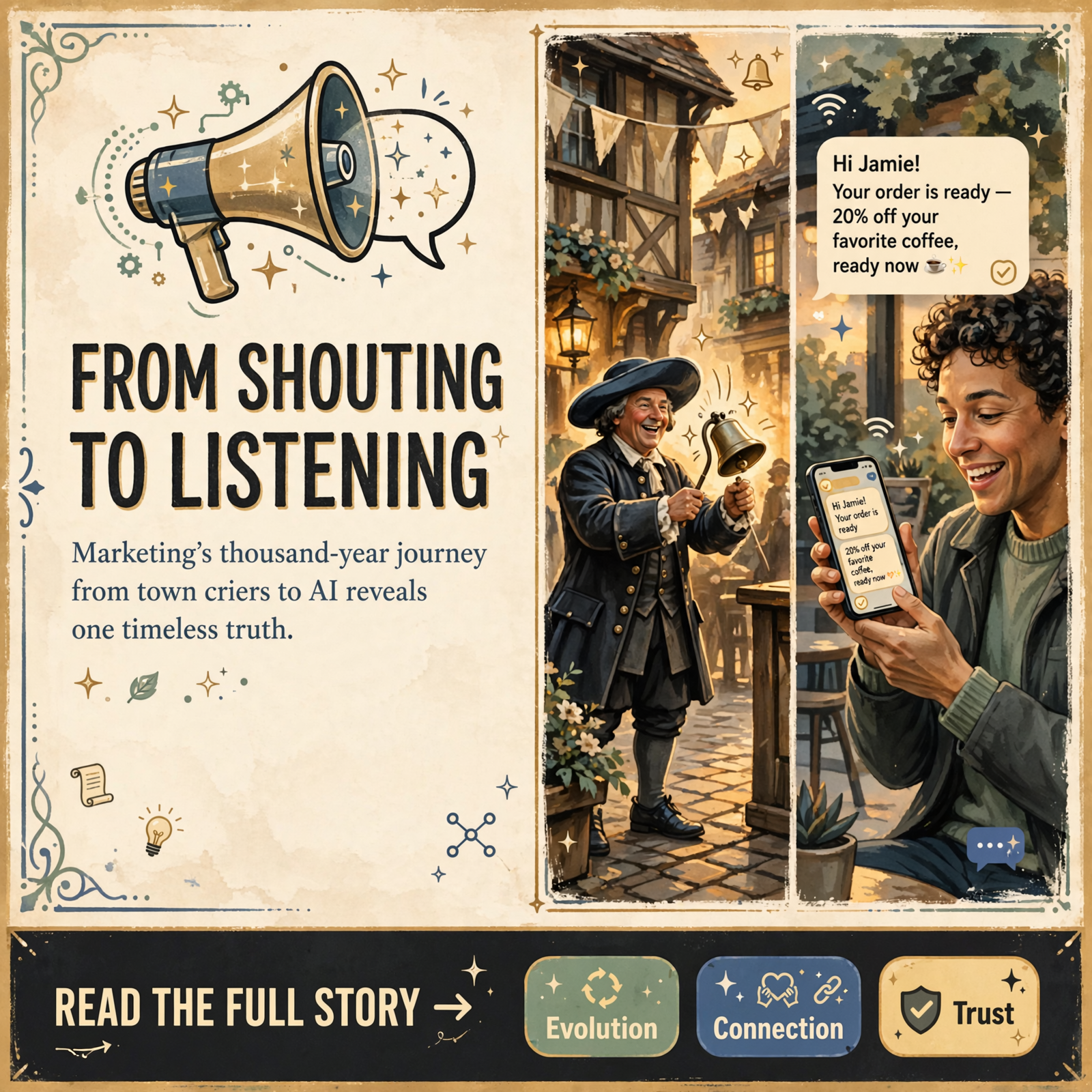
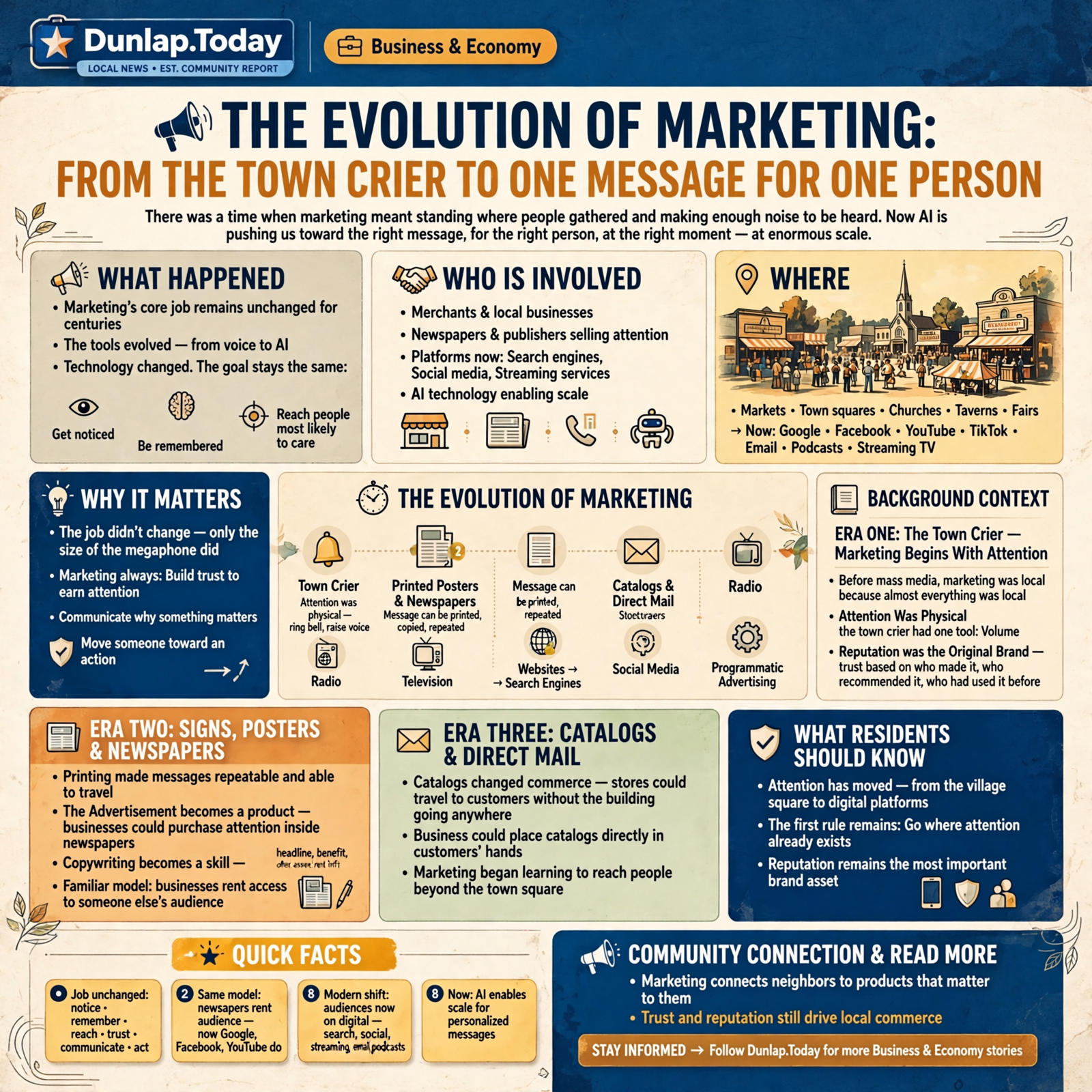
📣 The Evolution of Marketing: From the Town Crier to One Message for One Person
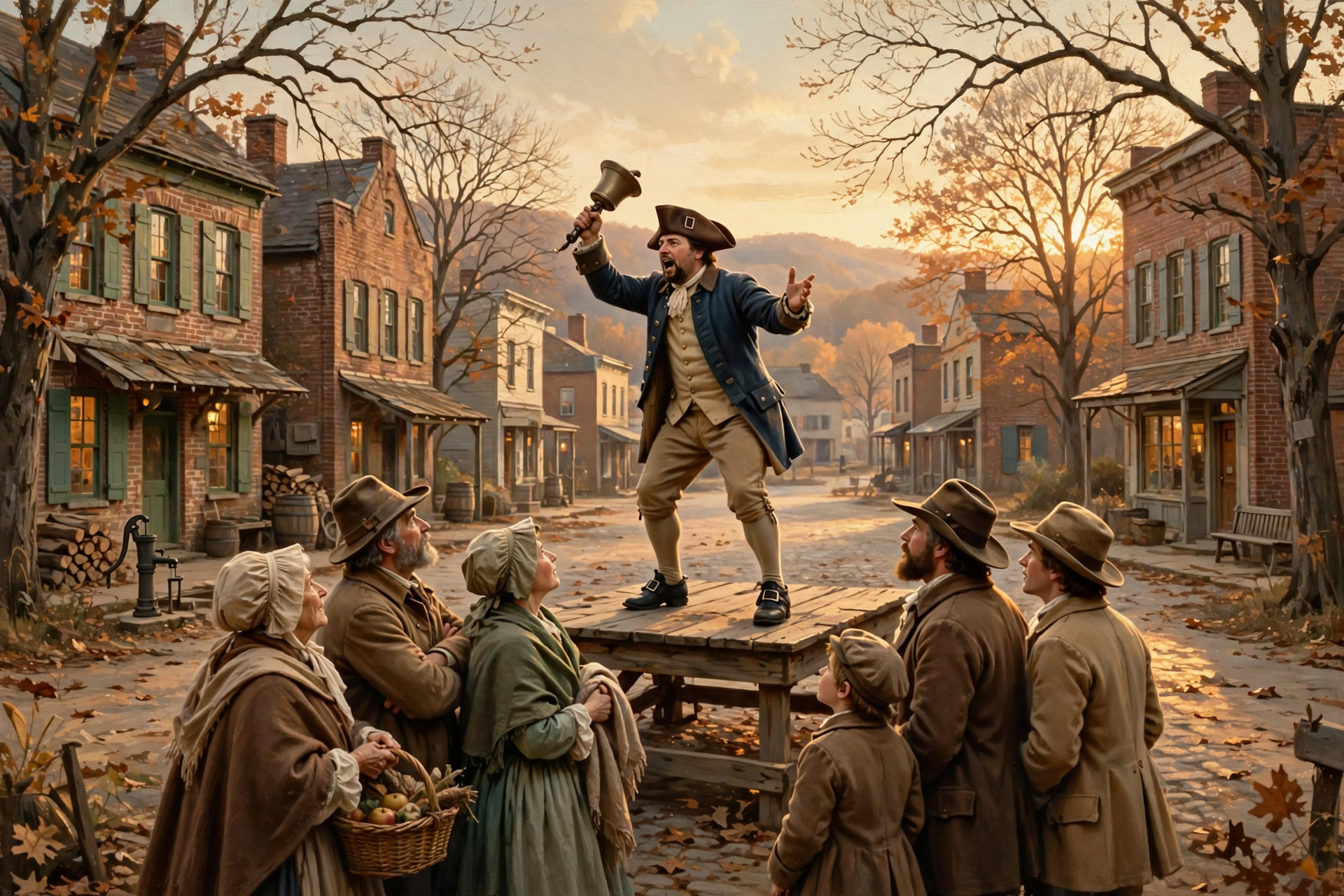
There was a time when marketing meant standing where people gathered and making enough noise to be heard.
Then we printed posters.
Then newspapers.
Then catalogs.
Then radio.
Then television.
Then websites.
Then search engines.
Then social media.
Then programmatic advertising.
Now artificial intelligence is pushing us toward something marketing has chased for centuries:
The right message, for the right person, at the right moment.
Except now we may finally have the technology to do it at enormous scale.
Marketing has always had essentially the same job:
- 👀 Get noticed.
- 🧠 Be remembered.
- 🎯 Reach the people most likely to care.
- 🤝 Build enough trust to earn attention.
- 💬 Communicate why something matters.
- ➡️ Move someone toward an action.
The job didn’t change very much.
The size of the megaphone did.
📢 Era One: The Town Crier — Marketing Begins With Attention
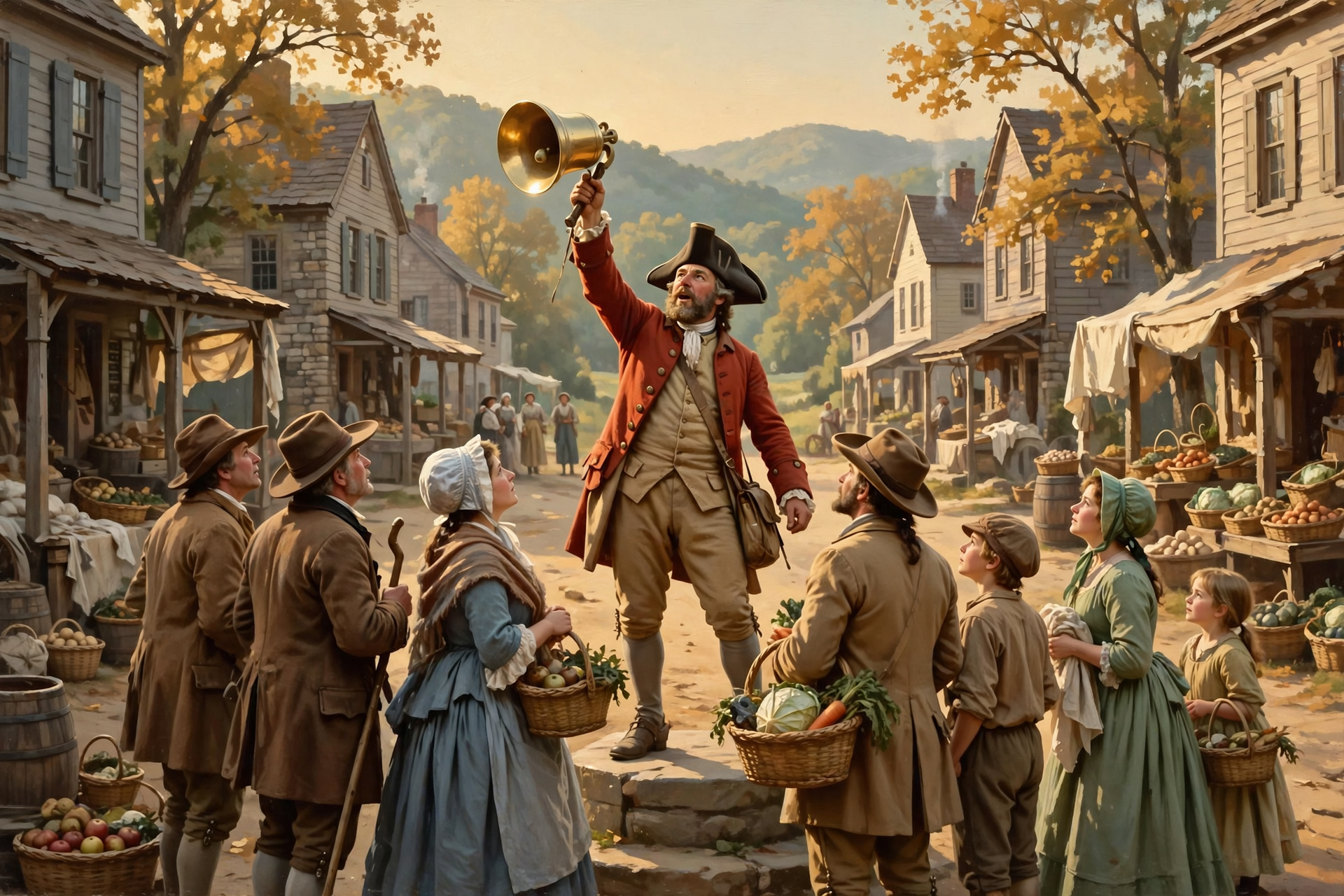
Before mass media, marketing was local because almost everything was local.
If you wanted people to know something, you had to tell them where they already gathered.
Markets.
Town squares.
Churches.
Taverns.
Fairs.
Public gatherings.
Marketing began with one brutally simple problem:
How do I get people to notice me?
🔔 Attention Was Physical
The town crier had one important marketing tool.
Volume.
Ring the bell.
Raise the voice.
Gather the crowd.
Deliver the message.
The marketer went where the audience already was.
We sometimes treat that as primitive.
It really isn’t.
Modern marketing still works the same way.
The audience moved.
That’s all.
Instead of the village square, they’re on Google.
Facebook.
YouTube.
TikTok.
Email.
Streaming television.
Podcasts.
The first rule remains:
Go where attention already exists.
🗣️ Reputation Was the Original Brand
Before logos, brand guidelines and corporate identity manuals, people bought partly based on reputation.
Who made it?
Who recommended it?
Who had used it before?
Could you trust the merchant?
The earliest brand was often a name attached to a reputation.
And that still may be the most important brand asset there is.
🪧 Era Two: Signs, Posters and Newspapers — Marketing Becomes Repeatable
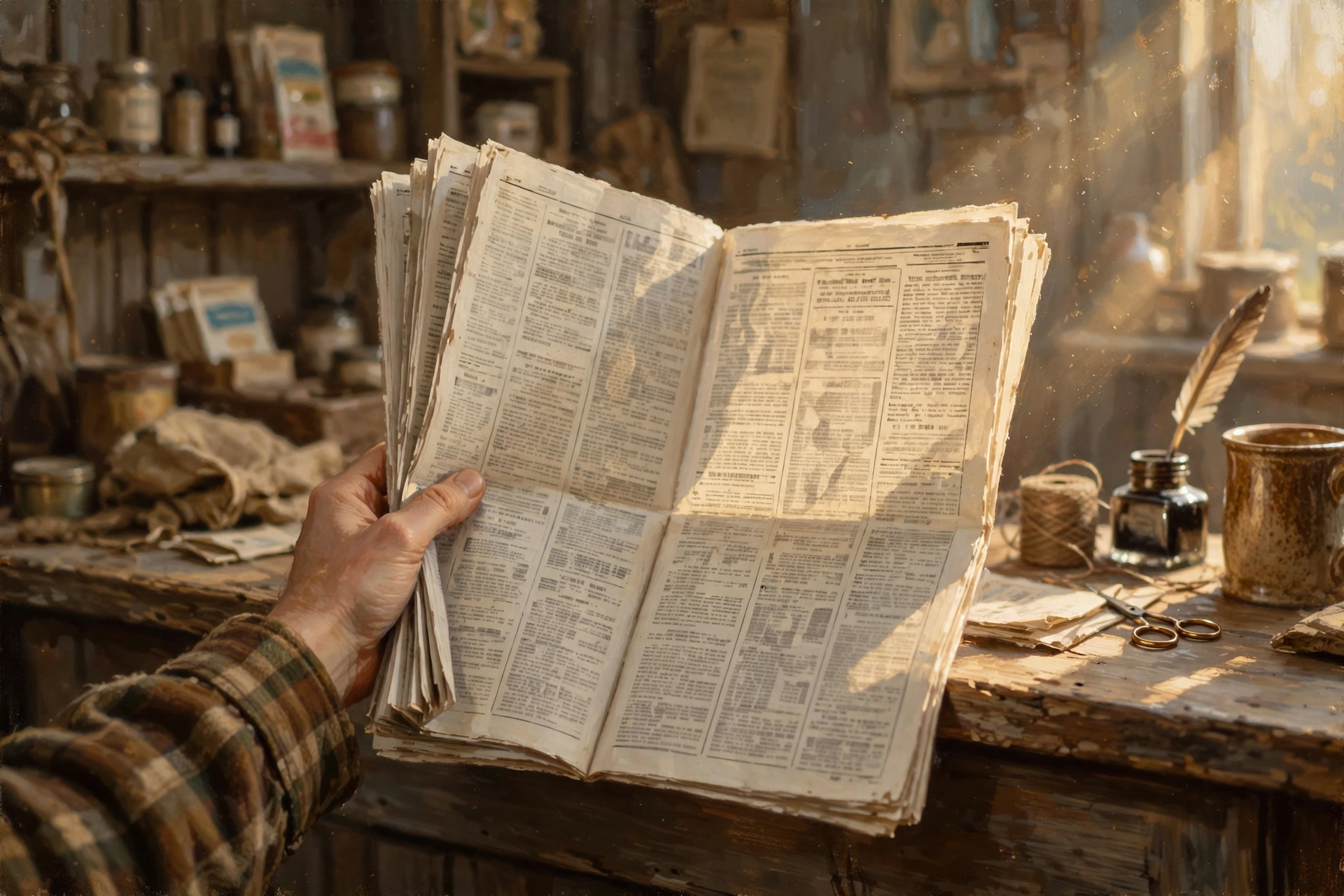
Printing changed marketing because a message no longer disappeared when the speaker stopped talking.
A printed message could remain.
It could travel.
It could be copied.
It could reach somebody the merchant had never met.
📰 The Advertisement Becomes a Product
Businesses could purchase attention inside newspapers.
That created an important new distinction.
The business no longer had to own the audience.
It could rent access to somebody else’s audience.
Newspapers gathered the readers.
Businesses paid for access to them.
That business model should sound familiar.
Google does it.
Facebook does it.
YouTube does it.
Streaming platforms do it.
The technology changed.
The arrangement didn’t.
✍️ Copywriting Becomes a Skill
Once businesses could distribute written advertisements, the words themselves mattered more.
Which headline gets attention?
What benefit should be emphasized?
What offer makes somebody respond?
How much information is enough?
How much is too much?
Marketing began becoming a discipline.
Not simply:
“Tell people what we sell.”
But:
“Figure out how to make them care.”
📬 Era Three: Catalogs and Direct Mail — Marketing Learns to Travel

Catalogs changed commerce because stores could travel to customers without the building going anywhere.
A business could place hundreds or thousands of products directly into people’s homes.
📖 The Catalog Was an Early Website
Think about what a catalog did.
It displayed products.
Organized categories.
Showed prices.
Explained features.
Presented offers.
Provided ordering instructions.
That’s remarkably similar to an e-commerce website.
The bandwidth was just significantly worse.
📮 Direct Mail Introduced Targeting
Direct mail added another concept that became central to modern marketing:
Not everybody needs to receive the same message.
A company could choose mailing lists based on geography, interests, occupation, purchase history or other available characteristics.
The marketer was beginning to ask:
“Who should see this?”
instead of merely:
“What should we say?”
🧪 Marketing Becomes Measurable
Direct-response marketers discovered that offers could be tested.
Different headlines.
Different prices.
Different mailing lists.
Different guarantees.
Different calls to action.
Marketing wasn’t just creative anymore.
It was becoming experimental.
That idea would eventually become A/B testing, conversion optimization and algorithmic advertising.
📻 Era Four: Radio — Marketing Learns to Enter the Home
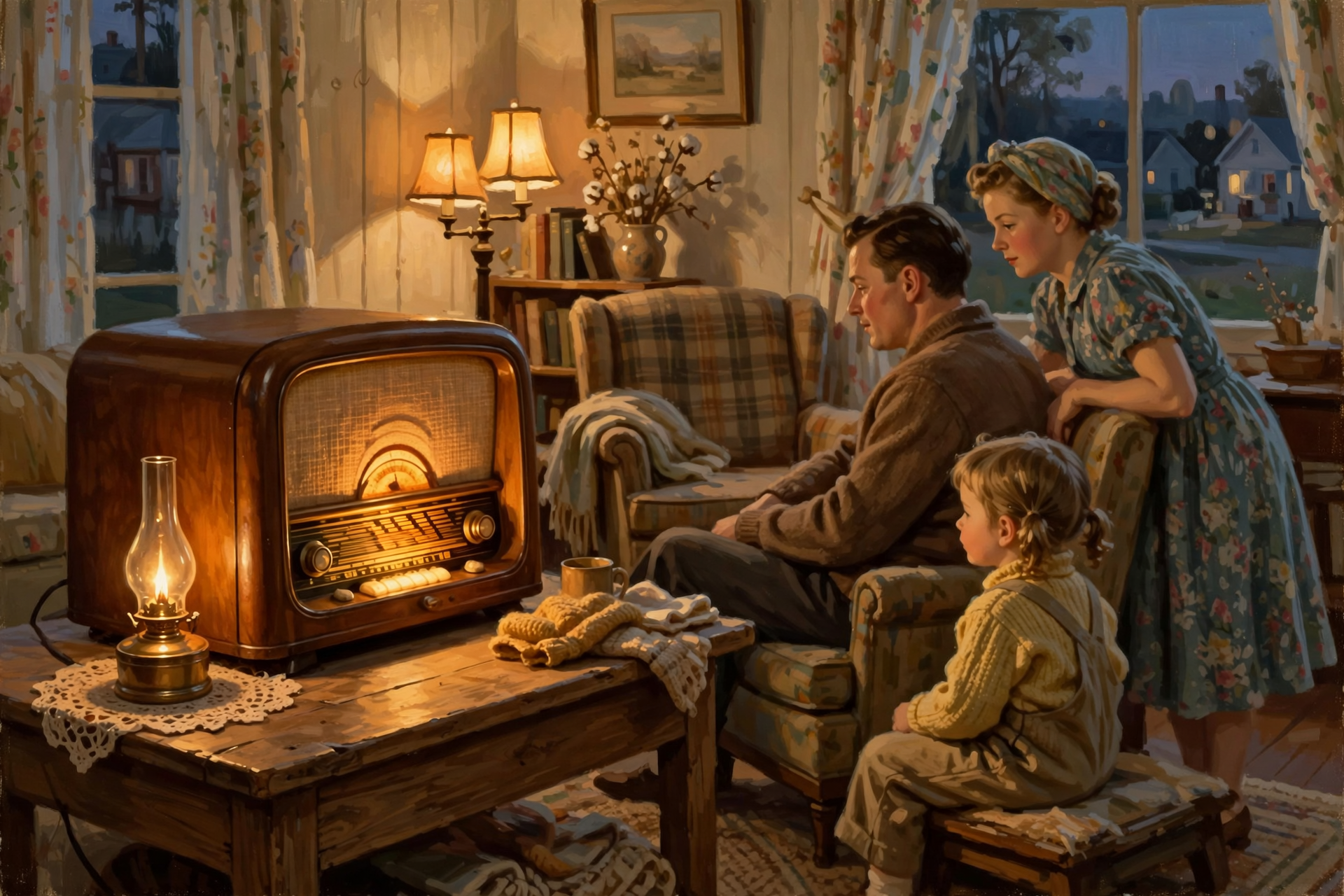
Radio changed the relationship between businesses and audiences.
For the first time, brands could regularly speak directly into people’s homes.
🎙️ Brand Voice Becomes Literal
Companies were no longer just printed names.
They had voices.
Jingles.
Slogans.
Characters.
Sponsorships.
Stories.
The emotional dimension of marketing expanded.
Brands weren’t merely explaining products.
They were creating familiarity.
🧠 Repetition Became a Strategy
Hear the same name repeatedly and it becomes familiar.
Familiarity can produce recognition.
Recognition can reduce uncertainty.
And reduced uncertainty can make buying easier.
The advertiser learned that sometimes the purpose of an advertisement wasn’t to make somebody buy immediately.
Sometimes it was simply to make sure that when the need eventually appeared, one particular name came to mind.
📺 Era Five: Television — Marketing Becomes Mass Storytelling
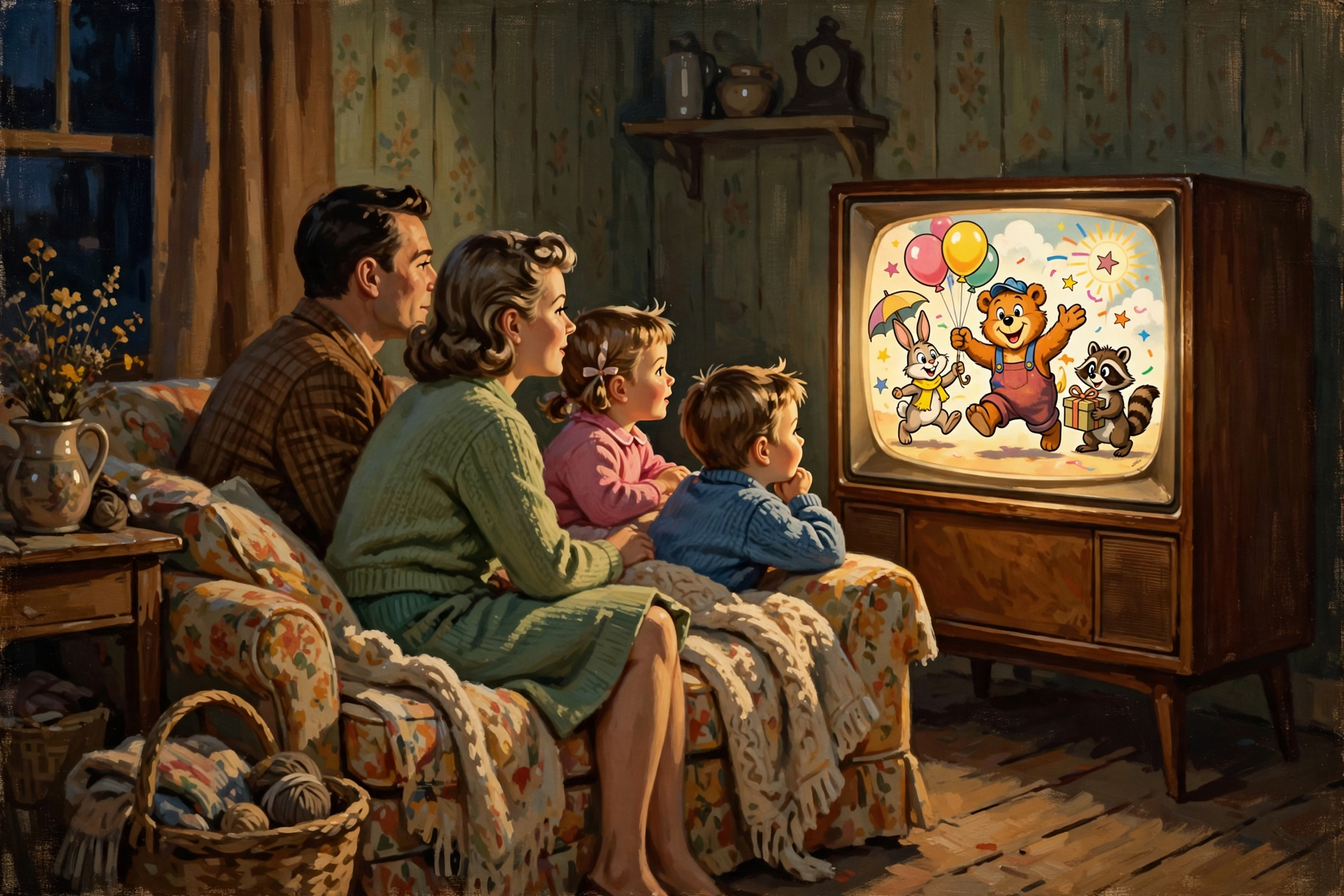
Television combined sight, sound, movement and enormous reach.
It became one of the most powerful marketing technologies ever created.
🌎 One Message Could Reach Millions
For national brands, the economics were extraordinary.
Create one advertisement.
Put it in front of millions of people.
Repeat it.
Repeat it again.
Repeat it until half the country can sing the jingle involuntarily.
🎬 Advertising Becomes Entertainment
The best advertising didn’t merely explain a product.
It told stories.
Created characters.
Used humor.
Created emotion.
Associated products with lifestyles.
Marketing became culture.
🎯 But Mass Marketing Had a Big Problem
The message was enormous.
The targeting wasn’t.
A detergent commercial might reach millions of people.
Some needed detergent.
Some didn’t.
Some already bought another brand.
Some had left the room to make a sandwich.
Everybody got essentially the same message.
Marketing had massive reach.
But very little individual understanding.
💾 Era Six: Databases — Marketing Starts Remembering People

Computers changed marketing because companies could store increasingly detailed information about customers.
📇 Audiences Become Segments
Instead of everybody receiving the same offer, marketers could separate customers into groups.
New customers.
Existing customers.
High-value customers.
Inactive customers.
Customers in Tennessee.
Customers who bought Product A.
Customers who hadn’t purchased in a year.
The mass audience began breaking into smaller audiences.
🎯 Relevance Improves
This sounds obvious now.
But it represented a major philosophical change.
Good marketing became less about reaching the largest possible audience and more about reaching the most appropriate audience.
Reach remained important.
Relevance became more important.
🌐 Era Seven: The Internet — Marketing Becomes Interactive

The Internet changed nearly every assumption of mass advertising.
Customers were no longer passive audiences.
They could click.
Search.
Compare.
Ask.
Ignore.
Review.
Share.
Respond.
🔎 Search Marketing Captures Intent
Search engines introduced one of the most powerful forms of marketing ever created.
Instead of showing somebody an advertisement and hoping they needed something, businesses could appear after the customer expressed the need.
A person searches:
“roof repair near me.”
That’s not merely an audience member.
That’s intent.
The marketing problem changes dramatically.
The customer is effectively saying:
“I am interested in this right now.”
📊 Everything Starts Producing Data
The Internet also made marketing dramatically more measurable.
Businesses could see:
- page views,
- clicks,
- search terms,
- conversion rates,
- traffic sources,
- time on page,
- abandoned carts,
- email opens,
- cost per acquisition.
Marketing acquired instrumentation.
And once marketers could measure behavior quickly, campaigns could change quickly.
📱 Era Eight: Social Media — Marketing Becomes a Conversation
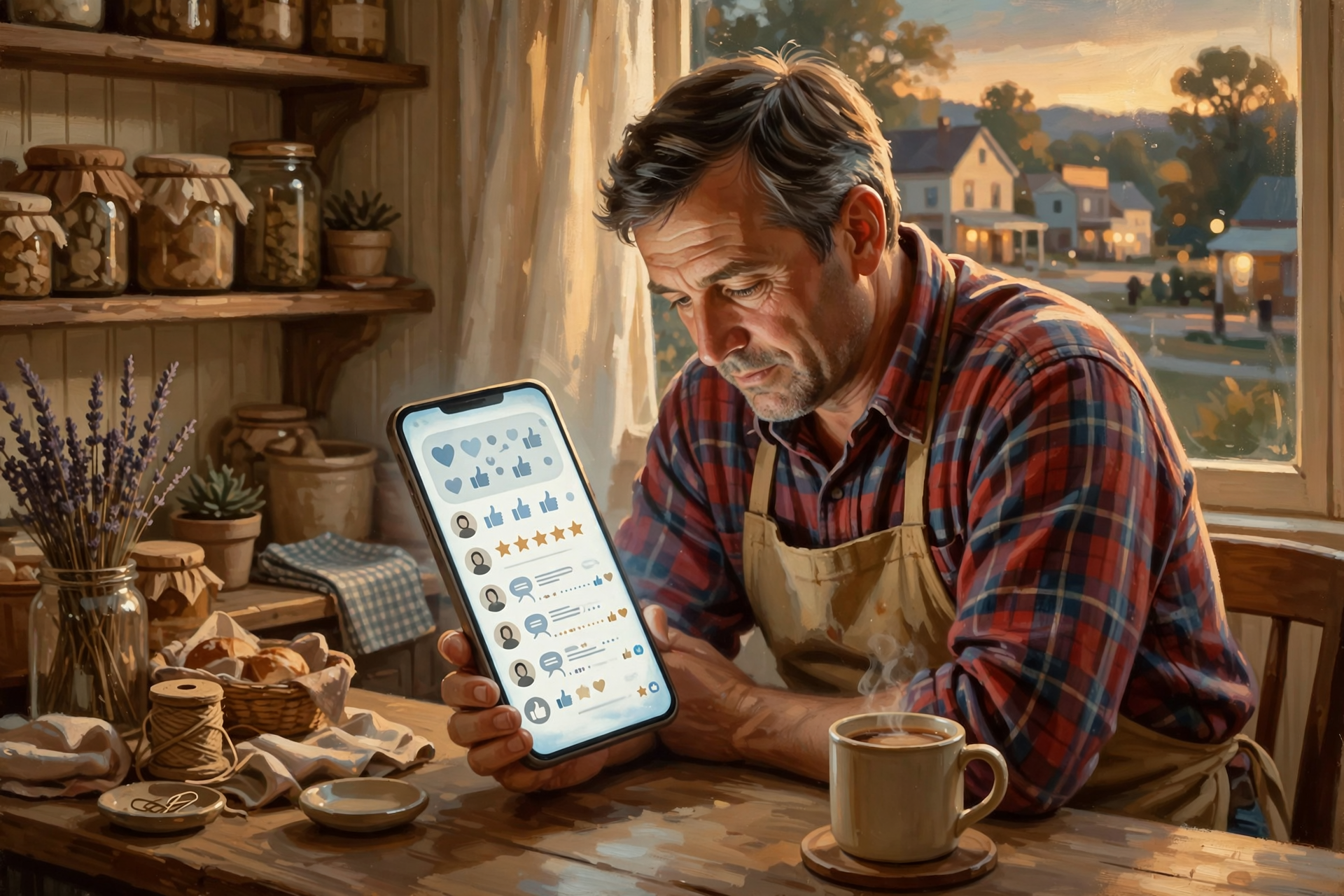
Social media broke another old rule.
The brand was no longer the only one talking.
Customers got microphones too.
💬 The Audience Can Answer Back
Customers could comment.
Share.
Praise.
Complain.
Recommend.
Mock.
Fact-check.
Create their own content.
A marketing campaign could suddenly become a conversation the company didn’t completely control.
🤝 Community Becomes Marketing
Businesses discovered that not every useful marketing interaction needed to look like an advertisement.
Helpful information could market.
Community participation could market.
Entertainment could market.
Education could market.
Customer stories could market.
The distinction between media company and ordinary business began disappearing.
A plumber could publish videos.
A restaurant could build an audience.
A hardware store could teach.
A local newspaper could become a community platform.
Everybody could publish.
⚠️ Then the Platforms Changed the Deal
There was a catch.
Businesses built audiences on platforms they didn’t own.
Algorithms changed.
Organic reach changed.
Advertising became increasingly important.
Businesses discovered an old lesson in a new form:
If somebody else owns the road to your customer, they can eventually charge a toll.
🤖 Era Nine: Programmatic Advertising — Machines Begin Buying the Audience
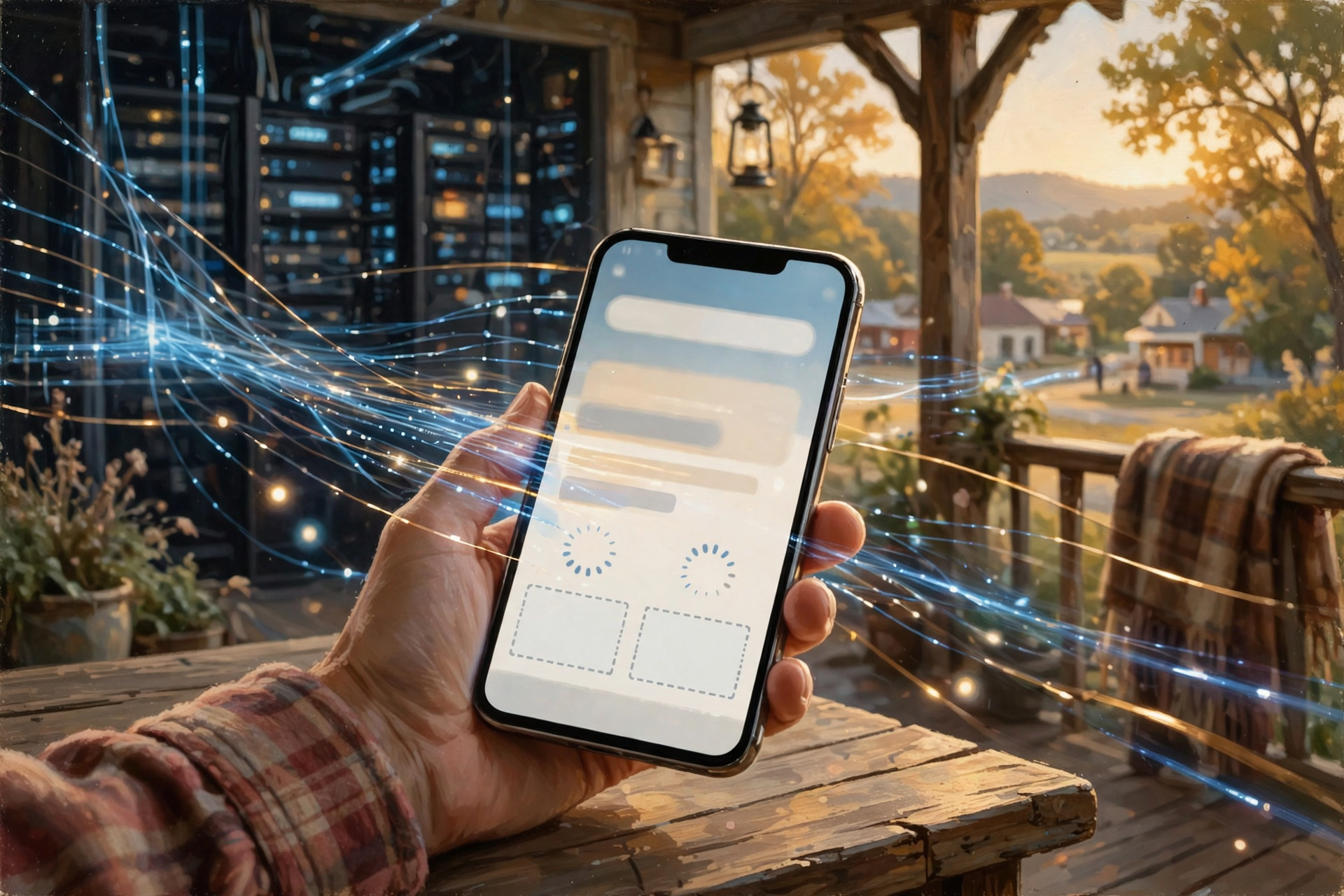
As digital advertising matured, another transformation occurred.
Humans no longer had to manually decide where every advertisement should appear.
Software could increasingly make those decisions in fractions of a second.
⚡ Advertising Becomes an Auction
A person loads a webpage or app.
Behind the scenes, advertising systems may evaluate:
- who the audience appears to be,
- the context of the page,
- which advertisers want that audience,
- how much they’re willing to pay,
- which advertisement should be shown.
And the decision can happen before the page finishes loading.
The town crier has become a high-speed auction.
🎯 Audiences Become Increasingly Granular
Instead of:
“Advertise to everybody watching this television program.”
marketing moves toward:
“Show this advertisement to people who fit this set of characteristics under these conditions.”
The audience keeps getting smaller.
And theoretically, more relevant.
🧠 Era Ten: AI — Marketing Starts Understanding Context

Artificial intelligence adds a new layer.
Traditional marketing systems largely operate on categories, rules and historical behavior.
AI can increasingly interpret meaning.
✍️ AI Changes Content Production
A marketing team can now use AI to assist with:
- articles,
- social posts,
- advertisements,
- email campaigns,
- images,
- video concepts,
- customer research,
- competitive analysis,
- landing pages,
- campaign variations.
The economics of producing marketing material are changing rapidly.
Not because good ideas are becoming free.
Because producing variations of an idea is becoming dramatically cheaper.
🧪 Testing Can Become Continuous
Historically, a company might create one advertisement and run it for months.
Digital advertising made testing faster.
AI can make testing potentially continuous.
Different:
- headlines,
- images,
- offers,
- audiences,
- landing pages,
- calls to action,
- tones,
- formats.
The campaign can increasingly behave less like a finished product and more like a living experiment.
👤 The Destination: One Message for One Person

Look at the entire evolution of marketing.
We began with:
📢 One message shouted at whoever happened to be nearby.
Then:
📰 One message for newspaper readers.
Then:
📻 One message for a radio audience.
Then:
📺 One message for millions of television viewers.
Then:
📬 Different messages for different lists.
Then:
🌐 Different messages for different online audiences.
Then:
🎯 Different messages based on behavior and intent.
And now we are moving toward:
👤 One message for one person, shaped by that person’s context.
🧠 Personalization Moves Beyond the First Name
For years, marketers called this personalization:
“Hello, Tom.”
That’s technically personalization.
So is writing somebody’s name on a coffee cup.
The next generation may be more meaningful.
Imagine marketing that understands:
- what problem you’re trying to solve,
- what you already know,
- what you’ve previously purchased,
- what you’re likely to care about,
- what you’ve already rejected,
- what information would actually help you decide.
That’s not merely inserting a name into a template.
That’s contextual communication.
🔄 Marketing May Become a Conversation Instead of a Campaign

The traditional marketing campaign has a beginning and an end.
Create the campaign.
Launch it.
Measure it.
Finish it.
AI could make marketing much more continuous.
🤖 The System Can React
A customer asks a question.
The system responds.
The customer reads an article.
The system understands the topic.
The customer returns later.
The conversation continues.
The customer buys.
The marketing changes again.
The relationship itself becomes the campaign.
🎨 The Cost of Creating Marketing Is Collapsing

Historically, producing high-quality marketing required specialists.
Writers.
Designers.
Photographers.
Video editors.
Media buyers.
Researchers.
Analysts.
Those skills still matter.
But AI increasingly gives smaller organizations access to portions of those capabilities.
🏪 Small Business Gains a Marketing Department
Consider the local restaurant owner.
Historically, marketing might have meant:
“I suppose I should post something on Facebook.”
Then somebody took a picture of Tuesday’s special.
Maybe they remembered to post it Thursday.
AI-assisted systems can potentially help create:
- daily social content,
- email newsletters,
- menu descriptions,
- promotional graphics,
- event announcements,
- customer follow-ups,
- website updates,
- advertising variations.
The small business owner doesn’t suddenly become a marketing expert.
But the production bottleneck becomes smaller.
⚠️ Which Creates Another Problem: Everybody Can Make Content

When content was expensive, scarcity helped get attention.
When everybody can create unlimited content, the problem changes.
🌊 We Are Entering an Abundance Problem
If AI can create ten articles, 30 social posts, 50 advertisements and 100 images before breakfast, so can everybody else.
That means the scarce resource is no longer content.
The scarce resource is:
attention.
And increasingly:
trust.
🧠 Judgment Becomes More Important Than Production
The important marketing questions become:
Should we publish this?
Is it useful?
Is it different?
Is it accurate?
Does anybody need it?
Does it strengthen the relationship?
Or are we simply producing more digital noise because producing digital noise became cheap?
AI can make content.
It doesn’t automatically make the content worth someone’s attention.
❤️ Trust May Become Marketing’s Most Valuable Asset
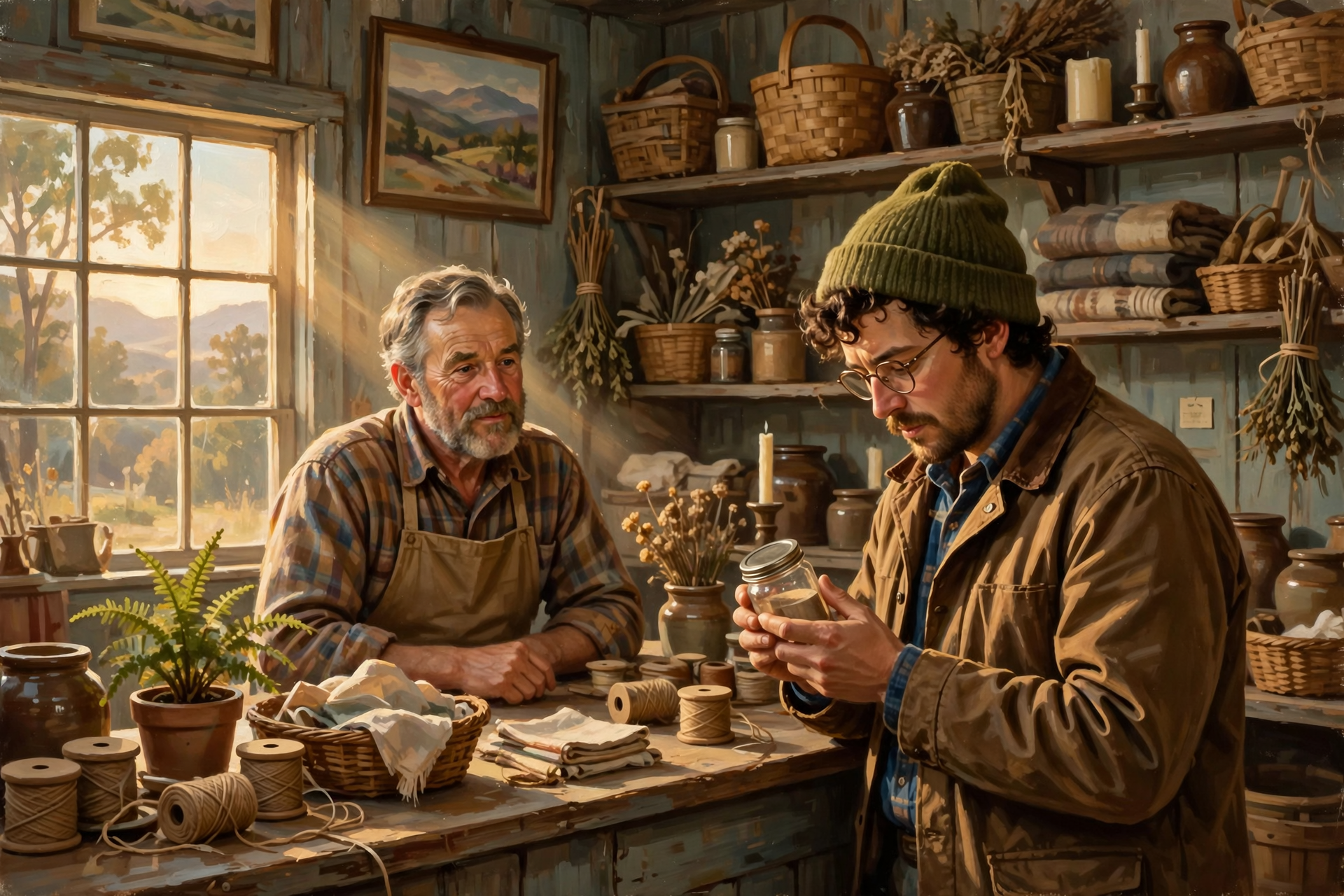
Marketing has always depended on trust.
But AI may make trust more important precisely because producing persuasive-looking material becomes easier.
🤔 “Is This Real?” Becomes Part of Every Message
Customers increasingly encounter:
- AI-written reviews,
- AI-generated images,
- AI-created videos,
- automated messages,
- synthetic voices,
- personalized advertisements.
The polished appearance of marketing becomes less meaningful.
A gorgeous advertisement no longer necessarily signals a large, capable company.
A one-person operation may produce one.
A scammer may produce one.
So customers search for other signals.
History.
Reviews.
Community presence.
Transparency.
Consistency.
Real relationships.
Marketing technology gets more sophisticated.
Reputation becomes more valuable.
📍 This Is Where Local Businesses Have an Advantage
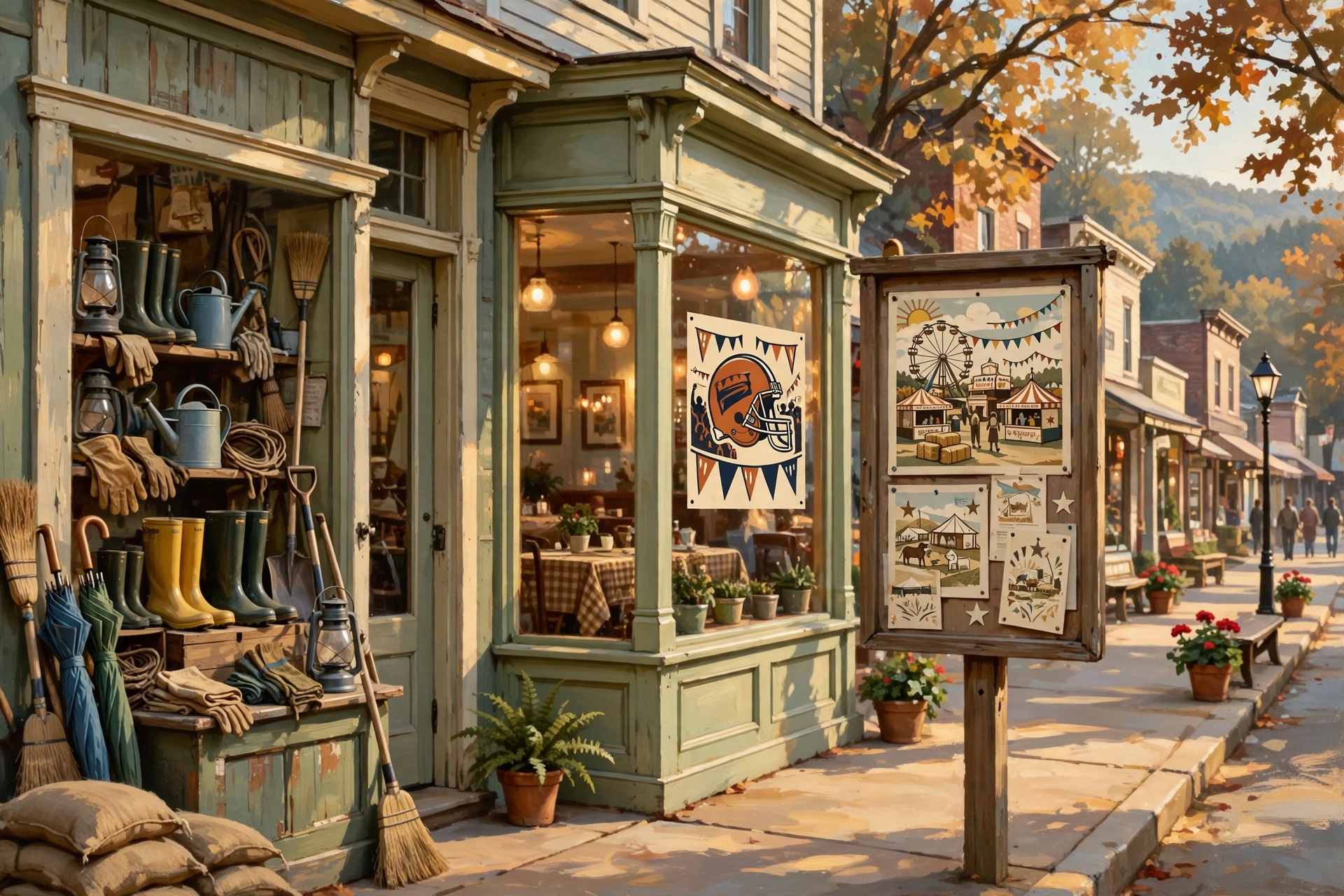
Local businesses possess something national advertisers spend enormous sums trying to manufacture:
real-world context.
🏘️ Local Marketing Can Be Meaningful Instead of Merely Targeted
There is a difference between:
“A person within ZIP code 37327 has been added to Audience Segment 14.”
and:
“The county fair is this weekend, the football game is Friday night, this restaurant has a special before the game, and the hardware store has what people need for the weather coming Saturday.”
One is demographic targeting.
The other understands the community.
🧠 Local Intelligence Could Become a Marketing Layer
Imagine a community platform that understands:
- local businesses,
- local events,
- local news,
- local interests,
- resident subscriptions,
- seasonality,
- business updates,
- community conversations.
Instead of asking every small business owner to become an expert in Facebook, SEO, email, websites, AI, programmatic advertising and content creation, a local platform could help businesses communicate with the people who actually care.
That begins looking less like an advertising service.
It begins looking like community communication infrastructure.
🚫 The Future of Marketing Should Not Be More Interruption

There is a bad version of AI marketing.
And we already know exactly what it looks like.
More emails.
More messages.
More advertisements.
More notifications.
More automated outreach.
More personalized spam.
More machines screaming:
“BUY THIS!”
at increasingly precise groups of people.
We have enough technology to make advertising incredibly annoying.
That isn’t progress.
🎯 Better Marketing Should Mean Less Waste
The better future is almost the opposite.
Show fewer irrelevant messages.
Interrupt fewer people.
Understand needs better.
Communicate when something is genuinely useful.
Make discovery easier.
Reduce friction.
Improve matching.
The ultimate purpose of better targeting should be that people see less advertising they don’t care about.
Not more advertising everywhere.
🔮 Marketing May Eventually Become Anticipatory

Today, much marketing reacts to what the customer has already done.
They searched.
They clicked.
They visited.
They purchased.
AI may increasingly help systems anticipate needs.
🧠 From Response to Prediction
A system might notice:
A business typically orders supplies every three months.
A customer’s product is approaching its replacement interval.
A seasonal event is approaching.
A traveler usually books particular activities after reserving lodging.
A homeowner’s previous behavior suggests a maintenance need.
Marketing moves from:
“You asked for this.”
toward:
“You may need this soon.”
Done well, that feels helpful.
Done badly, it feels creepy.
That distinction may become one of the most important marketing skills of the AI era.
🛡️ The New Marketing Skill May Be Restraint

For more than a century, marketers have asked:
How many people can we reach?
Technology increasingly lets us ask:
Who exactly should we reach?
AI may force the next question:
Should we reach them at all?
🤝 Permission May Become a Competitive Advantage
If customers control:
- which businesses they follow,
- which topics they care about,
- which notifications they want,
- how often businesses may contact them,
- which information may be used for personalization,
then marketing becomes less adversarial.
The relationship changes from:
“How do we capture your attention?”
to:
“What would you like us to keep you informed about?”
That’s a dramatically healthier relationship.
📉 The Entire History of Marketing Is the Shrinking Audience
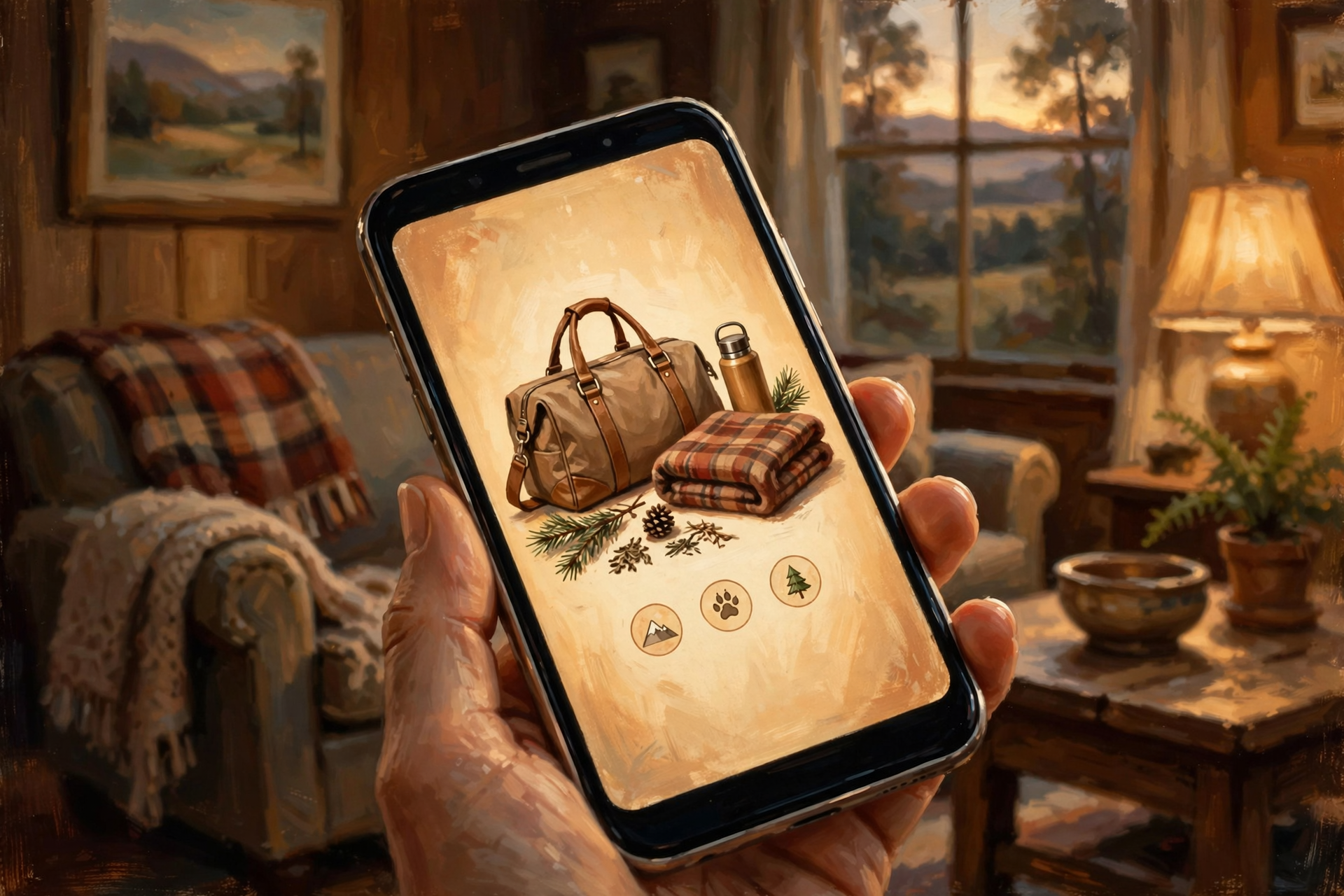
There is another way to look at 200 years of marketing.
The audience keeps getting smaller.
Not because businesses want fewer customers.
Because technology keeps making it possible to identify the right customers more precisely.
The town crier addressed:
Everybody within earshot.
The newspaper addressed:
Everybody reading the paper.
Television addressed:
Everybody watching the program.
Direct mail addressed:
Everybody on the list.
Digital advertising addressed:
Everybody matching the audience.
Search addressed:
Everybody expressing an intent.
AI moves toward:
This particular person, with this particular need, in this particular context.
🔄 And Somehow We End Up Back at Main Street
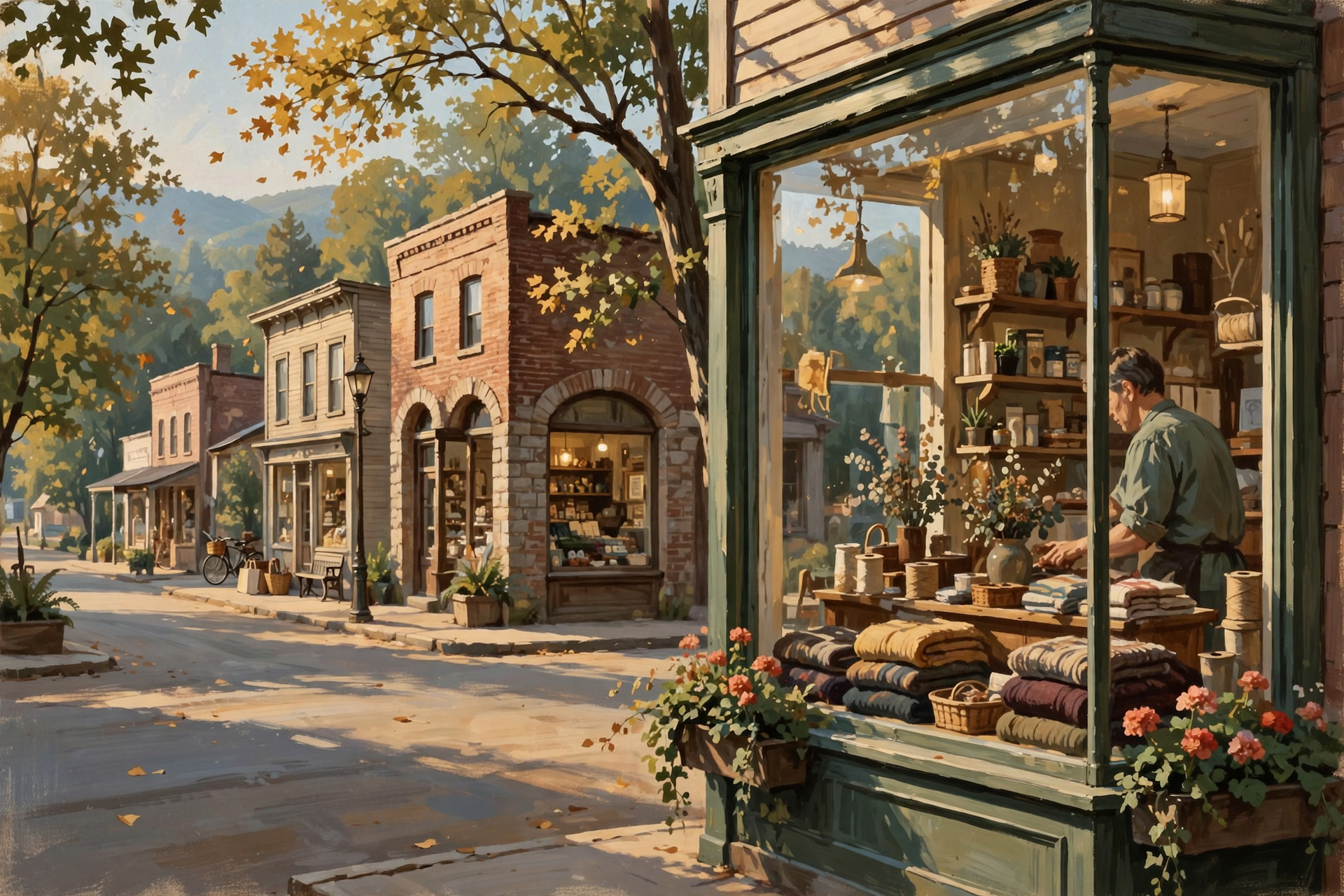
There is a funny historical circle here.
The local merchant once knew customers personally.
Industrialization created enormous scale.
Mass media created mass audiences.
Databases separated audiences into groups.
The Internet separated them further.
AI may eventually make communication personal again.
Not because businesses became small.
Because technology became capable of remembering individuals at scale.
We spent 150 years learning how to talk to everybody.
Now we’re learning how to talk to one person again.
🧰 The Tools Changed. The Mission Didn’t.

The town crier rang a bell.
The newspaper printed an advertisement.
The catalog arrived in the mail.
The radio played a jingle.
The television told a story.
The website captured a search.
Social media created a conversation.
Programmatic systems found an audience.
AI may personalize the message.
But the purpose underneath all of them remains remarkably consistent:
Get the attention of someone who might care.
Give them a reason to remember you.
Earn enough trust for them to listen.
And say something useful enough that they want to continue the relationship.
The great progression of marketing may not be from primitive tools to sophisticated tools.
It may be from:
Everybody.
to:
Somebody.
to:
You.
And perhaps the most important question for the AI marketing era isn’t:
“How much more marketing can we create?”
It is:
“How much more relevant can we become?”
📰Other Stories In This Series
- 🏭➡️💻 The Progress of Business: Six Eras, Same Job
- 🧠 The Evolution of the Customer Database: From Fred’s Memory to AI Memory
- 🚂 The Evolution of Selling: From the Traveling Salesman to the AI Sales Agent


0 Comments