
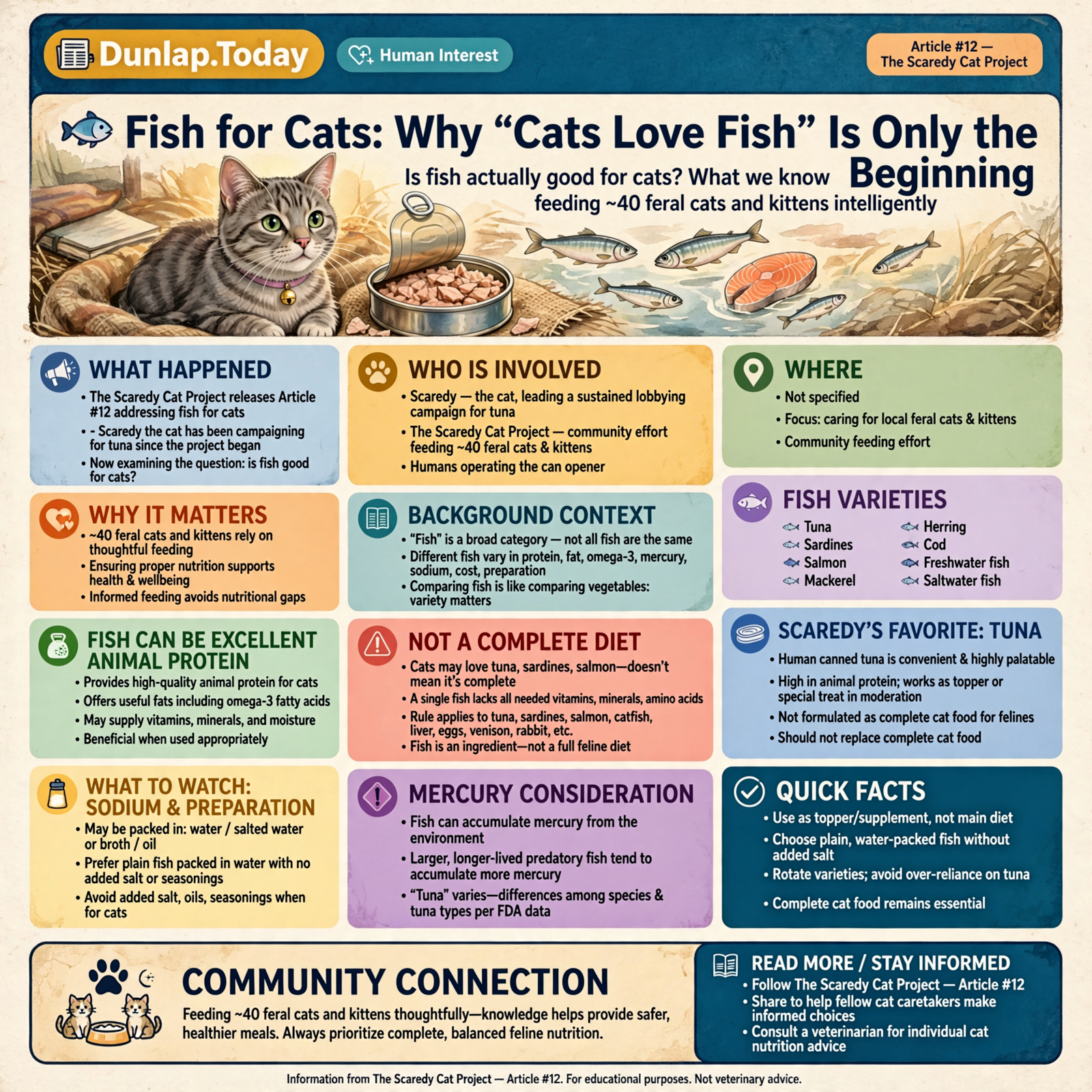
🐟 Fish for Cats: Why “Cats Love Fish” Is Only the Beginning
🐾 The Scaredy Cat Project — Article #12
Scaredy has been waiting for this article.
Actually, “waiting” may be too generous.
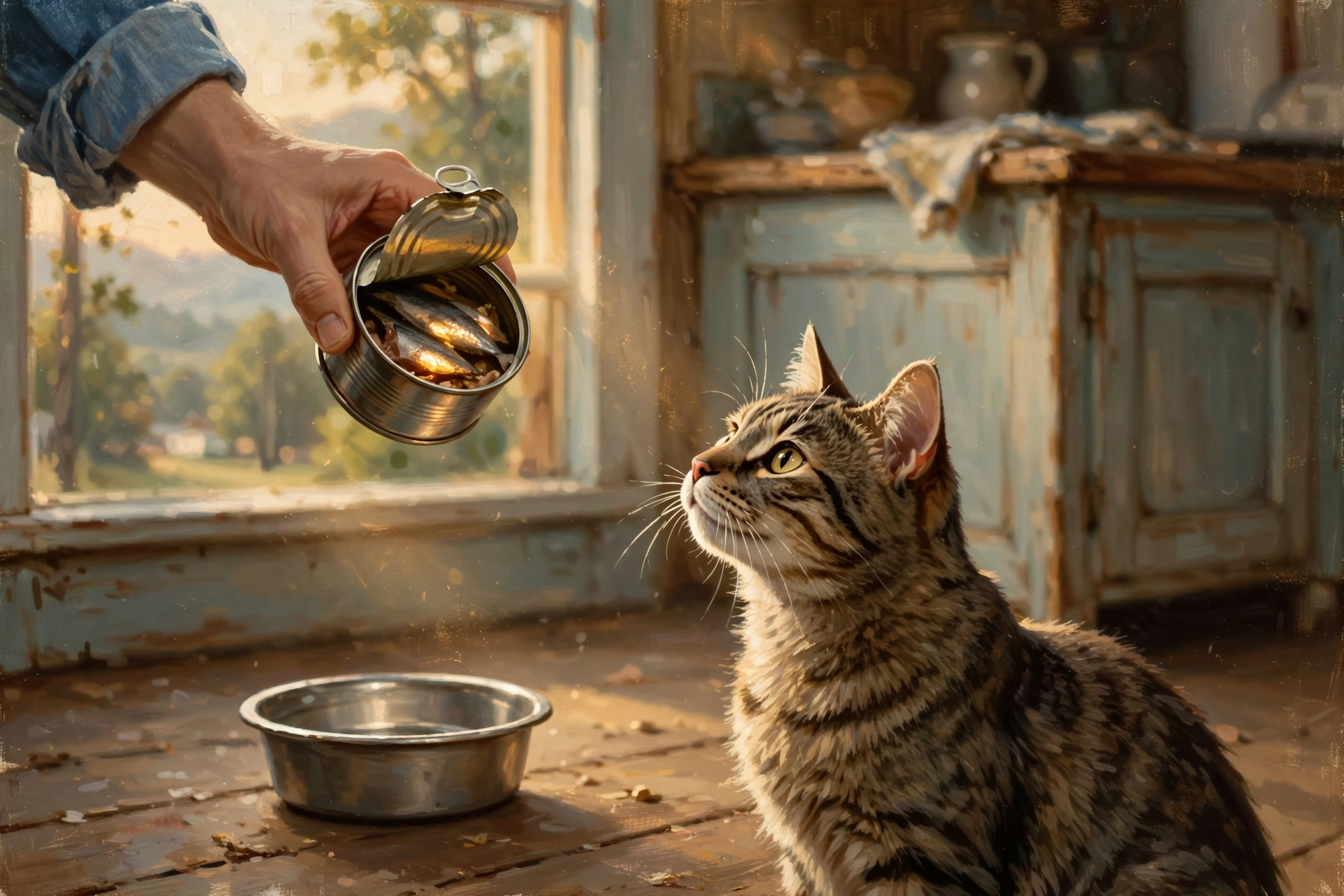
Scaredy has been conducting a sustained lobbying campaign on behalf of tuna since before The Scaredy Cat Project had a name.
She knows the sound of a can opening.
She knows which human operates the can opener properly.
And she has apparently concluded that canned tuna is one of the principal reasons humans were placed on this earth.
I admire her confidence.
But now that we’re trying to understand how to feed roughly 40 feral cats and kittens intelligently, we need to ask a slightly less emotional question.
Is fish actually good for cats?
The answer is:
Yes—but “fish” is a much bigger category than it sounds.
🐟 Tuna Is Not the Same as Sardines
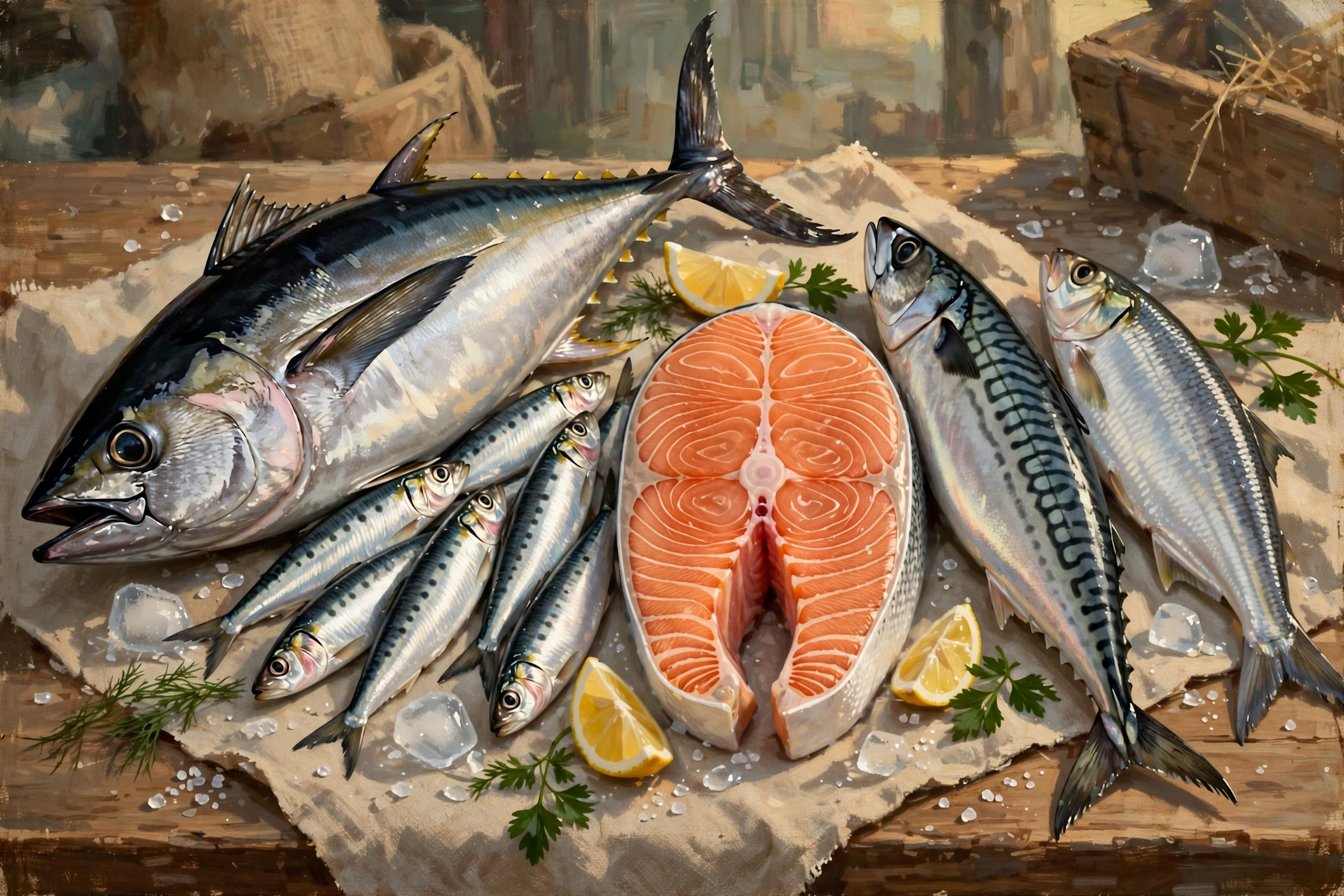
When people say “fish,” they may be talking about:
- 🐟 Tuna
- 🐟 Sardines
- 🐟 Salmon
- 🐟 Mackerel
- 🐟 Catfish
- 🐟 Herring
- 🐟 Cod
- 🐟 Freshwater fish
- 🐟 Saltwater fish
Those fish are not nutritionally identical.
They differ in:
- 🥩 Protein
- 🧈 Fat
- 🐟 Omega-3 fatty acids
- ⚠️ Mercury
- 🧬 Enzymes
- 💵 Cost
- 🧂 Sodium after processing
- 🥫 How they are canned or prepared
So the question:
“Can cats eat fish?”
is a little like asking:
“Can people eat vegetables?”
We need to know which one.
🥩 Fish Can Be Excellent Animal Protein
Let’s begin with the obvious advantage.
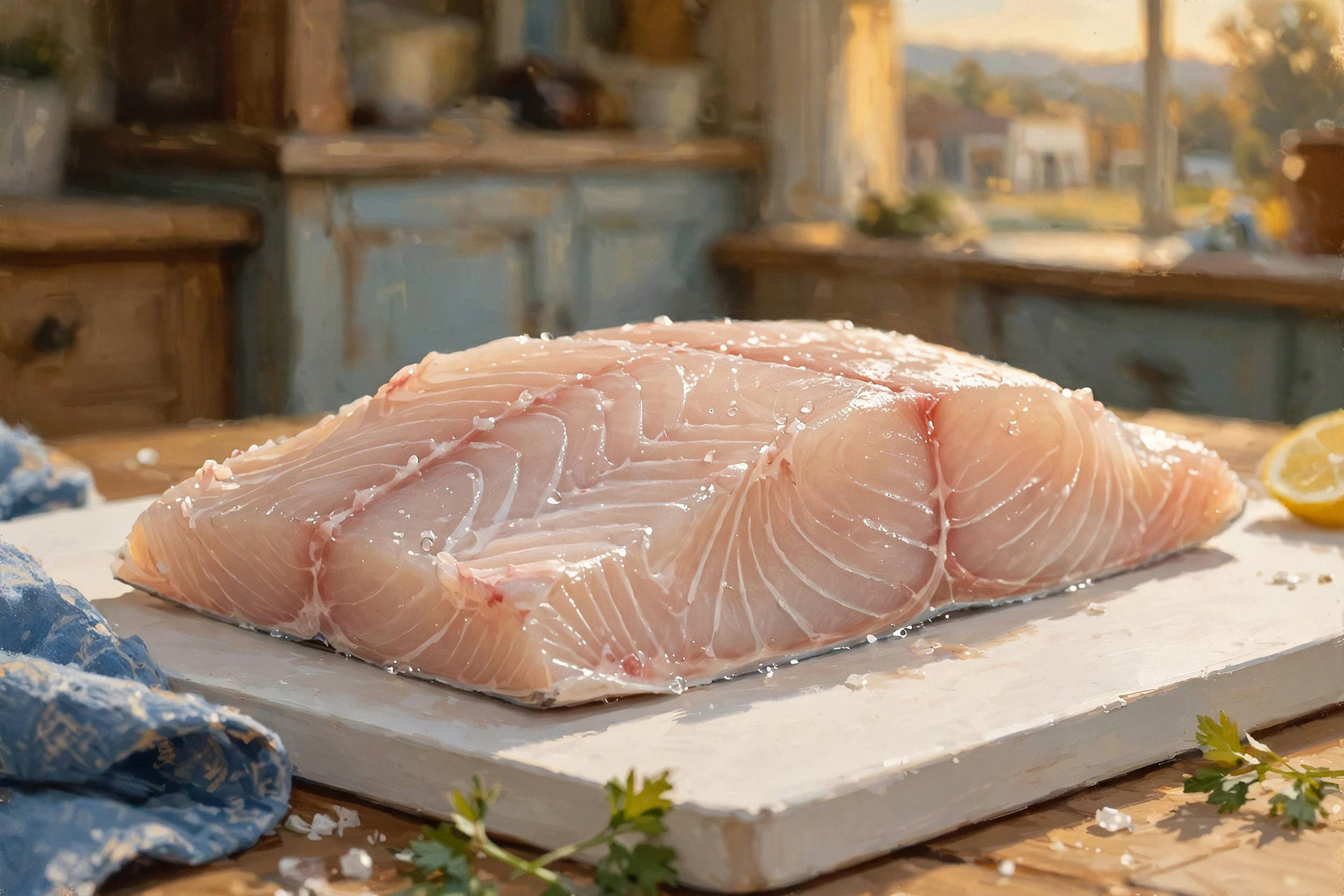
Fish can provide high-quality animal protein.
That makes it immediately relevant to cats.
Many fish also provide useful fats, including omega-3 fatty acids.
Depending on the species, fish can also provide:
- 🥩 Protein
- 🧈 Fat
- 🐟 Omega-3 fatty acids
- 💊 Vitamins
- ⚙️ Minerals
- 💧 Moisture
That sounds promising.
And it is.
But regular readers know what comes next.
⚠️ Fish Is Still an Ingredient, Not Automatically a Complete Diet

A cat may enthusiastically empty a bowl of tuna.
That proves the cat likes tuna.
It does not prove tuna contains everything the cat needs.
The same is true of sardines.
Salmon.
Catfish.
Or any other single fish.
A nutritious ingredient is not automatically a complete feline diet.
That rule has survived hearts, gizzards, liver, eggs, venison and rabbit.
It survives fish too.
🥫 Let’s Start With Scaredy’s Favorite: Tuna
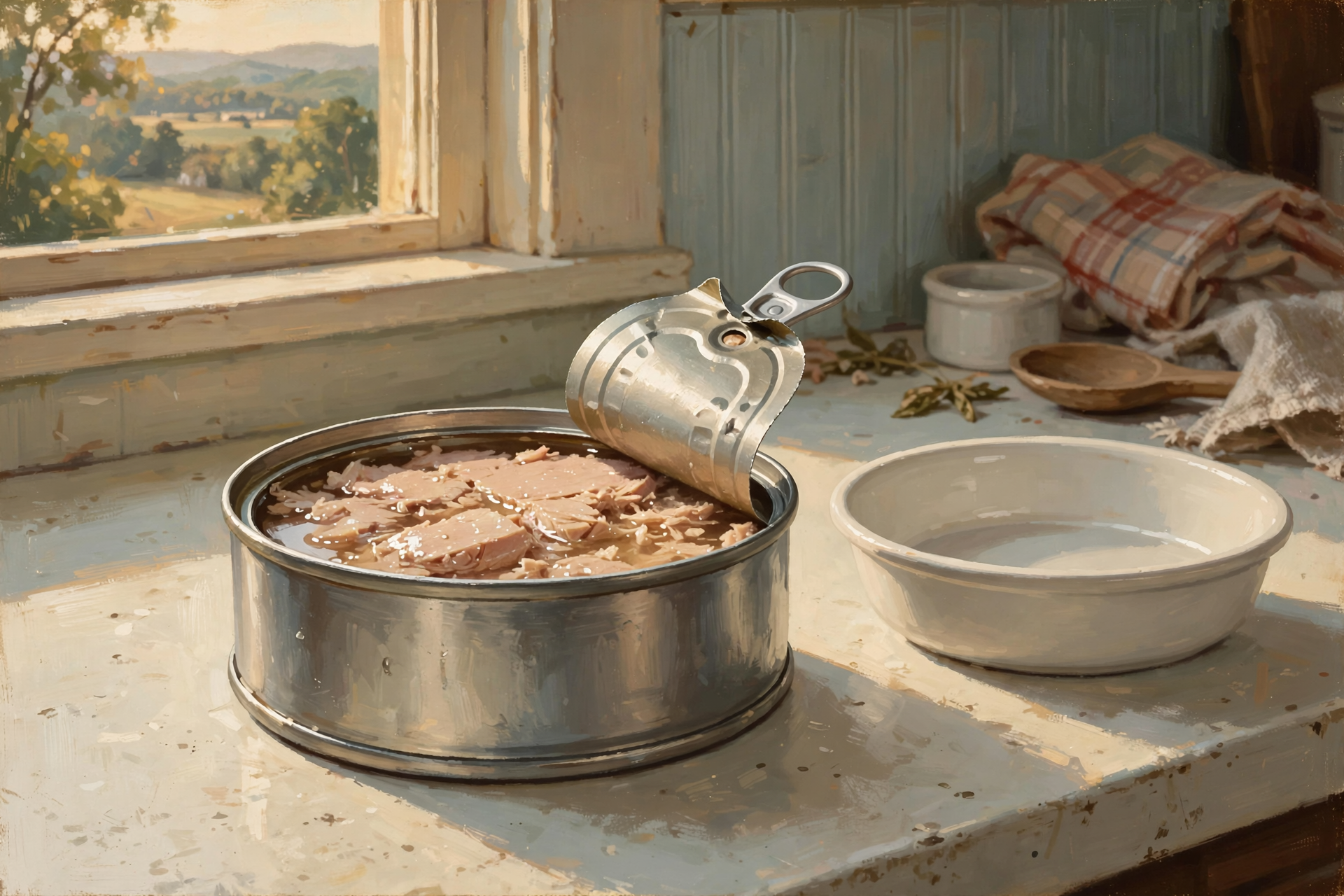
Human canned tuna is convenient.
It smells wonderful to a cat.
It is high in animal protein.
And in moderate quantities it can make an extremely effective topper or special treat.
But tuna is where several different issues come together.
🥫 Human Tuna Is Not Formulated as Complete Cat Food
A can of tuna intended for people is exactly that:
food intended for people.
It is not formulated to provide all feline vitamins, minerals, fatty acids and amino acids in the correct proportions.
So while tuna may be useful as a supplemental food, it should not quietly replace the complete cat food underneath it.
🧂 Some Tuna Contains More Sodium Than We Need
Canned tuna may be packed in:
- 💧 Water
- 🧂 Salted water or broth
- 🧈 Oil
If we’re buying tuna specifically for cats, I’m more interested in plain fish packed in water without unnecessary added salt or seasonings.
We’re trying to obtain the fish.
Not create a feline deli sandwich.
☿ Then There Is Mercury
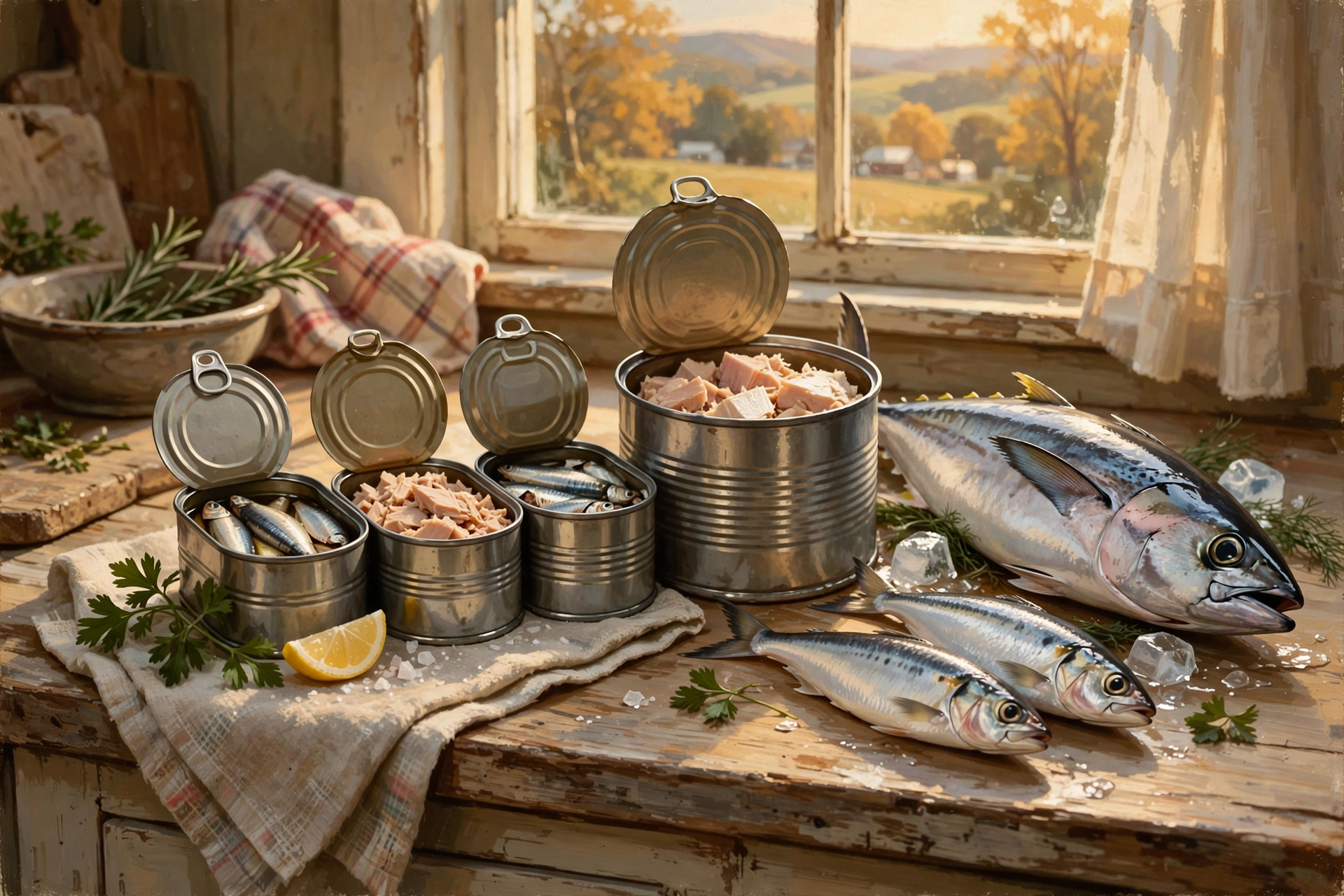
Fish can accumulate mercury from the environment.
Larger, longer-lived predatory fish generally have more opportunity to accumulate it than many smaller fish.
That’s one reason “tuna” itself is not one simple category.
FDA data show substantial differences among fish species and even among tuna types.
For example, FDA guidance for people notes that albacore, or white tuna, typically contains substantially more mercury than the smaller tuna species commonly used in canned light tuna.
That doesn’t mean Scaredy is going to suffer mercury poisoning because I opened a can of tuna.
It means this:
If fish is going to be a recurring supplemental food, variety makes more sense than building the entire system around one large predatory fish.
🐟 Sardines Suddenly Become Interesting
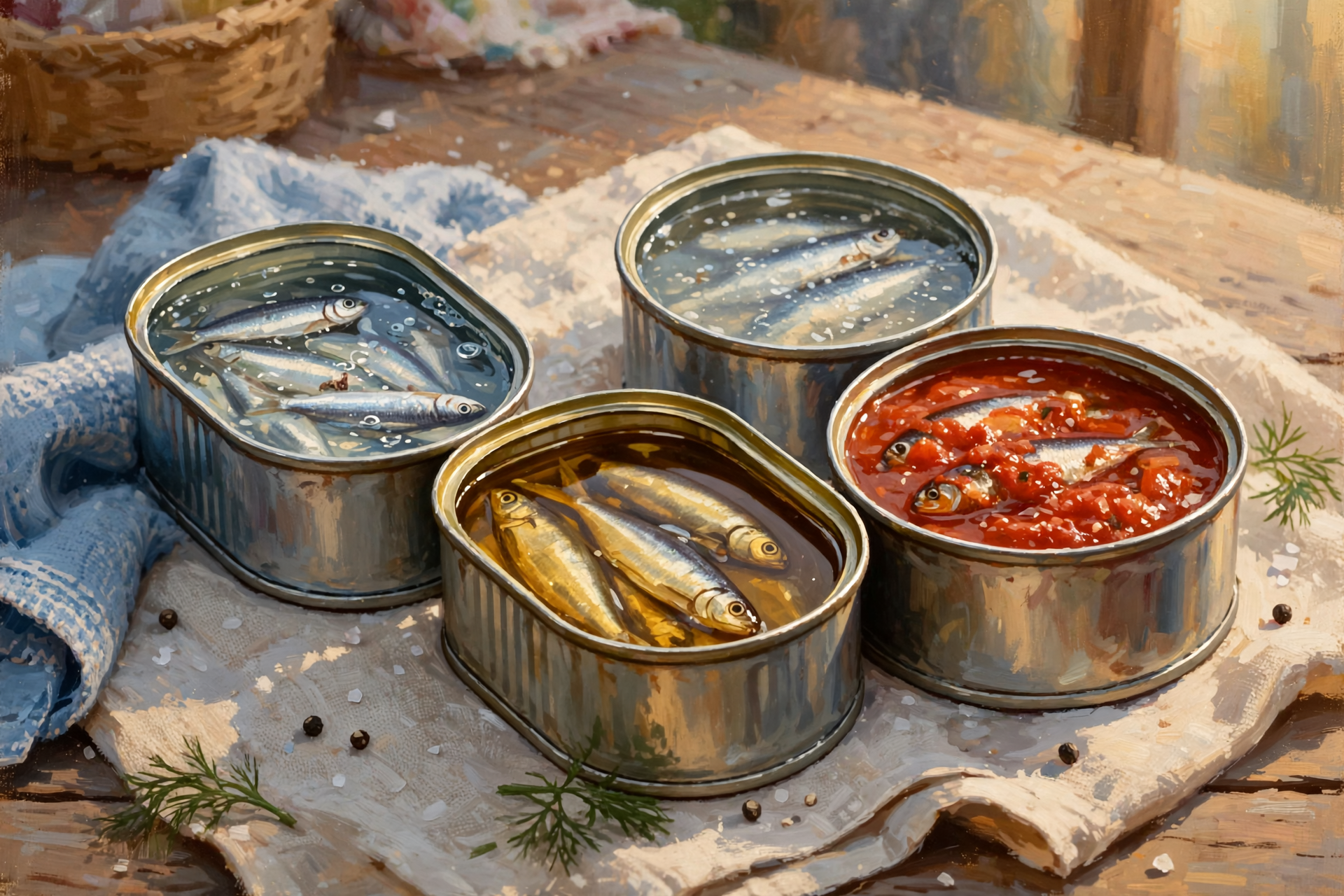
Sardines have several characteristics that make them worth investigating.
They are small fish.
They tend to sit lower in the food chain than large tuna.
They can provide protein and useful fats.
And canned sardines are often inexpensive.
That gives us another possible Scaredy Cat Project ingredient.
🥫 But Read the Sardine Can Too
Sardines may be packed in:
- 💧 Water
- 🧈 Oil
- 🧂 Brine
- 🍅 Tomato sauce
- 🌶️ Seasoned sauces
For our purposes, plain sardines packed in water would be a much simpler starting point than sardines swimming in sauce meant for people.
Scaredy may have culinary ambitions.
I do not intend to encourage them.
🐟 What About Salmon?
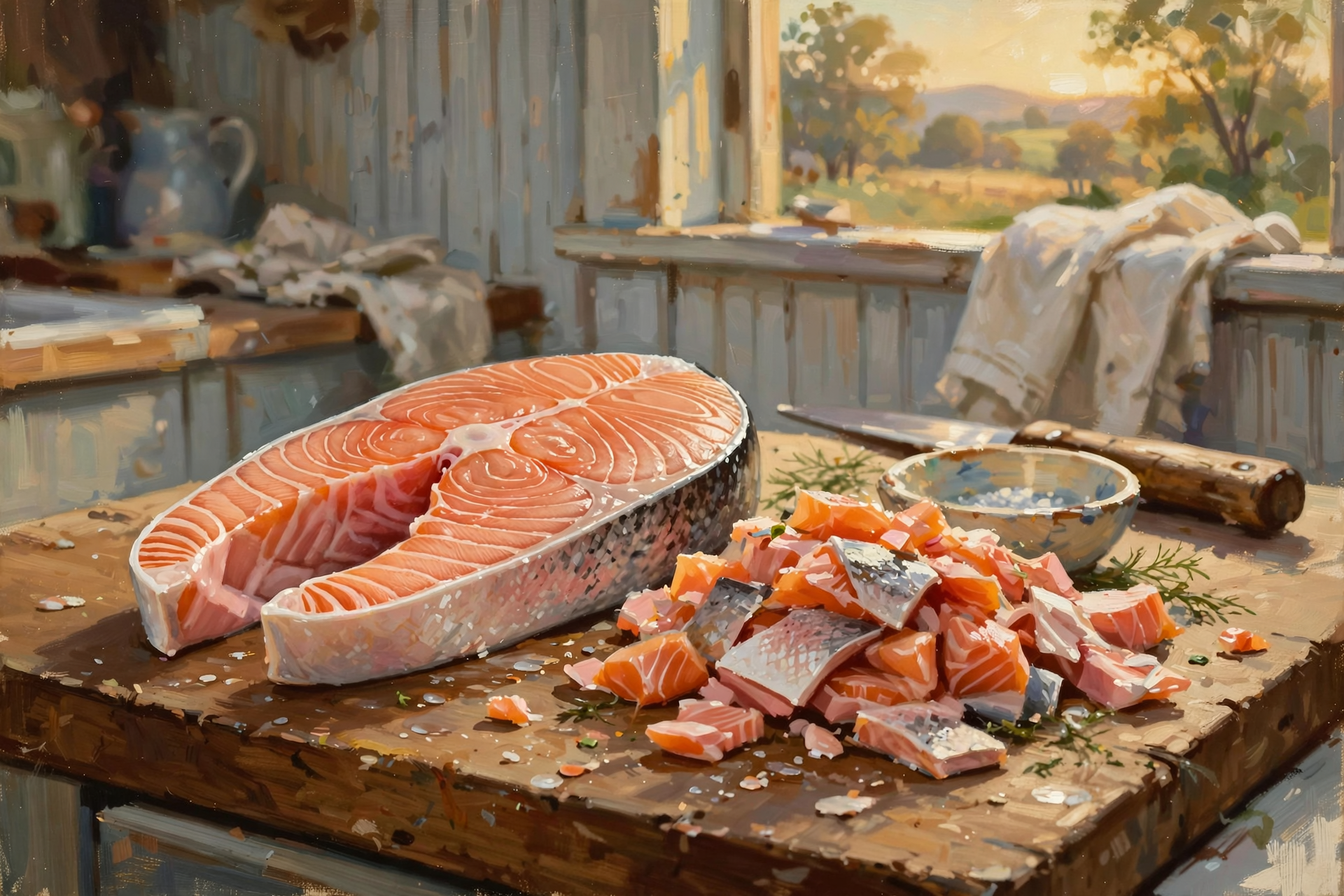
Salmon is another fish people immediately associate with cats.
It can provide:
- 🥩 Excellent protein
- 🧈 Fat
- 🐟 Omega-3 fatty acids
- 💧 Moisture
That makes it nutritionally attractive.
The problem may be economics.
If salmon costs considerably more per pound than complete cat food, it doesn’t help us solve our primary feeding challenge.
But salmon trimmings, scraps from appropriate processing, or safe surplus could be a different conversation.
💵 Once Again, Premium Human Food May Be the Wrong Target
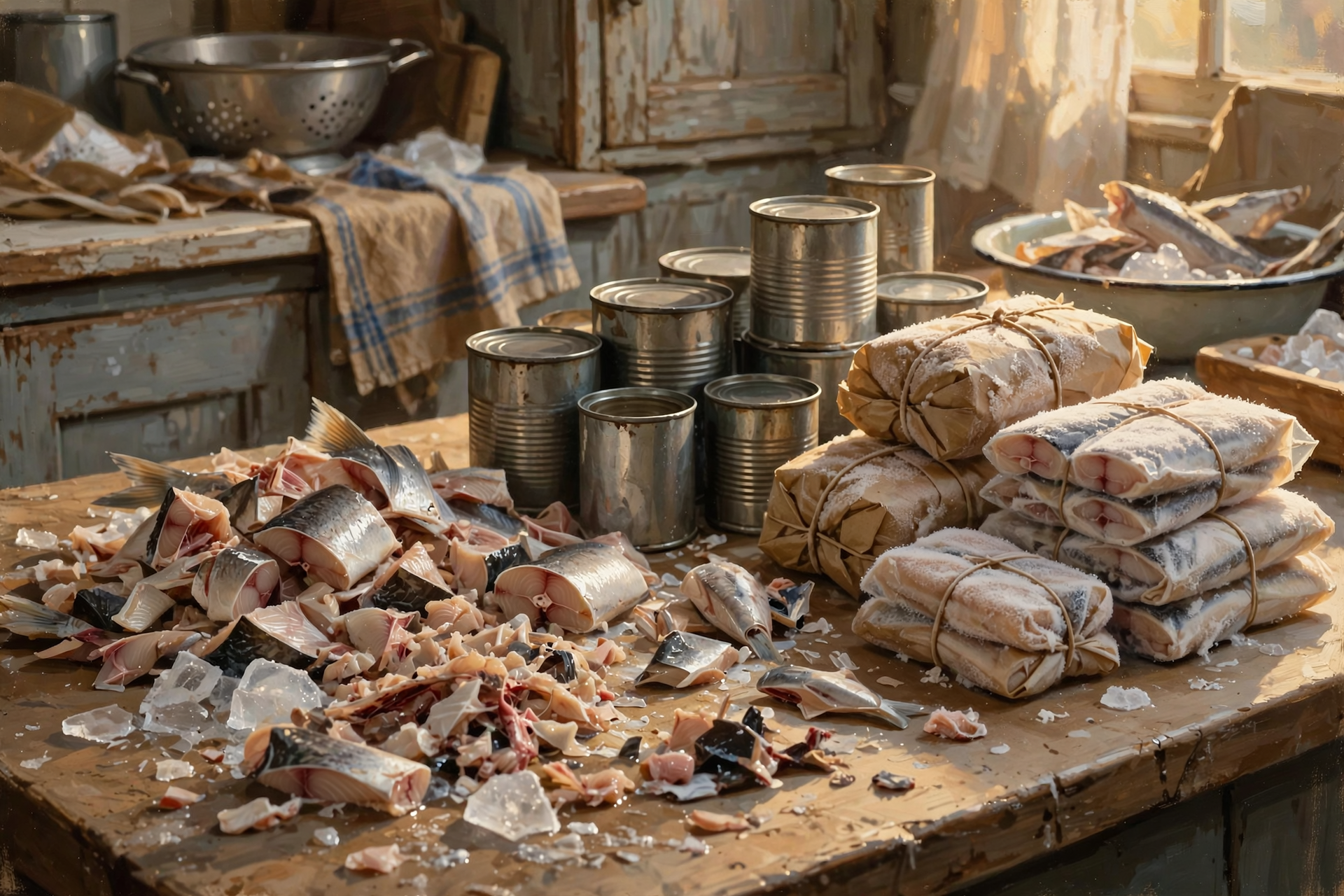
This project keeps returning to the same economic principle.
I’m not particularly interested in competing with people for expensive salmon fillets.
I am interested in:
- 🐟 Fish trimmings
- 🥫 Economical canned fish
- ♻️ Safe surplus fish
- 🧊 Frozen fish someone no longer plans to use
- 🔪 Processing portions with low human demand
That is where a local feeding project might find value.
⚠️ Raw Fish Creates a Special Problem: Thiaminase
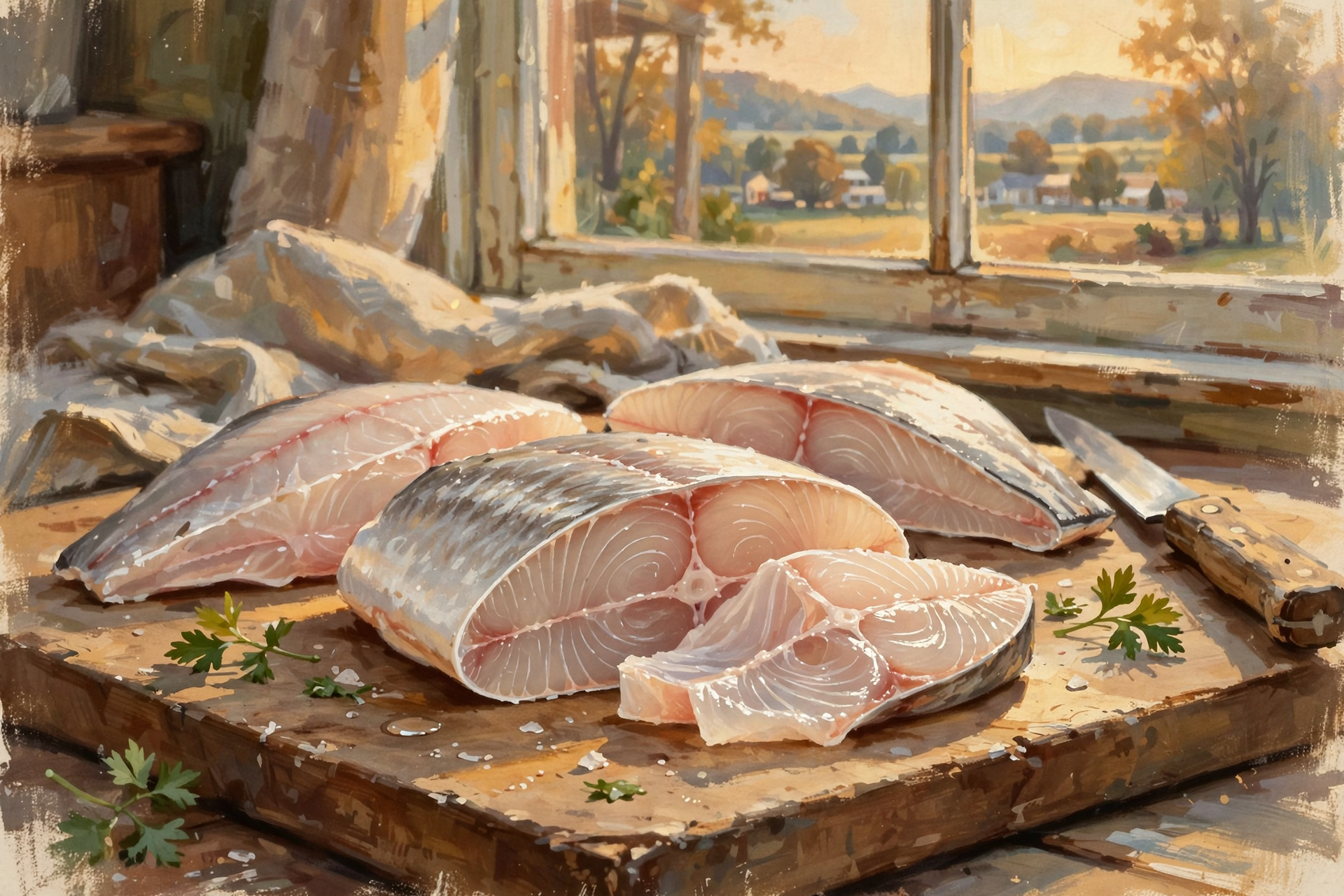
This is where fish introduces something we haven’t dealt with much in our other ingredients.
Some raw fish contain an enzyme called thiaminase.
Thiaminase destroys thiamine, also known as vitamin B1.
Merck notes that thiaminases are found in raw freshwater fish and some other aquatic foods and can cause thiamine deficiency when enough is consumed.
Thiamine deficiency in cats can become serious.
Neurologic signs can include:
- ⚠️ Loss of coordination
- ⚠️ Tremors
- ⚠️ Abnormal head or neck posture
- ⚠️ Seizures
- ⚠️ Severe neurologic illness
That gives us another excellent example of why:
“Cats like it” is not a nutritional safety standard.
🔥 Cooking Changes the Thiaminase Question

Merck notes that cooking destroys thiaminase.
Commercial canning also uses enough heat to destroy the enzyme.
That gives us another reason to prefer cooked fish when we’re intentionally preparing supplemental food for the colony.
It doesn’t mean every raw fish contains thiaminase.
It means there are enough species that do that feeding random raw fish without knowing what it is creates an unnecessary complication.
🎣 What About Locally Caught Freshwater Fish?

This is where things get locally interesting.
People fish.
Some catch more fish than they use.
There may be trimmings after cleaning.
There may be smaller fish that aren’t especially desirable to people.
Could any of that help?
Possibly.
But freshwater fish requires us to ask several questions:
- 🐟 What species is it?
- ⚠️ Does that species contain thiaminase?
- 🌊 Where was it caught?
- 🧪 Are there local fish-consumption advisories?
- 🦠 Was it handled properly?
- 🔥 Will it be cooked?
That means “somebody gave us a bucket of fish” isn’t quite enough information.
🌊 Local Water Quality Matters Too

Wild-caught fish can also accumulate contaminants from the water where they live.
That can vary by species, water body and region.
If we eventually investigate locally caught Tennessee fish, we should also pay attention to current state fish-consumption advisories.
Once again, local sourcing has an advantage:
we can identify the actual source.
That lets us ask better questions.
🐟 Small Fish May Be More Interesting Than Big Fish
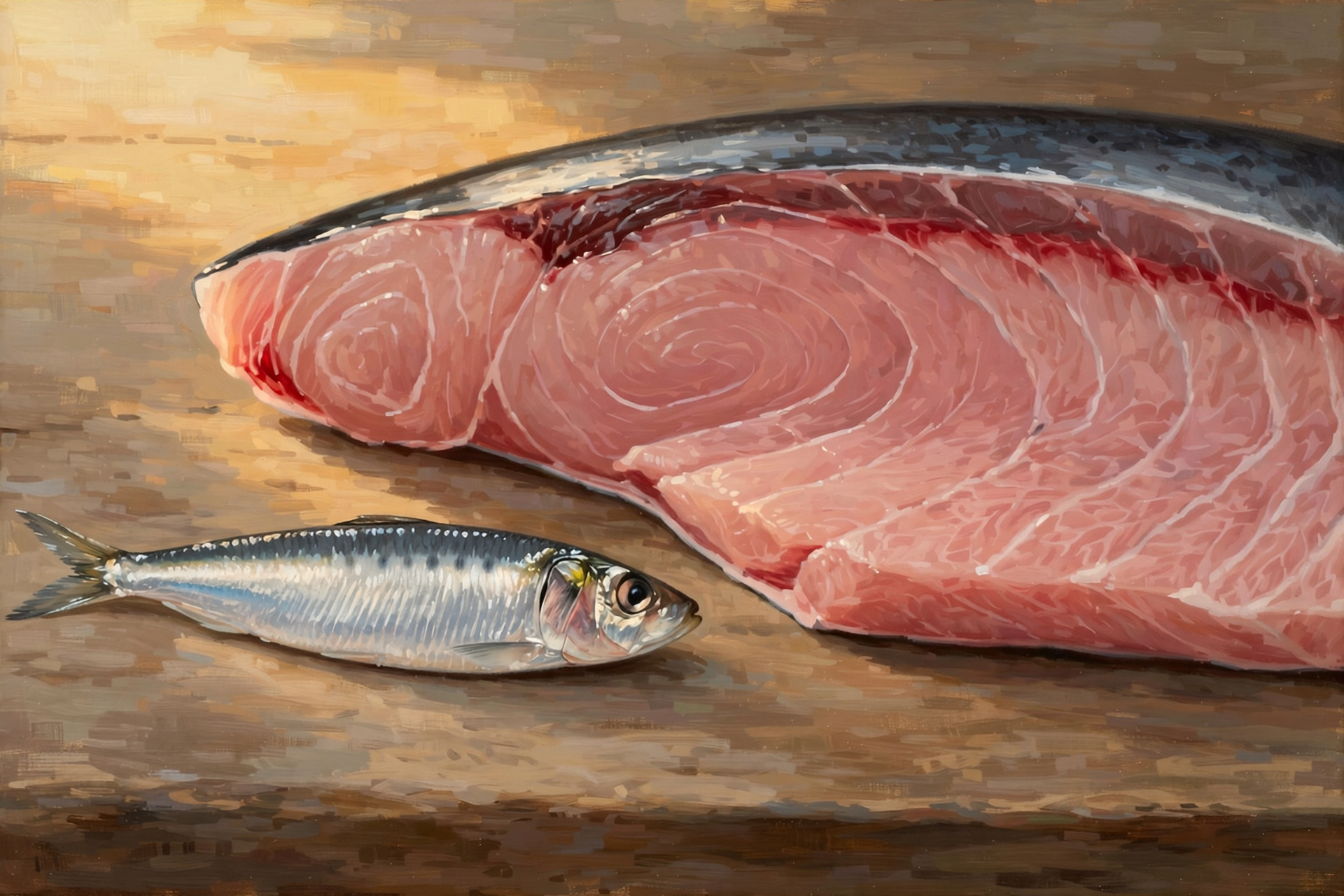
There is another pattern worth noticing.
Smaller fish often have:
- ⏳ Shorter lifespans
- 🐟 Lower positions in the food chain
- ☿ Less opportunity to accumulate mercury than large predatory fish
That doesn’t make every small fish automatically safe or appropriate.
But it helps explain why sardines can look interesting compared with feeding large amounts of tuna.
🧈 Omega-3 Fats Are Useful—but Again, Balance Matters
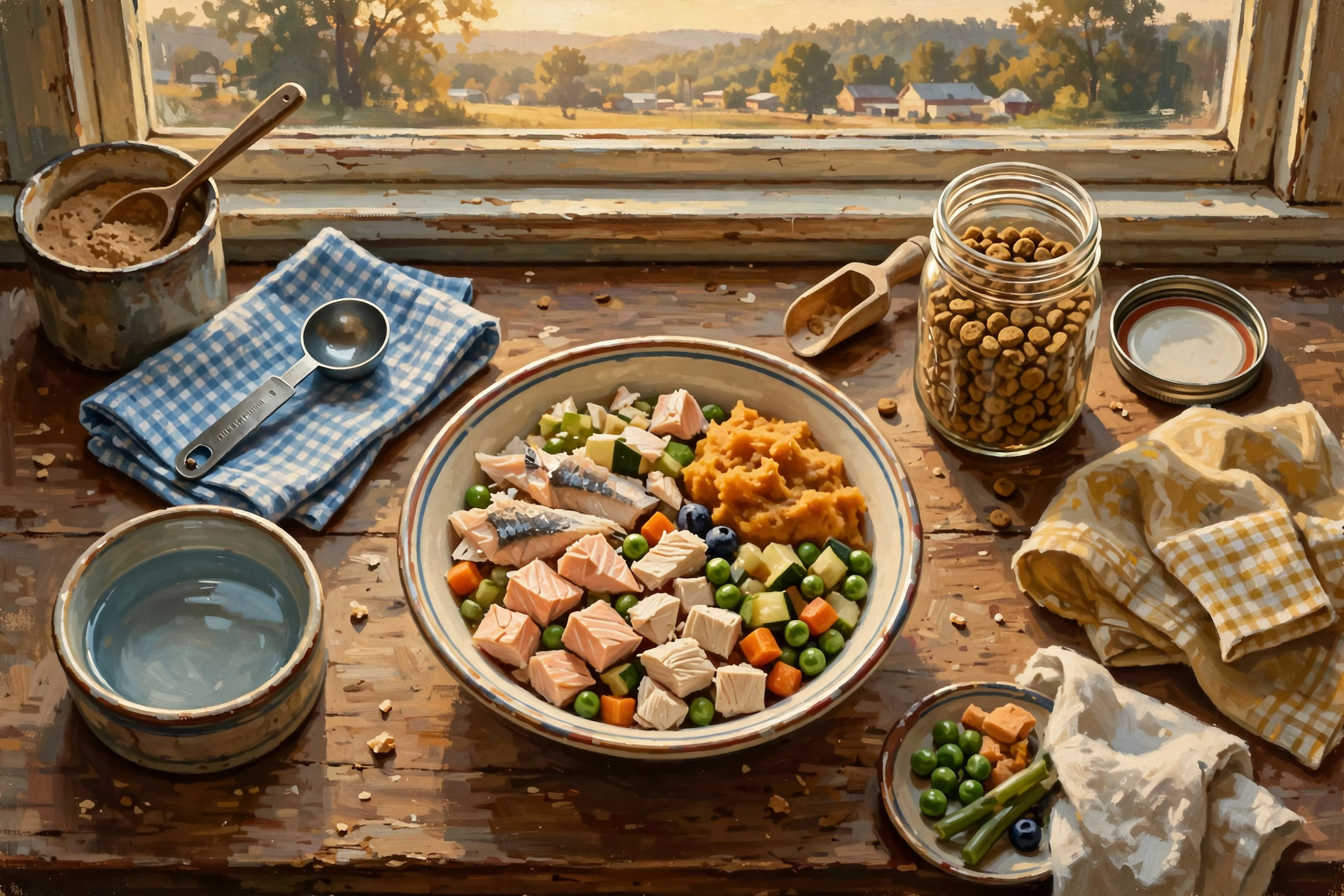
Certain fish are particularly good sources of omega-3 fatty acids.
Those fats have legitimate biological roles.
But this series has already taught us not to take:
“contains something useful”
and turn it into:
“therefore feed unlimited amounts.”
Complete diets balance multiple fatty acids and nutrients.
We’re interested in what fish contributes to that overall picture—not replacing the picture with fish.
🥫 What About Fish-Based Commercial Cat Food?
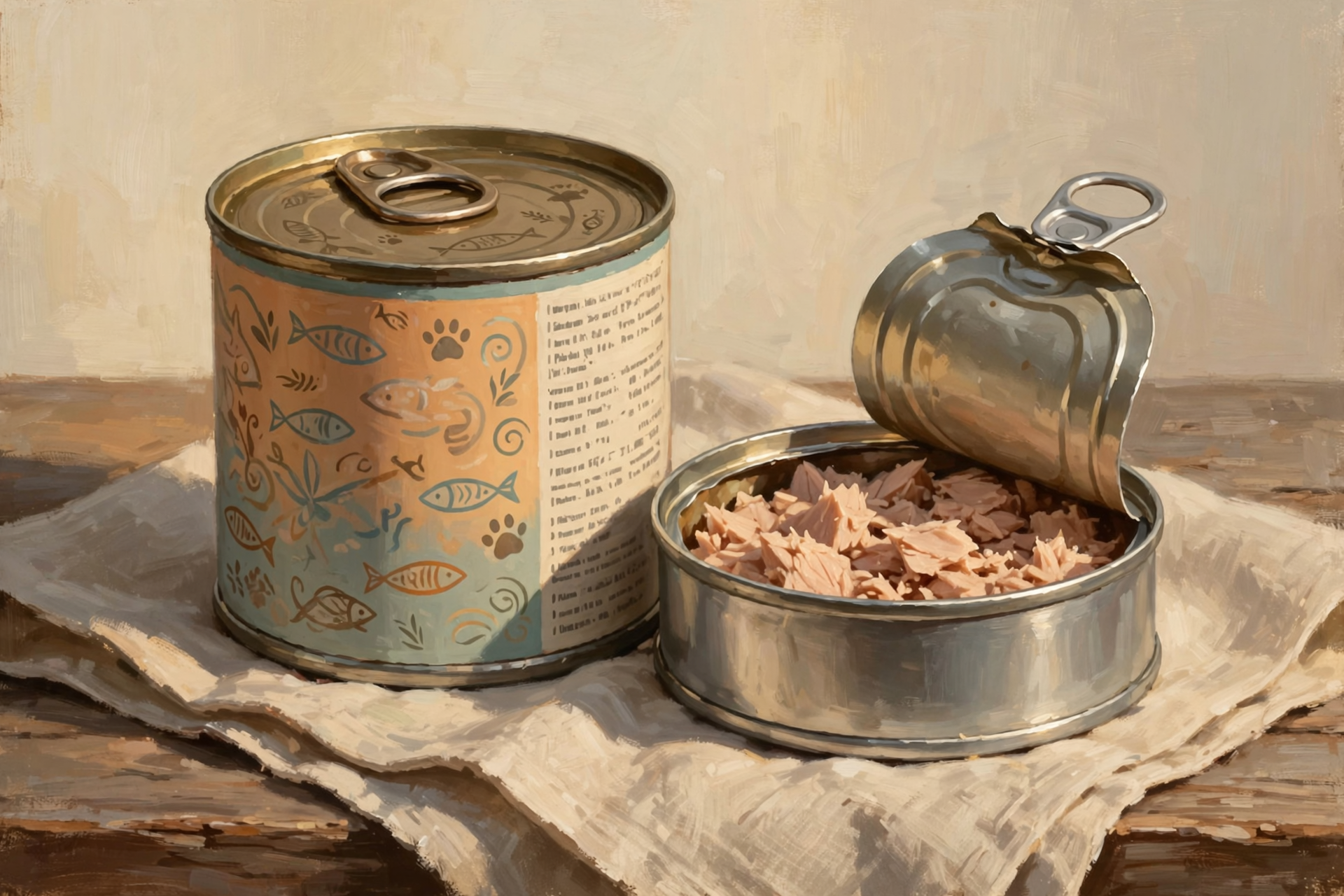
This is an important distinction.
A commercial cat food labeled salmon, tuna, whitefish or another fish flavor may be formulated as a complete and balanced feline diet.
That is very different from opening a can of human tuna.
The commercial food may contain additional:
- ❤️ Taurine
- ⚖️ Balanced minerals
- 💊 Vitamins
- 🧈 Essential fatty acids
- 🧬 Amino acids
So:
fish-based complete cat food
and
plain fish
are not nutritionally interchangeable.
😸 Palatability May Be Fish’s Greatest Superpower
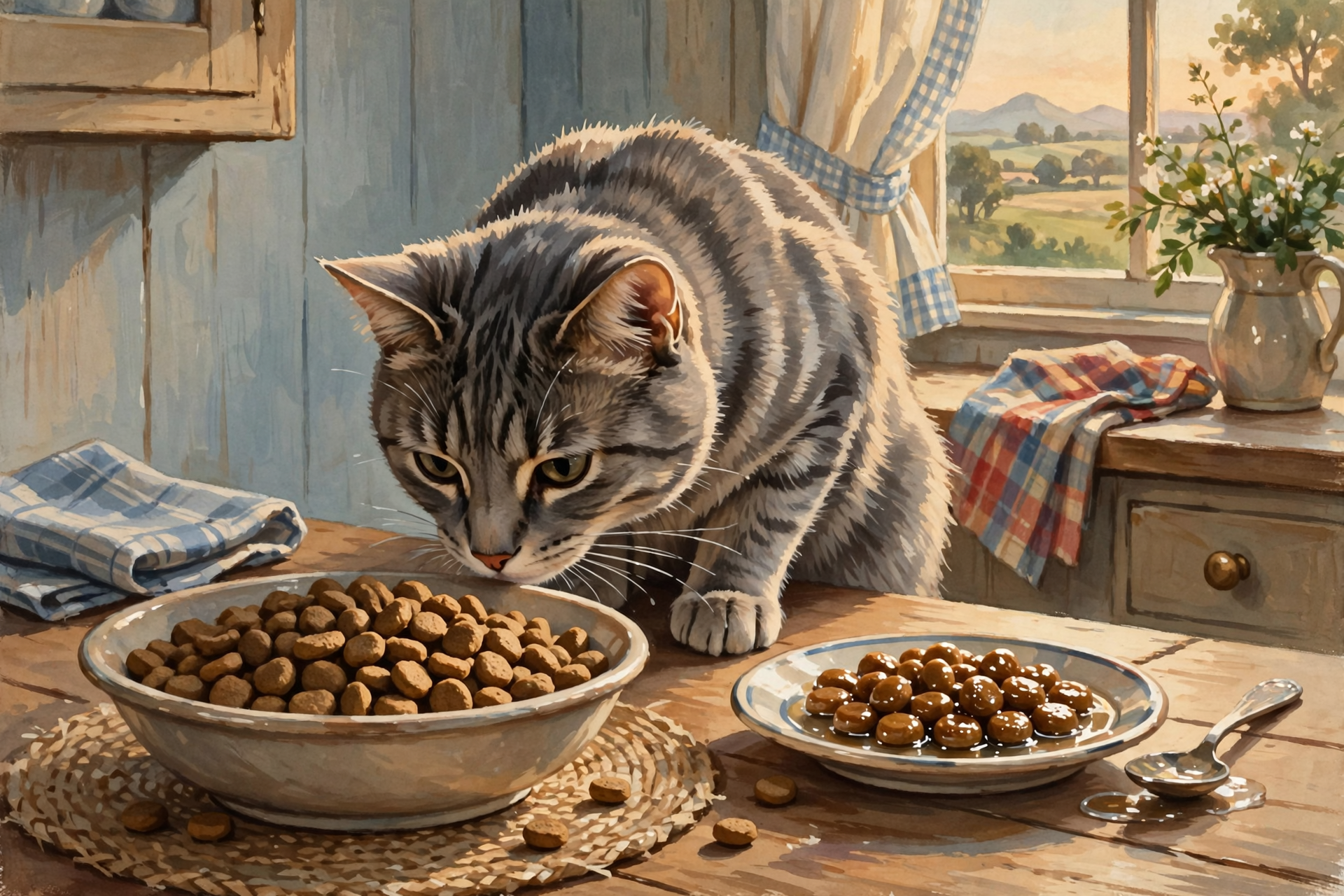
One reason fish might be useful in our colony may have less to do with replacing food and more to do with encouraging cats to eat it.
A small amount of tuna water or plain fish mixed into complete food may make the entire meal considerably more attractive.
That could be particularly useful for:
- 🙀 Timid cats
- 🐾 Newly arrived cats
- 😿 Cats with reduced appetite
- 🥣 Foods the colony otherwise finds less interesting
That may give fish a useful role as a palatability tool.
💧 Tuna Water Might Be More Useful Than I First Thought
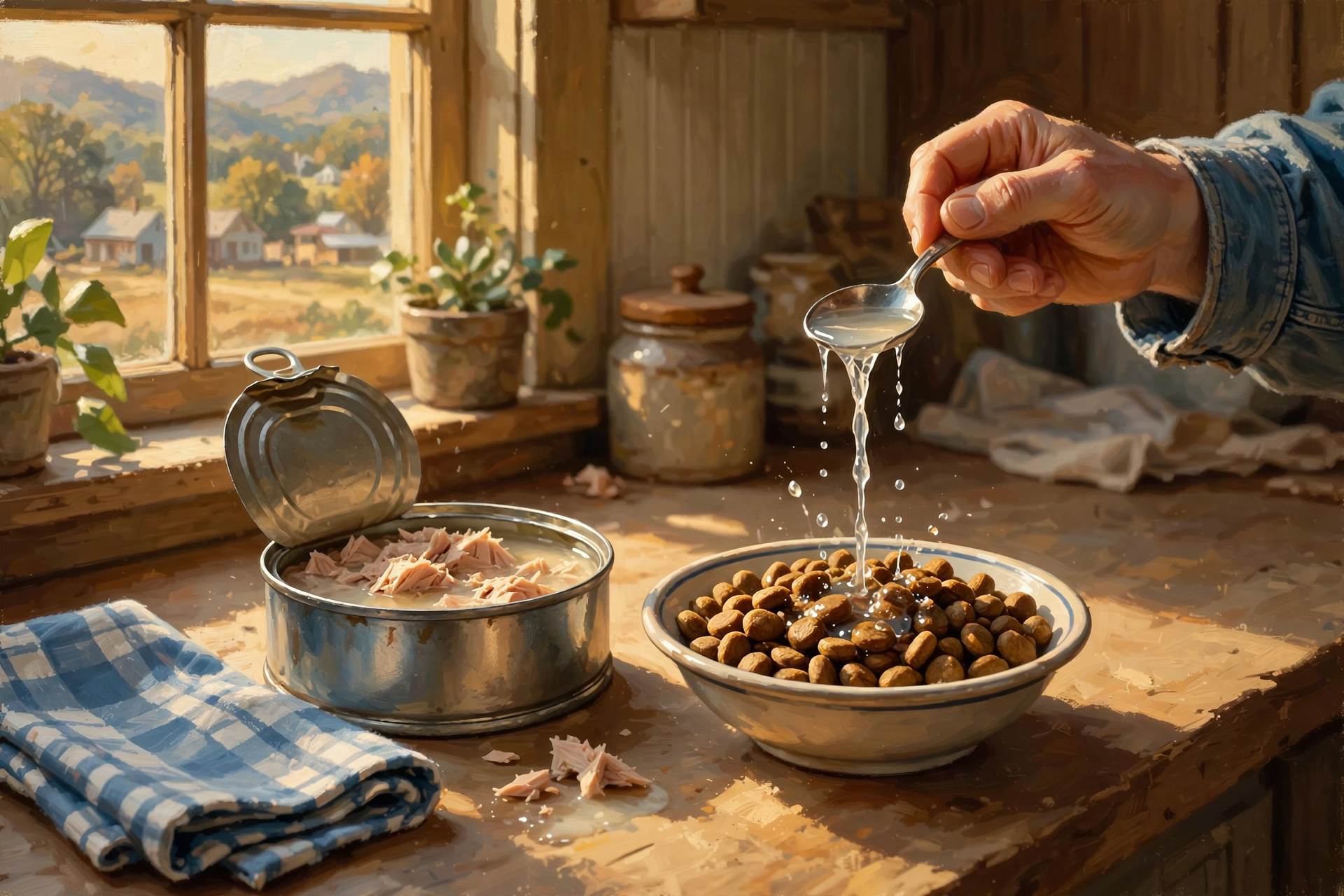
Suppose we use plain tuna packed in water.
The liquid itself contains fish aroma and flavor.
A small amount mixed into dry food could:
- 💧 Add moisture
- 😸 Increase aroma
- 🥣 Encourage eating
That means one can of tuna might influence considerably more than one cat’s meal.
Scaredy may regard this as an unacceptable dilution of tuna resources.
The accounting department may disagree.
🧂 Watch the Salt
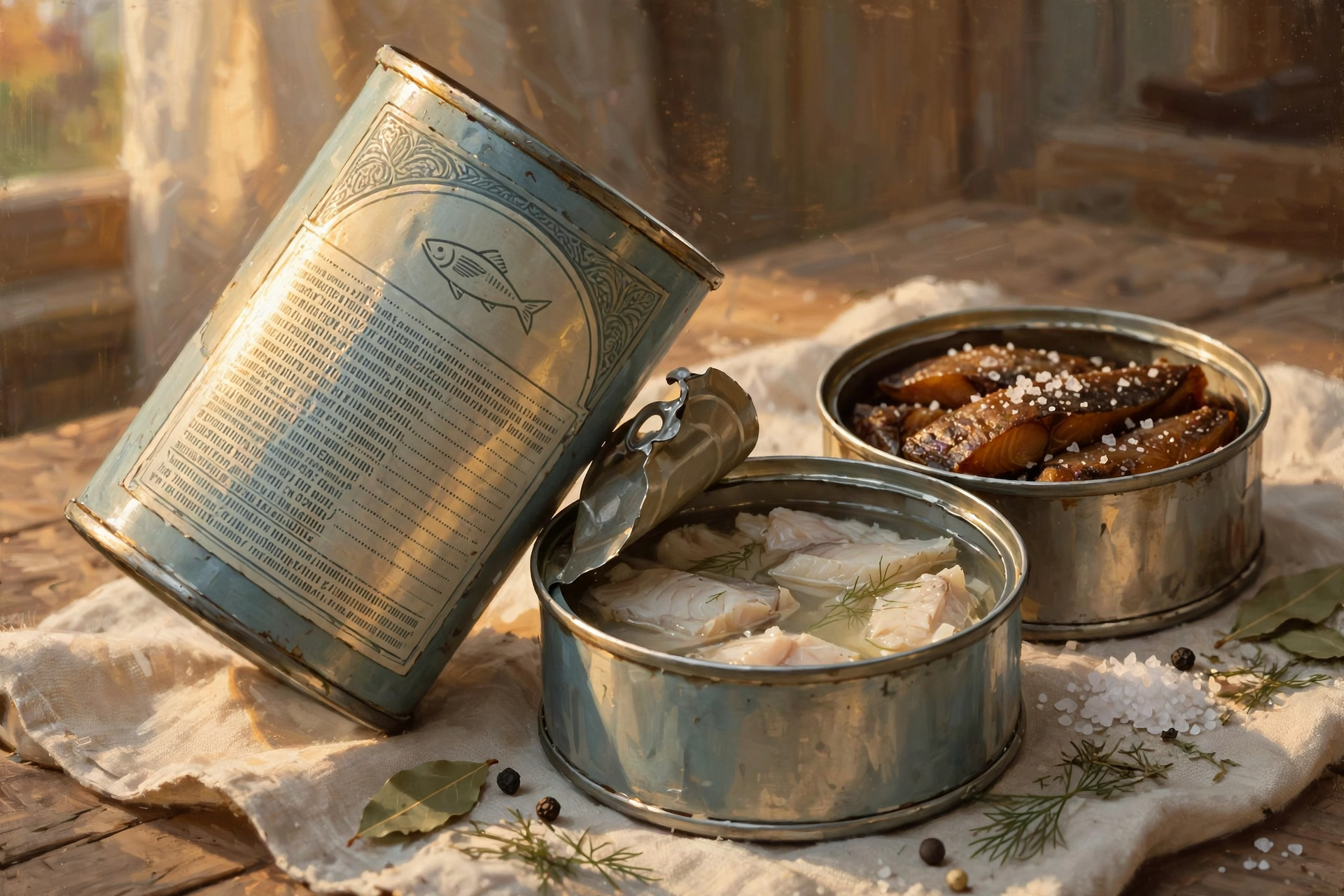
This is one reason I prefer products without unnecessary added sodium.
If we’re using canned fish primarily as a topper or supplemental ingredient, there’s no nutritional advantage in paying for heavily salted brine.
Likewise, smoked fish, heavily seasoned fish or preserved human snack products aren’t what we’re investigating.
Keep it simple.
🧈 What About Fish Packed in Oil?
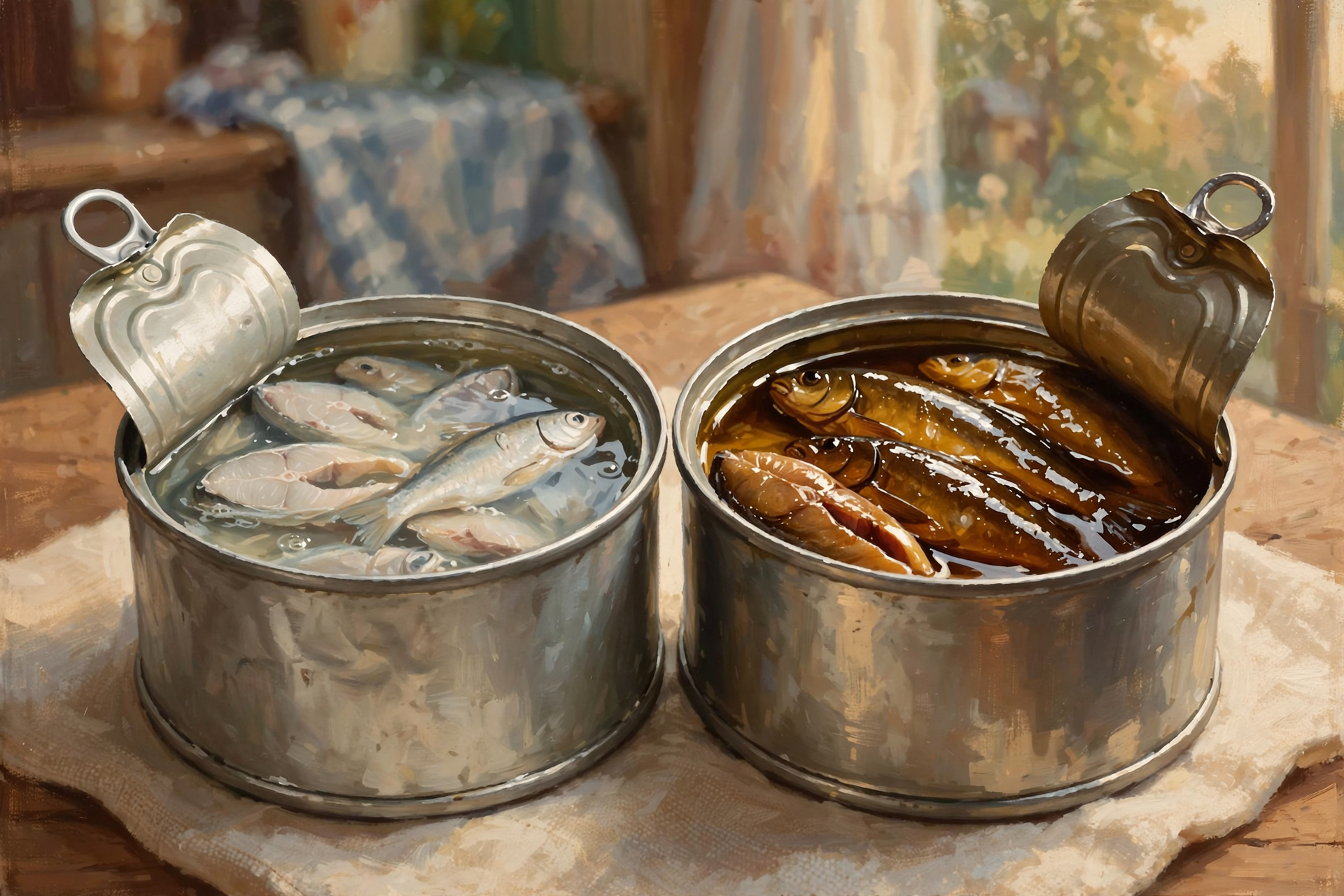
Oil adds calories.
That isn’t automatically harmful.
But it changes what we’re feeding.
If our goal is to understand the nutritional contribution of the fish itself, fish packed in water is easier to evaluate.
For a thin cat, additional calories may occasionally be useful.
But I don’t want to accidentally transform a modest fish supplement into a bowl full of added oil.
🐾 Kittens Need the Same Caution

Kittens may eagerly eat fish.
That doesn’t mean fish should replace food formulated for growth.
Growing kittens have demanding nutritional requirements.
So our rule remains:
complete food first, supplemental fish second.
A kitten being enthusiastic about tuna is not evidence that tuna contains everything needed to build a kitten.
💰 Could Fish Actually Save Us Money?
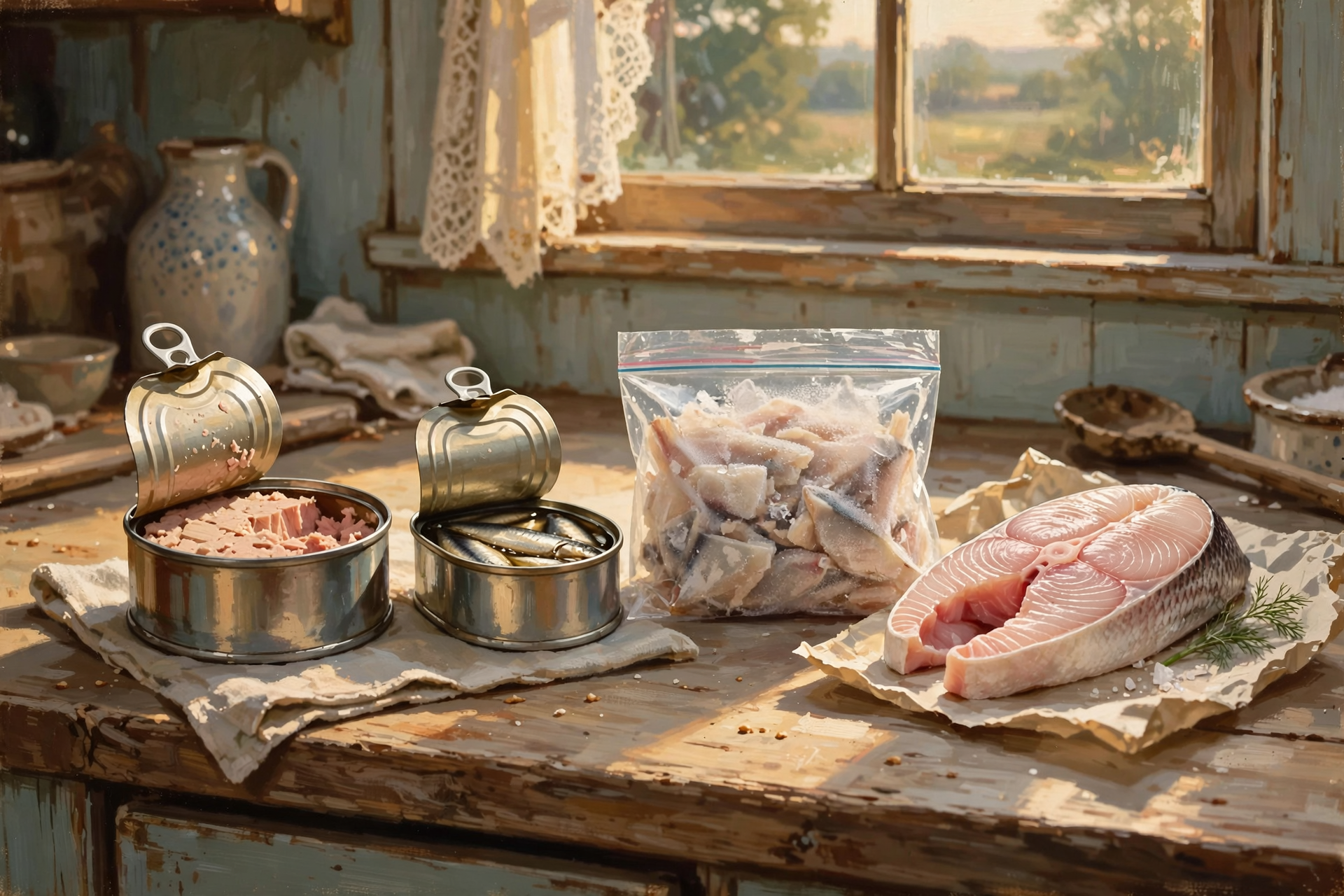
This depends entirely on source.
Premium tuna steaks?
Probably not.
Expensive salmon?
Probably not.
Economical canned sardines?
Maybe.
Store-brand canned light tuna used sparingly?
Maybe.
Safe fish trimmings with low human demand?
Potentially.
Surplus frozen fish someone won’t use?
Also potentially.
Like rabbit, venison and eggs, the local economics matter at least as much as the ingredient itself.
🧊 Frozen Fish Could Be Another Donation Opportunity
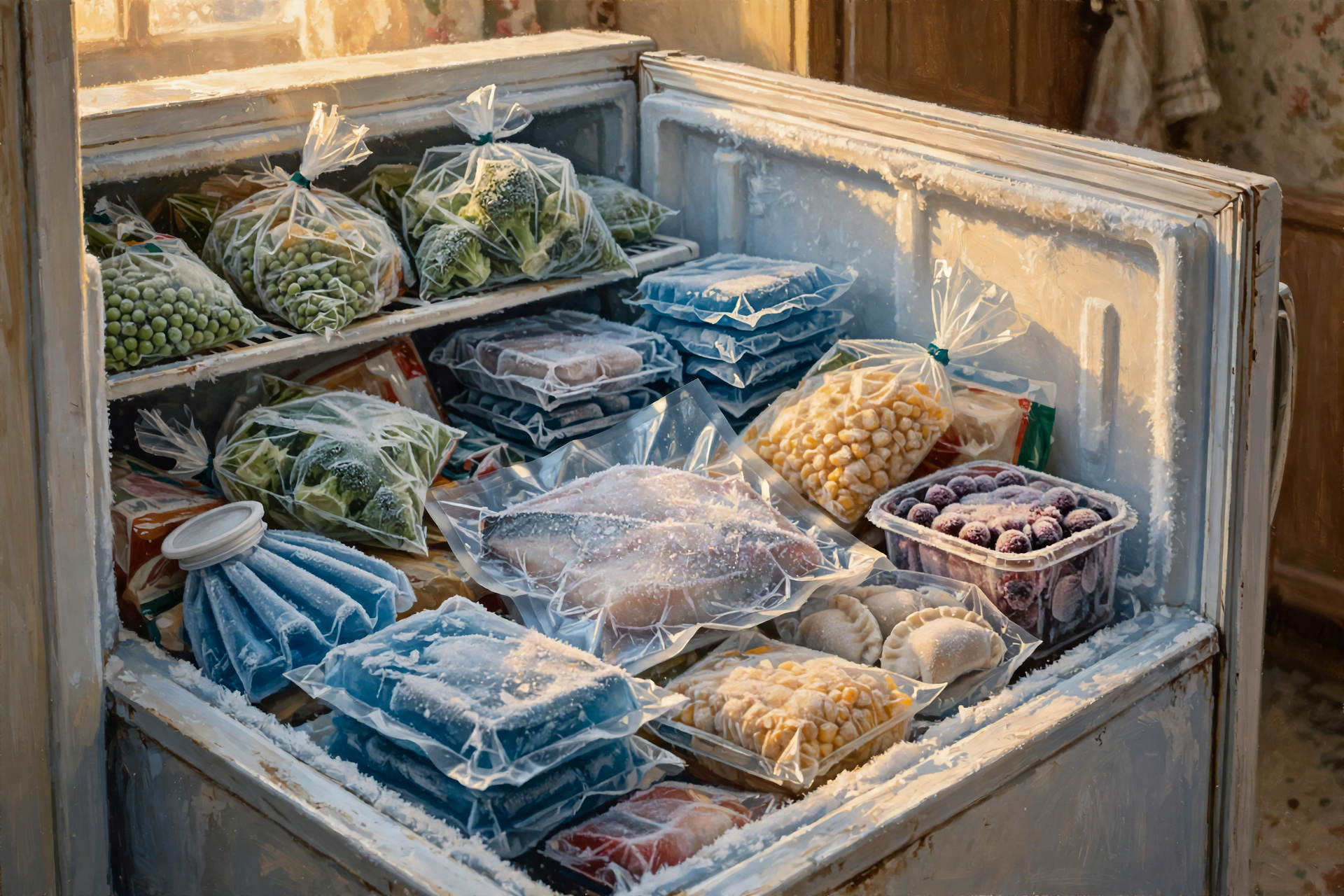
There are probably freezers around Sequatchie County containing fish that seemed like a wonderful idea when it was caught.
Then six months went by.
Then twelve.
Then somebody opened the freezer and remembered:
“Oh yeah. Fish.”
Properly frozen fish that a family no longer plans to eat may be worth investigating.
Again, storage history matters.
If nobody knows how long it sat thawed or whether it remained continuously frozen, we don’t know enough to use it.
♻️ Freezer Burn Is a Quality Problem, Not Automatically a Safety Problem
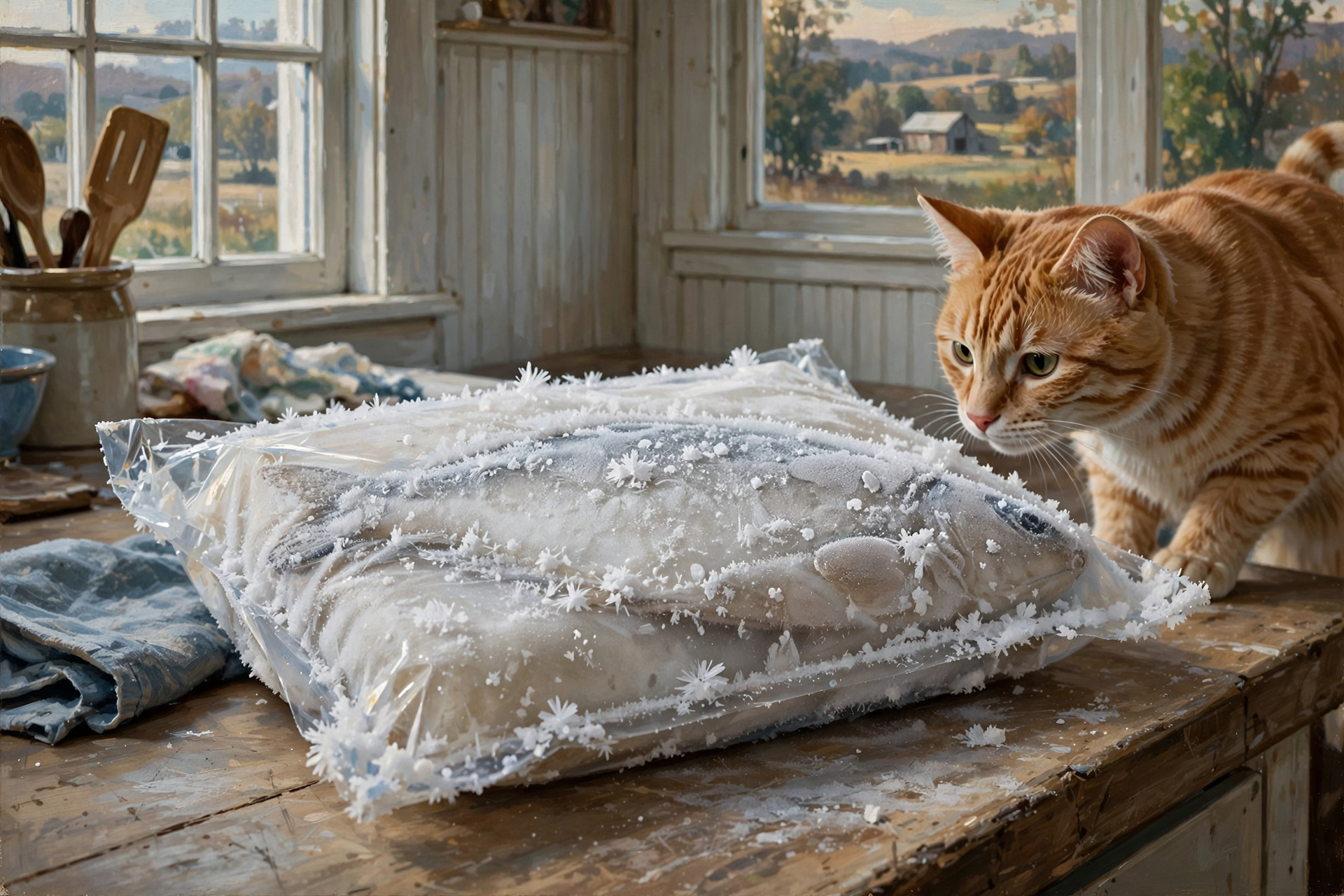
As we discussed with venison, freezer burn changes texture and flavor.
It can make fish much less appealing to people.
That doesn’t automatically mean properly stored frozen fish is spoiled.
This may create another useful mismatch:
low culinary value to people, possible nutritional value to cats.
Scaredy has never requested Michelin-star presentation.
🧪 How We Could Test Fish With Our Colony

1️⃣ Start With Known Fish
Not mystery fish.
Know the species and source.
2️⃣ Start With Cooked or Commercially Canned Fish
This avoids unnecessary raw-fish problems.
3️⃣ Keep It Plain
No onion.
No garlic.
No heavy salt.
No seasoned sauces.
4️⃣ Use Small Amounts
Especially for strongly flavored foods like tuna.
5️⃣ Mix With Complete Food
We’re supplementing.
6️⃣ Watch Acceptance
This is the experiment Scaredy has been training for her entire life.
7️⃣ Watch Waste
Fish can spoil quickly once served outdoors.
Don’t leave uneaten portions sitting around.
8️⃣ Record Cost
Purchase price.
Preparation.
Storage.
Waste.
And how many meals a small amount actually improves.
📋 The Scaredy Cat Ingredient Scorecard: Fish

🥩 Protein Value
High.
Fish generally provides high-quality animal protein.
🐟 Omega-3 Potential
High in some species.
Oily fish such as sardines and salmon are particularly interesting.
💧 Moisture
Good.
Fish and canned fish can add moisture compared with dry food.
☿ Mercury Concern
Varies substantially by species.
Large predatory fish generally deserve more caution than smaller species.
⚠️ Thiaminase Concern
Relevant for some raw fish.
Merck notes that thiaminases in raw freshwater fish can destroy dietary thiamine and that cooking destroys the enzyme.
🧂 Sodium Concern
Product-dependent.
Canned products can contain unnecessary added salt.
⚖️ Nutritional Completeness
Low when plain fish is used alone.
Fish-based complete cat food and plain fish are not the same thing.
🍳 Preparation
Easy.
Plain cooking or appropriately selected canned fish is straightforward.
🧊 Storage
Good.
Frozen fish stores well when properly packaged and continuously frozen.
💵 Cost Potential
Highly variable.
Premium fish may make little economic sense. Smaller canned fish, trimmings or safe surplus may be much more promising.
🏡 Local Availability
Potentially good.
Stores, anglers, restaurants and household freezers may all become relevant sources.
😸 Cat Appeal
Very high potential.
Scaredy has already submitted supporting documentation.
🐱 Scaredy Cat Project Rating
High Interest—Especially as a Small Supplemental Food or Palatability Booster.
🥫 So Which Fish Interests Me Most Right Now?

I don’t think the answer is expensive tuna.
At this stage, I’m particularly interested in comparing:
🐟 Sardines
Small fish, potentially useful fats, and often inexpensive.
🥫 Canned Light Tuna
Affordable, highly palatable and generally lower in mercury than albacore according to FDA data.
🐟 Salmon Trimmings
Potentially interesting if a safe low-cost source exists.
🎣 Locally Caught Fish
Interesting, but only after identifying species, source, current advisories and proper preparation.
That gives us plenty to investigate without turning Scaredy into a tuna-powered submarine.
🤝 Anglers, Restaurants and Fish Sellers Could Help Us Learn
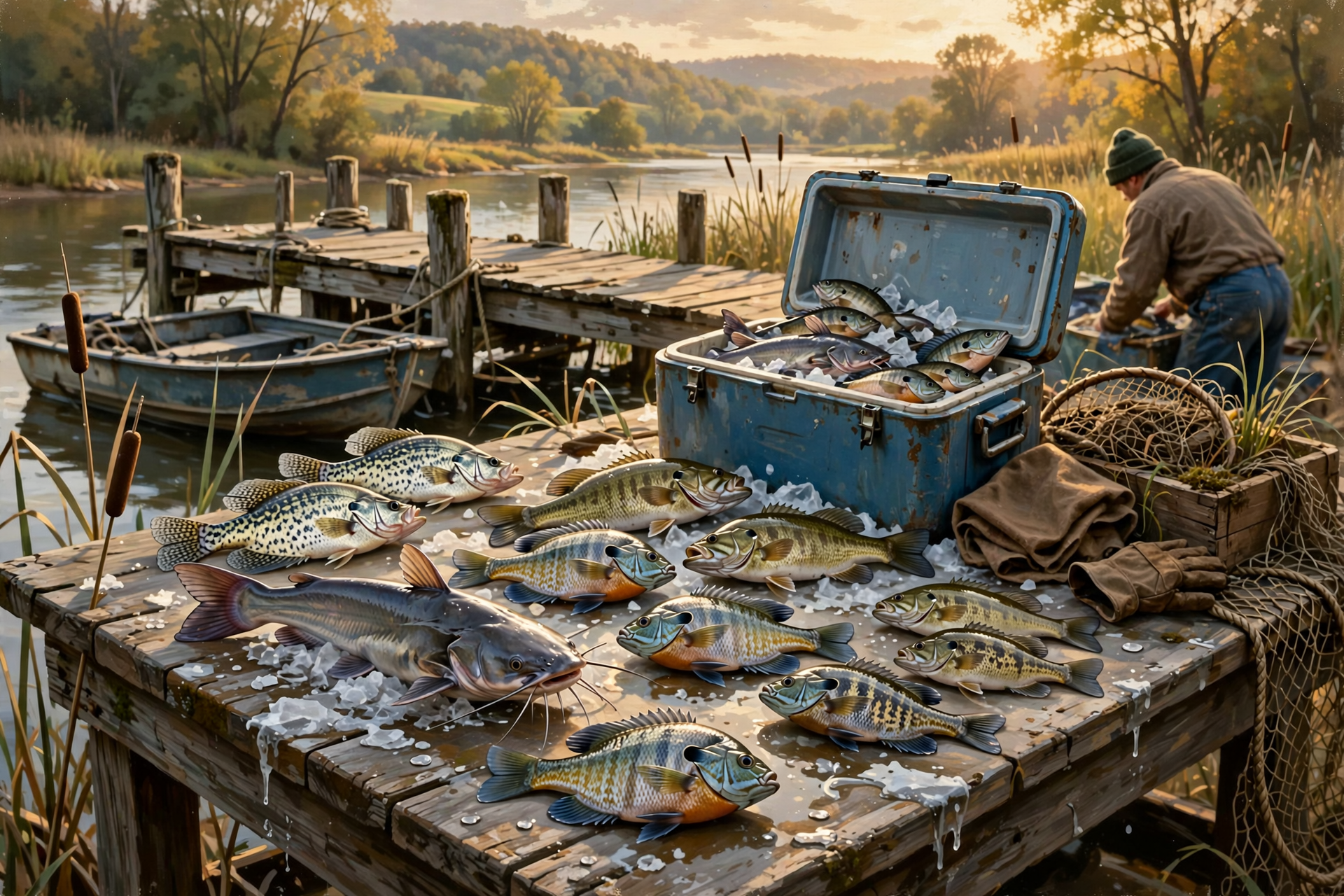
This is another article where local experience matters.
I’d like to hear from:
- 🎣 Local anglers
- 🐟 Fish sellers
- 🛒 Grocery seafood departments
- 🍽️ Restaurants
- 🧊 Families with frozen fish they no longer plan to use
What fish is locally available?
What gets thrown away?
What trimmings have little demand?
Which fish are inexpensive?
And which local species should we be cautious about?
Those answers are more useful than assuming all fish are alike.
❤️ Fish Brings Us Back to Where This Series Began

This series began because I was away from home looking at a photograph of Scaredy.
I missed her.
She apparently missed me.
Or perhaps she missed having her preferred tuna technician on duty.
That little joke started a much bigger investigation.
What should cats really eat?
What can we source locally?
What can we afford?
What gets wasted?
What are we overlooking?
And how do we care for forty cats without confusing love with simply putting something tasty in a bowl?
Fish answers that last question particularly well.
Something can be loved without being complete.
Scaredy loves tuna.
That doesn’t mean tuna should run the kitchen.
🔜 Next: Beef Heart for Cats—Another Overlooked Muscle With an Interesting Nutritional Story
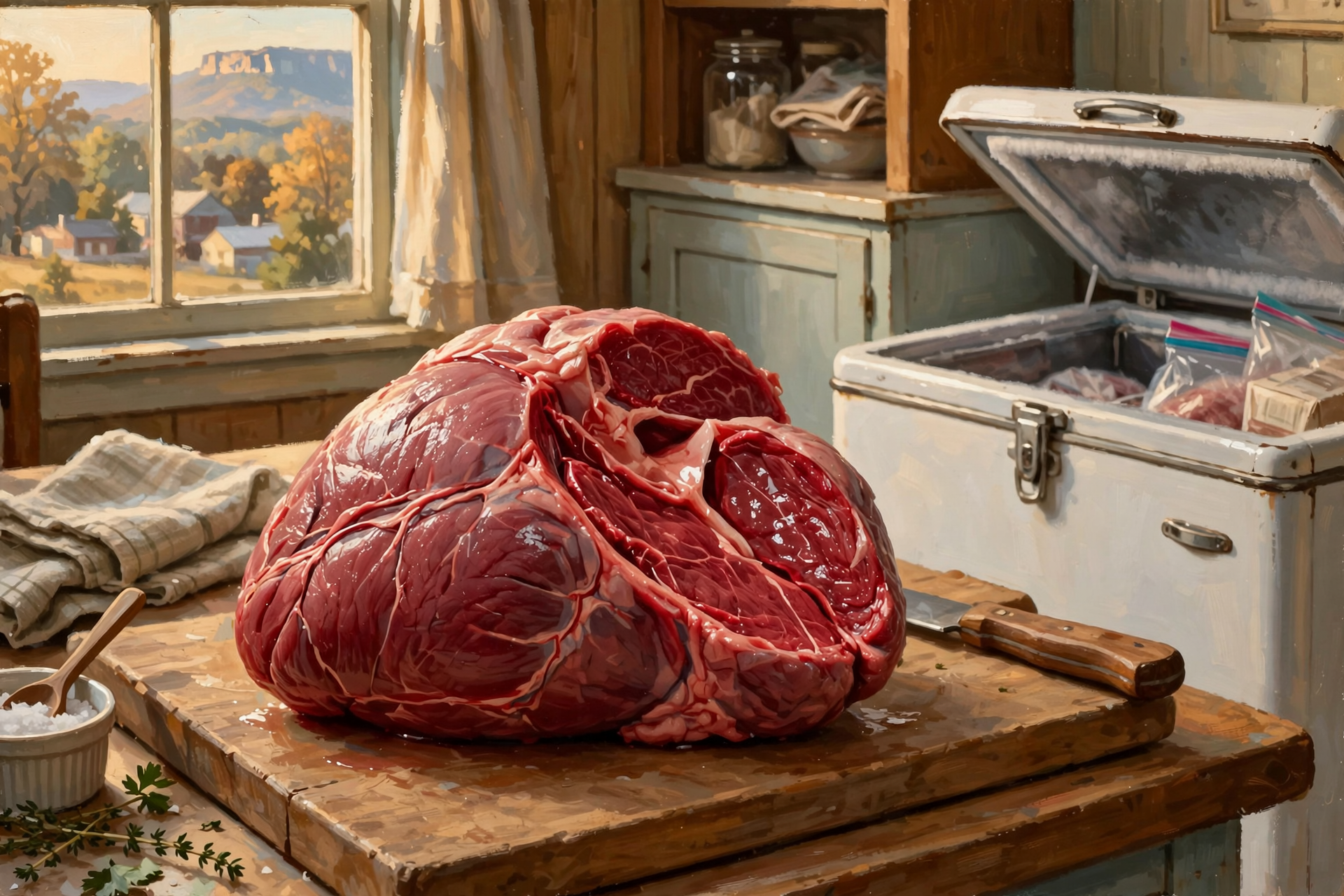
We’ve explored chicken heart.
Now I think it’s worth asking whether the same idea extends to a larger animal.
Beef heart is:
- 🥩 Dense animal protein
- ❤️ Muscular heart tissue
- 🧊 Freezer-friendly
- 💵 Sometimes less expensive than familiar beef cuts
- 🏡 Potentially available through local processors
We’ll compare it with chicken heart, look at taurine, cost, sourcing, preparation and whether beef processors might have lower-demand portions that could fit our project.
📣 What Fish Do Your Cats Like?

If you care for cats around Dunlap or Sequatchie County, we’d like to hear what you’ve learned.
Do they like sardines?
Tuna?
Salmon?
Cooked local fish?
Have you ever used a small amount of fish to encourage a picky cat to eat?
If you’re an angler or work with fish commercially, we’d especially like to hear about safe lower-demand products that might otherwise go unused.
The goal isn’t to feed cats whatever we can find.
It’s to learn where useful local foods fit.
❤️ Feed Them. Fix Them. Find Them Homes When We Can. Help the Rest Age Gracefully.

Fish may become one of Scaredy’s favorite parts of this project.
That’s fine.
She gets a vote.
She doesn’t get veto power.
Our job is to balance:
nutrition, safety, affordability, availability and what the cats will actually eat.
If fish can help us do that, we’ll find its place.
If tuna remains mostly Scaredy’s special treat, she’ll probably survive the disappointment.
Although I’m sure she’ll have something to say about it.
🐾 Feed them. Fix them. Find them homes when we can. Help the rest age gracefully.
🔎 Sources & Further Reading

- Merck Veterinary Manual — Nutritional Requirements of Small Animals
- Merck Veterinary Manual — Nutritional Disorders of the Spinal Column and Cord in Animals
- U.S. Food and Drug Administration — Technical Information on Fish and Mercury
- U.S. Food and Drug Administration — Questions and Answers About Eating Fish
Sources
Know about an upcoming event or story in the Dunlap, TN area? Submit it here.



0 Comments