
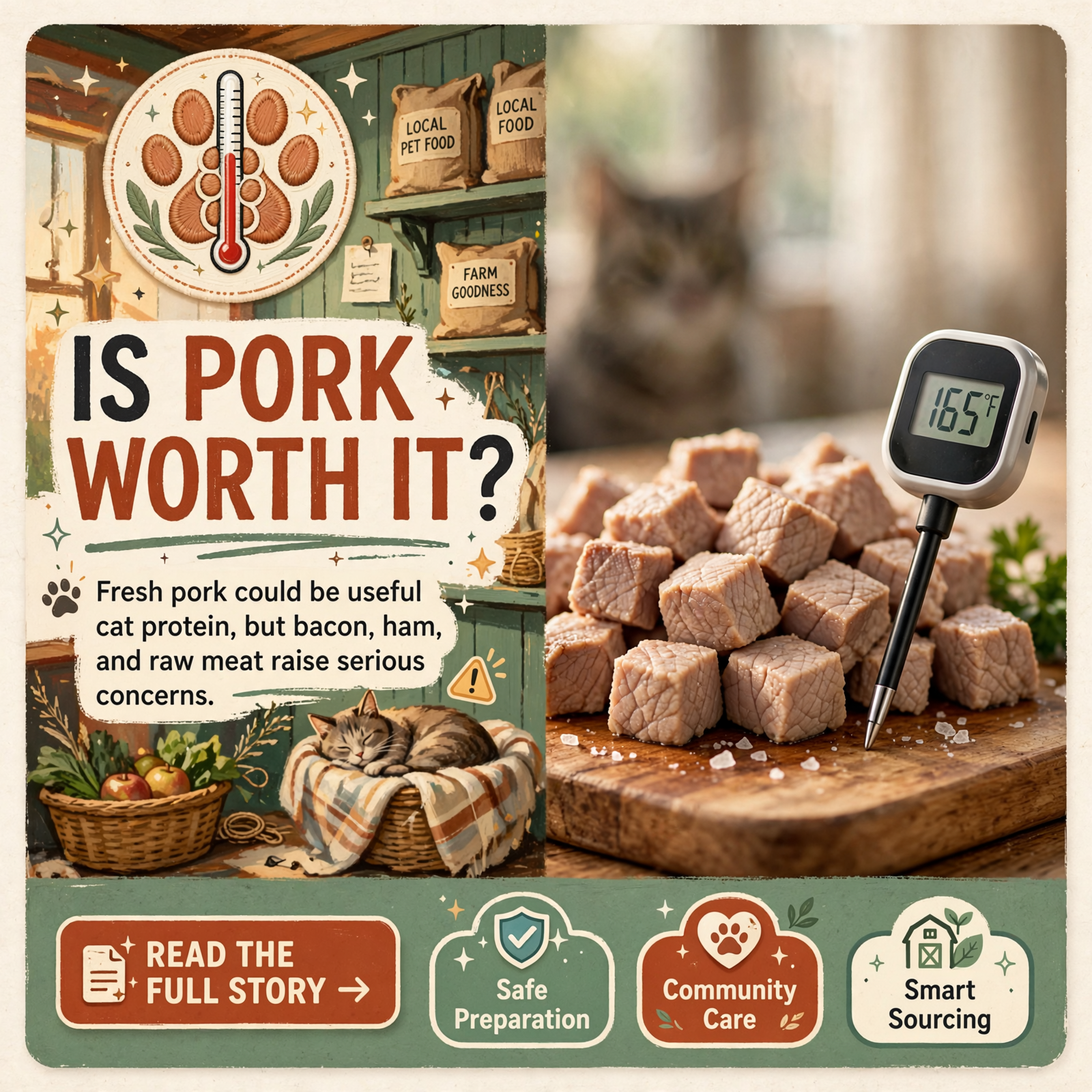
🐖 Pork for Cats: Useful Protein, or More Trouble Than It’s Worth?
🐾 The Scaredy Cat Project — Article #14
We’ve worked our way through chicken.
Eggs.
Venison.
Rabbit.
Fish.
Beef heart.
Now we get to another meat that’s common, familiar and sometimes surprisingly inexpensive.
Pork.
At first glance, pork seems like an obvious candidate for The Scaredy Cat Project.
It’s animal protein.
Some cuts are relatively inexpensive.
Some are calorie-dense.
Butchers and processors handle large amounts of it.
And less-popular portions may have significantly less human demand than pork chops or bacon.
But pork also brings a few complications.
Raw pork safety.
Parasites.
Processed meats.
Salt.
Fat.
And the unfortunate human tendency to turn perfectly ordinary pork into bacon and then assume bacon must therefore be a health food.
Scaredy would probably support that logic.
I do not.
🥩 Plain Pork Is Still Animal Protein
Let’s start with the simple part.
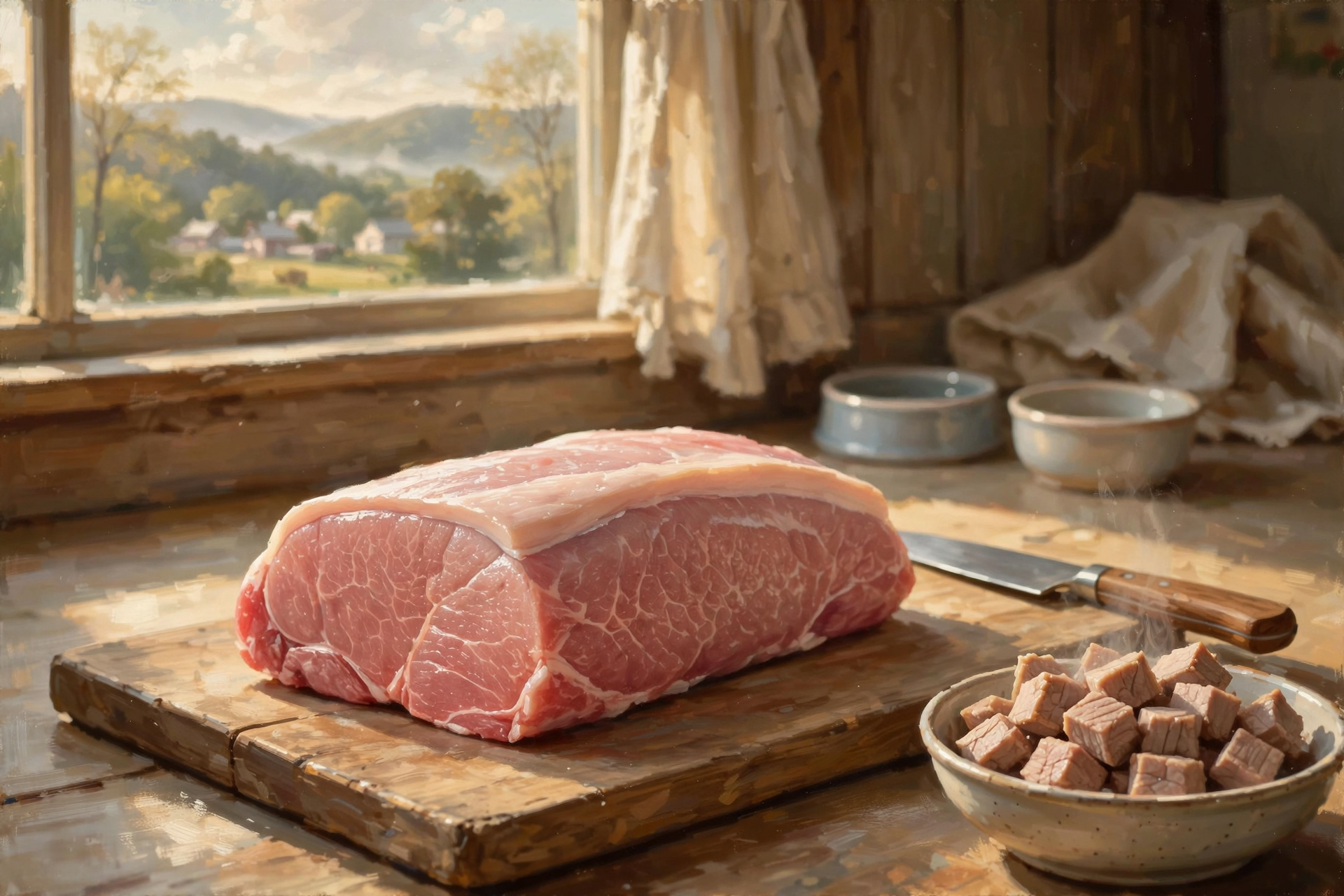
Fresh pork muscle meat can provide:
- 🥩 Animal protein
- 🧬 Essential amino acids
- 💊 B vitamins
- ⚙️ Minerals
- 🧈 Varying amounts of fat
- 💧 Natural moisture
That makes fresh pork a legitimate food ingredient for cats.
But the word fresh matters here.
A plain piece of cooked pork and a strip of bacon may both come from a pig.
That does not make them nutritionally equivalent.
🐱 Can Cats Eat Pork?

In plain English:
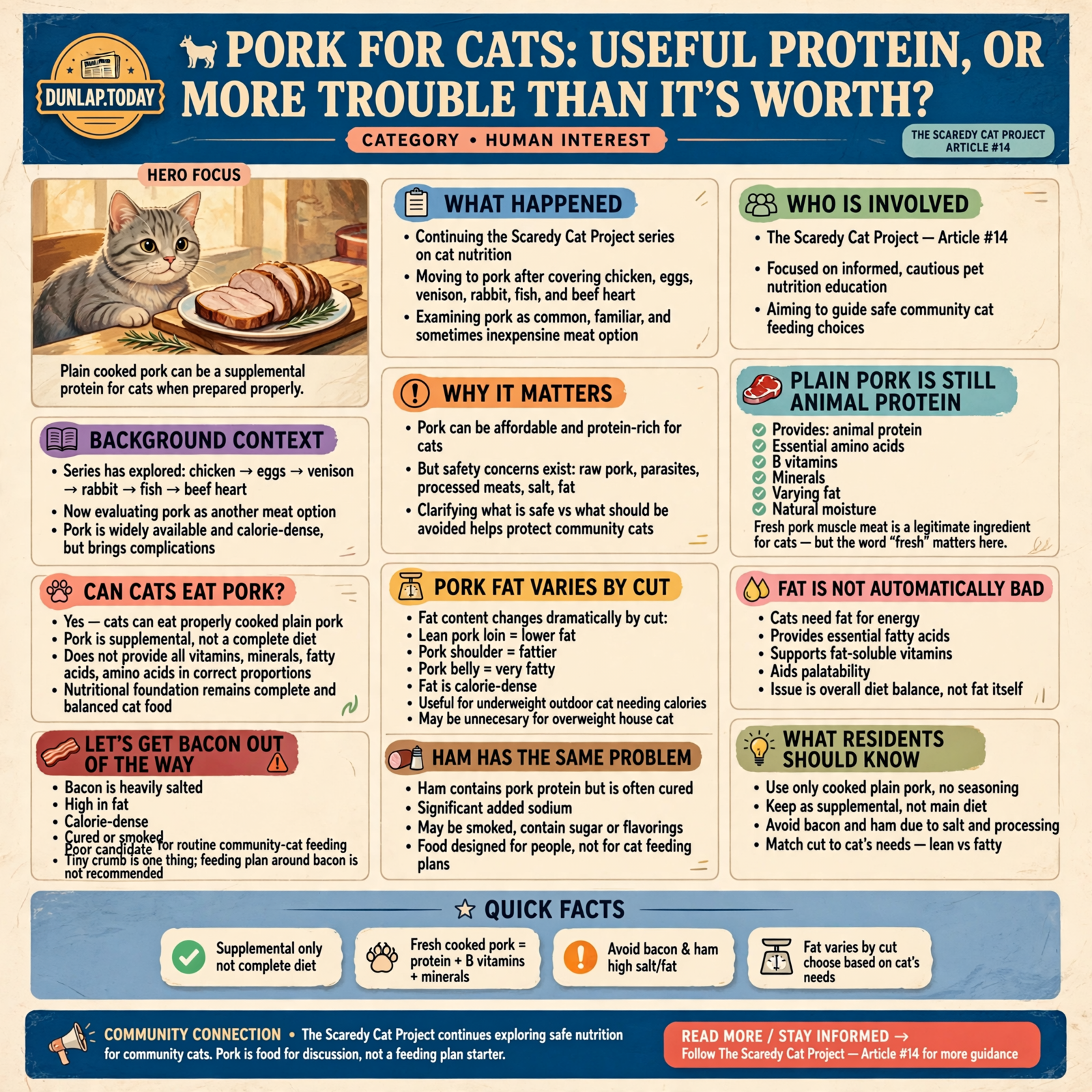
Yes, cats can eat properly cooked plain pork.
But our usual rule still applies.
A useful ingredient is not automatically a complete diet.
Plain pork muscle meat can contribute protein and calories.
It does not provide every vitamin, mineral, fatty acid and amino acid a cat needs in the correct proportions.
So our nutritional foundation remains complete and balanced cat food.
Pork, if it earns a place, is supplemental.
🔥 Pork Can Be Much Fattier Than Some of the Meats We’ve Studied
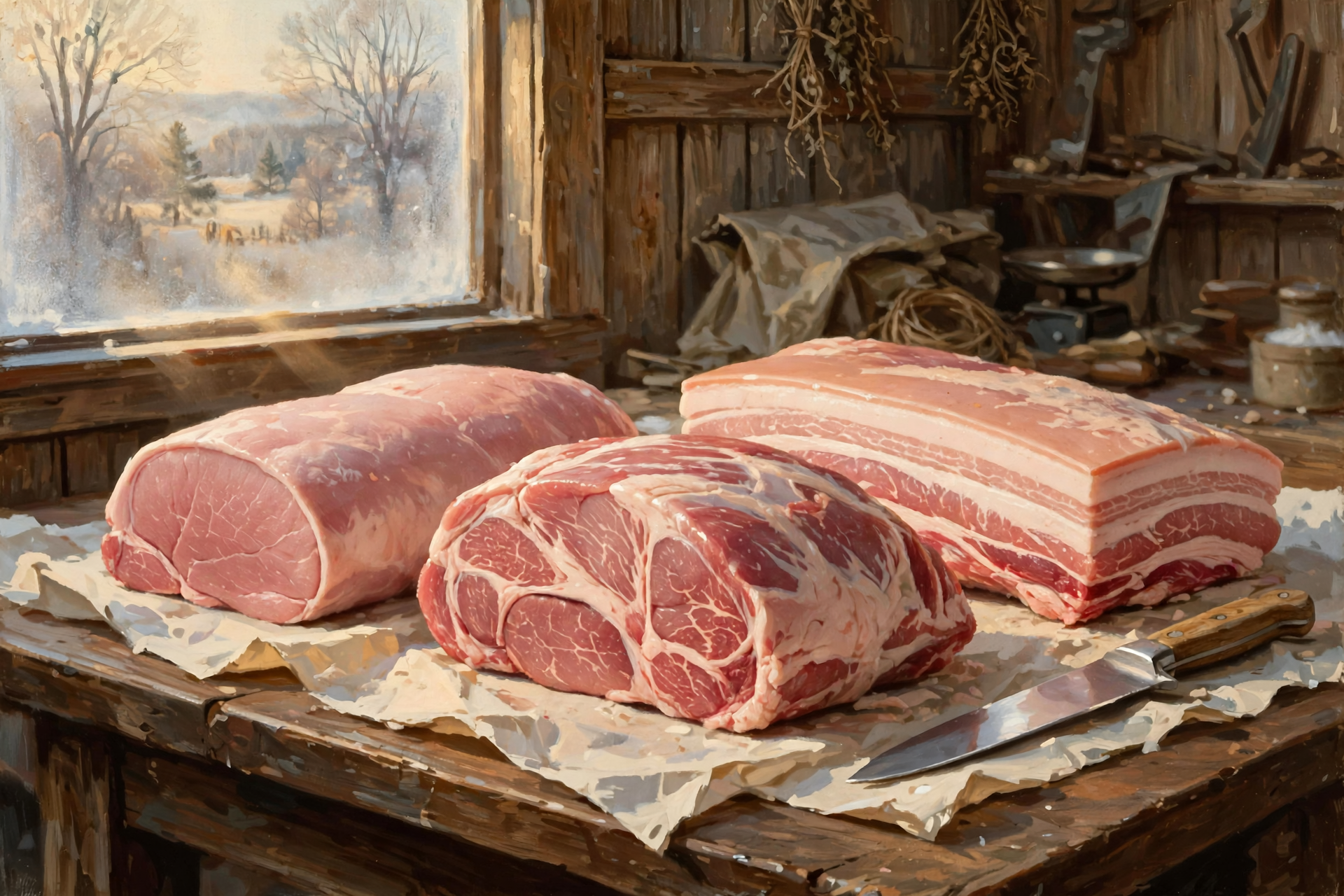
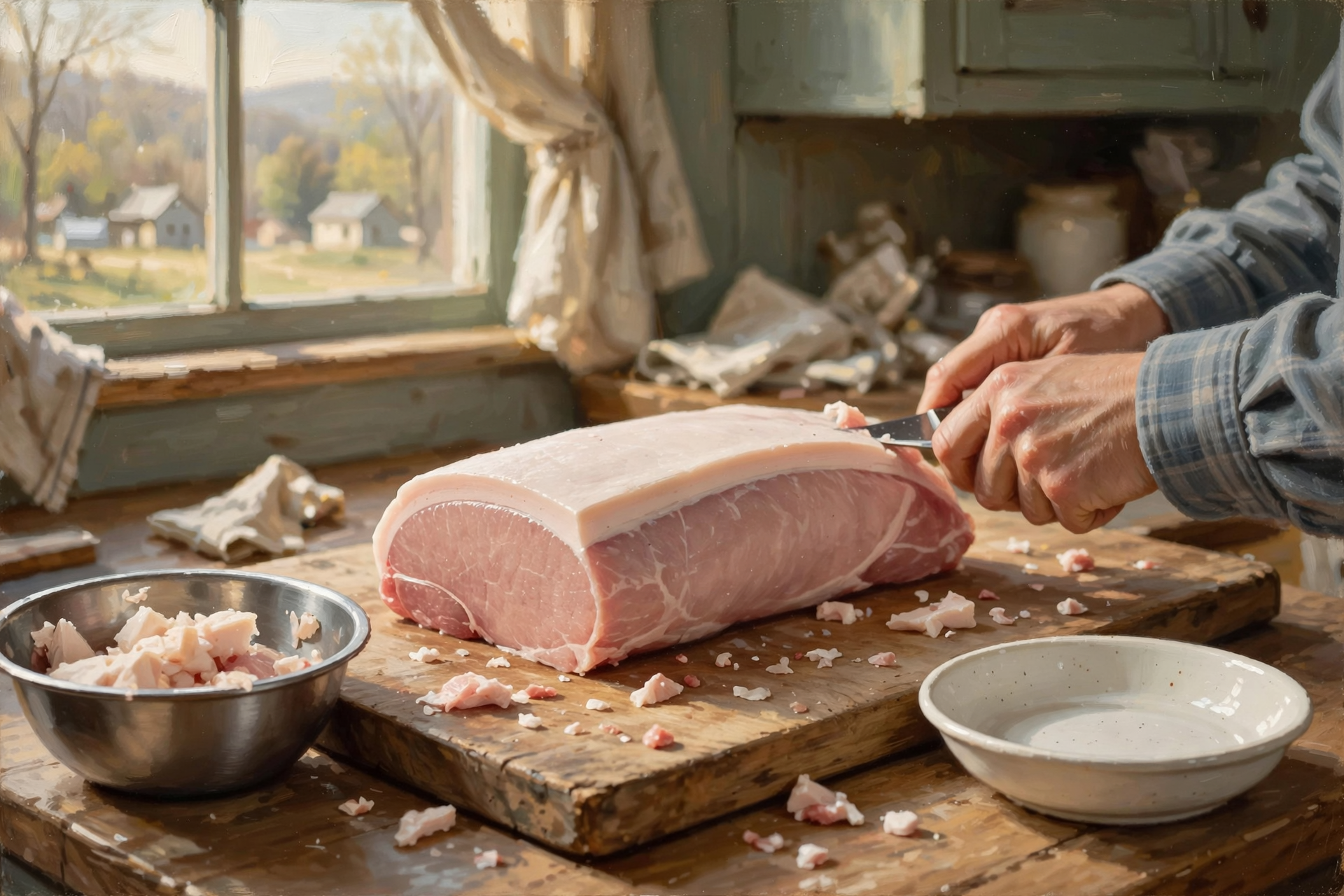
One reason pork becomes interesting is that fat content varies dramatically by cut.
A lean piece of pork loin is one thing.
A fatty shoulder is another.
Pork belly is something else entirely.
That matters because fat is calorie-dense.
For an underweight outdoor cat burning energy in winter, additional calories can be useful.
For an overweight house cat, those same calories may be unnecessary.
So instead of asking:
“Is pork fatty?”
we need to ask:
“Which cut, and what role are we asking it to play?”
🧈 Fat Is Not Automatically Bad
This is another place where human diet slogans can get in the way.
Cats need fat.
Fat provides:
- 🔥 Energy
- 🧈 Essential fatty acids
- 💊 Support for fat-soluble vitamins
- 😸 Palatability
The problem isn’t that fat exists.
The problem is whether the overall diet has an appropriate calorie and nutrient balance.
That’s why plain fresh pork can be useful while bacon is a very different conversation.
🥓 Let’s Get Bacon Out of the Way
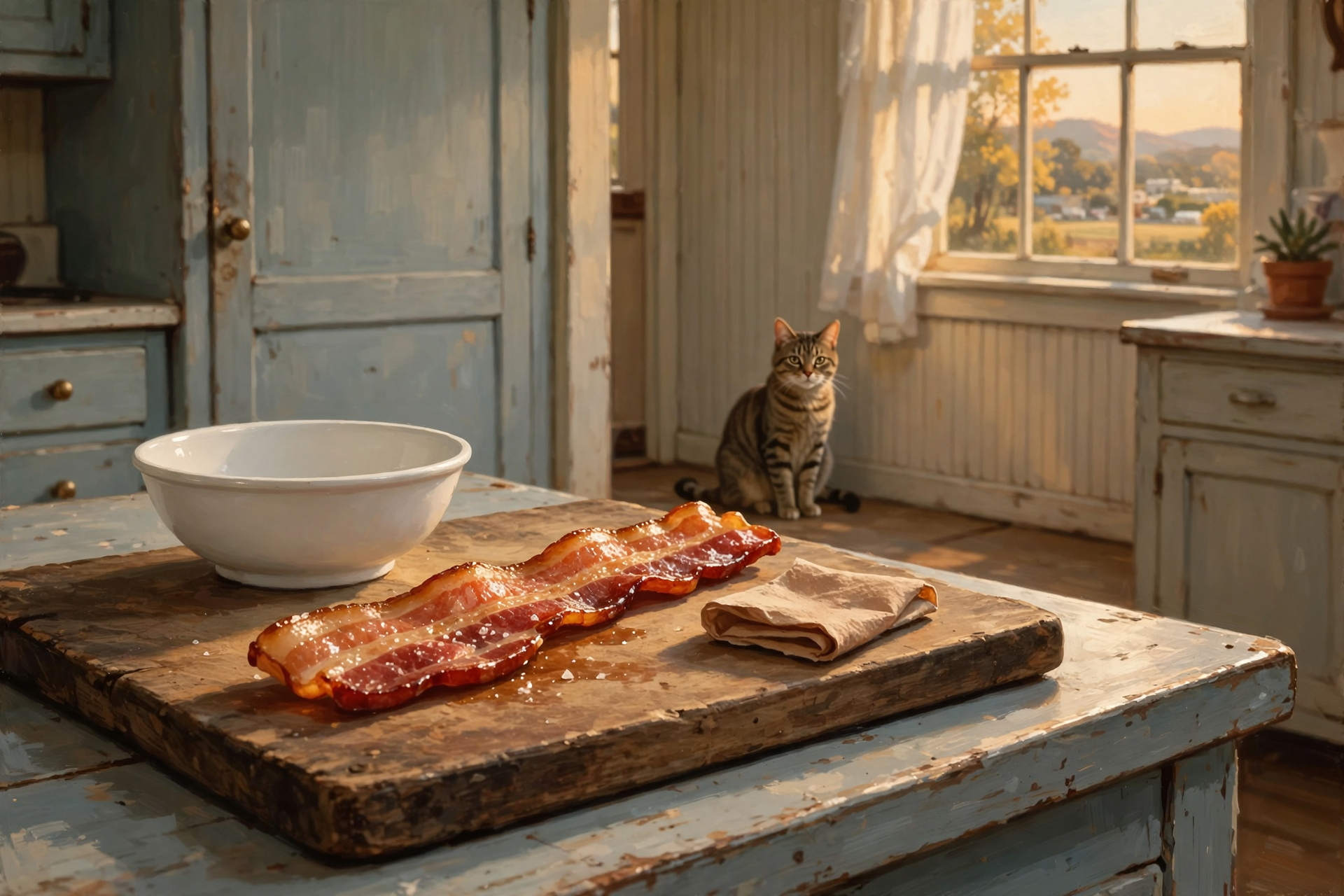
Scaredy would prefer we did not.
But we should.
Bacon is pork.
It is also typically:
- 🧂 Heavily salted
- 🧈 High in fat
- 🔥 Calorie-dense
- 🥓 Cured or smoked
That makes bacon a poor candidate for routine community-cat feeding.
A tiny stolen crumb is one thing.
Building a feeding strategy around bacon would be something else entirely.
The fact that a cat wants something is not evidence that it belongs in the feeding plan.
🍖 Ham Has the Same Problem
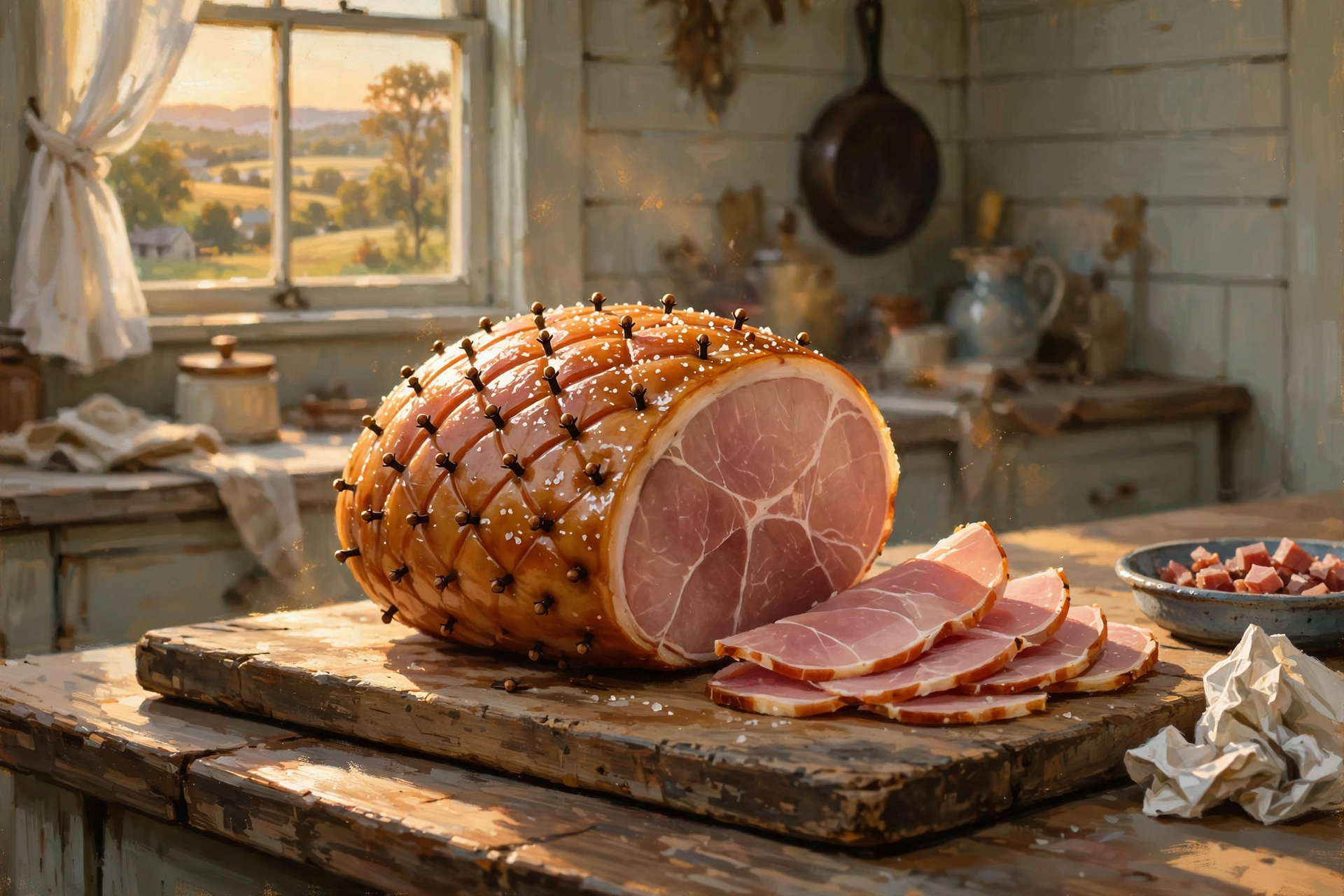
Ham may contain excellent pork protein underneath all the processing.
But many hams are cured and contain significant added sodium.
Some are smoked.
Some contain sugar or flavorings.
Again, that’s food designed for people.
When we’re sourcing supplemental meat for cats, plain fresh pork is much easier to evaluate.
🌭 Sausage Is Even More Complicated

Sausage may contain:
- 🧂 Salt
- 🧄 Garlic
- 🧅 Onion
- 🌶️ Spices
- 🧈 Extra fat
- 🥩 Mixed meats
At that point, we’re no longer evaluating pork.
We’re evaluating a recipe.
And I don’t want to reverse-engineer somebody’s sausage seasoning to determine whether Scaredy can have leftovers.
Our rule remains:
simple food is easier to use safely.
⚠️ Raw Pork Is Where the Safety Conversation Changes

Raw pork has a long historical association with a parasite called Trichinella, which causes trichinellosis, sometimes called trichinosis.
Today, trichinellosis is rare in the United States, and CDC notes that many modern cases are associated more often with wild game than commercially farmed pork. But the risk is not zero, and undercooked pork remains one recognized route of infection.
More importantly for our project, cats themselves can become infected.
Merck says cats may acquire trichinellosis by eating rodents, wildlife carcasses or raw infected meat and specifically advises that raw or improperly cooked meat should not be fed to cats.
That gives us a very simple rule.
The Scaredy Cat Project is not feeding raw pork.
🔥 Cooking Is the Easy Solution
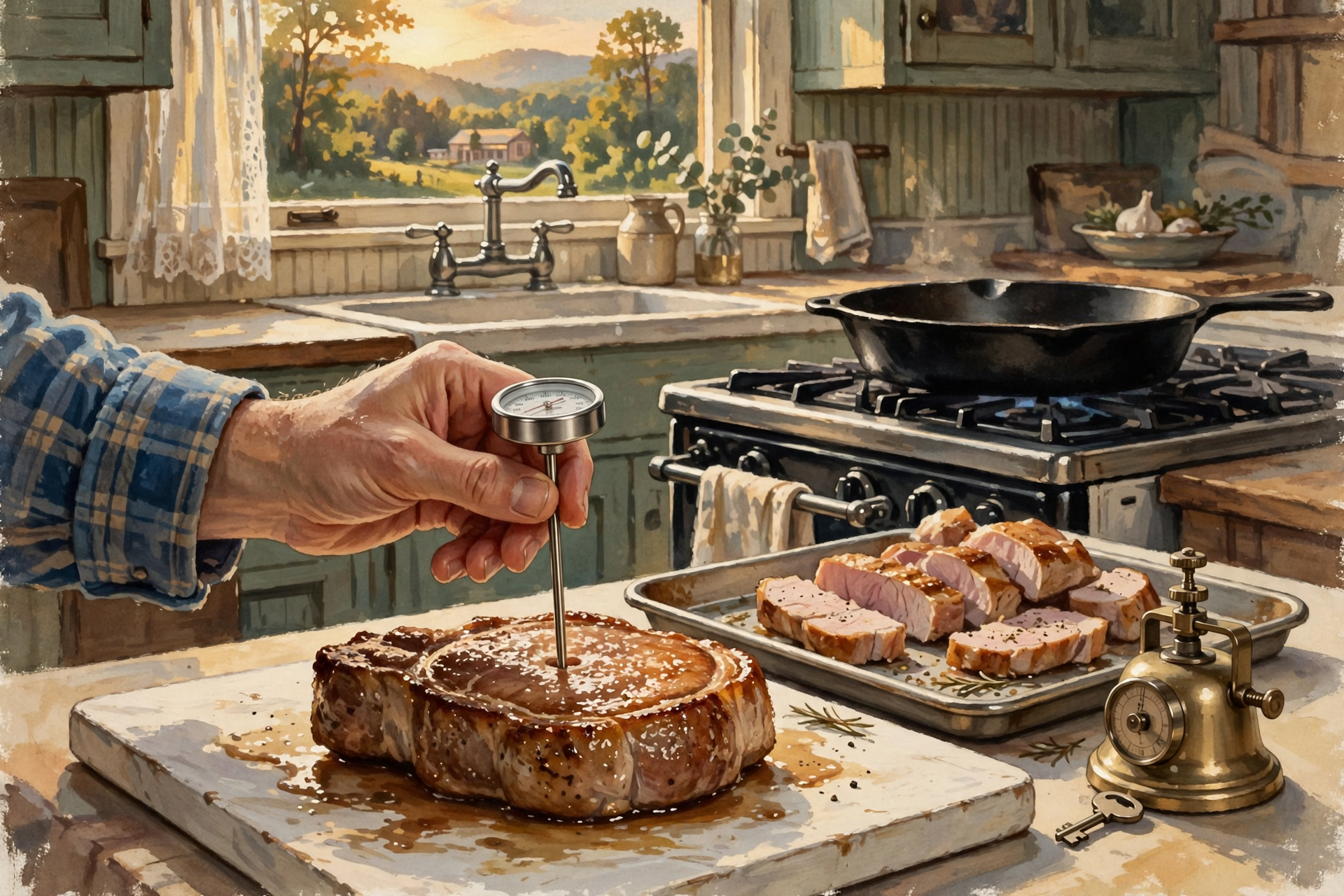
USDA Food Safety and Inspection Service guidance says whole cuts of pork such as steaks, chops and roasts should reach at least 145°F internally followed by a three-minute rest, while ground pork should reach 160°F.
Merck provides the same basic thresholds when discussing prevention of Trichinella infection in cats and people.
That means we don’t need complicated guesswork.
Use a thermometer.
Cook the meat.
Keep preparation simple.
❄️ Freezing Is Not My Preferred Safety Plan

CDC notes that specific freezing conditions can kill some Trichinella larvae in pork, but freezing is not equally reliable for wild game because some Trichinella species are freeze-resistant. CDC therefore emphasizes cooking as the dependable control.
For our project, that makes the decision easy.
We’re already cooking supplemental meat.
So we’re not going to depend on complicated freezer-time calculations as our parasite-control strategy.
🐗 Wild Boar Is a Different Conversation From Grocery-Store Pork
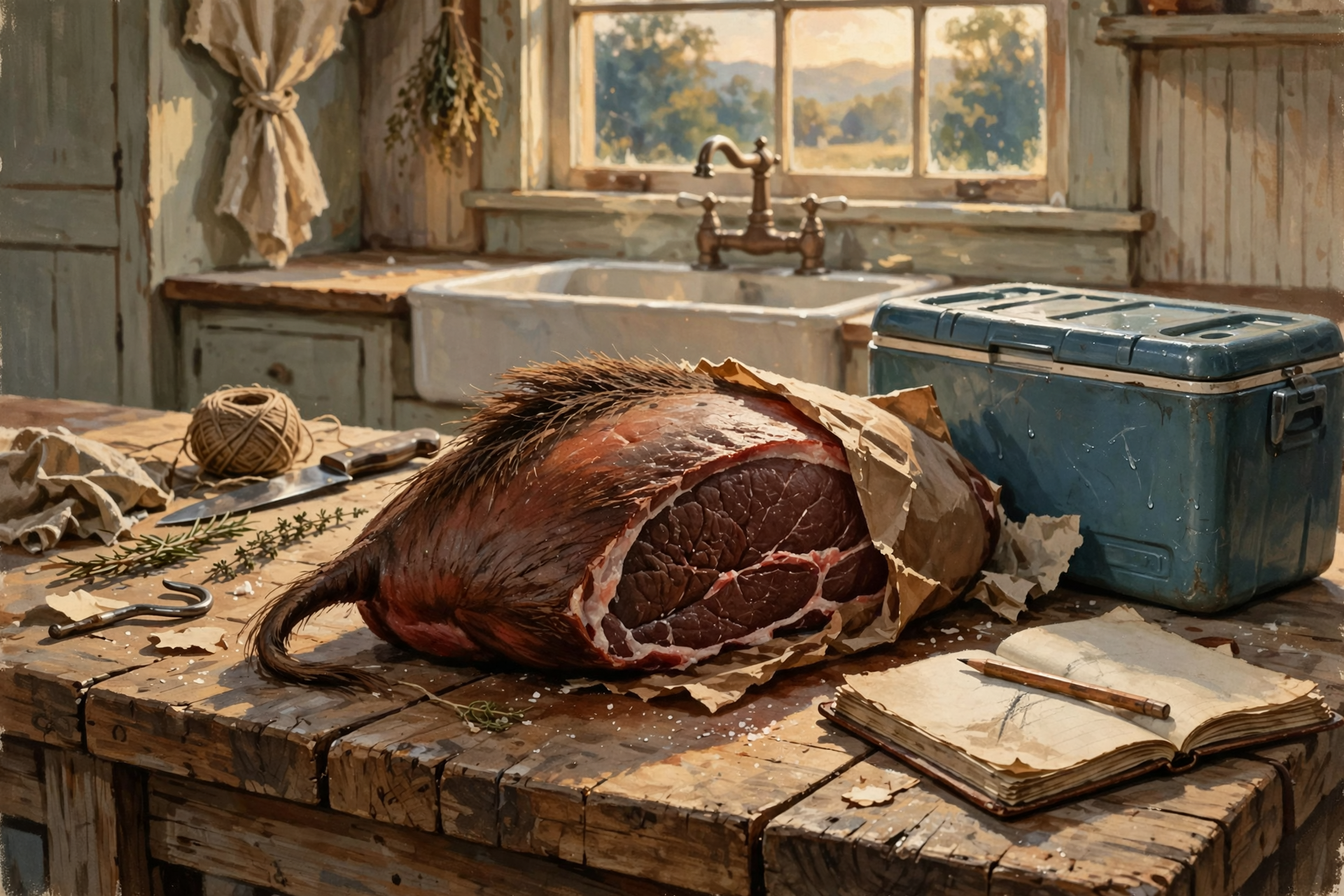
This is especially important in a rural setting.
Commercial domestic pork and wild boar are not interchangeable from a food-safety perspective.
CDC specifically identifies wild boar among the wild game associated with Trichinella infections.
So if someone tells us:
“I’ve got some wild hog meat the cats can have.”
my answer isn’t automatically:
“Great.”
My next questions are:
Where did it come from?
How was it handled?
How long has it been stored?
And how are we going to cook it safely?
🥩 Fresh Pork Trimmings May Be More Interesting Than Pork Chops
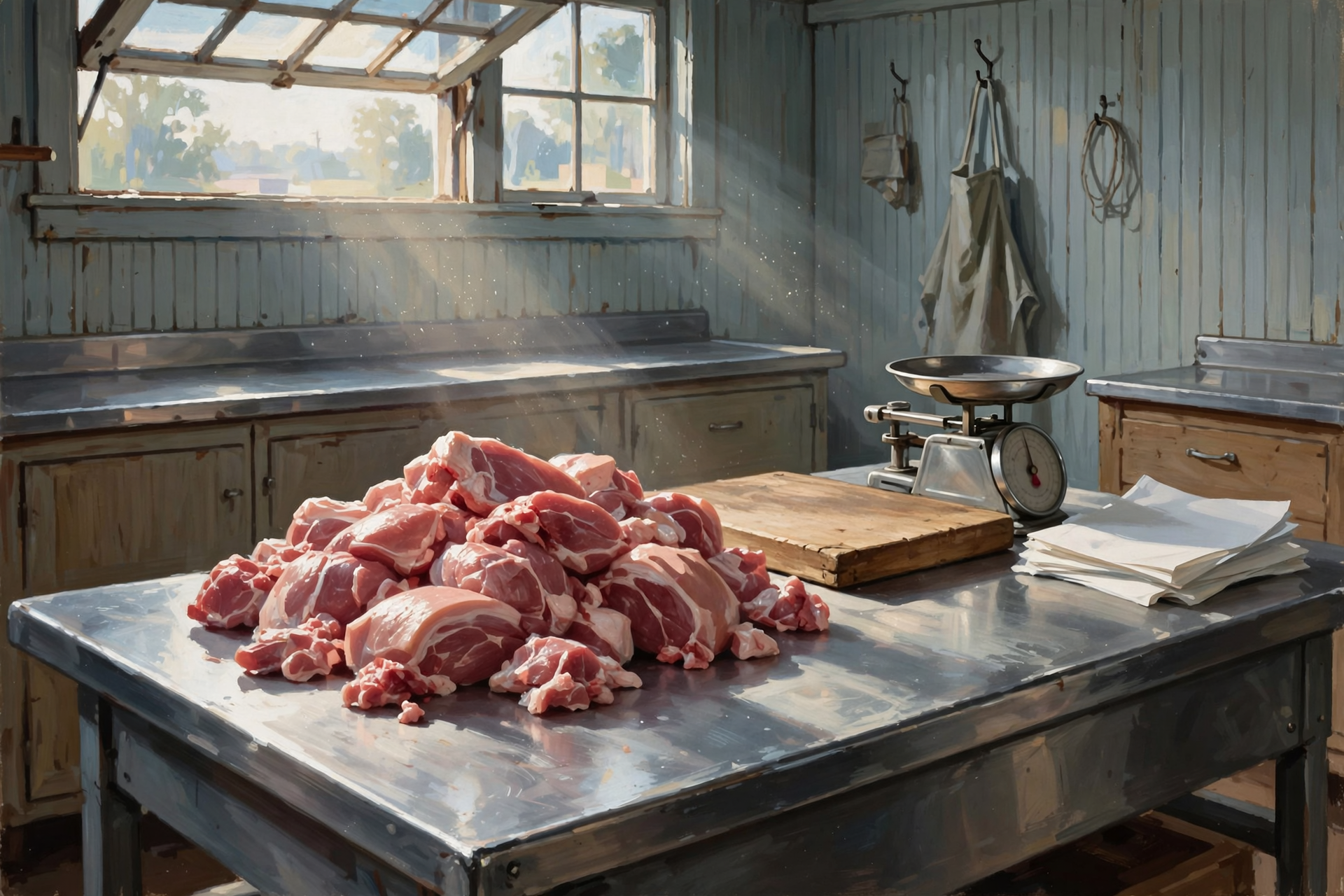
This is where the local-food idea becomes useful again.
I’m not especially interested in buying pork tenderloin for forty cats.
Humans already value pork tenderloin.
We’re looking for something different:
safe food with useful nutrition and relatively low human market demand.
That might include certain plain trimmings generated during processing.
The exact economics will depend on what local processors already do with them.
🔪 What Happens at a Pork Processor?
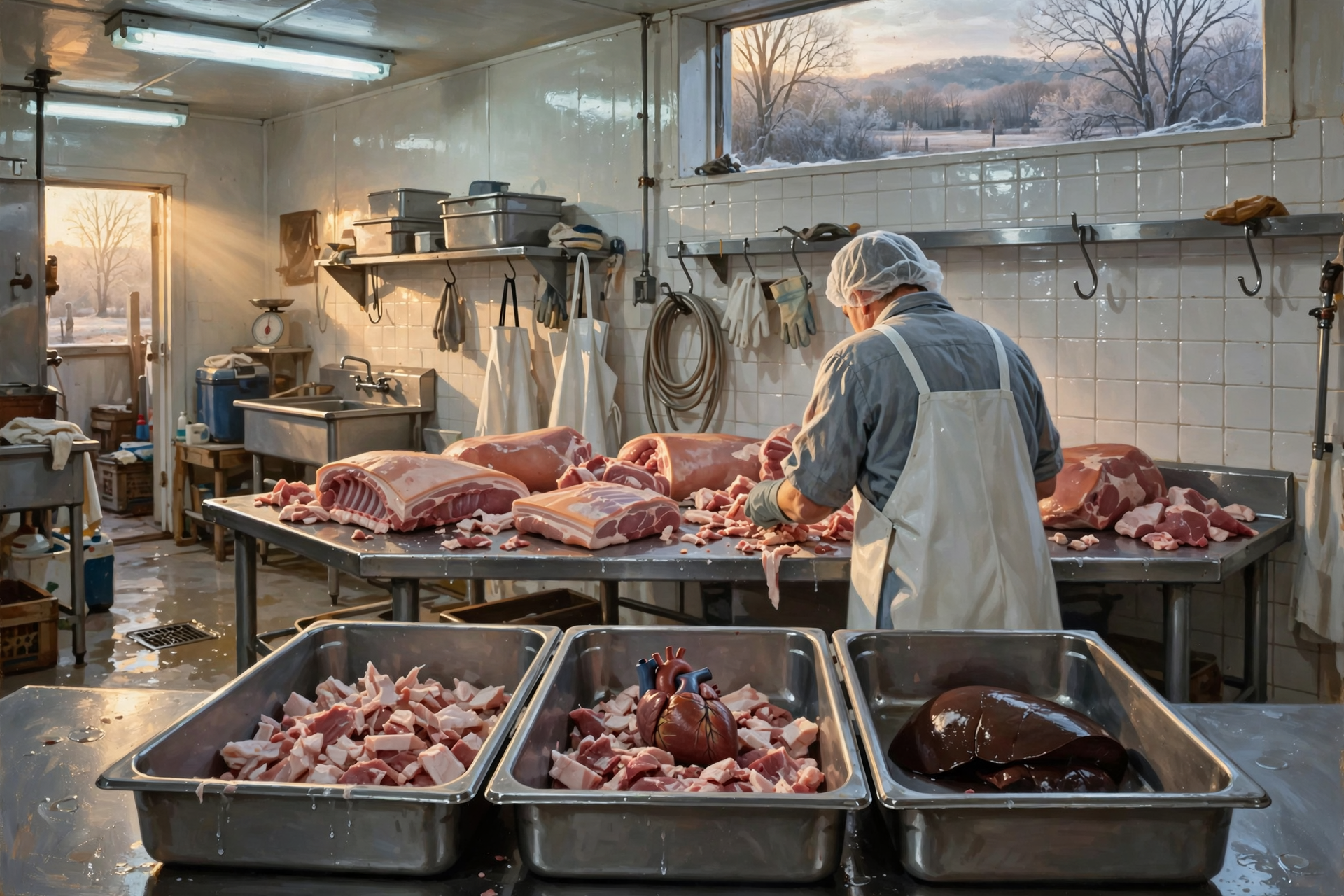
USDA identifies four basic primal pork cuts:
- 🐖 Shoulder
- 🥩 Loin
- 🥓 Side
- 🍖 Leg
Each of those eventually becomes familiar products ranging from chops and roasts to ribs, bacon and ham.
But processing also creates trimmings and organs.
That’s the part I’d like to understand locally.
🥩 Meat Trimmings
Could small pieces of plain fresh pork have little retail value while still being perfectly usable food?
❤️ Pork Heart
Like beef and chicken heart, pork heart is muscular tissue and potentially interesting as protein.
🫀 Pork Liver
Like other liver, it is nutrient-dense and would need the same restraint we’ve already discussed with chicken liver.
🧈 Fat Trimmings
Potentially useful in very limited situations where extra calories are desirable, but not something we’d use indiscriminately.
❤️ Pork Heart Could Deserve Its Own Score
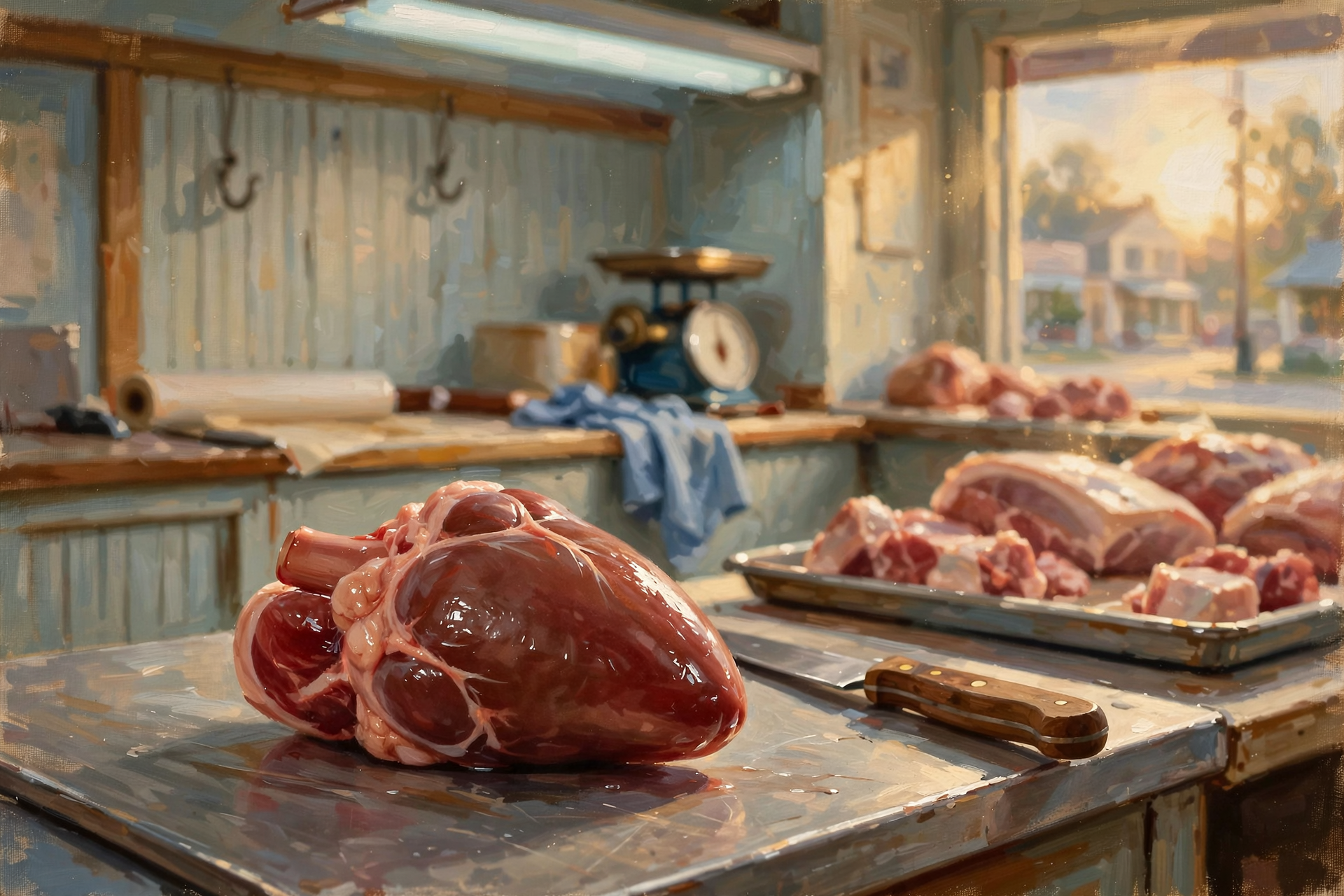
Pork heart is anatomically an organ but nutritionally mostly muscular tissue.
That puts it in the same broad category as chicken heart and beef heart.
If local processors have little human demand for it, this could be one of the more interesting pork products for our purposes.
But rather than assume, we’ll ask.
🫀 Pork Liver Requires the Same Respect as Chicken Liver

Liver contains concentrated vitamins and minerals.
That makes it useful in appropriate quantities.
It also means:
more is not better.
If pork liver becomes available cheaply, that doesn’t mean the cats should eat unlimited amounts of it.
The nutritional role is similar to the lesson we already learned from chicken liver.
🧈 Pork Fat Might Be Useful—but Only for the Right Cat
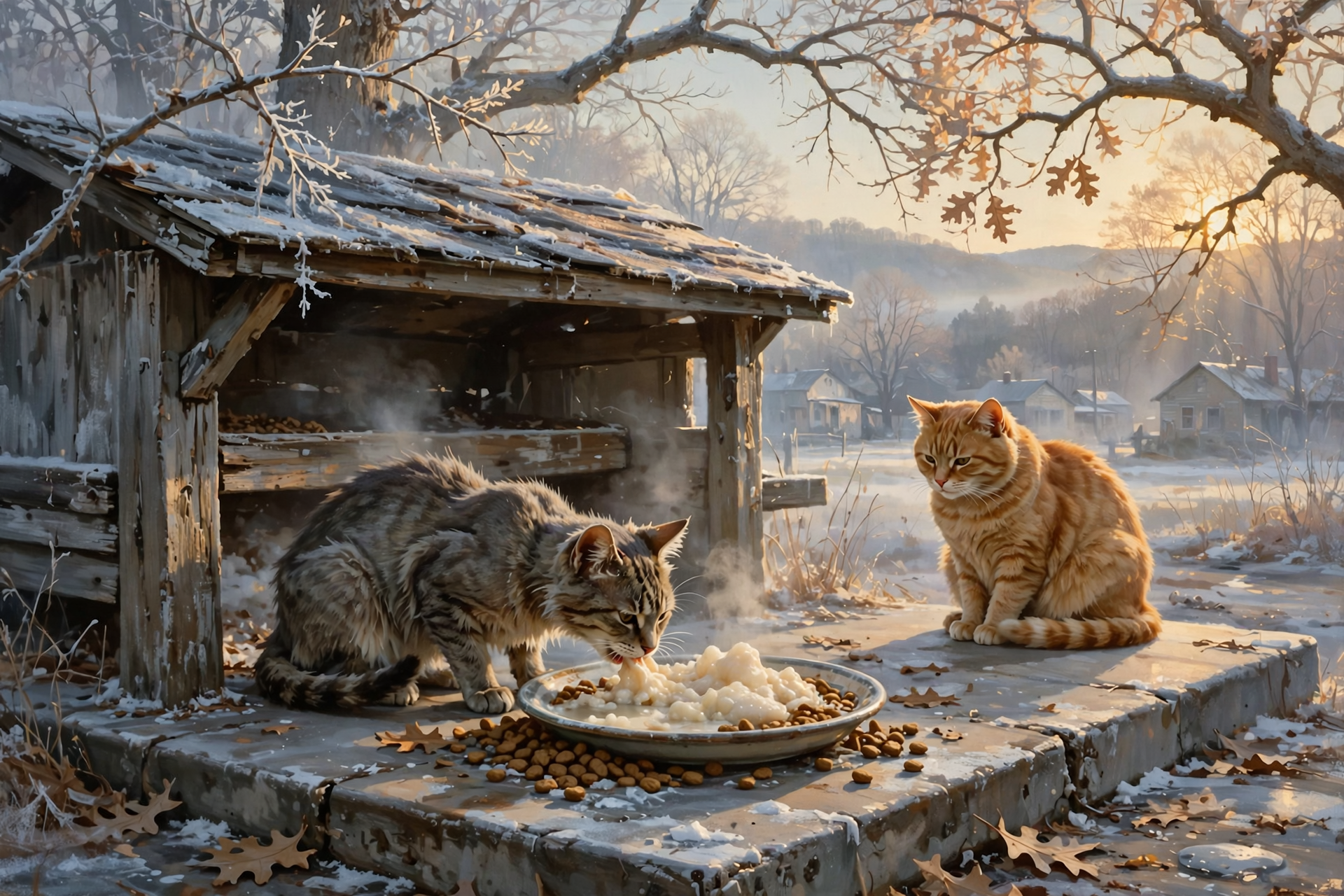
Outdoor cats sometimes struggle to maintain weight, especially in cold weather.
Fat provides a lot of calories in a small amount.
That makes plain pork fat potentially interesting in very modest quantities.
But adding concentrated fat indiscriminately across an entire colony makes little sense.
Some cats may need more energy.
Others may already carry plenty.
This is where colony feeding will always be less precise than feeding an individual house cat.
🐾 Kittens Need the Same Nutritional Foundation
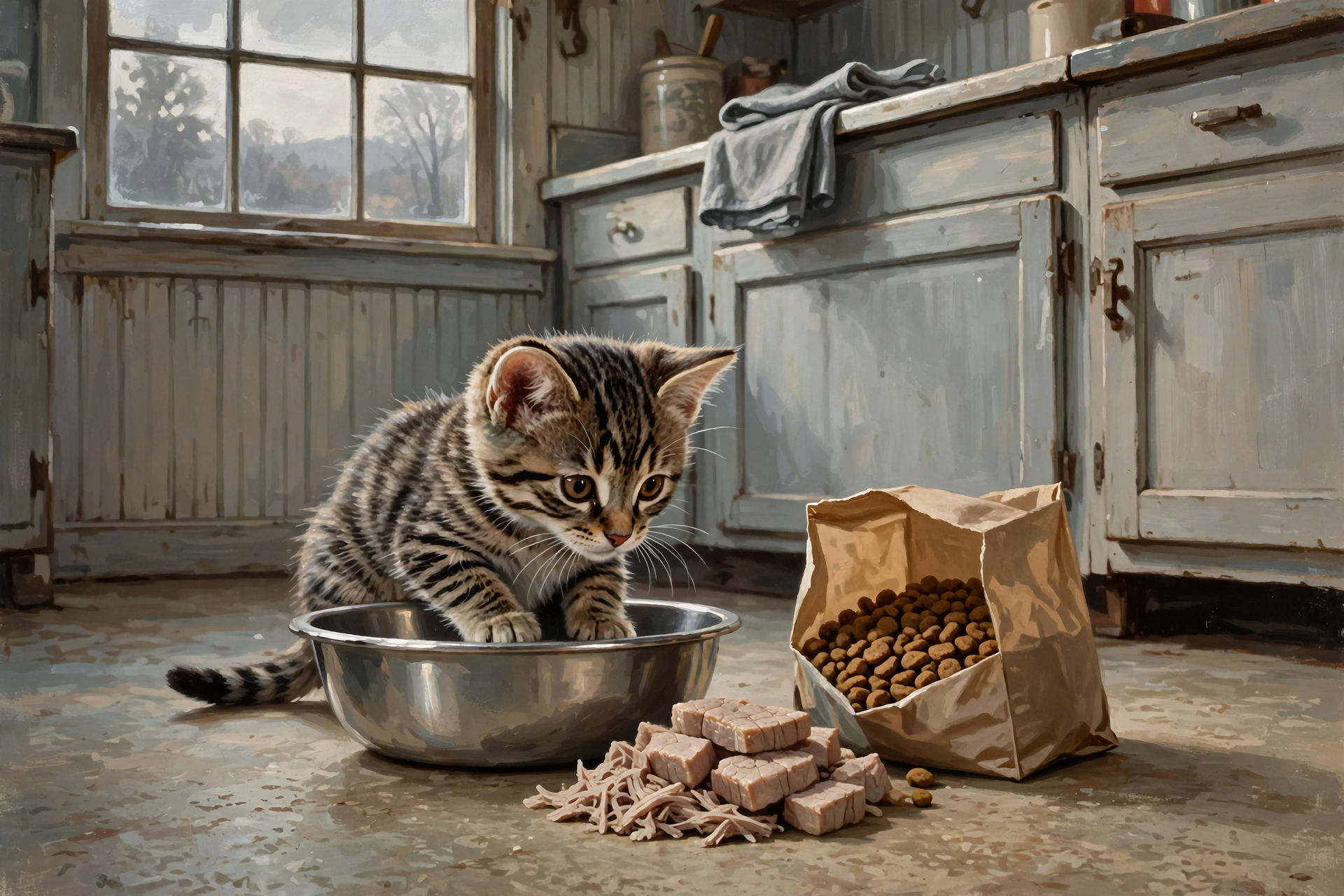
A kitten may happily eat pork.
That doesn’t make pork kitten food.
Growing kittens need the correct balance of protein, calcium, phosphorus, vitamins, fatty acids and other nutrients.
Plain pork does not provide that entire package.
So for kittens:
complete growth or all-life-stages food first.
Pork stays supplemental.
🧂 Avoid the Temptation to Use Leftovers Just Because They’re Pork
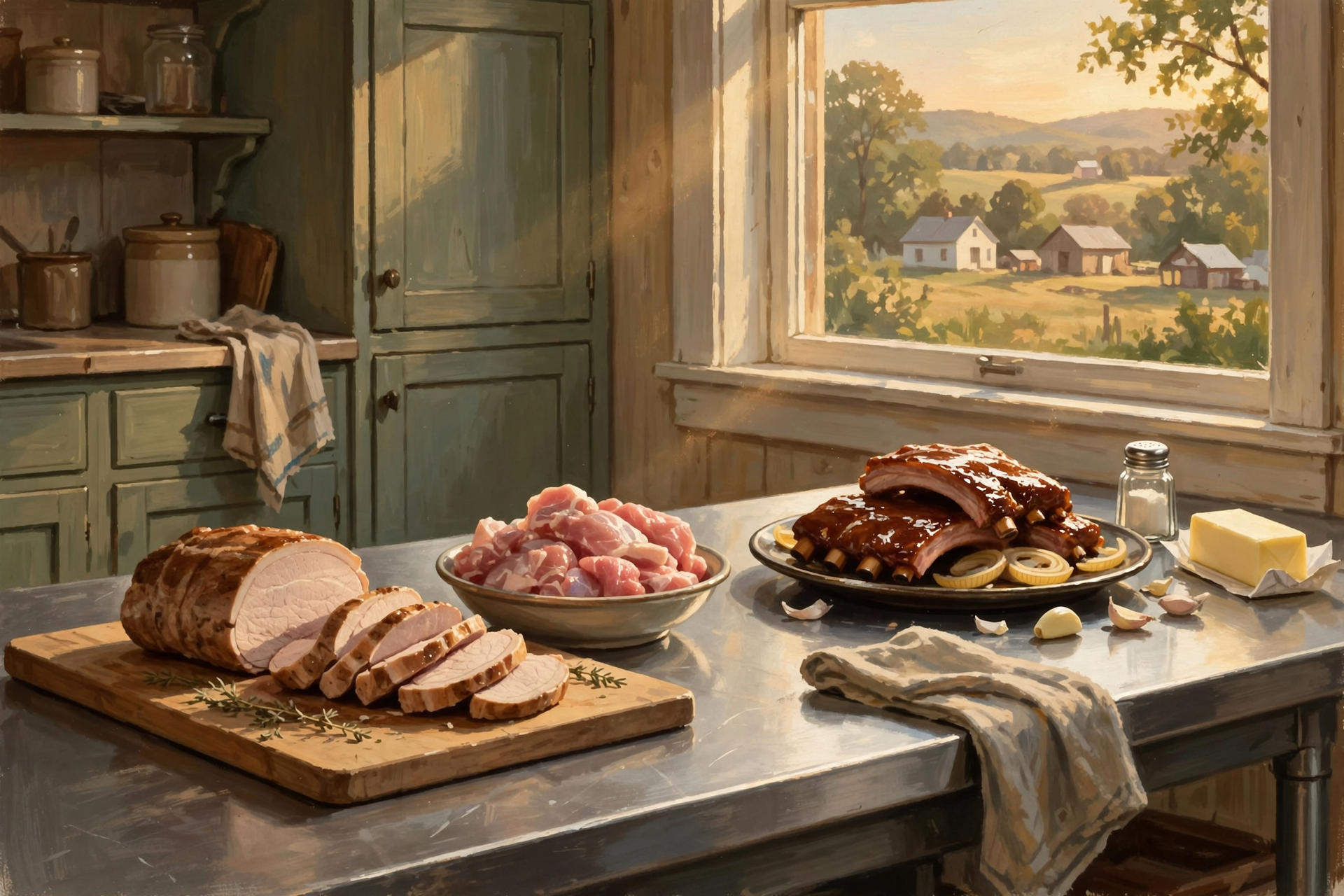
This is worth emphasizing.
There is a big difference between:
plain cooked pork
and:
whatever was left from dinner.
Dinner may contain:
- 🧅 Onion
- 🧄 Garlic
- 🧂 Heavy salt
- 🌶️ Seasonings
- 🍯 Sugary sauces
- 🧈 Added fat
We’re interested in recovering useful meat.
Not feeding cats barbecue leftovers because the plate happened to contain pork.
🍳 How Would We Prepare Pork for the Colony?
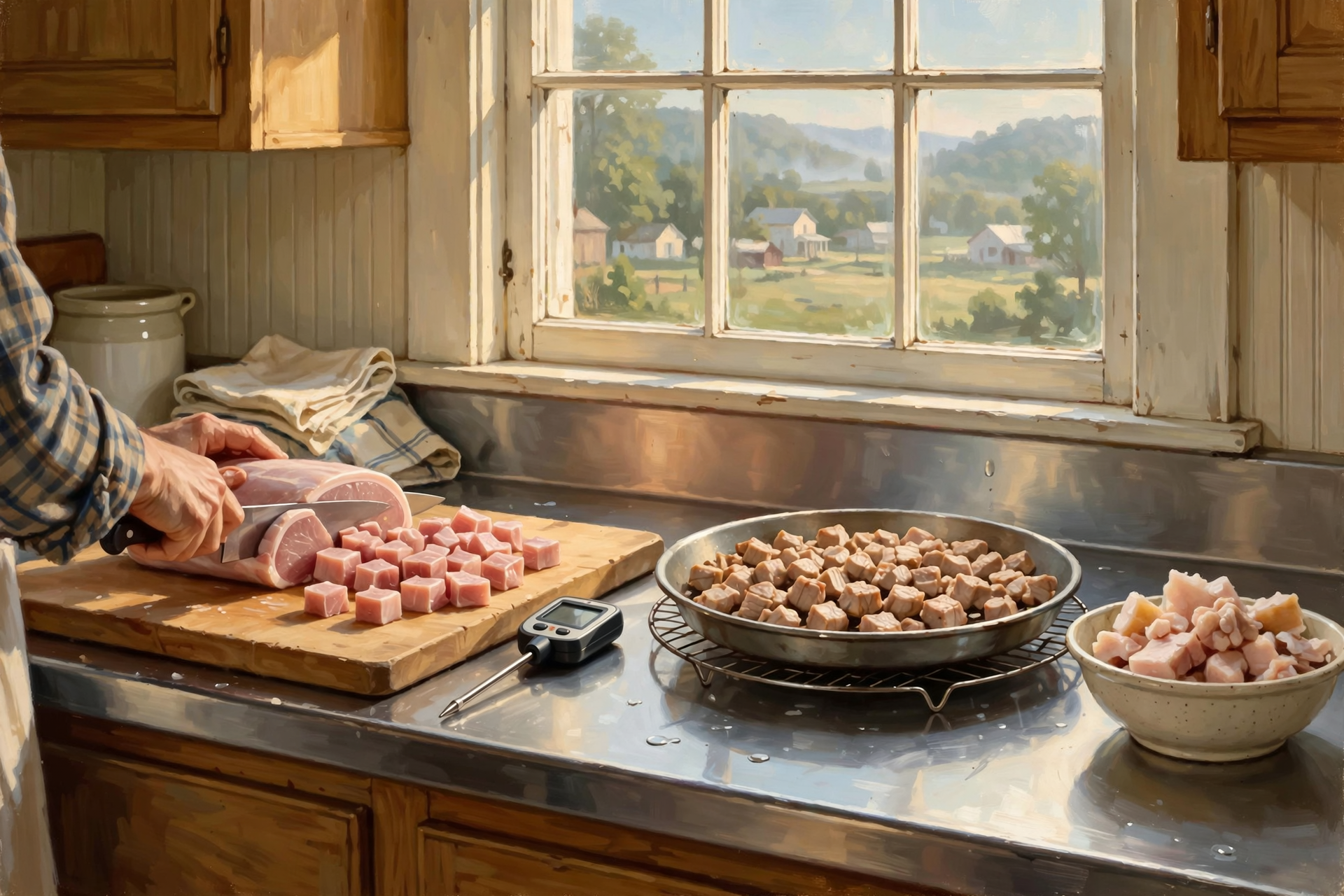
1️⃣ Start With Plain Fresh Pork
Known source.
Known storage history.
2️⃣ Trim What Makes Sense
We don’t necessarily need to remove every bit of fat, but we also don’t need to create a bowl of grease.
3️⃣ Cook It Properly
Use a thermometer rather than guessing.
4️⃣ Skip Seasoning
No onion.
No garlic.
No heavy salt.
5️⃣ Cut It Into Small Pieces
That makes distribution across the colony easier.
6️⃣ Use It With Complete Food
The balanced food remains the foundation.
😸 Pork May Score Very Well on Palatability
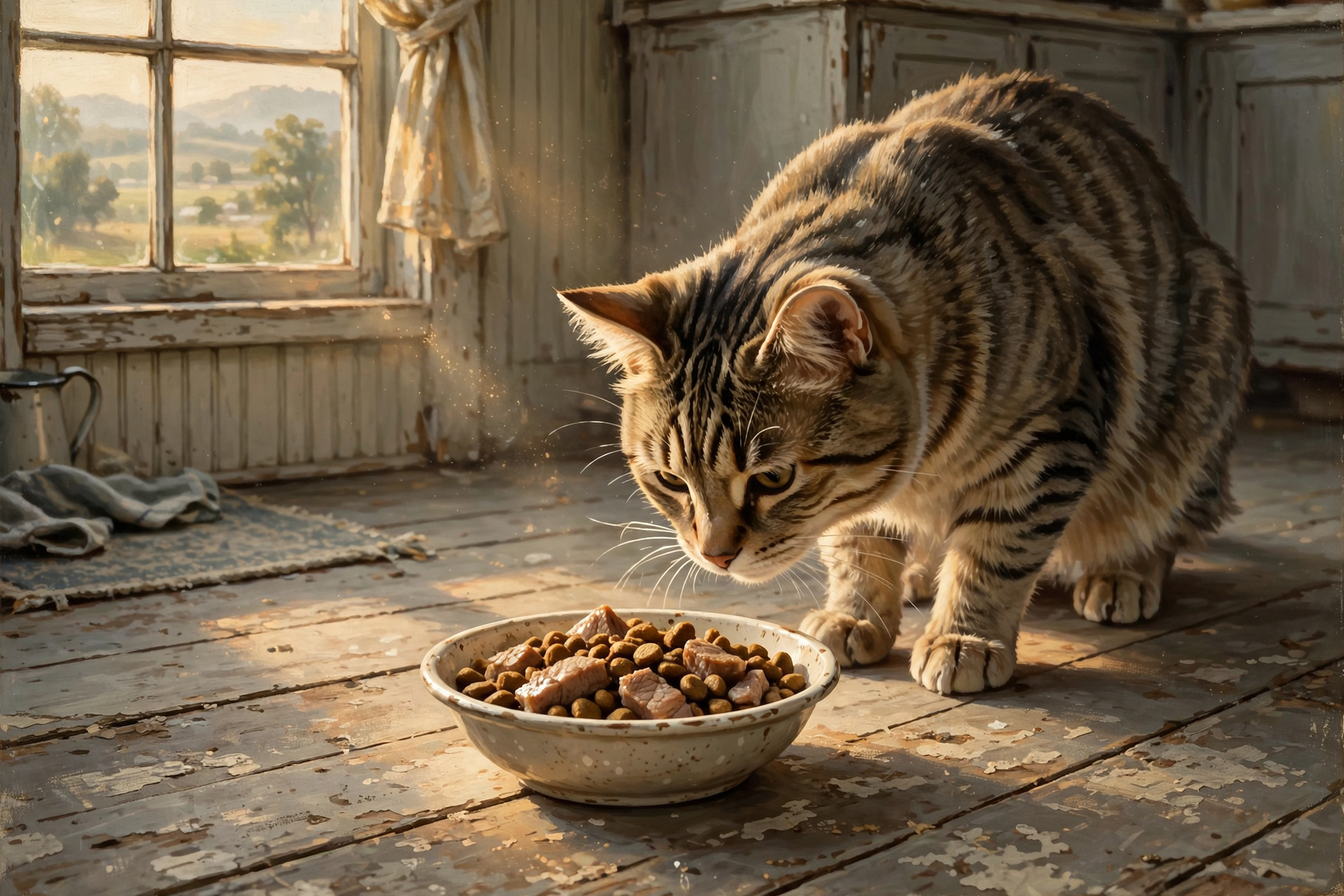
Fat and aroma make many pork cuts highly palatable.
That could make small amounts useful as a topper.
Suppose we have a nutritionally complete dry food the cats eat reluctantly.
A modest amount of plain cooked pork mixed through it might improve acceptance considerably.
That could be more economically useful than simply replacing kibble with meat.
💧 Fresh Pork Also Adds Moisture
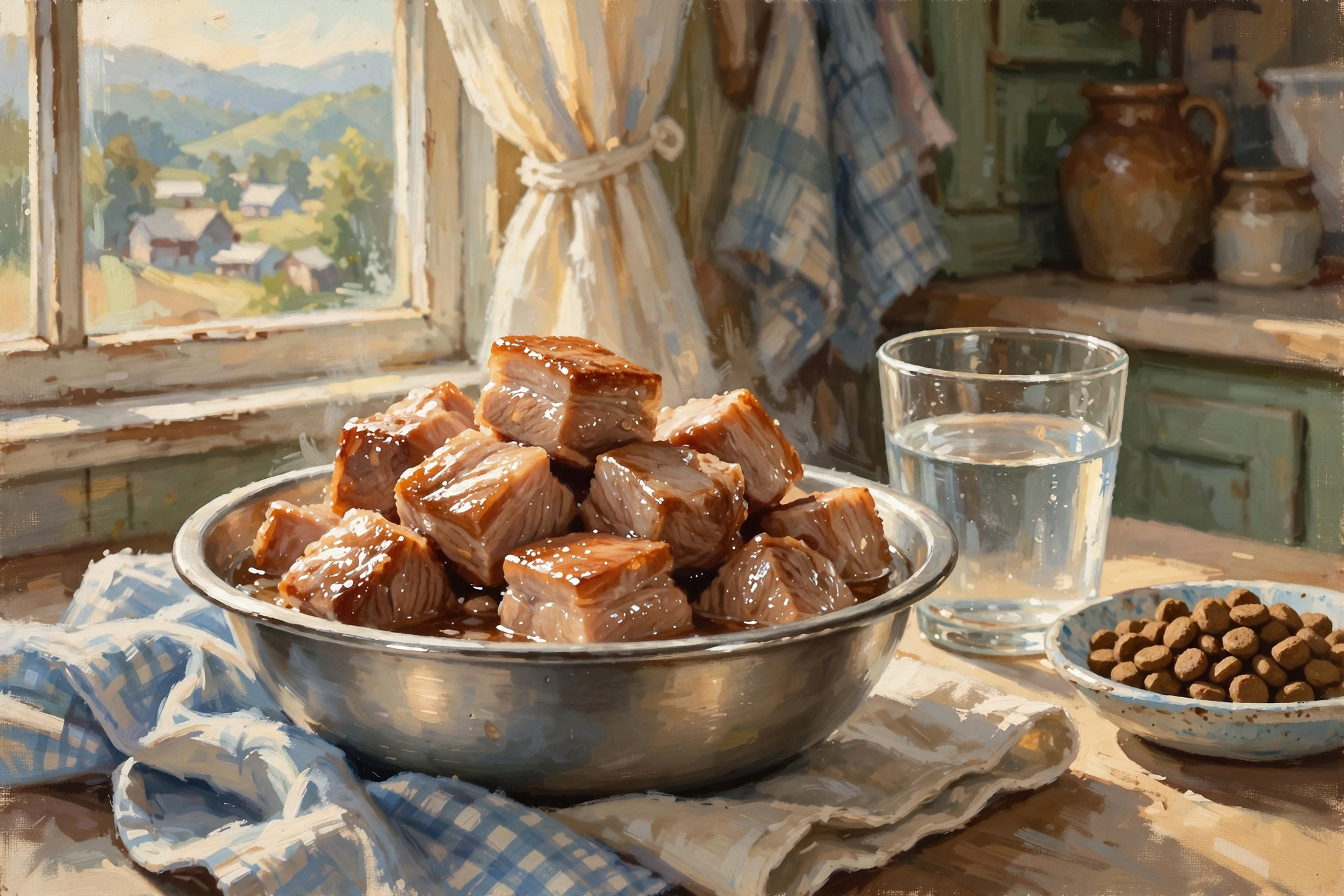
This is another benefit shared by many fresh ingredients.
Cooked pork contains far more moisture than dry kibble.
If small amounts are incorporated into the feeding program, that’s additional water entering the diet.
Fresh drinking water still remains essential.
🧊 Pork Freezes Well
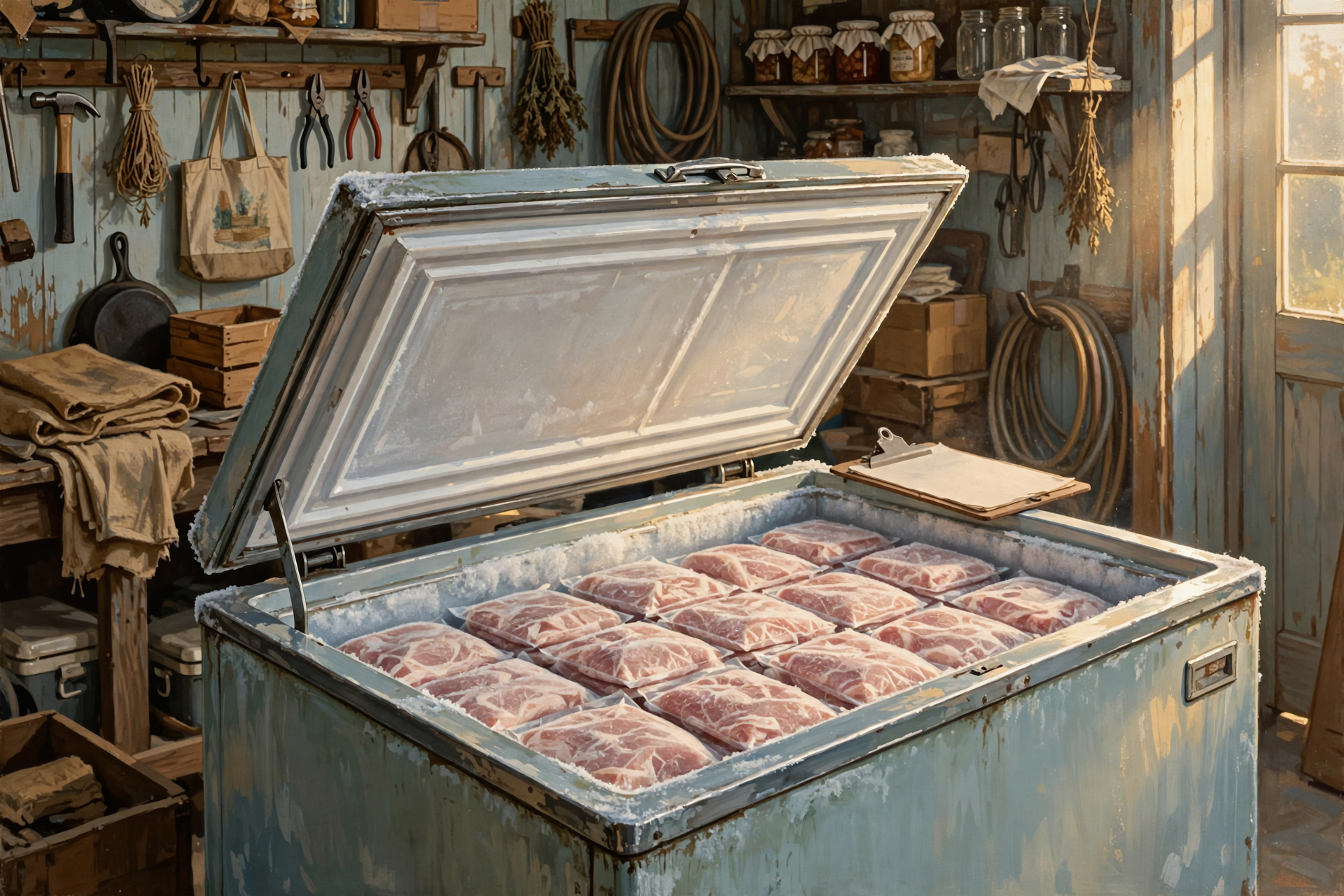
From a logistics standpoint, pork is convenient.
It can be:
- ⚖️ Portioned
- 🏷️ Labeled
- 🧊 Frozen
- 📅 Dated
- 🔄 Rotated
That’s another reason the community-freezer idea keeps resurfacing.
If a local processor offered a large batch of useful trimmings at low cost, freezer capacity would let us accept that opportunity without having to feed everything immediately.
⚠️ But a Freezer Is Not a Time Machine
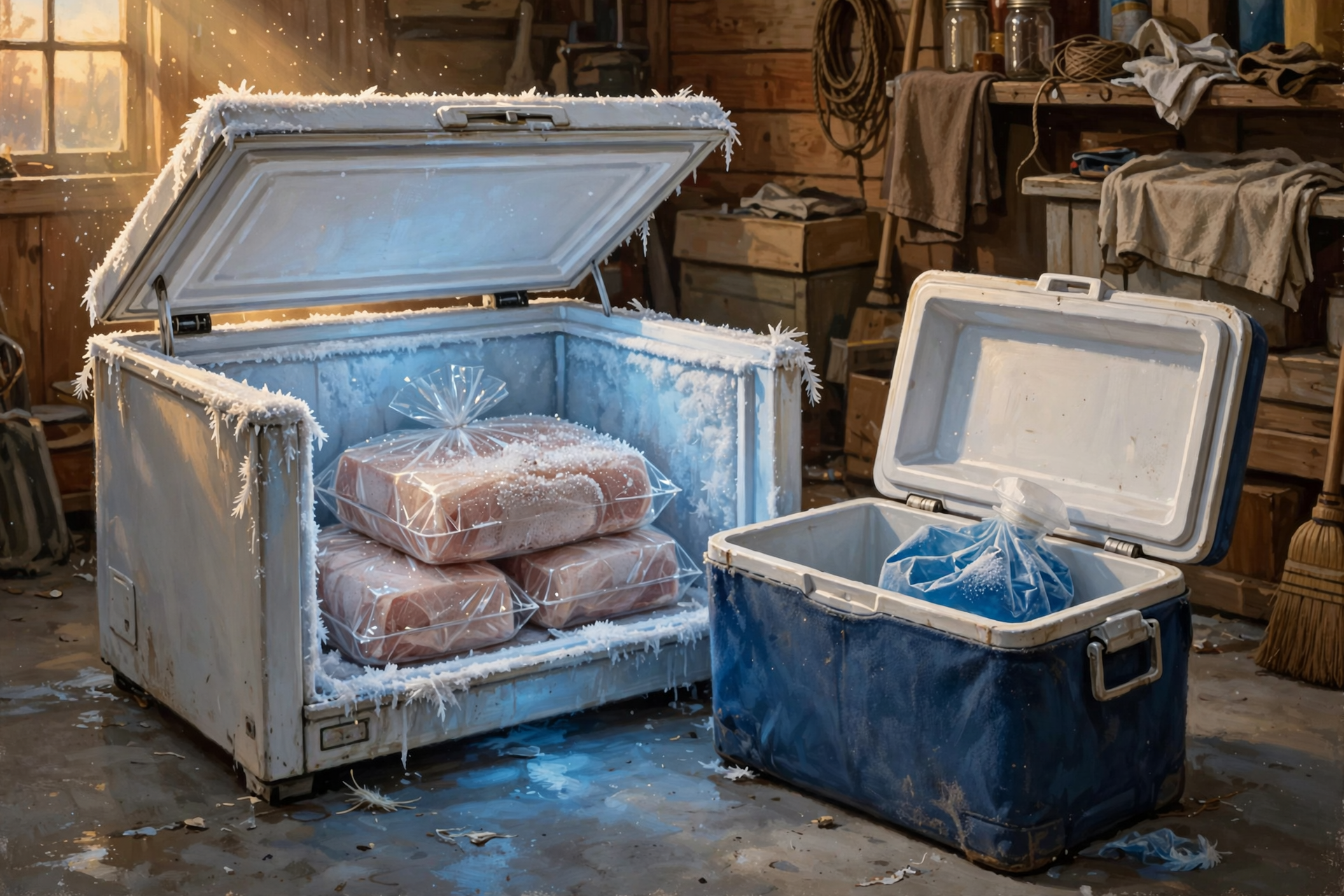
Freezing preserves properly handled meat.
It does not repair meat that was already spoiled.
So we still need to know:
Was it handled safely?
Was it chilled promptly?
Was it continuously frozen?
If we don’t know, cheap food starts becoming a bad bargain.
💰 The Economics Could Be Excellent—or Terrible
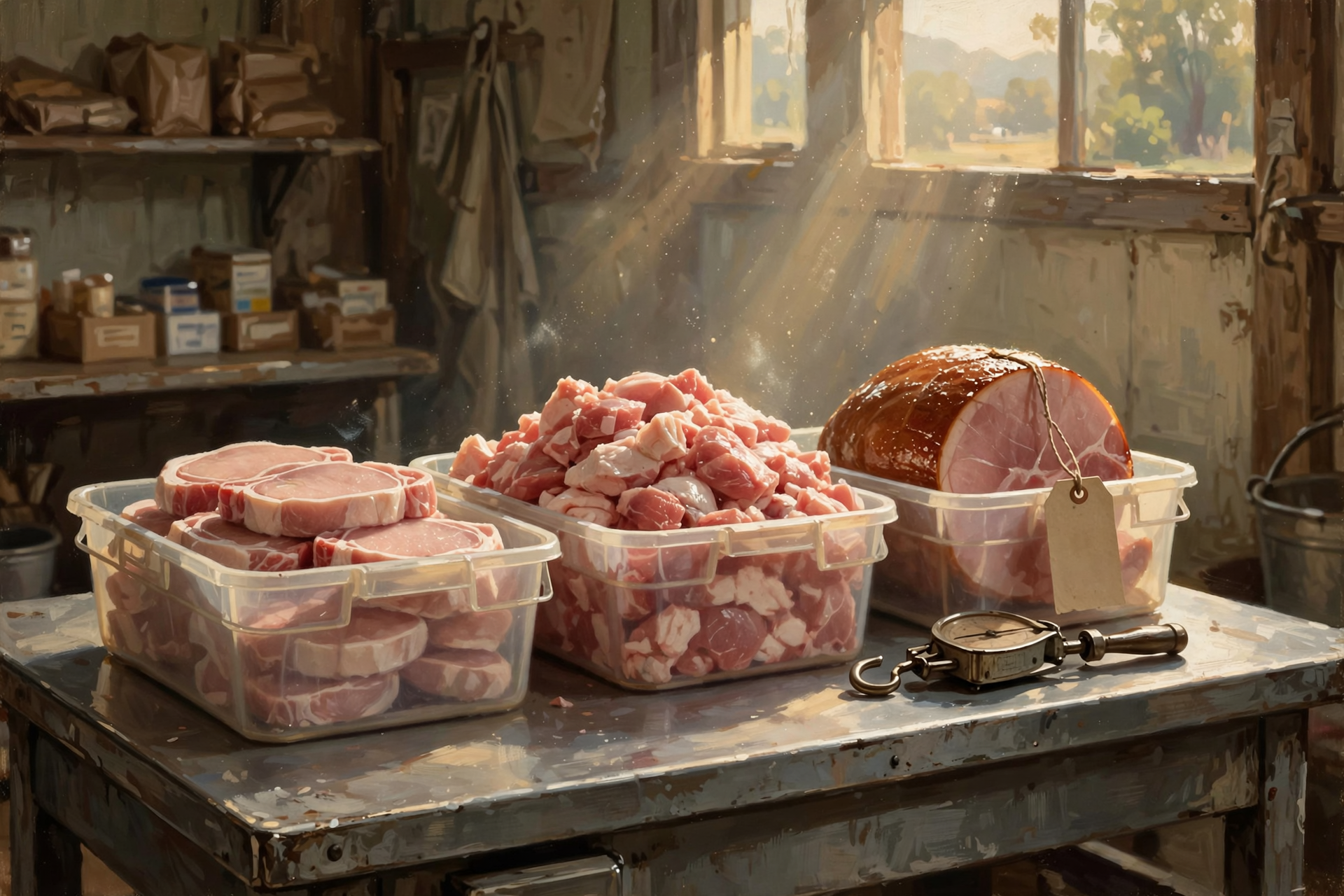
Imagine pork chops at $4 per pound.
Not especially interesting for our project.
Now imagine clean pork trimmings from a processor at $1 per pound.
Much more interesting.
Now imagine someone offering seasoned leftover ham for free.
Free does not automatically make it useful.
That’s why our scoring system needs more than price.
🧪 How We Could Test Pork With Our Colony
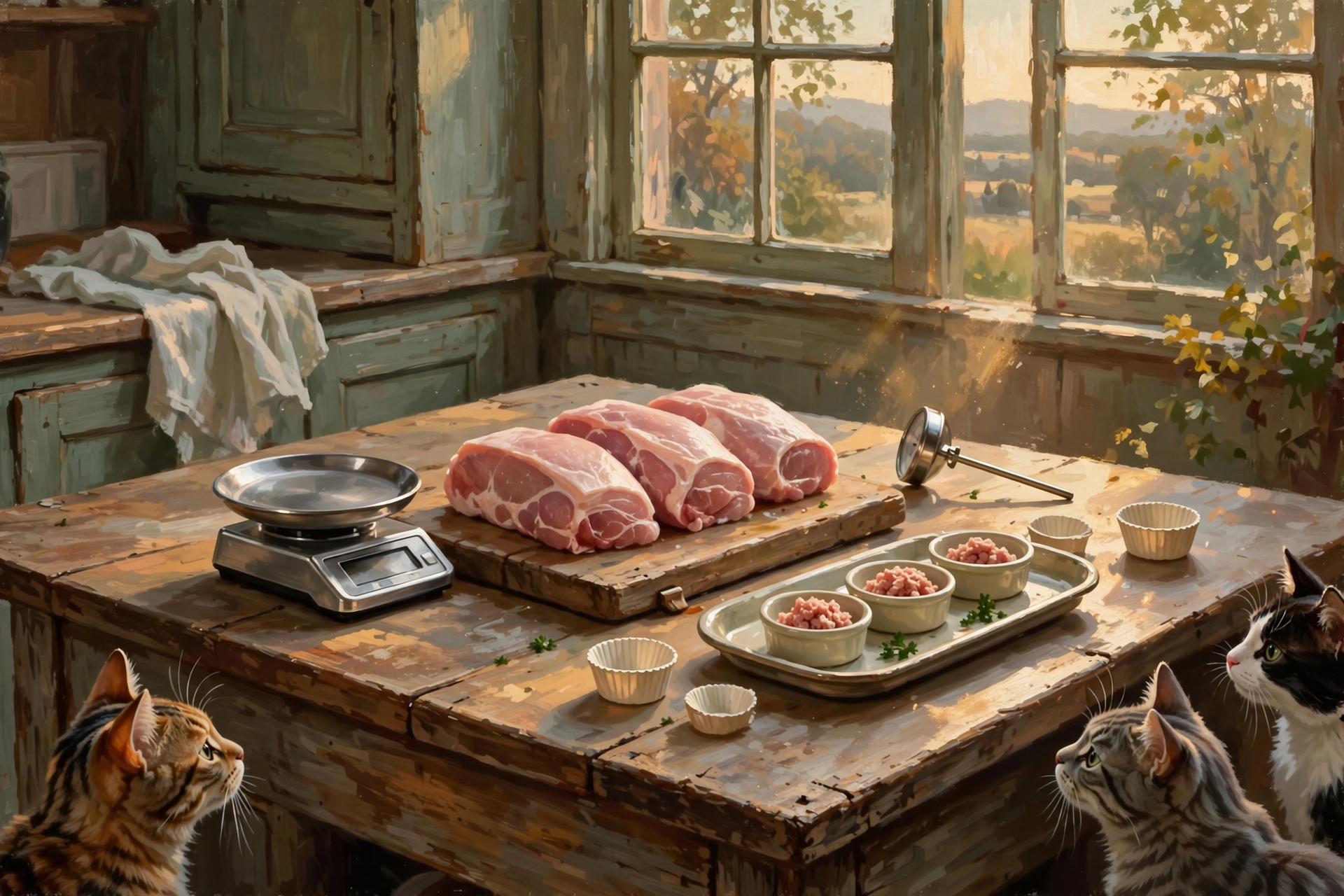
1️⃣ Start With Plain Fresh Pork
Not bacon.
Not sausage.
Not mystery leftovers.
2️⃣ Record the Cut
Lean loin?
Shoulder?
Heart?
Trim?
That matters.
3️⃣ Record Cost
Price per pound and usable yield after trimming.
4️⃣ Cook It Safely
Use a thermometer.
5️⃣ Portion It Small
We’re testing a supplement, not serving pork chops.
6️⃣ Keep Complete Food Available
Nutrition first.
7️⃣ Watch the Cats
Do they like it?
Do some cuts work better than others?
Does the fattier meat get eaten first?
8️⃣ Measure the Real Cost
Purchase.
Pickup.
Preparation.
Storage.
Waste.
📋 The Scaredy Cat Ingredient Scorecard: Pork

🥩 Protein Value
High.
Fresh pork provides useful animal protein.
🧈 Fat and Calories
Highly variable.
Lean loin and fatty belly are very different foods.
💧 Moisture
Good.
Plain cooked pork adds moisture relative to dry food.
⚖️ Nutritional Completeness
Low when used alone.
Pork muscle meat is not a complete feline diet.
🦴 Calcium Balance
Poor in plain boneless muscle meat.
Same fundamental limitation as other boneless meats.
🦠 Raw Feeding Concern
Significant enough that we avoid it.
Merck advises against raw or improperly cooked meat for cats because viable Trichinella cysts can cause infection.
🥓 Processed Pork
Low interest.
Bacon, ham and sausage commonly bring extra salt, fat, curing agents or seasonings that aren’t useful to our feeding objective.
🍳 Preparation
Easy.
Plain cooking with a food thermometer is straightforward.
🧊 Storage
Excellent.
Pork portions freeze well.
💵 Cost Potential
Potentially excellent.
Especially if local processors have safe lower-demand trimmings or heart meat available economically.
🏡 Local Availability
Good.
Pork is widely available, though the most interesting local source may be processors rather than retail cuts.
😸 Cat Appeal
Likely high.
But the cats get the final vote.
🐱 Scaredy Cat Project Rating
Moderate to High Interest—Fresh Plain Pork Only.
Good protein and potentially good economics, but processed pork and raw pork are poor fits for the project.
🤝 Local Butchers and Processors Could Answer the Questions That Matter
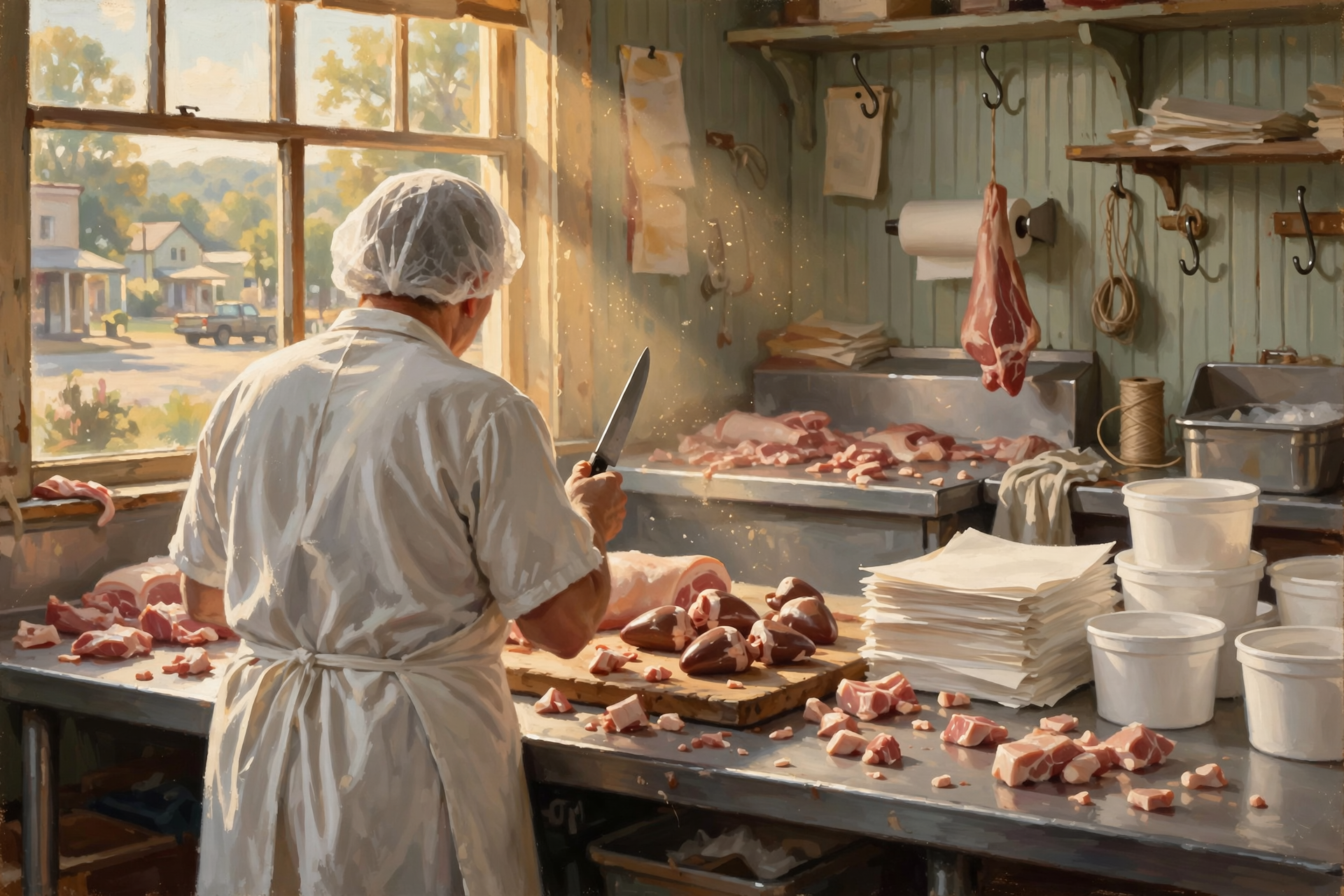
Once again, I don’t want to design a food-recovery system around assumptions.
I’d rather ask the people handling pork locally.
What happens to:
- 🥩 Clean trimmings?
- ❤️ Hearts?
- 🫀 Livers?
- 🧈 Fat trimmings?
- 📦 Products customers don’t request?
Do they already have markets?
Are they inexpensive?
Could they be sold in bulk?
Would separating them create more labor than the food is worth?
Those practical answers determine whether pork becomes a useful local resource.
♻️ “Low Human Demand” Is Still the Sweet Spot
We’re not trying to compete for pork chops.
We’re looking for parts of the food system where:
safe nutritional value remains after human market demand falls away.
That’s the pattern we’ve seen with:
- ❤️ Hearts
- 🍗 Gizzards
- 🫀 Liver
- 🥚 Surplus eggs
- 🦌 Venison trimmings
- 🐇 Rabbit trimmings
- 🐟 Fish surplus
Pork may have its own opportunities.
❤️ Pork Teaches Us That Preparation Is Part of Nutrition
This may be the most useful lesson from pork.
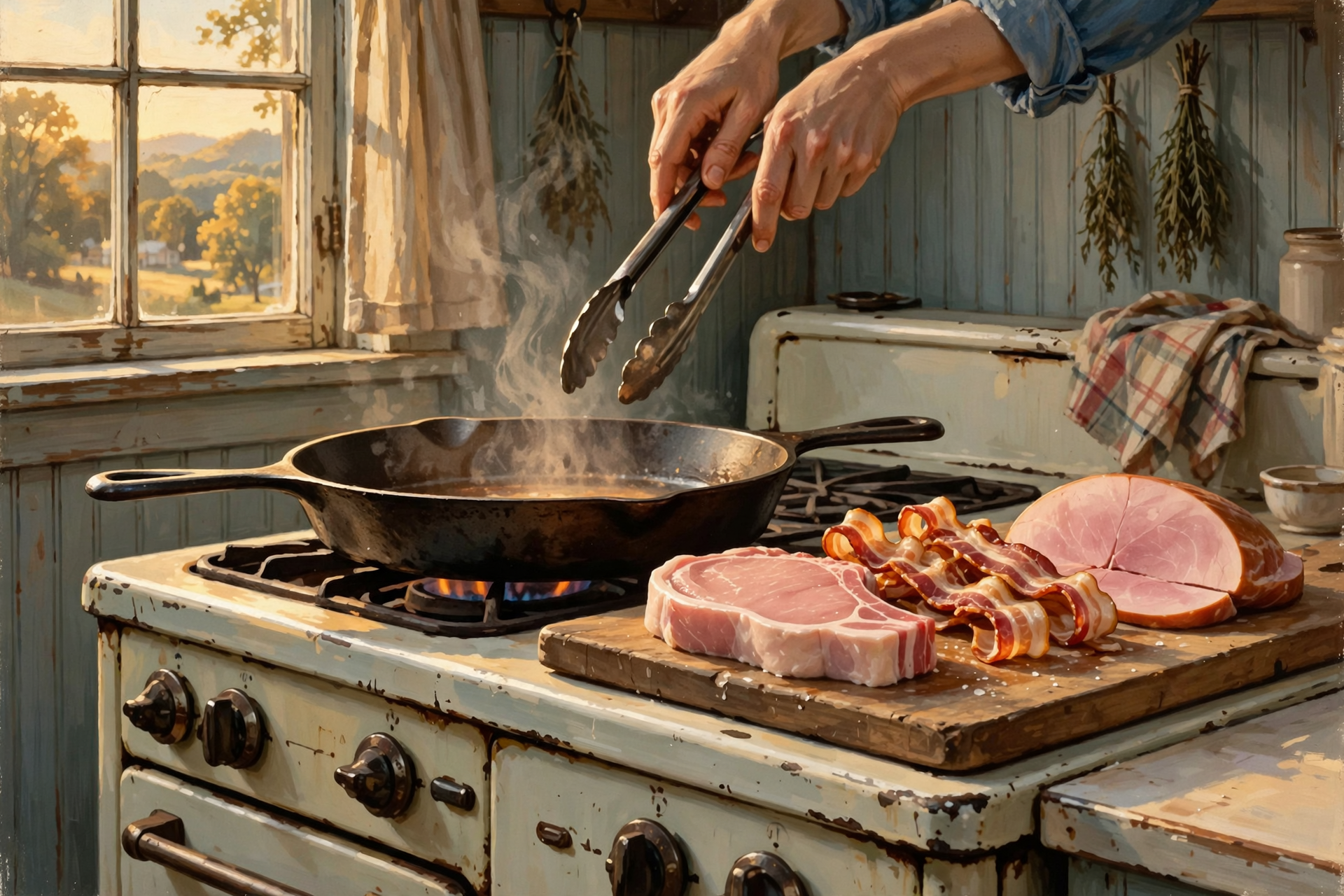
The ingredient doesn’t exist independently of how we handle it.
Fresh pork can be useful protein.
Raw pork adds unnecessary risk.
Bacon adds salt and fat.
Sausage adds mystery ingredients.
Ham adds curing and sodium.
The pig didn’t change.
The preparation did.
That means food evaluation has to consider:
ingredient + preparation + portion + overall diet.
That’s a much better way to think about feeding cats than simply making lists of “good foods” and “bad foods.”
🔜 Next: Chicken Thighs for Cats—Could the Cheap Familiar Cut Beat the Exotic Stuff?
We’ve spent a lot of time investigating foods people tend to overlook.
Hearts.
Gizzards.
Organs.
Trimmings.
But perhaps we’re overlooking something by trying too hard to be clever.
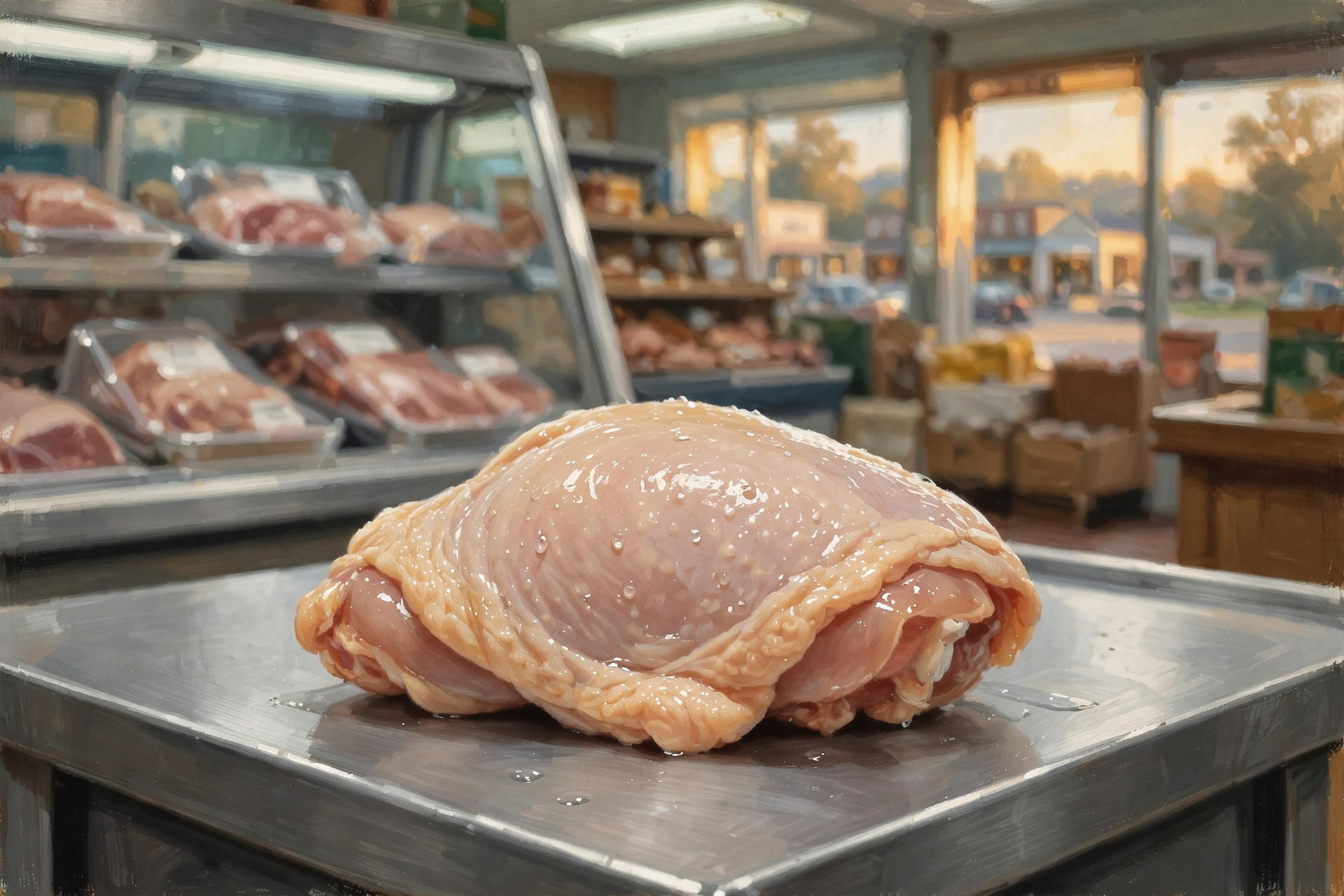
Chicken thighs are:
- 🍗 Widely available
- 🥩 High in animal protein
- 🧈 Higher in fat than breast meat
- 🔥 Calorie-dense enough to interest us
- 💵 Often inexpensive when sold on promotion
- 🧊 Extremely easy to store
So the next article will ask whether an ordinary grocery-store chicken thigh might actually compete surprisingly well with some of our more exotic local-food ideas.
📣 Do You Process Pork Locally?
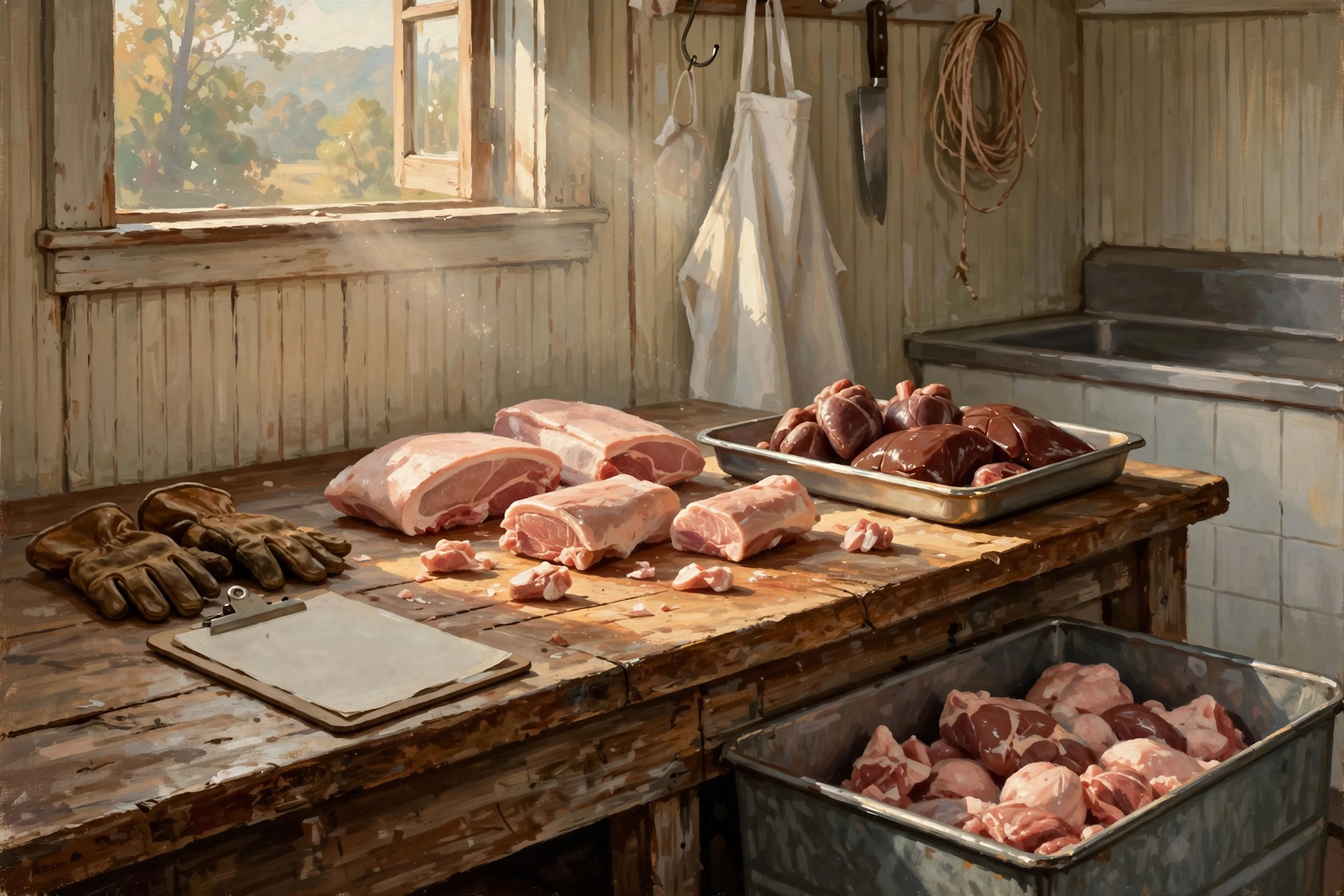
If you’re a butcher, hog farmer, meat processor, grocery meat manager or someone who regularly buys pork in bulk around Dunlap or Sequatchie County, we’d like to hear from you.
What happens to hearts?
Liver?
Trimmings?
Lower-demand cuts?
What already has a market?
What doesn’t?
And what would somebody feeding community cats need to understand before asking for any of it?
The people actually handling our food supply know more about these questions than I do.
That’s why this project needs their input.
❤️ Feed Them. Fix Them. Find Them Homes When We Can. Help the Rest Age Gracefully.

Pork doesn’t look like a miracle food.
Good.
I’m increasingly convinced there isn’t one.
What we’re building instead is a toolbox.
Complete food for nutritional security.
Useful local ingredients where they make sense.
Safe preparation.
Freezer capacity.
Local relationships.
Better purchasing.
Less waste.
And eventually, fewer cats needing all of it.
If plain pork can contribute one useful piece to that system, we’ll use it intelligently.
Scaredy can continue lobbying for bacon.
She does not control the budget.
🐾 Feed them. Fix them. Find them homes when we can. Help the rest age gracefully.
🔎 Sources & Further Reading

- Merck Veterinary Manual — Trichinellosis (Trichinosis) in Cats
- Centers for Disease Control and Prevention — How to Prevent Trichinellosis
- Centers for Disease Control and Prevention — About Trichinellosis
- USDA Food Safety and Inspection Service — Is Pork Safe to Eat?
- USDA Food Safety and Inspection Service — Safe Internal Temperatures for Meat and Poultry
Know about an upcoming event or story in the Dunlap, TN area? Submit it here.




0 Comments