
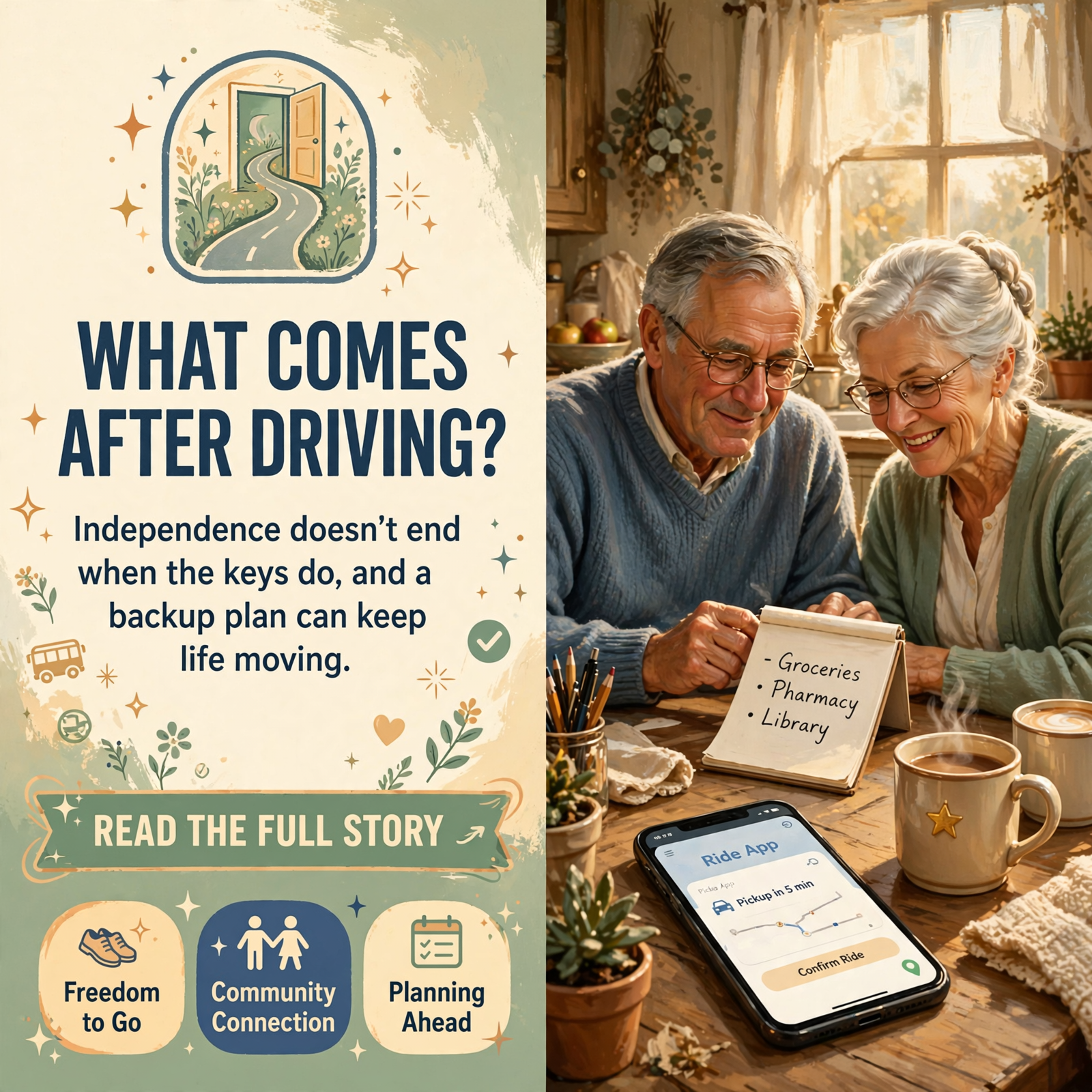
What Happens When You Can’t Drive Anymore?

In the last article in this series, we walked through the house.
The steps.
The bathroom.
The lighting.
The laundry.
The driveway.
We asked whether the home we love at 61 could still work for us at 81.
But there’s a problem.
You can build the world’s greatest aging-in-place house.
Zero steps.
Wide doors.
Beautiful walk-in shower.
Excellent lighting.
Grab bars that look like somebody actually thought about them before installing them.
Everything works perfectly.
And then one day you can’t drive.
Now what?
Because in rural Tennessee, the car may be one of the most important pieces of aging-in-place equipment we own.
The Car Is Doing More Work Than We Realize

Most of us don’t think much about transportation while driving is easy.
You want milk?
Get in the car.
Doctor’s appointment?
Get in the car.
Prescription?
Car.
Church?
Car.
Lunch?
Car.
Hardware store?
Definitely the car, because apparently we’re incapable of entering a hardware store and leaving with only the thing we went there to buy.
Visit the grandchildren?
Car.
See a specialist in Chattanooga?
Car.
For many people living in and around Dunlap, transportation has become so automatic that it barely registers as a system.
Until it stops working.
Then we discover the uncomfortable truth:
A person can be perfectly capable of living independently at home and still lose a large part of that independence because they cannot get from the home to everything else they need.
This Is Particularly Important in Sequatchie County

Sequatchie County is not a compact urban neighborhood where almost everything is three blocks away.
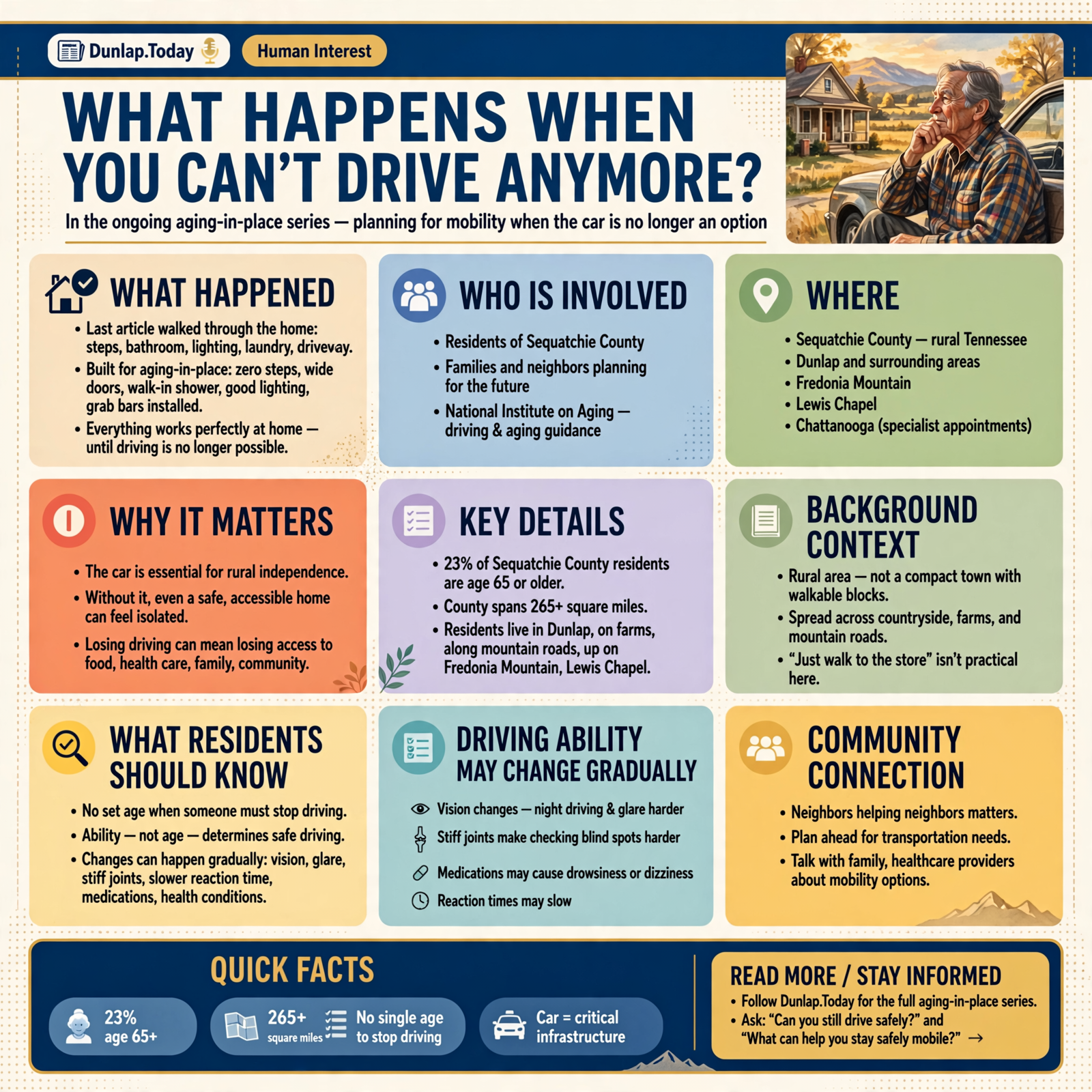
According to current Census Bureau estimates, roughly 23% of Sequatchie County residents are already age 65 or older.
We’re spread across more than 265 square miles.
People live in Dunlap.
They live in neighborhoods outside town.
They live on farms.
They live along mountain roads.
They live up on Fredonia Mountain and Lewis Chapel.
They live in places where “just walk to the store” is advice that could only have been offered by somebody who has never actually been here.
For many households, driving isn’t simply convenient transportation.
It’s infrastructure.
Getting Older Does Not Mean You Automatically Become a Bad Driver
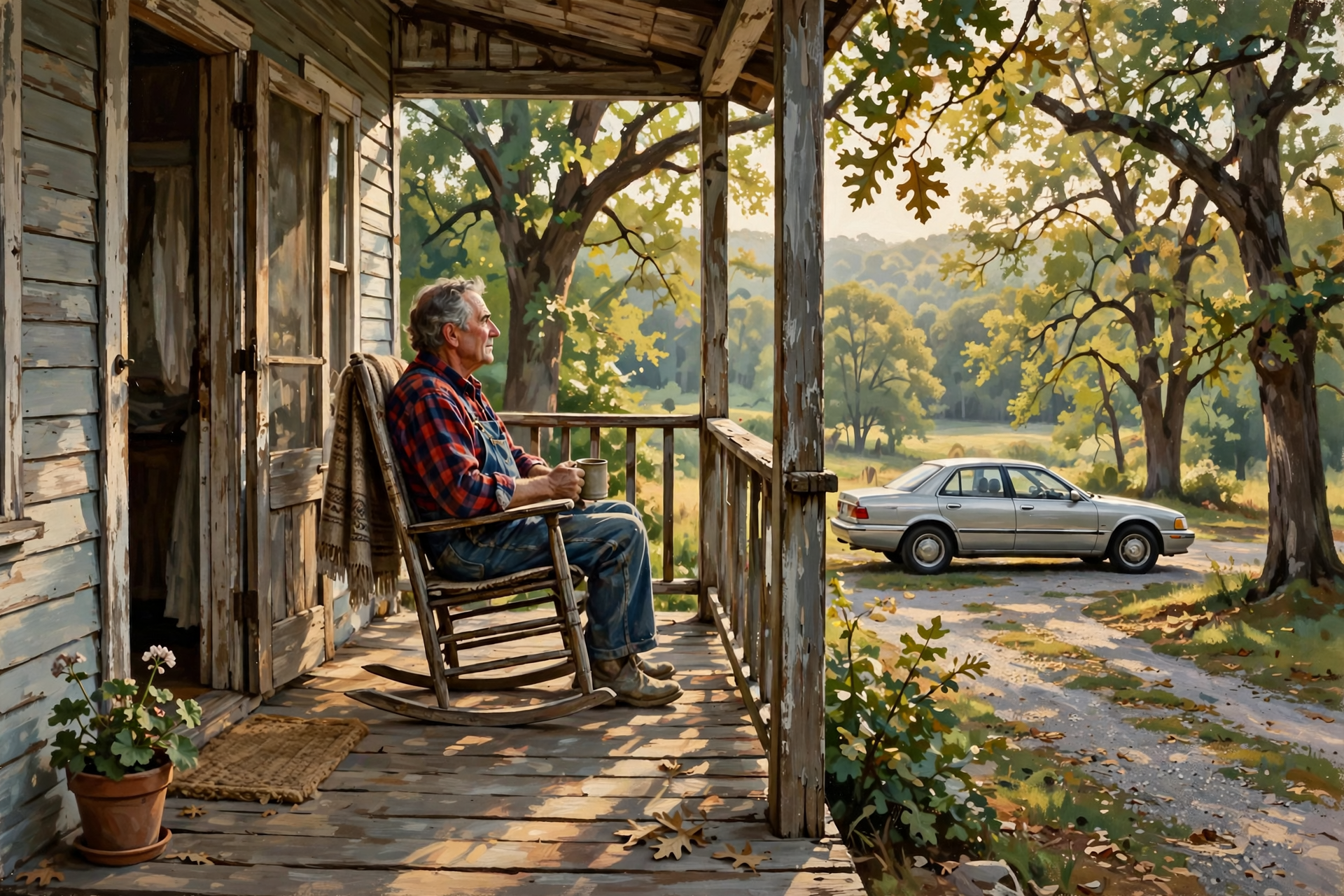
This is worth saying clearly.
There is no birthday on which somebody automatically becomes unsafe behind the wheel.
The National Institute on Aging says there is no single recommended age at which people should stop driving.
Some people may drive safely well into their 80s or beyond.
Others may encounter problems much earlier because of health conditions, medications, vision, mobility, reaction time, or cognitive changes.
Age itself isn’t the driving test.
Ability is.
That’s important because discussions about older drivers can become needlessly insulting.
The goal shouldn’t be:
You’re 82. Hand over the keys.
The better question is:
Can you still drive safely?
And after that:
What can we change to help you remain safely mobile for as long as possible?
Driving Ability May Change Gradually
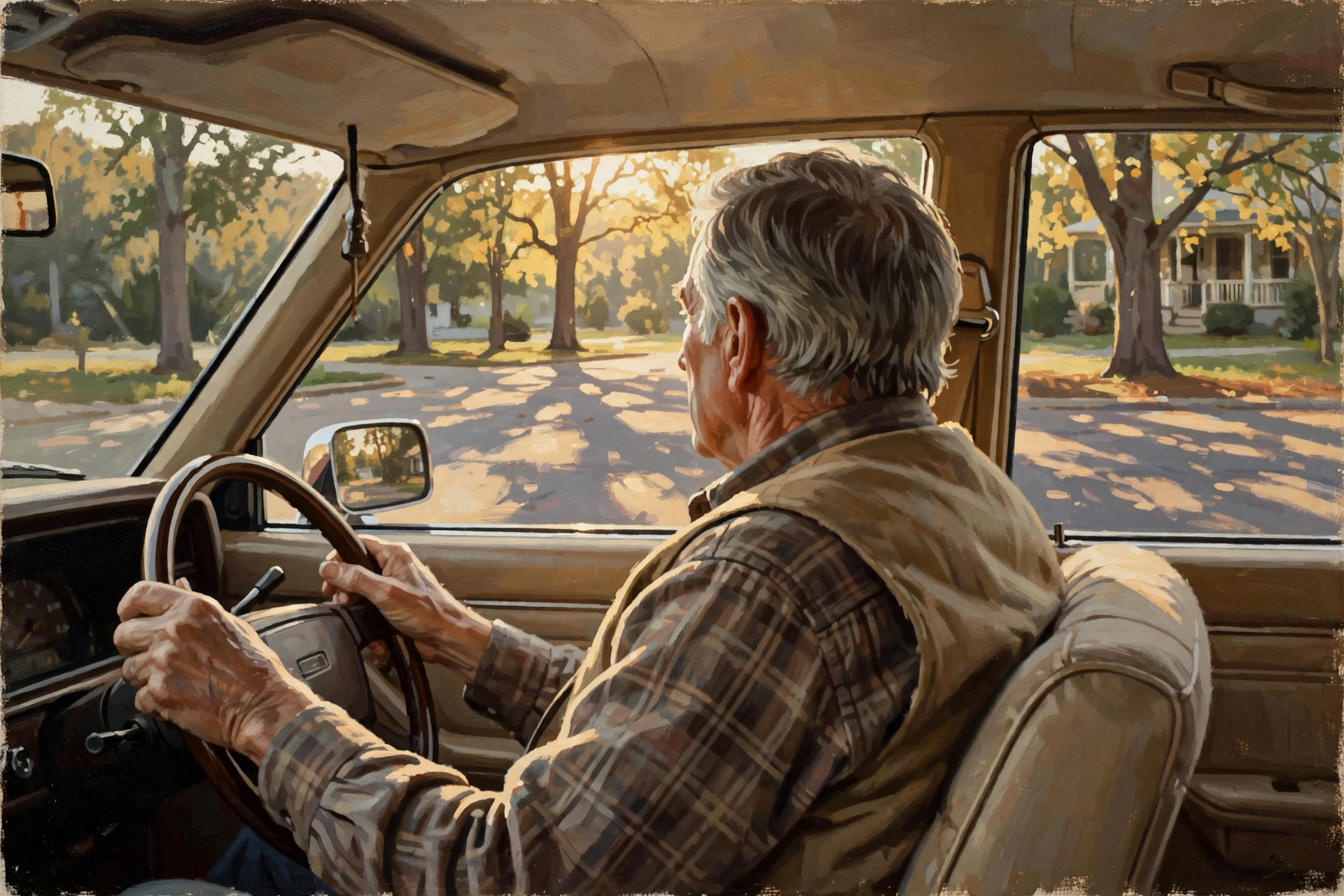
The National Institute on Aging identifies a number of changes that can affect driving.
Vision can change.
Night driving may become more difficult.
Glare can become troublesome.
Joints may become stiff.
Turning your head to check a blind spot may become harder.
Reaction times may change.
Certain medical conditions can affect driving.
Some medications can cause drowsiness, dizziness, or other effects.
None of that necessarily means:
STOP DRIVING FOREVER.
Sometimes the answer is simply adaptation.
Maybe the First Step Isn’t Giving Up Driving
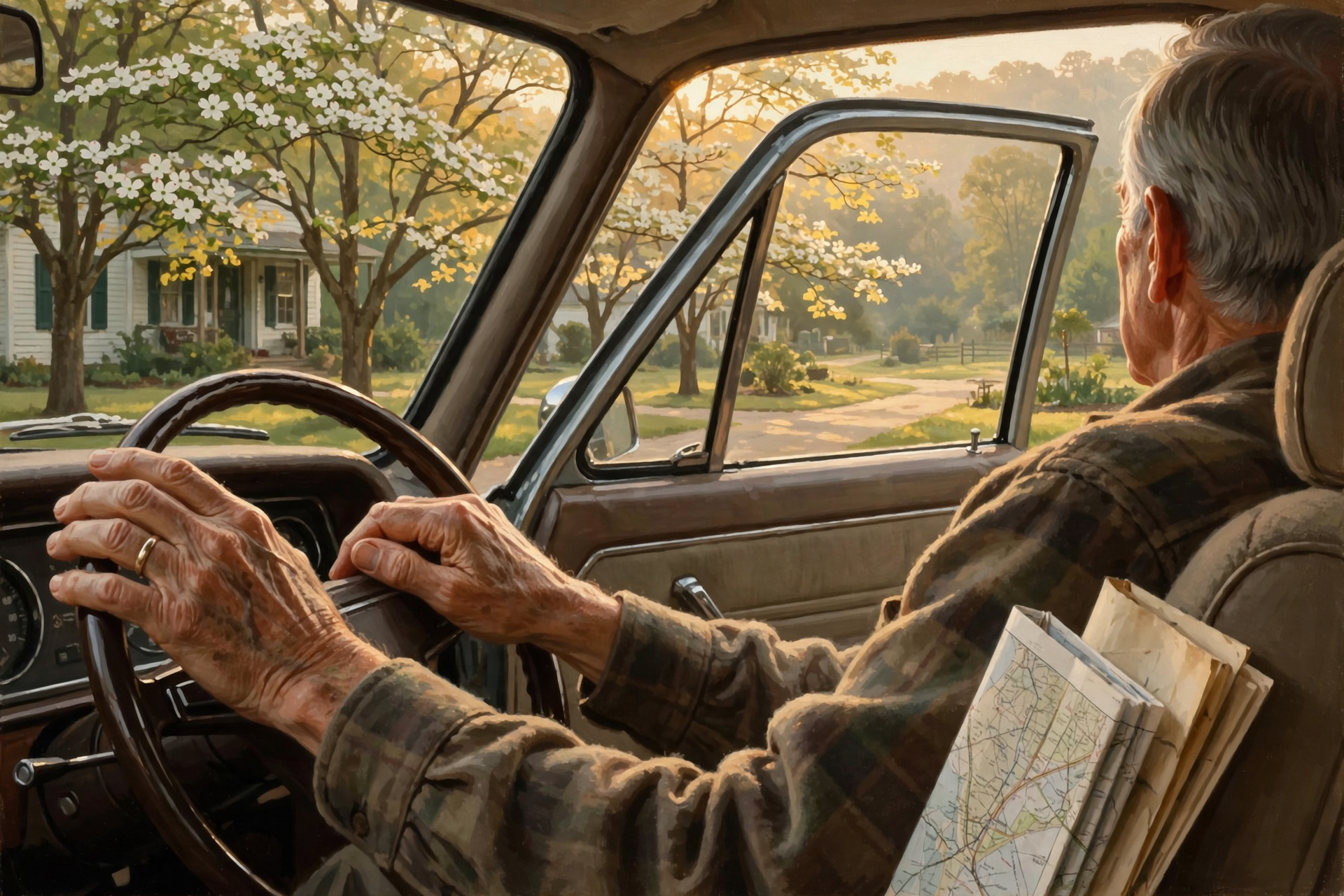
There is a huge amount of territory between:
I drive anywhere at any time.
and
I never drive again.
Someone might stop driving at night.
Another person may avoid heavy traffic.
Someone might stop driving in rain or snow.
Another might stick to familiar roads.
Someone might drive around Dunlap but let somebody else handle Chattanooga.
The National Institute on Aging specifically suggests strategies such as avoiding difficult weather, reducing night driving when vision is a problem, choosing familiar routes, avoiding heavy traffic, and planning routes that reduce difficult intersections or high-speed roads.
That’s not surrendering independence.
It’s managing risk.
We already do this throughout life.
I don’t climb onto every roof simply because I’m physically capable of finding a ladder.
There’s something to be said for knowing when a task has become unnecessarily adventurous.
What Are the Early Warning Signs?

NIA suggests asking practical questions rather than judging somebody by age.
For example:
- Are other drivers frequently honking at you?
- Have there been recent fender benders or near misses?
- Are road signs becoming difficult to see?
- Is turning to check mirrors and blind spots difficult?
- Do you sometimes become lost on familiar roads?
- Does traffic feel increasingly overwhelming?
- Are cars or pedestrians surprising you?
- Are you having trouble staying in your lane?
- Have family members or a doctor expressed concern?
- Have you already begun avoiding certain driving situations because you aren’t comfortable?
Those are much more useful questions than:
How old are you?
But This Article Really Isn’t About Driving
It’s about what comes after driving.
Because there’s a planning mistake I think families make.
We focus almost entirely on:
When should Dad stop driving?
Dad hears:
When are you going to take away my independence?
Maybe we’d have a better conversation if we started somewhere else.
Ask:
If Dad decided tomorrow that he didn’t want to drive at night anymore, how would we make sure he could still go everywhere he wants to go?
That’s a transportation question rather than a driving question.
And that distinction matters.
Don’t Take Away the Keys Before Replacing What the Keys Provide

A driver’s license represents considerably more than permission to operate a vehicle.
It represents:
- spontaneity,
- privacy,
- control,
- social connection,
- access to food,
- access to health care,
- access to church,
- access to entertainment,
- and the ability to leave the house without asking permission.
Imagine being told:
You can no longer drive.
Then imagine discovering that every trip now requires:
calling your daughter,
checking her schedule,
explaining where you’re going,
waiting until she’s available,
and feeling as though you’ve imposed on somebody.
That’s not merely a transportation change.
It’s a psychological change.
Which is why the transportation plan should ideally exist before the keys become an issue.
Good News: Sequatchie County Actually Has Rural Public Transportation
One reason we’re doing this series is to distinguish between services people assume don’t exist and services that actually do.
Sequatchie County is served by Southeast Tennessee Human Resource Agency transportation—SETHRA.
SETHRA currently provides public transportation in Sequatchie and several surrounding Southeast Tennessee counties.
And this isn’t restricted only to people who are elderly or disabled.
SETHRA describes its public transportation service as available to the general public.
That’s important.
As of November 2026, SETHRA has also changed the way local rides are arranged. Riders can call or text their local county office to request, modify, or cancel rides.
The Sequatchie County transportation office is in Dunlap.
Medical rides that are provided through insurance are still scheduled through the insurance provider.
This doesn’t mean SETHRA replaces having a car in every circumstance.
But it means our transportation Plan B may already have more pieces than many people realize.
We Need to Learn How the System Actually Works

Knowing a service exists and knowing how to rely on it are different things.
So before somebody urgently needs transportation, I would want to know:
- How far ahead should a ride be scheduled?
- What hours are available?
- What destinations can be reached?
- What does it cost?
- Can the service reach my exact address?
- Can someone take groceries home?
- How are wheelchairs or mobility devices handled?
- Can a caregiver travel too?
- How does transportation to Chattanooga work?
- What about recurring medical appointments?
- What happens when the appointment runs late?
Those are exactly the kinds of questions worth learning at 61 rather than discovering at 81 while waiting for an oncology appointment.
Run the “No Car for Seven Days” Experiment

Here’s the practical exercise for Article 4.
Don’t sell the truck.
Don’t hide the keys.
Don’t make your spouse drive you around while explaining that ChatGPT told you to do it.
Just keep track for one normal week.
Every time you use a vehicle, write down:
- where you went,
- why you went,
- whether the trip was scheduled or spontaneous,
- how far it was,
- whether somebody else could reasonably have driven you,
- whether delivery could have replaced the trip,
- and what another transportation option might have been.
At the end of the week, look at the list.
That is your actual transportation dependency.
Not a generic senior transportation checklist.
Yours.
Some Trips Are Easier to Replace Than Others

You may discover that transportation is really several different problems.
Groceries
Maybe those can be delivered.
Prescriptions
Some pharmacies offer delivery or mail options.
Routine Medical Appointments
These can often be scheduled around family, transportation services, or other planned rides.
Specialists
This may be more difficult, particularly when the doctor is in Chattanooga or farther away.
Church
A church community may already have people willing to help.
Social Visits
This is where transportation plans sometimes fail.
We remember doctors and groceries but forget that humans occasionally want to go somewhere because they enjoy it.
Emergencies
That’s a different system entirely.
A transportation plan should never confuse scheduled transportation with emergency medical response.
Don’t Accidentally Build a Life That Only Goes to the Doctor

This deserves its own section.
When we plan transportation for older adults, we often create a wonderfully efficient system for keeping them alive.
Doctor.
Pharmacy.
Grocery store.
Doctor.
Pharmacy.
Grocery store.
Congratulations.
We’ve built prison transportation with better health insurance.
Independence includes going somewhere because you want to.
Lunch with a friend.
Church.
A grandchild’s ball game.
The library.
A haircut.
A community event.
Visiting family.
Going for coffee.
Or wandering into the hardware store to purchase the one thing you need plus six things that seemed necessary once you got there.
Transportation planning should preserve a life, not merely appointments.
Build a Transportation Portfolio

I wouldn’t want my future independence to depend on a single replacement for driving.
I’d rather have several.
Think of it as a transportation portfolio.
Option 1: Continue Driving Safely
For as long as ability and circumstances make that reasonable.
Option 2: Modify When and Where You Drive
Daytime only.
Familiar routes.
Good weather.
Less traffic.
Option 3: Family and Friends
Useful, but ideally not the only option.
Option 4: Rural Public Transportation
Learn how SETHRA works before you need it.
Option 5: Delivery
Groceries, prescriptions, meals, household products, and other goods don’t always require moving the person.
Option 6: Telehealth and Remote Services
Not every appointment or service necessarily requires travel.
Option 7: Taxis or Rideshare Where Available
Availability in rural communities can vary dramatically, which is exactly why this should be tested rather than assumed.
Option 8: Community Networks
Churches, neighbors, volunteer organizations, senior programs, and local organizations may provide additional options.
No single one has to replace the car completely.
Together they might replace enough trips to preserve independence.
AI Can Help Build the Transportation Plan

This is another good place to use AI as an interviewer rather than an oracle.
You could say:
I live in a rural community and currently drive. I want to understand how dependent my independence is on driving and create a backup transportation plan before I need one. Interview me one question at a time about every type of trip I make: groceries, prescriptions, doctors, specialists, family, church, social activities, errands, emergencies, entertainment, and recurring appointments. Ask about distances, frequency, scheduling flexibility, family help, delivery options, public transportation, rideshare availability, and telehealth. At the end, identify which trips would be hardest to replace and help me create multiple backup options for each one.
Notice what we’re doing again.
We’re not asking AI:
Should Grandpa stop driving?
That’s not the question for a chatbot.
We’re asking:
What needs to exist so Grandpa retains as much independence as possible if his driving changes?
That’s much more useful.
AI and Search Can Also Research the Local Options

This is where AI plus current web search becomes particularly useful.
Once you’ve identified a transportation need, you can investigate it specifically.
For example:
Find current public and nonprofit transportation services serving Sequatchie County, Tennessee. For each, identify who can ride, service area, scheduling requirements, operating hours, cost if published, accessibility options, and official contact information. Use current official sources and clearly identify anything you cannot verify.
Then verify the important information directly with the provider before depending upon it.
Services change.
Phone numbers change.
Hours change.
Routes change.
That’s precisely why we want a living local resource system rather than a pamphlet printed once and forgotten in somebody’s desk drawer.
This Is Where Dunlap.Directory Can Become More Important
We’re starting to uncover a recurring pattern in this series.
An article explains the problem.
Then the reader needs to know:
Who actually provides the solution around here?
Transportation is a perfect example.
Over time, Dunlap.Directory can help organize:
- public transportation,
- medical transportation,
- taxi services,
- rideshare availability,
- pharmacy delivery,
- grocery delivery,
- meal delivery,
- home health providers,
- mobile services,
- and other resources that reduce the number of trips someone must make.
That’s more useful than simply publishing another article telling people transportation matters.
Maybe the Best Transportation Is Sometimes No Transportation

Technology changes this equation too.
Think about how many trips once considered unavoidable can now potentially disappear.
Banking.
Some government services.
Prescription refills.
Shopping.
Food.
Some medical consultations.
Family visits.
Business meetings.
Even certain types of monitoring and home support.
That doesn’t mean we should lock Grandma in the house with an iPad and declare victory.
Human contact matters.
Leaving the house matters.
Community matters.
But reducing unnecessary transportation can make the transportation we genuinely need much easier to manage.
Self-Driving Cars Could Eventually Change This Entire Conversation
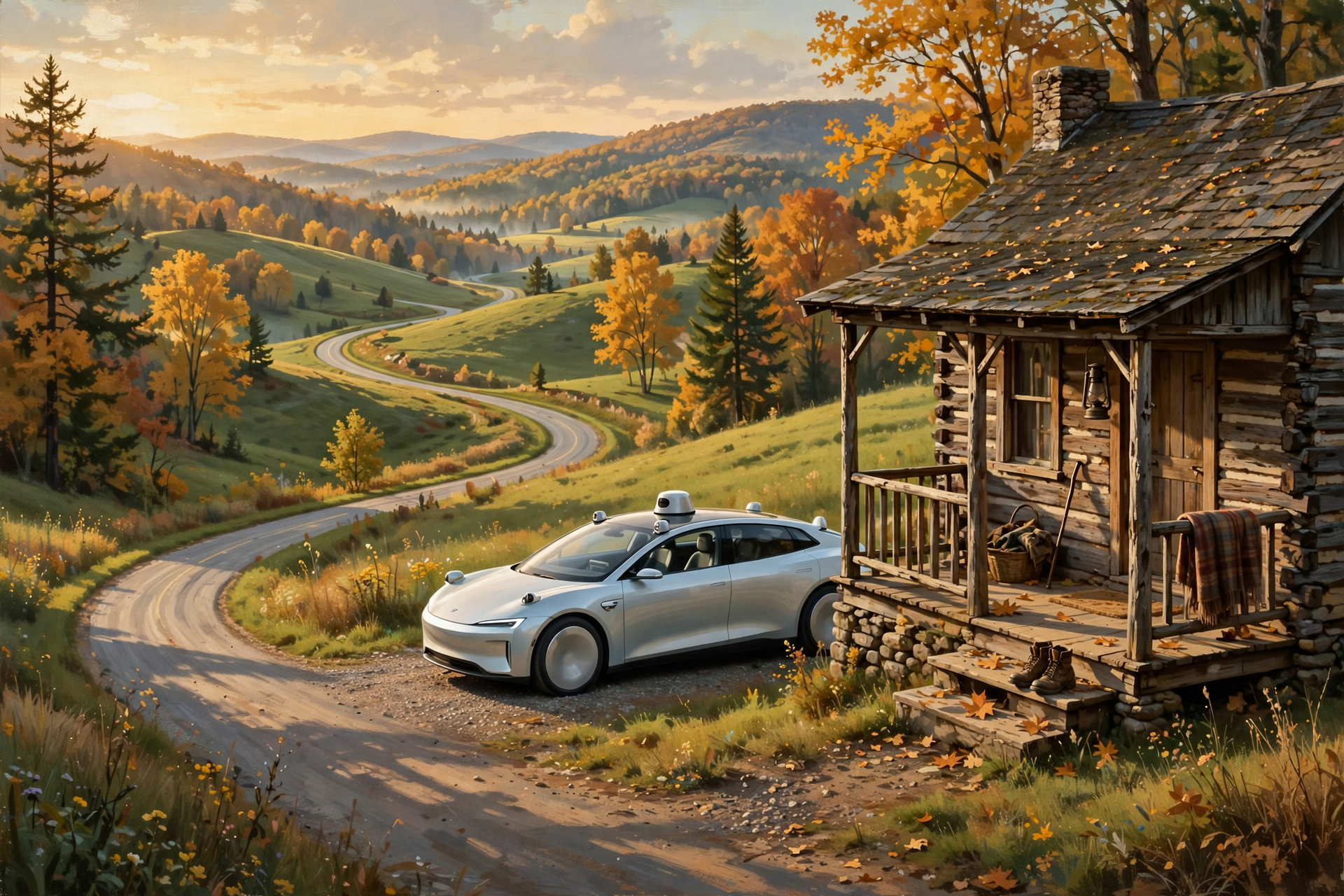
This is where looking twenty years ahead gets interesting.
I turn 61 now.
The transportation options available to my hypothetical 81-year-old self may be substantially different from today’s.
Autonomous vehicles could eventually allow people who can no longer safely operate a car themselves to retain much of the point-to-point mobility they enjoy today.
Maybe.
There are still enormous technical, regulatory, geographic, economic, and infrastructure questions—especially in rural areas.
So I wouldn’t build my retirement plan around a robot car arriving at my mountain cabin in 2046.
But I wouldn’t ignore the possibility either.
Technology may significantly extend independent mobility.
That’s another reason not to think of aging as one predetermined path.
The Vehicle Itself May Help Extend Safe Driving
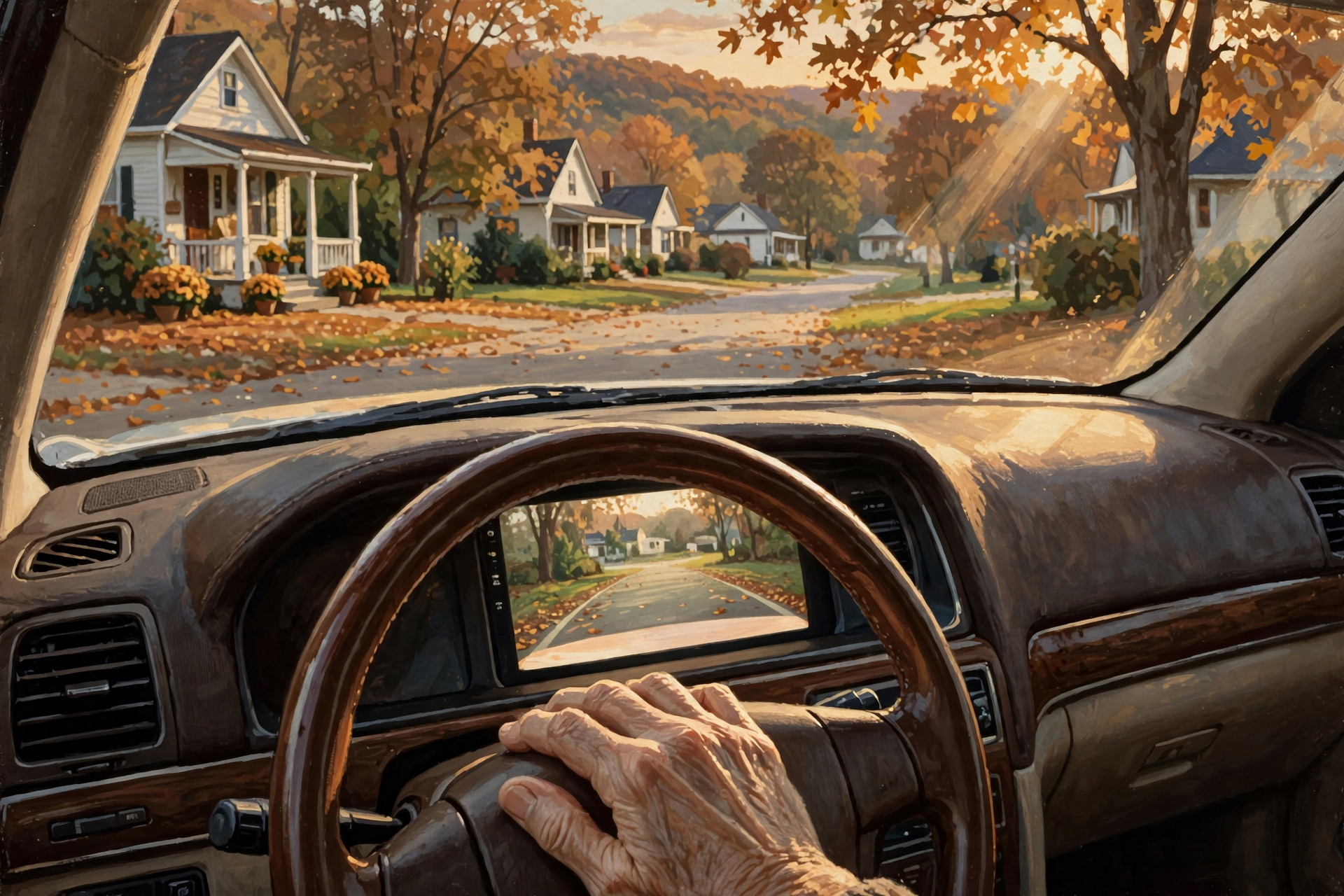
Modern vehicles already offer technologies that previous generations of older drivers never had.
Depending on the vehicle, features can include:
- blind-spot monitoring,
- backup cameras,
- automatic emergency braking,
- lane warnings,
- adaptive cruise control,
- parking assistance,
- better headlights,
- voice controls,
- and navigation.
None of these makes an unsafe driver safe.
But thoughtful vehicle selection may help compensate for certain limitations and reduce some driving workload.
NHTSA also provides resources about adapting vehicles to meet drivers’ changing physical needs.
That suggests another future article for this series:
What should an older adult actually look for when buying a car?
Because perhaps the car you buy at 70 should be evaluated differently than the car you bought at 30.
The Family Conversation Should Start With Independence

The National Institute on Aging offers good advice for families discussing driving.
Focus on driving ability rather than age.
Talk about specific concerns.
Recognize that driving represents independence.
And make maintaining the person’s activities part of the conversation.
I think that’s exactly right.
Instead of:
Dad, you need to stop driving.
the broader conversation is:
Dad, we want to make sure you can continue getting everywhere that’s important to you safely. Let’s figure out what that looks like.
Those may eventually lead to the same decision.
But they’re not the same conversation.
Try the Five-Trip Test
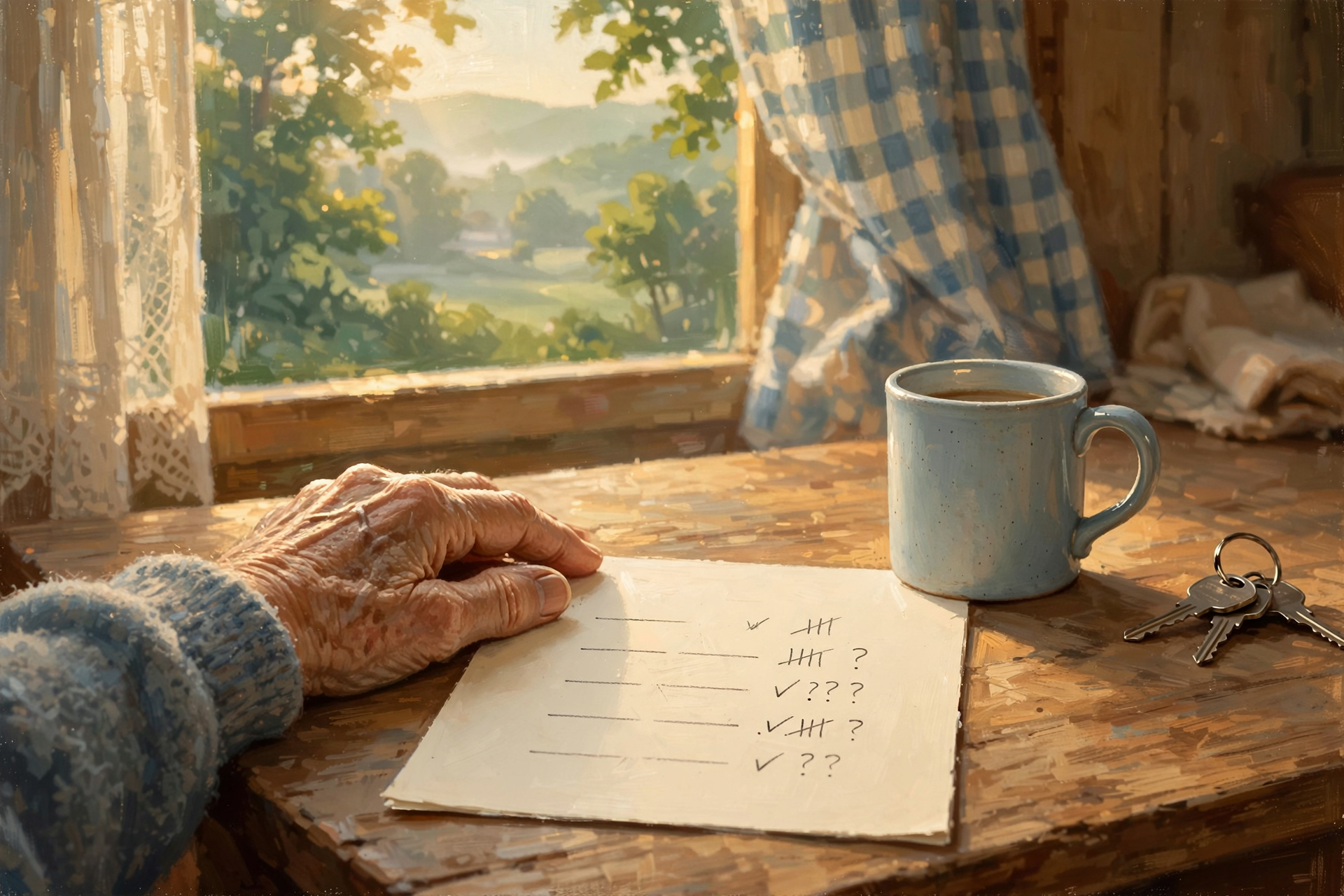
If the seven-day transportation log sounds like too much work, start with five trips.
Write down your five most important regular destinations.
For example:
- Grocery store
- Pharmacy
- Primary-care doctor
- Church
- Family
Then answer five questions for each:
- How far away is it?
- How often do I go?
- Can the trip be scheduled?
- What is my backup if I don’t drive?
- Do I actually know that backup works?
That last question matters.
There’s a difference between:
I think Uber probably comes out here.
and
I have tested whether Uber comes out here.
There’s a difference between:
I heard there’s some senior bus.
and
I know SETHRA serves Sequatchie County and I know how to request a ride.
Assumptions aren’t transportation plans.
Build Plan B While You Still Have Plan A
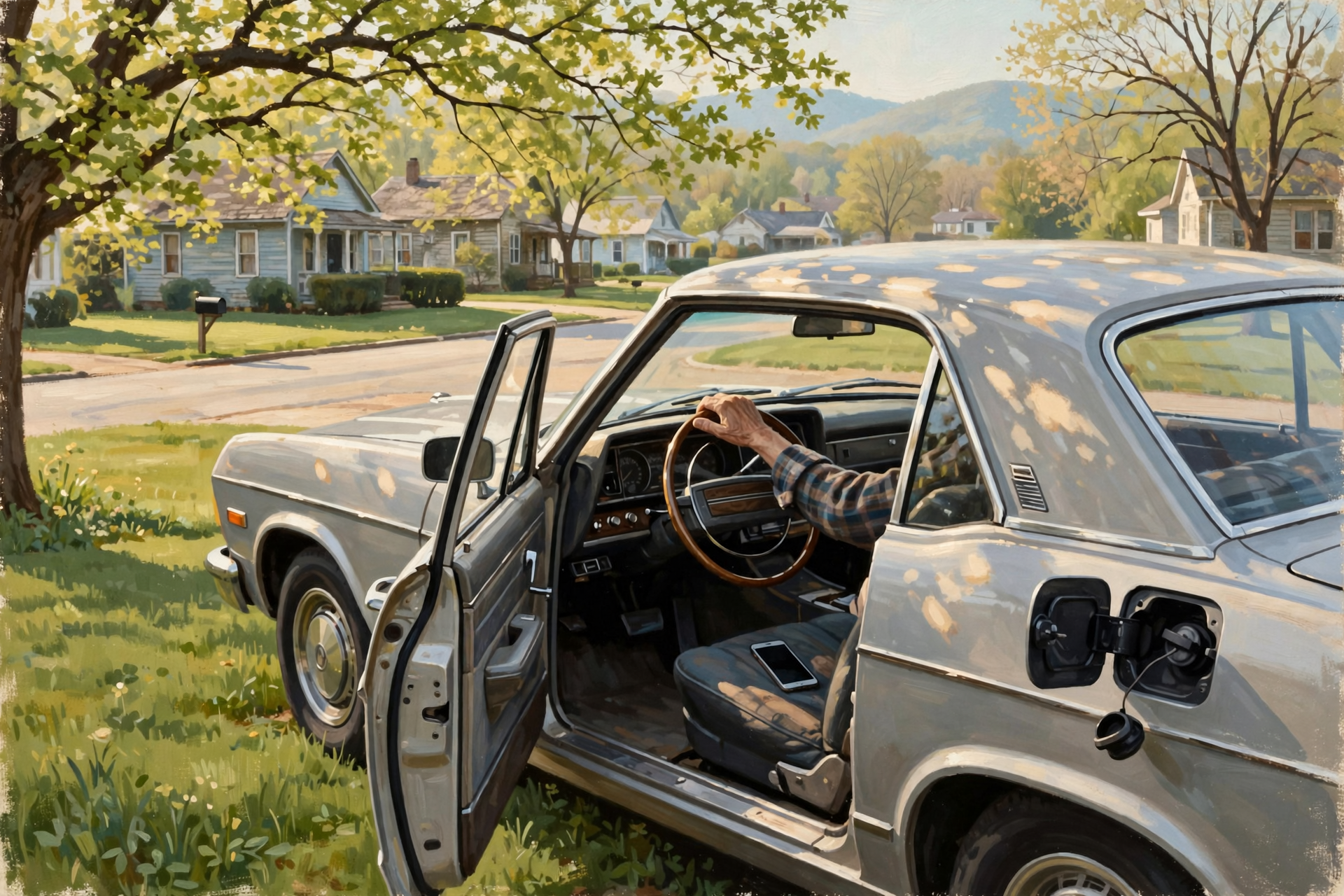
That’s the theme I keep coming back to.
The best time to learn the transportation system isn’t after you stop driving.
It’s while your truck is sitting outside with a full tank of gas.
Try the service.
Learn the process.
Install the grocery app.
Find out whether your pharmacy delivers.
Ask the church whether transportation help exists.
Find out which relatives are realistically available and when.
Test the rideshare app.
Learn which appointments can be handled remotely.
Build the alternatives one at a time.
Then if driving changes someday, you’re changing one piece of your life.
You’re not rebuilding the whole thing at once.
Try This With AI: The Transportation Independence Interview

I want to preserve my independence if my ability or willingness to drive changes as I get older. Interview me one question at a time about where I live and every type of trip I regularly make, including groceries, prescriptions, medical appointments, specialists, church, family, social activities, shopping, entertainment, errands, and emergencies. Ask how often each trip occurs, how far away it is, whether it can be scheduled, and whether delivery, telehealth, family, public transportation, taxi, rideshare, community organizations, or another option could substitute. At the end, organize my transportation needs into: Easy to Replace, Requires Planning, and Major Independence Risk. Then help me create at least two backup options for every Major Independence Risk.
Questions for Your Family

- If you couldn’t drive for one month, which trip would be hardest to replace?
- Which trips could disappear through delivery or online services?
- Which trips are important primarily for social connection?
- Do we know how SETHRA transportation works?
- Have we actually tested any rideshare services at our address?
- Which family members are realistically available to help with transportation?
- Could we manage transportation to a specialist in Chattanooga?
- Could driving be reduced gradually rather than stopped all at once?
- Would a different vehicle make driving easier or safer?
- What transportation options would be necessary for us to remain in our current home?
Wisdom From the Front Porch

I started this series by imagining a conversation between my 61-year-old self and the fellow I might become at 81.
I suspect that guy will have some opinions about the decisions I’m making for him.
If he can still drive safely, great.
I hope he does.
If he decides nighttime driving isn’t worth the aggravation anymore, I hope I’ve given him alternatives.
If someday driving isn’t safe at all, I don’t want his choices to become:
drive anyway
or
stay home.
There should be more choices than that.
And today, here in Sequatchie County, there already are some.
SETHRA currently provides public transportation in the county, including service for the general public. That’s the sort of local resource worth learning about long before anyone urgently needs it.
Because aging in place isn’t merely about whether you can stay inside your house.
It’s about whether you can still participate in the world outside it.
The goal isn’t keeping the keys forever.
The goal is making sure losing the keys doesn’t mean losing your life outside the front door.
Next in The Next Chapter, we’re going to tackle another system most families don’t realize depends heavily on one person until something goes wrong:
What would my family need to know if I couldn’t answer questions tomorrow?
Doctors. Medications. Insurance. Bills. Property. Pets. Important contacts. Documents. Digital accounts.
In other words, we’re going to begin building the family version of an owner’s manual.



0 Comments