

The Ghost of Someday: I'll Get Around to It When Things Settle Down

Where Ideas Go to Die — Part 4 of 6
By Eleanor Eventually, Founding President of the Society for Things We’ll Definitely Get Around to Someday
Editor’s Note: Eleanor Eventually is a fictional character created for Dunlap.Today’s Halloween series, Where Ideas Go to Die. Her story is imaginary, but the experiences and behavioral patterns it illustrates are familiar to many of us.
Good evening, dear reader.
My name is Eleanor Eventually.
I am a woman of considerable ambition, extraordinary organizational ability, and an almost supernatural talent for postponement.
Actually, the supernatural part is relatively recent.
I have been dead for thirty years.
But I assure you, that has done very little to interfere with my plans.
I have always believed in the importance of preparing carefully before undertaking anything significant.
Preparation is essential.
Organization is essential.
Research is essential.
And, of course, one must never begin a major project until the circumstances are sufficiently favorable.
That is why I have spent the past sixty-seven years preparing to open my bakery.
I expect to begin any day now.
The Woman with a Thousand Wonderful Ideas

When I was young, I had so many wonderful ideas that my mother purchased an entire wooden cabinet just to store my notebooks.
I wanted to open a little bakery on Main Street.
I wanted to write a book about the unusual people who lived in our valley.
I wanted to learn to play the piano.
I wanted to grow an enormous garden, travel the country, and establish a community gathering place where neighbors could exchange knowledge and help one another.
I wasn’t merely dreaming.
I was planning.
I researched recipes.
I sketched the bakery’s floor plan.
I collected stories for my book.
I purchased sheet music for the piano.
I even designed business cards for the bakery.
They were beautiful cards.
Cream-colored, with elegant lettering and a small illustration of a loaf of bread.
The words beneath the illustration read:
Eleanor’s Bakery — Opening Soon.
I ordered five hundred.
One cannot be too prepared.
But First, a Few Things Must Settle Down
At twenty-five, I decided it was time to open the bakery.
Unfortunately, the economy was uncertain.
And I was planning a wedding.
And the roof needed repairing.
And my mother said it might be sensible to wait until things settled down.
She was right, naturally.
So I postponed the bakery for a year.
At twenty-six, I was expecting our first child.
Clearly, that was no time to start a business.
At thirty, the children were young.
At thirty-five, the children were growing.
At forty, the children were teenagers.
If you have ever raised teenagers, you understand why I considered postponing the bakery until the following century.
At forty-five, we had college expenses.
At fifty, my husband was considering changing careers.
At fifty-five, I felt it might be wise to wait until retirement.
At sixty, I retired.
Finally!
Freedom!
Opportunity!
Unlimited possibilities!
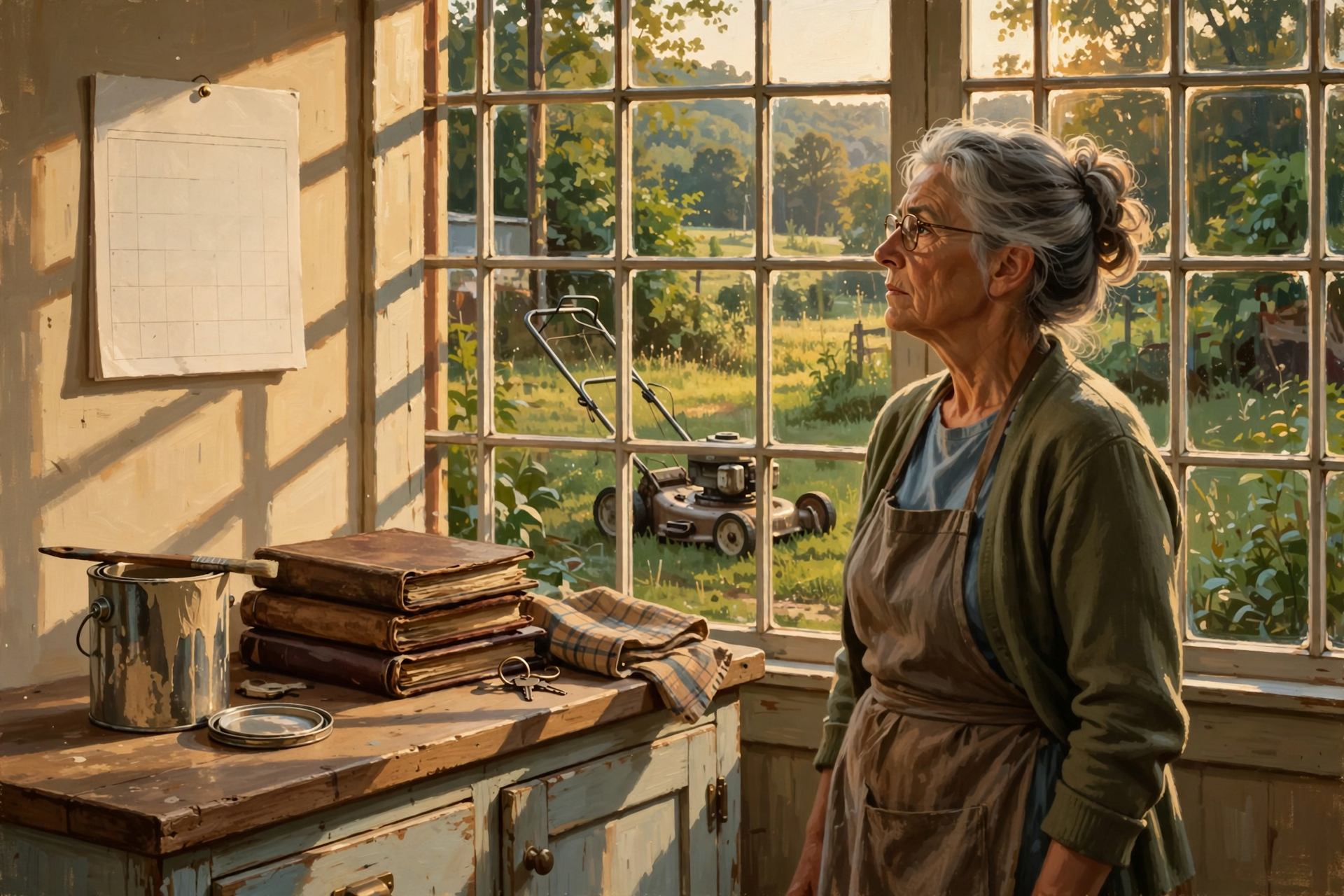
Unfortunately, the house needed painting.
And my sister wanted help organizing the family photographs.
And there was that rather unpleasant matter involving the lawn mower.
So I decided to postpone the bakery until the following spring.
Spring, I had discovered, was an excellent season for beginning new things.
Unfortunately, spring was also an excellent season for gardening.
The Calendar That Had No Someday
My husband, Arthur, was a practical man.
He wasn’t opposed to dreams.
He simply preferred dreams that occasionally involved leaving the house.
One evening, while I was reorganizing the bakery’s projected expenses for the seventeenth time, he approached my desk.
“Eleanor,” he said gently, “when are you going to open this bakery?”
“Someday, dear.”
“Which day?”
“When things settle down.”
“Things have been settling down for thirty years.”
“And I am making excellent progress.”
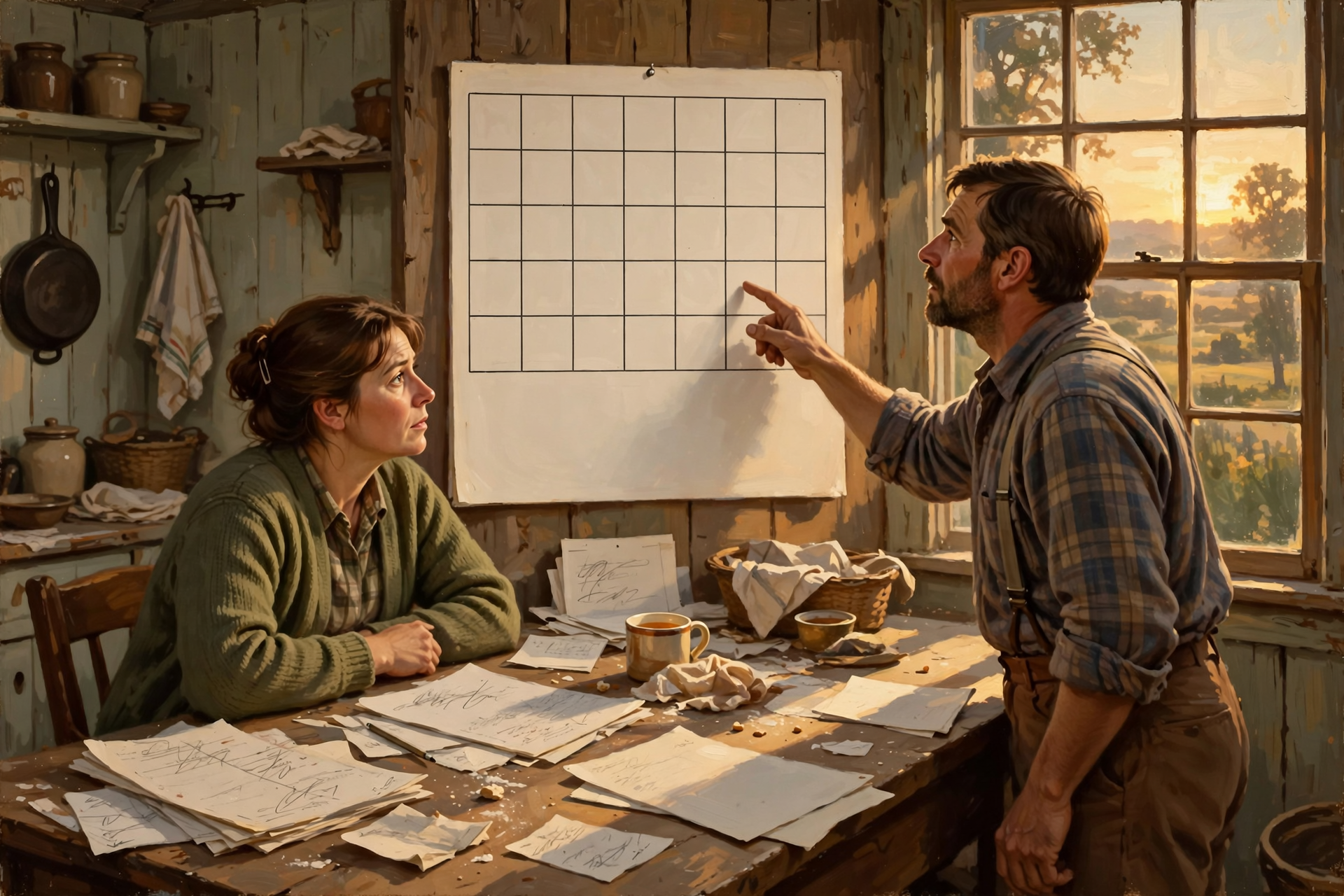
Arthur retrieved the calendar hanging beside the kitchen door.
“Here’s Monday,” he said.
“Yes.”
“Tuesday.”
“Naturally.”
“Wednesday, Thursday, Friday, Saturday, and Sunday.”
“I’m familiar with the days of the week, Arthur.”
He pointed to the empty space beneath the calendar.
“Where’s Someday?”
I looked at him sternly.
“Don’t be ridiculous. Someday isn’t a day of the week.”
He nodded.
“That’s what worries me.”
Tomorrow Is a Remarkably Convenient Place

Over the years, I discovered that tomorrow possesses several advantages over today.
Tomorrow is rarely interrupted.
Tomorrow has no unexpected visitors.
Tomorrow’s children are well behaved.
Tomorrow’s bills are paid.
Tomorrow’s weather is delightful.
Tomorrow’s plans always work.
And tomorrow’s Eleanor is remarkably energetic.
She is disciplined, confident, talented, and perfectly organized.
Tomorrow’s Eleanor can write an entire book before lunch and open a thriving bakery before supper.
Today’s Eleanor, unfortunately, has laundry.
So I continued making arrangements for Tomorrow’s Eleanor.
I purchased notebooks.
I revised the business plan.
I collected recipes from magazines.
I read books about successful entrepreneurs.
I attended a seminar titled “Turning Your Dreams Into Reality.”
It was most inspiring.
I returned home and purchased another notebook.
This one had a very attractive leather cover.
Surely, with such a notebook, success was inevitable.
A Most Unexpected Appointment
Eventually, as it does for everyone, life reached its final chapter.
I will spare you the particulars.
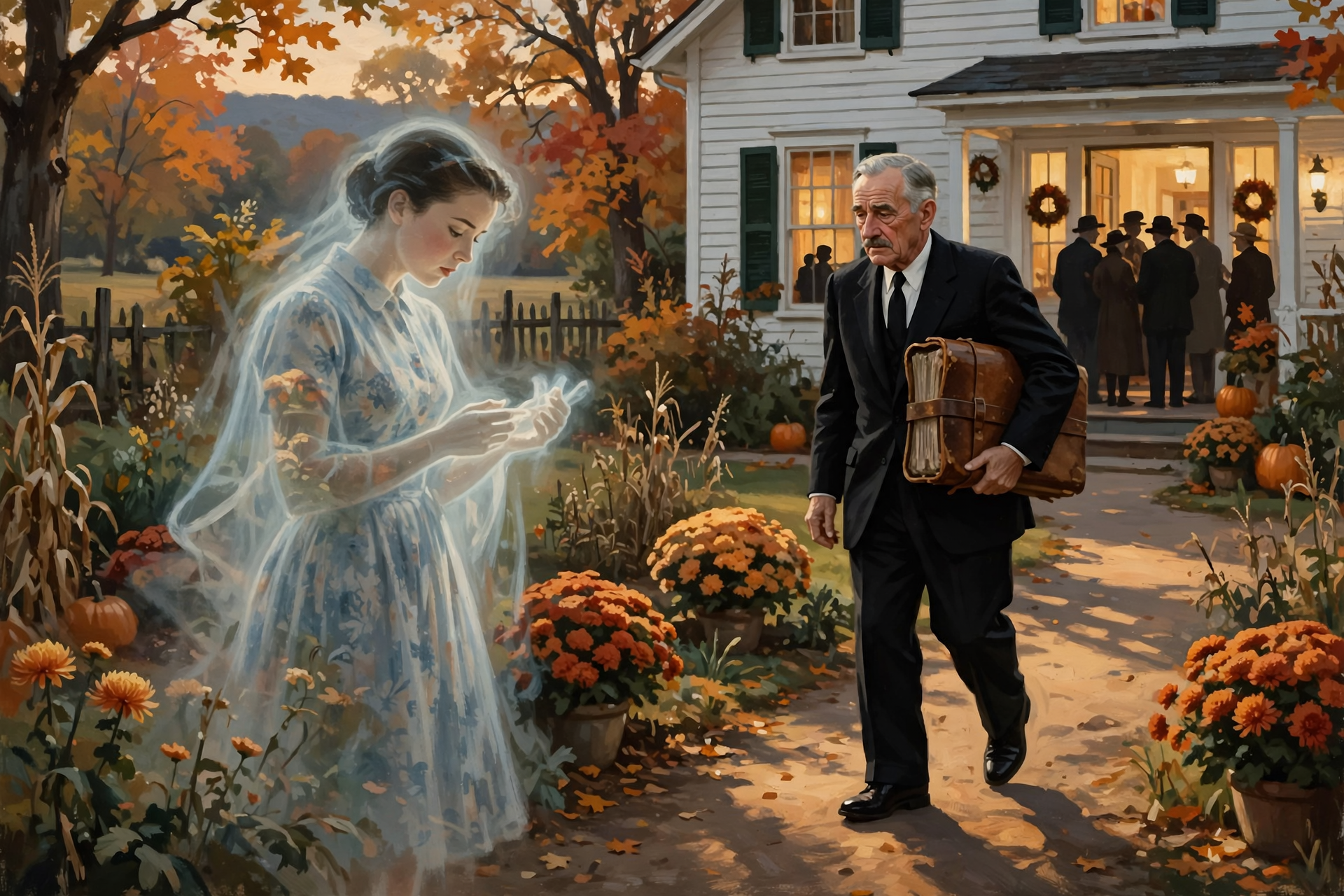
Suffice it to say that one October evening, I found myself standing outside my own house, looking through the window at a room full of people who could no longer hear me.
My notebooks remained on the shelf.
My unopened piano books sat beside the instrument.
My manuscript was still unfinished.
And in a wooden box beneath my desk were four hundred and ninety-seven pristine business cards.
Eleanor’s Bakery.
Opening Soon.
I waited for someone to announce the opening date.
Nobody did.
After a while, a distinguished gentleman approached along the garden path.
He wore an old-fashioned black suit, carried an enormous ledger, and had the weary expression of a man who had spent several centuries listening to excuses.
“Mrs. Eventually?” he asked.
“Yes?”
“Professor Mortimer Graves, Department of Deceased Dreams and Abandoned Opportunities.”
“How may I help you?”
“I’m here about your bakery.”
My spirits lifted.
“Wonderful! Are you interested in investing?”
He glanced at my translucent hands.
“Not precisely.”
The Graveyard of Almost
Professor Graves invited me to accompany him.
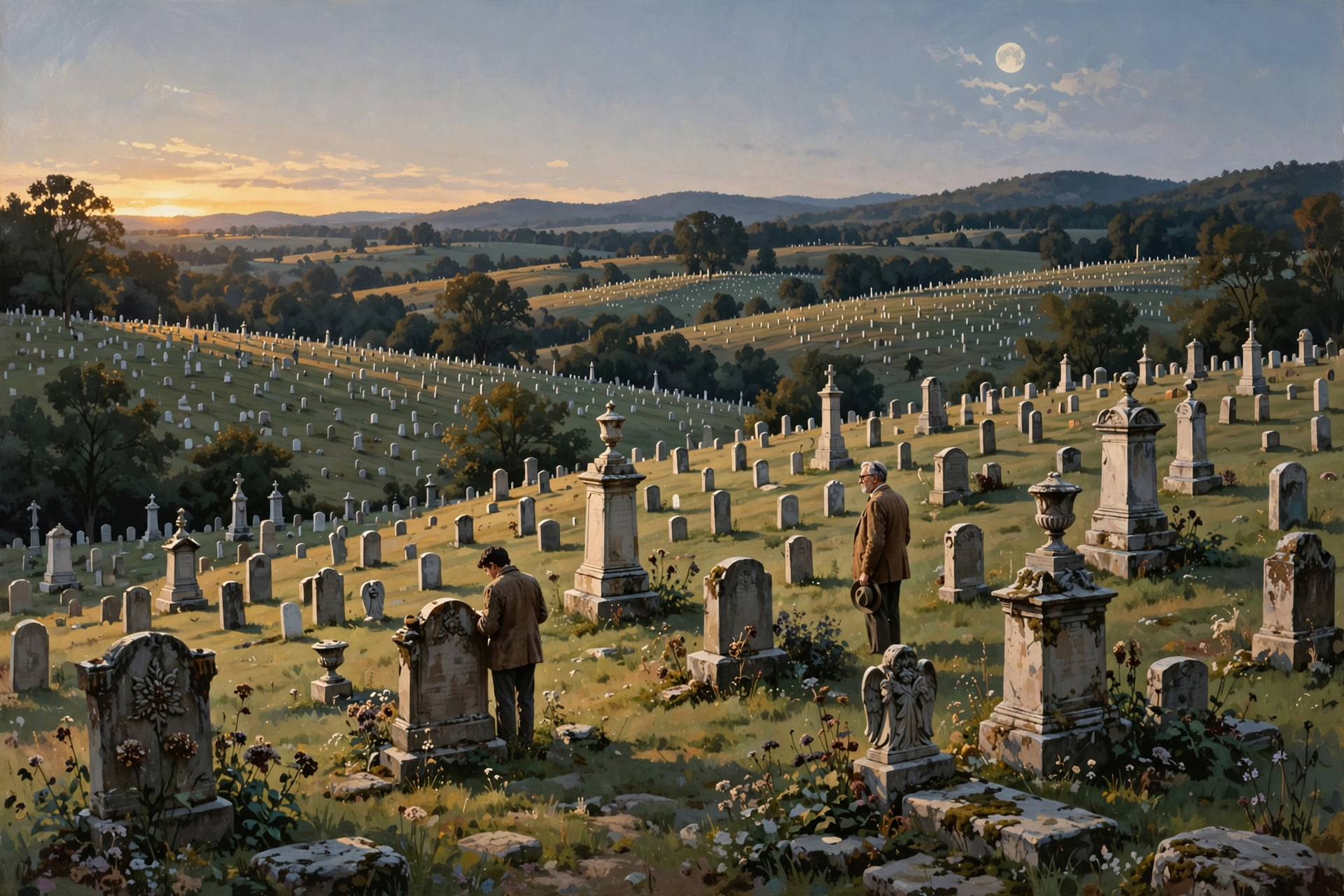
We traveled through a moonlit cemetery filled with crooked gravestones, abandoned workshops, and mysterious monuments.
One headstone bore the inscription:
HERE LIES A BRILLIANT INVENTION. ITS OWNER WAS AFRAID SOMEONE WOULD STEAL IT.
Another read:
HERE LIES A BUSINESS PLAN. IT ACQUIRED FORTY-SEVEN FEATURES AND FORGOT ITS ORIGINAL PURPOSE.
Nearby stood an elaborate marble memorial surrounded by conference chairs.
HERE LIES AN OPPORTUNITY. THE COMMITTEE REQUESTED ANOTHER MEETING.
“How unfortunate,” I remarked.
“Indeed,” said the professor.
Then we entered a different section of the cemetery.
It was the largest section of all.
Its headstones stretched into the darkness farther than I could see.
Some were small and weathered.
Others were magnificent monuments, lovingly decorated with flowers and inscriptions.
I read the nearest one.
I WAS GOING TO WRITE A BOOK.
The next said:
I ALWAYS MEANT TO LEARN THE GUITAR.
Another:
WE PLANNED TO START A FAMILY BUSINESS WHEN THINGS CALMED DOWN.
And another:
I WAS GOING TO CALL MY OLD FRIEND.
I stopped walking.
“Professor, what is this place?”
He removed his hat.
“The Cemetery of Almost.”
“Why are there so many graves?”
“Because, Mrs. Eventually, someday is an extraordinarily popular destination.”
He gestured toward the dark horizon.
“Unfortunately, almost nobody arrives.”
The Strange Truth About Procrastination
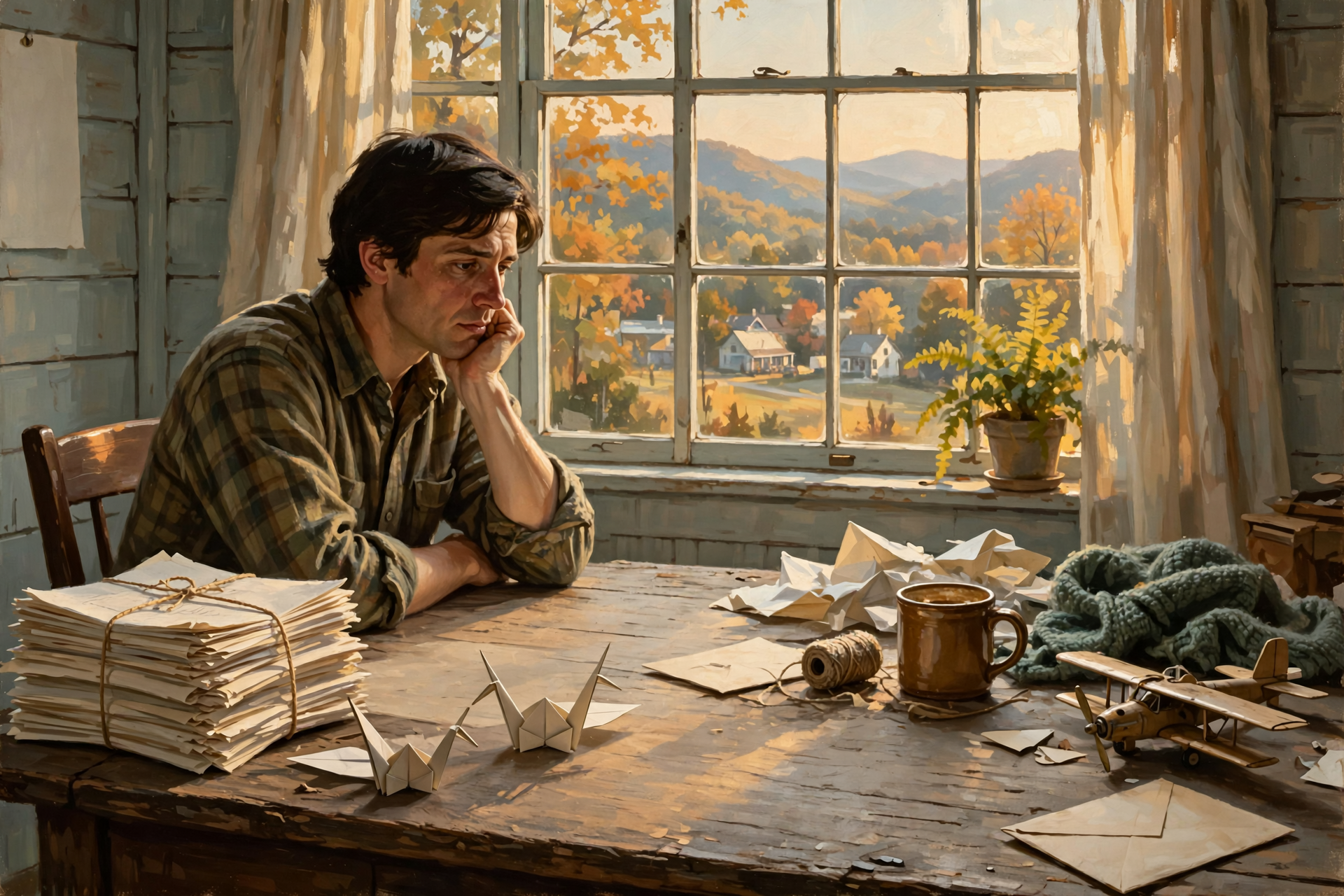
Now, dear reader, you might assume that people postpone important goals because they are lazy.
Sometimes they may simply lack motivation.
But the science of procrastination paints a considerably more complicated picture.
In a 2007 meta-analysis published in Psychological Bulletin, researcher Piers Steel reviewed evidence from hundreds of relationships between procrastination and possible contributing factors.
The findings identified several important predictors, including how unpleasant a task seemed, how distant its consequences were, confidence in one’s ability, and susceptibility to distractions.
In other words, putting something off isn’t always a simple failure to manage a calendar.
It can involve expectations, motivation, competing rewards, uncertainty, and how people respond to difficult work.
Researchers Fuschia Sirois and Timothy Pychyl explored another important explanation in a 2013 paper published in Social and Personality Psychology Compass.
They argued that procrastination often involves short-term emotional relief.
A task feels unpleasant, intimidating, frustrating, or overwhelming.
Postponing it makes us feel better right now.
But the unfinished task remains, and the consequences are transferred to our future selves.
It’s a peculiar arrangement.
Present-day Eleanor gets relief.
Tomorrow’s Eleanor gets the work.
And Tomorrow’s Eleanor, being an entirely imaginary woman of unlimited capability, never complains.
Why Planning Can Feel Like Progress
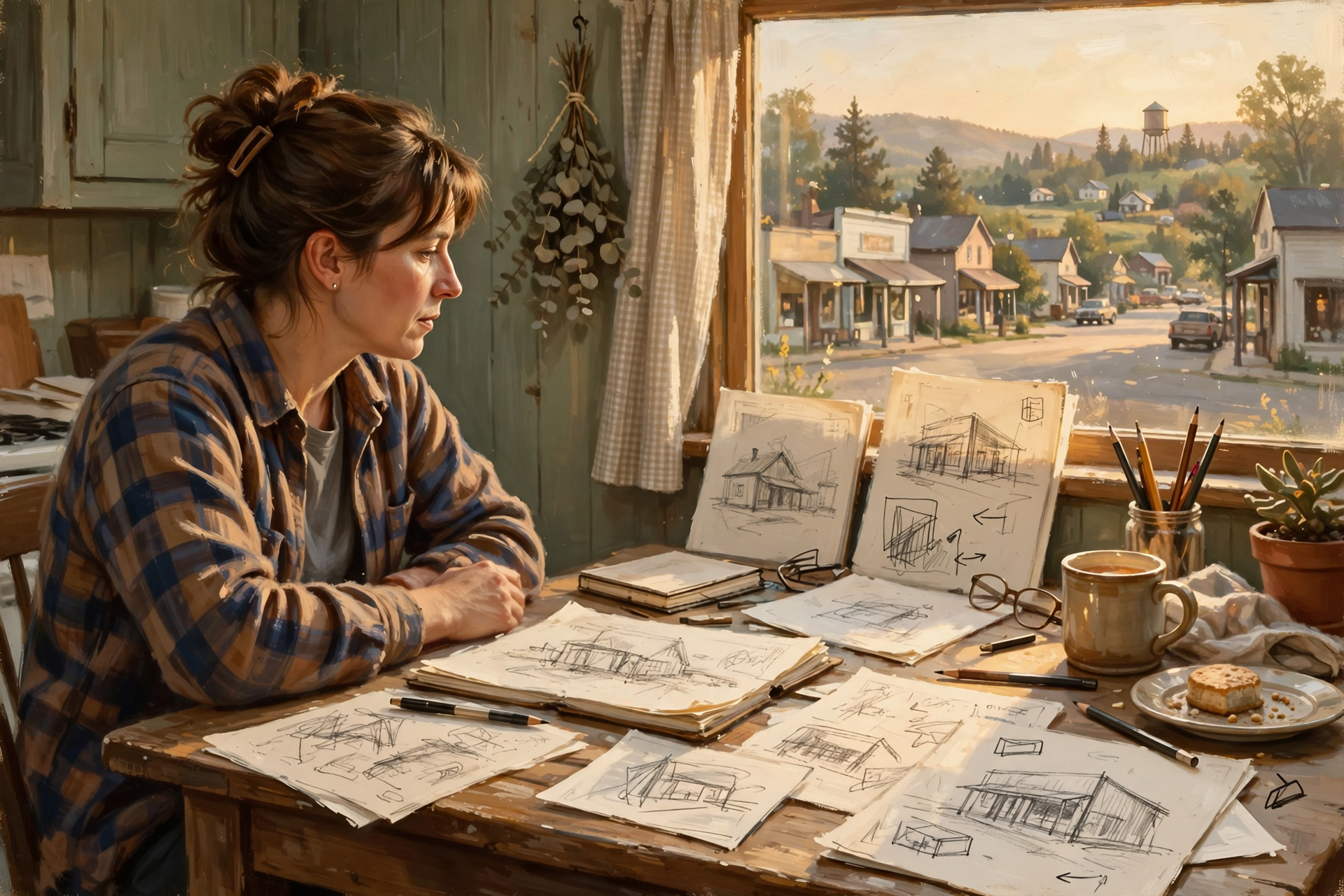
One of the more subtle dangers of procrastination is that preparation can resemble accomplishment.
Researching a business idea may be useful.
Writing a plan may be useful.
Comparing alternatives, examining costs, and identifying risks are often essential.
But planning can also become an activity we retreat into when the next meaningful step feels uncomfortable.
Perhaps we’re afraid the idea won’t work.
Perhaps we worry that people will criticize it.
Perhaps we don’t know how to begin.
Or perhaps the imagined version of the opportunity is more enjoyable than the difficult reality of bringing it into existence.
I certainly enjoyed imagining Eleanor’s Bakery.
In my imagination, every cake was perfect.
Every customer was delighted.
Every employee arrived on time.
And the cash register never broke.
Actual bakeries, I have since learned, occasionally involve burnt bread, difficult customers, and broken equipment.
One might reasonably wish to avoid such things.
But avoiding all possible disappointment also means avoiding the possibility of learning what might work.
Not Every Delay Is Procrastination

Professor Graves insists that I explain something important here.
Not every postponed idea belongs in the Cemetery of Almost.
Sometimes waiting is the correct decision.
A person may lack the money required to start a business safely.
A family may have responsibilities that deserve higher priority.
A proposed invention may depend on technology that isn’t yet affordable.
A community project may require volunteers, facilities, permissions, or partnerships that aren’t available.
And sometimes careful research reveals that an idea simply isn’t worth pursuing.
Those are not automatically examples of procrastination.
They may be examples of sound judgment.
The difference is whether the postponement is based on identifiable reasons and whether there is a meaningful way to reconsider the decision.
“I cannot afford to begin this business now, but I’ll reconsider when I have adequate savings” is a concrete constraint.
“I’ll start when everything is perfect” is a destination that may never exist.
“The necessary equipment is too expensive, but I’ll review the opportunity every six months” creates a path to re-evaluation.
“I’ll get around to it someday” creates no path at all.
A deferred idea can remain a valuable opportunity.
It can be documented, independently evaluated, and periodically reconsidered as technology, resources, costs, and circumstances change.
Sometimes the appropriate decision is not yes or no.
It is not yet.
The Difference Between a Dream and an Appointment

One of the most useful findings in goal-setting research concerns what psychologists call implementation intentions.
Rather than simply deciding to accomplish something, a person identifies a particular situation and the action they will take when it occurs.
For example:
“If it’s Tuesday at seven in the evening, I’ll spend thirty minutes outlining the first chapter.”
Or:
“When I finish my morning coffee on Saturday, I’ll contact one potential customer and ask about the problem I’m trying to solve.”
Researchers Peter Gollwitzer and Paschal Sheeran examined this approach in a 2006 meta-analysis involving 94 independent tests.
Their analysis found that implementation intentions had a meaningful positive effect on goal attainment.
A broader 2024 meta-analysis also reported benefits across hundreds of tests, while identifying differences in effectiveness depending on the structure of plans and other factors.
The practical lesson is straightforward.
A goal describes what you hope to accomplish.
An implementation intention describes what you will do when a specific opportunity to act occurs.
It doesn’t guarantee success.
But it makes the next step considerably more concrete.
As Arthur used to say, the difference between Someday and Tuesday is that Tuesday actually appears on the calendar.
Six Ways to Keep Someday from Becoming Never

- Identify the real next action. Instead of writing “start a business,” write “talk with three potential customers about the problem.” Make the next step specific enough that you can recognize when it is complete.
- Separate evaluation from execution. You don’t have to commit to building an idea simply because you’re willing to examine it. A short, independent evaluation may reveal whether the opportunity deserves additional investment.
- Name the obstacle honestly. Is the problem money, technology, time, skills, uncertainty, or fear? Different obstacles require different solutions.
- Make a specific appointment with the work. Identify when, where, and how you will take the next step. If the project matters, give it a real place in the calendar rather than an imaginary one.
- Preserve ideas that genuinely need to wait. Record why the opportunity isn’t practical now, what would have to change, and when or under what circumstances it deserves re-evaluation.
- Allow yourself to retire an idea deliberately. Not every dream needs to become an obligation. An idea can be meaningful even when you decide that pursuing it is no longer appropriate.
The goal is not to turn every passing thought into another project.
Nor is it to make people feel guilty for having interests they never fully pursue.
The goal is to recognize the difference between a dream you enjoy imagining, an opportunity you intend to investigate, and a commitment you’re actually prepared to make.
Those are three different things.
And there is nothing wrong with knowing which one you’re dealing with.
The Opportunity Cost of Waiting
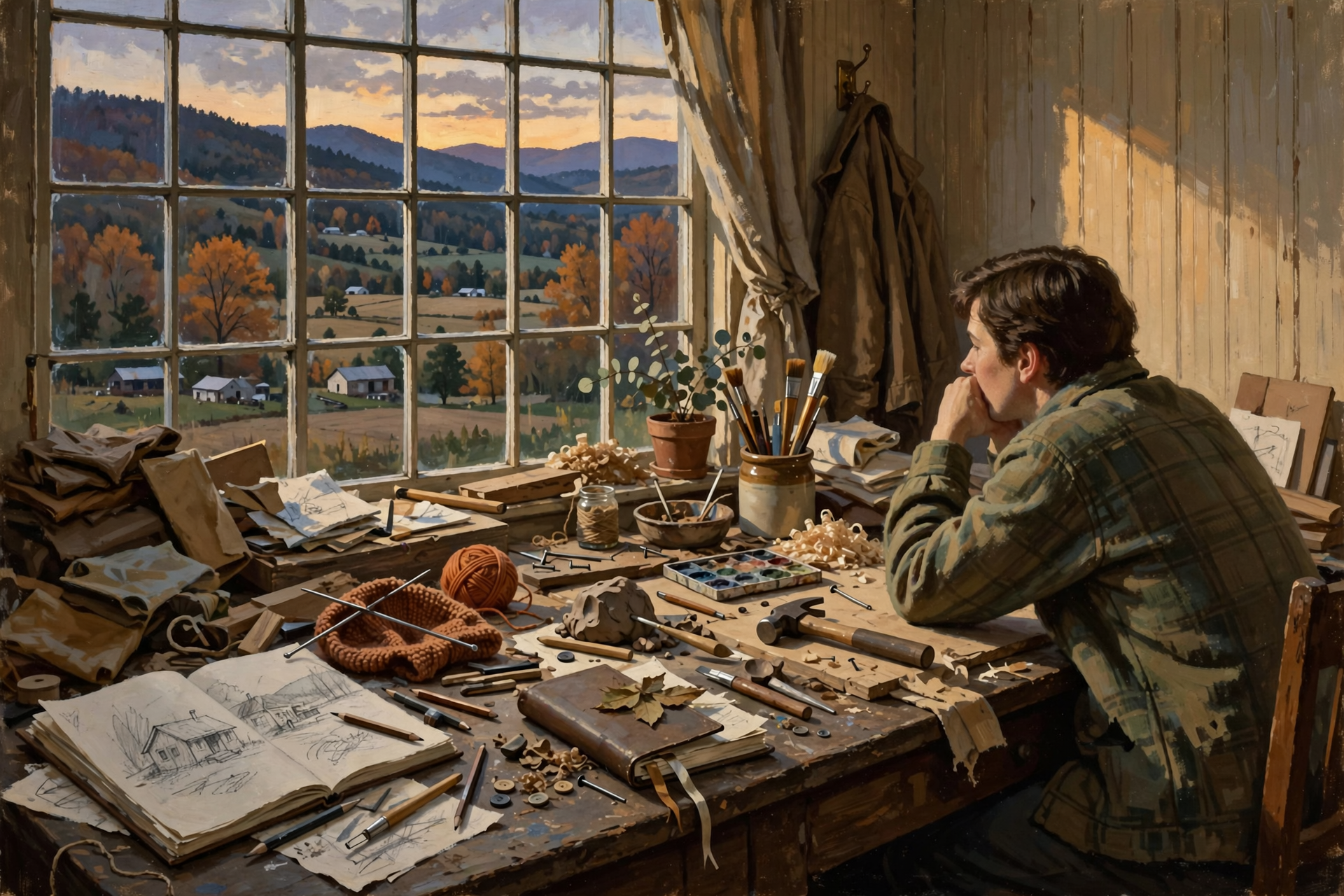
There is another consideration worth mentioning.
Every decision to postpone something creates the possibility of an opportunity cost.
Time spent on one activity cannot simultaneously be spent on another.
A delayed business idea may miss a market opportunity.
A delayed community project may leave a need unmet.
A delayed invention may be overtaken by a competing solution.
But beginning an unsuitable project also has opportunity costs.
Money and attention invested in a poor idea cannot be invested elsewhere.
That is why good evaluation matters.
The objective is not to begin everything immediately.
It is to make better-informed choices about what deserves attention now, what deserves preservation for later, and what deserves to be set aside.
Some opportunities have short windows.
Others remain available for years.
And some become more attractive as new technologies and resources emerge.
The important thing is to understand the difference.
Certificate of Idea Death

Department of Deceased Dreams and Abandoned Opportunities
Case Number: 004
Name of Deceased: Eleanor’s Bakery — Opening Soon
Original Purpose: Establish a welcoming neighborhood bakery where residents could gather, enjoy homemade food, and exchange stories.
Official Cause of Death: Indefinite postponement, complicated by chronic preparation and an excessive dependence upon favorable circumstances.
Contributing Conditions: Seventeen revisions of the business plan, five hundred business cards, numerous legitimate family responsibilities, and an inability to distinguish necessary preparation from avoidable delay.
Last Known Words: “I’ll get around to it when things settle down.”
Could This Death Have Been Prevented? Possibly. A small experiment, honest assessment of constraints, or scheduled reconsideration might have provided a path forward. Success was never guaranteed.
Recommended Treatment: Evaluate the idea independently, identify genuine obstacles, define a manageable next step, and preserve the reasoning behind any decision to defer.
Conditions for Resurrection: A willing successor, evidence of community demand, adequate resources, and a feasible plan appropriate to current circumstances.
Final Disposition: Original business unrealized. Recipes, plans, and community aspirations preserved for possible future use.
Certified by Professor Mortimer Graves, Senior Archivist.
A Thought for the Sequatchie Valley

Across the Sequatchie Valley, people have ideas they’ve carried for years.
Some want to start small businesses.
Some dream of opening workshops, restaurants, or roadside stands.
Some have inventions they’d like to develop.
Some want to preserve family histories, restore old buildings, teach skills, or establish community programs.
And some have simply wondered whether there’s a better way to solve a familiar problem.
Not every one of those ideas should become a project.
But each can be examined on its merits.
A person may discover that the idea is practical today.
Another may discover that better tools or more affordable technology will be necessary.
Someone else may find that an existing business or organization is already addressing the need.
And another may decide that, while the idea is worthwhile, pursuing it isn’t the right choice for their circumstances.
Those are all useful conclusions.
What we should be careful about is allowing ideas to disappear simply because nobody took the time to consider them.
Have an Idea You’ve Been Meaning to Explore?

If you live in the Sequatchie Valley and have a business idea, invention, personal project, or community opportunity you’d like to examine, I’d be glad to help you think it through.
That might mean discussing the idea, identifying obstacles, comparing alternatives, locating useful resources, or determining whether today’s tools and technology make it more practical than it once was.
Sometimes the best outcome is a small experiment.
Sometimes it’s a plan for later.
And sometimes it’s an informed decision not to proceed.
There is no requirement to turn every idea into a business or every conversation into a commitment.
You can reach me through the contact information on Dunlap.Today, through the website, or through Dunlap.Today on Facebook.
If you’re looking for businesses, services, or potential collaborators, you can also explore Dunlap.Directory.
Because sometimes the first useful step isn’t building something.
It’s finding out whether the idea deserves to be built at all.
Tomorrow: Night of the Living Projects

Our Halloween series continues Friday with Night of the Living Projects: They Were Finished, but Nobody Used Them.
Dr. Ada Afterlaunch will guide us through a most unsettling cemetery, where completed projects wander the earth in search of customers, users, and proof that they accomplished anything useful.
These unfortunate creatures have passed every test.
Their documentation is immaculate.
Their dashboards are beautiful.
Their release notes are comprehensive.
But something terrible has happened.
Nobody uses them.
And in the world of unfinished opportunities, a project can be technically alive while its purpose is very much dead.
From the Gravekeeper’s Ledger

Professor Graves walked beside me as the first light of dawn began to appear over the cemetery.
“Eleanor,” he said, “there’s something I want to show you.”
He led me to a small stone bench overlooking a quiet garden.
On the bench lay an old wooden recipe box.
I recognized it immediately.
“Those are my recipes!”
“Yes.”
“And my business plan!”
“Indeed.”
“And my grandmother’s instructions for making cinnamon rolls!”
He smiled.
“Your granddaughter found them.”
I stared at him.
“What did she do?”
“She started making cinnamon rolls for neighbors.”
“Really?”
“Then she began taking small orders.”
“And?”
“She’s considering whether a bakery might be practical.”
I was speechless.
“She hasn’t decided yet,” the professor continued. “She’s examining the costs, talking with customers, and trying to determine whether it makes sense for her.”
“So she might open my bakery?”
“Perhaps. Or perhaps she’ll decide not to. The choice belongs to her.”
I considered this for a moment.
“And that wouldn’t disappoint you?”
The professor shook his head.
“My dear Eleanor, the purpose of preserving an opportunity isn’t to require someone else to pursue it.”
He placed the recipe box in my hands.
“It’s to give them a choice they might not otherwise have known existed.”
I looked out over the cemetery.
For the first time in thirty years, I felt no particular need to make another plan.
Professor Graves opened his ledger and wrote one final inscription:
HERE LIES A DREAM THAT NEVER FOUND ITS DAY. ITS STORY, HOWEVER, MAY YET HELP SOMEONE ELSE FIND THEIRS.
He closed the book.
And somewhere beyond the cemetery gates, in a little kitchen filled with the smell of cinnamon, a young woman was asking her first customer what they thought of the recipe.
About This Halloween Series

Where Ideas Go to Die is a six-part Halloween series from Dunlap.Today exploring the unusual ways promising ideas, inventions, businesses, and opportunities disappear before reaching their potential.
Each installment features a fictional narrator, a darkly humorous story, and practical lessons about creativity, entrepreneurship, independent evaluation, and recognizing when an idea deserves a second chance.
The series runs October 26–31, 2026, concluding on Halloween with a visit to the Gravekeeper and his collection of ideas waiting for the right conditions to return.
Sources and Further Reading

- Steel (2007): The Nature of Procrastination — A Meta-Analytic and Theoretical Review of Quintessential Self-Regulatory Failure — A research synthesis examining predictors and explanations of procrastination.
- Sirois and Pychyl (2013): Procrastination and the Priority of Short-Term Mood Regulation — Consequences for Future Self — Explores procrastination as short-term emotional relief at the expense of future goals.
- Pychyl and Sirois (2016): Procrastination, Emotion Regulation, and Well-Being — Discusses the relationship between emotional regulation, task avoidance, and self-control.
- Gollwitzer and Sheeran (2006): Implementation Intentions and Goal Achievement — A Meta-Analysis of Effects and Processes — Research examining how specific if-then plans can support goal attainment.
- The When and How of Planning (2024) — Meta-analysis examining the effects and characteristics of implementation intentions across 642 independent tests.
- Gollwitzer and Sheeran (2025): Psychology of Planning — Reviews the mechanisms and uses of if-then planning.
- Eckert and colleagues (2016): Overcome Procrastination — Enhancing Emotion Regulation Skills Reduce Procrastination — Experimental research examining emotion-regulation training and procrastination.

Know about an upcoming event or story in the Sequatchie Valley? Submit it here.




0 Comments