
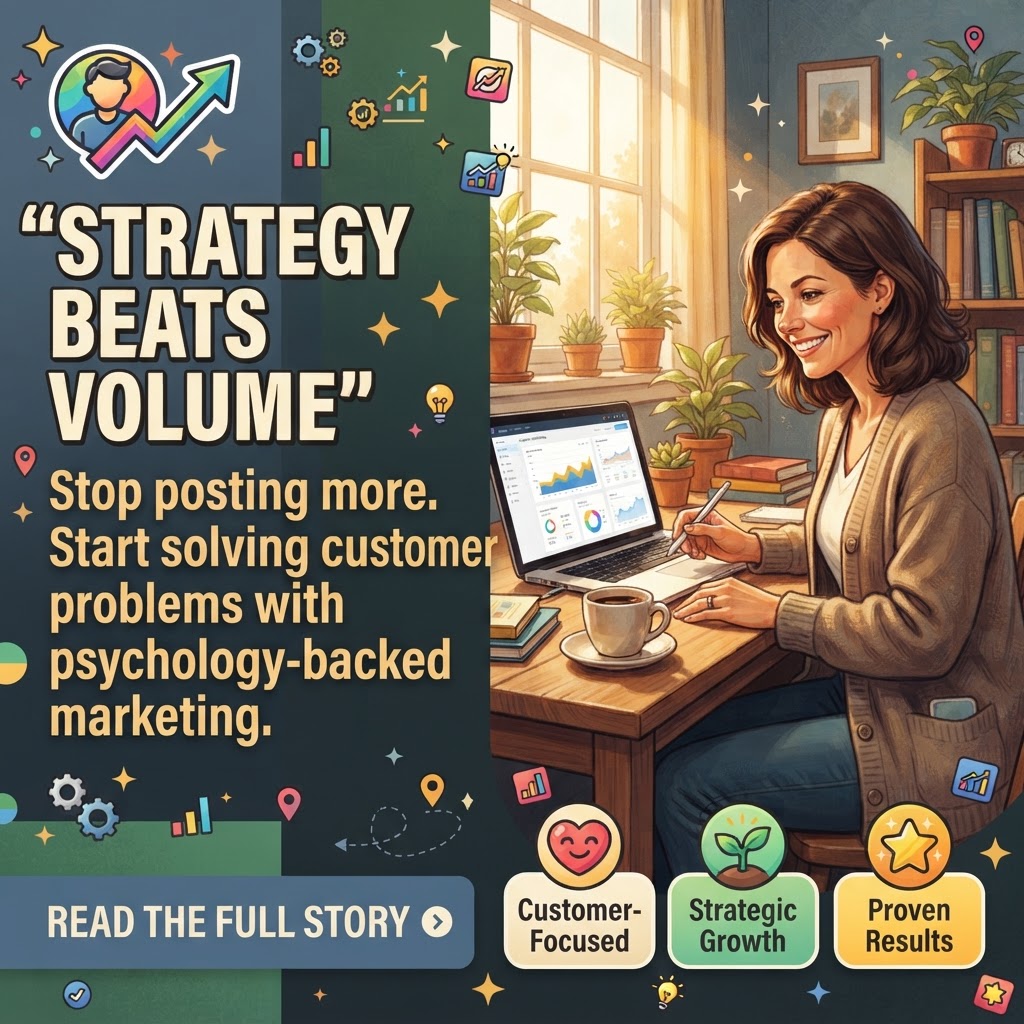
📱 Local Business Owners: Why “Posting More” To Social Media Won’t Grow Your Customer Base
As small businesses across the Sequatchie Valley navigate an increasingly crowded digital landscape, many are discovering that traditional social media strategies—simply posting more content—no longer deliver the results they once did. A growing conversation among local entrepreneurs is shifting focus from volume to strategy, raising important questions about how community businesses can adapt to changing algorithms and consumer behavior.
🎯 Why This Matters for Local Business Owners
If you’re running a local business in the Sequatchie Valley, the challenge is real: organic social media reach has declined dramatically. 📉 According to current marketing analysis, only about 5% of your followers typically see what you post—meaning 95% of your audience never encounters your content at all. For small business owners already stretched thin managing inventory, staff, and daily operations, this reality can feel discouraging. But understanding why posting more doesn’t work is the first step toward building a system that actually does.
The shift away from organic reach isn’t a failure on your part. It’s a fundamental change in how social platforms operate. Algorithms now prioritize paid content and engagement-driven posts over simple announcements. For local businesses competing with national brands and each other for attention, this means the old playbook—consistent posting and hoping for visibility—no longer cuts it. ✨
💡 A Different Approach: The Business Growth Formula
Rather than increasing posting frequency, marketing strategists are now recommending a four-part framework that shifts how local businesses communicate with potential customers:
Stop talking about your business. Start talking about their problem. 🤝 This is perhaps the most counterintuitive shift. Instead of focusing your content on what you sell, successful businesses are identifying the specific challenges their customers face—and addressing those challenges directly. A local restaurant might stop posting photos of dishes and instead share solutions to “What’s for dinner when you’re too tired to cook?” A fitness studio might shift from posting class schedules to addressing “How do I stay consistent with my health goals?” When customers see their own problems reflected in your content, they’re far more likely to engage.
Activate the 4 buyer psychology triggers. 🧠 Consumer psychology research identifies four primary drivers of purchasing decisions:
- Emotional Trigger (The Desire): People buy based on feelings—status, comfort, security, belonging—and justify purchases with logic afterward. A luxury watch isn’t about telling time; it’s about the feeling of achievement it represents.
- Rational/Logical Trigger (The Justification): Once emotion sparks interest, buyers look for facts: features, ROI, specifications, and value. They need logical reasons to feel confident in their choice.
- Trust & Authority Trigger (Risk Reduction): Buyers fear making mistakes. Reviews, testimonials, guarantees, and clear policies reduce perceived risk and make purchasing feel safe.
- Urgency & Scarcity Trigger (Action): Without a reason to act now, people procrastinate. Limited-time offers, low-stock warnings, or registration deadlines push decisions forward.
Show up consistently, even when you’re busy. ⏰ Consistency matters—but consistency in delivering value, not just posting frequency. Local businesses that maintain regular, strategic communication (whether weekly, bi-weekly, or monthly) build stronger relationships with their audience than those who post sporadically.
Pay to play strategically. 💰 The reality for most local businesses is that organic reach alone won’t sustain growth. Strategic paid promotion—even small budgets—can amplify content to the right audience at the right time. This doesn’t mean spending recklessly; it means investing intentionally in content that’s already proven to resonate.
❓ Questions for Local Business Owners to Consider
As you think about your own business’s marketing approach, consider these questions:
- What specific problem does your business solve for customers? How often are you communicating that problem-solution connection versus just promoting your products or services?
- Which of the four buyer triggers (emotional desire, logical justification, trust-building, urgency) are you currently using in your marketing? Which ones are you missing?
- How much of your marketing budget is allocated to organic (unpaid) content versus strategic paid promotion? Is that balance working for you?
- Are you showing up consistently with your audience, or does your posting pattern reflect your availability rather than your customers’ needs?
- What would change in your business if you could reach even 10% more of your target customers with the right message at the right time?
🌐 What This Means for the Sequatchie Valley Business Community
Small businesses are the backbone of the Sequatchie Valley economy. 🏘️ When local owners invest time and resources into marketing that doesn’t work, it affects not just their bottom line—it affects their ability to hire, expand, and contribute to the community. Conversely, when local businesses adopt smarter marketing strategies, they grow, hire locally, and strengthen the entire regional economy.
This shift toward strategy-based marketing also levels the playing field somewhat. A small local business with a clear understanding of buyer psychology and a modest paid advertising budget can now compete more effectively than a business that simply posts more frequently. It rewards thoughtfulness and strategy over volume and hope.
🔄 What Happens Next
For local business owners, the next step isn’t to post more—it’s to audit your current marketing approach. Ask yourself: Are you talking about your business, or are you talking about your customers’ problems? Are you using all four buyer psychology triggers, or just one or two? Are you showing up consistently with a strategic plan, or reactively when you have time?
Many business owners are beginning to work with marketing strategists or consultants to implement these frameworks. Others are joining peer groups or business associations where they can learn from each other’s successes and challenges. The key is recognizing that the old approach no longer works—and being willing to try something different. 🚀
💬 A Broader Conversation
This shift in marketing strategy reflects a larger truth about modern business: success requires understanding your customer, not just broadcasting your message. For the Sequatchie Valley business community, that means investing in deeper customer relationships, clearer communication about the value you provide, and strategic use of available tools—rather than simply doing more of what used to work.
Local business owners who embrace this approach are likely to see stronger customer engagement, better conversion rates, and ultimately, more sustainable growth. And that benefits everyone in the community. ✨
🤔Source
General Thoughts By The Author

📰Other Stories
- 🏜️ Canyon Lodging Welcomes Visitors Year-Round, Rain or Shine
- 💚 Valley Resident Calls for More Positive Community Stories—and It’s Resonating
- 🏍️ Country Boys Laser Engraving Shifts Focus to Vintage Vehicles and Custom Designs
- 🚗 Sequatchie Valley VW Rally ’26 Hits 70 Pre-Registrations Across 9 States — 67 Days to Go
- 🎓 Van Buren County Schools Hiring PreK Educational Assistant
- 🐷 Livestock Processing Appointments Now Booking — Plan Ahead for Butcher Season
- 🎉 Vendor Pop-Up Event Coming to Van Buren County This Saturday




0 Comments