
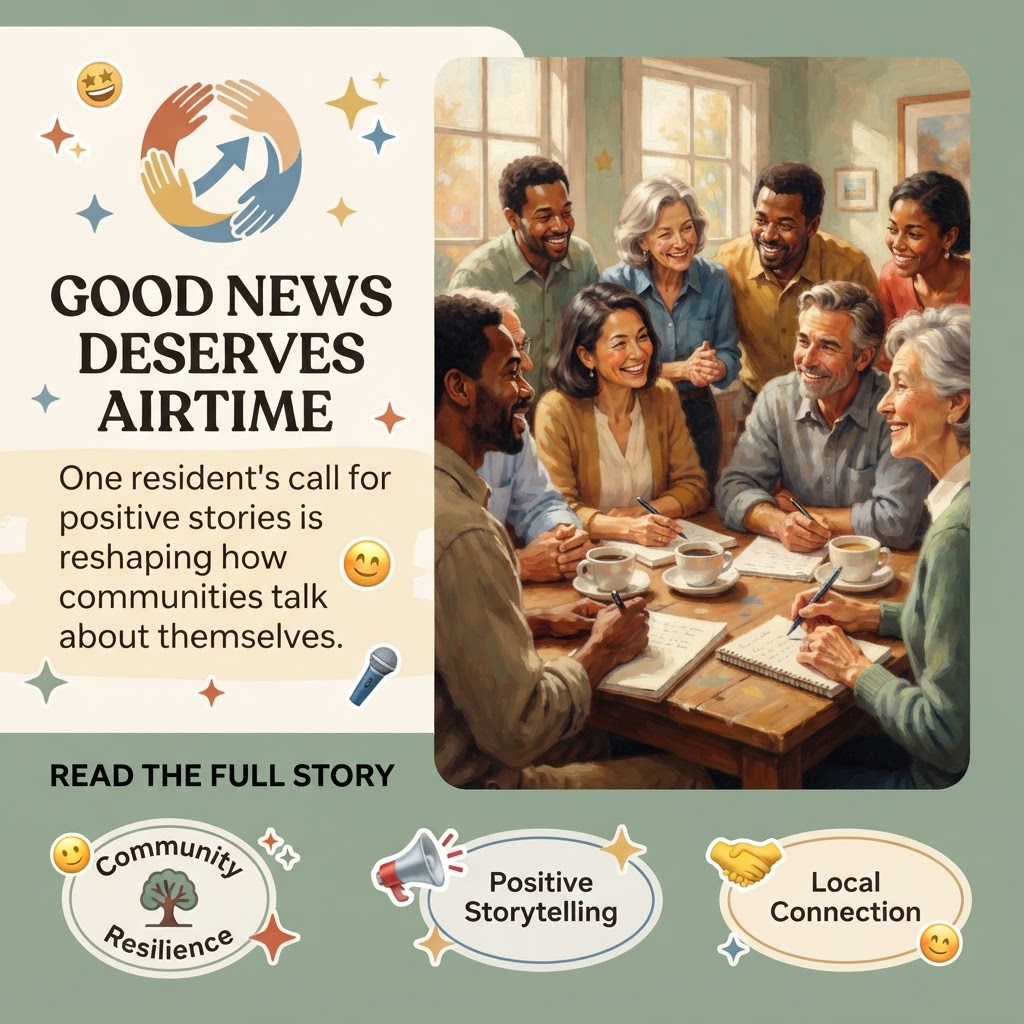
💚 Valley Resident Calls for More Positive Community Stories—and It’s Resonating
In a moment that reflects a broader conversation happening across the Sequatchie Valley, one community member recently posted a simple but powerful request: more good news. The message—”Iron sharpens iron. Let’s try lifting each other”—captures something many residents feel about their valley and how local conversations could shift.
🤔 Why This Matters
The post touches on something fundamental to how communities function. When local conversations focus heavily on problems, challenges, and conflicts, residents can begin to see their valley through a lens of scarcity rather than abundance. This shapes how people talk about where they live, how they introduce their community to others, and whether they feel motivated to invest time and energy in strengthening local relationships. A deliberate choice to highlight positive stories—achievements, kindness, growth, and connection—can shift that narrative without ignoring real challenges.
❤️ What the Post Reveals About Community Sentiment
The message reflects a perspective held by many in the valley: that good things are happening here, often quietly, and they deserve attention. The phrase “There is far more good than bad” suggests that residents recognize both the real difficulties communities face and the genuine strengths that often go unnoticed in public conversation. This kind of observation often emerges when someone feels a community is being defined by its struggles rather than its resilience.
🌄 Community Threads: How Stories Shape Identity
Local stories—the ones shared in community groups, at church gatherings, at the coffee shop, and around dinner tables—form the invisible network that holds a community together. They tell residents who they are, what they value, and what’s possible. When positive stories circulate, they reinforce community identity and give people models of behavior and connection to follow. When only problems are discussed, residents may feel disconnected from the good happening around them, even when it’s abundant.
The call for more positive posts suggests that residents want to see the full picture: the volunteer who showed up, the business that hired locally, the neighbor who helped, the student who succeeded, the organization that made a difference. These stories matter not because they’re naive or ignore real challenges, but because they’re part of the complete truth about any community.
💡 What Residents Should Know
This post was shared in a community group focused on local news and conversation—a space where residents actively seek connection and information about their valley. The response (at least one “love” reaction) suggests that the message resonated with others. This is a signal that community members are thinking about how local conversations happen and what they want those conversations to include.
🔄 What Happens Next
Whether this single post leads to a broader shift in how the community shares stories remains to be seen. However, it plants a seed: residents are aware of the tone of local conversation and are willing to advocate for change. Community groups, local media, and residents themselves now have an invitation to consider what stories they’re telling and whether they’re telling the whole story.
📍 Questions Worth Asking
- What positive stories are happening in your neighborhood or circle right now that deserve to be shared more widely?
- How might regular sharing of good news change how residents feel about their community and their role in it?
- What barriers might prevent positive stories from being shared as readily as challenges or complaints?
- How can community groups, local organizations, and residents work together to ensure both honest conversation about challenges and celebration of strengths?
🌱 Long-Term Community Impact
Communities that deliberately cultivate positive storytelling often see measurable benefits: stronger volunteer participation, increased local business support, better retention of young people and families, and deeper social connections. This doesn’t mean ignoring problems—it means ensuring that the full narrative of community life is told. Over time, a culture that celebrates and shares good news can shift how residents see themselves and their valley, making them more likely to invest in its future.

0 Comments