
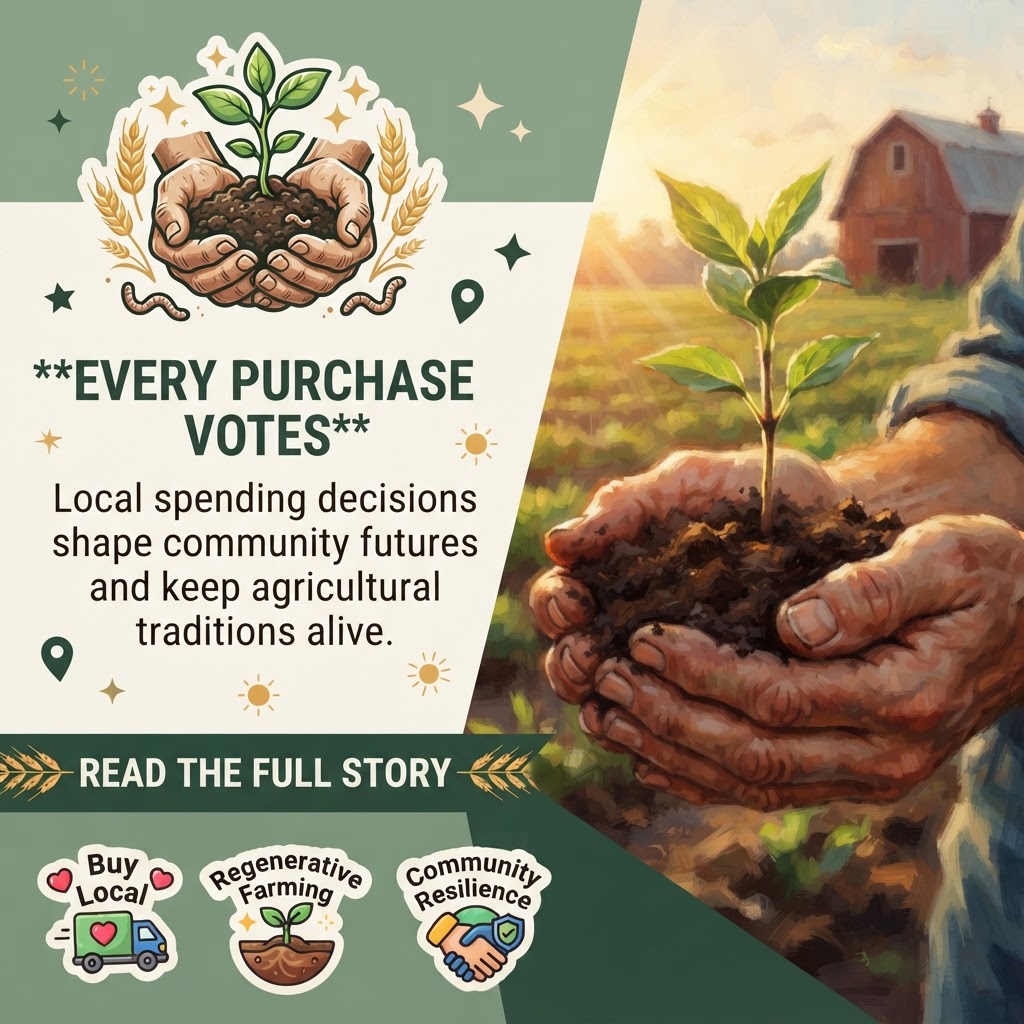
🌾 Switchgrass Farm Advocates for Local Spending in Sequatchie Valley — “Every Purchase Is a Vote”
A local farm operator is making a case for why where Sequatchie Valley residents spend their money matters—not just for their wallets, but for the future of the region itself. The message reflects a growing conversation across Tennessee about supporting small farms, local mills, and artisans who keep rural communities alive.
💭 Why This Matters
When residents choose to buy from local farms, mills, and makers instead of larger commercial operations, they’re making a choice about what kind of community they want to live in. 🏘️ That’s the core idea behind Switchgrass Farm‘s recent message: spending decisions shape local economies, preserve agricultural traditions, and keep money circulating within the region rather than flowing out to distant corporations.
For Sequatchie Valley, where agriculture and small-scale food production have deep roots, this message carries particular weight. The region’s identity is tied to its farms, its natural resources, and the people who work the land. When local residents support these businesses, they’re investing in that identity—and in the economic survival of neighbors who depend on farming and craft production.
🤝 Community Connections
Switchgrass Farm‘s call to “buy local” connects to a broader network of relationships already present in the Sequatchie Valley: farmers markets, farm-to-table restaurants, local food cooperatives, agricultural extension services, and community organizations focused on food security and rural sustainability. 🌱 These institutions already exist in the region, and they share a common mission—keeping food production local and keeping money in local hands.
The message also resonates with churches, civic groups, and families who have long traditions of supporting local agriculture. For many Sequatchie Valley residents, buying from local farms isn’t new—it’s a continuation of how their families have always shopped and eaten. What’s changing is the intentional framing of that choice as an act of community building.
❤️ Human Impact
Small farmers and artisans in the Sequatchie Valley face real economic pressure. When residents choose to buy their products—whether it’s produce, milled flour, or handmade goods—they directly support the livelihoods of their neighbors. 👨🌾 That support can mean the difference between a farm staying open or closing, between a family staying in the community or relocating for work.
For consumers, the impact is different but equally real. Buying local often means fresher food, knowing where products come from, and building relationships with the people who produce them. It can also mean higher prices in some cases—but the trade-off is quality, transparency, and the knowledge that money is staying in the community.
🏞️ Local Perspective
The Cumberland Plateau region, where Pikeville and the Sequatchie Valley are located, has a long history of small-scale farming and craft production. 🛠️ Regenerative farming practices—which Switchgrass Farm highlights—are gaining attention across Tennessee as a way to improve soil health, reduce chemical inputs, and build more sustainable food systems. This isn’t a new idea in rural Tennessee, but it’s one that’s gaining renewed focus as consumers and producers alike think about long-term land stewardship.
The message also reflects a regional trend: as larger agricultural operations consolidate and industrial food systems dominate, small farmers and local producers are increasingly positioning themselves as alternatives—not just economically, but culturally and environmentally. For Sequatchie Valley residents, supporting these businesses is a way of saying that they value the region’s agricultural heritage and want to see it continue.
💡 Opportunities for Connection
Residents interested in supporting local farms and producers have several ways to engage: 🛒
- Visit local farmers markets and farm stands in the Sequatchie Valley
- Join a community-supported agriculture (CSA) program if available in the area
- Seek out locally milled flour and other farm products at local retailers
- Support farm-to-table restaurants and food businesses that source locally
- Follow local farms on social media to learn about their practices and products
- Participate in community conversations about food systems and local agriculture
🌾 What Residents Should Know
The “buy local” movement in Tennessee is supported by several hashtags and online communities where residents can find information about local producers: #BuyLocalTN, #TennesseeFarms, #SupportLocal, and #CumberlandPlateau are all ways to discover and connect with local businesses. 📱 Switchgrass Farm and similar operations often share information about their products, practices, and availability through social media and word-of-mouth networks.
For those new to buying local, it’s worth noting that prices may vary, availability changes with seasons, and building relationships with producers often means learning about their practices and constraints. Many local farmers are happy to explain how they grow their food, what regenerative practices they use, and why their products cost what they do.
🔮 What Happens Next
The conversation about local food systems and supporting small producers is likely to continue growing in the Sequatchie Valley and across Tennessee. 📈 As more residents become aware of where their food comes from and the impact of their purchasing decisions, demand for local products may increase—which could create opportunities for existing farms to expand and for new producers to enter the market.
At the same time, challenges remain: small farms often struggle with infrastructure, market access, and competing with larger operations on price. Whether the “buy local” movement can translate into sustainable economic growth for Sequatchie Valley farmers will depend on whether residents continue to prioritize local spending even when it requires more effort or costs more money.
🧵 Community Threads: The Invisible Network
Thread 1: The Farm-to-Consumer Connection 🌱 Switchgrass Farm‘s message reveals an invisible thread connecting individual purchasing decisions to the survival of local agriculture. When a resident buys from a local farm instead of a supermarket, they’re not just buying food—they’re participating in a relationship that keeps that farm viable. This thread strengthens when residents understand the connection between their choices and the community’s future.
Thread 2: Regenerative Farming and Land Stewardship 🌍 The emphasis on regenerative farming practices connects local producers to a broader conversation about environmental sustainability and land health. This thread links farmers, consumers, environmental advocates, and community organizations around a shared concern: how to produce food in ways that improve rather than degrade the land. In the Sequatchie Valley, this thread is particularly strong because the region’s natural beauty and agricultural heritage are central to its identity.
Thread 3: Economic Resilience and Community Self-Sufficiency 💰 When money stays in the local economy—circulating between farms, mills, restaurants, and consumers—it strengthens the entire community’s economic resilience. This thread connects farmers, small business owners, workers, families, and civic organizations. A community that produces its own food and supports its own producers is less vulnerable to economic shocks from outside.
Thread 4: Cultural Identity and Rural Values 🏘️ Supporting local farms and artisans is also about preserving a way of life and a set of values—craftsmanship, self-reliance, connection to the land, and community interdependence. This thread runs deep in rural Tennessee and connects generations of families who have always valued these things. When younger residents choose to support local producers, they’re choosing to honor and continue that cultural heritage.
❓ Questions for Community Reflection
As the Sequatchie Valley considers its economic future and the role of local agriculture, residents might ask themselves:
- What would it take for me to prioritize buying local, even if it costs more or requires more effort?
- Which local farms, mills, or producers do I already know about, and how could I learn about others?
- How could our community better support small farmers and artisans—through farmers markets, local food hubs, or other infrastructure?
- What role should local food production play in the Sequatchie Valley’s economic future?
- How can we balance supporting local producers with making sure their products are accessible and affordable for all residents?
🌄 Long-Term Community Impact
If the “buy local” movement gains traction in the Sequatchie Valley, the long-term impacts could be significant. 📊 A stronger local food system could attract new residents interested in sustainable living, support agricultural education and training, preserve farmland from development, and create economic opportunities for young people who want to stay in or return to the region.
At the same time, a thriving local food economy could strengthen community bonds, preserve cultural traditions, and give residents a greater sense of agency and connection to where they live. When people know where their food comes from and have relationships with the people who produce it, they tend to feel more invested in their community’s future.
The challenge will be sustaining this movement over time—making sure that local producers have the support, infrastructure, and market access they need to survive and thrive, and that residents continue to prioritize local spending even as it requires ongoing effort and sometimes higher costs. 🤔



0 Comments