
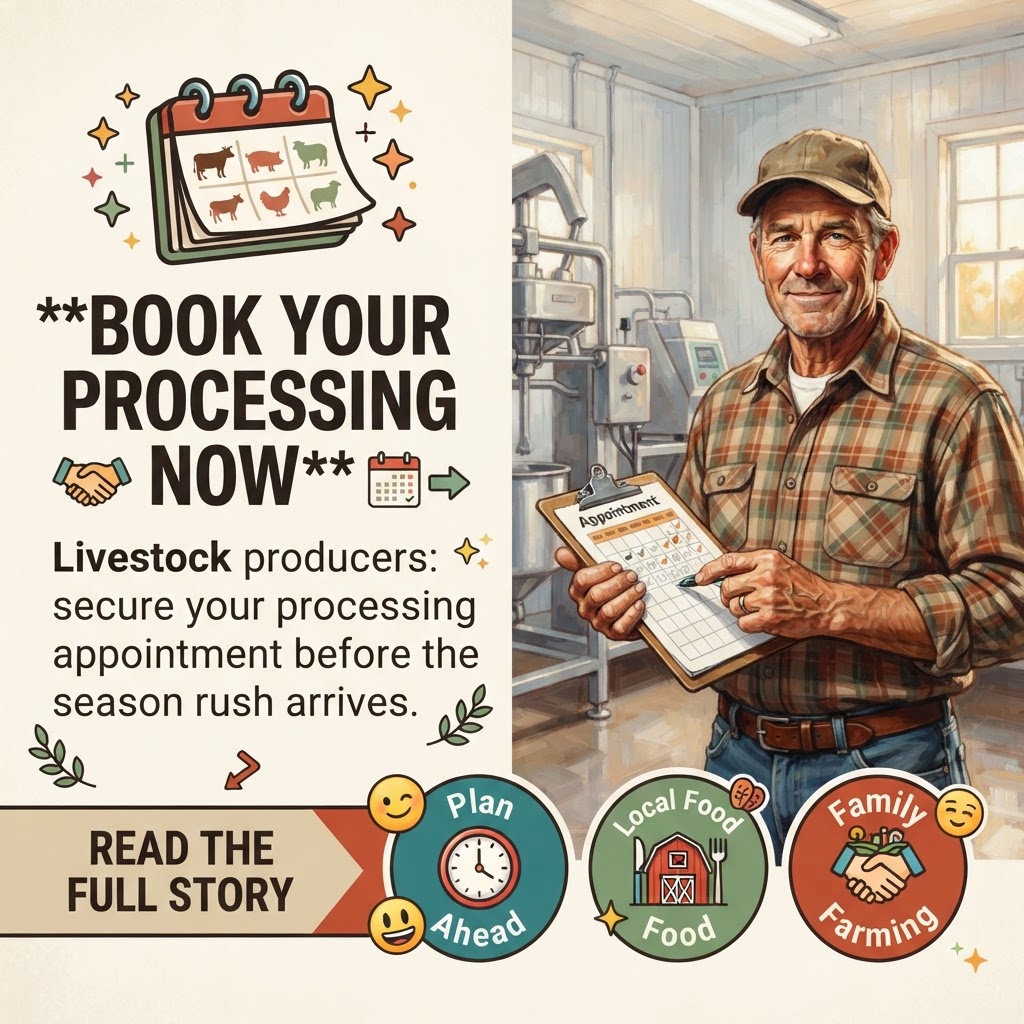
🐷 Livestock Processing Appointments Now Booking — Plan Ahead for Butcher Season
As summer moves into late season in the Sequatchie Valley, farmers and homesteaders raising livestock for meat are entering the critical window when animals reach processing weight. Wyatt’s Custom Slaughtering is reminding producers in the region that booking appointments now—rather than waiting until animals are ready—is essential to securing a processing date.
❓ Why This Matters
For livestock producers across the Sequatchie Valley, processing appointments are not a last-minute detail—they’re a critical part of the farming calendar. 🐄 When hogs, beef cattle, lambs, or goats reach butcher weight, the window to process them is narrow. Without a reserved appointment, producers risk delays that can affect meat quality, animal welfare, and the entire year’s food production plan. For families raising livestock for home consumption, local food production, or small-scale agricultural business, a processing bottleneck can disrupt months of planning and investment.
🌾 Community Connections
Livestock processing is woven into the fabric of rural Sequatchie Valley life. Farmers, homesteaders, 4-H members, agricultural families, and small producers all depend on reliable local processing services to bring their animals from farm to table. 🤝 Wyatt’s Custom Slaughtering has been part of that network since 1999, serving as a critical link between producers and their finished product. The business operates at the intersection of agricultural tradition, family food security, and local economic activity—connecting producers to a service that keeps food production local rather than requiring long-distance transport.
👥 Human Impact
For a family raising hogs for the first time, or a small farmer managing a herd of cattle, the stress of finding a processing date at the right moment is real. 📅 Producers who plan ahead—calling now to reserve a slot—can manage their feeding schedules, animal care timelines, and meat preservation plans with confidence. Those who wait risk scrambling for availability, potentially forcing difficult decisions about timing or even losing the opportunity to process animals at peak quality. The reminder to “check your livestock calendar” is practical advice that can mean the difference between a smooth harvest and a stressful one.
🏘️ Local Perspective
In rural communities like those throughout the Sequatchie Valley, having a trusted local processing facility nearby is a significant advantage. 🛣️ Producers avoid long-distance transport of live animals, reduce stress on livestock, and keep their food production dollars circulating locally. The business has operated for over 25 years, suggesting it has built relationships and reputation within the farming community. For producers who value knowing where their food comes from and how it’s handled, a local processor they know and trust is invaluable.
📞 What Residents Should Know
Contact information: Call 931-788-3737 to reserve a processing appointment. 📱
What to have ready: Producers should assess their livestock calendar now—whether they have hogs nearing butcher weight, beef cattle ready for processing, lambs, or goats. Don’t wait until animals are at peak weight to start looking for an appointment slot.
Location: According to the business information, Wyatt’s Custom Slaughtering is located on Turkey Blind Road in Crossville, TN.
⏭️ What Happens Next
Producers who call now can secure their processing dates and plan the rest of their livestock management around confirmed appointments. 📋 Those who delay risk finding limited availability as more producers reach processing weight simultaneously. The business is actively booking, which suggests capacity is available—but that window may narrow as the season progresses.
💭 Questions for the Community
- How many families in your area raise livestock for home consumption or local sale, and how does access to local processing affect their decisions?
- What challenges do producers face when trying to coordinate animal care, processing timing, and meat preservation all at once?
- How important is it to your community to keep food production and processing local rather than shipping animals long distances?
- Are there other local services or resources that support livestock producers through the full cycle from raising to processing to preservation?
🌱 Long-Term Community Impact
Local processing capacity directly supports food security, agricultural viability, and community self-sufficiency in rural areas. 🥩 When producers have reliable, nearby processing options, they’re more likely to raise livestock—whether for family food, local sales, or small-scale agricultural enterprise. This strengthens local food systems, keeps agricultural knowledge and practice alive in the community, and reduces dependence on distant industrial food production. Over time, accessible local processing helps sustain farming as a viable way of life in the Sequatchie Valley.
🔗 Community Threads
Agricultural tradition and food security: Processing connects the work of raising animals to the reality of food on the table. For families with deep roots in farming, this service is part of a multi-generational practice of self-sufficiency and local food production.
Trust and reputation: A business operating for over 25 years builds relationships with producers who return year after year. That continuity matters in rural communities where word-of-mouth and personal relationships drive decisions about where to take livestock.
Seasonal rhythm: Processing appointments are tied to the natural cycle of animal growth and seasonal readiness. This connects producers to the land, weather, and biological timelines that shape rural life—not just industrial schedules.
Economic circulation: Money spent on local processing stays in the community, supporting a local business and the people who work there. This is different from shipping animals to distant facilities, where economic benefit leaves the valley.

0 Comments