
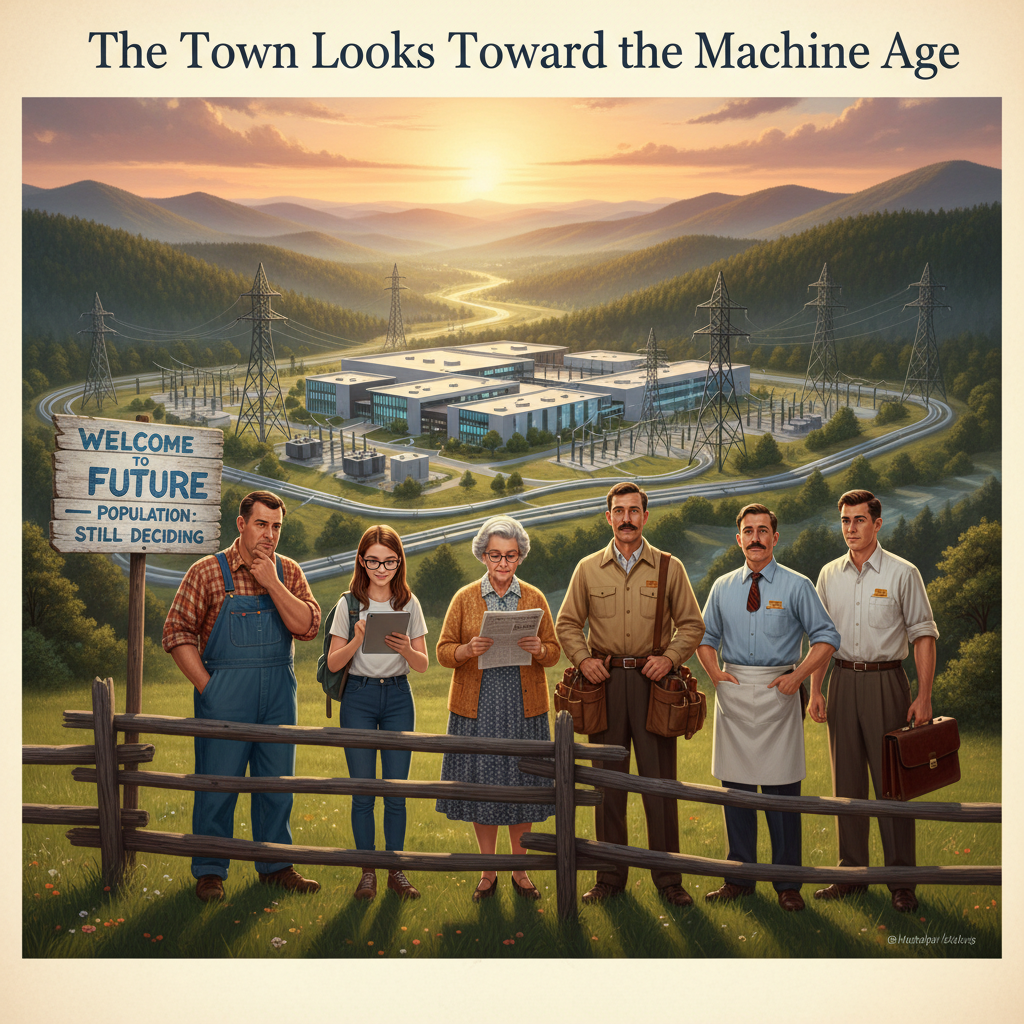
50 Things Everybody Says About AI and Data Centers — And Which Ones Are Actually True?
Artificial intelligence has developed its own vocabulary of clichés. Some of them are insightful. Some are misleading. Some are repeated so often that nobody stops to ask what they actually mean.
And nowhere is that more obvious than in the growing debate around AI and data centers.
We hear that AI is the new electricity, data is the new oil, compute is the new currency, and data centers are the factories of the future.
We are told that AI is going to consume enormous amounts of electricity, drain local water supplies, transform the economy, destroy jobs, create jobs, save rural communities, overwhelm rural communities, and somehow do all of these things at the same time.
Some of those statements contain a lot of truth.
Others contain just enough truth to make them dangerous.
So rather than accepting the slogans, let’s look at what is really being said.
🤖 1. “AI Is the New Electricity”
This may be the most popular AI cliché of all.
The comparison suggests that artificial intelligence will eventually become a general-purpose technology woven into nearly every industry, much like electricity.
That is probably directionally correct.
Electricity did not simply create an “electricity industry.” It transformed manufacturing, transportation, communications, agriculture, medicine, entertainment, and everyday life.
AI appears capable of doing something similar.
But there is an important difference.
Electricity is energy.
AI is a capability.
AI still depends on electricity, computers, networks, data, software, people, and physical infrastructure.
Verdict: Mostly true, but overly simplified.
🛢️ 2. “Data Is the New Oil”
This phrase has been repeated for years.
The idea is that raw data, like crude oil, has little value until it is collected, refined, organized, and transformed into something useful.
That analogy works reasonably well.
But unlike oil, data can often be copied indefinitely without being consumed.
Two companies can theoretically use the same information at the same time.
That makes data fundamentally different from a scarce physical commodity.
Verdict: Useful analogy, weak economics.
⚙️ 3. “Compute Is the New Oil”
This may actually be closer to reality than “data is the new oil.”
Advanced AI requires enormous computing resources.
Those resources depend on specialized chips, electricity, cooling systems, networking equipment, land, transformers, transmission capacity, and skilled engineering.
Unlike digital information, those things cannot simply be duplicated with a mouse click.
Compute is constrained by physical infrastructure.
Verdict: Increasingly true.
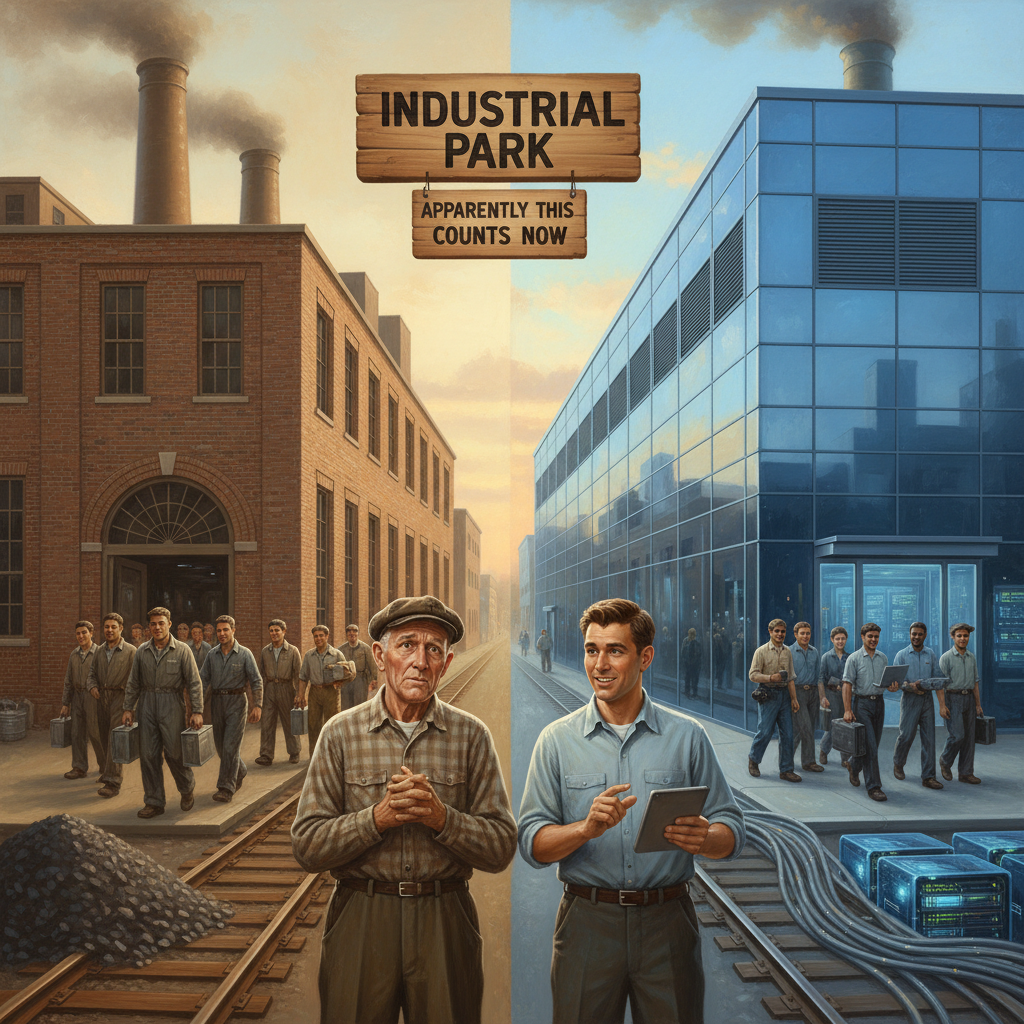
🏭 4. “Data Centers Are the Factories of the Future”
This comparison is increasingly common.
Traditional factories convert raw materials into physical products.
Data centers convert electricity, computing power, and information into digital products and services.
Those products may include search results, software, financial transactions, videos, medical analysis, logistics systems, AI models, customer service, or scientific simulations.
The comparison becomes especially interesting when AI systems begin performing work that once required large numbers of office workers.
The factory of the future may produce fewer physical objects and more decisions.
Verdict: Surprisingly accurate.
🌎 5. “AI Is Going to Change Everything”
No technology changes literally everything.
Your hammer will still work.
Your garden will still require water.
A leaking roof will still require someone to fix it.
But AI may influence nearly every information-based activity around those things.
It may help diagnose the roof leak, schedule the contractor, estimate the materials, order the supplies, generate the invoice, optimize the route, write the advertisement, and answer the customer’s questions.
Verdict: Exaggerated, but not by much.

The New Electricity
👨💻 6. “AI Won’t Replace You. Someone Using AI Will.”
This is one of the most popular business slogans surrounding AI.
Sometimes it will be correct.
But sometimes AI will simply replace the task entirely.
Technology rarely respects slogans.
Calculators did not merely create faster mathematicians. Spreadsheet software eliminated enormous amounts of bookkeeping labor. Automated telephone systems replaced switchboard operators. Digital photography dramatically reduced demand for film processing.
AI will likely augment some workers, eliminate some tasks, create new jobs, and destroy others.
Verdict: Motivational phrase, not an economic law.
🔬 7. “We’re Only Scratching the Surface”
This one is probably true.
Most businesses are still using AI for relatively simple tasks such as writing, summarization, brainstorming, transcription, customer support, and basic automation.
The deeper transformation will likely occur when AI becomes embedded inside existing workflows rather than being treated as a separate chatbot.
Verdict: Very likely true.
🧰 8. “AI Is Just a Tool”
A hammer is a tool.
So is a spreadsheet.
So is a bulldozer.
The phrase is technically true but often meaningless.
Tools can radically reshape economies.
The printing press was a tool.
The steam engine was a tool.
The Internet was a tool.
Calling something a tool tells us almost nothing about its potential impact.
Verdict: True but largely useless.
🧞 9. “The Genie Is Out of the Bottle”
This phrase usually means that AI development cannot realistically be reversed.
That is probably correct.
Algorithms can be copied. Research spreads internationally. Computing hardware exists around the world.
No single government or corporation can simply make advanced AI disappear.
Verdict: Mostly true.
🦷 10. “You Can’t Put the AI Toothpaste Back in the Tube”
Same argument.
Different bathroom product.
Verdict: True enough. Please retire the phrase.
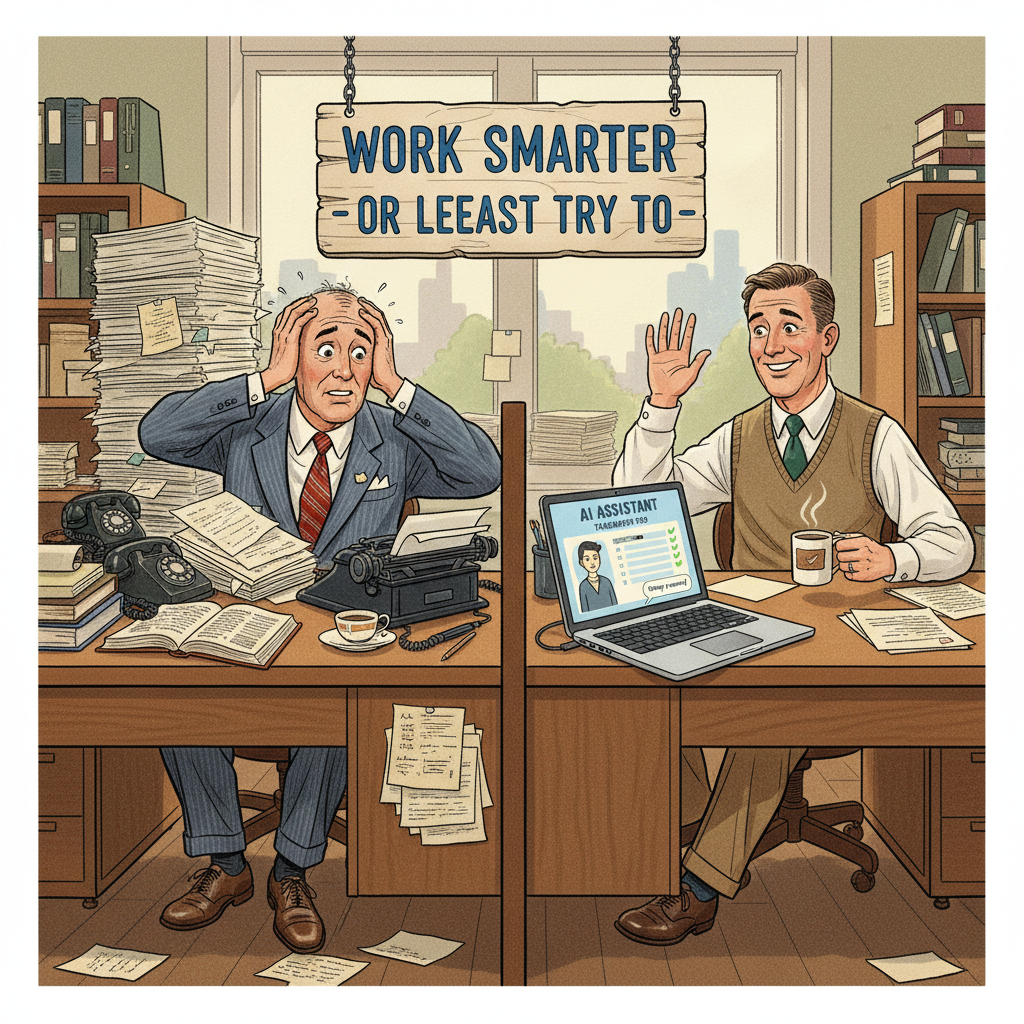
The Fellow Who Uses the New Tool
🚀 11. “AI Is Moving Faster Than Anyone Expected”
Some people expected this.
Many researchers did.
What surprised much of the public was how quickly AI moved from laboratories into ordinary consumer products.
The technology did not suddenly appear.
Public awareness did.
Verdict: True for most people, not everyone.
🏗️ 12. “This Is Another Industrial Revolution”
Possibly.
Industrial revolutions are usually identified in hindsight.
But AI shares several characteristics with previous technological revolutions: rapid productivity improvements, capital investment, infrastructure expansion, labor disruption, new business models, and political backlash.
Verdict: Plausible, but history has not finished writing the chapter.
🌐 13. “AI Is the Biggest Change Since the Internet”
This comparison is reasonable.
But AI may ultimately be better understood as the next layer of the Internet.
The Internet connected information.
Search engines organized information.
Social networks connected people.
AI increasingly interprets, synthesizes, creates, and acts on information.
Verdict: Reasonable.
🌅 14. “We Are at the Dawn of the AI Age”
Perhaps.
Although the dawn has apparently lasted several years and generated approximately fourteen million keynote presentations.
Verdict: Probably true, definitely overused.
🎓 15. “AI Democratizes Expertise”
This may be one of AI’s most significant effects.
A small business owner can increasingly access capabilities that previously required marketers, programmers, designers, analysts, researchers, and consultants.
That does not mean AI possesses perfect expertise.
But dramatically lowering the cost of accessing useful knowledge can change who is able to compete.
Verdict: Largely true.
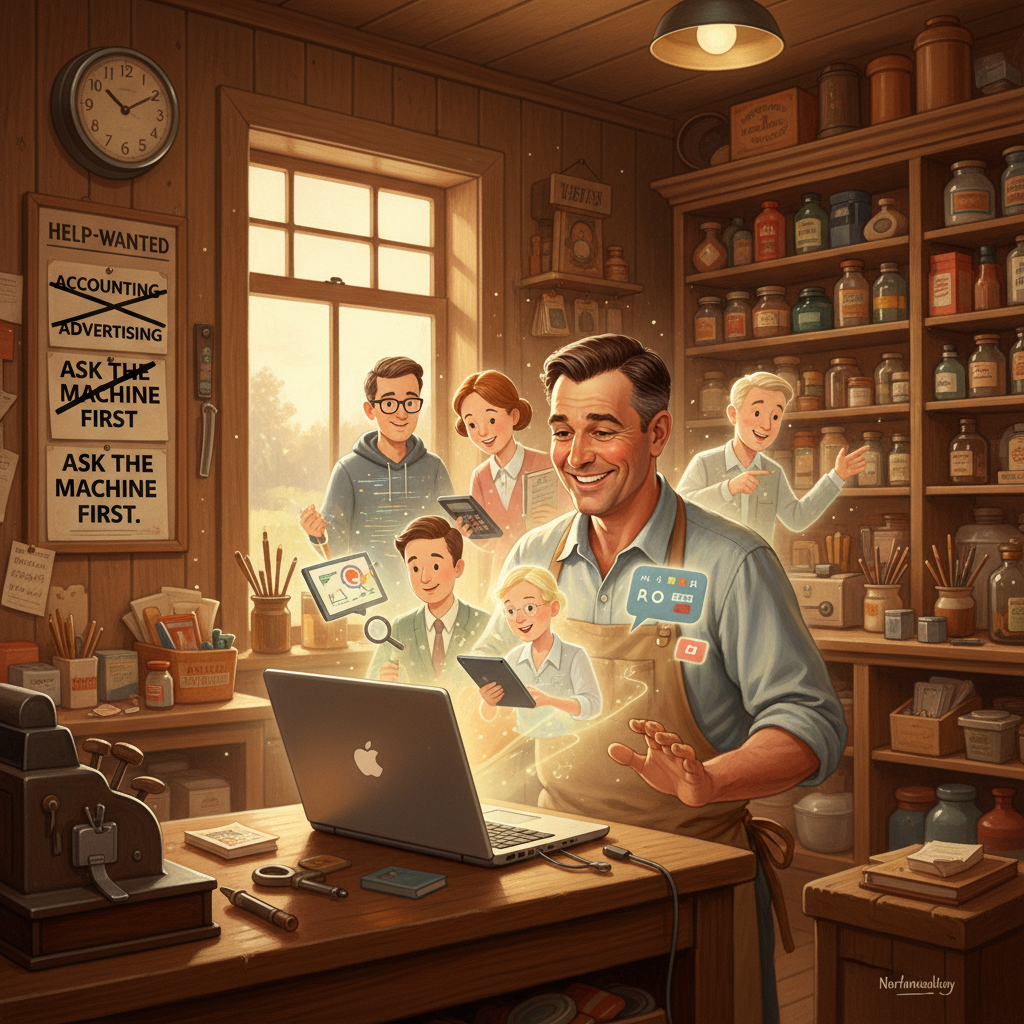
The Expert in the Little Box
🏆 16. “The Future Belongs to Those Who Embrace AI”
Probably not universally.
The future tends to belong to people who solve valuable problems.
Sometimes AI will help.
Sometimes it will be irrelevant.
A terrible business using AI remains a terrible business.
Verdict: Good conference slogan, incomplete business advice.
⏰ 17. “AI Isn’t Coming. It’s Already Here.”
This one is indisputably true.
AI is already embedded in search engines, phones, fraud detection systems, advertising platforms, logistics networks, medical technology, financial systems, vehicles, cameras, software development tools, and countless other technologies.
Verdict: True.
🏢 18. “Every Company Will Become an AI Company”
Not exactly.
Your local plumbing company probably does not need to become an artificial intelligence company.
But it may increasingly use AI for scheduling, advertising, estimating, bookkeeping, customer communication, inventory, and diagnostics.
In that sense, saying every company will become an AI company is like saying every company became an Internet company.
They did not.
They simply began using the Internet.
Verdict: Poor wording describing a real trend.
🤝 19. “AI Will Augment Humans, Not Replace Them”
This is comforting.
It is also impossible to guarantee.
AI will augment many workers.
It will also eliminate certain jobs and reduce the number of people required to perform others.
The same thing has happened with nearly every major productivity technology.
Verdict: Half true.
🧠 20. “Humans Using AI Will Beat Humans Without AI”
In many knowledge-work tasks, this already appears increasingly likely.
But expertise still matters.
A skilled person with AI will often outperform an inexperienced person using the same system.
The real divide may eventually become:
Expert + AI vs. everyone else.
Verdict: Probably true in many fields.
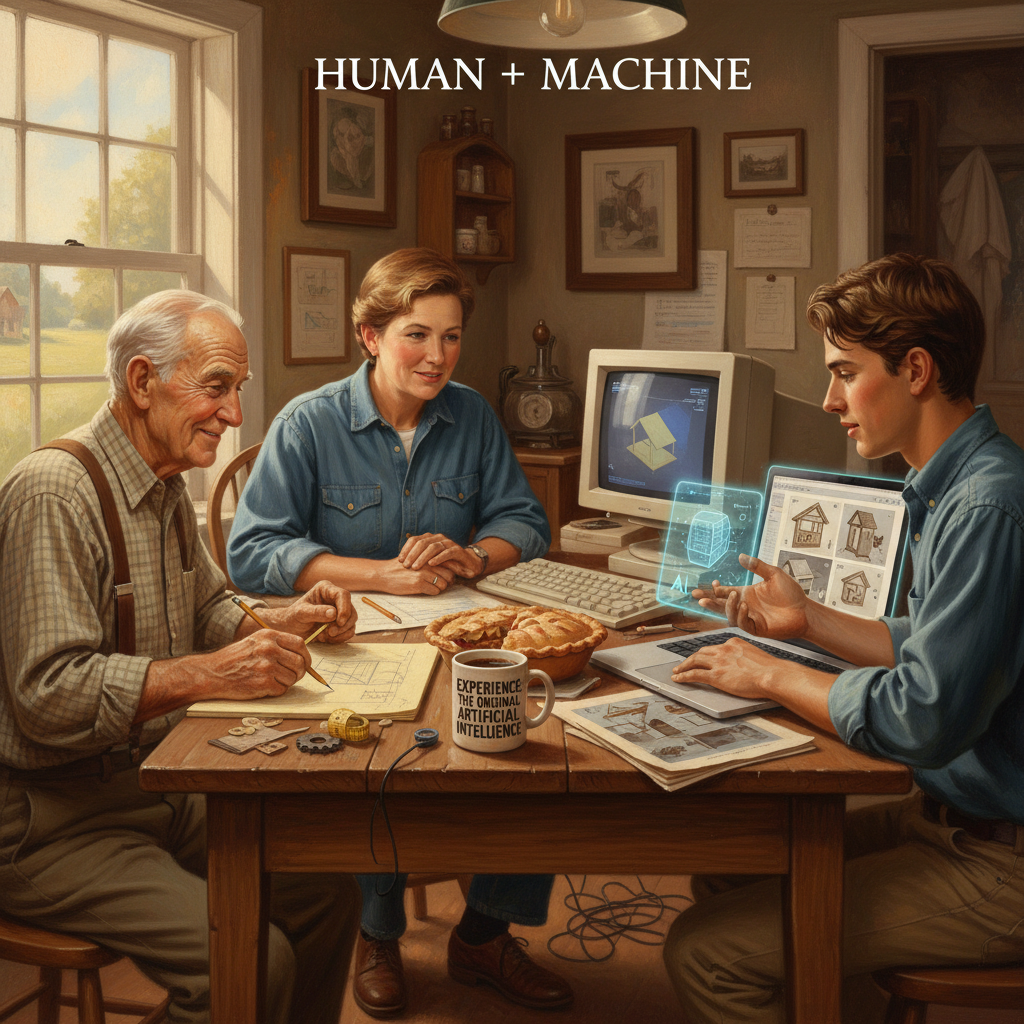
Human + Machine
🗑️ 21. “AI Is Only as Good as the Data You Feed It”
Data quality matters enormously.
But modern AI systems also infer patterns, reconcile conflicting information, and sometimes compensate for imperfect inputs.
The relationship is more complicated than the cliché implies.
Verdict: Generally true.
♻️ 22. “Garbage In, Garbage Out”
One of computing’s oldest sayings survives AI.
Poor inputs can still produce poor outputs.
But AI occasionally turns garbage into something surprisingly useful.
That may actually be one of its defining capabilities.
Verdict: Still useful, less absolute than it once was.
🩸 23. “Data Is the Lifeblood of AI”
AI models depend heavily on data.
But modern systems also depend on algorithms, infrastructure, computing resources, human feedback, energy, networking, and increasingly synthetic data.
Verdict: True but incomplete.
☁️ 24. “The Cloud Is Just Somebody Else’s Computer”
Technically, yes.
But that “somebody else’s computer” may be a sprawling collection of highly specialized servers distributed across multiple continents with redundant networking, storage, power, and cooling.
Verdict: Funny and technically correct.
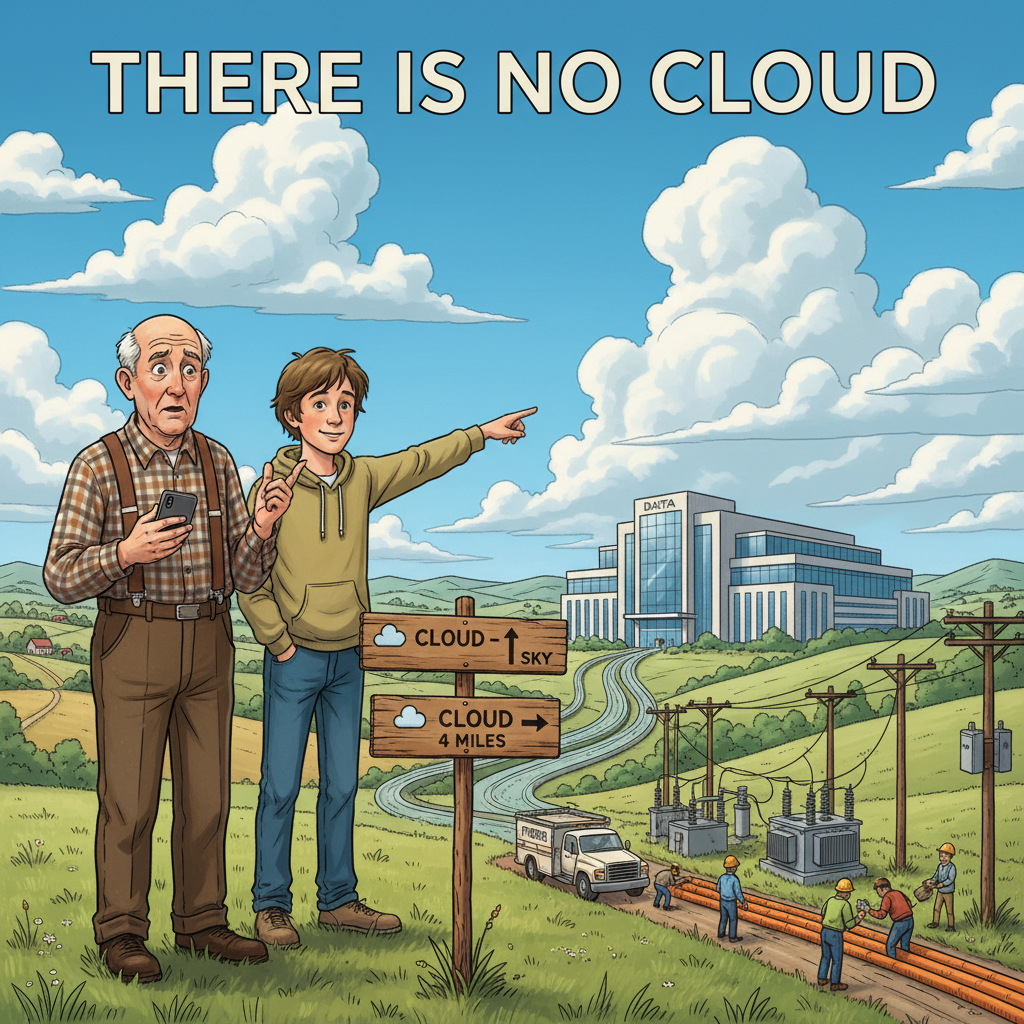
🏢 25. “There Is No Cloud. There Are Only Data Centers.”
This is actually an important reminder.
The digital world feels weightless.
It is not.
Streaming video, cloud storage, search engines, AI assistants, financial transactions, email, and social networks all depend on physical infrastructure somewhere.
Verdict: Very true.
There Is No Cloud
🦴 26. “Data Centers Are the Backbone of the Digital Economy”
They are certainly one backbone.
The others include telecommunications networks, fiber optics, power generation, semiconductor manufacturing, satellites, undersea cables, and countless edge devices.
Verdict: True.
🏗️ 27. “Data Centers Are Infrastructure for the Future”
Increasingly, yes.
Communities once competed for highways, railroads, airports, factories, broadband, and power infrastructure.
Computing infrastructure is becoming another strategic asset.
Verdict: True.
🔌 28. “AI Runs on Data Centers”
Mostly.
But increasingly, AI also runs on laptops, smartphones, vehicles, industrial equipment, local servers, and edge computing devices.
The future may involve enormous centralized AI infrastructure combined with increasingly powerful local AI systems.
Verdict: True today, but becoming less complete.
🍽️ 29. “AI Has an Insatiable Appetite for Compute”
Current AI development certainly consumes enormous computing resources.
But efficiency improvements matter.
Hardware becomes faster. Models become smaller. Algorithms improve. Specialized chips reduce energy requirements.
Technology rarely remains frozen at its least efficient stage.
Verdict: True today, uncertain forever.
💥 30. “AI Is Causing a Data Center Explosion”
AI is unquestionably accelerating data center construction.
But cloud computing, streaming video, cryptocurrency, enterprise software, online commerce, and the general growth of digital services were already driving expansion.
AI poured gasoline on an existing fire.
Verdict: True, but missing context.
The Digital Factory
💰 31. “Compute Is the New Currency”
Access to computing capacity increasingly determines who can train sophisticated AI systems.
That gives compute real strategic value.
Governments now discuss semiconductor capacity and AI infrastructure in terms once reserved for oil, steel, and military production.
Verdict: Increasingly true.
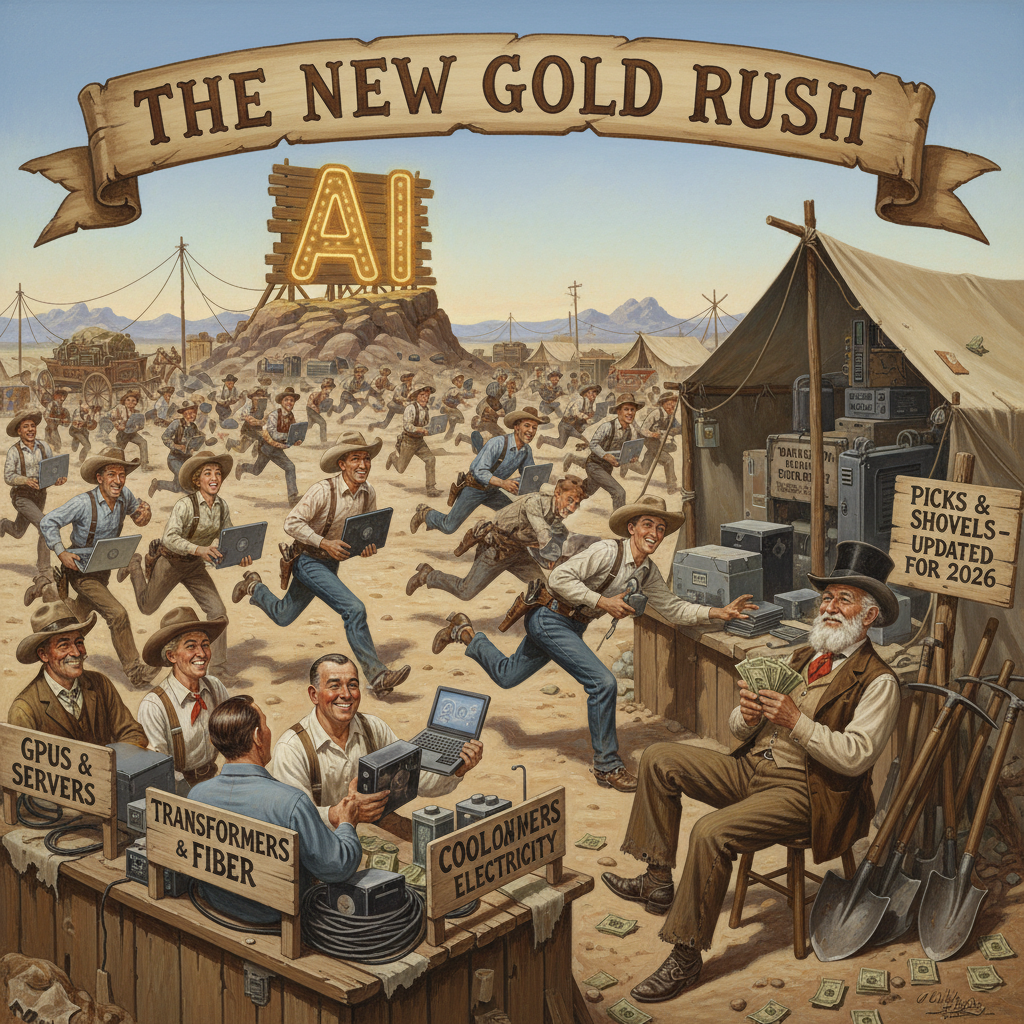
⛏️ 32. “Chips Are the Picks and Shovels of the AI Gold Rush”
During a gold rush, selling miners equipment can sometimes be more reliable than mining gold.
The same logic applies to companies supplying GPUs, networking equipment, cooling systems, power infrastructure, storage, transformers, and construction services.
Verdict: Good analogy.
🏗️ 33. “Data Centers Are the Picks and Shovels of AI”
Data centers are probably closer to the mines themselves.
The picks and shovels are the enormous ecosystem supplying them.
Verdict: Close enough for television.
⚔️ 34. “We’re in an AI Arms Race”
Companies are competing.
Countries are competing.
Universities are competing.
Investors are competing.
Military applications certainly exist.
But framing every technological competition as an arms race can distort public policy by encouraging speed over judgment.
Verdict: Sometimes accurate, often sensationalized.
🏁 35. “The Race for Compute Is Just Beginning”
Probably true.
AI demand is reshaping semiconductor manufacturing, electricity generation, transmission infrastructure, real estate development, and industrial policy.
Verdict: Likely true.
The New Gold Rush
👑 36. “Whoever Controls Compute Controls the Future”
That gives compute too much credit.
Infrastructure matters.
So do talent, capital, energy, entrepreneurship, software, education, governance, manufacturing, and customers.
The Soviet Union controlled enormous industrial resources.
That did not guarantee technological leadership.
Verdict: Dramatic but simplistic.
⚡ 37. “AI Is Creating Unprecedented Electricity Demand”
AI is creating significant new demand.
But humanity has experienced massive electricity expansions before, including electrification, air conditioning, heavy industry, household appliances, and Internet infrastructure.
The important question is not whether AI uses electricity.
Of course it does.
The better question is:
How much economic and social value is produced for the electricity consumed?
Verdict: Significant issue, frequently presented without context.
🔋 38. “Power Is the New Bottleneck”
In many regions, this is becoming true.
A company may have the land, money, equipment, and customers to build a data center but still lack sufficient electrical capacity.
Transmission lines and transformers cannot be deployed instantly.
Verdict: Increasingly true.
🕸️ 39. “The Grid Wasn’t Built for AI”
Technically correct.
The electrical grid was not built for air conditioners, electric vehicles, cryptocurrency, smartphones, or Netflix either.
Infrastructure evolves.
The meaningful question is whether it can evolve quickly and affordably enough.
Verdict: True but rhetorically loaded.
☀️ 40. “The AI Revolution Requires an Energy Revolution”
AI may accelerate investment in nuclear power, natural gas, solar, geothermal energy, batteries, small modular reactors, grid modernization, and other technologies.
Whether that becomes an energy revolution remains to be seen.
Verdict: Plausible.

Who Gets the Electricity?
🍴 41. “AI Data Centers Are Hungry for Power”
Yes.
So are steel mills, aluminum plants, chemical factories, hospitals, universities, shopping centers, and cities.
Energy consumption alone tells us little without examining what that energy produces.
Verdict: True, but incomplete without a denominator.
👣 42. “AI Has a Massive Energy Footprint”
This may be true depending on what is being measured.
Training a giant AI model can require enormous energy.
Running a tiny local model may require relatively little.
Saying “AI uses massive amounts of energy” is somewhat like saying “transportation uses massive amounts of energy.”
A bicycle and a Boeing 747 both belong to the category.
Verdict: Meaningless without context.
💧 43. “AI Is Thirsty for Water”
Some data centers use water-intensive cooling systems.
Others use different designs.
Climate, engineering choices, local water availability, energy generation, and cooling technology all matter.
Talking about “AI water use” as though every AI system consumes the same amount makes little sense.
Verdict: Sometimes true.
🚰 44. “Data Centers Consume Enormous Amounts of Water”
Some do.
But again, scale and comparison matter.
The appropriate question for a community is not whether a data center uses water.
Almost every major economic activity does.
The question is whether the water usage is sustainable relative to local supply and the benefits being produced.
Verdict: Legitimate concern requiring local numbers.
⚖️ 45. “Communities Must Choose Between Growth and Resources”
This creates a false choice.
Good infrastructure planning should ask whether development can occur while protecting water, electricity availability, land, taxpayers, and quality of life.
The goal should not automatically be:
Development at any cost.
Nor should it automatically be:
No development at any cost.
Verdict: False dilemma.
Compared to What?
👷 46. “Data Centers Create Jobs and Economic Development”
They do.
Construction can generate substantial short-term employment, while permanent facilities require technical, security, maintenance, operations, engineering, and administrative workers.
They may also increase property-tax revenue and stimulate infrastructure investment.
But the scale varies enormously from project to project.
Verdict: True, but quantify it.
🧑🏭 47. “Data Centers Create Very Few Jobs”
Compared with a factory occupying a similar amount of land, this may sometimes be true.
But employment is only one measure of economic value.
A hydroelectric dam, fiber-optic line, electric substation, or automated warehouse may not employ thousands of people either.
Infrastructure often creates value by enabling other economic activity.
Verdict: Sometimes true, often used too narrowly.
🏡 48. “AI Infrastructure Is Coming to a Community Near You”
Perhaps not every community.
But data centers increasingly require access to inexpensive land, abundant power, fiber connectivity, water or cooling capacity, and favorable permitting.
That means places far outside traditional technology hubs may become attractive.
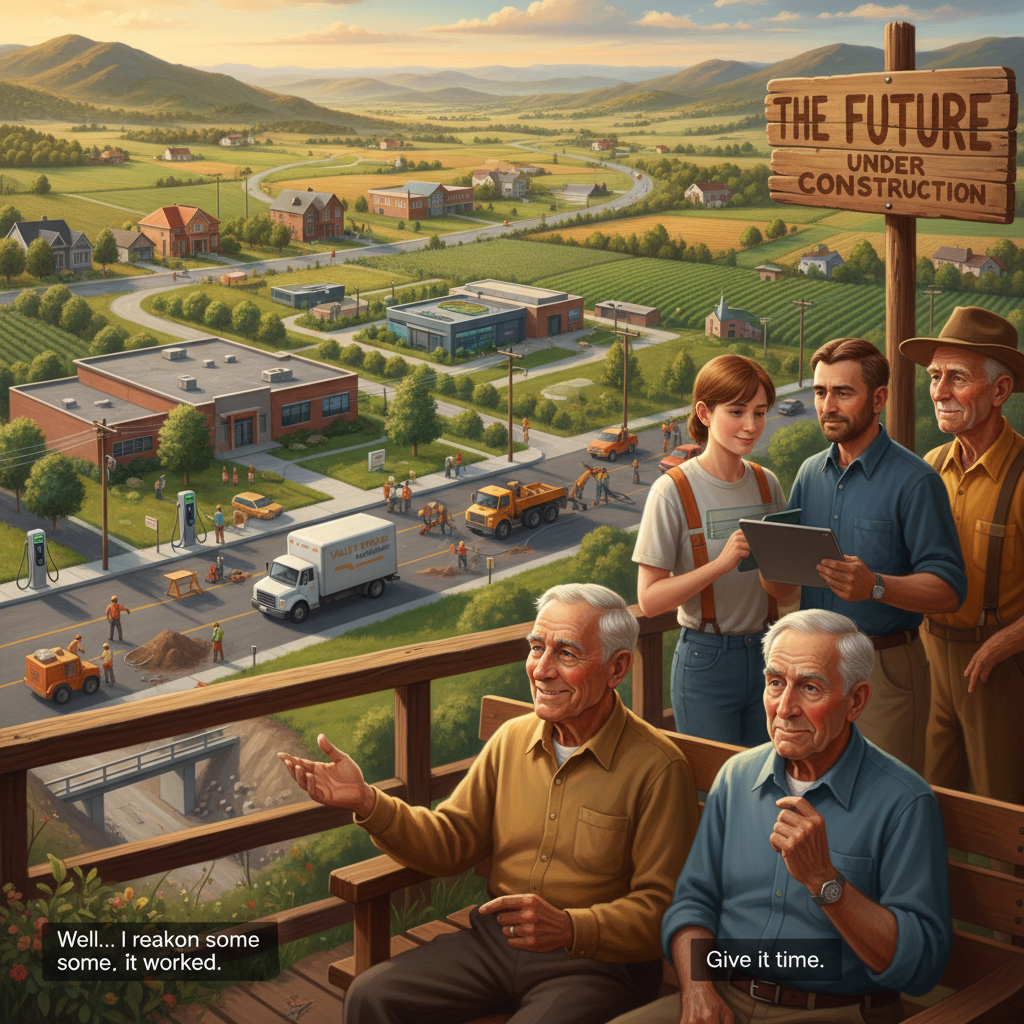
Rural communities that once wondered how to attract factories may soon find themselves evaluating digital infrastructure projects instead.
Verdict: Increasingly plausible.
🏆 49. “Communities That Embrace AI Will Win the Future”
Not necessarily.
Communities that make smart decisions will probably fare better than communities that simply say yes—or simply say no.
A good project under good terms can be valuable.
A poorly structured project can impose costs that outweigh its benefits.
The same has always been true of factories, highways, shopping centers, subdivisions, and industrial developments.
Verdict: Marketing slogan disguised as strategy.
🔮 50. “The Question Isn’t Whether AI Is Coming. The Question Is Whether We’ll Be Ready.”
This may be the cliché worth keeping.
AI is already here.
Data centers are already expanding.
Electric utilities are already planning around them.
Businesses are already adopting AI tools.
Workers are already discovering that some tasks can be performed differently.
Students are already growing up in a world where instant access to machine-generated knowledge feels ordinary.
The important discussion is no longer whether these technologies should exist.
They do.
The question is what communities, businesses, schools, governments, and individuals choose to do next.
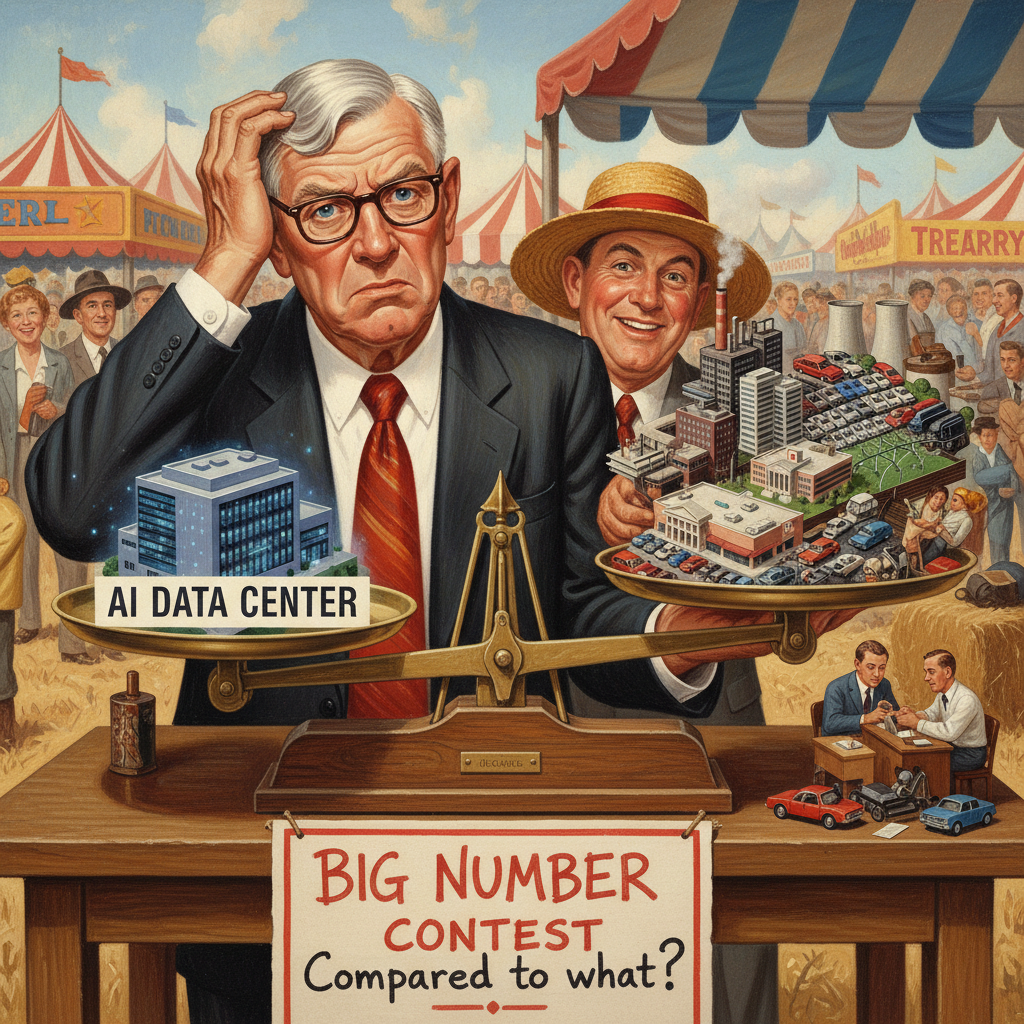
📊 The Missing Word in Almost Every AI Debate: Compared to What?
Many arguments about AI and data centers suffer from the same basic problem.
They present a large number without providing a meaningful denominator.
A data center uses a lot of electricity.
Compared to what?
A city?
A steel mill?
A manufacturing plant?
A hospital complex?
Thousands of office workers performing comparable work?
An AI model consumes energy to answer questions.
Compared to what?
A Google search?
A human researcher?
A call center?
A consultant driving across town?
A university campus?
The denominator changes the story.
That does not mean environmental concerns should be dismissed.
It means they should be measured properly.
Compared to What?
🌾 Rural Communities May Have More at Stake Than They Realize
For decades, rural economic-development discussions often focused on attracting factories.
Communities built industrial parks.
They expanded highways.
They recruited manufacturers.
They extended water and sewer infrastructure.
Then broadband arrived.
And suddenly the definition of infrastructure began changing.
A community with inexpensive land, reliable power, fiber connectivity, and access to regional transportation may possess assets that did not seem particularly valuable twenty years ago.
That does not mean every rural community should recruit a data center.
It means communities should understand what they own before negotiating with someone who understands its value better than they do.
🧭 Skepticism Should Work in Both Directions
There are AI evangelists who treat every new technology announcement as proof that civilization is about to enter a golden age.
There are also AI critics who treat every new data center as evidence that civilization is approaching ecological collapse.
Both groups can become trapped by their preferred narratives.
Technology deserves scrutiny.
So does criticism of technology.
When someone tells you AI will save the world, ask for evidence.
When someone tells you AI will destroy the world, ask for evidence.
When someone tells you a data center will transform the local economy, ask for numbers.
When someone tells you the same data center will drain the county dry and collapse the electrical grid, ask for numbers again.
Good decisions rarely emerge from slogans.
🏁 Final Thought
Perhaps the most dangerous thing about clichés is not that they are always wrong.
It is that they are often partly right.
That makes them easy to repeat and difficult to question.
AI will consume electricity.
Data centers will consume resources.
Automation will eliminate some jobs.
New technologies will create others.
Some communities will benefit greatly from AI infrastructure.
Others may negotiate bad deals.
Some businesses will use AI brilliantly.
Others will use it badly.
And some people will spend the next decade arguing about whether the whole thing should have happened while everyone else quietly figures out what to do with it.
Maybe the best cliché is also the simplest:
The future is coming whether we approve of it or not.
But what we build with it is still very much up to us.
Conclusion – The Town Decides



0 Comments