
📺 Why “Dumb TVs” Are Making a Comeback — And Why They’re So Hard to Find
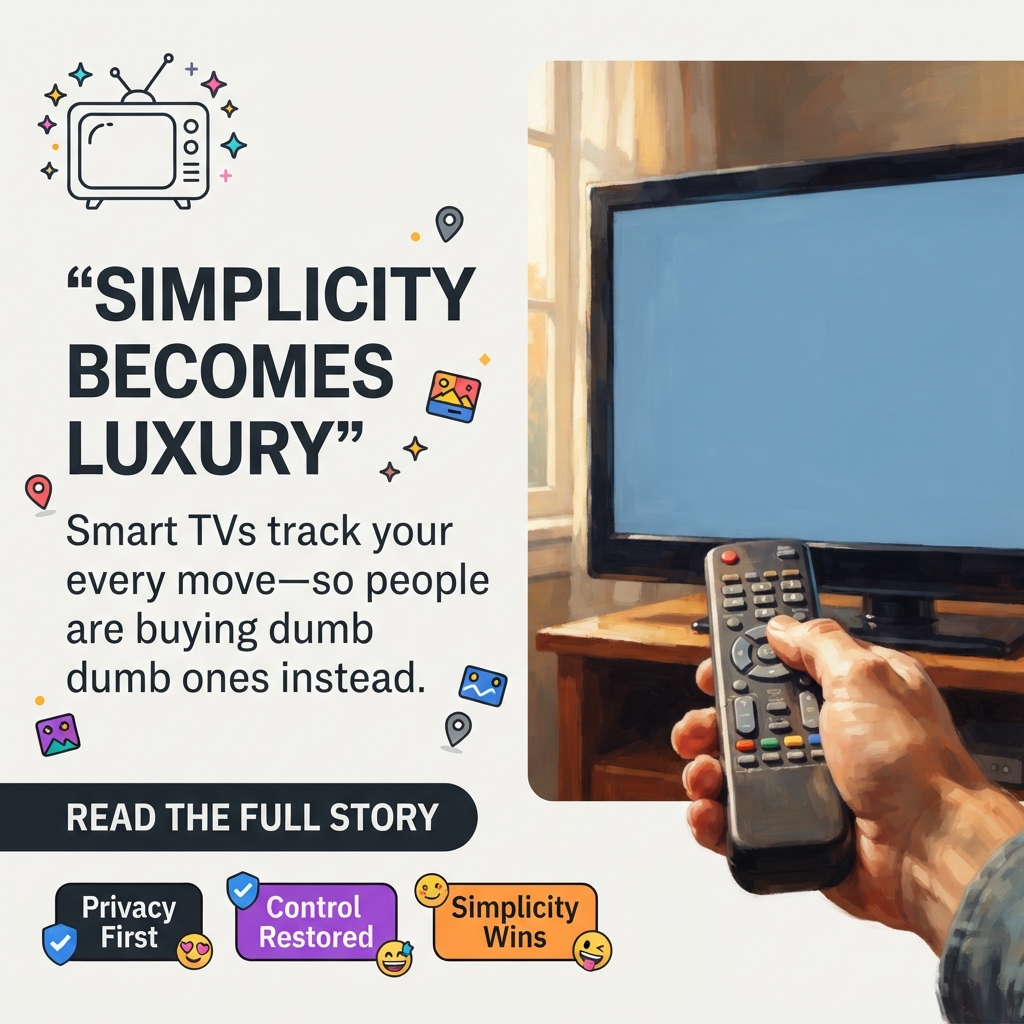
For decades, the television was simple: you turned it on, watched what you wanted, and it asked nothing of you. Today, that simplicity has become a luxury. As smart TVs dominate the market with built-in apps, data collection, and constant connectivity, a growing number of people are searching for something their parents took for granted — a TV that just shows pictures and stays quiet.
🎬 What’s Driving the “Dumb TV” Movement?
The shift is real, and it’s driven by frustration. 📱 Many households are exhausted by the modern television experience: endless streaming service recommendations, mandatory software updates, sluggish interfaces, and the nagging feeling that their viewing habits are being tracked and sold. When you sit down to relax, the last thing you want is to manage six different apps, hunt for login credentials, or navigate through ads designed to sell you something.
Westinghouse Electric Company has responded to this demand by introducing new non-smart television models, including a 32-inch 2026 set that strips away the internet connection and built-in streaming platform entirely. The 24-inch model available at Best Buy offers basic HDMI, USB, and VGA connections — nothing more. You plug in an antenna, cable box, game console, or streaming device of your choice, and the television does what televisions used to do: display the picture.
The irony is striking: in an age of technological advancement, simplicity has become a selling point. ✨
💰 Why Manufacturers Don’t Want You to Have One
If people clearly want dumb TVs, why are they so difficult to find? The answer lies in the economics of the television business — and it reveals why manufacturers have little incentive to make them.
When you buy a traditional dumb TV, the transaction is straightforward: you pay, you own it, and the relationship ends. But smart TVs created an entirely different business model. Advertising lives on the home screen. Streaming services pay for placement and branded remote buttons. Most importantly, your viewing data has real monetary value. 💵
Vizio’s financial disclosures make this crystal clear. In 2022, the company earned nearly $478 million from its SmartCast platform through advertising, data licensing, and content distribution agreements. By contrast, the actual TV hardware generated only $16 million in profit. The television hanging on your wall is what you bought — but the real money flows in long after you bring it home, through data and advertising revenue that continues for years.
A dumb TV leaves that revenue stream on the table. So manufacturers have little motivation to build them, even when demand exists.
🔍 The Privacy and Security Concerns
Beyond frustration with ads and complexity, some people worry about what smart TVs actually do with their information. Smart televisions use technology called Automatic Content Recognition (ACR) — essentially a “Shazam for television” — that identifies what’s appearing on your screen in real time. This technology has legitimate uses, but it also generates valuable viewing data.
In 2017, the Federal Trade Commission took action against Vizio for using software on 11 million smart TVs to collect second-by-second viewing information without user consent. The system didn’t just monitor Vizio’s apps — it recognized content from cable boxes, DVD players, and over-the-air broadcasts, then fed that data into advertising targeting systems. 📊
The privacy concerns extend further. A 2017 intelligence leak described an alleged CIA and British intelligence project called “Weeping Angel” that targeted certain Samsung smart TVs. The reported technique could make a television appear powered off while secretly using its microphone as a listening device. While the exploit required physical access to install and targeted specific models, it reinforced a troubling reality: an internet-connected device in your living room can become a surveillance tool.
😴 The Exhaustion Factor
Not everyone worried about dumb TVs is concerned about privacy or corporate data collection. Many simply want their entertainment back. Today’s television experience has become a chore. You sit down to unwind, but instead you’re scrolling through recommendations from six different services, entering login credentials, waiting for apps to load, and watching ads before your show even starts. Somewhere in that chaos, watching TV stops feeling like relaxation and starts feeling like managing an IT department. 🖥️
Interestingly, dumb-TV buyers aren’t rejecting modern technology entirely. Many will happily plug an Apple TV or Roku into an HDMI port. The difference is control. You choose the streaming device. You decide when to upgrade it. If the software becomes sluggish, you replace a $40 stick instead of replacing a $500 television. And if you want to go completely offline, you simply unplug the device — your TV forgets the internet exists.
📍 Where Dumb TVs Actually Exist
The truth is, dumb TVs never completely disappeared — they were just pushed into the margins. Today’s remaining options are mostly small bedroom sets or commercial displays designed for hotels and airports, where nobody needs Netflix recommendations interrupting the experience. Finding a modern, full-size non-smart television requires genuine effort.
Westinghouse’s decision to bring back a regular, modern television that simply isn’t smart feels almost rebellious. And the demand suggests there’s a real market waiting. Many people want nothing more than a screen that shows the picture and then stays quiet. ✨
❓ Questions Worth Considering
As the television market evolves, several questions emerge for households thinking about their next purchase:
- How much of your viewing data are you comfortable sharing with manufacturers and advertisers — and do you even know it’s happening?
- Is the convenience of built-in streaming worth the trade-off of slower performance, mandatory updates, and ads on your home screen?
- If you prefer a dumb TV, are you willing to manage a separate streaming device, or would you rather use traditional cable and antenna?
- What does “control” over your home entertainment actually mean to you — and how much are you willing to pay for it?
🔮 What Happens Next
The dumb TV comeback is still in its early stages. Westinghouse’s entry into the market signals that manufacturers are paying attention to consumer frustration. If demand continues to grow, other companies may follow — though the financial incentives work against them. The real question is whether consumer preference for simplicity and privacy can overcome the enormous profit motive driving the smart TV industry.
For now, finding a dumb TV requires patience and research. But the fact that “leave me alone” is becoming a desirable feature in consumer electronics suggests a broader shift: people are beginning to question whether every device in their home needs to be connected, tracked, and monetized.
💡 The Bigger Picture
The dumb TV story reflects a larger tension in modern life. Technology companies have spent decades adding features, connectivity, and data collection to everyday objects — often without asking whether consumers actually wanted those additions. Smart TVs are just one example. Refrigerators that connect to the internet, thermostats that learn your habits, doorbells that record video — the list grows constantly.
The resurgence of interest in dumb TVs suggests that people are beginning to push back. They’re asking: Do I need this? What am I trading away for it? Can I have a simpler version instead?
Those are healthy questions. And the fact that manufacturers are struggling to answer them — that they’ve made simplicity so rare it’s become a niche product — tells you something important about how the technology industry has evolved. Sometimes, the smartest choice is choosing not to be smart at all. 📺




0 Comments