
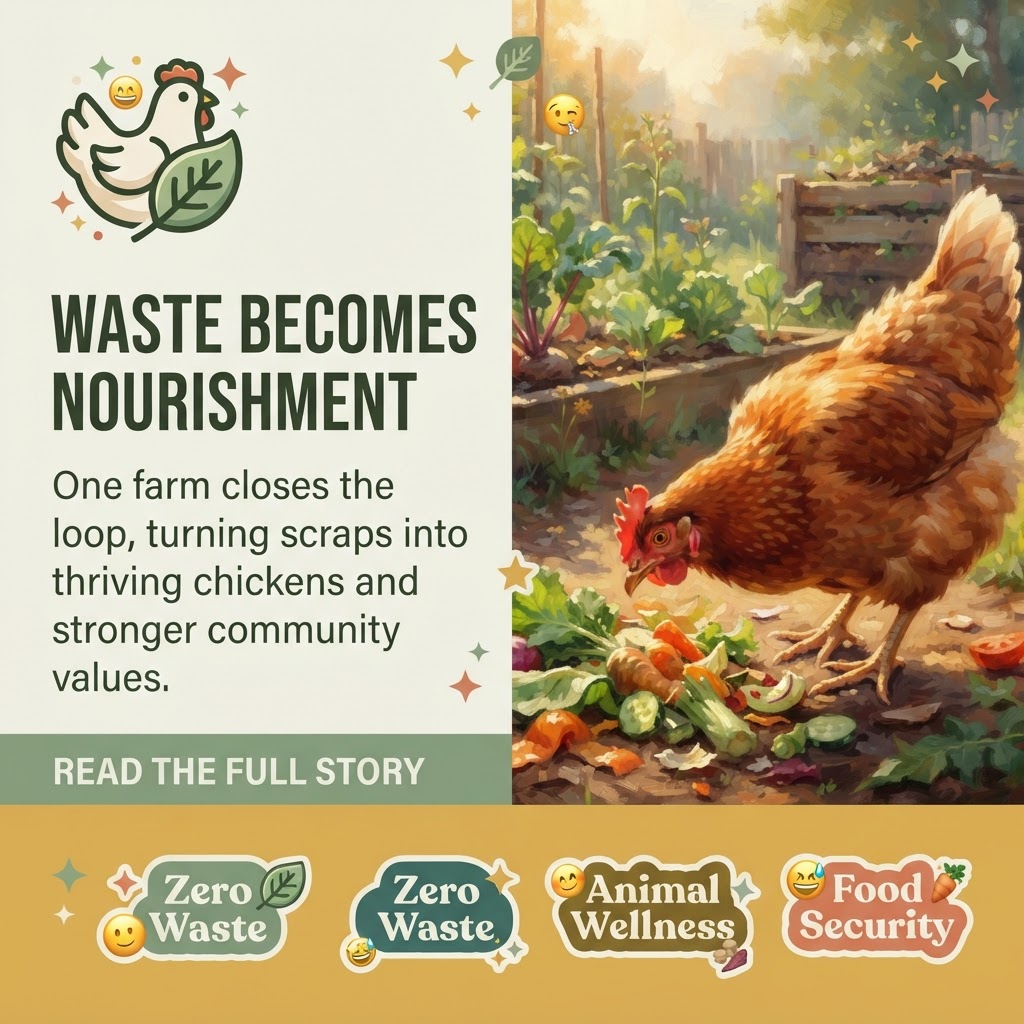
🐔 Fresh Produce Fuels Farm-to-Chicken Cycle at Local Operation
In the Sequatchie Valley, where small-scale farming and sustainable practices are increasingly central to community identity, one local farm is demonstrating a closed-loop approach to animal care and resource management. The practice of feeding fresh produce directly to chickens—and letting nothing go to waste—reflects a growing regional interest in self-sufficiency and responsible land stewardship.
🌱 Why This Matters
The way farms manage resources affects more than just the operation itself. When local farms prioritize waste reduction and direct animal nutrition, they model practices that can inspire neighbors, strengthen food security conversations, and demonstrate economic efficiency. For residents interested in homesteading, small-scale farming, or simply understanding where their food comes from, this approach offers a tangible example of how thoughtful farm management works in practice.
❤️ The Human Side of Farm Stewardship
Behind this simple statement—”fresh produce makes happy chickens”—lies a daily commitment to animal welfare and resource conservation. Farmers who adopt this practice are making intentional choices about how they care for their animals and manage their land. Happy, well-nourished chickens typically produce better eggs and meat, creating a direct link between careful feeding practices and the quality of food that reaches local tables. For the people running Rhea Family Farms, this cycle represents both practical economics and a philosophy about responsible stewardship.
🔄 The Closed-Loop Advantage
The phrase “nothing goes to waste” signals a commitment to efficiency that many Sequatchie Valley residents recognize as part of regional farming tradition. When produce that might otherwise be discarded becomes chicken feed, the farm reduces waste, lowers feed costs, and creates a more sustainable operation. This kind of circular thinking—where byproducts become resources—strengthens Rhea Family Farms‘s resilience and reduces its environmental footprint. For a region where many families have deep roots in agriculture, these practices connect to long-standing values about land use and self-reliance.
🤝 Community Connections
Local farms that operate with visible sustainability practices often become informal educators in their communities. Neighbors, school groups, and visitors who see these operations in action develop a deeper understanding of where food comes from and what responsible farming looks like. In the Sequatchie Valley, where agricultural heritage runs deep and interest in local food systems is growing, farms like this one serve as living examples that inspire conversations about food, land, and community resilience. They may also connect with local restaurants, farmers markets, schools, or community organizations interested in sourcing local eggs or learning about sustainable practices.
💡 Opportunities for Connection
Residents interested in learning more about local farming practices, sustainable animal care, or small-scale food production may find value in connecting with farms that operate this way. Some farms welcome visitors, host educational events, or participate in farmers markets where they can share their practices directly. For families considering backyard chickens or small-scale gardening, observing how established local farms manage their operations can provide practical insights. Community members interested in food security, waste reduction, or agricultural sustainability may also find common ground with farmers committed to these principles.
🌄 Local Perspective in the Sequatchie Valley
The Sequatchie Valley has a strong agricultural heritage, and many residents value farming practices that reflect both tradition and innovation. The approach of feeding fresh produce to chickens and eliminating waste aligns with regional values around self-sufficiency, land stewardship, and making the most of available resources. This practice is not new—generations of valley farmers have operated on similar principles—but renewed attention to sustainable and local food systems is bringing these time-tested methods back into focus. For a region where many people maintain connections to farming, either through family history or current interest, this kind of visible commitment to responsible practices strengthens community identity.
❓ Questions Worth Considering
As residents learn about local farming practices, a few questions may deepen understanding and spark community conversation:
- How many local farms in the Sequatchie Valley operate with closed-loop or waste-reduction practices, and how could residents learn more about them?
- What barriers prevent more farms from adopting these sustainable practices, and how might community support help?
- How can families interested in backyard chickens or small-scale farming learn directly from established local operations?
- Are there opportunities for schools or community organizations to partner with local farms for educational programs about food production and sustainability?
- How do these farming practices connect to broader regional efforts around food security and agricultural resilience?
🌾 Long-Term Community Impact
When local farms demonstrate sustainable, efficient practices, they contribute to the region’s long-term food security and environmental health. These operations also influence community culture—they normalize conversations about waste reduction, animal welfare, and responsible land use. Over time, visible examples of sustainable farming can inspire neighbors to adopt similar practices at home, strengthen local food networks, and build community pride in regional agriculture. For the Sequatchie Valley, where agricultural identity remains strong, farms committed to these principles help ensure that farming remains economically viable and environmentally responsible for future generations.
🧵 Community Threads: The Invisible Network
Farm-to-Table Relationships: This operation likely connects to local restaurants, farmers markets, or community members who value knowing where their food comes from. These relationships strengthen local food networks and create economic opportunities within the community.
Agricultural Heritage and Innovation: The practice bridges traditional farming wisdom (waste reduction, animal care) with modern sustainability values. This connection helps preserve regional agricultural identity while adapting to contemporary environmental concerns.
Educational Opportunity: Farms that operate transparently about their practices often become informal educators. Schools, community groups, and curious neighbors may learn directly from the operation, strengthening community understanding of food production.
Neighborly Example: When one farm demonstrates sustainable practices visibly, it influences nearby operations and residents. This creates a ripple effect where responsible stewardship becomes normalized and valued in the local farming community.
Resource Sharing and Resilience: Closed-loop operations like this one build economic resilience by reducing input costs and dependency on external resources. This strengthens the farm‘s ability to weather economic challenges and models self-sufficiency valued throughout the region.

0 Comments