
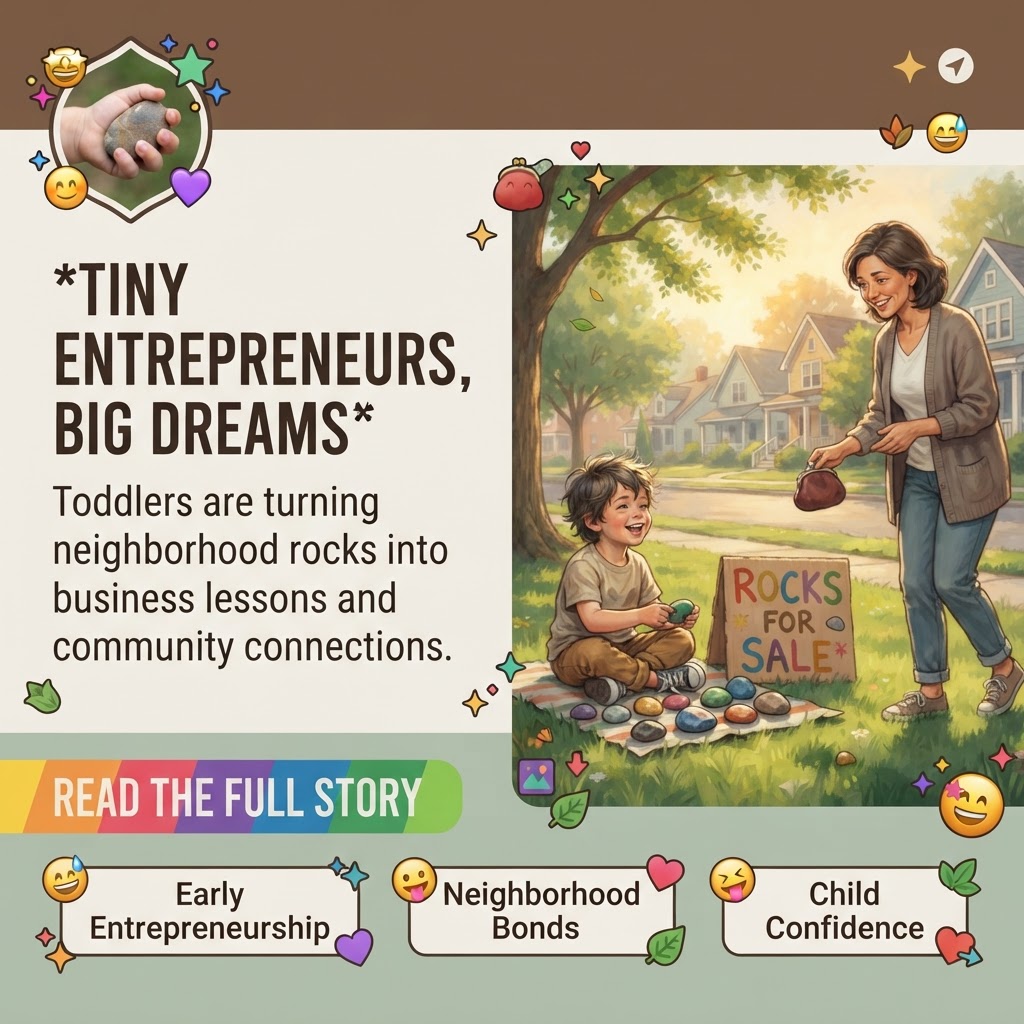
🪨 When Little Entrepreneurs Discover the Rock-Selling Business
Across the Sequatchie Valley and beyond, parents are discovering that their young children have entrepreneurial instincts—sometimes in the most unexpected ways. A recent social media conversation has sparked recognition of a quirky but telling trend: toddlers turning neighborhood rocks into a homemade business venture.
💡 Why This Matters
What might seem like a lighthearted question—”Does your three-year-old sell rocks the neighbors?”—actually touches on something meaningful about childhood, community, and how families are raising the next generation. 🏘️ It reveals how young children are learning about commerce, negotiation, and value creation in their own neighborhoods, often without formal instruction. For parents, it’s a gentle reminder that entrepreneurship doesn’t require a business plan or startup capital; sometimes it just requires a curious child, a pile of rocks, and willing neighbors.
❤️ Community Connections & Human Impact
This kind of informal, child-led enterprise thrives in communities where neighbors know each other and are willing to play along with a toddler’s business dreams. 👨👩👧👦 In tight-knit neighborhoods—the kind common throughout the Sequatchie Valley—these moments create small but meaningful interactions between families. A neighbor buying rocks from a three-year-old isn’t just a transaction; it’s an act of encouragement, a moment of connection, and a memory the child will carry forward.
For young children, these informal ventures teach real lessons: that people value what you create, that effort can be rewarded, and that you can contribute to your family or community in tangible ways. Parents who support these early business attempts—whether by helping their child gather rocks, set up a “shop,” or market their wares—are nurturing confidence and creativity during critical developmental years.
🌄 Local Perspective
In rural and semi-rural communities like those in the Sequatchie Valley, where outdoor play and self-directed activity remain common, children naturally gravitate toward resource-based enterprises. Rocks are abundant, free, and accessible—making them the perfect product for a young entrepreneur. This kind of play-based learning reflects a broader regional culture that values independence, resourcefulness, and the entrepreneurial spirit, even in its smallest forms.
🤔 Community Questions Worth Considering
- How do informal, child-led businesses in our neighborhoods strengthen connections between families and neighbors?
- What early lessons about work, value, and community do children learn when neighbors support their ventures—even playful ones?
- How can parents and communities encourage this kind of creative, independent thinking in young children?
- What role do these small neighborhood interactions play in building the kind of tight-knit communities we want to live in?
✨ Long-Term Community Impact
While a three-year-old’s rock-selling operation may be short-lived, the patterns it establishes can have lasting effects. Children who grow up in neighborhoods where their ideas are encouraged, where neighbors invest in their small ventures, and where self-directed activity is valued tend to develop stronger confidence and creativity. Over time, these early experiences contribute to a community culture that supports innovation, neighborly connection, and the kind of informal social bonds that make communities resilient.
The question posed on social media—playful as it is—reflects a deeper truth: in communities where people still know their neighbors and take time to engage with local children, entrepreneurship begins not in a classroom or boardroom, but on a front lawn with a pile of rocks and a determined toddler. 🌟




0 Comments