
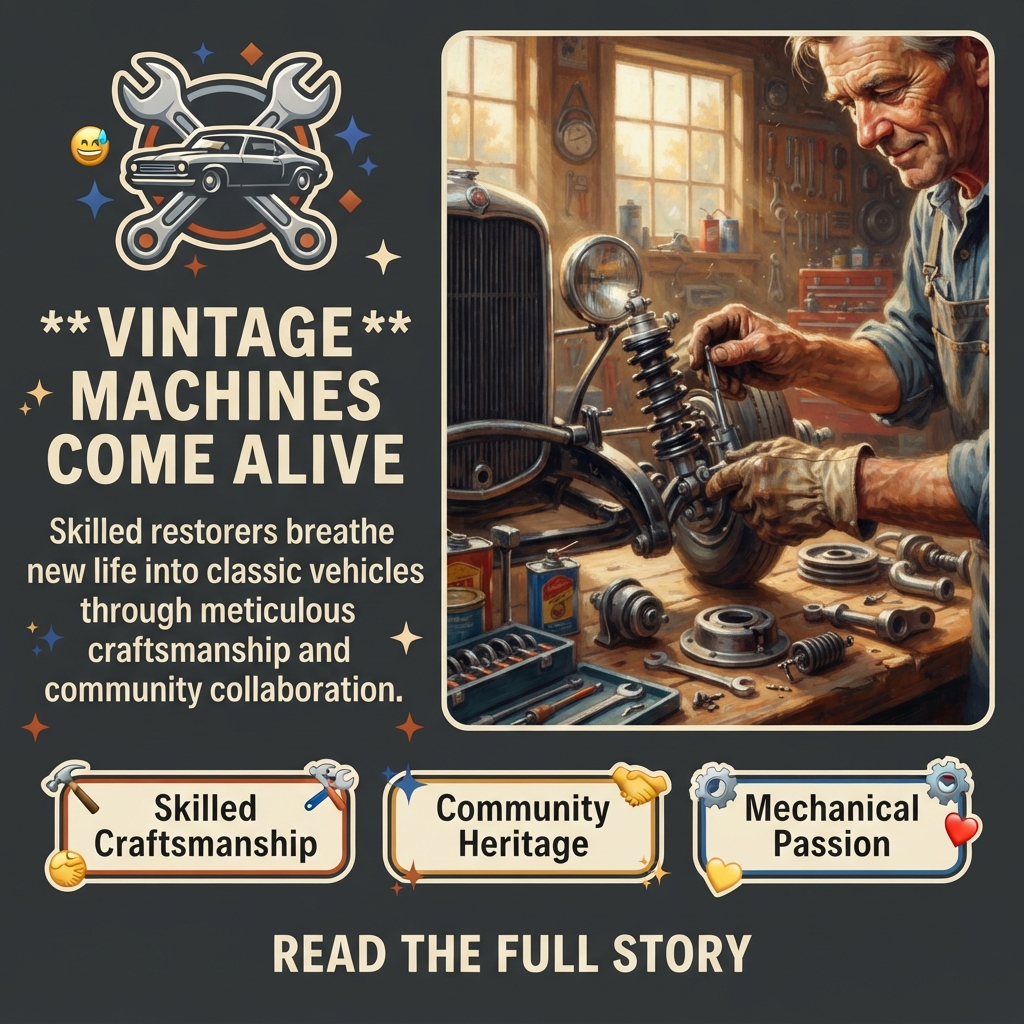
🚗 Classic Car Restoration Project Advances With Major Suspension and Body Work Milestones
Long Restoration is making steady progress on a multi-vehicle restoration project that reflects the hands-on craftsmanship and mechanical passion that runs through the Sequatchie Valley. The work combines vintage Volkswagen models with precision engineering, showcasing the kind of detailed restoration work that draws enthusiasts and community interest across the region.
🔧 What’s Happening Now
The restoration effort is advancing on multiple fronts. A split-bug front air ride suspension system is nearly complete and functional, with only paint work remaining. The team is using an older transaxle to set up the rear suspension. On a Squareback model, driver’s side fender beading has been installed—described as a challenging but rewarding task—and a marker light has been added to the driver’s side. A Porsche door has been buffed and prepared, and 1967 lower torsion bars are scheduled to arrive soon, with ball joints already completed. ✨
❤️ Why This Matters to the Community
Restoration projects like this one represent more than just mechanical work—they preserve automotive history and demonstrate the value of skilled craftsmanship in an era when many vehicles are simply replaced rather than renewed. For the Sequatchie Valley, where rural traditions and hands-on expertise remain central to community identity, restoration work connects residents to broader themes of sustainability, pride in workmanship, and the satisfaction of bringing something old back to life. These projects also often become gathering points for enthusiasts and curious neighbors who appreciate the technical knowledge and patience required.
🤝 Community Connections and Collaboration
The restoration effort involves multiple collaborators, including Caleb Watson, Pete Natale, Shaun Hughes, and Rachelle Natale, alongside the primary Long Restoration team. This kind of collaborative work—where people with shared interests come together around a common project—strengthens informal networks within the community. Such projects often inspire conversations about mechanical skills, automotive history, and the value of preserving older vehicles, creating natural opportunities for knowledge-sharing and mentorship across generations.
🛠️ The Technical Challenge
Restoration work of this complexity requires problem-solving at every stage. The team is adapting components from different eras and models—using an older transaxle for rear suspension setup, installing 1967-era torsion bars, and integrating modern air ride technology with classic Volkswagen platforms. This kind of creative engineering, where restorers must understand both original specifications and contemporary modifications, reflects the practical ingenuity that characterizes much of the hands-on work in rural communities.
📍 What Happens Next
The immediate next steps include painting remaining suspension components, adjusting the driver’s side door for proper fit, and receiving and installing the 1967 lower torsion bars. Once these milestones are complete, the team will likely move toward final assembly and testing phases. The project appears to be progressing steadily, with multiple systems nearing completion rather than all work happening simultaneously—a typical approach in restoration work where different components must be ready at the right time.
💡 For Enthusiasts and Curious Neighbors
If you’re interested in automotive restoration, classic Volkswagens, or the mechanics of suspension systems, Long Restoration‘s work offers a window into how these projects unfold. The team shares progress updates on their Facebook page, providing a real-time look at the challenges and solutions involved in bringing vintage vehicles back to working condition. Following such projects can deepen appreciation for the skill and patience restoration requires.
🌄 Long-Term Community Impact
Restoration projects contribute to local culture in subtle but meaningful ways. They preserve knowledge about older vehicles and mechanical systems that might otherwise be lost. They create informal gathering spaces where people with shared interests connect. They demonstrate that value exists in careful, patient work—a counterpoint to throwaway consumer culture. And they often result in vehicles that become part of local car shows, parades, and community events, adding character and history to public gatherings.
🧵 Community Threads: The Invisible Network
Skill-Sharing and Mentorship: Collaborative restoration work like this creates natural opportunities for experienced mechanics to share knowledge with those learning the craft. The involvement of multiple collaborators suggests a network of people with complementary skills—suspension specialists, body work experts, electrical knowledge—coming together around a shared project.
Maker Culture and DIY Values: Restoration projects embody the DIY ethos that remains strong in rural areas, where people solve problems by learning, experimenting, and adapting. This thread connects to broader community values around self-reliance and practical problem-solving.
Automotive Heritage and Local Identity: Classic Volkswagens carry cultural significance—they represent an era of automotive design and a particular aesthetic that enthusiasts worldwide appreciate. When local restorers work on these vehicles, they’re participating in a global community of enthusiasts while also contributing to local automotive culture.
Documentation and Transparency: By sharing progress updates publicly on social media, the restoration team invites community observation and interest. This transparency builds trust and allows neighbors to follow the work’s evolution, creating informal accountability and community engagement.
❓ Questions Worth Considering
- How do restoration projects like this one preserve mechanical knowledge and skills that might otherwise disappear from communities?
- What role do collaborative maker projects play in strengthening informal networks and relationships among neighbors?
- How might completed restoration vehicles contribute to local events, shows, and community gatherings?
- What opportunities exist for younger people in the community to learn hands-on mechanical skills through involvement in projects like this?


0 Comments