
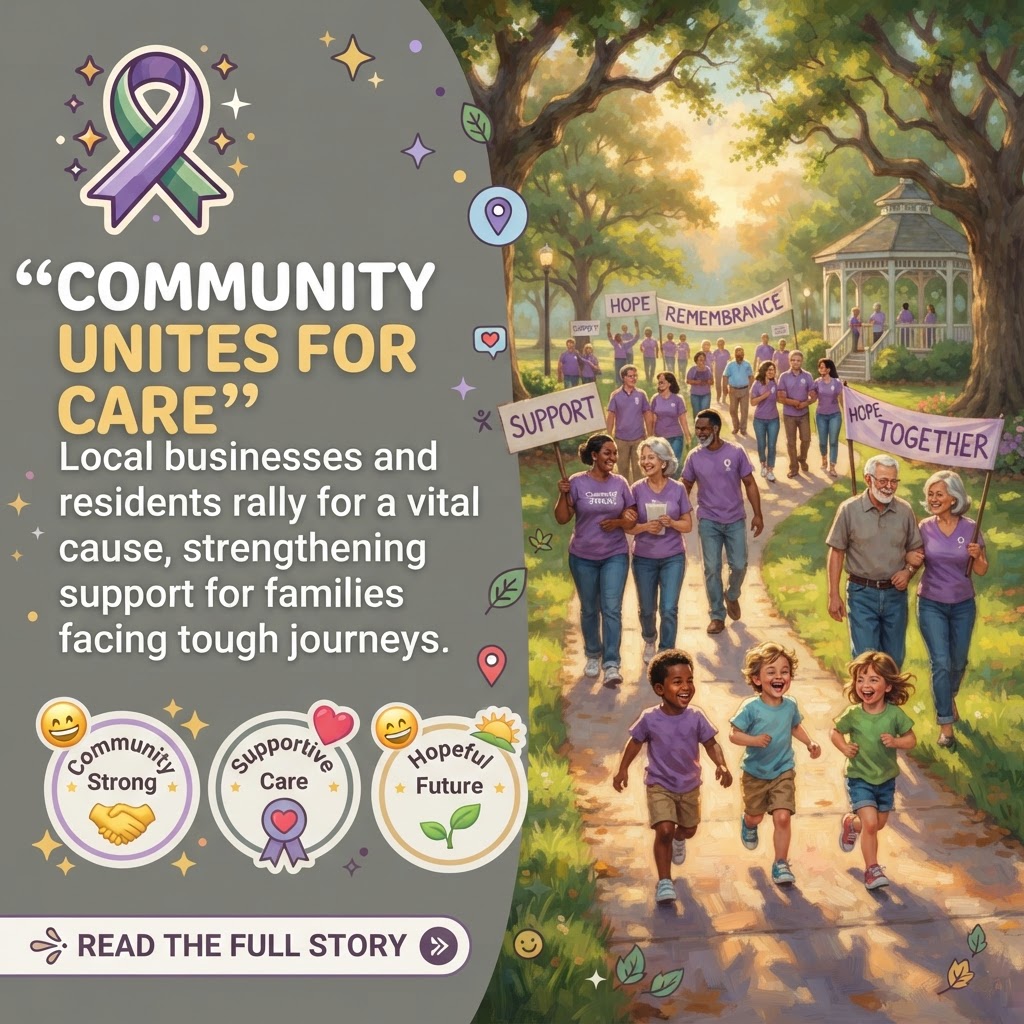
🌿 Sequatchie Valley Walk for Alzheimer’s Welcomes Reed Family Funeral Homes as Silver Sponsor
In a move that underscores the Sequatchie Valley’s commitment to compassionate care, local families and community leaders are celebrating the partnership between Reed Family Funeral Homes, Inc. and this year’s Sequatchie Valley Walk for Alzheimer’s. As the event approaches, this Silver Sponsorship highlights how businesses and organizations across the valley are stepping up to support families navigating one of life’s most challenging journeys.
Alzheimer’s disease touches countless lives in the Sequatchie Valley—whether through personal experience or community solidarity. The annual Walk for Alzheimer’s, organized by the Pat Summitt Foundation, serves as a vital gathering where residents can come together to raise awareness, honor loved ones, and advocate for resources that strengthen local families.
💜 Why This Matters
For many Sequatchie Valley families, Alzheimer’s isn’t just a medical diagnosis—it’s a daily reality that reshapes routines, relationships, and emotional well-being. The walk offers more than physical activity; it provides a space for shared understanding, reduced isolation, and hope.
Reed Family Funeral Homes’ sponsorship signals something deeper: the recognition that grief and caregiving are woven into the fabric of this community. Their support ensures that families facing Alzheimer’s can access critical resources—whether through educational workshops, respite care referrals, or simply knowing they’re not alone in their journey.
❤️ Community Connections
This partnership reflects a broader network of local organizations and individuals who have long championed Alzheimer’s awareness in the valley. The Pat Summitt Foundation, for instance, has been a cornerstone of Sequatchie Valley’s response to neurodegenerative diseases, drawing on the legacy of former Tennessee Lady Volunteers coach Pat Head Summitt, whose own battle with early-onset Alzheimer’s brought national attention to the disease.
Local churches, senior centers, and schools often host smaller awareness events or fundraisers leading up to the walk. For example:
– Sequatchie Valley High School has previously participated in student-led initiatives to educate peers about Alzheimer’s symptoms.
– Area churches, including First Baptist Church of Sequatchie and St. Peter’s Episcopal, have hosted memory cafés where families can share stories and resources.
– Nonprofits like the Sequatchie Valley Community Foundation occasionally partner with the walk to amplify fundraising efforts.
Reed Family Funeral Homes’ involvement underscores how even businesses traditionally focused on end-of-life care are becoming part of the valley’s proactive support system for Alzheimer’s patients and caregivers.
👨👩👧👦 Human Impact
Who benefits most from this sponsorship? The answer is clear: families directly affected by Alzheimer’s. For many, the disease arrives without warning, forcing adjustments to daily life—from hiring in-home aides to navigating complex healthcare systems. The walk and its sponsors provide tangible support:
– Financial relief: Proceeds fund local programs offering caregiver training or memory-enhancing activities.
– Emotional validation: Attendees often describe the event as a rare moment of connection with others who truly understand their struggles.
– Access to resources: Sponsors like Reed Family Funeral Homes help connect families to grief counselors, legal aid for estate planning, and local support groups.
Yet the impact extends beyond immediate relief. By fostering community awareness, the walk helps reduce stigma around Alzheimer’s—a critical step in ensuring patients receive early diagnosis and compassionate care sooner rather than later.
🏡 Local Perspective
Sequatchie’s rural setting presents unique challenges for families dealing with Alzheimer’s. Longer distances to specialists can delay diagnoses, and limited local resources sometimes leave caregivers feeling isolated. The walk addresses these realities by:
– Bringing experts to the valley: Past events have featured presentations from neurologists affiliated with Sequatchie Medical Center, offering insights tailored to rural healthcare access.
– Strengthening local networks: The event encourages collaboration between caregivers, healthcare providers, and community organizations—something that becomes increasingly vital as the valley’s population ages.
This sponsorship also reflects a growing trend in Sequatchie: businesses recognizing their role not just as service providers but as stewards of the community’s well-being. As more local companies invest in events like this walk, they reinforce the idea that prosperity isn’t measured solely by economic growth—but by how thoughtfully a town cares for its people.
🤝 Opportunities for Connection
Residents who want to get involved or show support have several ways to engage:
– Walk as a participant: Sign up to join the event, bringing friends, family, or even a loved one affected by Alzheimer’s. The walk is designed to be inclusive for all fitness levels.
– Volunteer your time: Help with registration, route guidance, or setting up informational booths. Volunteers are the backbone of the event and often form lasting friendships with fellow advocates.
– Donate or sponsor: Whether through the walk’s fundraising platform or by reaching out to DunlapWalk@gmail.com, individuals and businesses can amplify the impact of this year’s mission.
– Share stories: The Pat Summitt Foundation encourages attendees to bring photos or mementos of loved ones affected by Alzheimer’s, creating a powerful visual reminder of why this fight matters.
📅 What Residents Should Know
Here are key details for those interested in participating:
– Event name: Sequatchie Valley Walk for Alzheimer’s
– Beneficiary: Pat Summitt Foundation
– Sponsor spotlight: Reed Family Funeral Homes, Inc. (Silver Sponsor)
– How to get involved:
– Questions or sponsorship inquiries: Email DunlapWalk@gmail.com or leave a comment on the event’s Facebook page.
– Follow updates: The walk’s Facebook page (@Sequatchie Valley Walk for Alzheimer’s) will share registration deadlines, volunteer sign-ups, and speaker announcements as they approach.
🔮 What Happens Next
While the exact date hasn’t been confirmed in this post, past events have typically taken place in late spring or early summer. Organizers are likely finalizing:
– Registration details: Expect a link to sign up for the walk, including options to fundraise individually or as a team.
– Speaker lineup: The event often features local healthcare professionals, caregivers, and advocates sharing personal stories or practical advice.
– Community partnerships: Collaborations with businesses like Reed Family Funeral Homes may lead to additional resources being available on-site, such as free grief counseling sessions.
Keep an eye out for the official announcement on the walk’s Facebook page or through local news outlets like The Sequatchie County News.
🤔 Community Questions
As this event approaches, residents might consider:
– How has Alzheimer’s affected families in our valley? Are there stories we haven’t heard yet that could inspire others?
– What other local resources do caregivers need but aren’t currently available? Could businesses or community groups help fill those gaps?
– How can Sequatchie continue to build on its compassionate culture—especially when it comes to end-of-life and chronic illness care?
– Why is it important for businesses like Reed Family Funeral Homes to support events focused on preventing grief rather than just addressing it?
– What small ways could individuals take action this month to spread awareness, whether through conversation, volunteering, or sharing information?
🌱 Long-Term Community Impact
The ripple effects of this sponsorship—and the walk itself—could extend far beyond a single day. Over time, such events:
– Reduce stigma: By normalizing conversations about Alzheimer’s, they encourage earlier diagnoses and better support systems.
– Strengthen local networks: Caregivers often form lifelong friendships with others who understand their challenges, creating a safety net that reduces burnout.
– Inspire systemic change: Public awareness can pressure policymakers to allocate more resources to rural healthcare, including telemedicine for neurological conditions.
– Foster intergenerational bonds: Schools and senior centers participating in the walk can build bridges between generations, ensuring younger residents understand the importance of caregiving.
For Sequatchie Valley, where community is often defined by how we care for one another, this sponsorship isn’t just about raising money—it’s about reinforcing the idea that no family should face Alzheimer’s alone.
🧵 Community Threads
1. The Legacy of Pat Summitt and Rural Awareness
Why it matters: The Pat Summitt Foundation’s presence in Sequatchie Valley ties local efforts to a nationally recognized advocate for Alzheimer’s research. Summitt’s story humanizes the disease, making it relatable to families who might otherwise feel isolated.
How residents benefit: By connecting their own experiences to hers, participants gain courage and solidarity. The foundation’s work also ensures that Sequatchie Valley doesn’t just react to Alzheimer’s—it proactively seeks solutions.
2. Businesses as Community Stewards
Why it matters: Reed Family Funeral Homes’ sponsorship challenges the traditional perception of funeral homes as solely service providers. Instead, they’re positioned as partners in community resilience.
How residents benefit: This shift encourages other local businesses to see their role beyond profit—inviting them to invest in the well-being of Sequatchie’s people. It also sends a message: We care about you, not just your bottom line.
3. The Intersection of Grief and Caregiving
Why it matters: Alzheimer’s doesn’t just affect patients; it transforms entire families. The walk creates space for both caregivers and those grieving losses to share their journeys.
How residents benefit: By normalizing these conversations, the community builds a more empathetic culture. It also ensures that resources—whether emotional support groups or practical tools—are directed where they’re needed most.
4. Rural Healthcare Advocacy
Why it matters: Sequatchie Valley’s walk is part of a broader movement to advocate for rural healthcare access, particularly for chronic and neurodegenerative diseases.
How residents benefit: As awareness grows, so does pressure on local providers to offer specialized care (e.g., memory clinics) or partner with telehealth services. This could lead to better outcomes for patients who might otherwise wait months for specialist visits.
5. The Power of Collective Action
Why it matters: Events like this walk prove that change happens when individuals come together—not just through donations, but through shared stories and mutual support.
How residents benefit: Participants often report feeling less alone after the event, which directly improves their ability to cope with daily challenges. The walk also strengthens civic engagement, reminding residents that they have the power to shape their community’s response to tough issues.


0 Comments