
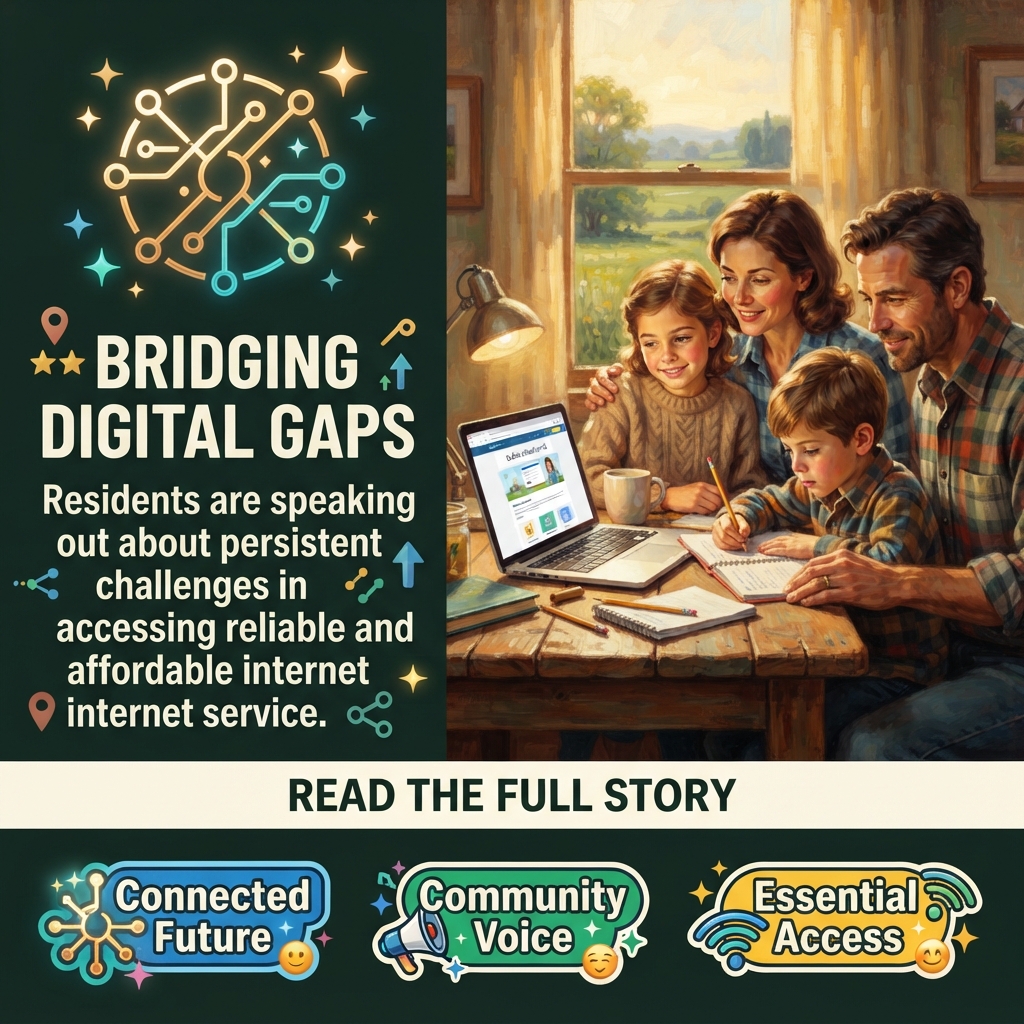
🌐 Internet Access Challenges in Sequatchie Valley: What Residents Are Saying
A recent community conversation in a local Sequatchie Valley group has surfaced a persistent frustration many residents face: finding reliable, affordable internet service. The discussion reflects a broader challenge affecting rural and semi-rural communities across the region, where limited provider options and high costs continue to shape how families work, learn, and stay connected.
❓ The Core Problem
One resident recently posted a straightforward question to neighbors: who provides reliable wifi in the area? 🛰️ The inquiry came with a specific complaint—frustration with a current satellite internet provider and concerns about both service quality and affordability. The post struck a chord, generating dozens of responses from community members sharing their own experiences with internet service providers.
The question itself reveals something important about life in the Sequatchie Valley: internet access is not a given. For many residents, choosing a provider involves weighing limited options, managing high monthly costs, and tolerating service limitations that urban areas may take for granted.
💡 Why This Matters
Reliable, affordable internet has become essential to modern life—not optional. 📱 For Sequatchie Valley residents, internet access affects:
- Work and income: Remote work, freelancing, and small business operations depend on stable connectivity.
- Education: Students need reliable connections for homework, online classes, and college applications.
- Healthcare: Telehealth appointments and medical research require dependable service.
- Family connection: Staying in touch with loved ones near and far.
- Emergency services: Access to information during crises or weather events.
- Economic opportunity: Businesses and entrepreneurs need fast, consistent service to compete.
When internet options are limited or expensive, these everyday needs become harder to meet—and the gap between rural and urban communities widens.
🏘️ Community Connections
This conversation is happening in local community groups where neighbors turn to each other for advice and recommendations. 👥 These informal networks—Facebook groups, church gatherings, coffee shop conversations—are where real community knowledge lives. When someone asks “who does everyone use,” they’re tapping into collective experience and trust. The responses that follow reveal not just provider names, but which neighbors have tried what, what worked, what didn’t, and what trade-offs they’ve accepted.
This kind of peer-to-peer problem-solving is a hallmark of close-knit communities. It also signals that residents are actively seeking solutions and willing to share what they’ve learned.
👨👩👧👦 Human Impact
Behind the question about wifi are real people managing real constraints. A parent working from home while children attend school needs different service than a retiree checking email. A small business owner streaming video content has different needs than someone primarily browsing and email. 💼 A student applying to colleges needs reliable upload speeds for applications and video interviews. A family with a member receiving telehealth care needs consistent, uninterrupted service.
The frustration expressed in the original post—about cost and service quality—reflects the difficult choices many residents make: pay more for better service, accept slower speeds to save money, or explore alternatives that may not be available in their area.
🗺️ Local Perspective
Internet access challenges are not unique to the Sequatchie Valley, but they are particularly acute in rural regions. 📍 The valley’s geography—rolling terrain, distance from major urban centers, and lower population density—makes it less attractive to broadband providers than densely populated areas. This means fewer competitors, less pressure to lower prices, and sometimes limited options altogether.
Satellite internet, like the provider mentioned in the post, has historically been the fallback option for rural areas without cable or fiber access. But satellite service comes with trade-offs: higher latency (delay), data caps, weather sensitivity, and often higher monthly costs. As more residents work and learn remotely, these limitations have become more frustrating.
The conversation also reflects a broader regional trend: as remote work becomes more common, internet quality is becoming a factor in whether people choose to stay in or move to rural communities. For the Sequatchie Valley, reliable, affordable internet is increasingly tied to economic opportunity and quality of life.
🤝 Opportunities for Connection
This community conversation creates several potential pathways forward:
- Peer recommendations: Residents sharing honest experiences with different providers help neighbors make informed choices.
- Collective advocacy: When many residents face the same problem, it can motivate community organizing around broadband access—whether through local government, nonprofit initiatives, or regional coalitions.
- Information sharing: Community groups can become repositories of practical knowledge about available options, pricing, installation, and troubleshooting.
- Support networks: Residents helping neighbors navigate provider options, compare plans, or troubleshoot problems strengthen community bonds.
📊 What Residents Should Know
If you’re evaluating internet options in the Sequatchie Valley, here are practical considerations based on what the community conversation reveals:
- Provider options vary by location: What’s available in one part of the valley may not be available in another. Check what’s actually available at your address before deciding.
- Cost vs. quality trade-offs are real: The cheapest option may not meet your needs. Consider what you actually use internet for—streaming, video calls, gaming, remote work—and choose accordingly.
- Peer experience matters: Ask neighbors what they use and what they think. Their real-world experience is valuable.
- Service changes: New providers and technologies are expanding into rural areas. What wasn’t available last year may be available now.
🔮 What Happens Next
Community conversations like this one often lead to several outcomes: 📢
- Shared recommendations: Neighbors will likely continue responding with their own provider experiences, creating a crowdsourced guide to local options.
- Ongoing frustration: Without new providers or infrastructure, the same complaints will resurface as new residents face the same choices.
- Potential advocacy: If enough residents express frustration, it may motivate local leaders or nonprofits to explore broadband expansion initiatives.
- Technology changes: New options—5G wireless, fiber expansion, satellite improvements—may eventually reach the valley, changing the landscape of available choices.
💭 Questions Worth Considering
As this conversation continues in the community, consider these questions:
- How many Sequatchie Valley residents face limited internet options, and how does that affect their ability to work, learn, and participate in the broader economy?
- What would reliable, affordable internet access mean for local businesses, remote workers, and students in the valley?
- Are there community organizations, local government, or regional coalitions working on broadband expansion, and how can residents support or participate in those efforts?
- How do internet access gaps affect quality of life, economic opportunity, and whether younger families choose to stay in or move to the valley?
🌱 Long-Term Community Impact
Internet access is increasingly tied to community vitality. ✨ In the Sequatchie Valley, reliable, affordable broadband could:
- Enable economic growth: Remote workers, entrepreneurs, and small businesses could thrive with better connectivity.
- Improve educational outcomes: Students would have equal access to online learning resources and opportunities.
- Strengthen healthcare: Telehealth and health information access would improve, especially for residents in remote areas.
- Enhance quality of life: Families could stay connected to distant loved ones, access entertainment and information, and participate in online communities.
- Attract and retain residents: As remote work becomes more common, communities with good internet access become more attractive places to live and work.
Conversely, without progress on broadband access, the valley risks falling further behind in economic opportunity and quality of life—and residents may continue to leave in search of better connectivity elsewhere.
🧵 Community Threads
This conversation reveals several invisible connections worth understanding:
The peer-advice network: 🤝 Local Facebook groups, church gatherings, and neighborhood conversations are where real community knowledge lives. When someone asks for a recommendation, they’re tapping into trust built over time. The responses they get reflect neighbors’ actual experiences, not marketing claims. This network is valuable—it’s how communities solve problems together.
The rural-urban divide: 🌄 Internet access challenges highlight a broader gap between rural and urban communities. Urban residents often take reliable, affordable broadband for granted. Rural residents navigate limited options and higher costs. This gap affects economic opportunity, education, healthcare, and quality of life. Understanding it helps residents advocate for solutions and support neighbors facing these challenges.
The work-and-life shift: 💼 The conversation reflects a fundamental change in how people work and live. Remote work, online education, and digital services are now essential—not optional. For the Sequatchie Valley, this means internet access is no longer a luxury; it’s infrastructure. Communities that recognize this and invest in broadband access will thrive. Those that don’t may struggle to attract and retain residents and businesses.
The collective problem-solving tradition: 👥 When residents turn to each other for advice and recommendations, they’re drawing on a long tradition of community mutual aid. This conversation—and the dozens of responses it generates—is neighbors helping neighbors. It’s also an opportunity for community leaders to listen, learn what residents need, and explore solutions together.
🤔Source
📰Other Stories
- 🍖 Local BBQ Spot Celebrates Community with New Dining Room & Smoky Specialties
- 🍩✨ Field to Flour & Mock & Mule Team Up for a Sweet Saturday at Chattanooga Public Library
- 🎓 Research Study Seeks Caregivers’ Voices to Improve Local Family Support
- 🩸 Life-Saving Blood Drive at Cagle Community Center – Free & Easy Donation in Sequatchie Valley
- 🗳️ Sequatchie County ’s 8th District Meet the Candidates Livestream: Your Chance to Engage Before August Elections
- 🐣 Unlikely Newcomers: Flightless Feathers Join Weakley Hog Farm ’s Unexpected Menagerie
- 🎆 Independence Day Celebration at White Oak Ranch Resort in Dunlap , TN — Grand Opening & Fireworks!


0 Comments