
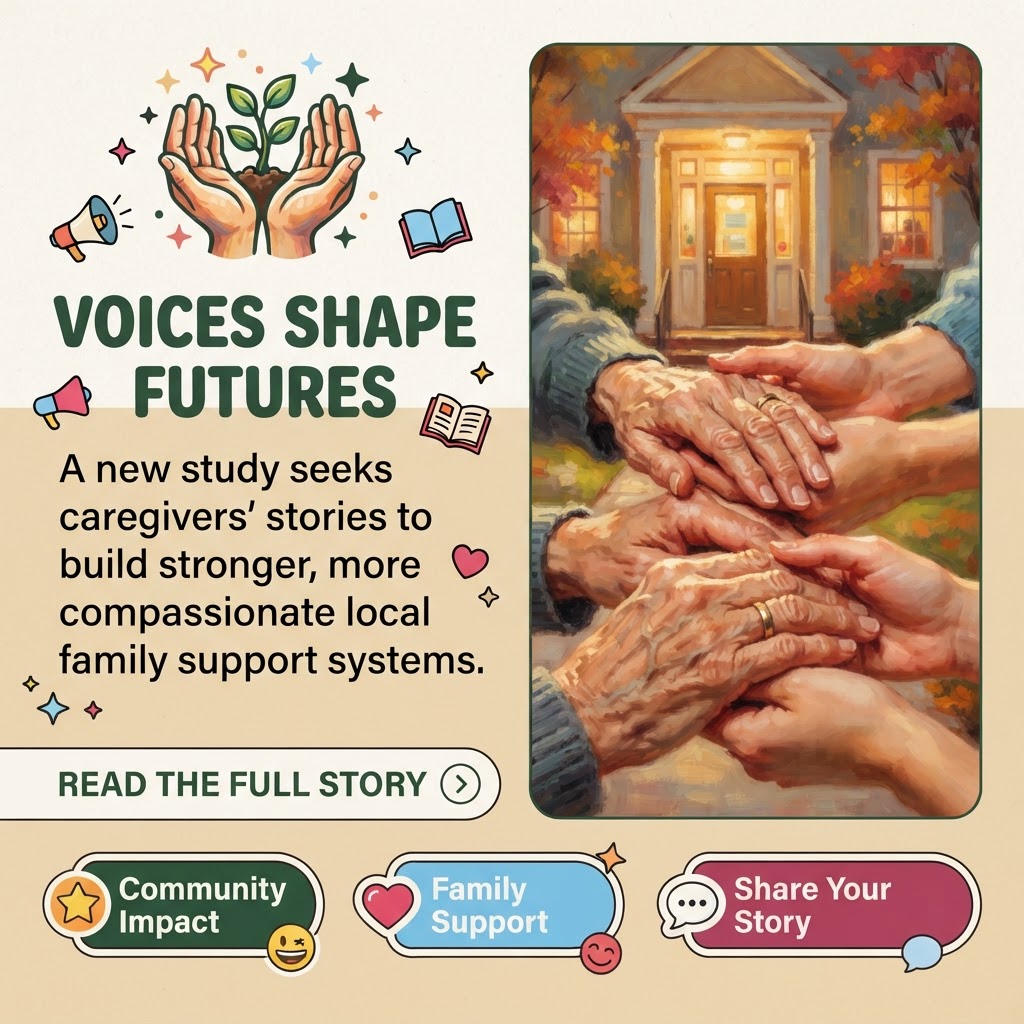
🎓 Research Study Seeks Caregivers’ Voices to Improve Local Family Support
A doctoral student’s upcoming research on caregivers navigating judicial services for their children offers a rare opportunity to amplify local voices and strengthen community understanding of family challenges in the Sequatchie Valley. As families across the region grapple with complex systems, this study could help shape more compassionate support programs tailored to our own backyard.
📢 Why This Matters
The experiences of caregivers whose children have interacted with judicial services often remain invisible in community conversations—yet these families face profound emotional and practical burdens. This research aims to uncover those stories, offering insights that could improve local resources, advocacy efforts, and even school or nonprofit programs designed to help families navigate similar situations.
❤️ Human Impact
Who might be affected? Caregivers who have personally experienced their child’s involvement with judicial services—whether through foster care, juvenile court, truancy proceedings, or other systems—could find validation in sharing their experiences. For some, participating may bring relief to know they’re not alone; for others, it could spark new connections with local support networks.
Families who choose not to participate won’t be affected directly, but the research’s findings could indirectly shape future services that benefit everyone—from schools and child welfare agencies to community organizations like Sequatchie Valley Family Services or local churches that offer mentorship programs.
🤝 Community Connections
This study intersects with several existing threads in the Sequatchie Valley’s social fabric:
- Child welfare advocacy: Groups like the Van Buren County Children’s Advocacy Center and local nonprofits already work to support families entangled in judicial systems. Their collaboration with researchers could amplify their impact.
- Schools and youth programs: Teachers, counselors, and after-school organizations may gain insights that help them better identify at-risk students or connect families to resources.
- Faith communities: Churches and religious organizations often provide emotional support to caregivers. Understanding the unique challenges these families face could inspire new outreach initiatives.
💡 Local Perspective
While research on caregiver experiences is common in larger cities, studies focused specifically on rural Appalachian communities like ours are less prevalent—and often reveal distinct dynamics. In the Sequatchie Valley’s close-knit environment, stigma around judicial involvement can be particularly acute. This study may uncover how isolation, limited resources, or cultural norms shape caregivers’ journeys here.
Historically, local efforts to support families—such as the Sequatchie Valley Family Resource Center—have thrived on grassroots collaboration. If this research identifies gaps in services, it could inspire new partnerships between community organizations, schools, and even local businesses that want to offer pro bono legal aid or mentorship.
📣 Opportunities for Connection
Residents who meet the study’s criteria (as outlined in the attached flyer) can:
- Share their story confidentially to help shape better support systems for future families.
- Connect with local resources through referrals provided by the researcher, Chelsea Fuller.
- Spread awareness by sharing this post in community groups or with trusted networks—especially among parents, grandparents, or caregivers who might relate.
🗓️ What Residents Should Know
The study is:
- Voluntary and confidential: No compensation is offered, but participants will contribute to meaningful change for their community.
- Open to caregivers of children who have had judicial involvement (details in the flyer).
- Contactable via private message or through the information on the attached flyer (linked below).
🔮 What Happens Next
The next steps depend on how many caregivers choose to participate, but likely milestones include:
- Data collection: Interviews or surveys with participants to gather firsthand accounts.
- Analysis and reporting: Sharing findings with local organizations to inform programs or policies.
- Potential follow-up: If the research identifies urgent needs, organizers may collaborate with existing Valley groups to address them.
🤔 Community Questions
As this study unfolds, readers might consider:
- How could local schools or churches better support families navigating judicial systems?
- What resources—whether free legal aid, mentorship programs, or emotional support groups—are missing in our community for caregivers?
- If you’ve been involved with child welfare services, how might sharing your story help others avoid the same challenges?
- How could businesses or nonprofits partner with researchers to amplify these findings?
✨ Long-Term Community Impact
If successful, this research could:
- Strengthen local advocacy: Equip organizations like the Children’s Advocacy Center with data-driven arguments for better funding or services.
- Improve school support systems: Help counselors and teachers identify early signs of family distress and connect students to help.
- Foster community resilience: Reduce stigma around judicial involvement by normalizing conversations about caregivers’ needs.
- Inspire future collaboration: Encourage more researchers, nonprofits, and faith groups to work together on family support initiatives.
🧵 Community Threads: The Hidden Network
This study touches several invisible but vital connections in the Sequatchie Valley:
- The caregiver network: A hidden web of parents, grandparents, and guardians who often rely on each other for emotional support—yet rarely have a formal space to share their experiences. This research could help bridge that gap.
- Schools and child welfare: The quiet collaboration between educators and social workers to spot at-risk students. Understanding caregivers’ perspectives might reveal how these systems can work more seamlessly.
- Faith as a lifeline: Many caregivers turn to churches for meals, childcare, or counseling during crises. This study could highlight how religious communities can expand their role in systemic support.
- The ripple effect of stigma: In tight-knit rural communities, fear of judgment often prevents families from seeking help. Research like this may help dismantle those barriers by showing others they’re not alone.
To learn more or participate, visit the attached flyer shared in the original post here or message Chelsea Fuller directly.
🤔Source
📰Other Stories
- 🎆 Four Decades of Family Tradition: Fall Creek Falls State Park Celebrates 4th of July
- 🎤 Open Mic Night at Castleberry Studios : Local Artists Take the Stage in Dunlap
- 🤠 Cowboy Church Brings Biggest Presentation of the Season This Saturday
- Fresh Produce Available at Feral Forrest Pantry & Apothecary 🍅
- 💰 Affordable Finds: Local Thrift Store Offers Kitchen & Furniture Deals This Weekend
- 🚛 Local Dumpster Rental Service Expands Options for Homeowners & Contractors in Chattanooga
- 🍽️ Summer Dining Comes to the Patio at Top of the Rock Restaurant & Brewery


0 Comments