

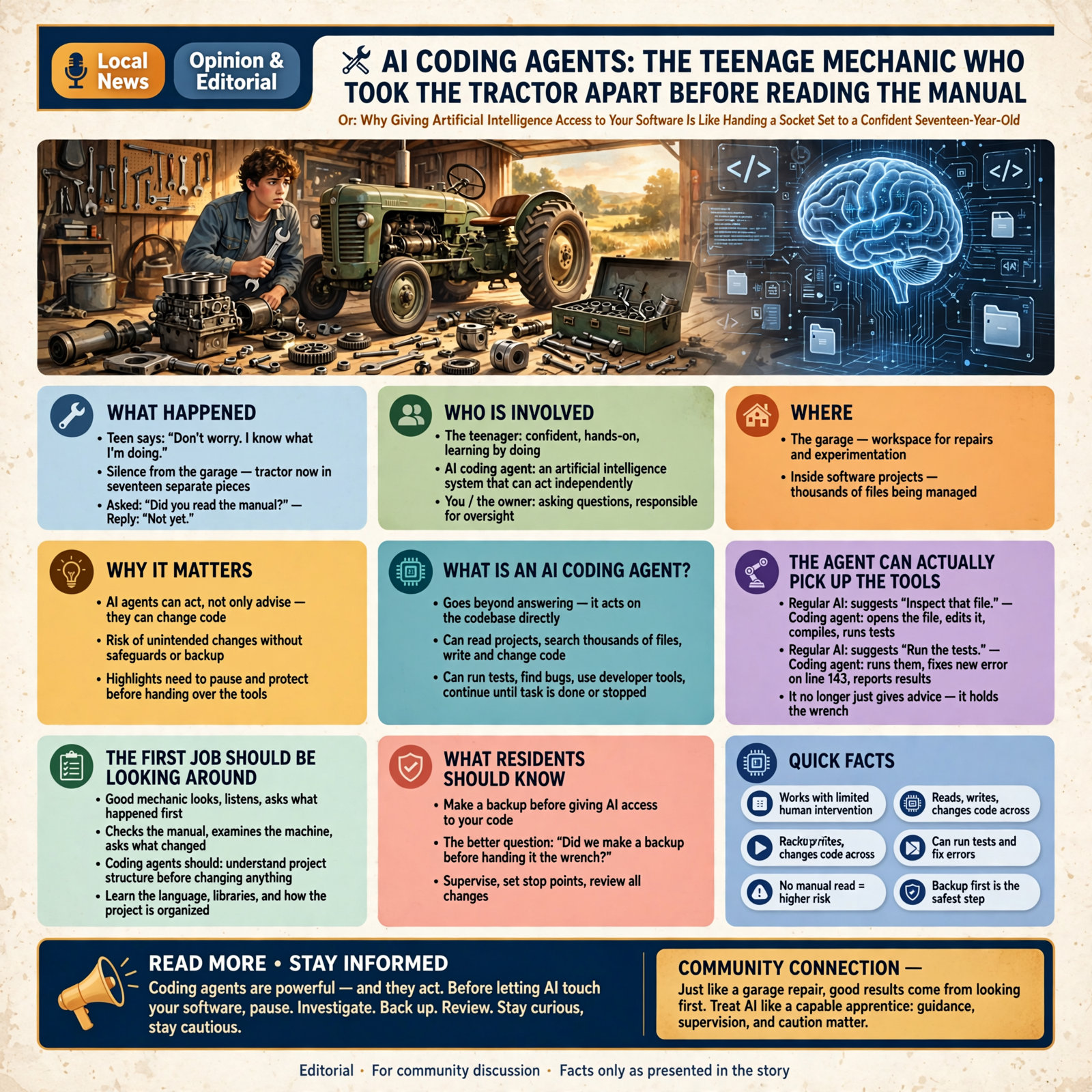
🛠️ AI Coding Agents: The Teenage Mechanic Who Took the Tractor Apart Before Reading the Manual

Or: Why Giving Artificial Intelligence Access to Your Software Is a Little Like Handing a Socket Set to a Confident Seventeen-Year-Old
There are few sounds more concerning than silence coming from the garage after a teenager announces:
“Don’t worry. I know what I’m doing.”
That sentence has preceded a great many educational experiences.
Sometimes the project turns out beautifully.
Sometimes the lawn mower runs better than it ever did.
Sometimes the teenager discovers a mechanical talent nobody knew he had.
And sometimes you walk into the garage and discover the family tractor in seventeen separate pieces.
You ask:
“Why did you take the carburetor off?”
The young mechanic replies:
“I thought the problem might be in there.”
You ask:
“Did you read the manual?”
He looks offended.
“Not yet.”
Welcome to the world of AI coding agents.
These are artificial intelligence systems that do more than tell programmers what code might work.
They can increasingly:
- read software projects,
- search through thousands of files,
- write new code,
- change existing code,
- run tests,
- find bugs,
- use development tools,
- and sometimes keep working through an entire programming task with limited human intervention.
That is an extraordinary capability.
It is also why the first question should not always be:
“How smart is the AI?”
Sometimes the better question is:
“Did we make a backup before we handed it the wrench?”
💻 First, What Is an AI Coding Agent?

Many people have already encountered AI that can write computer code.
You ask:
“Write a program that sorts this list.”
The AI produces code.
You copy the code into your program.
That is useful.
But a coding agent goes considerably further.
Instead of merely answering:
“Here’s some code you might try,”
the agent may be given a goal such as:
“Add a customer search feature to this application, update the database if necessary, write tests, fix any errors, and make sure the program still builds.”
The agent may then inspect the existing project, determine which files matter, modify them, run the software, examine failures, make corrections, and continue until the task is complete—or until somebody sensibly tells it to stop.
This is the difference between asking:
“How do I change the spark plug?”
and saying:
“The tractor won’t start. Figure it out.”
🔧 The Agent Can Actually Pick Up the Tools

This is what makes coding agents fundamentally different from ordinary question-and-answer AI.
A regular AI can tell you:
“You should inspect that file.”
A coding agent may open the file.
A regular AI can suggest:
“Run the tests.”
A coding agent may run them.
A regular AI may say:
“There is probably an error around line 82.”
A coding agent may:
- open line 82,
- change the code,
- compile the program,
- see a new error on line 143,
- fix that one too,
- run the tests,
- and report what happened.
In other words, the whippersnapper no longer stands beside the tractor giving advice.
He has the socket wrench.
📂 The First Job Should Be Looking Around Before Touching Anything

A good mechanic does not immediately begin removing parts.
He looks.
He listens.
He asks what happened.
He examines the machine.
He may check the manual.
He may ask:
“What changed right before this stopped working?”
Good coding agents should behave similarly.
Before changing software, they should understand:
- how the project is organized,
- what programming language it uses,
- which libraries are involved,
- how the application is built,
- how tests are run,
- where important configuration lives,
- and which parts should not be disturbed.
This preliminary exploration is often more important than writing code.
Because one of the quickest ways to create a new problem is to solve the wrong one enthusiastically.
📖 Yes, There Really Is a Manual
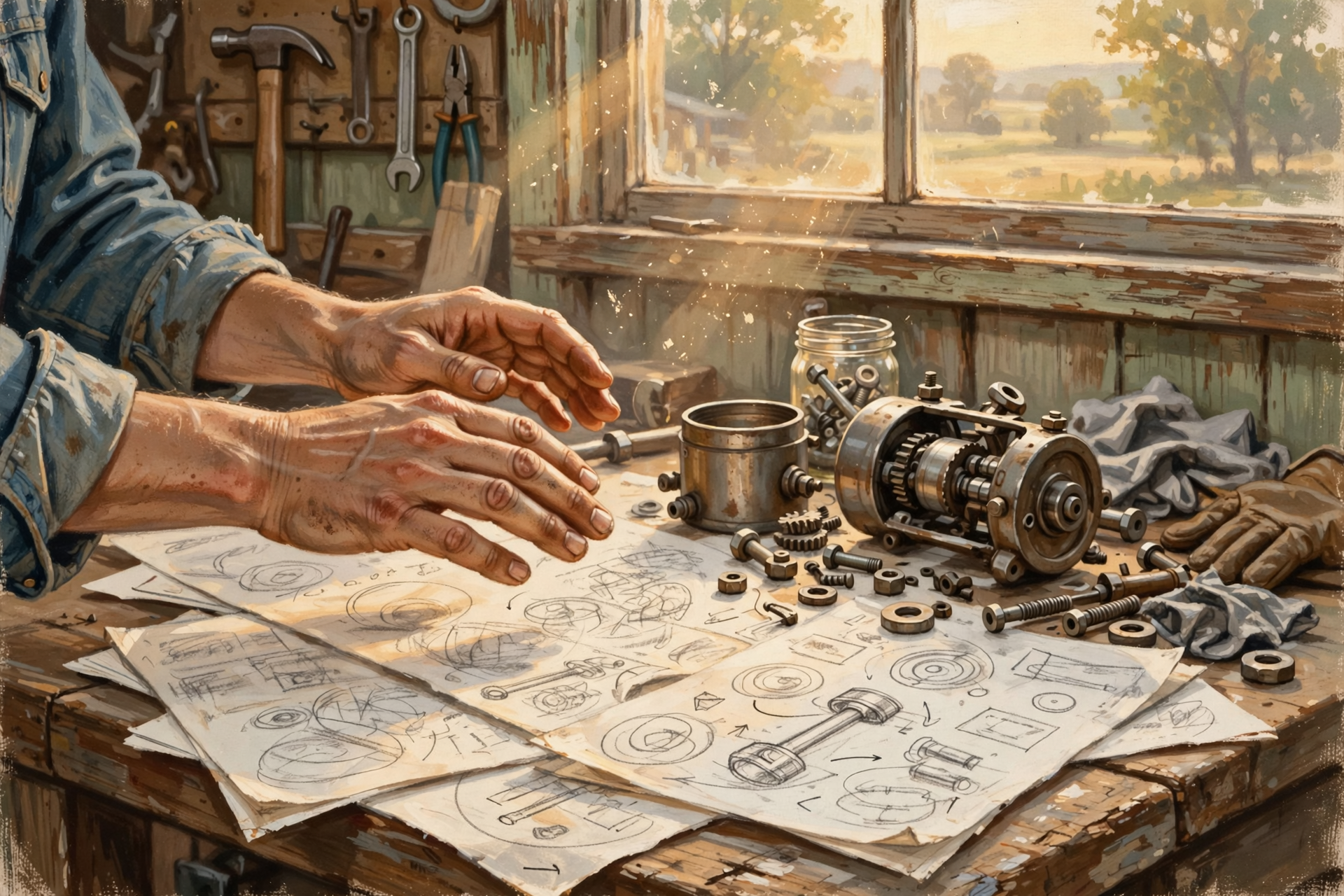
Software projects have their own version of shop manuals.
They may contain:
- README files,
- architecture documents,
- coding standards,
- developer notes,
- database diagrams,
- test instructions,
- deployment instructions,
- and comments explaining why something strange exists.
That last category is especially important.
Programmers occasionally write code that looks ridiculous for an excellent reason.
A new developer—or an AI—may look at it and think:
“Well, that’s obviously wrong.”
Then “fix” it.
Three days later somebody discovers the allegedly unnecessary code was the only thing preventing invoices from being sent twice.
This is why documentation matters.
The manual does not exist merely to inconvenience the mechanic.
🧠 AI Coding Agents Can Be Brilliantly Fast

This is the part worth getting excited about.
A capable coding agent can sometimes inspect and modify software at a speed that would have seemed absurd only a few years ago.
It can:
- trace how data flows through a project,
- find every place a particular function is used,
- update repetitive code across many files,
- generate tests,
- explain unfamiliar code,
- find likely bugs,
- modernize old patterns,
- write documentation,
- and perform tedious maintenance work.
Imagine an apprentice mechanic who has read nearly every repair manual ever written, never gets tired, and can search a 100,000-line program in seconds.
That’s enormously valuable.
The trick is remembering that the apprentice can still misunderstand what you wanted.
🙄 “I Improved It”

These may be the three most dangerous words in both garages and software development.
You ask the teenager to replace a belt.
He replaces the belt.
Then he notices another part.
Then another.
Then he decides the exhaust could be improved.
Then he reroutes a cable.
Then he paints something.
At supper he proudly announces:
“I upgraded the tractor.”
This is known in software as scope creep.
You asked the AI to fix one bug.
It notices nearby code that looks untidy.
Then another function could be modernized.
Then perhaps the entire class should be reorganized.
Then a dependency could be replaced.
Soon your bug fix has turned into a home renovation.
Good coding-agent instructions should define scope.
For example:
“Fix this problem. Do not redesign unrelated components. Explain any additional changes you believe are necessary before making them.”
That is the software equivalent of:
“Replace the belt. Leave the rest of the tractor alone.”
🧪 Tests Are How You Find Out Whether the Tractor Still Runs

Software developers use automated tests to check whether code behaves as expected.
A test might verify:
“If a customer orders three items at $10 each, the total should be $30.”
Or:
“If the user enters the wrong password, access should be denied.”
Or:
“This old feature must still work after we add the new one.”
Tests are especially important when AI is modifying software.
Without tests, an AI may make a change that looks completely reasonable but quietly breaks something else.
Imagine repairing the tractor.
You finish.
You polish the hood.
You proudly announce success.
Grandpa asks:
“Did you start it?”
You reply:
“No.”
Grandpa has identified a weakness in your quality-assurance process.
Running tests is the software version of turning the key.
🔁 And Then You Need Regression Tests

There is another important category called regression testing.
That simply means checking that fixing something new did not break something old.
You repair the headlights.
Wonderful.
But now the horn does not work.
You fix the horn.
Now the windshield wipers operate whenever you turn left.
At some point you begin questioning the entire electrical system.
Software can behave the same way.
That is why mature projects accumulate tests over time.
Every important feature becomes something the system can recheck automatically.
This gives AI coding agents a safety net.
They can make changes and immediately discover whether old behavior has been disturbed.
💾 Backups: Because Occasionally the Tractor Does End Up in Pieces

Before making significant software changes, there should be a way back.
This is where backups and version control become important.
Version control is essentially a detailed history of changes made to software.
It lets developers compare versions and often restore earlier code.
The most widely known version-control system is Git.
Think of it as taking photographs of the tractor before every repair.
Except considerably more useful.
If an AI changes forty files and the result is a disaster, version control can help identify exactly what changed and restore a known-good state.
This is why the sentence:
“I think I can fix it.”
should ideally be followed by:
“Good. Make a backup first.”
🌿 Branches: Giving the Whippersnapper His Own Tractor to Experiment On

Modern software teams frequently use something called a branch.
A branch allows developers to work on changes separately from the main, stable version of the software.
This is a wonderful concept for AI coding agents.
Instead of handing the teenager the only tractor you own, you give him a separate work area where he can experiment without immediately changing the machine you need tomorrow morning.
If the work turns out well, the changes can be reviewed and merged into the main version.
If the work turns out poorly, nobody has to explain why the family tractor is now powered by a leaf blower.
🏖️ Sandboxes: Let Him Experiment Somewhere He Can’t Burn Down the Barn
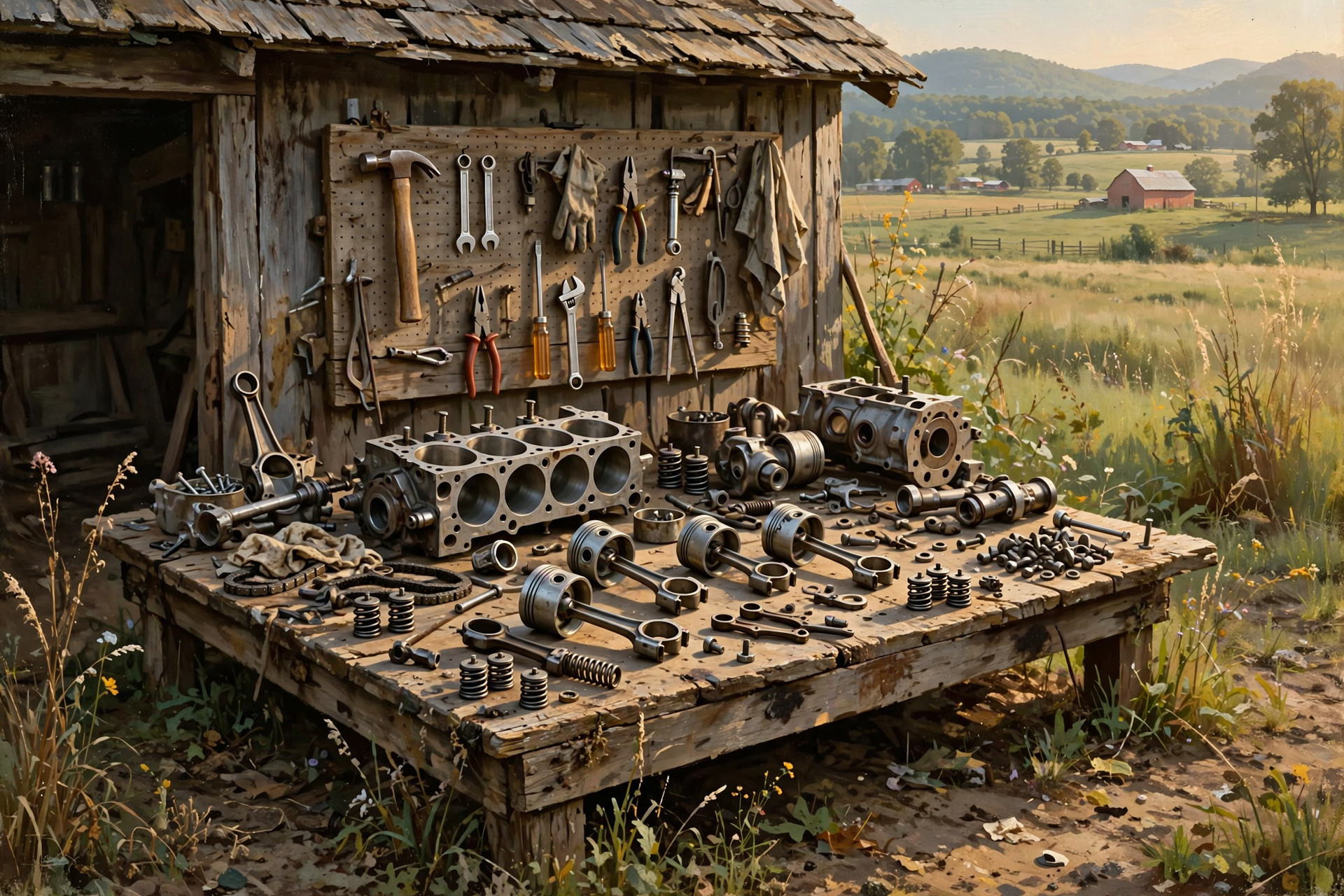
A sandbox is an isolated environment where software can run with limited ability to affect the rest of the computer or network.
It is another excellent concept for AI agents.
You want the AI to experiment.
You want it to run commands.
You may even want it to install temporary tools.
But perhaps you do not want it exploring every file on your computer while doing so.
A sandbox creates boundaries.
Think of giving the teenager an old engine on a workbench behind the shed.
He can dismantle it.
Rebuild it.
Paint it purple.
Attempt to attach a turbocharger.
But he is not doing any of this to the truck you need to drive to work tomorrow.
🔐 Permissions Still Matter

Our previous AI Whippersnapper article discussed guardrails and least privilege.
Those principles matter tremendously with coding agents.
A coding agent may need access to:
- source-code files,
- documentation,
- test systems,
- development databases,
- and build tools.
It may not need access to:
- your banking information,
- every file on the network,
- production customer records,
- password vaults,
- or the ability to destroy the live database.
A wrench does not require access to the gun cabinet.
A coding agent does not require administrator privileges merely because administrator privileges would be convenient.
🕵️ Secrets Should Not Be Lying Around the Garage

Software frequently needs passwords, API keys, database credentials, certificates, and other sensitive information.
Developers often call these secrets.
They should be handled carefully.
An AI coding agent that can inspect an entire project may encounter these secrets if they are carelessly stored inside source files.
That creates unnecessary risk.
A better design keeps sensitive credentials separate and gives the agent access only when needed.
This is not much different from an old workshop.
You may leave the screwdrivers hanging on the wall.
You probably do not leave the combination to the safe painted on the workbench.
🧾 Make the Agent Explain What It Changed

A useful coding agent should not merely announce:
“Done.”
It should be able to explain:
- what it changed,
- why it changed it,
- which files were affected,
- which tests were run,
- what passed,
- what failed,
- and what uncertainties remain.
This is the digital version of walking into the garage and asking:
“All right. Tell me exactly what you did.”
A good answer might be:
“I replaced the fuel line, cleaned the carburetor, changed the filter, and left the ignition system alone because it tested correctly.”
That builds confidence.
A less comforting answer is:
“A bunch of stuff.”
AI should be held to the higher standard.
👀 Code Review Is the Digital Version of Grandpa Looking Under the Hood

Professional programmers frequently review each other’s changes.
This is called code review.
AI-generated changes benefit from the same practice.
A human developer—or sometimes another automated system—can inspect the work before it becomes part of the main application.
This does not mean the AI’s work is inherently bad.
Humans review human code too.
The purpose is to catch:
- mistakes,
- security problems,
- unnecessary complexity,
- missed requirements,
- and unintended consequences.
Grandpa does not look under the hood because he hates the apprentice.
Grandpa looks under the hood because everybody occasionally leaves a wrench somewhere unfortunate.
🧑🏫 AI May Become the Best Apprentice Some Programmers Ever Had

It is easy to focus on what can go wrong.
But coding agents may become one of the most useful applications of artificial intelligence.
Programming contains enormous amounts of repetitive work.
Searching.
Renaming.
Updating.
Testing.
Documenting.
Tracing.
Comparing.
Checking.
An AI agent can shoulder much of that work.
That allows the human developer to spend more time on:
- architecture,
- business rules,
- user experience,
- priorities,
- quality,
- and deciding what should be built in the first place.
The coding agent may eventually resemble an exceptionally fast apprentice.
One who can type thousands of lines without getting tired.
One who can search the entire shop instantly.
One who has read every repair manual he could get his hands on.
And one who still occasionally needs somebody to say:
“No. Put that back where you found it.”
🏪 Small Businesses May Benefit the Most

For decades, custom software development has often been expensive.
Small businesses may know exactly what they need but cannot justify hiring a large development team.
Coding agents may begin changing that equation.
A skilled person who understands the business may increasingly be able to work with AI to:
- build internal tools,
- automate repetitive tasks,
- connect existing systems,
- modernize older software,
- create reports,
- build customer portals,
- and maintain specialized applications.
The important phrase here is:
“a skilled person who understands the business.”
AI can write code.
That does not mean it automatically understands why Mildred in accounting does something strangely every Wednesday.
Business knowledge still matters.
Probably more than ever.
🧱 Old Software May Get a Second Life

There is another fascinating opportunity.
Businesses everywhere rely on old software.
Some of it was written years or decades ago.
The original developer may be gone.
Documentation may be incomplete.
Everybody is afraid to touch it because:
“That’s the system that actually runs the place.”
Coding agents can help inspect these systems.
They can explain unfamiliar code.
Trace dependencies.
Document what exists.
Generate tests.
And potentially help modernize old applications gradually rather than replacing everything at once.
That is somewhat like finding an old tractor in a barn.
You do not necessarily need to haul it to the scrapyard.
You may finally have an apprentice patient enough to figure out how the old thing works.
⚠️ The Most Dangerous Phrase May Be “While I Was In There…”

Mechanics know this phrase.
So do homeowners.
So do husbands.
“While I was in there…”
It begins innocently.
You were replacing a faucet.
Now the kitchen wall is missing.
You were changing a belt.
Now the engine is hanging from a chain.
You asked an AI coding agent to fix a button.
Now it has rewritten the authentication system.
This is why good agent workflows should separate:
necessary changes
from
interesting improvements.
The agent can recommend improvements.
It should not necessarily make every improvement the instant it notices one.
Sometimes the highest form of intelligence is knowing what to leave alone.
🐓 Wisdom From the Front Porch

Artificial intelligence coding agents may sound like tools only programmers need to understand.
That will probably not remain true.
As these systems become easier to use, business owners, managers, hobbyists, entrepreneurs, and ordinary people may increasingly direct software development using plain language.
You may someday say:
“Add a screen that shows customers whose invoices are more than 30 days late.”
And an AI coding agent may build it.
That is remarkable.
But the old rules still apply.
Understand the machine before taking it apart.
Read the manual.
Keep backups.
Work somewhere safe.
Test what you changed.
Make sure everything else still works.
Keep sensitive things locked up.
And when the apprentice proudly announces:
“I improved a few other things while I was in there…”
you should probably go look at the tractor.
AI coding agents may become some of the most productive tools we have ever created.
But productivity without discipline can produce an impressive quantity of broken machinery.
So give the whippersnapper the wrench.
Give him the manual.
Give him a test bench.
Give him his own branch.
And for heaven’s sake…
take a picture of the tractor before he starts.
— Dunlap.Today
📚 Plain-English AI Glossary

🛠️ Coding Agent: An AI system that can inspect, write, change, test, and sometimes run software as part of completing a programming task.
📂 Repository: A collection of a software project’s source code, documentation, configuration, and related files.
💾 Version Control: A system that records changes to software over time so developers can compare versions and restore earlier work.
🌿 Branch: A separate line of development where changes can be made without immediately affecting the main version of the software.
🧪 Automated Test: A repeatable check that verifies whether part of the software behaves as expected.
🔁 Regression Test: A test that confirms existing features still work after changes are made.
🏖️ Sandbox: An isolated environment where software can be tested or executed with limited ability to affect other systems.
🔐 Secret: Sensitive information used by software, such as passwords, API keys, certificates, or access tokens.
👀 Code Review: Examining proposed software changes before accepting them into the main application.
📦 Dependency: An outside library, framework, or software component that another program relies on.
📈 Scope Creep: When a small project gradually grows into a much larger one because additional changes keep being added.
❓ Frequently Asked Questions

Can AI really write complete software?
AI can already produce substantial amounts of working software and can assist across many parts of the development process. Complex applications still benefit greatly from human architecture, review, testing, business knowledge, and oversight.
What makes a coding agent different from asking AI for code?
A normal AI conversation may produce code for a person to copy manually. A coding agent can often inspect an existing project, modify files, run development tools, test its work, and continue through several steps toward a larger goal.
Can a coding agent damage an application?
Yes. An agent can misunderstand requirements, change unrelated code, introduce bugs, or create security problems. Version control, backups, tests, permissions, review, and isolated environments reduce those risks.
Why are automated tests so important with AI coding agents?
Tests provide objective feedback. Instead of relying only on whether the new code looks reasonable, the agent and developer can verify that expected behaviors still work after each change.
What is a sandbox?
A sandbox is a restricted environment where software can be executed without giving it unrestricted access to the rest of the machine or network.
Could coding agents help maintain old software?
Yes. They can be particularly useful for understanding unfamiliar code, documenting systems, finding dependencies, creating tests, and helping developers modernize older applications incrementally.
Will coding agents replace programmers?
They are more likely to change what programming work looks like. Writing individual lines of code may become less central while architecture, requirements, testing, business knowledge, review, system design, and directing automated development become more important.
✅ The Front-Porch Coding Agent Checklist

Before turning an AI coding agent loose on a software project, ask:
- ✅ Did it inspect the project before making changes?
- ✅ Did it read the available documentation?
- ✅ Is the requested scope clearly defined?
- ✅ Is the original code safely stored in version control?
- ✅ Is the agent working on a separate branch?
- ✅ Are important tests already available?
- ✅ Did the agent add tests for new behavior?
- ✅ Did all existing tests still pass?
- ✅ Is experimentation happening in a safe environment?
- ✅ Does the agent have only the permissions it needs?
- ✅ Are passwords and API keys protected?
- ✅ Can every change be reviewed?
- ✅ Can every change be reversed?
- ✅ Did the agent explain exactly what it changed?
- ✅ Did anybody actually start the tractor?
The rule is simple:
A brilliant apprentice with good tools can accomplish an astonishing amount of work.
But before handing him the socket set…
make sure you know where the undo button is.



0 Comments