
🍞 What Makes Sourdough Sourdough? A Cleveland Baker’s Love Letter to Fermentation
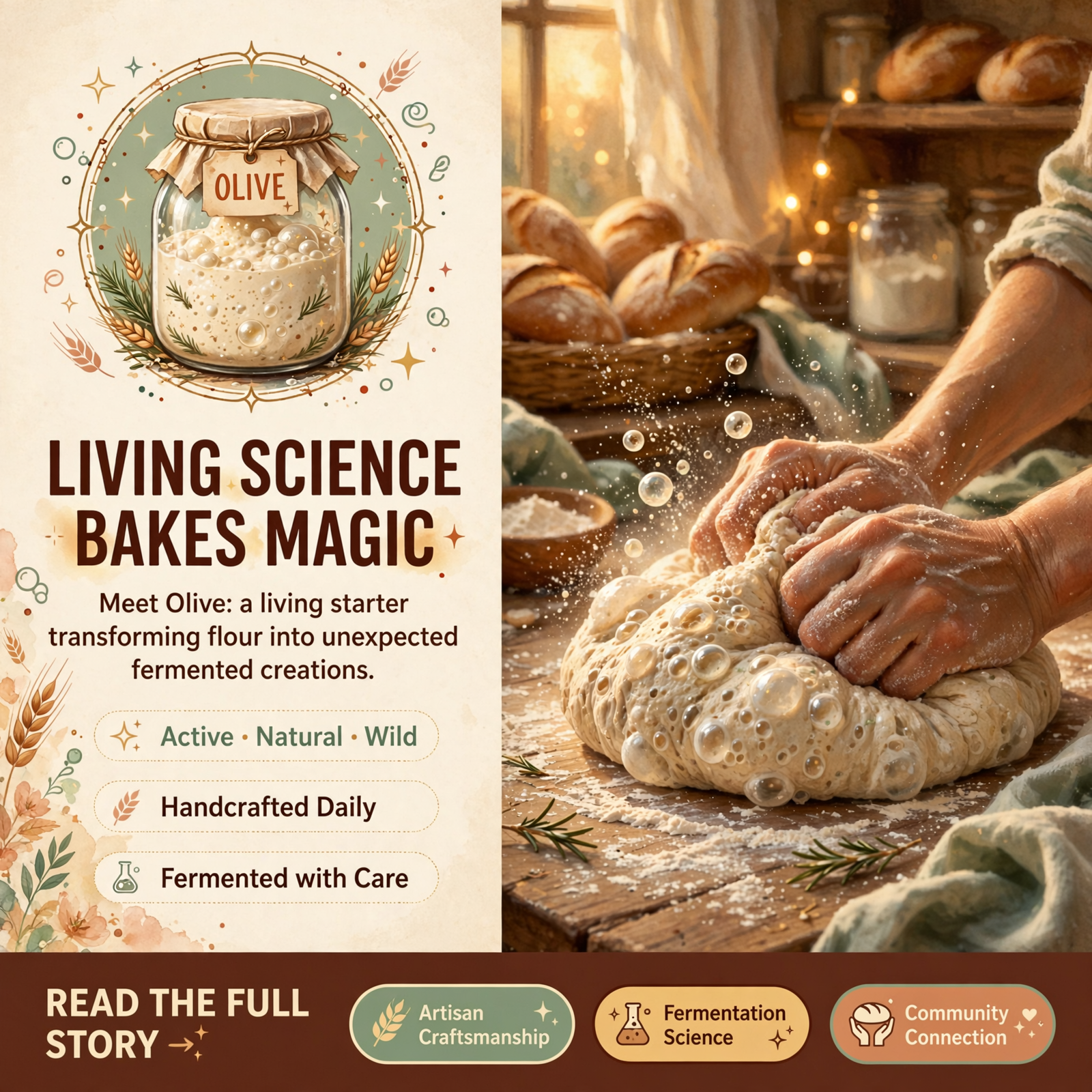
Field to Flour Sourdough in Cleveland is sharing the living science behind artisan bread-and inviting the community to think differently about what sourdough can become. The post reveals how a single starter, affectionately named Olive, transforms flour and water into everything from traditional loaves to unexpected creations like cinnamon rolls, brownies, and biscotti.
🫒 Meet Olive: The Heart of the Bakery
At the center of Field to Flour Sourdough‘s craft is Olive, a living sourdough starter made from flour, water, wild yeast, and naturally occurring bacteria. Unlike commercial yeast, which is a single-strain product added to dough, a sourdough starter is a living culture that ferments over time, developing complex flavors and a distinctive tang. The baker’s decision to name the starter-and to introduce it to customers-reflects a philosophy that treats fermentation not as a technical process, but as a relationship. 🤎
This personal connection matters because it helps customers understand that sourdough isn’t simply a bread flavor or style. It’s a method, a living thing, and a foundation for creativity. When people know the starter has a name and a personality, they’re more likely to appreciate the care and time that goes into each loaf, roll, or unexpected creation.
💡 Beyond the Loaf: Reimagining What Sourdough Can Be
The post highlights a core mission: taking sourdough “way beyond the traditional loaf and turning it into something completely unexpected.” The baker has experimented with cookies, cinnamon rolls, brownies, donuts, biscuits, bagels, pop tarts, cake pops, and coffee cake-all fermented with Olive’s starter. This approach transforms sourdough from a single product category into a versatile ingredient that can enhance nearly any baked good. ✨
For customers, this means discovering familiar treats with unfamiliar depth-a brownie with subtle tang, a cinnamon roll with complex fermented flavor, or a cake pop with the tender crumb that long fermentation creates. For the baker, it represents an ongoing creative challenge: “If I can figure out how to put sourdough in it, there’s a pretty good chance I’m going to try.”
🤎 Why This Matters to the Community
Understanding sourdough fermentation connects to broader conversations about food quality, local craftsmanship, and what it means to support artisan producers. When a baker shares the “why” behind their work-not just the “what”-customers develop a deeper relationship with the business and a greater appreciation for the time and skill involved. This kind of transparency strengthens community trust and loyalty. 🥹
For food lovers in the region, Field to Flour Sourdough represents a growing trend of micro-bakeries and artisan producers who prioritize fermentation, local ingredients, and creative experimentation. The Sequatchie Valley and surrounding areas are home to several sourdough and artisan bread makers, each bringing their own approach to traditional and innovative baking. This post shows how one baker is contributing to that conversation.
🍪 Community Connections: Artisan Baking in the Region
The region supports a vibrant community of sourdough and artisan bread makers. Nearby, residents can find BREADZILLA Sourdough Bakery in Dunlap, The Bread Cottage in Dunlap, Triple JJJ Sourdough in Spencer, Miller’s Bread in Pikeville, and other established bakeries. Each brings its own philosophy and specialty to the craft. Field to Flour Sourdough‘s emphasis on fermentation science and unexpected applications adds another dimension to the local baking landscape. 🌄
This diversity of approach-from traditional loaves to experimental applications-reflects a community that values both heritage and innovation. When customers explore multiple local bakeries, they’re not just buying bread; they’re supporting a network of craftspeople who are invested in quality, creativity, and the art of fermentation.
👥 Human Impact: What This Means for Customers
For people who love baked goods, this post opens a door to understanding the “why” behind their favorite treats. Knowing that a sourdough starter is a living culture-not just an ingredient-can deepen appreciation for the baker’s work and the time required to maintain and use it. For those curious about fermentation, it’s an invitation to learn more about how wild yeast and bacteria transform simple ingredients into complex flavors. 🧑🍳
For customers seeking limited-time offerings, the post hints at ongoing experimentation. The mention of cinnamon roll flights (available for porch pickup) suggests that Field to Flour Sourdough regularly introduces new creations. This creates an incentive to stay connected-to follow the bakery’s social media, check in regularly, and discover what Olive has inspired next.
🎯 Opportunities for Connection
Readers interested in sourdough, fermentation, or artisan baking can engage with Field to Flour Sourdough through its social media channels. The post invites community members to share their favorite unexpected sourdough creations they’ve seen the baker make-an opportunity to participate in the conversation and connect with others who share the passion for craft baking. 📣
For those curious about fermentation science or interested in learning more about sourdough starters, following the bakery’s posts offers informal education alongside entertainment. The baker’s willingness to share knowledge and personality makes the business approachable and inviting, even for people who may not yet be customers.
❓ Questions Worth Considering
- How does understanding the science of fermentation change the way you think about bread and baked goods?
- What role do artisan and micro-bakeries play in building community identity and supporting local food culture?
- How does a baker’s willingness to share their process and personality-like naming their starter Olive-affect customer loyalty and trust?
- What unexpected sourdough creations would you want to see a local baker experiment with?
🔮 What Happens Next
Field to Flour Sourdough continues to operate as an established Cleveland micro-bakery, offering artisan sourdough bread and limited-time cinnamon roll flights for porch pickup. The post suggests ongoing experimentation and creative development-customers should expect new sourdough applications and seasonal offerings. Following the bakery’s social media is the best way to stay informed about what Olive has inspired next. 🥹
🧵 Community Threads: The Fermentation Network
The Craft-to-Customer Relationship: By naming her starter and sharing the science behind fermentation, the baker at Field to Flour Sourdough is building a direct relationship with customers based on transparency and shared values. This thread connects the baker’s daily work to the community’s growing interest in understanding where food comes from and how it’s made. When customers know Olive’s story, they’re more invested in supporting the business and more likely to recommend it to others.
The Artisan Baking Community: Field to Flour Sourdough is part of a broader network of local and regional sourdough and artisan bread makers. This thread matters because it shows that the region supports multiple approaches to baking-from traditional to experimental-and that there’s room for creativity and specialization. Customers who explore different local bakeries strengthen the entire community by supporting diverse craftspeople and keeping artisan baking viable as a livelihood.
The Education-Through-Sharing Thread: The post demonstrates how a small business can educate its community about food science and craft without being preachy or formal. By sharing a “fun fact” about fermentation in a conversational, personality-driven way, the baker invites customers to think more deeply about their food. This thread connects local food producers to community members who care about quality and understanding-a foundation for long-term loyalty and word-of-mouth support.
💭 Long-Term Community Impact
As more local bakeries and food producers share their knowledge and process with the community, residents develop a stronger connection to local food culture and a deeper appreciation for craft. This can lead to increased support for artisan businesses, more conversations about food quality and fermentation, and a community identity built around valuing skill, creativity, and transparency. Over time, this strengthens the local food economy and makes the region more attractive to people who prioritize quality and craftsmanship. 🌟

0 Comments