
🍞 The Rustic Raccoon Tests Double Chocolate Espresso Sourdough in Crossville
A family-owned bakery in Crossville is inviting its community to help shape its menu by guessing a new sourdough flavor in development. The playful approach to product testing reflects how small food businesses in the region are building customer engagement while staying true to their craft.
🎯 What’s Happening
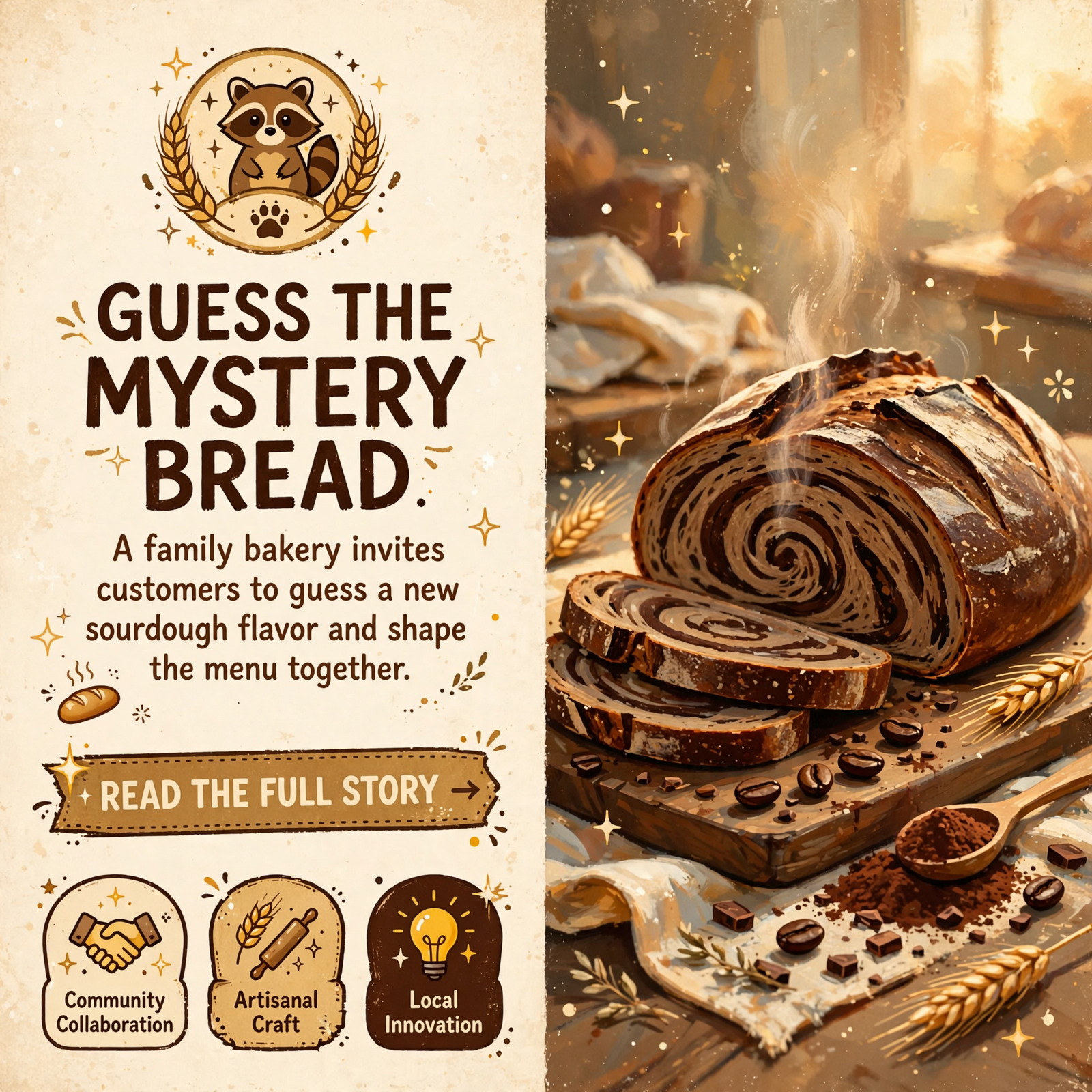
The Rustic Raccoon, located at 1294 Potato Farm Rd in Crossville, Tennessee, is testing a new sourdough bread flavor: Double Chocolate Espresso. The bakery announced the flavor through a community guessing game on social media, inviting followers to identify the mystery bread before an official reveal. The first person to guess correctly receives a special “Raccoon” reward from the business owner.
This approach transforms a routine product launch into an interactive moment-one that encourages followers to engage directly with the business and feel invested in the menu development process. The flavor combines two popular ingredients: chocolate and espresso, both increasingly common in artisanal sourdough offerings across the region.
💡 Why This Matters
For customers who value fresh, homemade baked goods, new flavor options represent both variety and a sign that the business is listening to community preferences. Menu innovation keeps regular customers engaged and can attract new visitors curious about what’s being tested. For the bakery itself, this kind of community-driven product development helps ensure that new offerings will actually sell before committing to full production.
The sourdough market in the broader region-from Dunlap to Soddy-Daisy to Chattanooga-has grown noticeably in recent years, with multiple artisanal bakeries and farmstands now offering handmade sourdough alongside traditional offerings. The Rustic Raccoon‘s willingness to experiment with flavor combinations suggests the local appetite for quality baked goods continues to expand.
❤️ Community Connections
The Rustic Raccoon operates as a family-owned farm stand, a business model deeply rooted in the region’s agricultural and community-focused traditions. By inviting customers to participate in menu decisions, the bakery strengthens the relationship between maker and consumer-a hallmark of local food culture. This kind of transparency and collaboration mirrors how other regional farmstands and bakeries build loyalty: by treating customers as partners in the business rather than passive buyers.
The playful tone of the announcement-complete with the raccoon mascot and lighthearted language-also reflects the personality-driven marketing that small, locally-owned businesses use to stand out in a competitive landscape. It’s an invitation to be part of something, not just to buy something.
🤔 What Residents Should Know
The Double Chocolate Espresso sourdough is currently in testing phase at The Rustic Raccoon‘s stand in Crossville. Whether the flavor becomes a permanent menu item will depend partly on customer response and sales during the test period. Interested visitors can stop by to try the new bread and participate in the guessing game on social media.
For those interested in staying updated on new flavors and offerings, The Rustic Raccoon maintains an active social media presence where announcements and menu updates are shared regularly. The bakery also offers fresh homemade cookies and cinnamon rolls alongside its sourdough breads.
📍 What Happens Next
The bakery will likely monitor customer feedback and sales data for the Double Chocolate Espresso sourdough over the coming weeks. If the test is successful, the flavor may be added to the regular rotation. If response is limited, the bakery may adjust the recipe or discontinue it in favor of other experimental flavors. Either way, this kind of iterative approach to menu development is becoming standard practice among quality-focused bakeries in the region.
🧵 Community Threads: The Artisanal Sourdough Movement
Local Craft and Regional Identity: The growth of sourdough bakeries across the Sequatchie Valley and surrounding areas reflects a broader shift toward locally-made, quality food products. Businesses like The Rustic Raccoon, alongside others in the region, are part of a network of makers who prioritize fresh ingredients, traditional techniques, and community relationships over mass production. This thread strengthens the region’s identity as a place where food quality and local ownership matter.
Customer-Maker Collaboration: By inviting customers to guess and help shape the menu, The Rustic Raccoon demonstrates how small businesses can deepen relationships with their community. This collaborative approach-where customers feel heard and valued-creates loyalty that extends beyond a single purchase. It’s a model that works particularly well in tight-knit communities where personal connection drives business success.
💭 Questions for the Community
- What new sourdough flavors would you like to see local bakeries experiment with?
- How important is it to you to know the story behind the food you buy-who made it, where the ingredients come from, and how it’s produced?
- Do you prefer trying new flavors at established local businesses, or do you seek out new bakeries and farmstands regularly?
- How does the opportunity to participate in product decisions (like guessing games or feedback surveys) change your relationship with a local business?
🌱 Long-Term Community Impact
If The Rustic Raccoon‘s approach to community-driven menu development succeeds, it may inspire other local food businesses to adopt similar strategies. Over time, this could strengthen the region’s reputation as a place where customers have a genuine voice in the food system-not just as consumers, but as collaborators. It also reinforces the economic value of small, locally-owned food businesses: they adapt, innovate, and stay connected to their communities in ways that larger operations cannot.
The continued growth of artisanal sourdough and farmstand culture in the region also supports local agriculture, attracts visitors seeking authentic food experiences, and creates employment opportunities for bakers, farmers, and other food-system workers. Each new flavor tested and each customer who participates in the process contributes to a stronger, more resilient local food economy.



0 Comments