
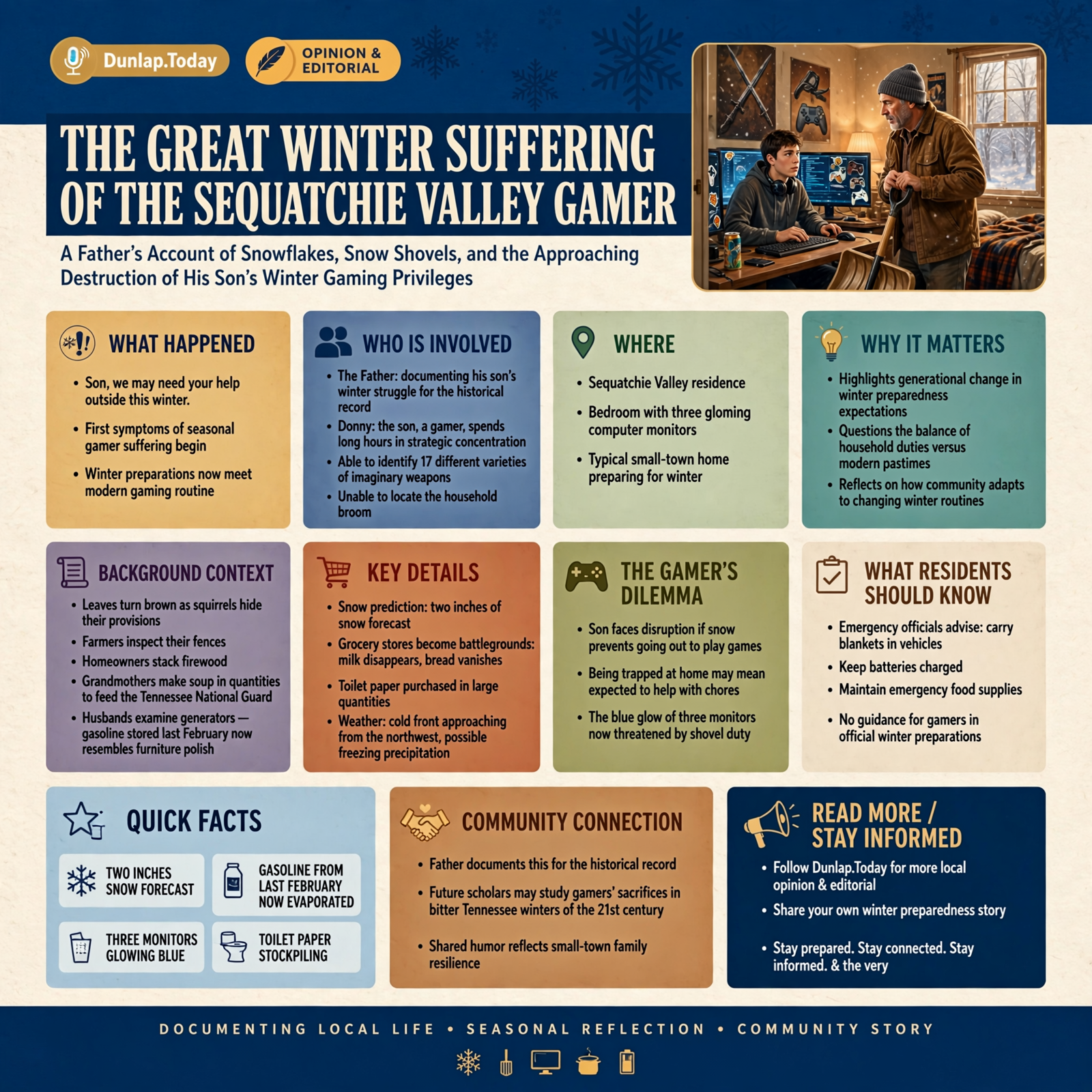
The Great Winter Suffering of the Sequatchie Valley Gamer
A father’s heartbreaking account of snowflakes, snow shovels, and the approaching destruction of his son’s winter gaming privileges.
There comes a season in the life of every Tennessee family when the leaves turn brown, the squirrels begin hiding their provisions, and sensible people start preparing for winter.
Farmers inspect their fences. Homeowners stack firewood. Grandmothers begin making soup in quantities sufficient to feed the Tennessee National Guard. Husbands examine their generators, only to discover that the gasoline they carefully stored last February has mysteriously evaporated into something resembling furniture polish.
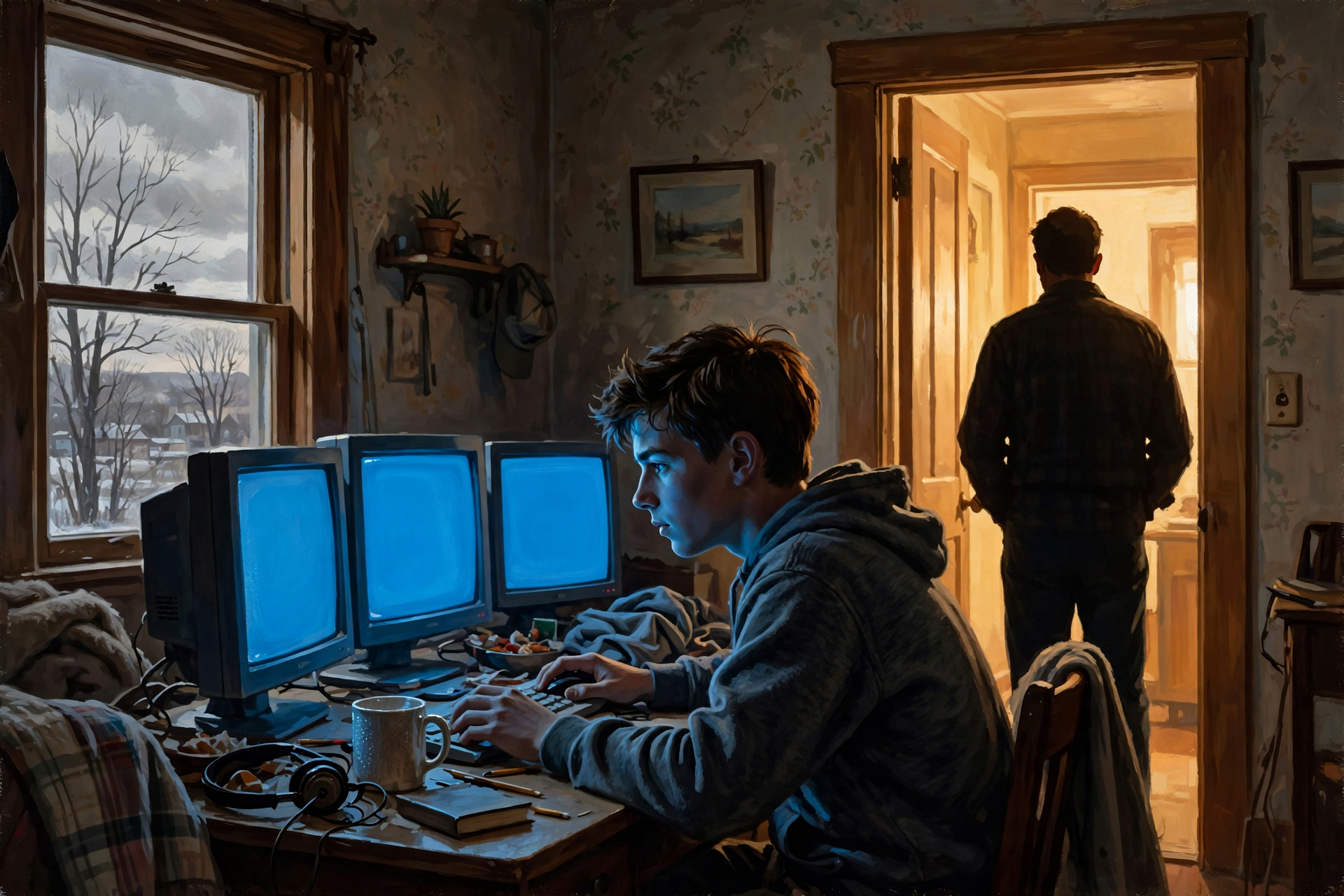
And somewhere in a bedroom, illuminated by the unnatural blue glow of three computer monitors, a gamer receives the first terrible news that winter is approaching.
Not because of the weather forecast.
Not because of falling temperatures.
But because his father appears in the doorway and announces:
“Son, we may need your help outside this winter.”
It is at this precise moment that the first symptoms of seasonal gamer suffering begin.
I know this because I have a son named Donny.
Donny is a gamer, which is a respectable modern occupation involving long hours of intense concentration, complicated strategic thinking, and the ability to identify seventeen different varieties of imaginary weapons while remaining completely unable to locate the household broom.
He is a fine young man, and I would not trade him for all the gold in Fort Knox, though during certain snowstorms I might consider leasing him to somebody who owns a snowplow.
Donny is particularly fond of gaming, and I fear that the approaching winter may subject him to hardships unknown to previous generations of Americans.
I have therefore resolved to document his suffering for the historical record, so that future scholars may understand the sacrifices made by gamers during the bitter Tennessee winters of the twenty-first century.
The Coming Catastrophe: When the Weather Forecast Becomes a Personal Attack
In most American households, the announcement of possible snowfall is received with a mixture of excitement, suspicion, and a sudden desire to purchase twelve loaves of bread.
Here in the Sequatchie Valley, a prediction of two inches of snow is often interpreted as evidence that civilization has approximately forty-eight hours remaining.
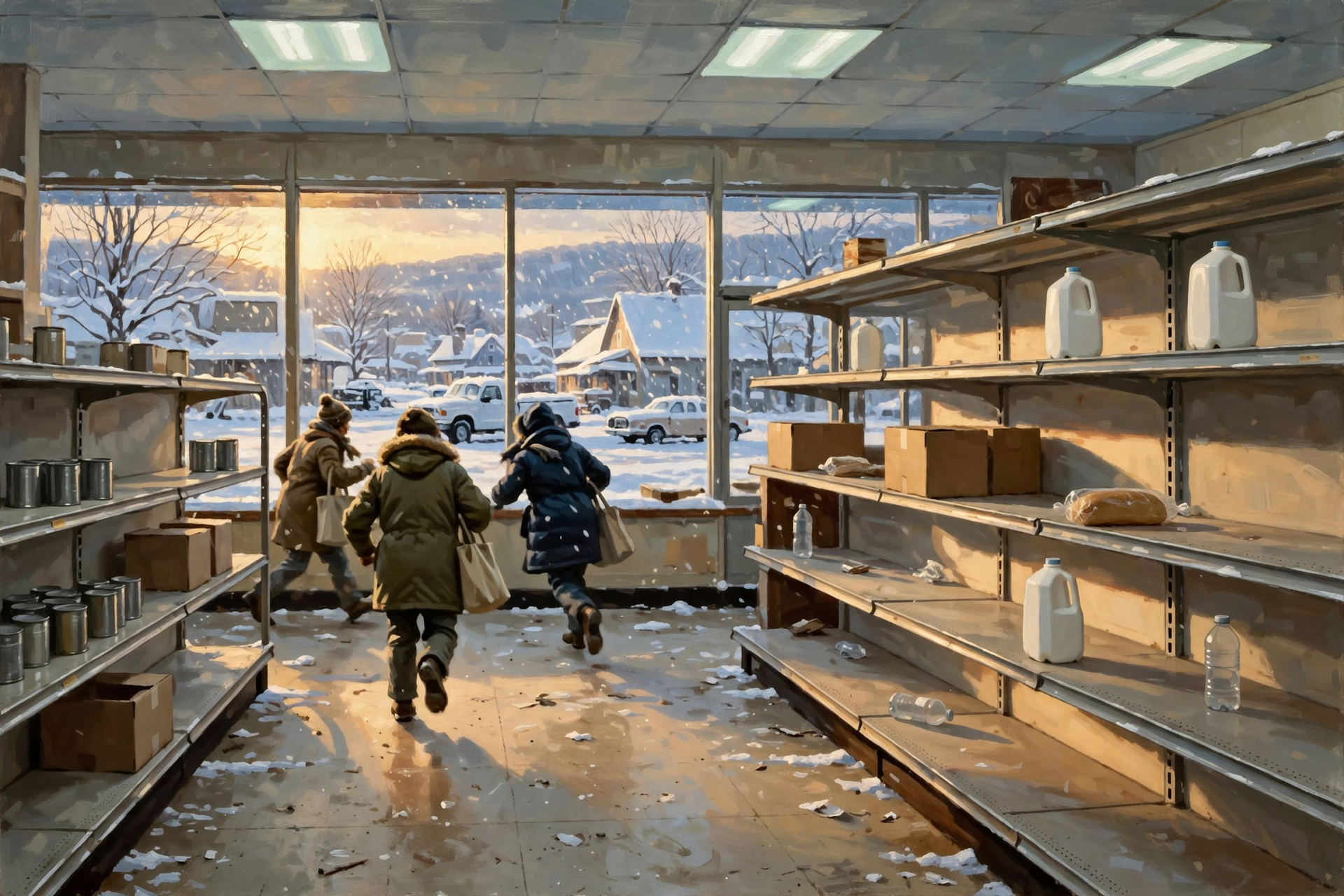
The grocery stores become battlegrounds.
Milk disappears. Bread vanishes. Toilet paper is acquired in quantities that suggest the population expects to spend the winter consuming nothing but dairy products and making very poor dietary decisions.
Meanwhile, our weather forecasters explain that a cold front is approaching from the northwest, possibly accompanied by freezing precipitation.
They say this with the confidence of men who know that if the forecast proves incorrect, they may simply announce that the weather has changed.
But while ordinary citizens worry about roads, pipes, livestock, and heating bills, the modern gamer faces a far more complicated crisis.
What if the snow prevents him from going somewhere to play games?
And, more terrifying still:
What if being trapped at home means he is expected to do something useful?
These are questions our emergency management officials have not adequately addressed.
They tell us to carry blankets in our vehicles, keep batteries charged, and maintain emergency food supplies.
Yet nowhere in the official winter preparedness literature can I find a recommendation that parents refrain from assigning outdoor chores to emotionally unprepared gamers.
This seems to me a serious omission.
Donny can survive a dragon attack, navigate an alien battlefield, and manage a virtual kingdom under siege.
But a father standing in the doorway holding a snow shovel may prove to be his final boss.
The Sacred Gaming Establishments of the Sequatchie Valley
To understand the seriousness of this approaching crisis, one must first appreciate the rich gaming civilization that has developed here in the Sequatchie Valley.
These are not merely places where people purchase games or gather around tables.
They are important cultural institutions where friendships are established, strategies are debated, imaginary monsters are defeated, and grown men argue with enormous seriousness about whether a fictional character should have been allowed to cast a particular spell.
Consider The Lazy Buzzard in Pikeville, Tennessee.
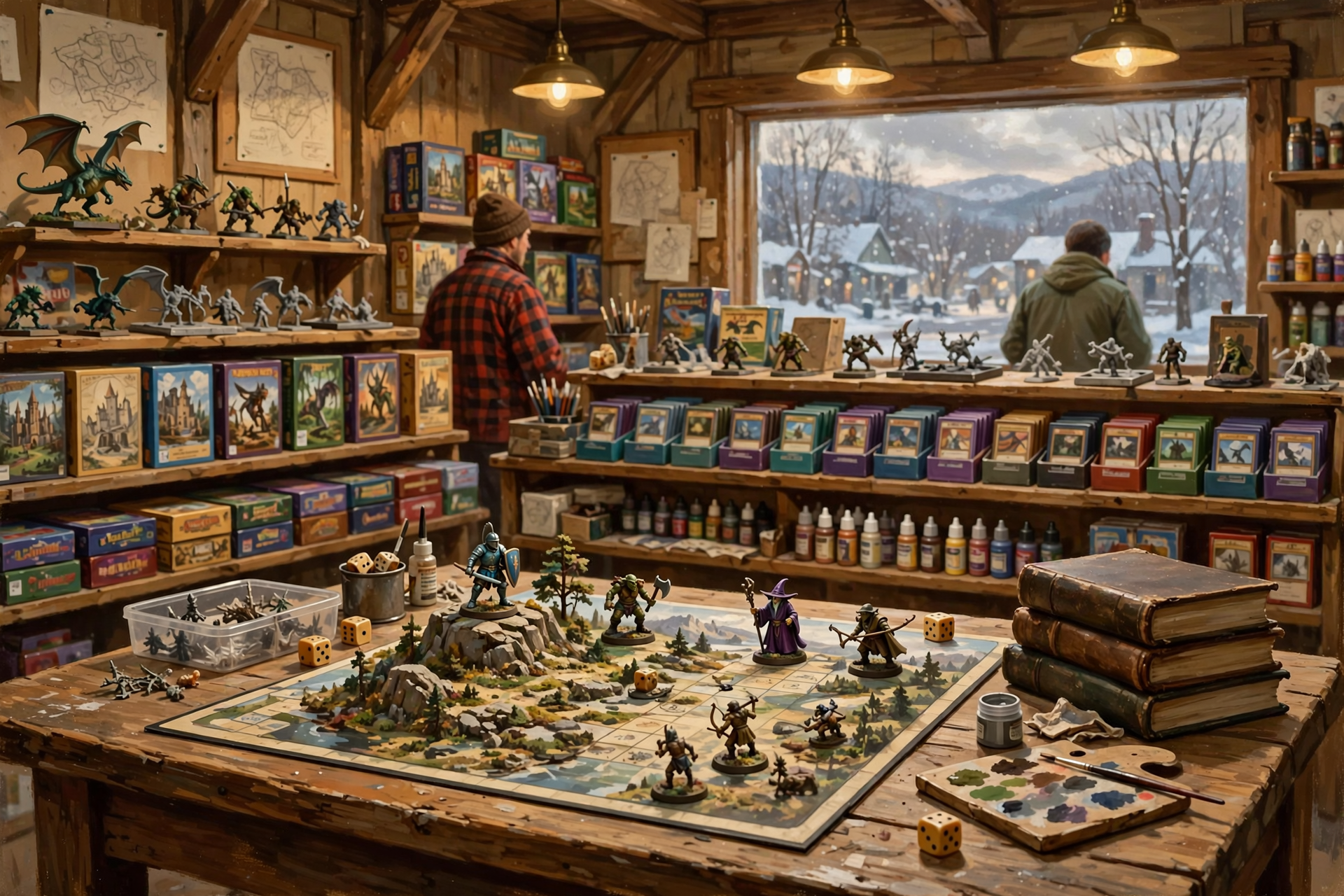
There, enthusiasts can gather to enjoy tabletop games, trading card games, miniature adventures, and the sort of strategic contests that require a person to understand forty-seven pages of rules before moving a small piece of painted plastic approximately three inches.
Among the offerings are games such as Magic: The Gathering, Pokémon, Yu-Gi-Oh!, and Dungeons & Dragons.
To the uninitiated, these activities may seem like harmless recreation.
To the dedicated gamer, however, they are matters of national importance.
A battle may be underway.
A rare card may be needed.
A wizard may be waiting for reinforcements.
And then winter arrives.
The roads become icy, travel becomes inadvisable, and somewhere in Pikeville a fictional kingdom must face its enemies without Donny’s assistance.
History may never forgive us.
Then there is Game Shack in downtown Dunlap, including Game Shack Café and the retro gaming shop.
Here, a fellow can find video games, classic consoles, gaming equipment, and other electronic treasures that cause the older generation to ask perfectly reasonable questions such as, “Didn’t you already buy one of those?”
The café offers another refuge, where gaming and refreshments can coexist in peace.
There are board games, card games, chess, gaming systems, coffee, and the pleasant opportunity to sit among people who understand why a thirty-year-old video game cartridge may be regarded with greater affection than a perfectly serviceable household appliance.
Indeed, the idea of a coffee shop where people can play board games strikes me as one of civilization’s finest achievements.
It combines the two great American traditions of paying for beverages and arguing over rules.
Now imagine what happens when snow and ice interrupt access to these establishments.
The gamer cannot easily visit his friends.
He cannot examine the latest merchandise.
He cannot enjoy the companionship of those who understand his passion.
Instead, he is stranded at home with his family.
His actual family.
People who know his real name.
People who ask questions about his plans for the day.
People who may even expect him to participate in a conversation without first selecting the appropriate dialogue option.
One shudders to imagine it.
The Terrible Discovery That Household Chores Exist in Three Dimensions
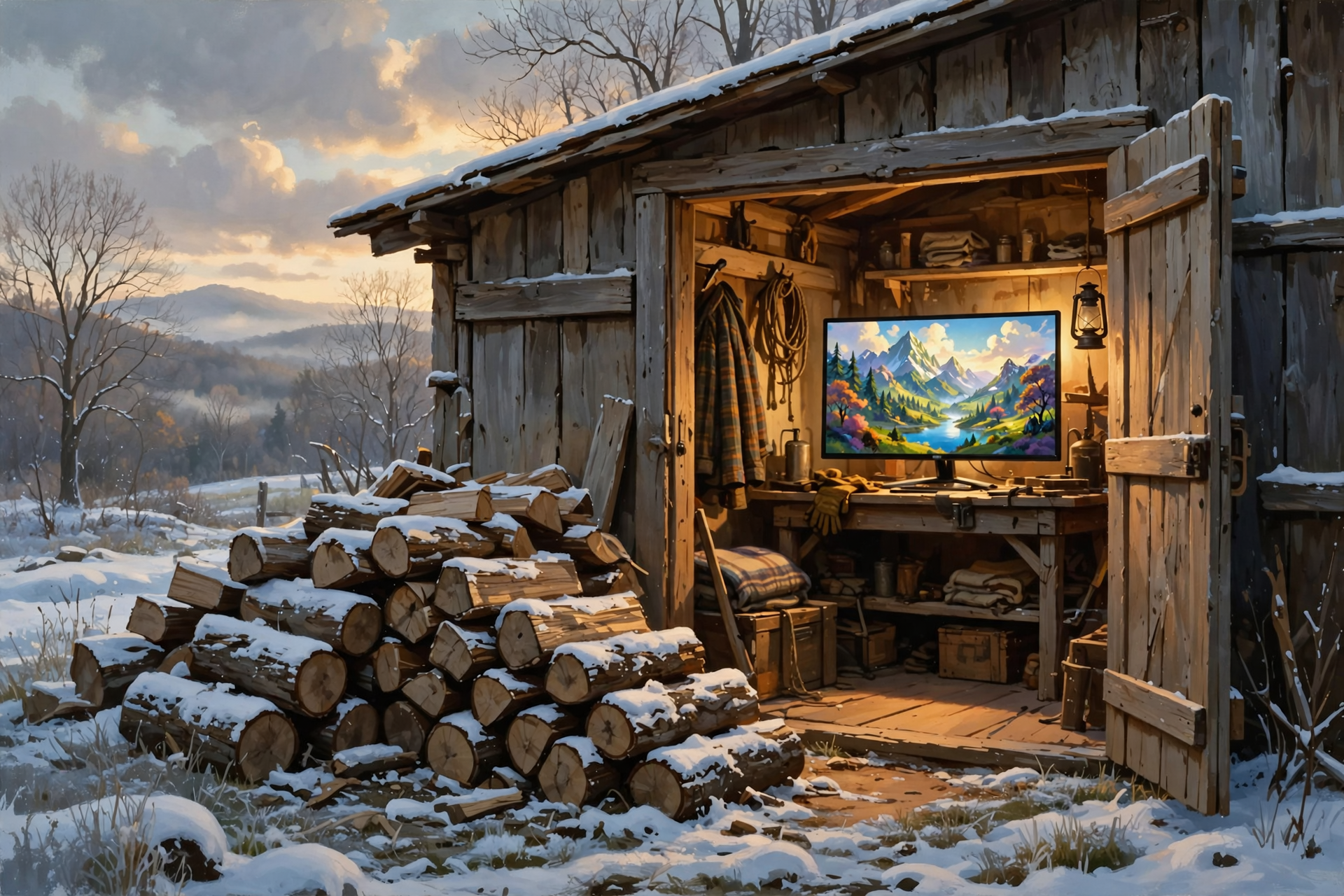
There is a fundamental misunderstanding between parents and gamers concerning the definition of productive labor.
To a gamer, productivity may involve gathering resources, constructing fortifications, improving equipment, managing inventory, and defeating hostile creatures.
To a father, productivity generally involves removing the garbage before it begins developing political opinions.
Donny, for example, may devote several hours to collecting virtual lumber for the construction of an imaginary fortress.
He can tell you the precise number of virtual trees required to build a defensive wall.
But when I point toward a very real pile of firewood and suggest that it be brought closer to the house, he appears astonished that the laws of resource management have escaped the computer.
“But Dad,” I imagine him protesting, “I’m in the middle of something.”
“So am I,” I reply. “It’s called winter.”
In a video game, a man may spend an entire afternoon mining ore, hauling supplies, maintaining equipment, and battling creatures of unspeakable horror.
He calls this entertainment.
Ask the same man to carry six pieces of firewood from the shed, and suddenly we must begin discussing workplace conditions, physical exhaustion, and the importance of maintaining a healthy life balance.
There are other disturbing contradictions.
A gamer may enthusiastically shovel virtual snow to uncover a hidden treasure.
But actual snow on the driveway contains no treasure.
It merely conceals gravel, frozen mud, and perhaps the newspaper somebody failed to retrieve three days earlier.
A gamer may spend hours constructing an elaborate virtual farm.
Yet when asked to feed an actual animal, he may complain that the assignment interferes with his schedule.
He may bravely enter digital caves inhabited by enormous spiders.
But ask him to retrieve a snow shovel from the storage shed, and suddenly there is considerable concern about what might be living inside.
It is one of the great mysteries of modern civilization that young men who fear no dragon can be utterly defeated by a broom.
And winter, I regret to report, provides parents with an alarming abundance of broom-related opportunities.
Donny’s Emergency Winter Gaming Preparedness Plan
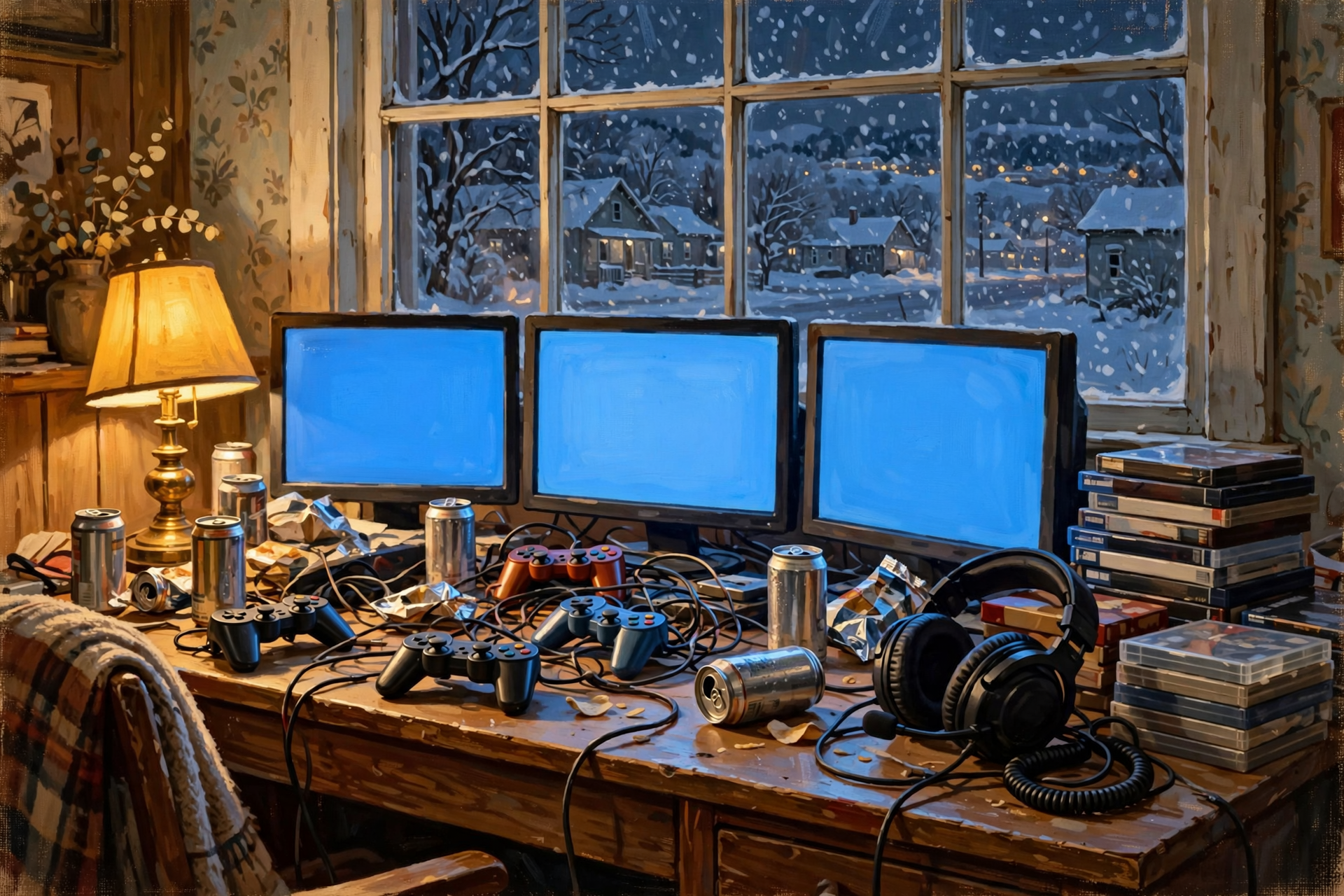
I have suggested that our family establish a proper winter preparedness plan.
My idea is simple.
Before the first snowfall, we should inspect the generator, ensure that the heating system functions properly, check our flashlights, stock emergency food, and confirm that our vehicles are prepared for cold weather.
Donny may have a somewhat different list of priorities.
His hypothetical emergency provisions would likely include three backup controllers, six charging cables, enough snacks to feed an advancing army, several varieties of caffeinated beverages, a replacement headset, and a carefully organized library of games that he has owned for years but has not yet had time to play.
He might also inquire about the possibility of obtaining a dedicated backup generator exclusively for gaming equipment.
I have explained that the generator’s principal purpose is to preserve food, maintain essential heating, and support necessary household systems.
He would probably agree with this explanation, provided that “necessary household systems” included his computer.
There may also be discussions about bandwidth.
I have discovered that modern gamers regard internet connectivity as an essential utility, ranking somewhere between oxygen and the ability to order pizza.
A family can survive an inconvenience involving hot water.
It can survive a short disruption to television service.
It may even survive being unable to operate the microwave.
But if the internet goes down during an important gaming session, the resulting expressions of despair can be heard across several adjoining properties.
A traditional Tennessee father responds to a power outage by checking the circuit breakers.
A gamer responds by asking whether the Wi-Fi router is still functioning.
Both men believe they are addressing the emergency.
Neither understands the other.
And should the electricity fail completely, I fear Donny may be forced to confront the shocking realization that the world beyond his monitors has been operating continuously without his supervision.
There are trees out there.
And birds.
And neighbors.
Some of these neighbors may even attempt to communicate.
I do not know whether Donny is prepared for such an encounter.
The Psychological Toll of Being Handed a Snow Shovel
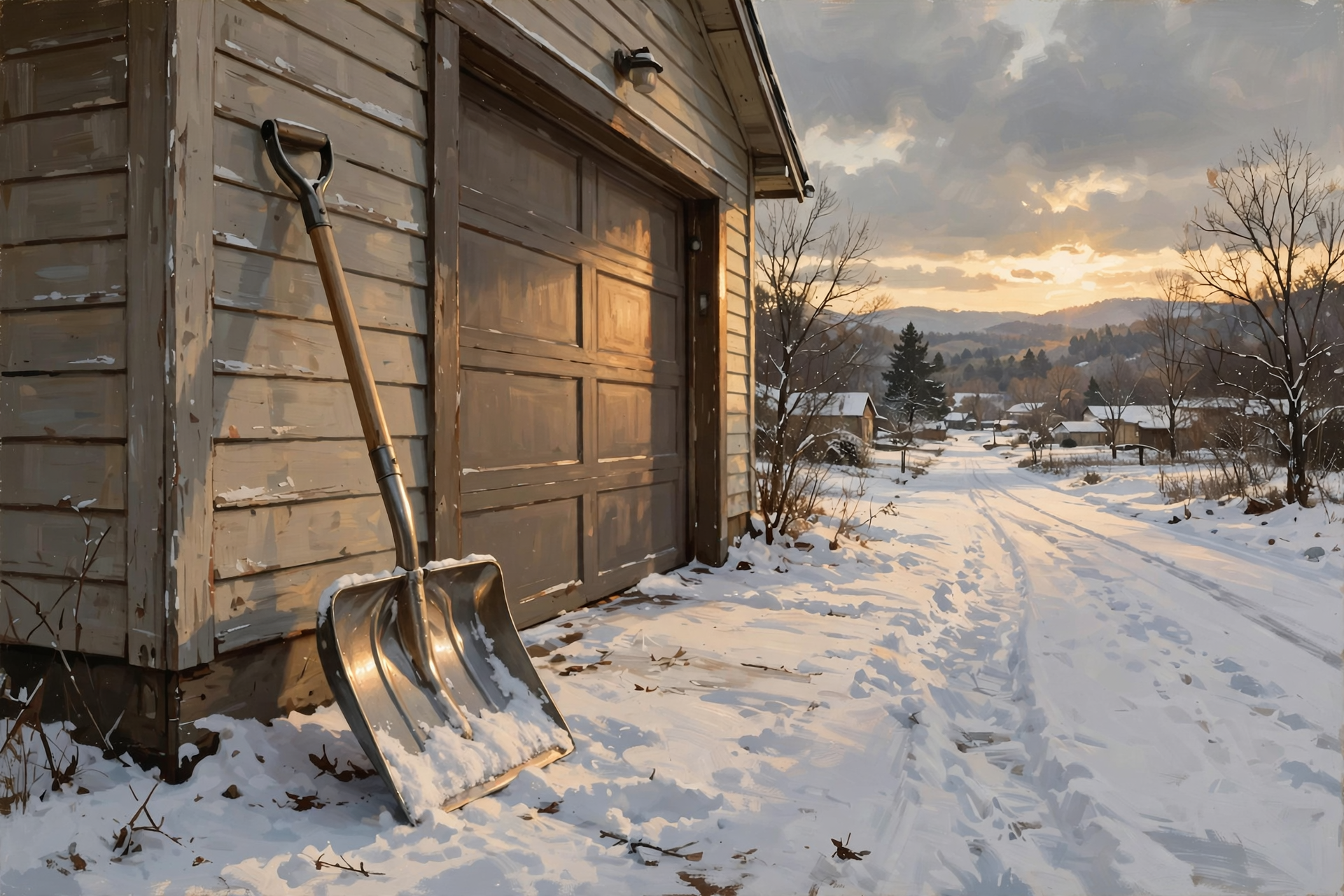
I believe it may be necessary to arrange counseling for Donny both before and after every significant snowfall.
Before the storm, the counseling would focus on preparation.
We would help him understand that snow is a naturally occurring form of frozen precipitation and not a personal attack orchestrated by parents who have secretly conspired to reduce gaming hours.
We would explain that a driveway is not an optional decorative feature of the property and that vehicles occasionally need to travel upon it.
We would introduce the snow shovel gradually, perhaps beginning with photographs.
Then a small plastic model.
Eventually, if his emotional condition permitted, we might allow him to stand within several feet of an actual shovel while remaining in a safe and supportive environment.
After the snowfall, counseling would address the trauma of having been exposed to daylight, cold air, and measurable physical exertion.
I imagine the first session might proceed something like this:
“Donny, can you tell us what happened?”
“It was terrible.”
“Take your time.”
“Dad came into my room.”
“And then?”
“He told me to put on my boots.”
“That sounds difficult.”
“It got worse.”
“Worse?”
“He handed me a shovel.”
At this point, the counselor would probably offer him a tissue.
“And what did your father expect you to do with this shovel?”
“He said the driveway needed clearing.”
“I see.”
“And he wanted me to help.”
“You mean voluntarily?”
“No. He used that voice.”
Every father possesses that voice.
It is not loud.
It is not threatening.
It is merely the unmistakable tone of a man who has already explained himself twice and has reached the outer limits of his diplomatic patience.
I believe the counselor would eventually advise Donny to establish reasonable boundaries.
Donny would then return home and inform me that he requires personal gaming time for his emotional well-being.
I would agree entirely.
And explain that shoveling the driveway should require no more than forty-five minutes.
This would probably necessitate another counseling session.
The Great Family Snow Day: A Tragedy in Several Acts
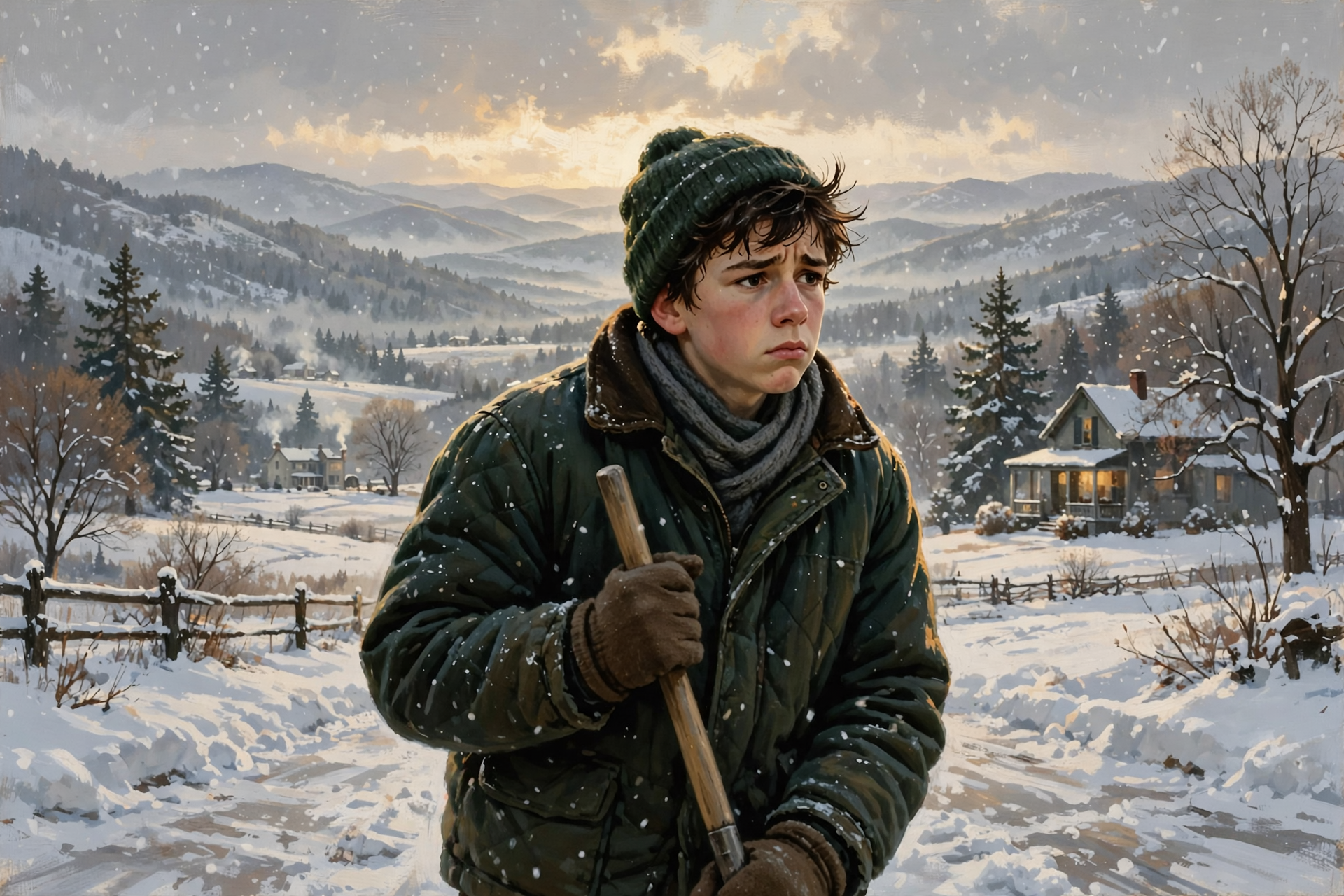
Let us imagine a typical snow day at our house.
7:00 AM: Snow begins falling gently across the Sequatchie Valley. The family admires the beauty of the landscape. Donny remains asleep, having concluded an important gaming session at approximately the same hour most farmers begin their workday.
8:00 AM: The weather forecast announces additional accumulation. The family checks road conditions. Donny’s computer continues operating faithfully in the darkness of his bedroom.
9:00 AM: The driveway begins disappearing beneath a white blanket of snow. I inspect the snow shovel. Donny remains unaware that his life is about to change.
10:00 AM: I open his bedroom door and announce that we will soon be clearing the driveway.
Donny does not respond immediately.
He may be asleep.
He may be wearing headphones.
Or he may be conducting a careful assessment of whether pretending not to hear me offers a reasonable chance of success.
10:15 AM: I repeat the announcement, adding that we will begin shortly.
From somewhere beneath a blanket comes a muffled acknowledgment.
10:30 AM: Donny emerges from his bedroom and asks whether the driveway truly requires shoveling.
I direct his attention toward the window.
He examines the snow and suggests that perhaps the sun will eventually melt it.
This is a scientifically valid observation, and I commend his understanding of the relationship between solar radiation and frozen precipitation.
I then point out that the sun may not finish the job before spring.
10:45 AM: Donny announces that he must first eat breakfast.
This is a reasonable request.
A man should not enter a winter emergency without proper nourishment.
11:15 AM: Breakfast has concluded, but Donny now believes that proper digestion requires a period of quiet inactivity.
He returns to his room to recover.
11:45 AM: I find him engaged in a video game involving a heavily armed soldier running through waist-deep snow while carrying approximately one hundred pounds of equipment.
I observe that the soldier appears to be managing quite well.
Donny explains that video games are not real life.
This is the first occasion on which I have heard him make that distinction voluntarily.
12:00 PM: We begin the actual driveway operation.
Donny arrives dressed in enough winter clothing to suggest an expedition to the North Pole.
He is wearing gloves, a heavy coat, boots, and an expression usually associated with prisoners being marched toward an uncertain fate.
I hand him the shovel.
He studies it carefully.
There are no buttons.
No battery.
No instruction manual.
No difficulty setting.
Most troubling of all, there is no apparent method of skipping the tutorial.
12:05 PM: Donny discovers that snow possesses weight.
This comes as an unpleasant surprise.
In video games, a character can often carry fifty swords, twelve helmets, several hundred gold coins, and a complete assortment of magical potions without developing so much as a sore shoulder.
Actual snow, however, refuses to cooperate with this system.
12:10 PM: Donny asks how much of the driveway must be cleared.
I explain that we need enough room to get the vehicles out safely.
He asks whether that includes the area where he is standing.
I tell him that it does.
He appears disappointed.
12:20 PM: We have made excellent progress. Donny announces that his hands are cold.
I remind him that he is wearing gloves.
He explains that the gloves are insufficient.
I suggest that he move faster to generate warmth.
He looks at me as though I have proposed that he obtain employment in a coal mine.
12:45 PM: The driveway is clear.
The family celebrates.
Donny returns to his bedroom and begins telling his gaming friends about the terrible ordeal he has survived.
By the time the account reaches its third audience, I suspect the driveway will have grown to approximately two miles in length, the snow will have reached his chest, and he will have fought off a pack of hungry wolves using nothing but a defective shovel.
I will not correct him.
Every man deserves a heroic story.
The Winter Gamer Support Group Nobody Wants to Attend
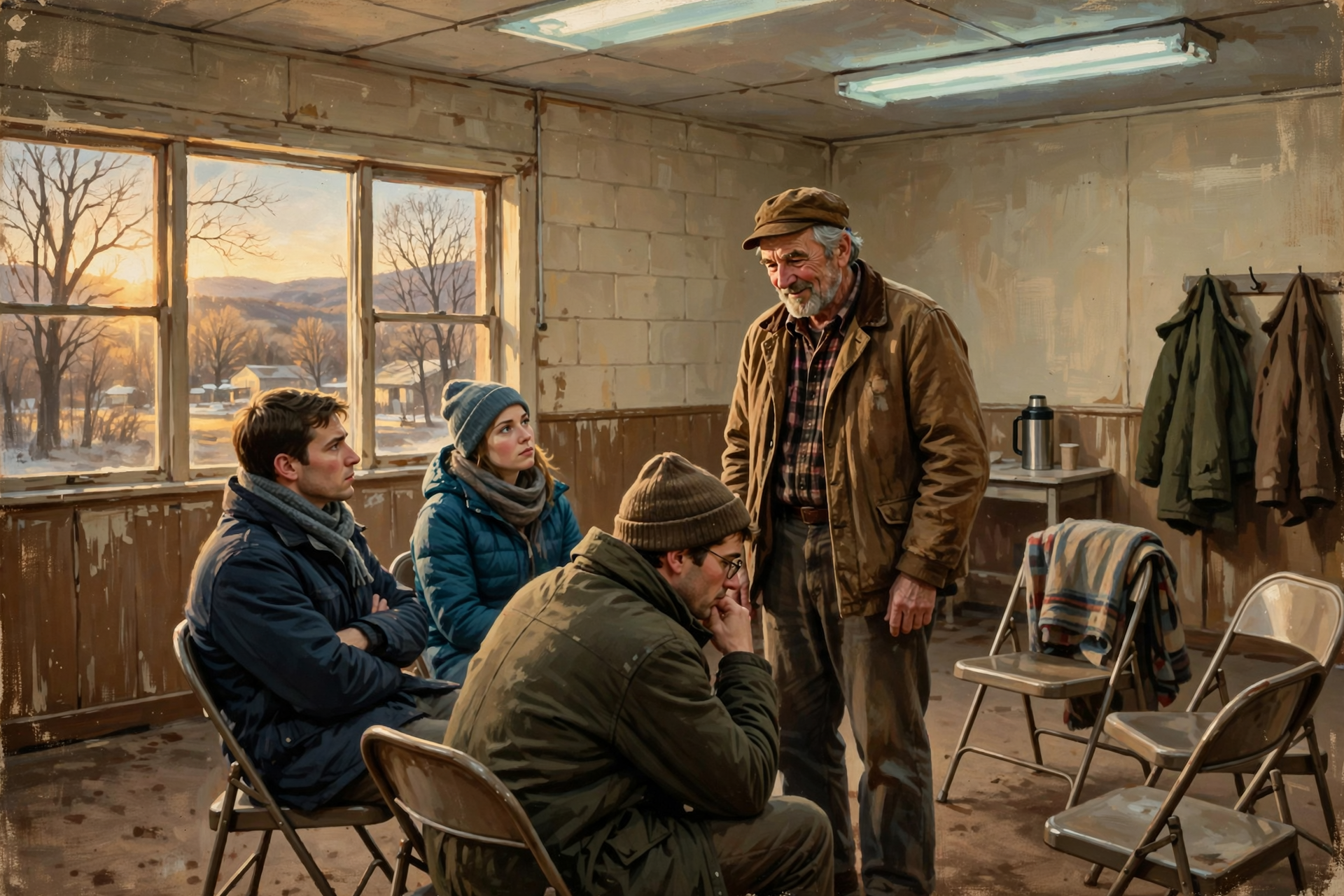
It has occurred to me that the Sequatchie Valley may need a winter support group specifically for gamers.
I envision a weekly gathering where participants can share their experiences in a confidential and supportive setting.
The meetings might begin with a simple introduction.
“Hello. My name is Donny, and I was forced to shovel snow.”
The others would respond, “Hello, Donny.”
One participant might explain that his mother asked him to bring groceries inside.
Another might confess that his father expected him to help carry firewood.
A third could describe the emotional devastation of being required to clean his room before opening a new game.
Somewhere in the back, an elderly farmer who has spent sixty winters feeding cattle in freezing weather would listen with growing fascination.
Finally, he might stand and say:
“Well, boys, I reckon I understand. Last winter I had to break ice out of the water trough every morning, haul feed through the mud, fix a frozen water line, and get up before daylight to check on the cows.”
The room would fall silent.
Donny might ask whether the farmer had managed to get any gaming done afterward.
The farmer would explain that he had not.
At this point, several members would become concerned that the poor fellow had experienced a complete collapse of his social life.
I suspect the farmer would find this entire exchange entertaining enough to return the following week.
He might even bring another farmer.
Before long, the support group would become the most popular comedy program in the county.
And if any of the gamers complained that attending the meeting required going outside in the cold, I would consider the experiment a complete success.
A Father’s Final Word of Comfort to His Suffering Son
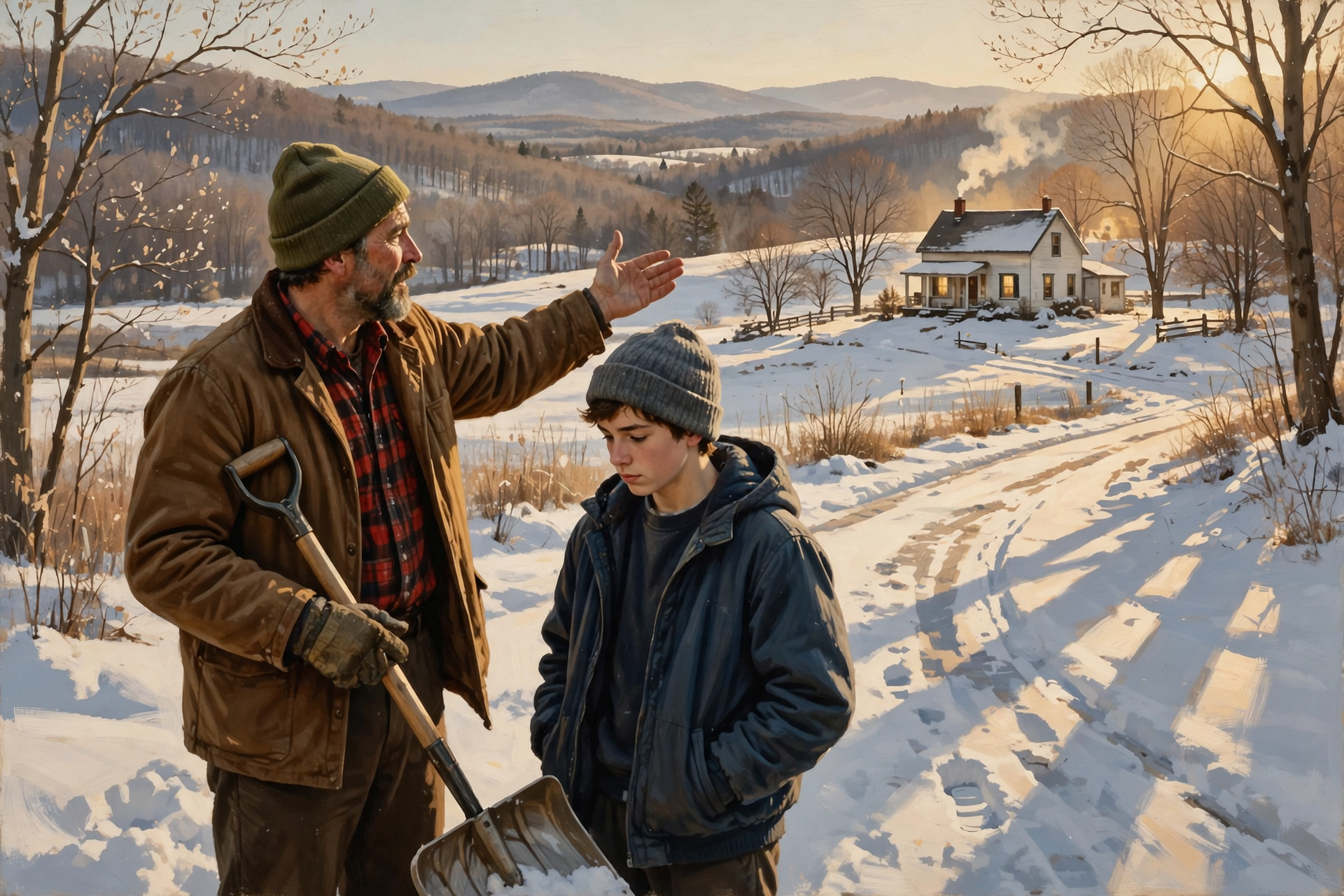
Now, I do not wish to suggest that gaming is a useless pursuit.
Quite the contrary.
I understand that modern games encourage creativity, strategic thinking, problem-solving, cooperation, and friendships among people who may live miles apart.
Indeed, I admire anyone who can remember the rules of several complicated games, organize a team of unpredictable strangers, and remain patient while communicating with someone whose microphone apparently consists of a soup can attached to a vacuum cleaner.
And I am particularly pleased that communities such as Pikeville and Dunlap have places where gamers can gather in person, make friends, enjoy a cup of coffee, and participate in activities that bring people together.
We should appreciate our local businesses that create these opportunities.
They contribute something valuable to our communities, especially when they provide a welcoming place for different generations to share an interest.
I hope Donny and his gaming friends have many happy evenings at The Lazy Buzzard and Game Shack, along with plenty of opportunities to enjoy the games they love.
But I also hope that when the snow arrives, they will occasionally discover another remarkable form of multiplayer entertainment.
It requires no internet connection.
No subscription.
No downloadable content.
And no expensive graphics card.
It is called helping your family.
The gameplay is straightforward.
Several players cooperate toward a shared objective, such as clearing a driveway, carrying firewood, feeding animals, or helping an elderly neighbor after a storm.
Each participant receives a tool appropriate to the mission.
The work involves resource management, environmental hazards, endurance, teamwork, and occasionally a boss battle with an especially stubborn patch of ice.
Unlike most video games, however, the rewards are genuine.
The driveway gets cleared.
The house stays warm.
The animals get fed.
The neighbors receive help.
And the family finishes the day with something worth remembering.
There may even be hot chocolate afterward.
I intend to present this revolutionary concept to Donny as a new cooperative survival game called “Winter: The Sequatchie Valley Expansion Pack.”
It features realistic weather, fully interactive environments, demanding physical challenges, and absolutely no respawn points.
Difficulty is automatically adjusted according to how much snow falls overnight.
The primary mission is to keep the household operational until spring.
Bonus points are awarded for helping neighbors.
And should Donny successfully complete all the objectives, I may reward him with an afternoon of uninterrupted gaming.
Of course, I have not yet told him about the expansion pack’s most controversial feature.
The player cannot pause the game to avoid doing chores.
I expect considerable protest.
There may be negotiations.
There may be appeals to higher household authorities.
There may even be threats to move to a warmer climate, although I suspect that once Donny discovers that Florida lawns require mowing throughout much of the year, the attraction will fade considerably.
But I have confidence in my son.
He is resourceful, intelligent, determined, and capable of overcoming obstacles.
He has defeated imaginary armies, survived digital disasters, and endured internet service interruptions that would have broken lesser men.
Surely he can survive forty-five minutes with a snow shovel.
And if he cannot, I shall personally arrange for the counseling.
Before the storm.
After the storm.
And, if necessary, during the storm, provided he agrees to shovel the path to the counselor’s office.
A Final Public Service Announcement
To the parents of gamers throughout Dunlap, Pikeville, and the surrounding Sequatchie Valley:
Winter is coming.
Prepare your homes. Check your heating systems. Stock your emergency supplies. Watch the road conditions, and look after your neighbors.
But above all, prepare your gamers.
Explain gently that snow shovels are not weapons.
Remind them that firewood does not carry itself.
Assure them that a brief encounter with fresh air is generally survivable.
And if your gamer begins showing signs of distress at the mere mention of outdoor chores, remember that patience and understanding are essential.
Do not immediately demand that he clear the entire driveway.
Start with something manageable.
Perhaps ask him to carry a single log.
Then two.
With sufficient encouragement, he may eventually become capable of operating a broom without adult supervision.
We must not expect miracles overnight.
As for my son Donny, I love him dearly, and I shall stand beside him throughout the coming winter.
Unless, of course, he is standing in the driveway with a shovel.
In that case, I shall be standing behind him.
Pointing out the spots he missed.
May God have mercy on the gamers of the Sequatchie Valley, for their fathers are checking the weather forecast and sharpening their snow shovels.
Editor’s Note: This story is a work of affectionate family satire. Any resemblance to actual winter hardship, imaginary gaming emergencies, or young men mysteriously losing their hearing when chores are announced is entirely intentional. Donny has not been formally diagnosed with snow-shovel intolerance, although preliminary family observations remain concerning.
Know a gamer who may suffer this winter? Share this article with them before the first snowfall. Better yet, share it with their parents. They may appreciate knowing that other families throughout the Sequatchie Valley are facing the same difficult seasonal challenges. And while we’re having a little fun, remember to support our local gaming businesses, which bring friends, families, and communities together all year long.
Know about an upcoming event or story in the Sequatchie Valley? Submit it here.




0 Comments