
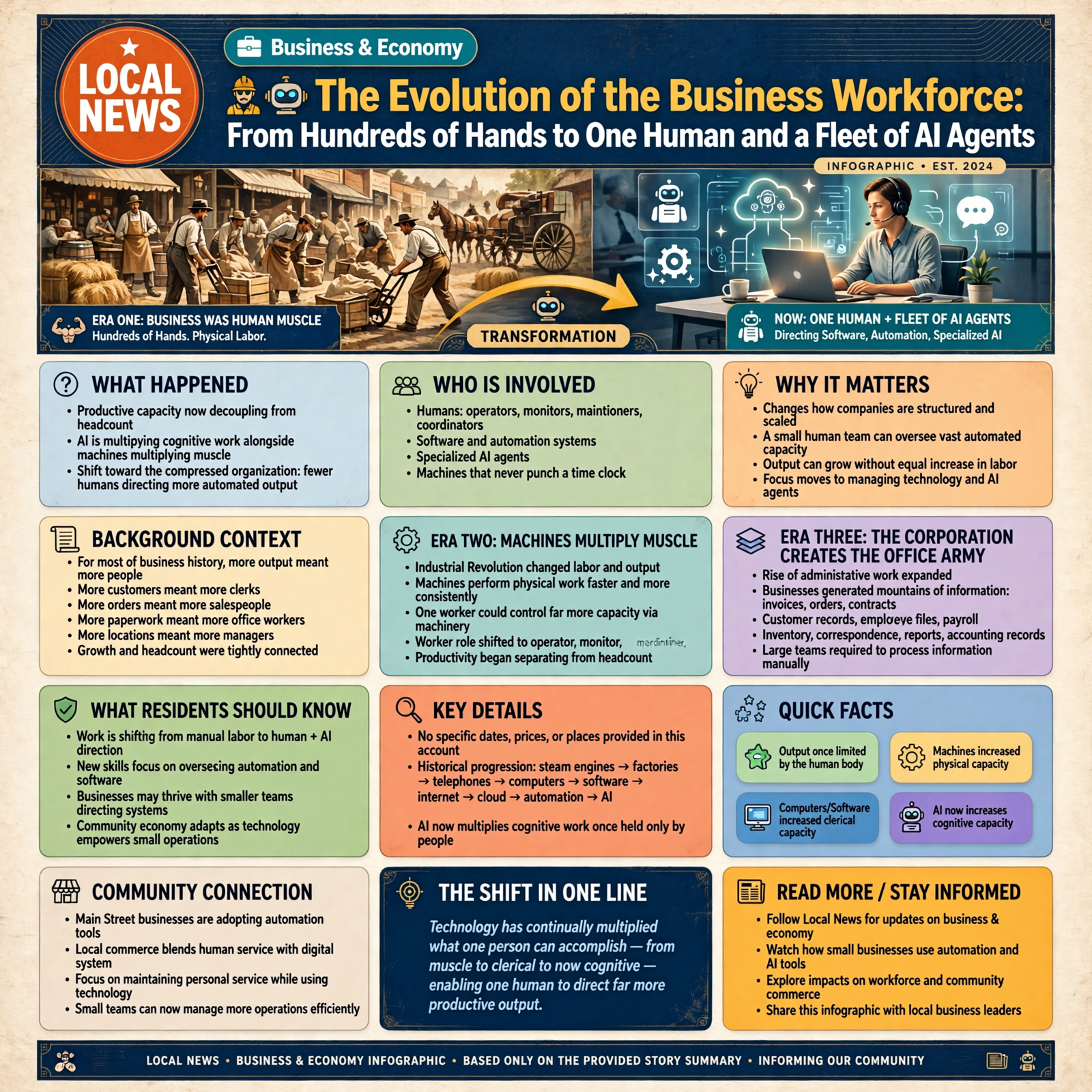
👷🤖 The Evolution of the Business Workforce: From Hundreds of Hands to One Human and a Fleet of AI Agents

For most of business history, if you wanted to accomplish more work, you needed more people.
More output meant more hands.
More customers meant more clerks.
More orders meant more salespeople.
More paperwork meant more office workers.
More locations meant more managers.
Growth and headcount were tightly connected.
Then machines began changing the equation.
Steam engines multiplied muscle.
Factories multiplied production.
Telephones multiplied reach.
Computers multiplied clerical capacity.
Software multiplied knowledge work.
The Internet multiplied distribution.
Cloud systems multiplied access.
Automation multiplied repetition.
And now artificial intelligence is beginning to multiply something we once assumed belonged almost entirely to people:
cognitive work.
That may fundamentally change what a company looks like.
The business of the future may not necessarily be the business with the most employees.
It may be the business in which a very small number of humans can direct an enormous amount of productive capacity.
Maybe even one human.
Surrounded by software.
Automation.
Agents.
Specialized AI systems.
And a network of machines that never punch a time clock.
We may be entering the age of the compressed organization.
🏭 Era One: Business Was Human Muscle
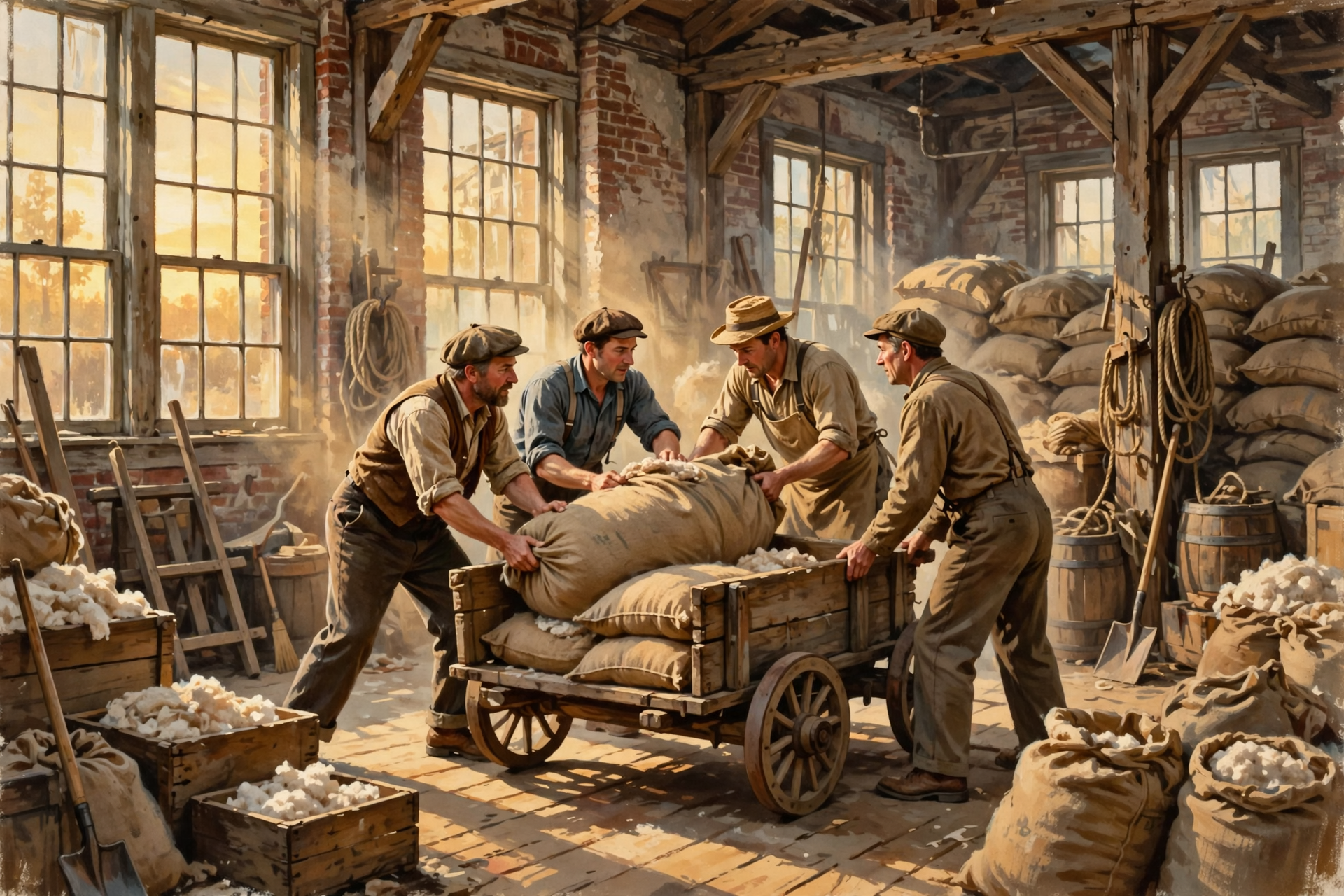
Before mechanization, production depended heavily on human and animal labor.
If you wanted to move more material, harvest more crops, manufacture more goods or transport more products, you needed more physical effort.
💪 Output Was Closely Tied to Bodies
A person could only lift so much.
Carry so much.
Build so much.
Harvest so much.
Move so fast.
The natural limits of the human body created natural limits on the business.
Growth often meant hiring more workers.
👥 Management Was Mostly Coordination
As workforces grew, businesses had to solve another problem:
How do you coordinate all those people?
Supervisors.
Foremen.
Managers.
Schedules.
Rules.
Work crews.
Hierarchy emerged partly because large numbers of humans are difficult to coordinate.
The bigger the organization became, the more people it often needed merely to organize the people already doing the work.
⚙️ Era Two: Machines Multiply Muscle
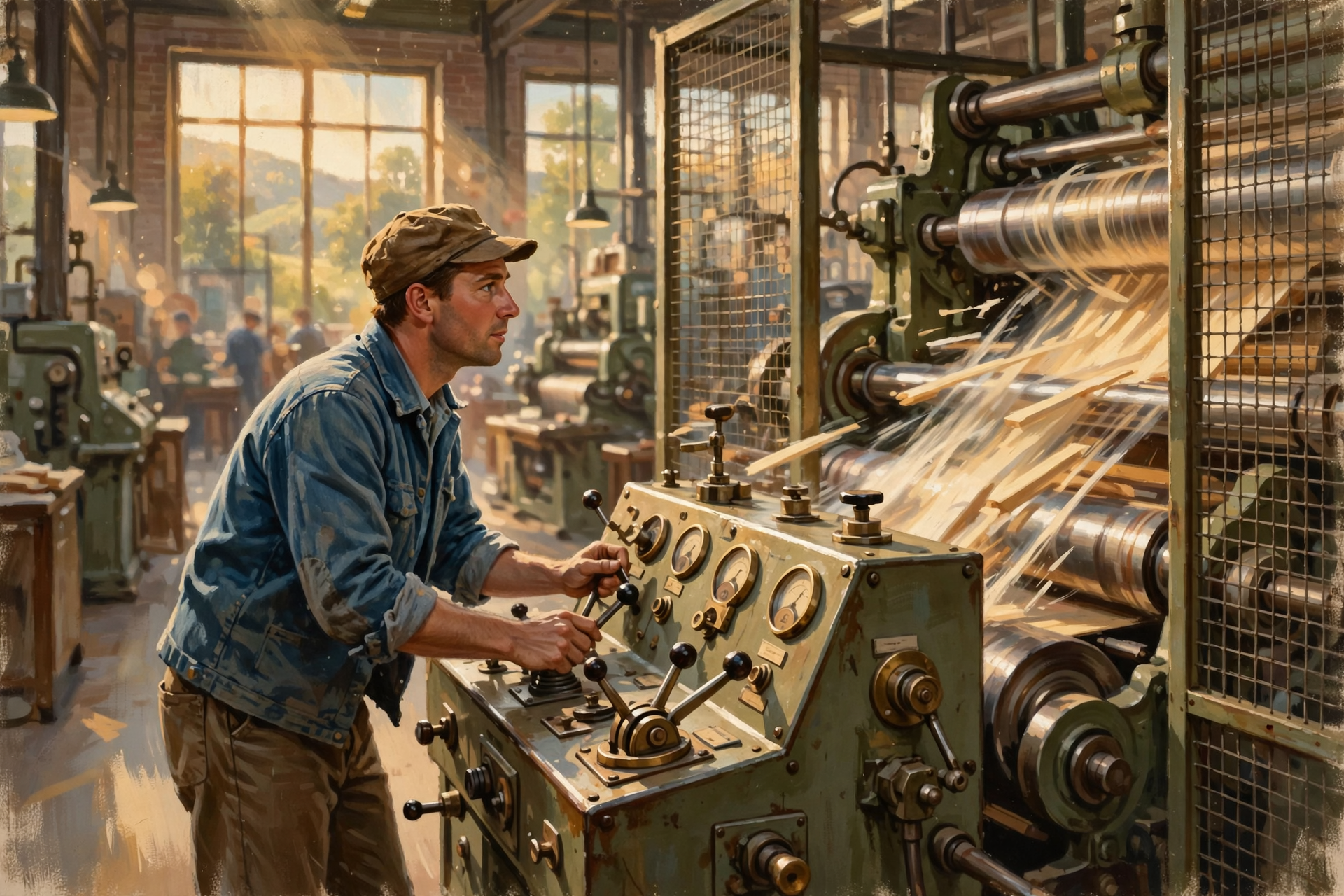
The Industrial Revolution changed the relationship between labor and output.
Machines could perform physical work faster and more consistently than people.
🏗️ One Worker Could Control More Productive Capacity
A worker operating machinery could produce far more than a worker using only hand tools.
Machines didn’t eliminate workers.
They changed what workers did.
The worker increasingly became the operator, monitor, maintainer or coordinator of machinery.
📈 Productivity Begins Separating From Headcount
This was the beginning of a recurring pattern.
Technology allowed one person to accomplish what previously required several.
Businesses could grow output without increasing labor at exactly the same rate.
The workforce still mattered enormously.
But labor was gaining leverage.
🏢 Era Three: The Corporation Creates the Office Army

As businesses became larger and more complex, another kind of work exploded:
administration.
📄 Business Created Mountains of Information
Invoices.
Orders.
Contracts.
Customer records.
Employee files.
Payroll.
Inventory.
Correspondence.
Reports.
Accounting records.
Every large business generated enormous amounts of information that had to be processed by people.
⌨️ Clerical Labor Becomes Infrastructure
Entire departments emerged to manage information.
Typists.
Bookkeepers.
Secretaries.
File clerks.
Telephone operators.
Accounting departments.
Administrative assistants.
Human beings weren’t just manufacturing the products anymore.
They were manufacturing and moving the information needed to run the organization.
☎️ Era Four: Communication Technology Compresses Distance
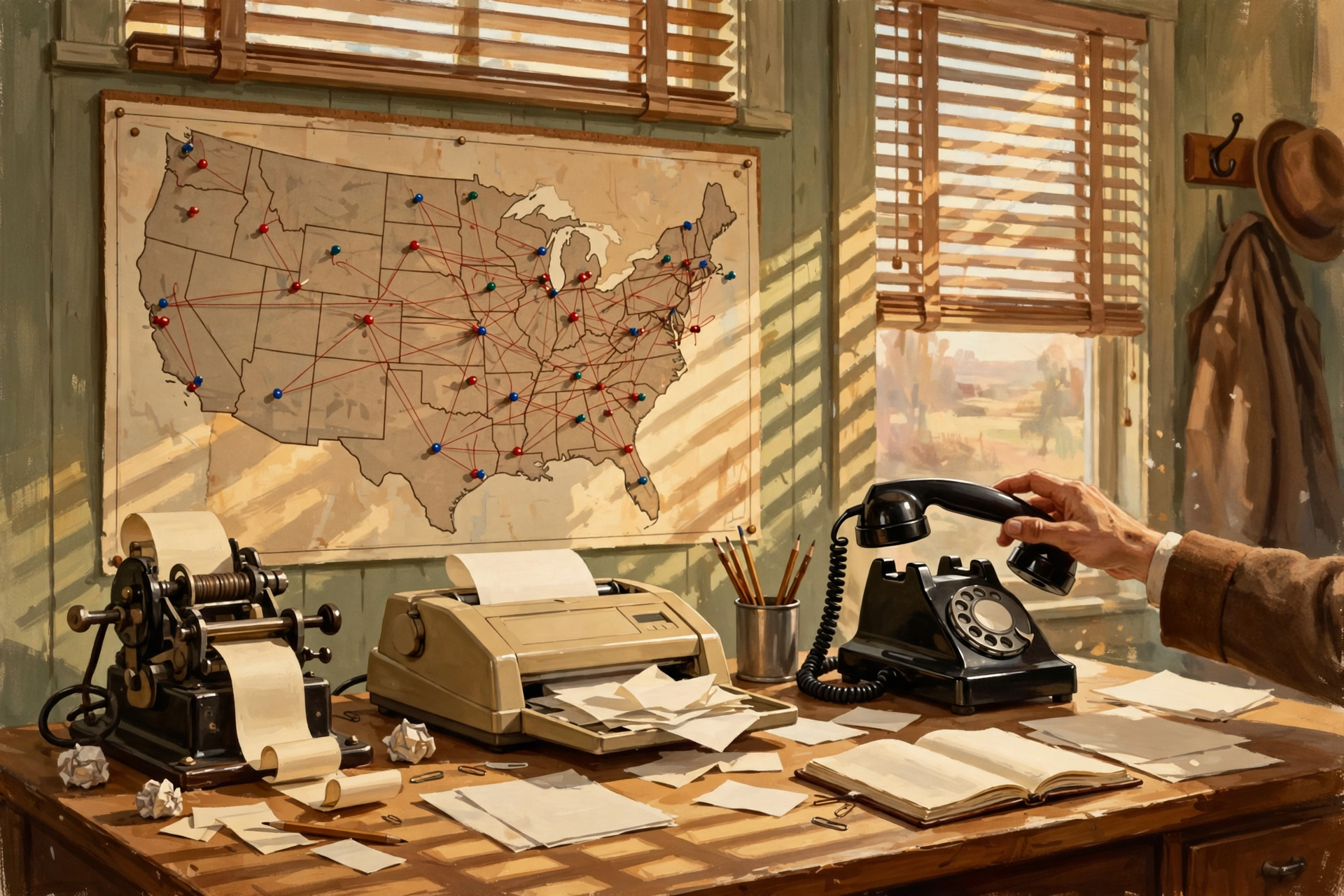
The telephone, telegraph, fax machine and eventually electronic communication changed organizations because information could move faster.
🌎 The Business Could Coordinate Across Distance
Headquarters could communicate with branches.
Salespeople could contact offices.
Suppliers could receive orders quickly.
Managers could coordinate operations across cities or states.
The organization could spread geographically without becoming completely disconnected.
🧑💼 But Communication Created More Coordination Work
Every new communication technology made coordination easier.
It also produced more communication.
More calls.
More messages.
More reports.
More meetings.
More people coordinating the people coordinating the work.
Technology sometimes removed work.
Sometimes it simply created different work.
💻 Era Five: The Personal Computer Multiplies the Office Worker

The personal computer changed office productivity much as industrial machinery changed physical productivity.
📊 One Person Could Suddenly Do Much More
Word processors replaced enormous amounts of typing and retyping.
Spreadsheets replaced countless manual calculations.
Databases replaced filing cabinets.
Desktop publishing replaced portions of print production.
Accounting software replaced large amounts of bookkeeping labor.
Email reduced the cost and delay of communication.
🧠 Knowledge Workers Became Machine-Augmented
The important change wasn’t that computers did everything.
They gave humans leverage.
An accountant with a spreadsheet could process information faster.
A designer with desktop software could produce materials faster.
A programmer could automate business processes.
A manager could analyze data more quickly.
Once again, the pattern repeated:
the human remained, but the amount of productive capacity controlled by that human increased.
🌐 Era Six: The Internet Separates Work From Location

The Internet weakened another old assumption:
People working together had to be physically together.
🏢 The Office Starts Becoming Optional
Email.
Web applications.
Shared documents.
Video conferencing.
Cloud storage.
Project-management systems.
Businesses could increasingly coordinate employees, contractors and customers across geography.
🌎 The Labor Market Becomes Global
A company in Tennessee could hire a programmer in another state.
A designer in another country.
A virtual assistant thousands of miles away.
A specialist it might never have been able to employ full time.
The traditional company boundary began getting blurry.
Who works for the company?
Employees?
Contractors?
Vendors?
Platforms?
Software providers?
The business became increasingly modular.
🌍 Era Seven: Outsourcing Turns Departments Into Services
For generations, businesses built capabilities internally.
If you needed accounting, you hired accountants.
If you needed IT, you created an IT department.
If you needed marketing, you hired marketers.
Outsourcing challenged that model.
🧩 Own the Outcome, Not Necessarily the Department
Businesses increasingly asked:
Do we really need to employ this capability?
Or do we simply need access to it?
Payroll could be outsourced.
Customer service could be outsourced.
IT could be outsourced.
Manufacturing could be outsourced.
Marketing could be outsourced.
Fulfillment could be outsourced.
The company became smaller while the ecosystem surrounding it became larger.
📦 The Business Becomes an Integrator
A modern business increasingly didn’t need to own every capability.
It needed to coordinate them.
That is an important distinction.
The entrepreneur’s job began shifting from:
“Build everything.”
toward:
“Assemble the right capabilities.”
☁️ Era Eight: SaaS Turns Business Infrastructure Into a Subscription

Software as a Service pushed organizational compression much further.
💳 Entire Departments Became $29-a-Month Buttons
A small company could suddenly rent capabilities that once required expensive systems and staff.
Accounting.
CRM.
Email marketing.
Customer support.
Website hosting.
E-commerce.
Payroll.
Analytics.
Scheduling.
Video conferencing.
Project management.
A company didn’t need to build these systems.
It subscribed to them.
🏪 Small Businesses Gain Big-Business Infrastructure
This was revolutionary for small organizations.
A five-person company could use software capabilities that would have required significant capital investment a generation earlier.
The infrastructure gap between the large company and the small company began shrinking.
Not disappearing.
But shrinking.
⚙️ Era Nine: Automation Starts Removing Repetitive Work

Software initially helped humans do work.
Then software increasingly began doing portions of the work itself.
🔁 “When This Happens, Do That”
Automation platforms introduced simple but powerful logic:
When the customer fills out the form…
send the email.
Create the record.
Assign the lead.
Schedule the reminder.
Update the spreadsheet.
Create the task.
Notify the team.
No employee needs to move the information manually.
🧹 Tiny Tasks Were Consuming Entire Careers
Organizations contain enormous amounts of work that exists only because one system doesn’t automatically communicate with another.
Copy this field.
Paste it there.
Download this file.
Upload it over there.
Send this message.
Rename this document.
Run this report.
Automation began attacking that layer of business friction.
🤖 Era Ten: AI Starts Multiplying Cognitive Labor

Automation follows predefined instructions.
Artificial intelligence introduces something different.
It can increasingly handle work where the exact answer isn’t known ahead of time.
🧠 AI Can Work With Unstructured Problems
Summarize this document.
Research this competitor.
Draft this proposal.
Compare these options.
Write this code.
Analyze these customer comments.
Find patterns in this data.
Create a marketing concept.
Review this contract.
Prepare a report.
Traditional automation struggles when every input is slightly different.
AI is useful precisely because so much knowledge work is slightly different every time.
📈 One Knowledge Worker Can Control More Output
A writer can explore more ideas.
A programmer can build more software.
A salesperson can research more prospects.
A marketer can create more variations.
An analyst can examine more information.
A manager can summarize more activity.
Once again:
the amount of productive capacity controlled by one human increases.
🤖🤖 Era Eleven: The AI Agent — Software Begins Owning the Task

There is a meaningful difference between asking AI a question and assigning AI a job.
That difference is the foundation of the emerging agent era.
💬 A Chatbot Answers
You ask:
“Summarize these customer comments.”
It summarizes them.
Then it stops.
⚙️ An Agent Acts
An agent may be assigned a broader objective:
“Every morning, collect the latest customer feedback, identify recurring complaints, compare them with yesterday’s findings, update the dashboard and flag anything that requires human attention.”
Now the system has something closer to a role.
It has:
- an objective,
- tools,
- data sources,
- rules,
- memory,
- an escalation path.
That begins to resemble an employee function.
Not an employee.
A function.
That distinction is going to matter.
👤 The One-Person Company May Stop Being a Small Company

Historically, we associated company size with employee count.
A one-person business was naturally limited by what one person could accomplish.
That assumption is beginning to weaken.
🧰 Imagine One Entrepreneur With an AI Workforce
The human founder handles:
- vision,
- judgment,
- relationships,
- capital allocation,
- high-level decisions.
An AI research agent watches the market.
An AI content agent prepares articles.
An AI marketing agent prepares campaigns.
An AI sales agent qualifies prospects.
An AI support agent handles common questions.
An AI development agent builds software.
An AI QA agent tests it.
An AI analyst monitors performance.
An AI operations agent watches workflows.
The entrepreneur hasn’t hired nine employees.
But functionally, nine different kinds of work are getting done.
🏢 What Size Is That Company?
One employee?
Ten functional workers?
A hundred automated processes?
Thousands of tasks completed every day?
Our traditional measures of company size may become less meaningful.
📉 The Organizational Pyramid May Get Flatter

Traditional companies often look like pyramids.
A few executives.
More managers.
Many workers.
That structure partly exists because humans require coordination.
👔 Management Itself Contains Automatable Work
Managers spend enormous amounts of time:
- collecting status updates,
- preparing reports,
- assigning tasks,
- checking progress,
- coordinating schedules,
- following up,
- moving information between groups.
AI can assist with many of those activities.
The result may be fewer layers dedicated primarily to information coordination.
🧠 Humans May Manage Systems Instead of People
The manager of the future may increasingly supervise:
people,
automation,
AI agents,
vendors,
software services,
and data pipelines
all at the same time.
Management becomes orchestration.
🎼 The Entrepreneur Becomes the Conductor

This may be one of the most useful ways to think about the future business owner.
Not as the person doing every task.
Not even as the person managing everybody doing the tasks.
But as the conductor.
🎻 The Orchestra Does the Work
The conductor doesn’t play every instrument.
The conductor decides:
- what should be played,
- when it should happen,
- how the pieces fit together,
- where something sounds wrong,
- when the performance needs adjustment.
That may increasingly describe entrepreneurship.
The entrepreneur assembles capabilities.
Humans where humans are best.
Software where software is best.
Automation where repetition dominates.
AI where interpretation helps.
Specialists where expertise matters.
The skill becomes orchestration.
🚦The Human Moves Toward the End of the Loop

Traditional business processes usually begin with the human.
A person notices something.
A person decides what to do.
A person assigns the work.
A person produces the result.
A person checks the result.
AI systems can increasingly invert that model.
🤖 Machines Can Initiate More of the Work
The system notices a problem.
It gathers information.
It analyzes options.
It prepares a recommendation.
It may even prepare the finished work.
Then the human appears.
Review.
Approve.
Reject.
Modify.
Escalate.
The human moves from the beginning of the process toward the decision point.
🧠 Human Judgment Becomes the Bottleneck
This creates an interesting reversal.
For generations, the scarce resource was production capacity.
Can we make enough?
Can we write enough?
Can we research enough?
Can we process enough?
AI can create enormous amounts of output.
The scarce resource becomes:
What deserves attention?
What is correct?
What should be approved?
What should we ignore?
What should we do next?
Judgment becomes the throttle.
🧠 The Skill of the Future May Be Delegation

We have traditionally thought of delegation as a management skill.
In an AI-heavy organization, it may become a basic professional skill.
📋 You Need to Know How to Define Work
AI becomes much more useful when the human can clearly define:
- the objective,
- the constraints,
- the available information,
- the quality standard,
- the boundaries,
- the escalation rules,
- what success looks like.
That is delegation.
The better you can describe the job, the better machines can help perform it.
👨🏫 Managing AI May Look Surprisingly Familiar
People managing AI systems may discover many of the same lessons managers already know.
Give vague instructions and get vague results.
Fail to define quality and quality varies.
Fail to inspect work and mistakes accumulate.
Give the wrong person—or machine—the wrong job and performance suffers.
Good management survives another technological revolution.
📚 Expertise May Become More Valuable, Not Less

If AI can produce drafts quickly, it becomes tempting to assume expertise matters less.
The opposite may happen in many fields.
🔍 Someone Still Has to Recognize Good Work
AI can generate code.
A skilled developer can determine whether it is good code.
AI can generate a legal analysis.
Someone knowledgeable must identify what matters.
AI can generate marketing ideas.
An experienced marketer knows which ones are nonsense.
AI can generate business strategies.
An experienced operator understands which assumptions will survive contact with reality.
Cheap production increases the value of expensive judgment.
🏪 Small Businesses May Gain More Than Large Businesses

Large organizations already have specialists.
They have HR.
Marketing.
Legal.
Sales.
Research.
IT.
Analytics.
Operations.
Small businesses usually don’t.
🧰 AI Gives Small Businesses Access to Missing Capabilities
The local business owner may not need an entire marketing department.
They need marketing work done.
They may not need a full-time analyst.
They need analysis.
They may not need a dedicated researcher.
They need answers.
They may not need an employee sitting at a desk waiting for customer questions.
They need questions answered.
That difference is enormous.
The business can increasingly acquire capabilities without acquiring permanent organizational weight.
🏘️ This Could Matter Enormously for Rural Economies

For decades, small-town economic development frequently centered on attracting employers.
Get a factory.
Get a warehouse.
Get a large retailer.
Get 200 jobs.
Those opportunities still matter.
But AI creates another path.
🌄 What If We Grow Entrepreneurs Instead of Only Recruiting Employers?
A resident in a small community with:
- broadband,
- a laptop,
- domain knowledge,
- AI systems,
- access to global markets,
can increasingly create a business that would once have required far more capital and staff.
The community doesn’t necessarily need one company employing 500 people.
It may eventually create 100 companies employing five.
Or 500 companies employing one.
Those businesses may still buy locally.
Hire locally.
Spend locally.
Sponsor local organizations.
Support local schools.
Contribute to local tax bases.
And create opportunities without requiring the entrepreneur to leave home.
⚠️ Organizational Compression Has a Dark Side Too

Every productivity revolution creates winners, losers and difficult transitions.
AI will be no exception.
👥 Some Roles Will Shrink
If one worker can perform work that previously required several, organizations will inevitably reconsider staffing.
Some tasks will disappear.
Some jobs will change.
Some departments may shrink.
New roles will appear.
And people will have to learn different ways to create value.
📈 Higher Productivity Doesn’t Automatically Mean Shared Prosperity
A company becoming dramatically more productive doesn’t automatically tell us who receives the benefit.
Owners?
Workers?
Customers?
Communities?
Some combination?
Technology answers:
“What can be done?”
Society still has to answer:
“How do we want the gains distributed?”
🚫 The Goal Shouldn’t Be “Remove Every Human”

There is a simplistic version of AI strategy that says:
Find every human task.
Automate it.
Remove the person.
Repeat.
That may be a poor strategy in many businesses.
❤️ Customers Still Value Humans
Some interactions benefit from:
- empathy,
- trust,
- negotiation,
- creativity,
- judgment,
- accountability,
- community connection.
The better question isn’t:
“Where can we eliminate humans?”
It is:
“Where does a human create unique value?”
Then protect that human’s time from everything else.
🧹 AI May Remove the Work Around the Work

This may be one of AI’s most valuable contributions.
Every profession has actual work.
And then there is all the work surrounding the work.
📋 The Work Around the Work
The contractor wants to build.
But also has to write estimates.
Answer email.
Schedule appointments.
Send invoices.
Follow up.
Post marketing content.
Organize photos.
Update records.
The attorney wants to practice law.
The physician wants to practice medicine.
The journalist wants to investigate and write.
The programmer wants to build software.
The business owner wants to run the business.
Yet enormous portions of the day disappear into administrative friction.
AI can attack the work around the work.
🎯 That Could Make Human Work More Human
There is a version of the AI future where people don’t become machine-like.
The machines take more of the machine-like work.
The humans spend more time:
thinking,
creating,
deciding,
building relationships,
solving unusual problems.
That would be genuine progress.
🏗️ The Business of the Future May Be Built From Capabilities

Instead of designing a business by asking:
“How many employees do we need?”
we may increasingly ask:
“What capabilities does this business need?”
🧩 Then Choose the Best Source for Each Capability
Employee?
Contractor?
Software?
AI model?
Automation?
Agent?
Vendor?
Partner?
The organization becomes a portfolio of capabilities rather than merely a collection of employees.
📊 We May Need New Ways to Measure a Company

Employee count has traditionally told us something about scale.
In an AI-heavy economy, it may tell us less.
🤔 Which Company Is Bigger?
Company A has 50 employees.
Company B has five employees using sophisticated automation and AI systems.
Company B produces twice the revenue.
Which is the larger organization?
Headcount says one thing.
Output says another.
Capability says something else.
We may increasingly measure companies by:
- revenue per employee,
- output per employee,
- customers served per employee,
- automated capacity,
- intellectual property,
- network reach,
- data assets,
- decision speed.
⚡ Speed May Become an Organizational Advantage

Large organizations historically benefited from scale.
But scale brings coordination costs.
Meetings.
Approvals.
Departments.
Budgets.
Policies.
Chains of command.
🚤 Tiny AI-Native Organizations May Move Differently
A small AI-enabled company may be able to:
research an idea in the morning,
prototype it by afternoon,
test it with customers tomorrow,
change direction next week.
The advantage isn’t merely cost.
It is speed of learning.
🧪 The Company Itself May Become an Experiment

If capabilities can be assembled cheaply and quickly, entrepreneurs can test ideas differently.
🔬 Build Smaller Before Building Bigger
Instead of hiring a team before knowing whether the idea works:
build the workflow.
Use AI.
Automate portions.
Use contractors where necessary.
Test demand.
See what customers actually do.
Then expand the human organization where the evidence justifies it.
The company becomes more experimental.
Less:
“Build the organization and hope the business appears.”
More:
“Prove the business and build the organization around what works.”
🔮 The One-Human Billion-Dollar Company Question

People increasingly speculate about whether AI could enable a company with one human founder to someday reach enormous scale.
Whether that particular milestone arrives soon is less important than what the question reveals.
We already expect the ratio between people and productive capacity to change dramatically.
📉 The Direction Is More Important Than the Number
Maybe the future company has one person.
Maybe five.
Maybe 50.
The important question is:
How much business capability can each person command?
That number has been increasing for 200 years.
AI appears likely to accelerate it.
🔄 The Entire History of Work Is Increasing Leverage

Look at the progression.
👷 The worker supplies the muscle.
⚙️ The machine multiplies the muscle.
🏢 The corporation organizes the workers.
☎️ Communication connects the organization.
💻 The computer multiplies the office worker.
🌐 The Internet removes distance.
🌍 Outsourcing turns departments into services.
☁️ SaaS turns infrastructure into subscriptions.
⚙️ Automation removes repetitive tasks.
🤖 AI multiplies knowledge work.
🤖🤖 Agents begin owning entire workflows.
And now we may be approaching:
👤 One human directing an entire digital workforce.
🧠 The Human Job Keeps Moving Up the Stack

Technology repeatedly removes the lowest-leverage layer of work.
Human muscle became machine operation.
Manual calculation became spreadsheet analysis.
Data entry became automation.
Information retrieval became search.
Routine drafting becomes AI-assisted generation.
The human role keeps moving upward.
Toward:
judgment.
prioritization.
creativity.
strategy.
relationships.
meaning.
responsibility.
🏡 Which Era Does Your Organization Still Run Like?

This brings us back to the question driving this entire series.
Which era does your business still operate in?
🔍 Look for the Friction
Are employees manually copying data between systems?
Are people spending hours producing reports that software could generate?
Are skilled employees buried in administrative work?
Are employees repeatedly answering the same questions?
Are opportunities missed because nobody remembers to follow up?
Are managers spending their days gathering status information?
Are you hiring people simply because the current process is inefficient?
Those are clues.
⚙️ Don’t Automate the Organization You Should Have Redesigned
This may be one of the most important lessons.
AI shouldn’t simply be poured over an old process.
If the workflow was designed in 1997, making it run faster isn’t necessarily transformation.
Sometimes the right question is:
Why does this process exist at all?
Don’t simply automate the bureaucracy.
Remove what no longer needs to exist.
🧰 The Tools Changed. The Organization Is Changing Now.
The Industrial Revolution changed how people made things.
The computer revolution changed how people processed information.
The Internet changed where people could work and sell.
Cloud software changed what businesses needed to own.
Automation changed which repetitive tasks required people.
Artificial intelligence may change how much cognitive work requires direct human effort.
That doesn’t mean the human disappears.
It may mean the human becomes more important exactly where humanity matters most.
Machines provide capacity.
Automation provides consistency.
AI provides leverage.
Humans provide judgment.
For two centuries, businesses grew by adding people, machinery, buildings and departments.
The next generation may grow differently.
It may grow by increasing the capabilities controlled by each person.
The factory once needed hundreds of hands.
The modern company may need a handful of minds.
And someday, some extraordinarily capable businesses may be operated by one human standing at the end of a very long digital loop.
The workforce isn’t merely becoming automated.
The organization itself is being redesigned.
📰Other Stories In This Series
- 🏭➡️💻 The Progress of Business: Six Eras, Same Job
- 🧠 The Evolution of the Customer Database: From Fred’s Memory to AI Memory
- 🚂 The Evolution of Selling: From the Traveling Salesman to the AI Sales Agent
- 📣 The Evolution of Marketing: From the Town Crier to One Message for One Person



0 Comments