
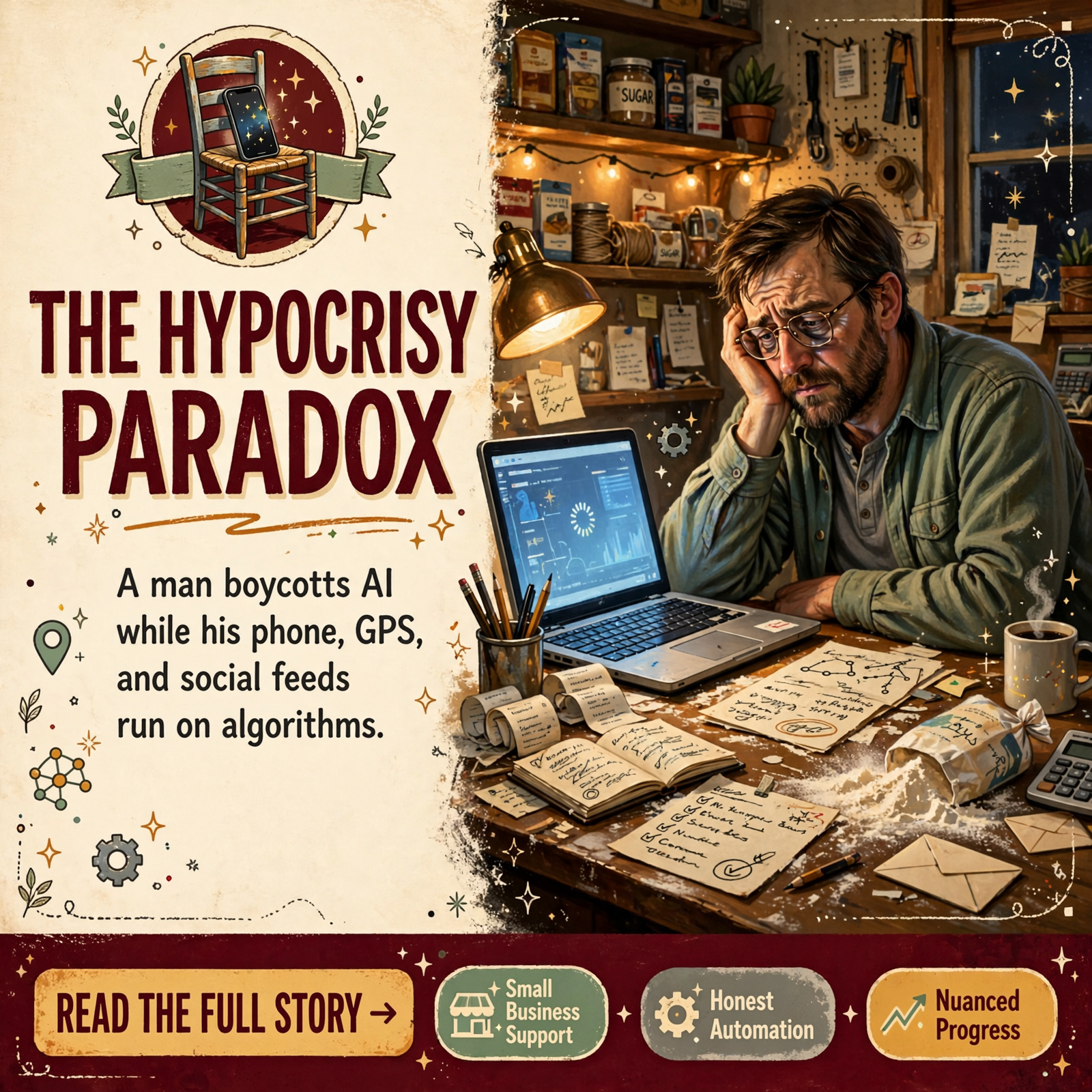
🤖 The Ballad of the Purely Human Customer: Anti-AI Virtue Signaling Comes to Main Street
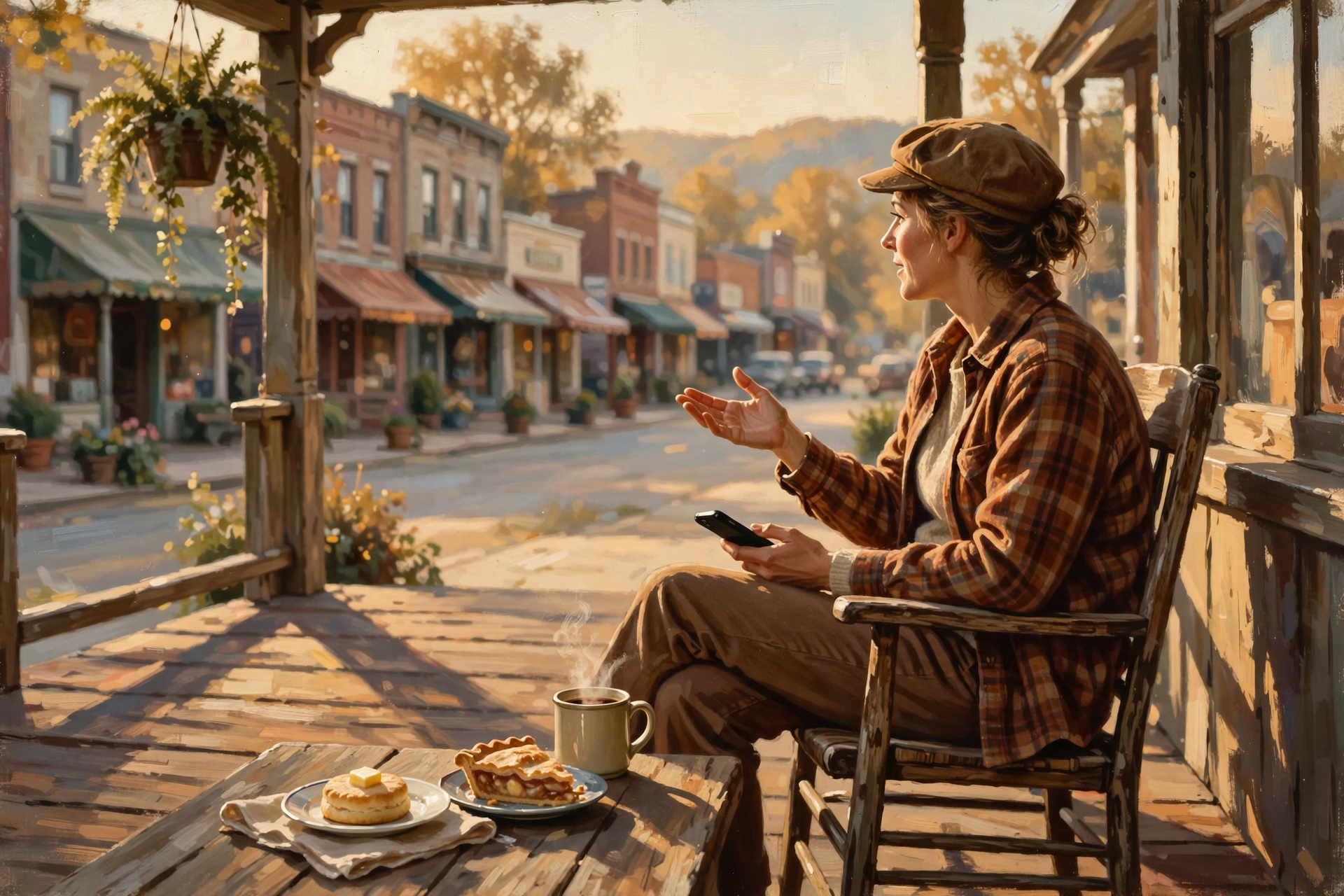
What happens when somebody loudly declares they will never support a small business that uses artificial intelligence—while carrying a smartphone, searching Google, following GPS, scrolling algorithmic social media feeds, accepting fraud detection, streaming recommended entertainment, and living inside a world already shaped by automation?
Well, pull up a porch chair. 🪑 Fetch a biscuit. 🥐 Cut yourself a piece of pie. 🥧 Because this may take a while.
This is a Southern satire about AI hypocrisy, anti-AI virtue signaling, small businesses, automation, technology, modern convenience, and the peculiar human habit of condemning tools we already use once our neighbor starts using them too.
📢 The Great Declaration: “I Shall Not Deal With AI”
Now gather close, good neighbors,
Pull up a porch-swing chair,
For I have heard a warning
That is spreading everywhere.
It came across the Facebook,
In letters bold and wide:
“IF A BUSINESS USES AI,
I WILL NOT BUY INSIDE.”
Well.
That settled that.
The rooster ceased his crowing.
The courthouse clock stood still.
Three merchants shut their awnings
And a banker changed his will.
For here had come a principle
So righteous, clean, and high,
No decent man could question it:
“I SHALL NOT DEAL WITH AI.”
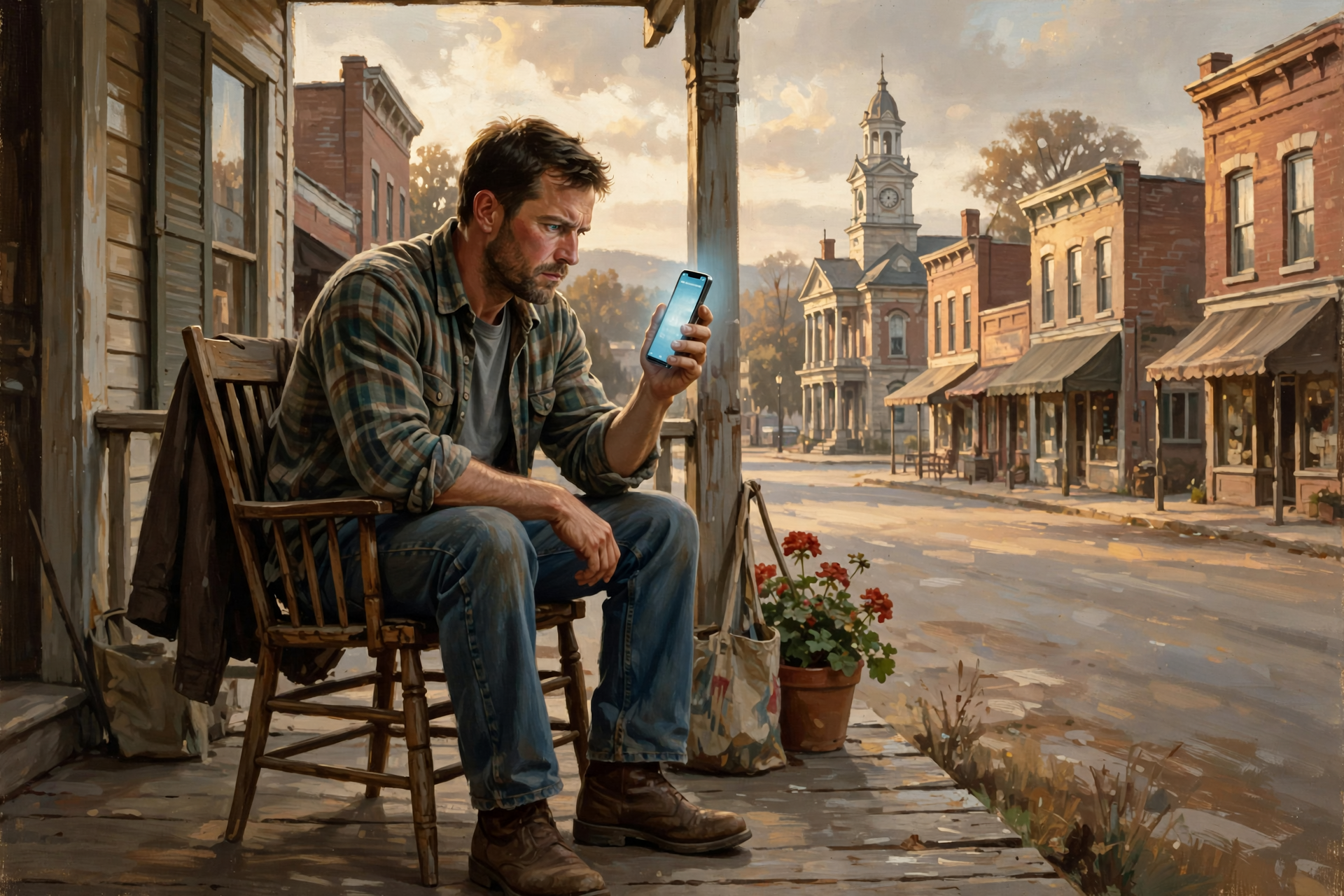
And standing there proclaiming this
With courage rarely seen,
Our hero held an iPhone
Assembled by machine.
He typed his declaration
With predictive text turned on,
While autocorrect assisted him
From dusk until the dawn.
His photographs were sharpened.
His red-eye disappeared.
His spam was sorted quietly.
His ugly ads were cleared.
His face unlocked his telephone.
But that was different.
Naturally.
For Virtue has exemptions
When convenient technically.
☕ The Search for a Purely Human Cup of Coffee
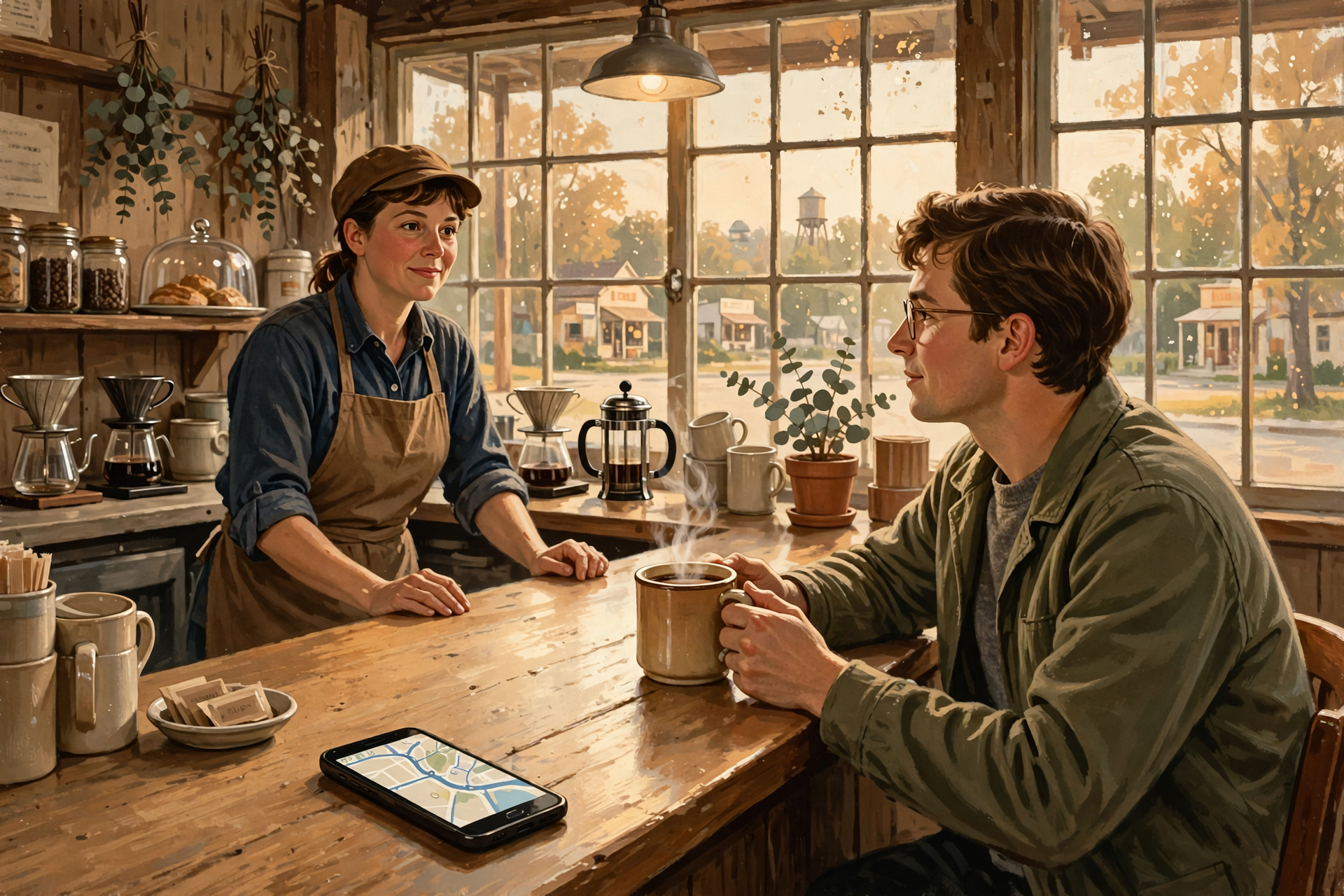
He searched online for coffee
At a purely human store,
And Google ranked the choices
From a hundred down to four.
He studied all the star reviews
The software chose to show,
Then followed GPS directions
Telling him where to go.
The traffic lights adjusted.
The engine watched its fuel.
The transmission changed its gearing
Using algorithms as a rule.
The brakes had little sensors.
The tires told him pressure.
The dashboard calculated
His remaining driving measure.
But none of this was AI.
No sir.
Not in his estimation.
AI begins precisely
At the point of his frustration.
🍳 Pete’s Café and the Terrible Crime of Better Grammar
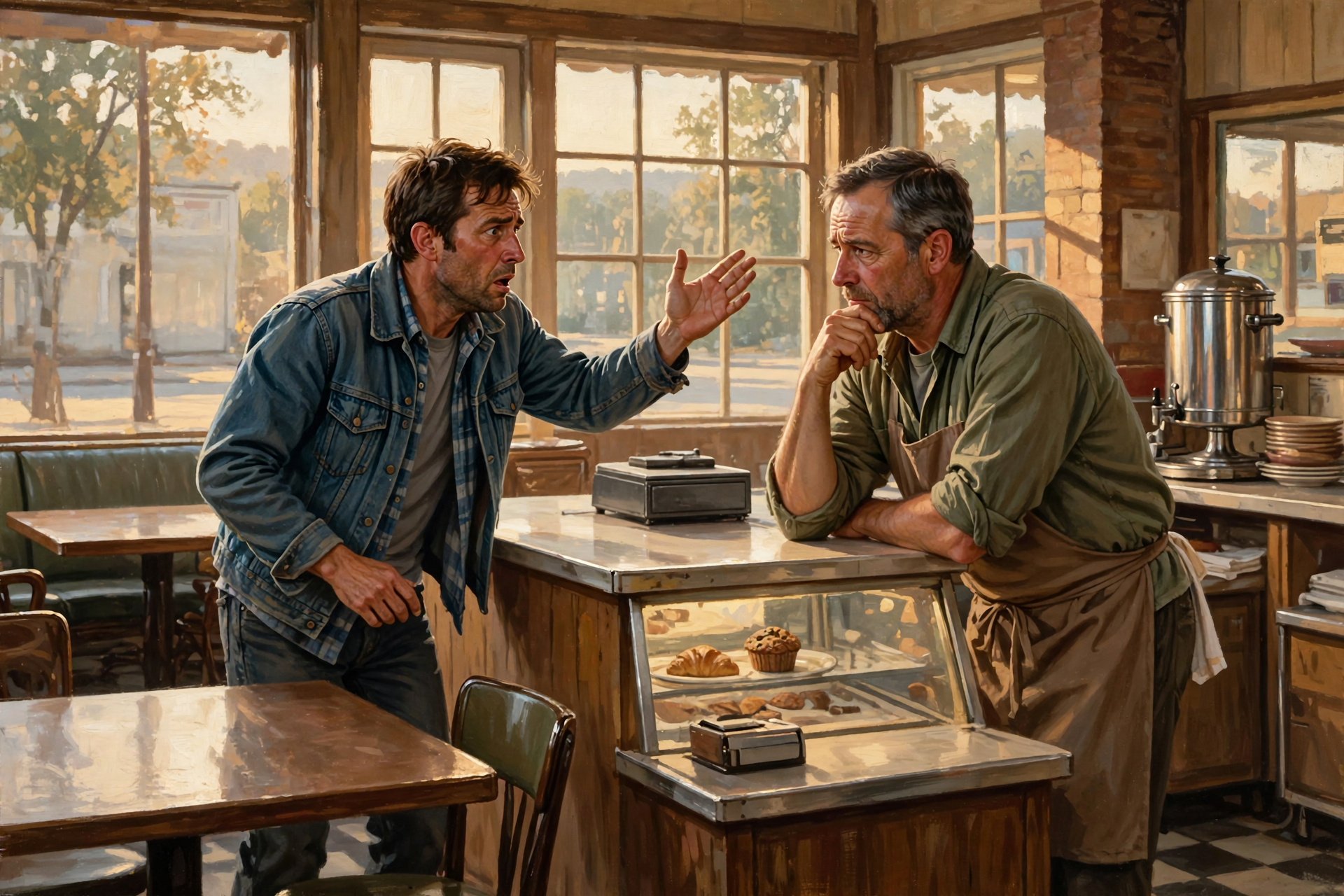
He entered Pete’s Café and said,
“Now Pete, I need to know:
Did any artificial thinking
Help this business grow?”
Pete scratched his chin.
“Well, maybe.
My register does sums.
My website takes reservations.
My inventory runs.
“My accountant uses software.
My bank checks fraud at night.
The weather app says Tuesday
Would be best for outside lights.
“My daughter fixed our menu
With a program yesterday.
And something helps me answer
What the customers all say.
“I used a writing tool last week
To fix a sentence there—”
Our hero gasped.
The room went cold.
A hush fell through the air.
“You mean,” he cried, “this restaurant
Has trafficked with MACHINE?
You used COMPUTERS to improve
A sentence on a SCREEN?”
Pete nodded.
“I had written
‘Our chickens is real good.’
It changed ‘is’ into ‘are,’
Which I admit it probably should.”
“MONSTROUS!” cried the customer.
“DECEITFUL!
FALSE!
OBSCENE!
You nearly made me purchase eggs
That had been touched by machine!”
So Pete apologized politely
For grammar so depraved,
While the customer’s credit card
Was algorithmically saved.
💐 Mary’s Flower Shop Encounters the Guardians of Creativity

He marched next door to Mary’s shop,
Where Mary sold bouquets.
“I hear you use AI,” he said.
“I’ve heard about your ways.”
Mary looked confused.
“Well, sir,
I sell flowers, mostly so.
I used a tool to make a post
About where roses grow.”
“HA!”
He pointed like a preacher
Who had caught the Devil red.
“So those weren’t your own adjectives?”
“Well…
Mostly mine,” she said.
“The thing suggested ‘beautiful.’”
He staggered toward the door.
“You outsource human creativity!
I cannot shop here anymore!”
Then he posted Mary’s treachery
To fourteen neighborhood groups,
Where ranking algorithms quickly
Fed it through their loops.
The angrier the comments got,
The more the system spread ’em,
Because righteous indignation
Is nutritious to an algorithm.
And thus he fought the machines
With courage, grit, and gall,
By feeding condemnation
To the largest ones of all.
🔨 Billy’s Hardware and the Search for an Ethical Screwdriver
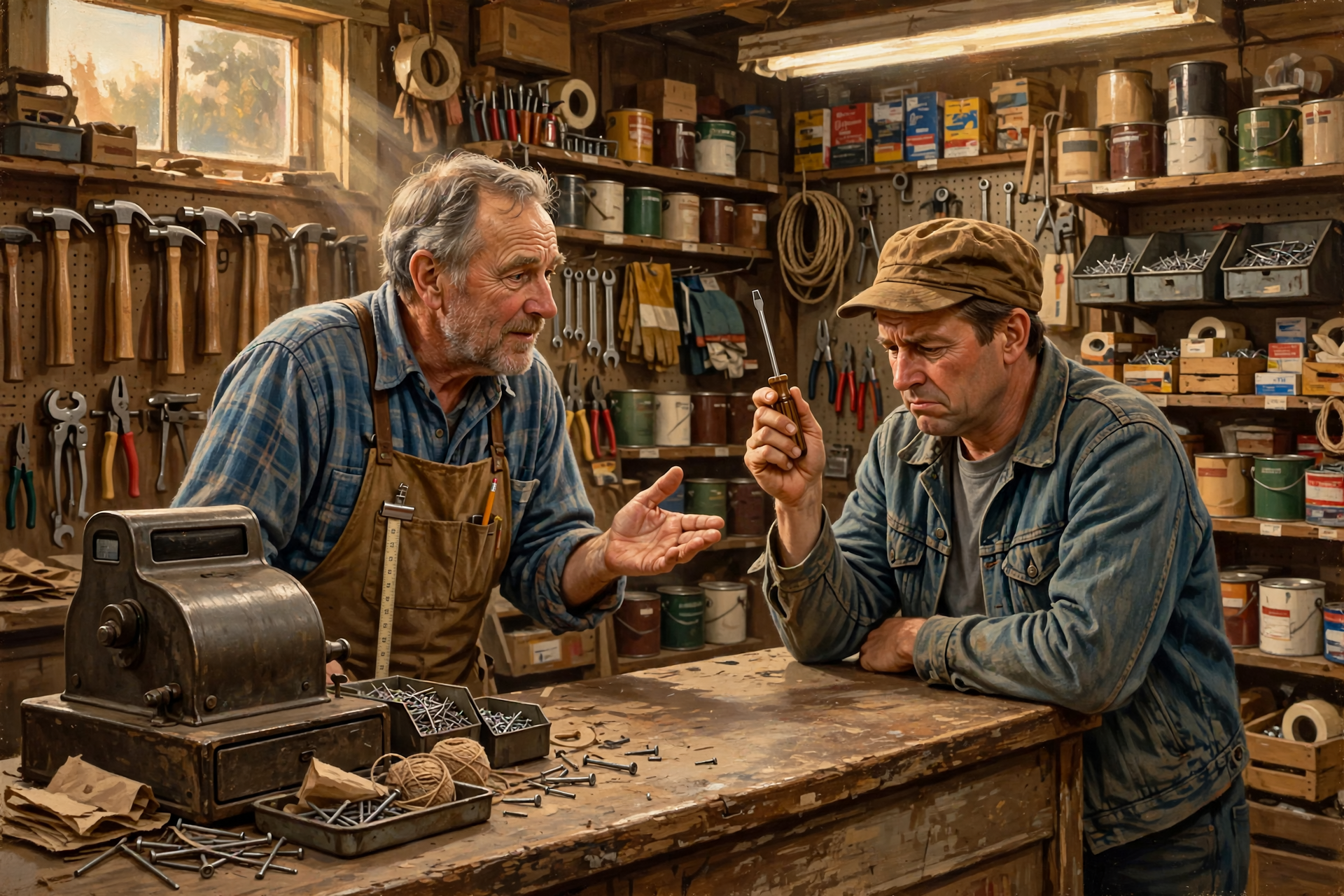
Now word reached Billy’s Hardware
That judgment walked the street.
Billy swept the sidewalk
And prepared himself to meet
The Champion of Humanity,
Defender of the Soul,
Who came armed with screenshots,
Followers, and a scrolling poll.
“Billy,” said the warrior,
“Answer plainly if you can.
Is this establishment operated
By the unaided mind of man?”
Billy thought.
“Well…
The sawmill uses lasers.
The warehouse uses code.
UPS selects the route
That brings my hammers down the road.
“The paint machine remembers
Forty thousand different shades.
The bank predicts suspicious checks.
The factory uses blades
“Controlled by little computers.
And my website, I confess,
Sometimes tells me which products
People probably want best.”
The customer grew pale.
“You mean…
Your HAMMERS…
have been DATA-Touched?”
Billy said,
“Well, come to think of it,
Most everything is, pretty much.”
The man dropped Billy’s screwdriver
As though it carried plague.
“I seek an ethical screwdriver!
One whose origins aren’t vague!”
Billy said,
“You want a blacksmith?”
“That sounds better.”
Billy grinned.
“He uses an electric furnace.”
“Never mind.
I cannot win.”
🚫 The Long Pilgrimage Toward Technological Purity
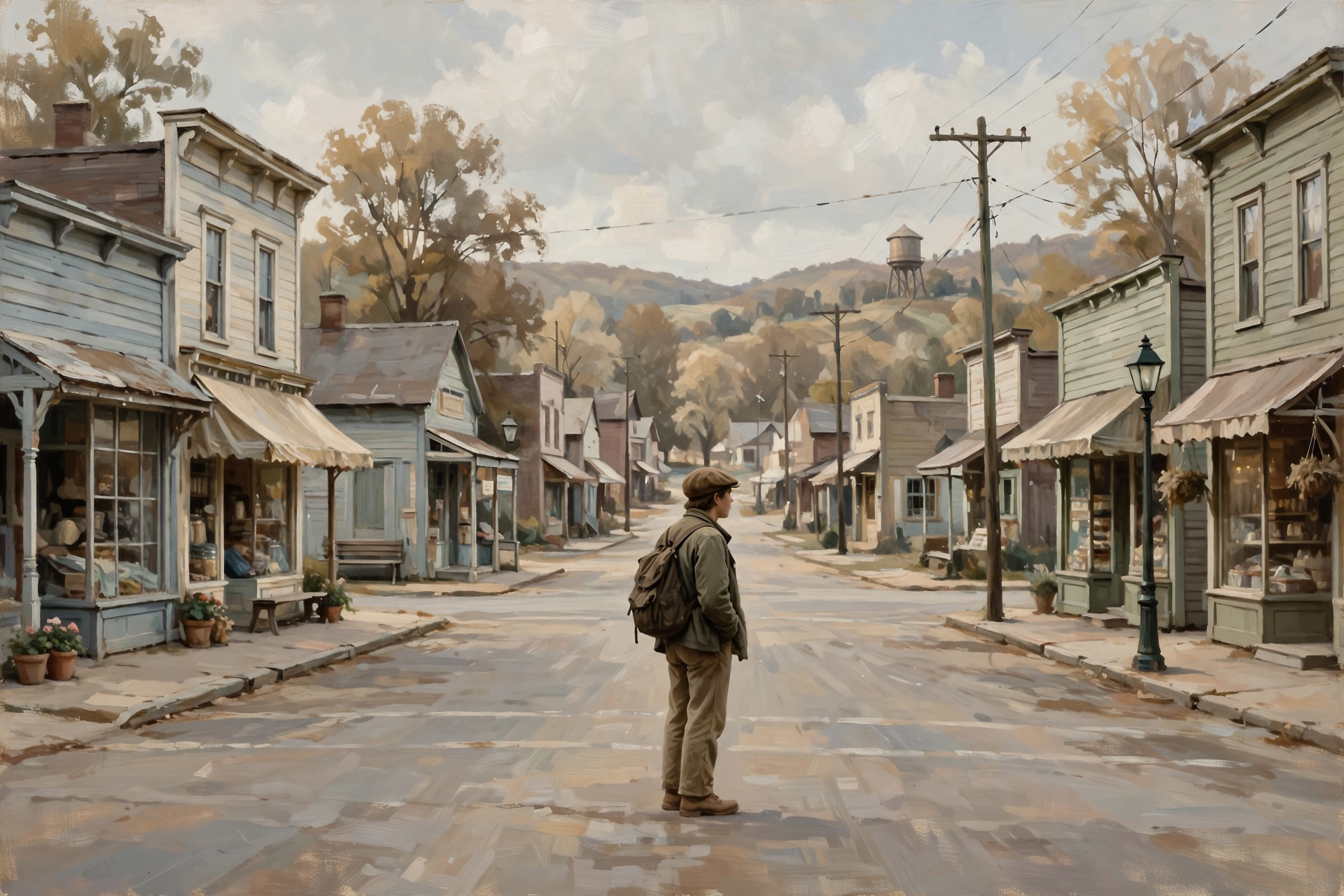
And so our hero wandered
In pursuit of human purity,
Seeking commerce uncontaminated
By computational impurity.
He would not use a grocer
Whose supply chain might predict
How many cans of beans to stock
Or what the shelves should pick.
He would not use a pharmacy
Whose software checked prescriptions.
He would not trust logistics
Driven by machine predictions.
He would not board an airplane
Whose systems planned the flight.
He would not use a hospital
Whose scanners aided sight.
He would not buy insurance
Priced by computational math.
He would not take an Uber
Whose algorithm chose the path.
He would not use a bank
That screened transactions for a thief.
He would not read a website
With automated spam relief.
He would not shop on Amazon.
He would not search on Bing.
He would not stream a movie
Recommended by a thing.
He would not use a smartphone.
He would not use a map.
He would not let a smartwatch
Tell him when to take a nap.
He would not use a camera
That adjusted for the light.
He would not use a thermostat
That learned the house at night.
He would not use an email filter.
He would not use translation.
He would not use a booking site.
Or weather calculation.
And somewhere around lunchtime
It occurred to our good friend
That moral purity gets difficult
When taken to its end.
🧠 A Small Amendment to the Doctrine
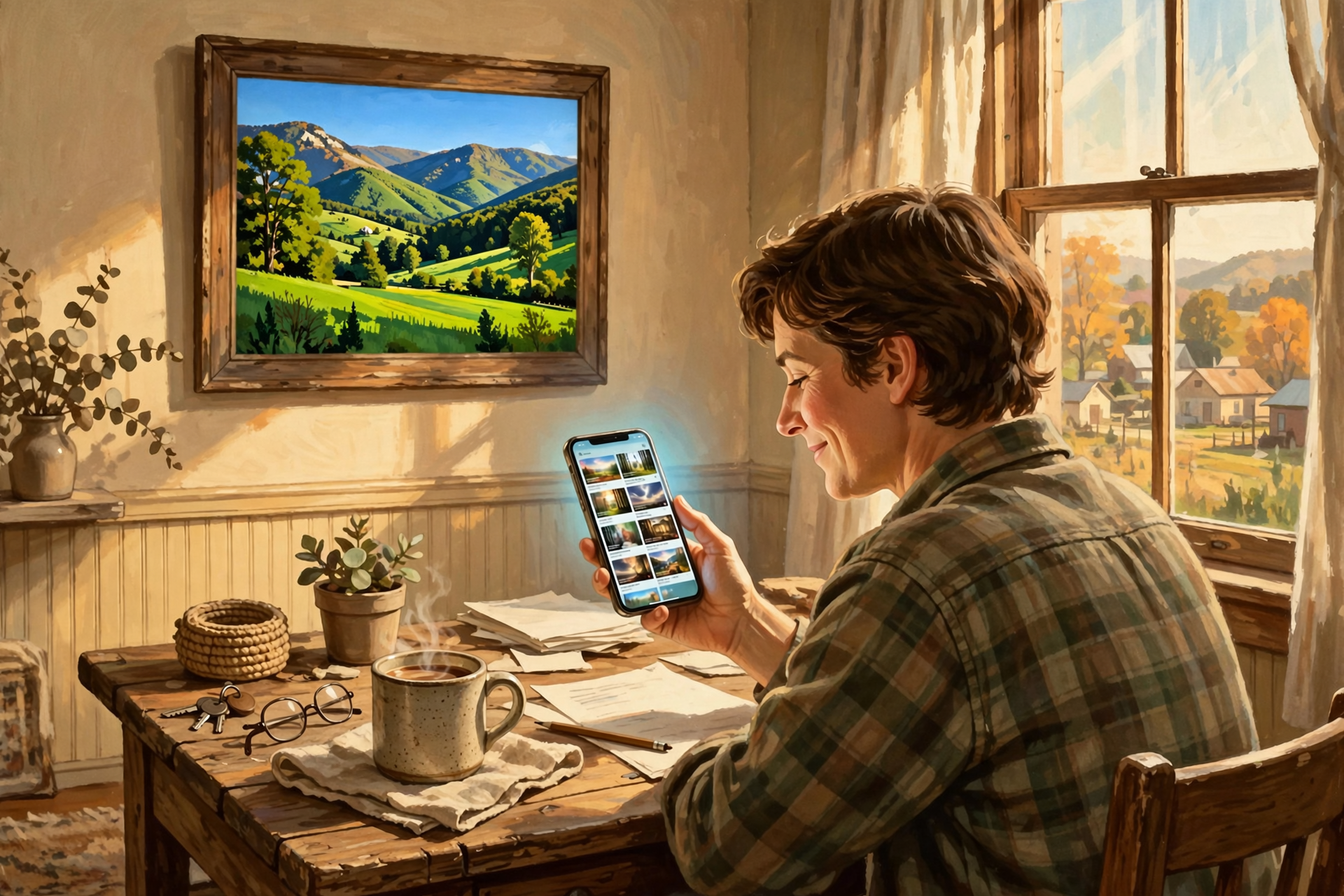
But principles are mighty things,
Especially when displayed.
They’re cheapest when announced online
And costliest when obeyed.
And so he made an adjustment
To the doctrine he’d begun:
AI was wicked mostly
When somebody ELSE used one.
If Netflix chose his movie,
That was useful innovation.
If Mary wrote a Facebook post,
That threatened civilization.
If Amazon predicted
What he’d probably like to buy,
That simply made life easier.
If Pete did it?
AI.
If Google summarized a page,
Well, that’s the modern age.
If Billy used the same technique,
It filled him up with rage.
If software helped his taxes,
That was merely bookkeeping.
If software helped a barber advertise,
Humanity was weeping.
If his phone enhanced a photograph,
That made the picture clean.
If a wedding photographer did it,
“THE PHOTO ISN’T REAL! IT’S MACHINE!”
If spellcheck fixed his sentences,
No moral line was crossed.
If Sarah used a writing assistant,
“The human touch is lost!”
🥐 Sarah’s Bakery and the Price of Purity
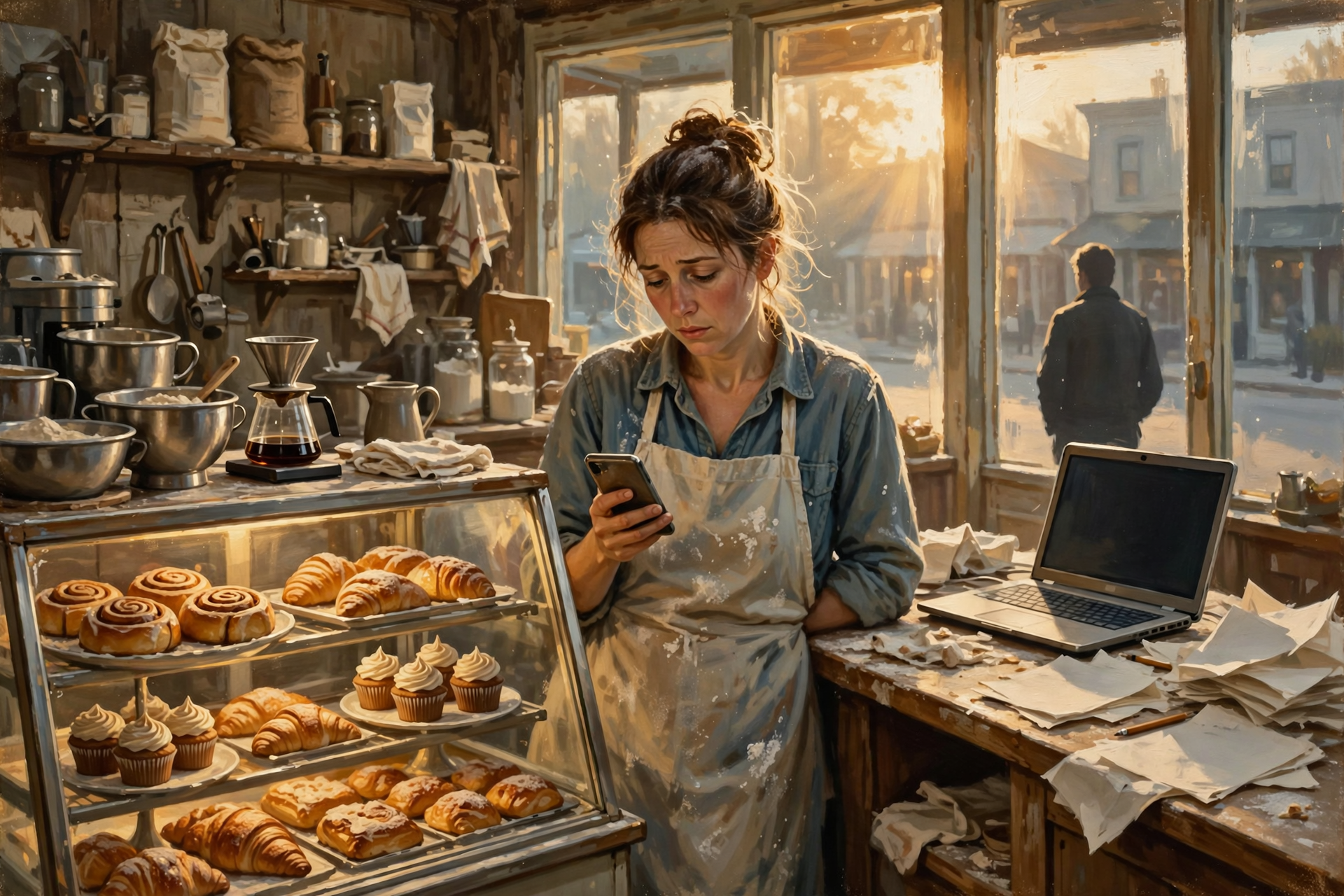
Now Sarah ran a bakery
On the outskirts of the town.
She worked from five each morning
Till the sun went halfway down.
She mixed the dough.
She swept the floor.
She iced the birthday cake.
She answered calls while wondering
How much more she could take.
She paid the rent.
She paid the lights.
She paid insurance too.
She ordered flour.
Fixed the sink.
And scrubbed the oven flue.
She photographed the cupcakes.
She posted when she could.
Though marketing at midnight
Was not particularly good.
So one evening, tired and aching,
With flour in her hair,
She asked a little writing tool,
“Can you clean this announcement here?”
It took her awkward paragraph
And helped her make it clear:
Fresh cinnamon rolls Saturday.
We’d love to see you here.
Our hero saw the posting.
His indignation grew.
“This business uses AI!
I’M DONE!
They’ve lost my business too!”
And Sarah, who had worked fourteen hours
To keep her dream alive,
Was judged by one man tapping glass
At quarter after five.
🏪 Supporting Humans by Making Their Lives Harder

He called it “supporting humans”
As he punished human trade.
He called it “saving artists”
While the small shop owner paid.
He called it “standing up for work”
While making extra labor,
For the butcher, baker, florist,
Mechanic, friend, and neighbor.
He demanded human effort
In every paragraph and line,
Then complained if Mary’s newsletter
Arrived at half-past nine.
He wanted instant answers.
He wanted perfect prose.
He wanted twenty photographs.
He wanted daily posts.
He wanted websites loading fast.
He wanted prices low.
He wanted tiny businesses
To put on quite a show.
He wanted customer service
At midnight Christmas Eve,
But heaven help the merchant
Who found software to relieve
A little of the burden
Of competing every day
With corporations spending millions
To automate the other way.
🏢 AI Becomes Respectable Once the Company Is Big Enough
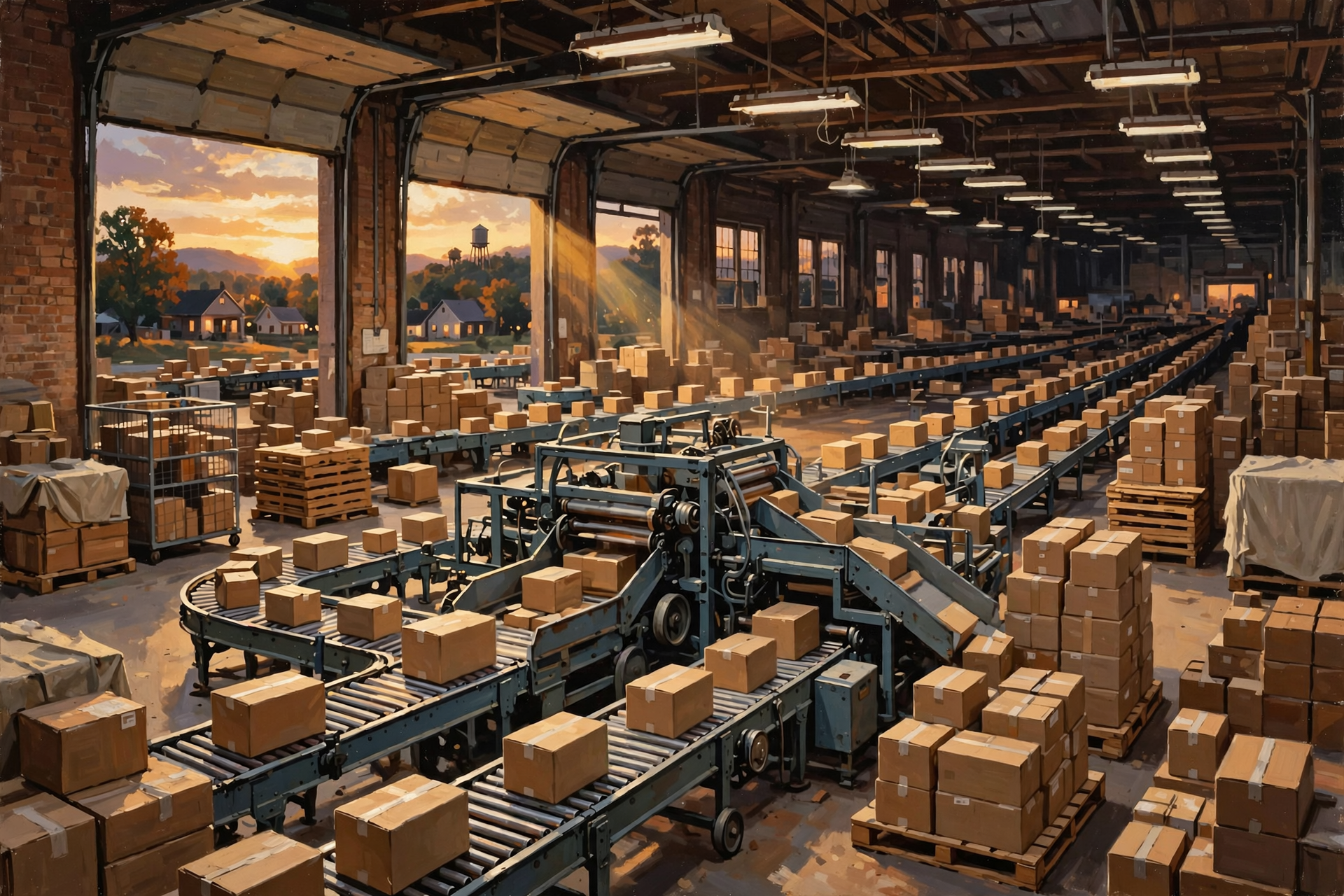
For Walmart may use forecasting.
Google may use AI.
Visa may detect fraud
Before the fraudulent purchase flies.
FedEx may route a million boxes.
Meta may rank your feed.
Amazon may guess tomorrow
What you haven’t learned you need.
Your bank may score transactions.
Your car may watch the lane.
Your hospital may process
What appears upon a scan.
Your insurance company models risk.
Your airline optimizes.
Your grocery store predicts demand.
Your smartphone recognizes.
But let Earl’s Tire & Muffler
Use a chatbot after five,
And suddenly the Republic
May not possibly survive.
⚖️ The Curious Double Standard Applied to Small Business
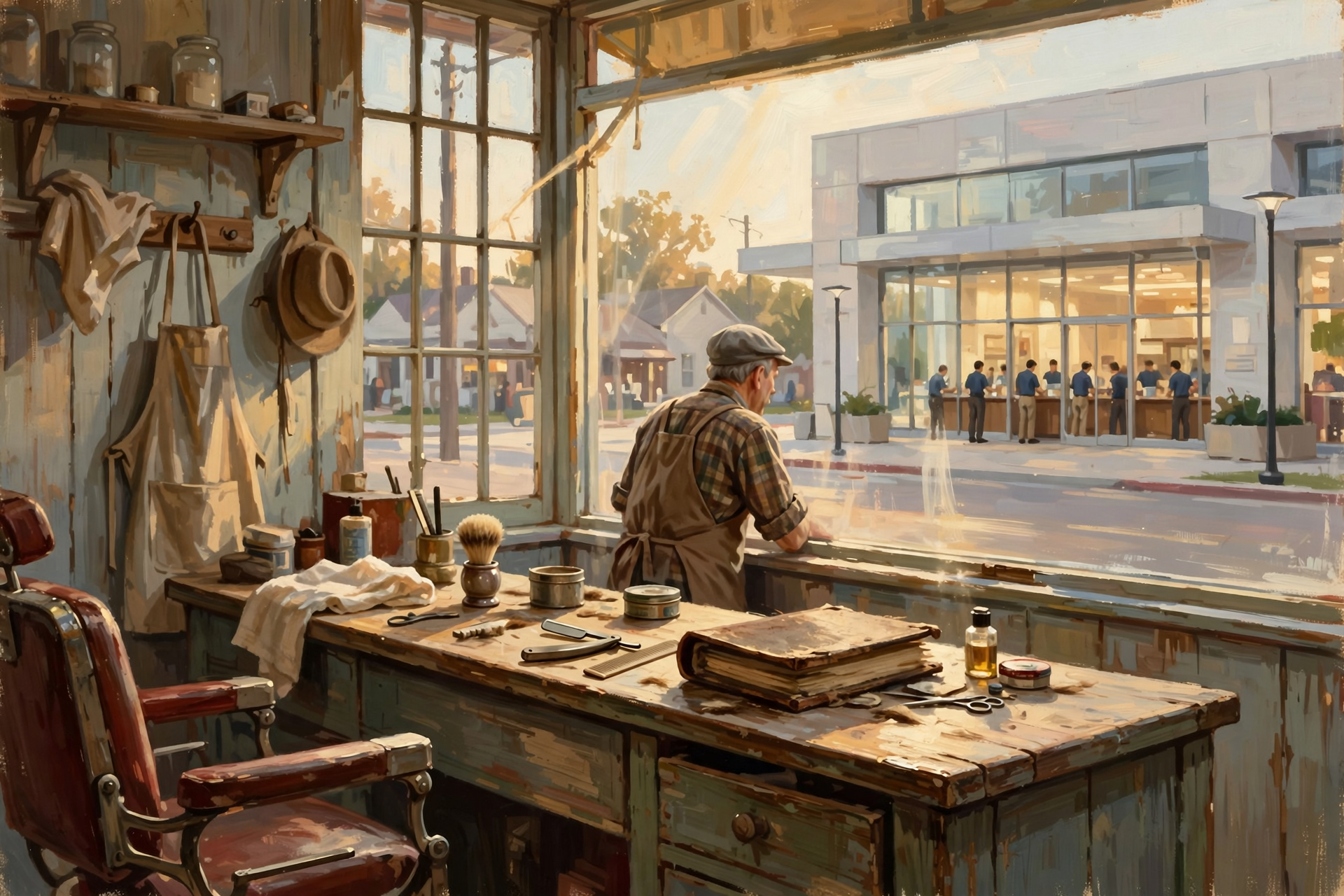
There is something mighty curious
In the modern moral game:
We tolerate automation
When corporations have the name.
But when the corner barber
Finds a cheaper way to write,
We mount our digital horses
And go galloping to fight.
The fellow working evenings
Who has not a marketing crew,
Who cannot hire a designer
Or an agency or two,
Who doesn’t have a lawyer,
Or a copy desk upstairs,
Or forty people answering
His customers’ affairs—
He finds a twenty-dollar tool
That helps him hold his ground,
And someone with a thousand-dollar phone
Declares him morally unsound.
🌙 A Noble Vision of the Exhausted Purely Human Merchant
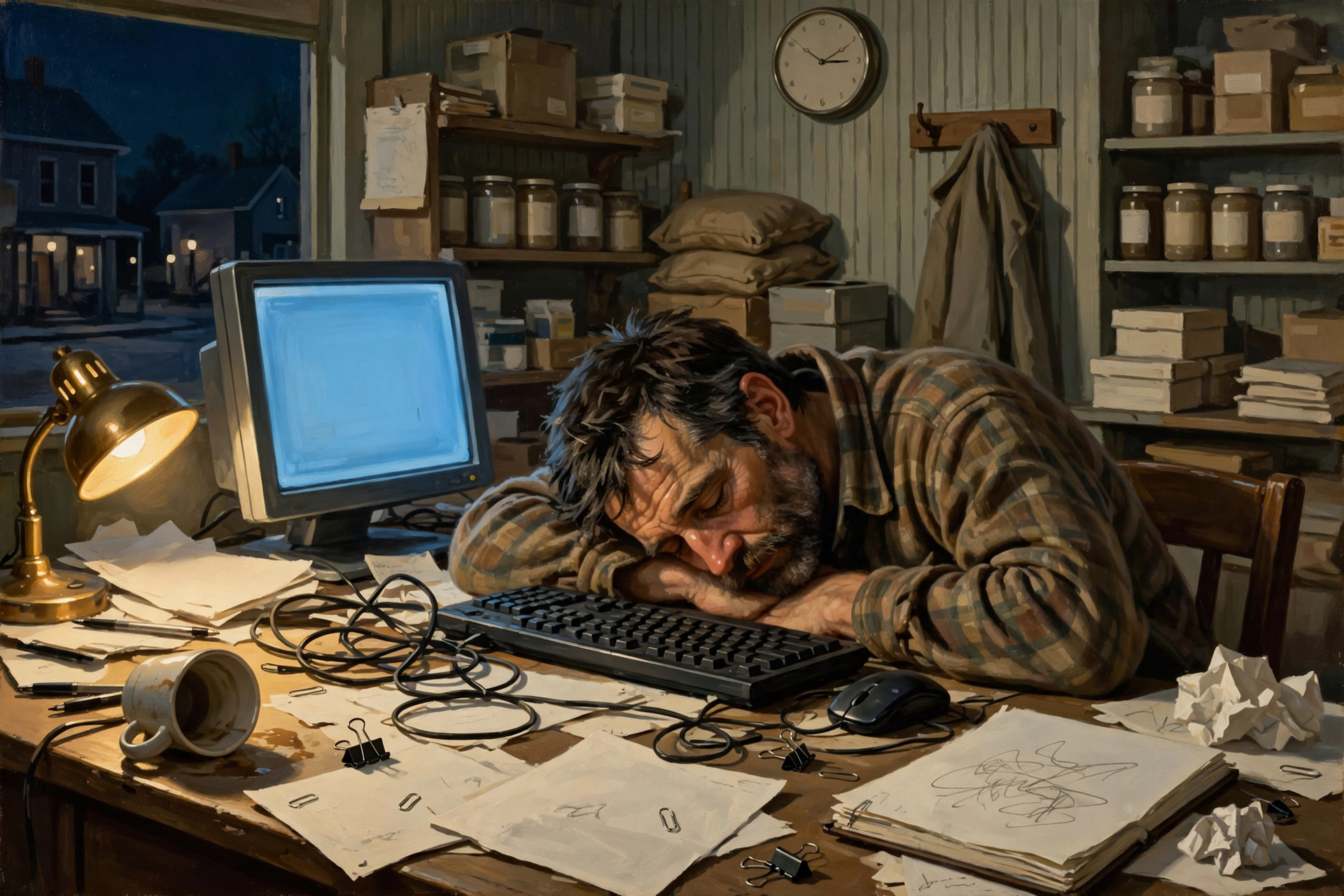
Now here’s a noble vision:
A merchant at his desk,
At 2:47 in the morning,
Looking particularly grotesque.
He’s answering seventeen emails.
He’s designing his own sign.
He’s calculating payroll
For the nineteenth blessed time.
He’s resizing all his photographs.
He’s writing one more post.
He’s fixing broken HTML.
He’s arguing with his host.
He’s reading privacy policies.
He’s updating his menu.
He’s wondering why the contact form
Quit working on the venue.
His wife says,
“Come to bed.”
He says,
“I can’t.
I’ve got to write
A cheerful Facebook paragraph
About our sale tomorrow night.”
She asks,
“Couldn’t that computer thing
Help you finish it somehow?”
He straightens with integrity:
“WE DON’T BELIEVE IN THAT HERE NOW.”
And then he falls unconscious
With his forehead on the keys,
Having preserved the dignity
Of commerce, if you please.
🐘 Meanwhile, the Giant Down the Road Automates Everything
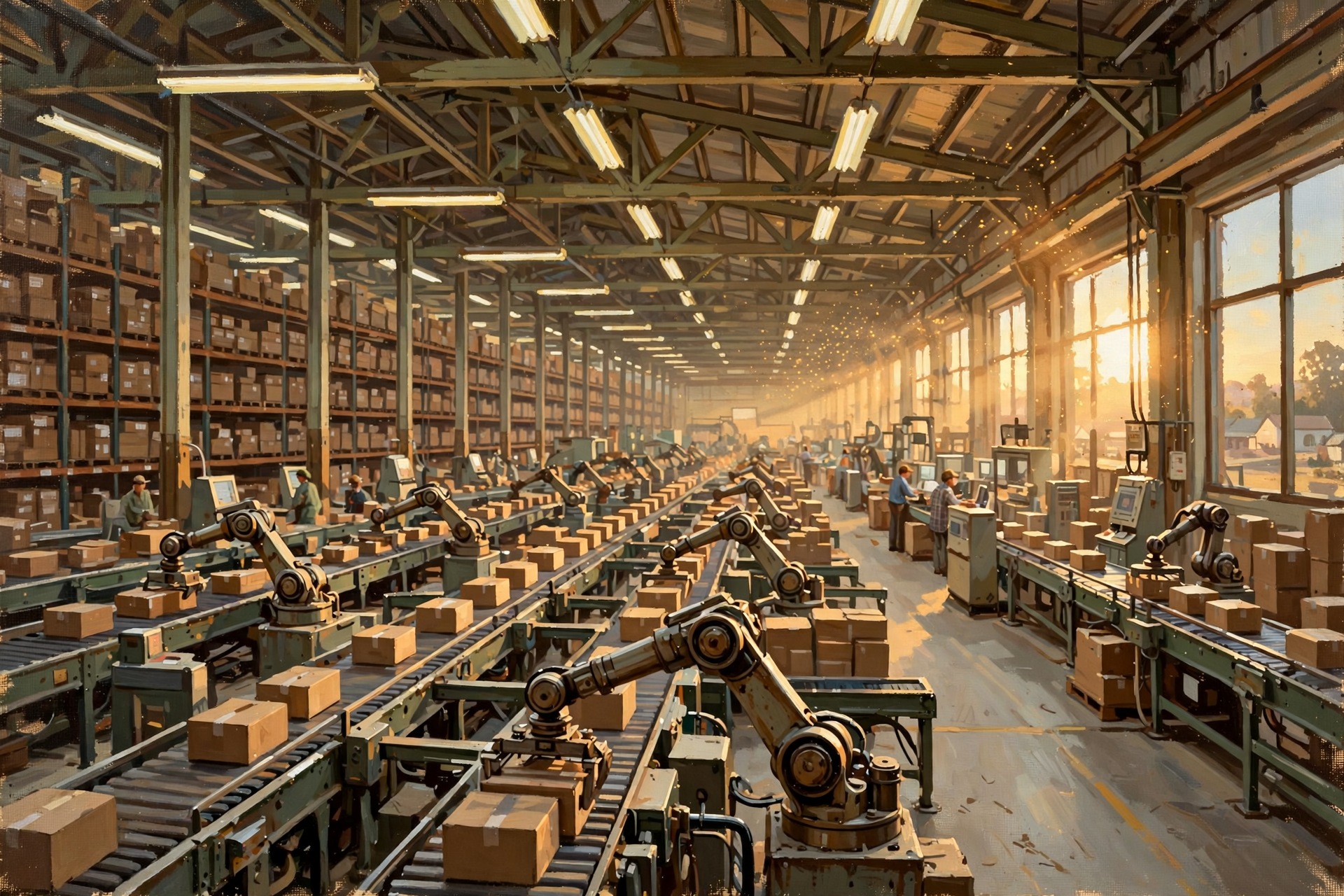
The giant down the road meanwhile
Has automated all,
From warehouses to marketing
To answering your call.
Its prices shift algorithmically.
Its inventory thinks.
Its cameras watch the checkout.
Its software joins the links.
Its advertisements follow you
From website into app.
Its distribution network
Could put Caesar on the map.
And our exhausted merchant
With his handcrafted Facebook prose
Proudly loses market share
While everybody knows
That virtue feels impressive
When you don’t inspect the math:
Sometimes refusing modern tools
Is not the nobler path.
Sometimes it simply guarantees
The largest firms get stronger,
Because they can afford ten people
Where the small shop can’t much longer.
🚰 The Plumber, the Chatbot, and the Leaking Kitchen

Now one day our Pure Human Shopper
Needed plumbing rather bad.
A pipe beneath the kitchen sink
Was leaking something sad.
He searched for “local plumber,”
Though search itself was suspect,
And found Old Henry Plumbing
With a profile he could inspect.
He called.
A voice said,
“Thanks for calling.
Tell us briefly what you need.”
Our hero shouted,
“ARE YOU HUMAN?”
The voice replied with speed:
“I can help schedule service—”
He slammed down the telephone.
“No ROBOT shall arrange repair
Inside my sacred home!”
He found another plumber.
No chatbot there at all.
The voicemail box was full, however.
No one took the call.
The third was purely human
And answered after eight:
“Sorry, friend, we’re booked three weeks.”
Our hero couldn’t wait.
The fourth used AI scheduling.
He hesitated.
Then he said,
“Well…
This is an emergency.
The kitchen’s nearly dead.”
And somewhere deep inside him
A principle grew thin.
He booked the artificial appointment.
Henry came at ten.
👨🔧 What the Machine Did—and What Henry Still Had to Do
Henry fixed the pipe.
Our hero paid.
The kitchen floor survived.
And strangely, Western Culture
Somehow remained alive.
Henry said,
“That scheduling thing
Has been a blessing to my wife.
She used to answer phones all night.
We nearly had no life.”
Our hero looked uncomfortable.
“Does it…
do anything else?”
“It sends appointment reminders.
It helps us route requests.
It turns my messy notes
Into some halfway decent texts.
“It doesn’t fix the plumbing.
It doesn’t shake your hand.
It doesn’t crawl beneath your sink.
It doesn’t understand
“Why Mrs. Johnson worries
When her faucet makes that sound.
It doesn’t know her husband died
And she likes folks coming ’round.
“It doesn’t teach an apprentice.
It doesn’t make him care.
It doesn’t look a widow in the eye
And promise to be fair.
“It handles little busy things
So I have time to do
The parts of running this business
That require me to be human too.”
🛠️ A Tool Is Not a Conscience
There sat the contradiction,
Plain as biscuits on a plate:
Perhaps the tool was not the thing
That made a business great.
Perhaps a hammer isn’t kindness.
Perhaps a spreadsheet isn’t greed.
Perhaps technology has little moral value
Till attached to human need.
A pencil can write scripture.
A pencil can write lies.
A camera can preserve a birth
Or manufacture disguise.
A telephone can comfort.
A telephone can scam.
A printing press can teach the world
Or praise a rotten man.
A computer can assist a shop
That treats its neighbors right.
Or help a crooked corporation
Cheat somebody overnight.
The machinery ain’t virtue.
The machinery ain’t sin.
The interesting moral question
Is the human operating it within.
✅ The Questions That Matter More Than “Did You Use AI?”
Now understand:
A tool can lie.
A tool can make a mess.
A fool can use a hammer wrong
And still blame the press.
A business ought to check its facts.
A writer ought to read.
A photograph should not deceive.
A customer shouldn’t be misled.
If Sarah says her bread is fresh
When yesterday it froze,
The problem ain’t the chatbot.
It’s Sarah.
Heaven knows.
If Pete invents a testimonial
From someone never born,
That’s deception whether written
By a machine or Christmas morn.
If Billy fabricates a warranty,
That’s crooked just the same,
Whether typed by artificial intelligence
Or written under his own name.
The question worth the asking
Is not simply, “Was AI there?”
But:
Was it true?
Was it useful?
Was it honest?
Was it fair?
🎭 Why Virtue Signaling Loves Simplicity
Yet fairness isn’t theatrical.
It doesn’t make a scene.
It doesn’t earn as many likes
As shouting,
“I HATE THE MACHINE!”
Nuance rarely trends online.
Restraint won’t ring the bell.
“I considered several factors”
Is a difficult thing to sell.
But outrage travels quickly.
Certainty travels faster.
And every moral panic
Needs a villain and disaster.
So somebody finds a small café
That generated some art,
And announces civilization
Has surrendered human heart.
Meanwhile they scroll Facebook
Through a recommendation engine,
Using facial recognition
On a lithium-powered screen.
📜 Mark Twain Might Recognize This Part
And maybe this is what Mark Twain
Might recognize today:
A human loves a principle
Until it blocks his way.
We demand old-fashioned virtue
While enjoying modern ease.
We condemn industrial kitchens
While ordering extra cheese.
We praise the handmade craftsman
But complain about the price.
We say “support small business,”
Then demand Amazon-like service nice.
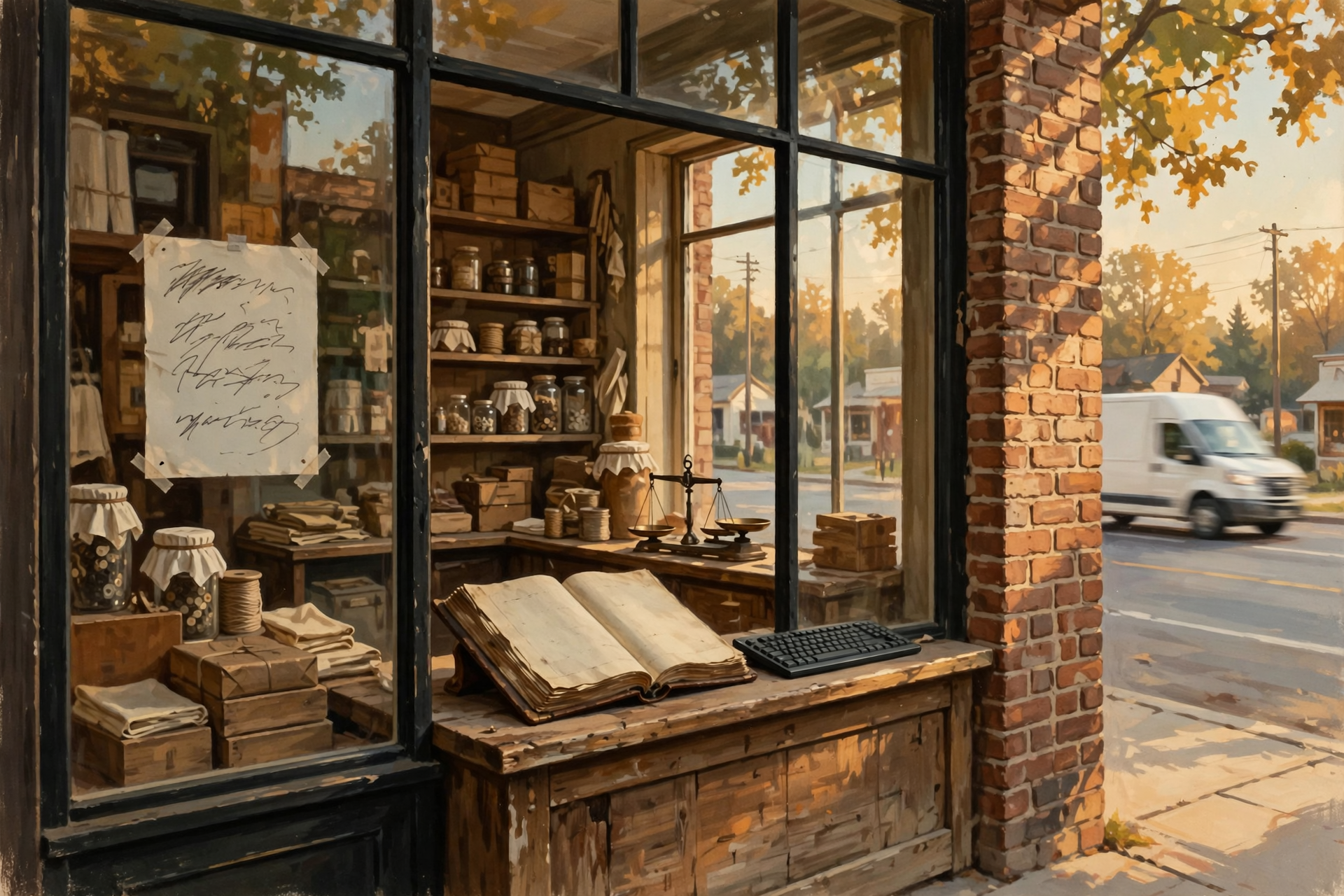
We mourn the loss of Main Street
From a same-day shipping van,
Then scold the Main Street merchant
For adopting tools he can.
We want the little fellow
To compete against the giant,
But when he uses modern tools,
We order him:
“BE DEFIANT!”
“Fight Google with a pencil!
Fight Amazon with chalk!
Answer every customer yourself!
And hand-deliver every talk!
Keep records in a ledger!
Write advertisements in ink!
And if your competition automates—
By God, don’t you dare think!”
📱 Before Boycotting AI, Check Your Pocket
And if you still refuse AI,
That’s surely yours to choose.
A person has the liberty
To shop wherever they choose.
But before mounting the courthouse steps
To loudly testify
That every shop employing it
Deserves to slowly die,
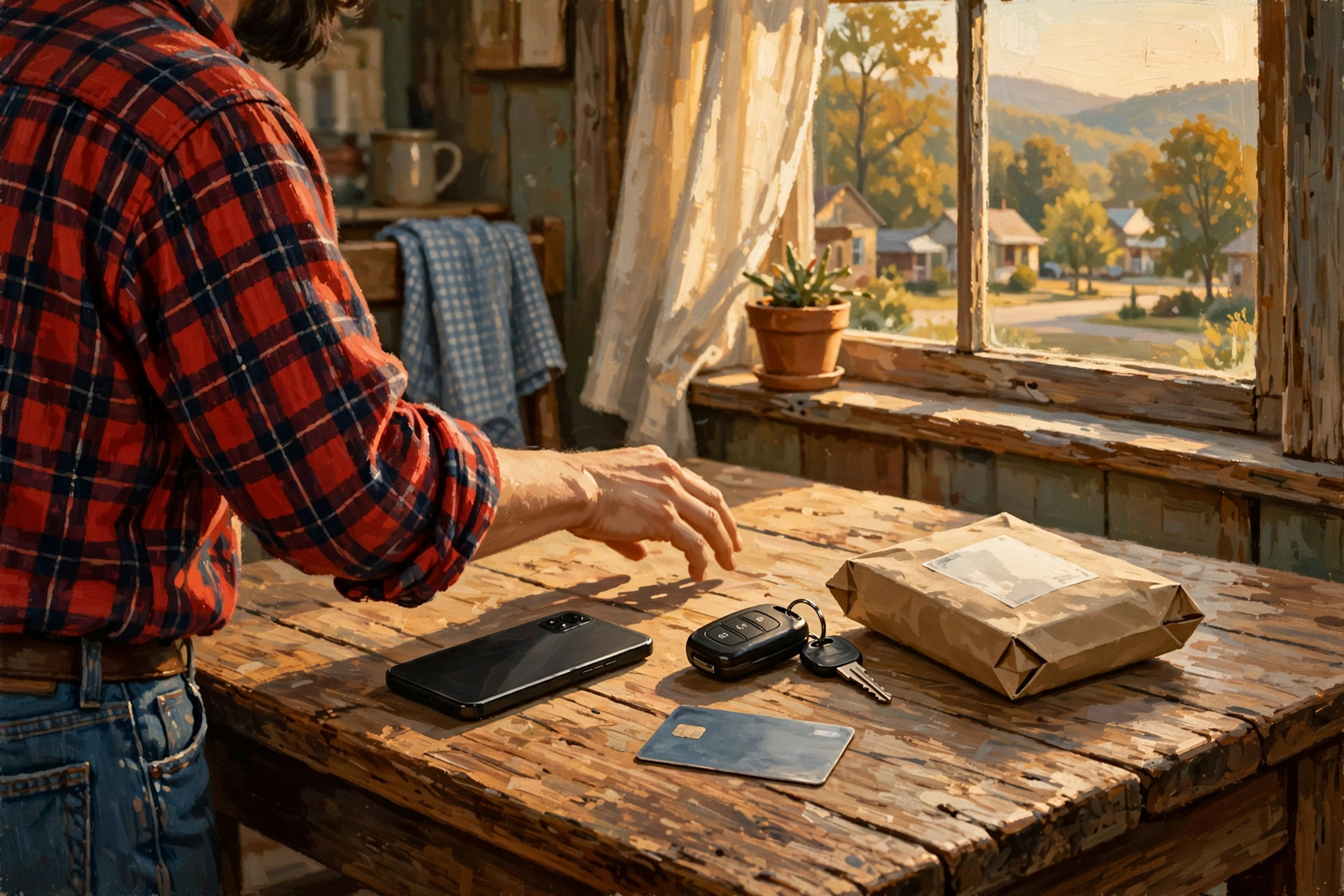
Check your pocket.
Check your car.
Check your search results at night.
Check your bank.
Check your camera.
Check your keyboard while you write.
Check the route that brought your package.
Check the fraud alert you got.
Check the weather prediction
That said Tuesday would be hot.
Check the streaming recommendation.
Check the spam that you don’t see.
Then explain, with suitable precision,
Which automation counts as purity?
🕰️ Yesterday’s Threat Becomes Tomorrow’s Ordinary Tool

For the future rarely arrives
With trumpets, smoke, and flame.
It sneaks into ordinary life
And gradually changes name.
Yesterday’s terrifying robot
Becomes tomorrow’s mundane tool.
Yesterday’s scandalous calculator
Ends up required at school.
Spellcheck once seemed unnatural.
Search engines once seemed strange.
Digital cameras killed photography—
Or so we heard proclaimed.
Word processors threatened handwriting.
ATMs would ruin banks.
Online shopping threatened stores.
And yet, somehow…
Here we are.
Thanks.
🥧 Judge the Biscuit
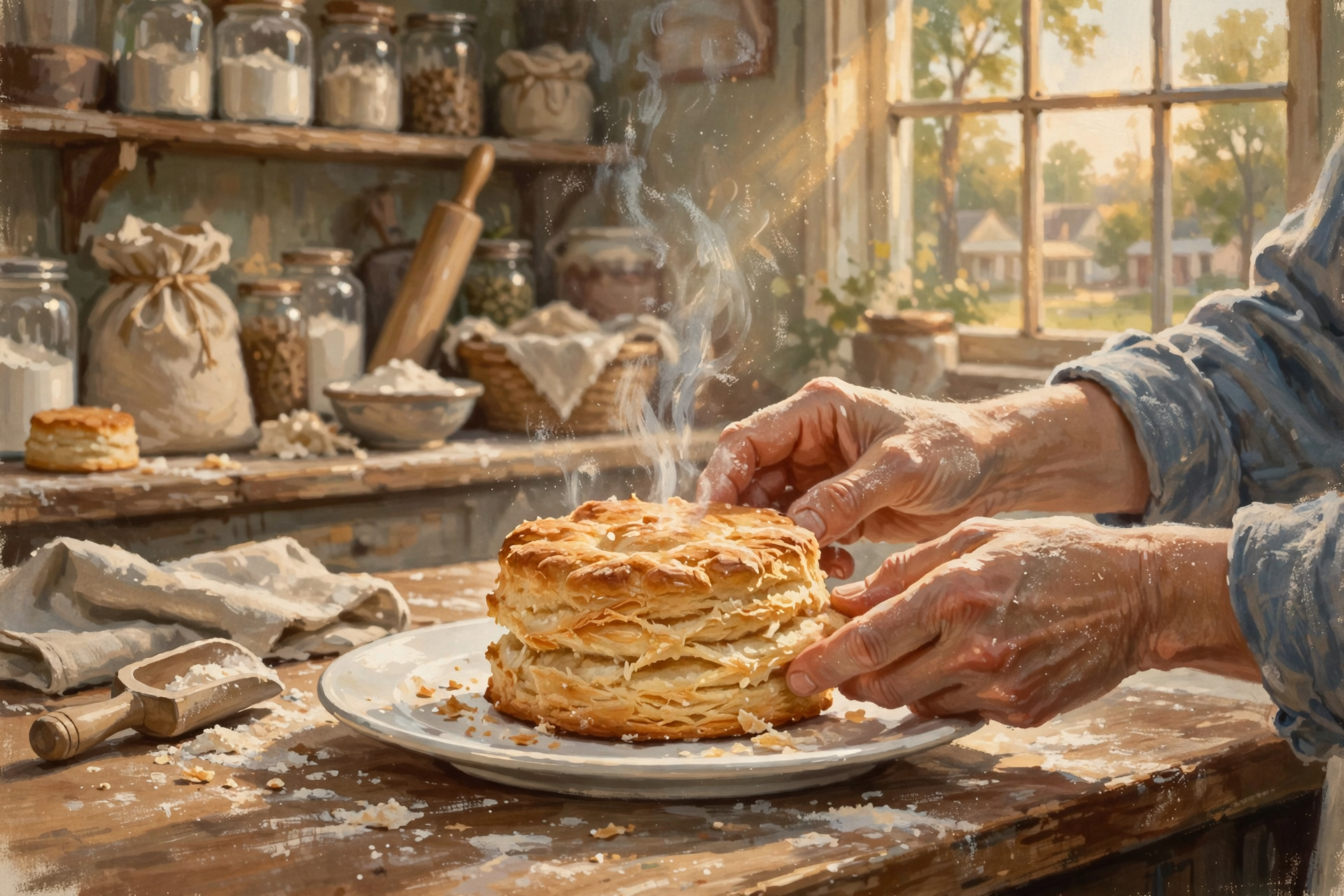
So I reckon I’ll judge the baker
By the biscuit that I eat.
I’ll judge the mechanic partly
By whether he fixes what squeaks.
I’ll judge the plumber by the pipe.
The barber by the trim.
The merchant by the promises
That I receive from him.
I’ll judge the writer by his truth,
The neighbor by his deeds,
The business by the value
It provides for human needs.
And should they use a clever tool
To save an hour or three,
I will reserve my moral panic
For something bothering me.
Because life is short.
The rent comes due.
The lights must still stay on.
The children need their supper
When the righteous crowd is gone.
And every little business
Trying desperately to survive
Doesn’t owe the Internet
A performance of technological purity
To prove that it is alive.
🪨 A Modest Prescription for Technological Purity
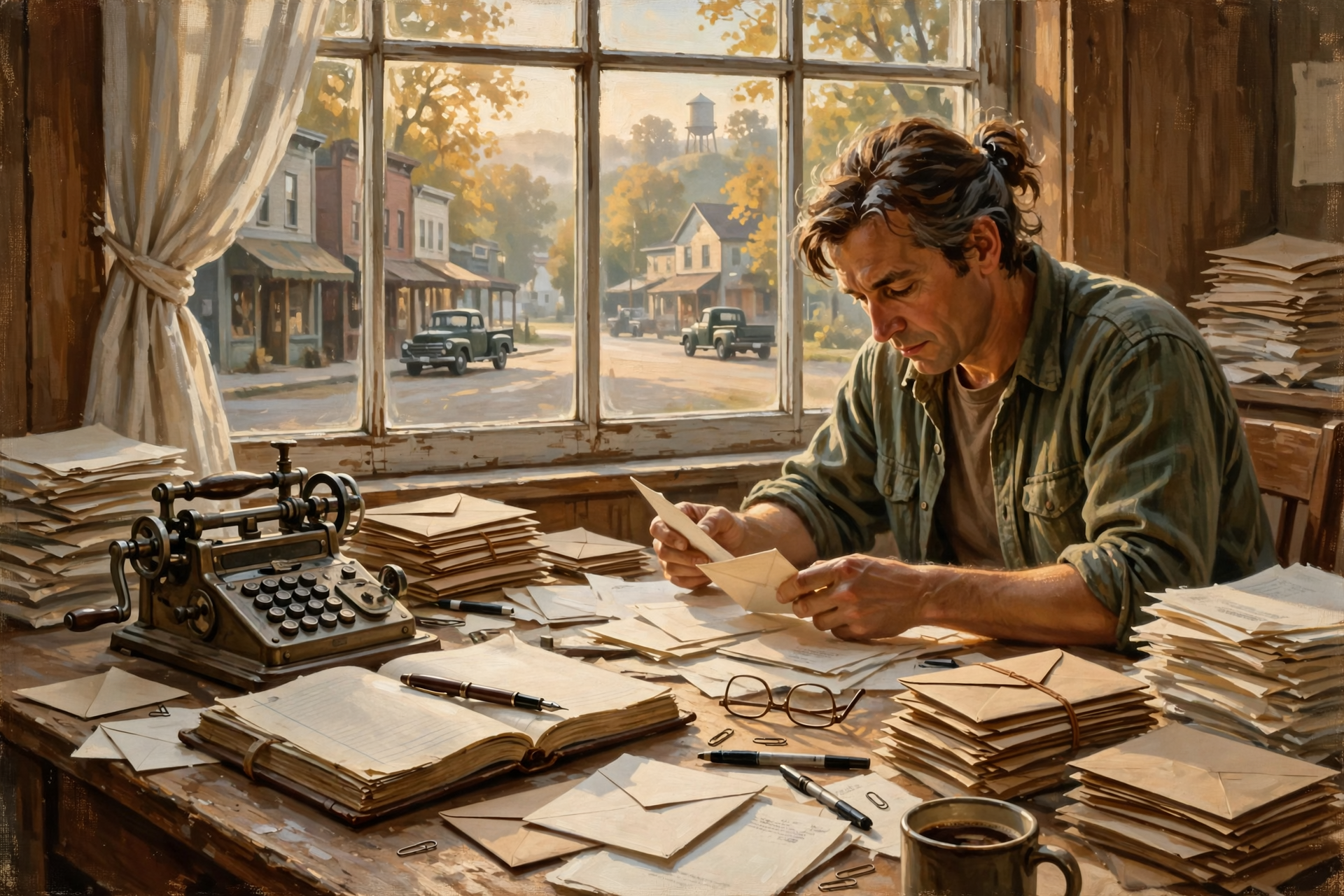
So raise your handcrafted coffee cup,
Your algorithmically shipped tea,
And toast the brave defenders
Of computational chastity.
May their GPS stay silent.
May their spam arrive by score.
May they manually sort ten thousand emails
Every morning before four.
May they calculate their mortgage
Using pebbles in a jar.
May they navigate by moss
Growing on the northern side of cars.
May their doctors shun computers.
May their airlines use no code.
May every package find them
By instinct on the road.
May autocorrect forsake them.
May recommendations cease.
May no fraud detection algorithm
Ever interfere with peace.
May they live the human lifestyle
They so proudly advertise…
And by Tuesday afternoon,
I suspect
They may revise.
🤝 The Human Part Still Matters Most
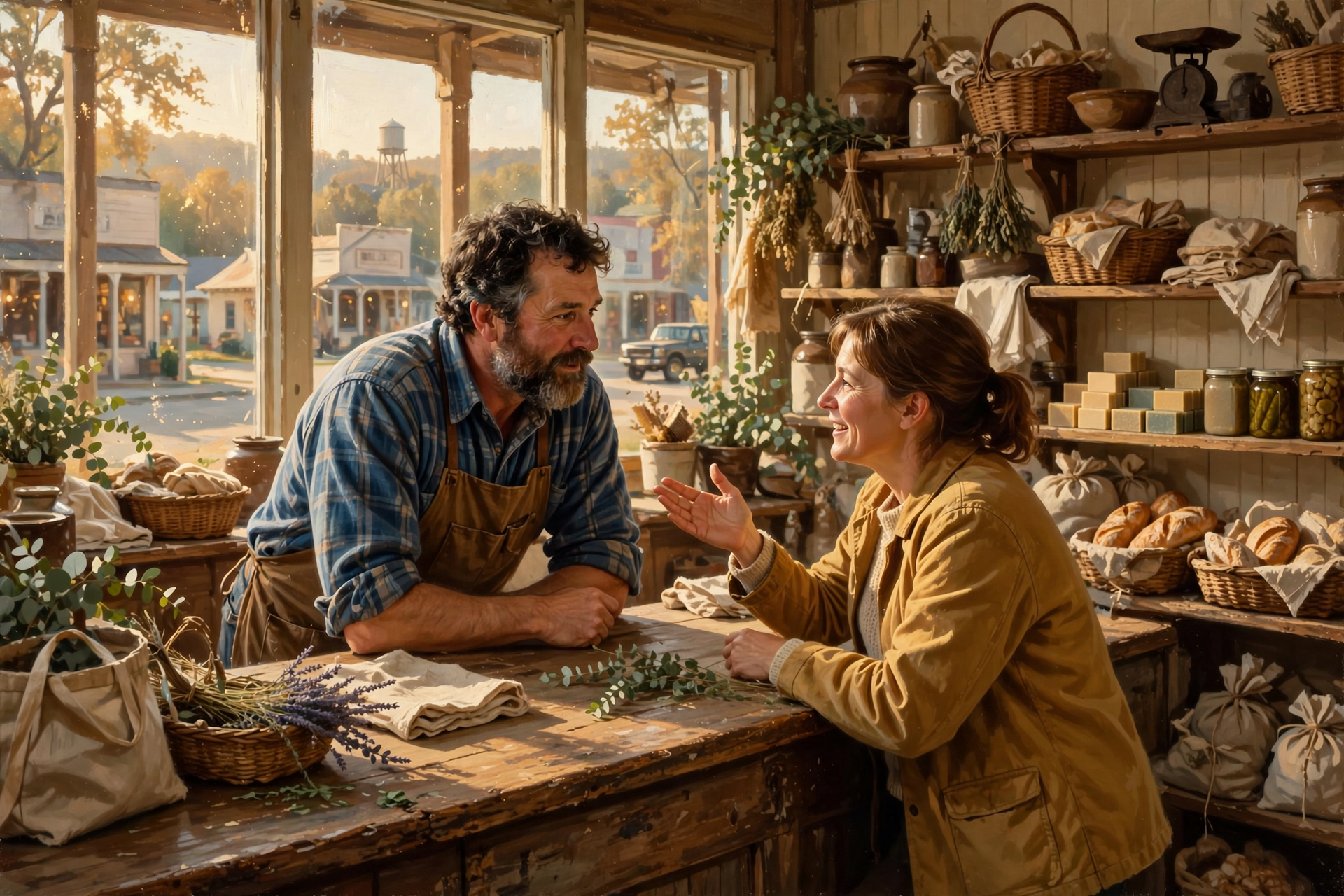
For there is hypocrisy,
And then there is modern life:
A complicated compromise
Of convenience, truth, and strife.
And somewhere between the pitchfork
And the server farm’s blue glow,
A sensible human being
Might admit what humans know:
A tool is not a conscience.
A machine is not a soul.
But neither is refusing one
A substitute for having either.
And perhaps the finest virtue
Isn’t loudly drawing lines,
But helping decent human beings
Use the tools of changing times.
So buy from honest merchants.
Support your local crew.
Ask questions when things matter.
Demand that claims be true.
But if your neighbor uses AI
To survive another year,
Before you call him soulless—
Check the smartphone in your hand,
Check the algorithm in your pocket,
And maybe…
Just maybe…
Put down the pitchfork,
Have a biscuit,
And quit scaring his customers away.
🤖 Frequently Asked Questions About Small Businesses Using AI
Is a small business unethical simply because it uses AI?
No. The more useful questions are whether the business is truthful, whether customers are being misled, whether the information is accurate, whether privacy is respected, and whether a human remains accountable for what the business publishes or promises.
Why are small businesses using artificial intelligence?
Small businesses often lack the staffing available to larger companies. AI can help with first drafts, appointment scheduling, customer questions, basic design work, organization, research, data analysis, bookkeeping support, inventory planning, marketing and repetitive administrative work.
Can AI actually help preserve the human side of a small business?
Yes. When repetitive tasks are automated responsibly, owners and employees can spend more time on the work requiring judgment, craftsmanship, relationships, local knowledge, empathy and accountability.
When should a business disclose AI use?
Disclosure matters most when failure to disclose could materially mislead a customer—for example, when synthetic imagery is presented as documentary evidence, fabricated testimonials are presented as real, automated advice is presented as personal human judgment, or an AI system is presented as a human when that distinction matters.
What should customers ask instead of simply asking whether AI was used?
Ask whether the claim is true, whether the business stands behind its work, whether its advertising is honest, whether its product or service delivers value, whether customer data is handled responsibly, and whether a real human takes responsibility when something goes wrong.
🌎 A Final Thought for Main Street in the Age of AI
Artificial intelligence is increasingly becoming another layer of modern infrastructure, much like websites, search engines, smartphones, GPS, online banking, electronic payments, digital photography, email, cloud software and social media before it.
The useful question may therefore not be:
“Did this business use AI?”
It may be:
“Did this business use its tools honestly and usefully to serve people?”

0 Comments