

Woman Gives Husband a $12,000 Graphics Card. Local AI Guy Wonders Why His Family Never Thinks of These Things.

The Local AI Guy’s Christmas Wish List — Episode 1: Love Is Measured in Gigabytes
By Thomas Seest | Dunlap.Today | October 17, 2026
It has come to my attention that somewhere in this troubled and increasingly confusing world, a woman presented her husband with a computer graphics card reportedly worth $12,000, and the man was so overcome with emotion that he began to cry.
Now, I don’t mind telling you that this story touched me deeply.
Not simply because it demonstrated the enduring power of human affection, nor because it offered further evidence that romance has survived the invention of the smartphone, but because it revealed something considerably more important.
Somewhere in this world, there exists a woman who understands the true meaning of a thoughtful gift.
I immediately shared the article with my family.
Not because I was making any particular suggestion, you understand. That would be crude. A gentleman does not go about demanding extravagant Christmas presents from those he loves.
He merely provides them with useful information, preferably accompanied by photographs, technical specifications, and links to reputable retailers.
Education, after all, is a lifelong process.
A Beautiful Story of Love and Advanced Computing

According to an October 17 report from Wccftech, a bride in China surprised her groom with an ASUS ROG Astral RTX 5090 graphics card during their wedding celebration.
For those unfamiliar with the more romantic aspects of modern computing, the RTX 5090 is an exceptionally powerful graphics processing unit, or GPU.
A GPU is a specialized computer component originally developed to handle demanding graphics calculations. It turns out that the same ability to perform vast numbers of calculations simultaneously is also useful for artificial intelligence.
In ordinary language, it is the sort of equipment that allows a computer enthusiast to do extraordinary things while simultaneously convincing his family that the electric meter is malfunctioning.
The premium model featured in the wedding video originally launched at a reported price of approximately $2,799. The news report describes current asking prices reaching roughly $12,000 in some circumstances, although the actual price paid by the bride is unknown. The wedding date has not been independently confirmed either.
These are important technical distinctions.
They are also distinctions I would prefer my family not dwell upon when considering the larger moral implications of the story.
The important thing is that the bride presented the gift, the groom became emotional, and the world was given a valuable lesson in marital devotion.
He reportedly held the graphics card aloft for the wedding guests to admire.
I suspect there were flowers, music, and expensive decorations at this wedding, but I doubt anybody remembers them now.
There is no word on whether the wedding cake was decorated with thermal paste or whether the newlyweds departed under an arch of Ethernet cables.
One can only hope.
Meanwhile, Back in the Sequatchie Valley
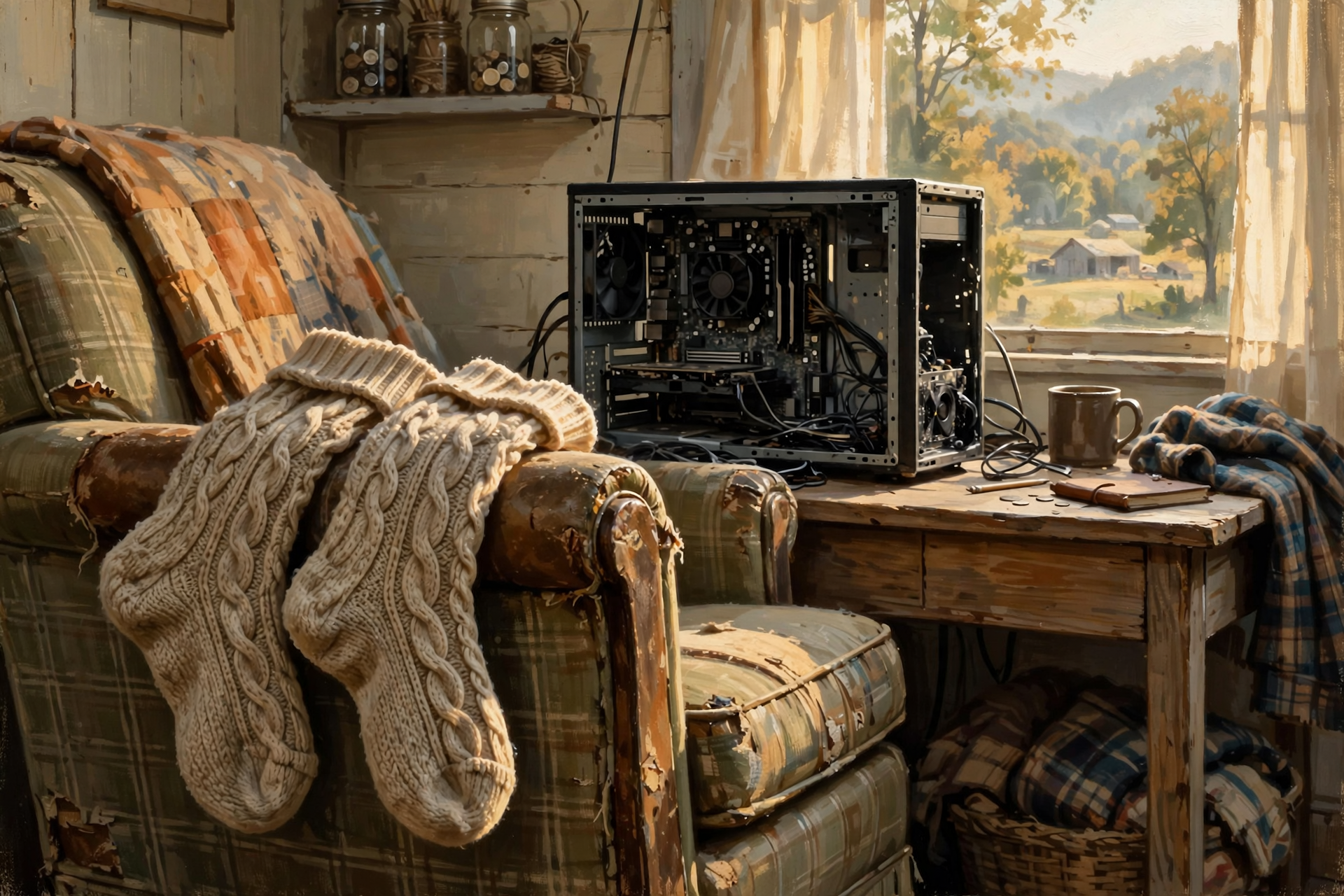
Here in Tennessee, Christmas shopping generally follows a different philosophy.
A person asks what you would like for Christmas.
You explain that you could use a new graphics card, additional computer memory, a few large storage drives, and perhaps a modest server capable of running several artificial intelligence models at the same time.
The person nods thoughtfully.
Then Christmas morning arrives, and you unwrap a pair of socks.
Sometimes they are exceptionally nice socks.
They might be thick, comfortable, and suitable for wearing around the house during the colder months. Occasionally they feature festive designs, which I suppose is intended to demonstrate that additional consideration went into the purchase.
I have nothing against socks.
Socks are a useful invention, and I would not wish to live in a society that had abandoned them.
But I have been examining their computational capabilities, and the results have been disappointing.
Not one pair I have received has possessed any meaningful video memory.
They cannot run a large language model.
They cannot generate images.
They cannot analyze financial statements, process inventory data, or coordinate autonomous software agents.
Most cannot even connect to Wi-Fi.
And yet my family continues purchasing them with a confidence that would be admirable if it were not so tragically misplaced.
The Problem With Traditional Expressions of Affection

For generations, husbands have been expected to express gratitude for ordinary Christmas gifts.
A new shirt.
A pair of slippers.
A coffee mug bearing a cheerful message.
Perhaps a sweater selected by someone who has apparently never observed how the recipient actually dresses.
These gifts are perfectly respectable for men whose ambitions do not extend beyond staying warm, drinking coffee, and attending the occasional church supper or family gathering.
But the modern AI enthusiast has additional responsibilities.
He must consider the future.
He must prepare for advances in technology.
He must ensure that his computer has sufficient memory to run the increasingly sophisticated models that will eventually help everyone else remember their appointments, locate their missing documents, and determine why the refrigerator has started making that noise.
These are important duties.
And they cannot all be accomplished with slippers.
I am not saying that love should be measured in graphics cards.
That would be shallow and materialistic.
Love should be measured in computational capability, which is an entirely different matter.
What Exactly Would a $12,000 Graphics Card Do?

This is a fair question, and one I expect to hear around our dinner table.
The answer requires a brief explanation of artificial intelligence.
Many people use AI by opening a website, typing a question, and receiving an answer from a large computer system somewhere else.
That works quite well.
But some of us also enjoy running AI models on computers we own and control.
Instead of sending every request to a distant service, we can perform certain types of AI processing locally.
This can offer practical advantages, including more control over private information, the ability to experiment with specialized software, and reduced dependence on outside services for some tasks.
One of the most important components for this work is the GPU.
Think of a regular computer processor as a very capable fellow operating a workshop by himself.
He knows how to use every tool, and he can perform complicated tasks, but there is only so much he can accomplish at once.
A powerful GPU is more like bringing an enormous crew into the workshop, with thousands of workers capable of handling many smaller calculations together.
Of course, not every job benefits from such a crew. Some jobs still need the original fellow, and some AI models require more memory than even an expensive graphics card provides.
But for the right kind of work, additional GPU power can make a remarkable difference.
The RTX 5090 offers 32 gigabytes of dedicated graphics memory, which can be valuable for certain local AI workloads.
Thirty-two gigabytes may not sound like much to a person whose phone has hundreds of gigabytes of storage, but this is a different kind of memory designed for high-speed processing.
I mention these details not to encourage extravagant purchases, but because an informed family is a loving family.
And because somebody may be taking notes.
An Investment in the Community, Not a Personal Luxury
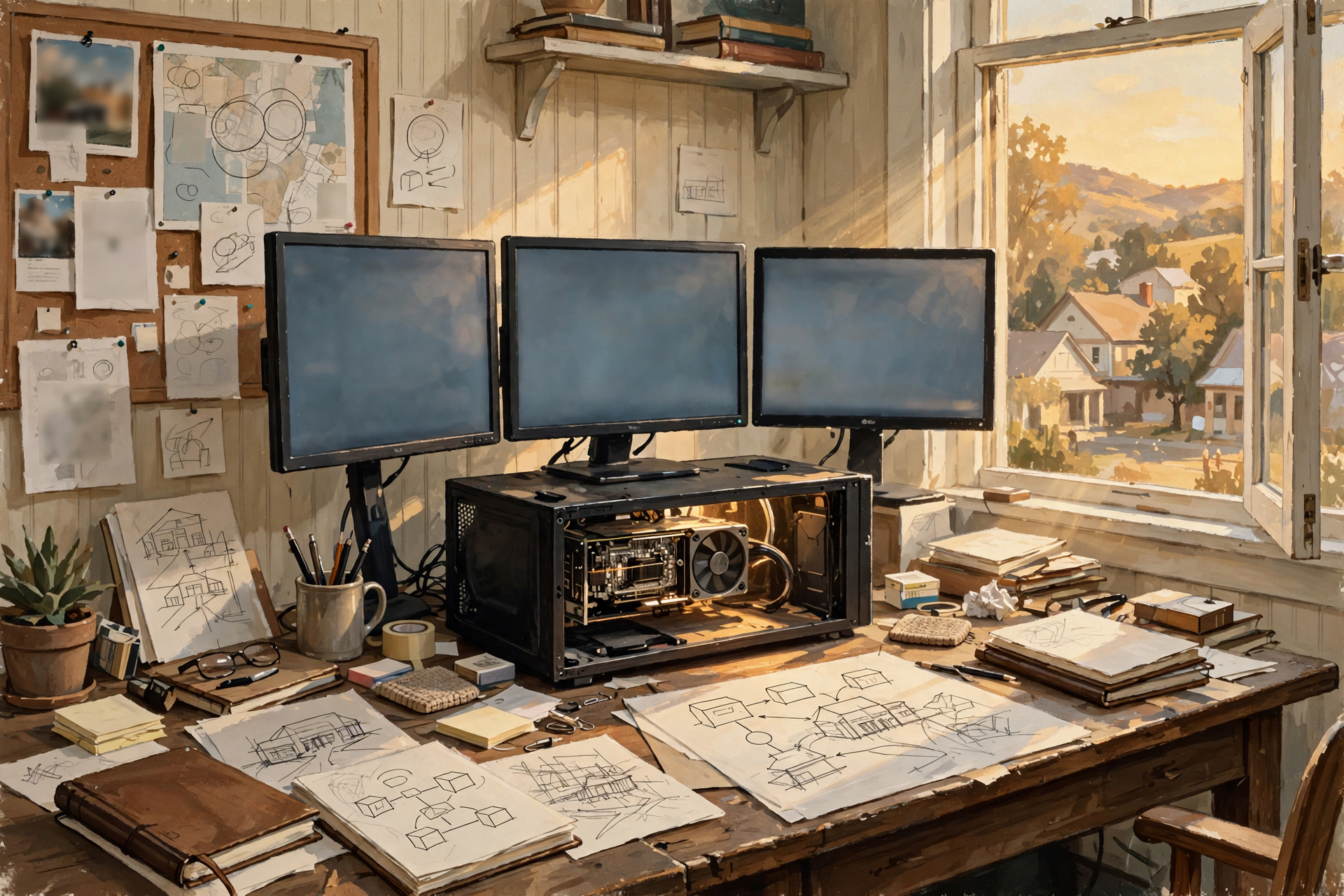
Some readers may now be wondering whether spending thousands of dollars on a graphics card is excessive.
This is understandable.
After all, that sort of money could purchase a dependable used vehicle, pay numerous household bills, or keep a family supplied with groceries for a considerable period.
These are all admirable uses of money.
But I would ask readers to consider the broader economic implications.
Suppose your friendly neighborhood AI guy is using artificial intelligence to develop software that helps local businesses manage inventory, improve their websites, analyze their accounting records, or reach more customers.
Suppose he is experimenting with educational programs for children, software to preserve family histories, or tools that help small-town entrepreneurs compete in a world increasingly dominated by large companies.
Wouldn’t more computing power be useful?
Quite possibly.
Wouldn’t a powerful graphics card make some of those experiments faster?
Depending on the software, it certainly could.
Wouldn’t the entire community benefit if its local AI enthusiasts had access to better equipment?
That is an interesting question worthy of serious discussion.
And wouldn’t the fellow operating all this equipment deserve a little encouragement around Christmas?
There, I believe, we have arrived at the heart of the matter.
A premium graphics card is not necessarily an extravagant personal indulgence. Properly presented, it can be described as a community technology development initiative.
I have found that choosing the correct terminology is essential when discussing large expenditures with one’s family.
“I want another computer toy” rarely receives a favorable response.
“I am requesting a strategic investment in regional artificial intelligence infrastructure” sounds considerably more responsible.
The equipment is exactly the same.
Only the accounting department’s attitude needs adjustment.
The Wife Acceptance Factor
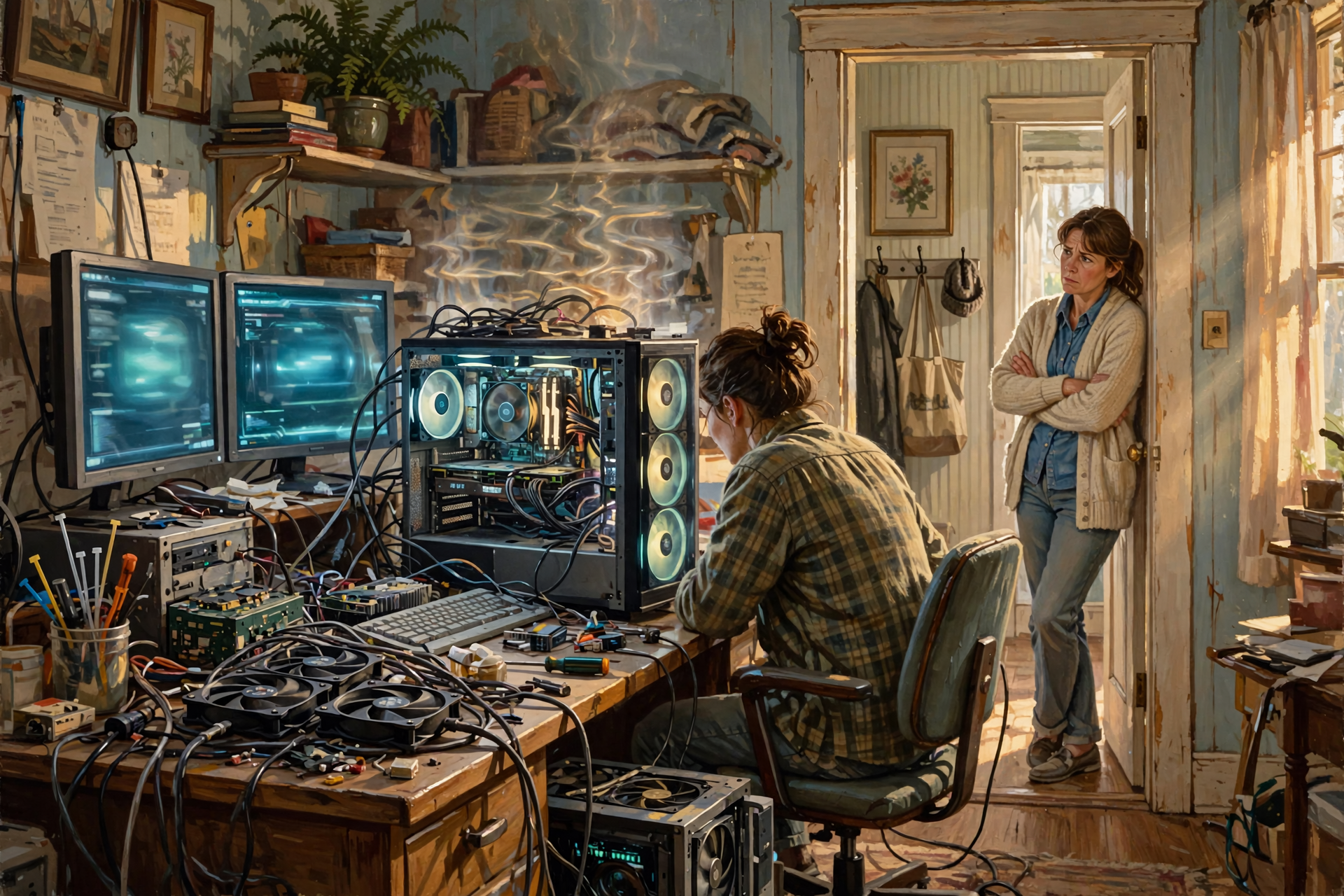
Engineers and technology enthusiasts have long understood that the success of a new piece of household equipment depends on several factors.
Cost.
Space.
Electricity.
Noise.
Cooling.
And the willingness of one’s spouse to continue living in the same building after the equipment arrives.
This last consideration is especially important.
A large computer workstation can consume substantial electricity and produce considerable heat. Some systems require multiple fans, dedicated cooling arrangements, and enough cables to make the back of the desk resemble a plate of spaghetti dropped from a considerable height.
The untrained observer may consider this a problem.
The experienced AI enthusiast recognizes it as progress.
A wife might reasonably ask why another computer component is necessary when the previous one was purchased only recently.
This question deserves an honest answer.
Technology changes rapidly.
New models require additional resources.
Existing equipment eventually becomes limiting.
And most important of all, the computer store has introduced a newer model with an extraordinarily attractive cooling system.
The last point is sometimes difficult to explain without photographs.
My advice to younger AI enthusiasts is to begin the conversation with community benefits, move gently into technical necessity, and introduce the price only after everyone has finished dessert.
I do not claim this method will succeed.
I merely believe it deserves additional research.
A Practical Christmas Gift Guide for the Financially Cautious
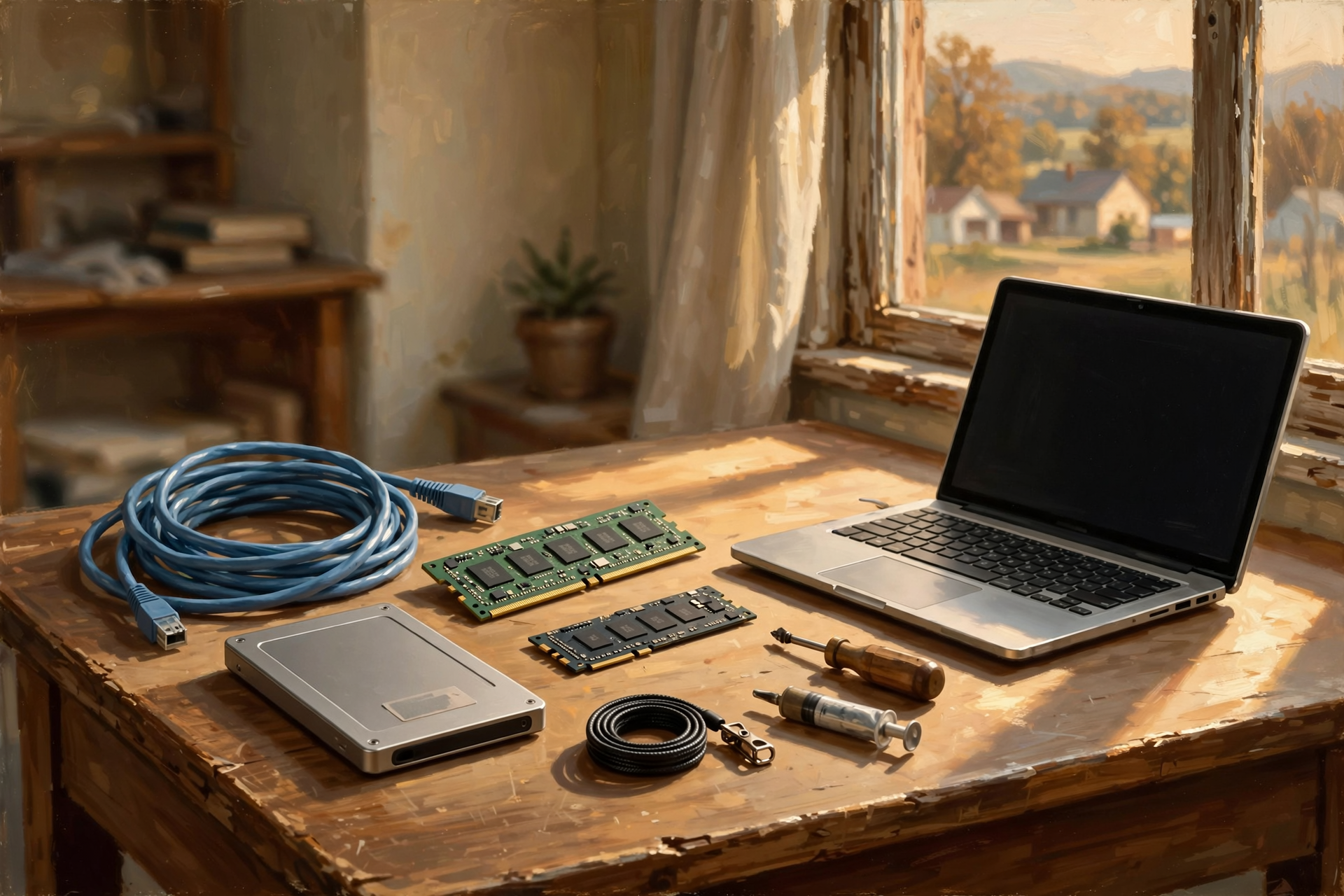
Having considered the emotional lessons of the Chinese wedding story, I believe it would be useful to offer some general guidance for families shopping for their local AI enthusiast.
Not every family has $12,000 available for a graphics card.
I understand this.
I am a practical man, and I would never wish to create financial hardship merely to obtain a modest improvement in artificial intelligence performance.
Fortunately, there are gift possibilities for nearly every budget.
- The Thoughtful Stocking Stuffer: A high-quality Ethernet cable. Modest, useful, and capable of carrying enormous quantities of data. Unlike socks, it actually connects to something important.
- The Sensible Gift: A fast solid-state storage drive. This provides room for more software, models, experiments, and projects that will eventually require another storage drive.
- The Generous Gift: Additional computer memory. A practical improvement that demonstrates genuine concern for the recipient’s ability to open seventeen applications at once.
- The Extraordinary Gift: A powerful graphics card. It combines technical usefulness with the possibility of producing actual tears on Christmas morning.
- The Gift That Will Be Remembered for Generations: An entire AI workstation with generous memory, ample storage, sophisticated cooling, and enough processing capability to require its own discussion with the electric cooperative.
I offer these suggestions strictly as a public service.
There is absolutely no reason to interpret them as hints.
Unless someone wishes to.
What About the Electric Bill?
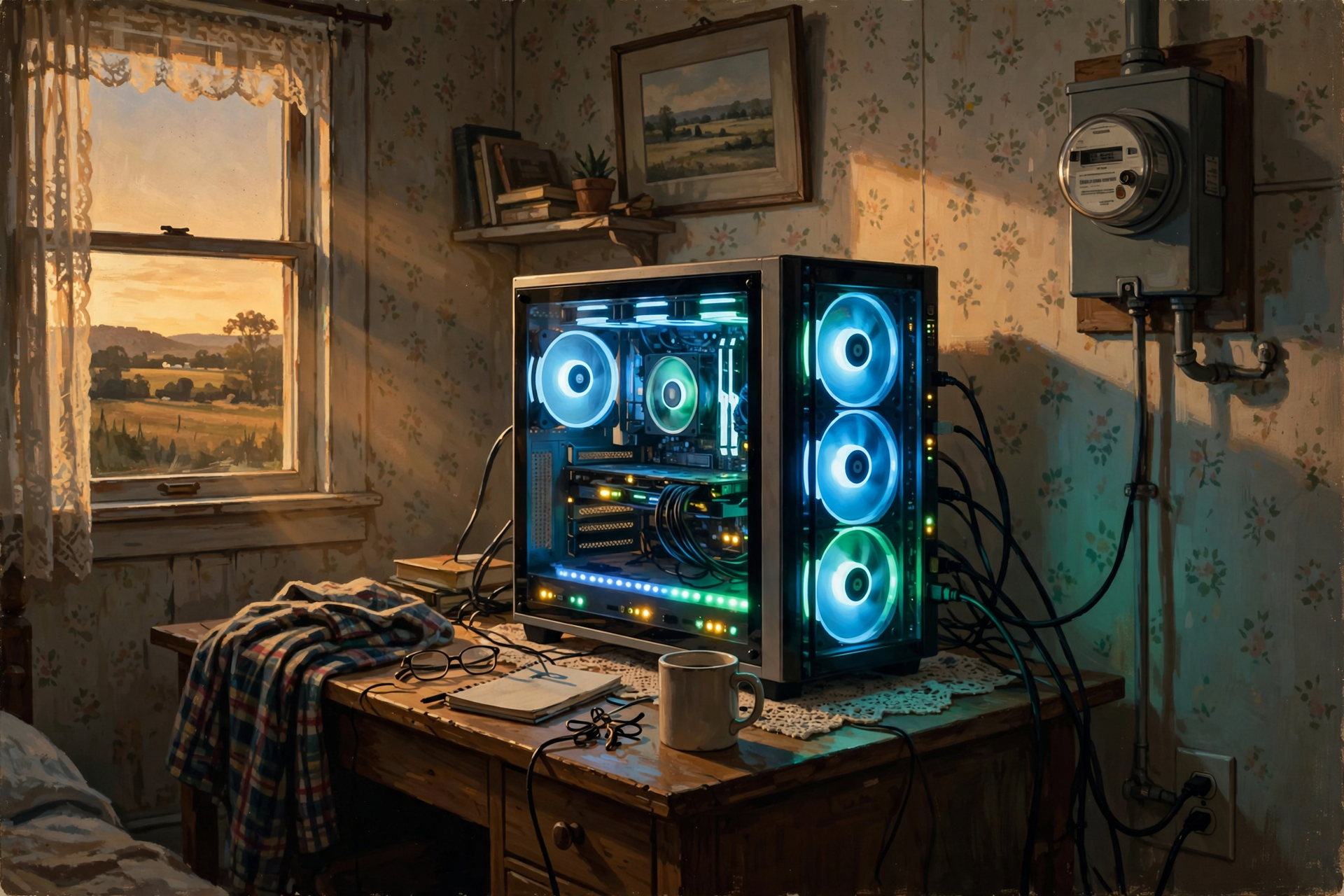
Every great technological advancement has encountered resistance.
Some people doubted the usefulness of the automobile.
Others questioned the telephone.
There were undoubtedly families who regarded the first electric refrigerators as unnecessary extravagances.
Today, of course, most households consider these things essential.
It seems possible that future generations will look back upon our reluctance to install powerful AI computers in the spare bedroom with similar astonishment.
They may wonder why we hesitated.
They may ask why we prioritized furniture over server racks.
They may question why anyone insisted that a guest bedroom should contain a bed when the same floor space could accommodate a perfectly respectable computing cluster.
As for the electric bill, I believe we should maintain a balanced perspective.
A powerful computer certainly consumes electricity. That costs money, and the expense should be considered before buying equipment.
But an increase in electrical consumption can also mean a machine is doing useful work.
We do not complain when a tractor uses diesel fuel while preparing a field.
We understand that work requires energy.
Likewise, when an AI workstation is analyzing data, generating software, or completing a task that would otherwise require many hours of human labor, electricity is part of the cost of doing business.
There is, admittedly, a distinction between useful computing work and leaving a machine running all night merely because its owner enjoys watching the little lights blink.
I do not believe we need to explore that distinction today.
The Tragedy of Being Difficult to Shop For
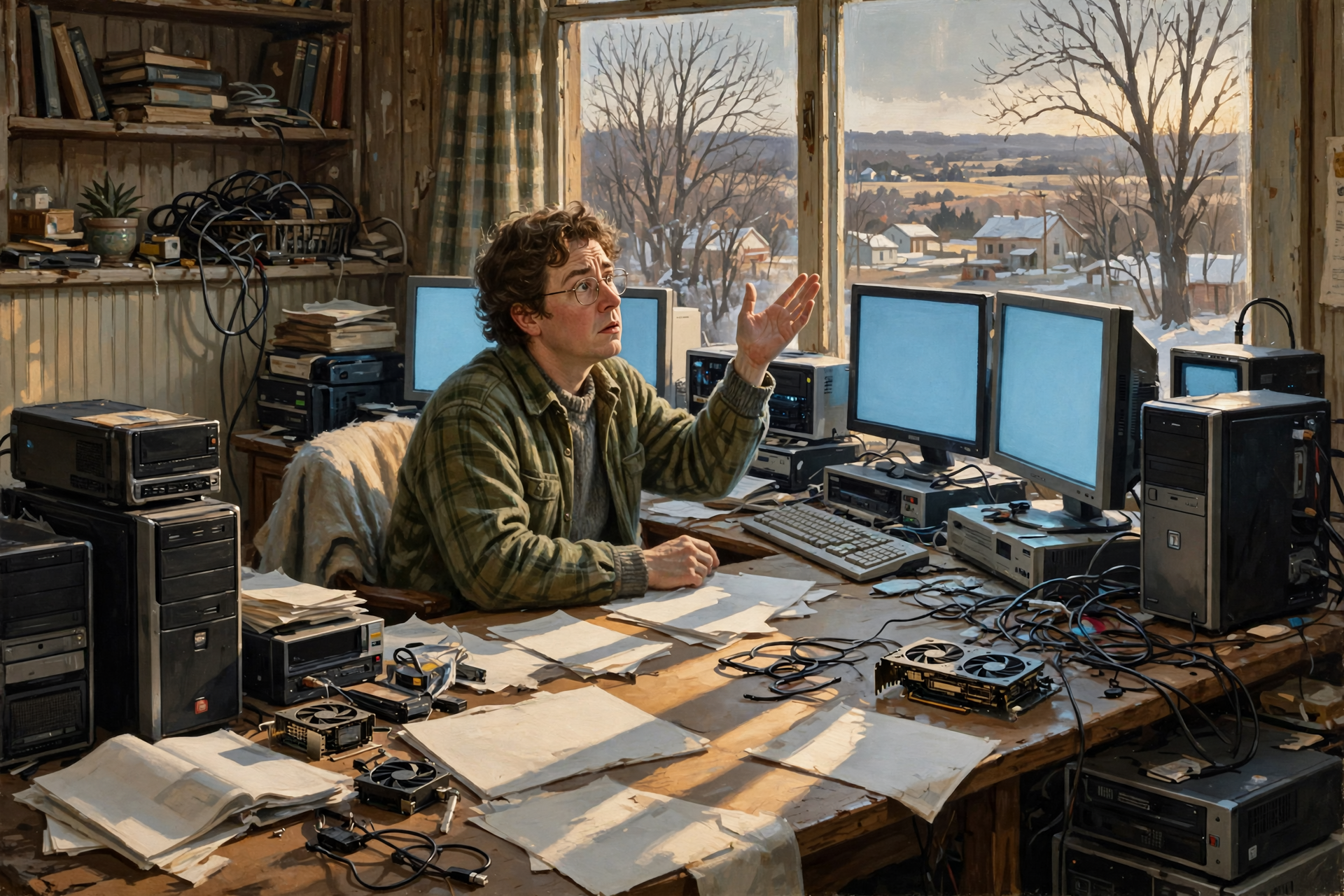
My family sometimes suggests that I am difficult to buy presents for.
I find this accusation peculiar.
I have remarkably straightforward tastes.
I enjoy computers.
I enjoy software.
I enjoy building things that use computers and software.
And I particularly enjoy computers that are powerful enough to build more software using artificial intelligence.
There is nothing mysterious about this.
Yet each December, relatives behave as though they have been assigned the impossible task of selecting a birthday present for a visiting ambassador from another planet.
“What do you buy someone who already has everything?” they ask.
For the record, I do not have everything.
I do not have a $12,000 graphics card.
This seems a fairly obvious starting point.
And if that particular item proves difficult to obtain, I have heard excellent things about larger memory configurations, additional storage arrays, and professional-grade computing equipment.
One must be flexible during the holiday season.
Perhaps We Have Misunderstood the Meaning of Christmas
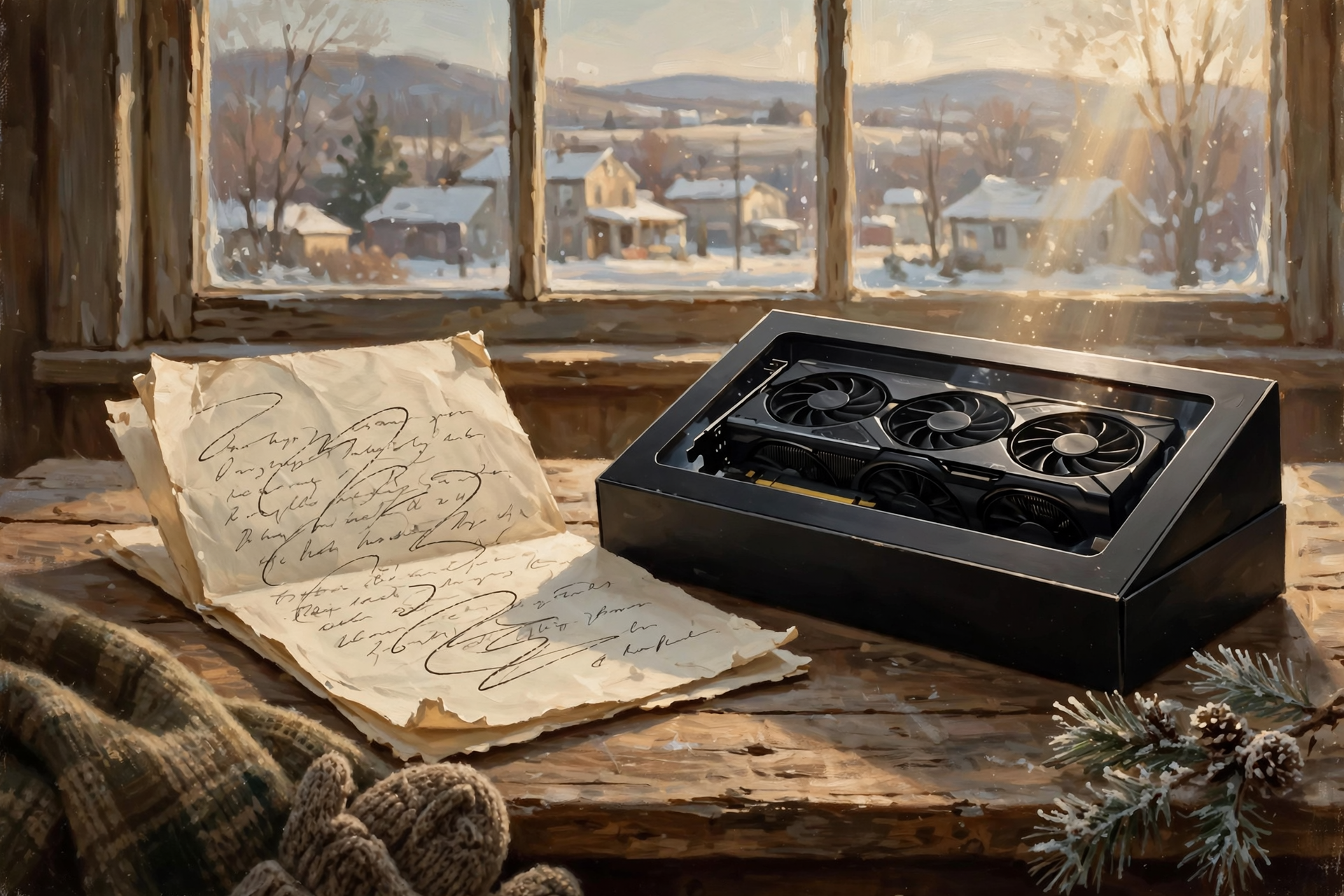
Now, before anyone accuses me of reducing the holidays to an annual competition in extravagant technology purchases, allow me to clarify my position.
The most meaningful gifts are not necessarily the most expensive.
A handmade present can be wonderful.
A thoughtful letter can mean more than something purchased at a store.
Time spent with family and friends is worth considerably more than the latest electronic equipment.
I believe all of these things sincerely.
I also believe that a handwritten letter would look exceptionally nice resting on top of a new graphics card.
There is no reason the two traditions cannot coexist.
Indeed, I would argue that the greatest Christmas gifts combine practical usefulness, thoughtful consideration, and an element of surprise.
That is what made the wedding story so delightful.
The bride apparently understood something that mattered deeply to her husband.
She chose a gift that reflected his interests rather than simply purchasing something from the nearest seasonal display.
And his reaction suggested that he appreciated the thought behind it.
That is the real lesson.
The graphics card was merely the vehicle through which the lesson was delivered.
An extremely powerful, extraordinarily expensive vehicle capable of advanced parallel computation.
But a vehicle nonetheless.
A Personal Message to My Family

As we enter the holiday shopping season, I would like to conclude with a brief personal statement.
Dear Family:
I want you to know that I appreciate everything you have ever given me.
The socks have been worn.
The shirts have been appreciated.
The coffee mugs have served their intended purpose.
The various practical gifts, household items, and articles of clothing have all demonstrated your affection in ways that I would never wish to diminish.
But we live in a changing world.
Artificial intelligence is transforming technology, business, education, and everyday life.
We must remain open to new ideas.
We must be willing to question old assumptions.
We must recognize that the gifts which brought happiness to previous generations may no longer satisfy the increasingly sophisticated requirements of modern computing.
I am not asking for much.
I am not demanding a private data center.
I am not insisting upon a climate-controlled server room with redundant electrical systems and enough fiber-optic cable to reach Chattanooga.
I am certainly not suggesting that we replace the Christmas tree with a server rack, although I will observe that the latter comes with an impressive assortment of decorative lights.
I merely thought you might enjoy reading about a touching wedding story from the other side of the world.
A story about kindness.
A story about generosity.
A story about understanding the interests of someone you love.
A story about a man who received a magnificent graphics card and wept openly before his friends and relatives.
It would be presumptuous of me to suggest that such happiness could be recreated here in the Sequatchie Valley.
But I believe in possibilities.
I believe in progress.
And I believe that every family deserves the opportunity to grow.
With love,
Your Local AI Guy
One Final Thought From the Front Porch

Somewhere tonight, that fortunate groom is probably sitting beside his new bride, looking forward to a lifetime together.
Perhaps they are discussing their future home, their hopes for the coming years, and the adventures that marriage will bring.
Or perhaps he is quietly calculating whether his existing power supply can handle his new graphics card.
Both are legitimate concerns for a newly married man.
As for me, I shall continue working with the computers I already own, grateful for my family, my friends, and the extraordinary opportunities that modern technology provides.
I shall not complain.
I shall not beg.
I shall not pressure anyone into purchasing expensive electronic equipment.
I shall simply leave this article where it can be easily discovered, perhaps print several copies for distribution at family gatherings, and trust that the spirit of the season will do the rest.
And should a small, tastefully wrapped box containing an RTX 5090 happen to appear beneath our Christmas tree, I promise to demonstrate precisely the same emotional gratitude exhibited by that fortunate groom.
Possibly more.
I have had considerable practice being disappointed by socks.
Merry Christmas to all, and may your stockings be filled with something that has an actual processor.
Editor’s note: This is the first installment of “The Local AI Guy’s Christmas Wish List,” a holiday series examining the unique gift-giving challenges faced by families whose loved ones believe another computer is always a reasonable household purchase. Future installments may address server racks, additional monitors, cooling systems, and the delicate subject of why the spare bedroom should be reconsidered as a technology facility. The author wishes to assure his family that the series is entirely educational, although he would appreciate it if they read every installment carefully.

Know about an upcoming event or story in the Sequatchie Valley? Submit it here.




0 Comments