
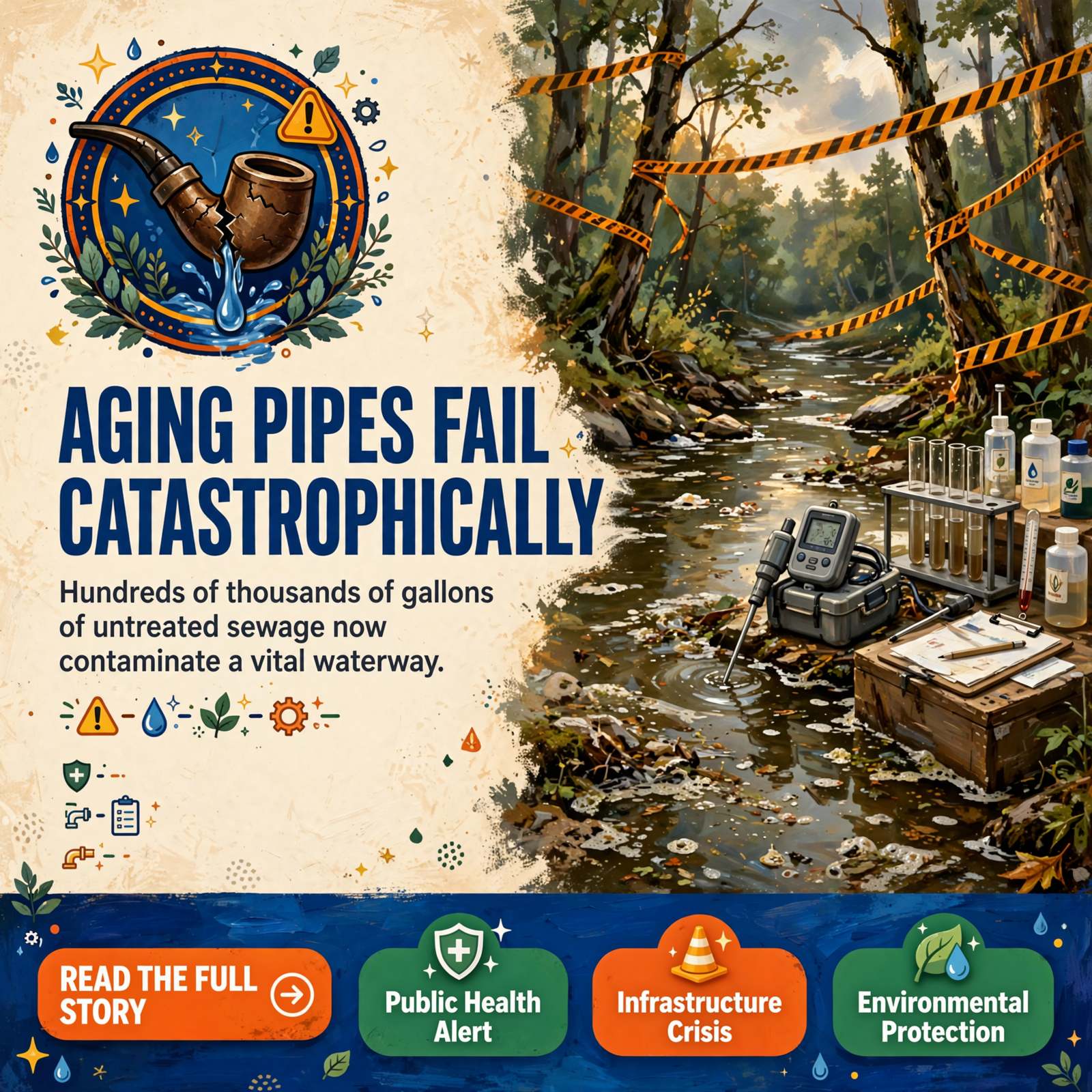
🚨 Sanitary Sewer Overflow Sends Hundreds of Thousands of Gallons Into South Chickamauga Creek in Chattanooga
A major infrastructure failure in Chattanooga’s aging sewer system has created an environmental and public health concern that extends far beyond the city limits. The overflow affects not only residents and businesses in the metro area, but also recreationalists and communities downstream who depend on South Chickamauga Creek.
📍 What’s Happening Right Now
An estimated 500,000 to 700,000 gallons of untreated wastewater continues to flow into South Chickamauga Creek as Chattanooga city crews work to contain the overflow. 🌊 The contamination stems from aging sewer infrastructure installed in the early 1970s-more than 50 years old-that city officials say is likely responsible for the failure. The ongoing nature of the overflow means the problem is not yet resolved, and the volume of wastewater involved represents a significant environmental incident.
💡 Why This Matters
A sanitary sewer overflow of this magnitude affects multiple groups of people and raises serious concerns about public health and environmental quality. Residents who live near the creek, families who fish or swim in its waters, and paddlers who use it for recreation all face potential exposure to harmful bacteria and pathogens. Beyond immediate health risks, the contamination can affect aquatic ecosystems, wildlife, and water quality downstream-concerns that ripple through communities well beyond Chattanooga’s city boundaries.
For property owners and businesses near the affected area, a sewer system failure raises questions about the reliability of municipal infrastructure and what similar aging systems might mean for their neighborhoods. The incident also highlights a broader challenge facing many communities: the cost and complexity of maintaining or replacing infrastructure that has served the area for decades but is now showing its age. 🏗️
👥 Who Is Affected
The immediate impact falls on anyone who uses South Chickamauga Creek-paddlers, anglers, swimmers, and families who enjoy the waterway for recreation. People living in homes or working in businesses adjacent to the creek may face health concerns and property-related issues. Beyond direct users, the overflow affects the broader Chattanooga metro community, which depends on the creek as part of the regional water system and natural environment.
Downstream communities and residents in areas where the creek flows also face potential contamination concerns, even if they are not directly aware of the overflow’s source. The creek’s role in the local ecosystem means that fish, wildlife, and plant life that depend on it are also affected by the sudden influx of untreated sewage.
🔧 The Infrastructure Challenge
Sewer systems installed in the 1970s were designed with specific capacity and durability expectations. After 50+ years of use, aging pipes can develop cracks, breaks, and weak points that allow sewage to escape into the environment-or allow stormwater and groundwater to infiltrate the system, overwhelming its capacity. 💧 Chattanooga’s overflow suggests that at least one section of the city’s sewer infrastructure has reached or exceeded its operational limits.
This is not unique to Chattanooga. Many communities across the United States face similar challenges with aging water and sewer systems that were built in the mid-20th century and are now approaching or past their expected service life. The cost of replacing or upgrading these systems is substantial, and many municipalities struggle to prioritize and fund the necessary repairs.
⚠️ What Residents Should Know
If you live near South Chickamauga Creek or use it for recreation, avoid contact with the water until city officials confirm the overflow has been contained and the water is safe. 🚫 Do not allow children or pets to play in or drink from the creek during this time. If you have already had contact with the contaminated water and experience symptoms such as nausea, diarrhea, or skin irritation, consult a healthcare provider and mention the sewer overflow.
Residents should monitor local news and official city announcements for updates on containment efforts and water quality testing. City officials and environmental agencies typically conduct follow-up testing to confirm when the water is safe for recreation again. This information will likely be shared through local news outlets and the city’s official channels.
🔍 What Happens Next
Chattanooga crews are actively working to contain the overflow, which suggests they have identified the source and are taking steps to stop the flow of sewage into the creek. The next phases will likely include:
- Containment and repair: Crews will need to locate and repair or replace the failed section of pipe.
- Water quality testing: Environmental agencies will monitor the creek to track contamination levels and determine when it is safe for recreation.
- Public notification: City officials will communicate updates on the situation and any restrictions or advisories.
- Investigation and assessment: The city will likely conduct a broader inspection of nearby sewer infrastructure to identify other potential problem areas.
The timeline for full resolution depends on the extent of the damage and the complexity of the repair. Some overflows are resolved within days; others may take weeks if significant pipe replacement is needed.
🌱 Long-Term Community Impact
This incident may accelerate conversations about infrastructure investment in Chattanooga and the broader metro area. Aging sewer systems are a widespread challenge, and communities that address them proactively-through funding, planning, and upgrades-can prevent future overflows and protect public health and environmental quality. 🏛️
For residents and businesses, the overflow serves as a reminder of the invisible infrastructure that supports daily life. Water and sewer systems operate largely out of sight, but when they fail, the impact is immediate and visible. The incident may also influence property values, insurance considerations, and community priorities around infrastructure spending in affected neighborhoods.
🤝 Community Threads: Infrastructure and Shared Responsibility
The Municipal-Resident Relationship: This overflow reveals the interdependence between city government and residents. The city is responsible for maintaining the sewer system, but residents depend on that system functioning reliably. When it fails, the impact is shared-residents face health and environmental risks, while the city faces pressure to repair and prevent future incidents. Understanding this relationship helps residents advocate for infrastructure investment and hold officials accountable for maintenance and upgrades.
Recreation and Environmental Stewardship: South Chickamauga Creek is a shared resource used by paddlers, anglers, and families. The overflow highlights how environmental quality affects community recreation and quality of life. Residents who use the creek have a stake in its health and may find common cause in advocating for both immediate cleanup and long-term protection of the waterway.
Downstream Responsibility: Communities downstream from Chattanooga depend on water quality from the creek. This overflow illustrates how infrastructure failures in one area can affect neighboring communities, creating a shared interest in system reliability and environmental protection across municipal boundaries.
💭 Questions for the Community
- How can residents stay informed about the status of the overflow and water quality testing?
- What role should infrastructure maintenance and upgrades play in local budget priorities?
- Are there other aging sewer systems in the area that may face similar risks?
- How can the community support efforts to protect South Chickamauga Creek and ensure safe recreation?
🤔Source
FOX Chattanooga – A sanitary sewer overflow is sending millions of gallons of wastewater into South Chickamauga Creek due to aging infrastructure.




0 Comments