

🐞 Lady Beetle Week, a Soil Report Worth Reading, a Johnsongrass Clock Check and a Free Farm Day in the Foothills — Your Farm & Garden Report

Or: A Sunny Wednesday in Dunlap — Seal the Cracks Before the Beetles Move In, Do the Lime Math, Get Free Nematode Tests and Hang Up on Fake FSA Calls
By Thomas Seest, Dunlap.Today · Wednesday, October 21, 2026
Good Wednesday morning. If you noticed a few orange, spotted beetles sunning on the porch rail lately, they’re right on time. National Weather Service Dunlap calls for sunny skies today with a high near 76, then more of the same: highs from 71 to 76, lows from 43 to 48, a little patchy fog early Thursday, and no rain and no freeze in the forecast through next Tuesday. It’s another good week for small, steady jobs.
Here’s the roundup. UT Extension says multicolored Asian lady beetles usually start looking for a winter home, sometimes yours, around the third week of October. That’s this week, so it’s a good time to seal gaps and keep the vacuum handy. Today’s tip on UT’s garden calendar is to review your soil report and adjust pH for next year, and UT specialists explain the lime math. For cattle folks, if last weekend’s frost touched your pasture, the johnsongrass waiting period ends about Oct. 28 to Nov. 2. Statewide, UT is offering free nematode screening for Tennessee farmers’ soil samples, and the first 2026 corn variety trial tables are posted. UT’s free Fall in the Foothills farm day is Sunday, Oct. 25, in Walland, and today is the last day to pre-register for door prizes. And USDA’s Farm Service Agency has a plain list of scam warning signs, plus two December paperwork dates. A short checklist is at the end.
⏱️ What this means for you in 30 seconds
- Weather: Sunny and dry through Tuesday. Highs 71–76, lows 43–48. No rain, no freeze in the forecast.
- Lady beetles: Seal cracks around windows, doors and pipes. If they get inside, vacuum them, don’t crush them.
- Soil report: Lime goes on by the report, not by guess. Fall lime has months to work before spring.
- Cattle: If frost hit your johnsongrass Oct. 18 or 19, wait until about Oct. 28 to Nov. 2 before grazing it.
- Sunday drive: Free UT farm day in Walland, Oct. 25, 1–5 p.m. Central. Pre-register today for door prizes.
- Remember: A real FSA office won’t ask for your password or PIN. When in doubt, call Jasper yourself: (423) 942-2244.
🐞 Lady Beetle Week: Why They’re on the Sunny Wall, and How to Keep Them Outside

This one comes straight from UT Extension, and it fits the calendar almost to the day. UT’s fact sheet on lady beetles in homes says that in Tennessee, the invasion “often starts around the third week in October.” The beetles are multicolored Asian lady beetles, orange-red with a varying number of spots. They’re looking for a protected place to spend the winter. In their native Japan, they tuck into cracks in mountain rocks. Here, they use buildings. UT says they can gather by the thousands on the sunny side of a house, and log homes, with their many cracks and crevices, can be a particular draw.
UT’s home pest guide says the beetles tend to go looking on the first warm days of fall, above about 65 degrees, that follow a sharp cool-down. We had chilly nights last weekend and mid-70s afternoons this week, so don’t be surprised to see them. UT’s advice, in plain order:
- Pest-proof first. Seal entry points before the beetles arrive: around windows, doors, vents and where pipes and wires come through the wall.
- Clear the piles. Remove dead beetles as they gather, because UT says the piles may draw more beetles to the same spot.
- Vacuum, don’t swat. If they get in, UT suggests a vacuum with a HEPA filter or a light trap. UT Extension in Franklin County adds a tip: don’t crush or sweep them, because they give off a smelly yellow-orange fluid that can stain.
The same season brings the brown marmorated stink bug, the shield-shaped brown bug UT says has been well established in Tennessee since it was first found in Knox County in 2008. It’s a fall nuisance for homeowners for the same reason: it’s hunting for a winter hideout. The same seal-the-gaps approach helps.
What it means for you: Think of it like weather-stripping before the first cold snap. An hour with a tube of caulk and a new door sweep now saves a winter of beetles on the windowsill. These visitors don’t eat your house or your food. They’re mostly just uninvited houseguests. If a few slip in, keep a vacuum by the window and be patient. If you’re not sure what bug you’re seeing, the Sequatchie County Extension office can help: 423-949-2611.
👉 Read more (UT Extension: Lady Beetles Infesting Homes, SP503-C) · UT: Managing Pests Around the Home · UT: Stink bugs in and around homes
🧪 Today’s Calendar Tip: Your Soil Report Came Back. Now Do the Lime Math.

On Oct. 17, Dunlap.Today suggested pulling soil samples. If yours came back, UT’s 2026 garden calendar has a tip for today, Oct. 21: “Review soil reports and make additions if needed to adjust pH for next year.” Here’s how UT says to read the lime part.
- Know the target. UT’s vegetable garden guide says most vegetables do best at a soil pH of 6.0 to 6.5. UT’s forage director, Dr. Bruno Pedreira, says common pasture grasses like tall fescue and orchardgrass do best from 6.0 to 7.0, and clover and alfalfa want above 6.5.
- Follow the number on the report. For gardens, the report lists pounds of ground limestone per 1,000 square feet. Broadcast it evenly and work it into the top 6 inches. UT warns not to over-apply, because pH that’s too high also locks up nutrients.
- Fall is a good time. UT says a fall application gives lime several months to react before spring planting. Pedreira says lime needs moisture and three months to a year to fully work. In a dry fall like this one, it simply waits for rain.
- Check the lime’s strength. UT’s lab bases its lime recommendations on lime with a 65% RNV (relative neutralization value), the Tennessee average. Ask your dealer for the RNV. Pedreira’s example: if the report says 2 tons per acre at 65%, but your lime is 50%, you’d need about 2.6 tons.
- Skip the shortcuts. Pedreira says research by University of Kentucky colleagues found that “liquid calcium” or “liquid lime” products do not raise soil pH. Agricultural lime is still the proven fix.
What it means for you: A soil report is like a recipe card. It only helps if you measure. Put the lime where the report says, in the amount it says, and let the winter rains stir it in. UT says a garden usually shouldn’t need lime more than every two to five years, so this is a once-in-a-while job, not a yearly one. If the numbers on your report look like a foreign language, take it by the Extension office on Church Street in Dunlap. That’s what they’re there for.
👉 Read more (UT Extension: Soil Preparation for Vegetable Gardens, SP291-C) · UT Beef & Forage Center: Why soil pH and lime matter · UT 2026 garden calendar
🐄 Johnsongrass Clock Check: When the Cows Can Go Back
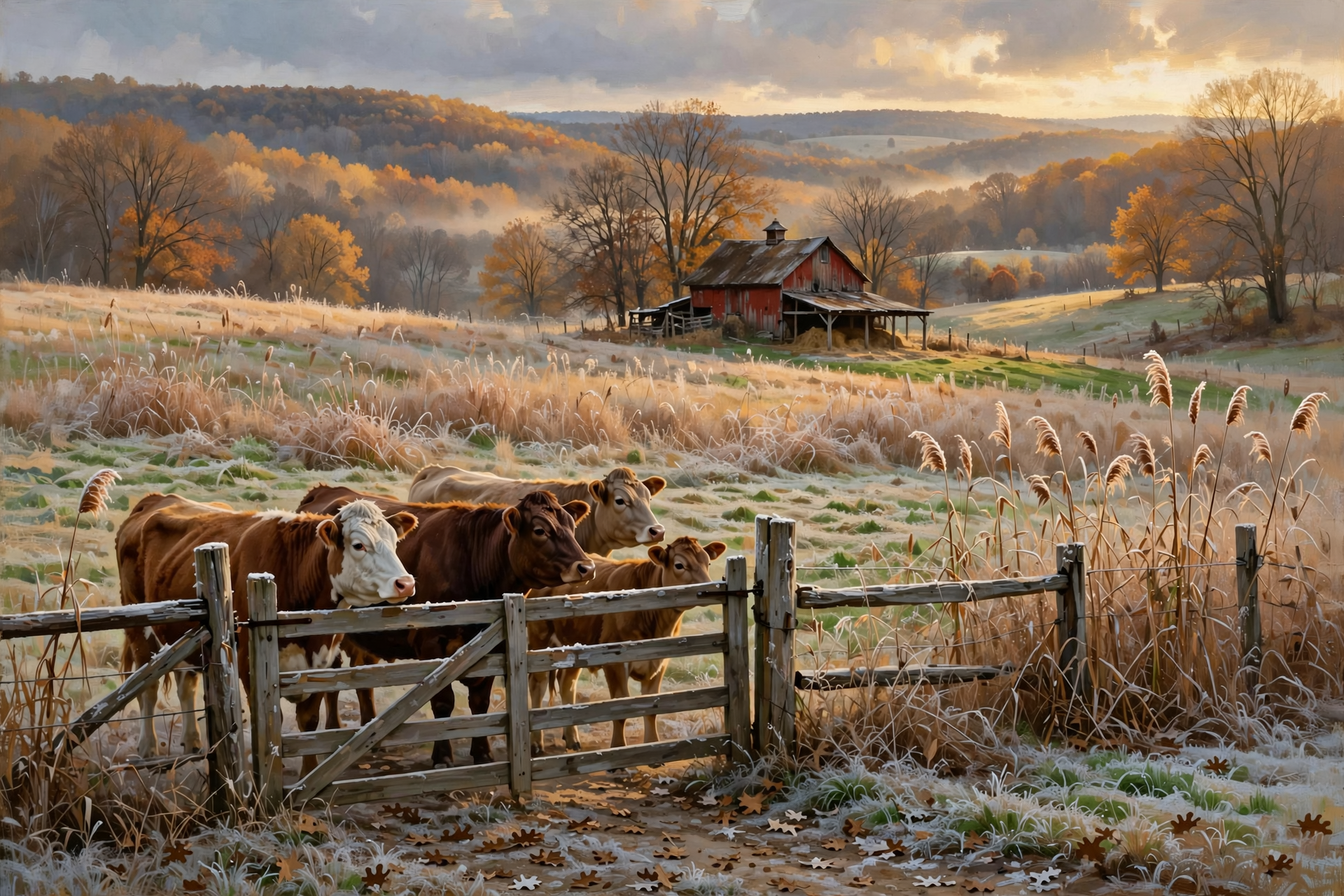
Here’s an update on a story from last weekend. On Oct. 17 and 18, Dunlap.Today passed along the National Weather Service’s word that frost was likely on parts of the Cumberland Plateau and higher ground. UT’s Beef & Forage Center says to wait 10 to 14 days after a frost before grazing pastures with johnsongrass, sudangrass or sorghum-sudangrass, because freezing can make these grasses release prussic acid, which can poison cattle. Do the counting from your own frost date. If frost touched your pasture the morning of Oct. 18 or 19, the wait runs out about Oct. 28 to Nov. 2.
UT adds two cautions. Both mature leaves and new regrowth can be dangerous after a frost. And young shoots that come up afterward shouldn’t be grazed until they dry after a killing frost or reach 18 to 24 inches tall, which UT says may not happen this late in the year. Its bottom line: “When in doubt, keep cattle out and give the forage more time.” Dunlap’s forecast lows stay in the 40s through Tuesday, so there’s no new frost in the forecast to restart the clock for now.
What it means for you: It’s like letting a pie cool before you cut it. Rushing it doesn’t help anybody. Write your frost date on the barn calendar, count two weeks, and keep the herd on safer grass or hay until then. If your place never frosted, the clock hasn’t started, but the first real frost will start it.
👉 Read more (UT Live.Stock Companion, October 2026: Prussic acid after frost) · Dunlap forecast
🌽 Row-Crop Corner: Free Nematode Tests and Fresh Corn Trial Results

These two are statewide, and they’re mostly for folks who grow soybeans, corn or cotton. UT Extension plant pathologist Dr. Heather Kelly says fall soil samples can be sent in for free screening for soybean cyst, reniform, root-knot and lesion nematodes. That’s free for Tennessee farmers and $15 for out-of-state samples. Nematodes are tiny soil worms that UT calls “silent yield robbers,” because they can cut yields without showing much above ground. UT’s sampling tips:
- Sample after harvest but before the first freeze, when the soil is moist enough to pull a probe.
- Take at least 20 cores, about 1 inch wide and 6 to 8 inches deep, roughly one per acre, for about a quart of soil.
- Bag it, keep it cool in a cooler or fridge, and mail it the same day or as soon as you can with the form from UTcrops.com.
Also new this week: on Oct. 19, UT posted preliminary results from its 2026 Tennessee corn hybrid variety trials. The trials tested 31 hybrids at eight sites across six UT AgResearch centers, from Jackson and Milan to Knoxville and Greeneville. UT says the final report comes after county trial data are in.
What it means for you: A free nematode test is like a free check-up at the county fair. There’s no reason to skip it if you’re already out pulling samples. It’s a dry fall, so you may need to wait for a little moisture before the probe goes in easily. And the corn tables are good winter reading for picking next year’s seed. Ask your Extension agent which sites grow most like the Valley.
👉 Read more (UT Crops News: Free nematode screening) · UT Crops News: 2026 corn variety trial preliminary tables
🚜 A Sunday Drive With a Corn Maze: Fall in the Foothills, Oct. 25

Here’s a calm outing for the whole family, a ways up the road. The UT Institute of Agriculture is hosting Fall in the Foothills on Sunday, Oct. 25, from 2 to 6 p.m. Eastern (1 to 5 p.m. Central) at the East Tennessee AgResearch and Education Center’s Little River Dairy, 3229 Ellejoy Road, Walland, in Blount County. UT lists wagon tours, a corn maze, milking demonstrations, farm equipment displays, chances to talk with agriculture experts, kids’ activities, and concessions from local Cub Scout Pack 1810.
Admission is free for all ages. If you’d like a shot at a door prize, UT says to pre-register by Oct. 21, which is today, at tiny.utk.edu/fall-foothills-pre-register. You can also register when you get there. Questions or accessibility requests go to Kim Lane at 865-974-7201.
What it means for you: It’s like a county fair without the funnel-cake budget. The grandkids can see where milk comes from, and you can ask a UT expert that pasture question you’ve been chewing on. Remember the time change on the way: the 2 p.m. start is Eastern, so that’s 1 p.m. our time.
👉 Read more (UTIA: Fall in the Foothills, Oct. 25)
📋 Paperwork Corner: Spot a Fake FSA Call, Plus Two December Dates

USDA’s Farm Service Agency in Tennessee says it has seen more scams aimed at FSA farm loan customers. Scammers use publicly available information about farm program or loan participation, then reach out by email, text, phone or social media. Here are FSA’s warning signs:
- Messages that urge you to act right now or ask for personal details.
- Unexpected links or attachments from senders you don’t know.
- Calls or texts “from FSA” asking for passwords, PINs, Social Security numbers or credit card numbers.
- Offers that seem too good to be true, especially investment or debt relief deals.
FSA’s advice is simple. Verify the contact by calling your local office yourself, don’t click unknown links, and use strong passwords. For Sequatchie County, that’s the Jasper Service Center, (423) 942-2244.
Two dates for the folder, if they fit your farm:
- Friday, Dec. 18: Dairy Margin Coverage. Signup for 2027 opened Oct. 5 and runs through Dec. 18. It’s a voluntary program that helps dairies when milk prices fall too close to feed costs.
- Thursday, Dec. 31: Organic Certification Cost Share. Certified organic producers and handlers can apply for help with 2025 and 2026 certification costs. It covers 75% of eligible costs, up to $750 per scope, paid first-come, first-served until funds run out.
What it means for you: Treat a surprise call like a stranger at the gate. Be friendly, but don’t hand over the keys. Hang up, look up the office number yourself and call back. The real FSA will still be there. The fake one usually won’t.
👉 Read more (USDA in Tennessee newsletter: Protect yourself from scams) · farmers.gov: Important USDA dates
📌 Sticky Notes for the Fridge

- This week: Sunny and dry in Dunlap through Tuesday. Highs 71–76, lows 43–48. No freeze in the forecast.
- Today, Wednesday, Oct. 21: Last day to pre-register for Fall in the Foothills door prizes. It’s also UT’s conservative first-frost date for Chattanooga.
- Thursday, Oct. 22: Next U.S. Drought Monitor map.
- Saturdays, Oct. 24 and 31, 9 a.m.–1 p.m.: Last two regular Dunlap Farmers Market days (confirm before you go).
- Sunday, Oct. 25, 1–5 p.m. Central: Fall in the Foothills, Little River Dairy, Walland. Free.
- About Oct. 28 to Nov. 2: Johnsongrass waiting period ends if your pasture frosted Oct. 18 or 19.
- Sunday, Nov. 1: Clocks fall back one hour.
- Friday, Nov. 6, 8 a.m. Central: Tennessee Forage & Grassland Council annual meeting, Crossville.
- Monday, Nov. 9: Last day to apply for winter-storm emergency loans with FSA.
- Wednesday, Nov. 11: UT Live.Stock broadcast (details at UTBEEF.COM).
- Sunday, Nov. 15: White oak acorn collection ends.
- Friday, Nov. 20: Apply-by date for 2027 NRCS conservation funding in Tennessee.
- Monday, Dec. 7: FSA county committee ballots due.
- Friday, Dec. 11: ARC/PLC 2026 enrollment deadline.
- Friday, Dec. 18: Dairy Margin Coverage signup ends.
- Thursday, Dec. 31: Organic Certification Cost Share applications due.
👉 U.S. Drought Monitor: Tennessee · Dunlap Farmers Market · UT Extension Sequatchie County
✅ Your Farm & Garden Checklist for Lady Beetle Week

- ✅ Walk around the house. Caulk gaps by windows, doors, vents and pipes, and check the door sweeps.
- ✅ Keep a vacuum by the sunny windows. Vacuum beetles, don’t crush them.
- ✅ Pull out your soil report. Note the pH and the lime recommendation.
- ✅ Ask your lime dealer for the RNV, and adjust the amount if it isn’t 65%.
- ✅ Spread garden lime evenly and work it into the top 6 inches. Don’t overdo it.
- ✅ Write your frost date on the barn calendar. Keep cattle off johnsongrass for 10 to 14 days after it.
- ✅ Row-crop growers: pull 20 or more cores per field for a free nematode test, and keep the bag cool.
- ✅ Pre-register today for Fall in the Foothills if you’d like a door-prize chance.
- ✅ Got a surprise “FSA” call or text? Hang up and call Jasper yourself: (423) 942-2244.
Practical rule: Seal the cracks, lime by the report, count two weeks after frost, and call the office back on a number you looked up yourself.
— Dunlap.Today
📚 Plain-English Farm & Garden Glossary

- Multicolored Asian lady beetle: An orange-to-red spotted beetle, related to our native ladybugs, that often gathers on houses in fall looking for a winter shelter.
- Brown marmorated stink bug: A brown, shield-shaped bug from Asia that pests crops and wanders into homes in fall.
- HEPA filter: A fine vacuum filter that traps small particles so they don’t blow back into the room.
- Soil pH: A measure of how sour (acid) or sweet (alkaline) the soil is. Most vegetables like 6.0 to 6.5.
- Ground limestone (ag lime): Crushed rock that slowly raises soil pH. It needs moisture and time to work.
- RNV (relative neutralization value): A number that tells you how strong a lime product is. UT’s recommendations assume 65%.
- Prussic acid: A poison that can form in johnsongrass, sudangrass and sorghum-sudan after frost or stress.
- Killing frost: A frost cold enough to kill the top growth of a plant, not just nip the leaf tips.
- Nematodes: Microscopic roundworms in the soil. Some feed on crop roots and quietly lower yields.
- Soil core: One small plug of soil pulled with a probe. Many cores mixed together make one sample.
- Variety trial: A side-by-side test of different seed types grown in the same conditions to compare yields.
- Scope (organic): A category of organic certification, such as crops, livestock, wild crops or handling.
❓ Frequently Asked Questions

Are these lady beetles harmful?
Mostly they’re a nuisance. UT says they come inside looking for a place to spend the winter. The main troubles are numbers and the stain-causing fluid they give off when crushed. Seal gaps, vacuum the ones that get in, and clear away dead ones so they don’t attract more.
Should I spray inside the house?
UT’s guidance puts sealing entry points first and suggests vacuuming or light traps for beetles already inside. UT Extension in Franklin County notes that beetles sprayed indoors still have to be vacuumed up anyway. If you’re considering any pesticide outdoors, read and follow the label, or call the Extension office for advice.
Is it too late in the year to lime?
No. UT says fall is a good time because the lime has several months to react before spring planting. It does need moisture, so in a dry fall it will start working once the rains come back. UT also says it’s better to lime just before planting than not at all.
How do I know how much lime to use?
Go by your soil test report. For gardens, it lists pounds per 1,000 square feet. For fields, it lists tons per acre, based on lime with a 65% RNV. If your lime is weaker or stronger, adjust. For example, 2 tons at 65% equals about 2.6 tons of a 50% product.
My place didn’t frost. Can the cows graze johnsongrass?
The 10-to-14-day wait UT recommends starts after a frost. If your pasture hasn’t frosted, the clock hasn’t started. When the first real frost comes, write the date down and start counting then. UT’s advice when you’re unsure is to keep cattle out and give it more time.
Who can get the free nematode test?
UT says screening is free for all Tennessee farmers, and out-of-state samples cost $15. Use the sampling form on UTcrops.com and follow the instructions on it. Your county Extension agent can also help.
How can I tell if a call is really from FSA?
FSA says to be wary of anyone who rushes you, asks for passwords, PINs, Social Security or credit card numbers, or sends links you didn’t expect. Hang up and call your local office on a number you look up yourself. For Sequatchie County, that’s the Jasper Service Center at (423) 942-2244.
🔗 Other Resources

- National Weather Service: Dunlap forecast
- UT Extension: Lady Beetles Infesting Homes (SP503-C)
- UT Extension: Managing Pests Around the Home (PB1303)
- UT Extension: Managing Brown Marmorated Stink Bug in and Around Homes (W779)
- UT Extension Franklin County: Lady beetle tips
- UT Extension: Tennessee Home Fruit and Vegetable Garden 2026 calendar
- UT Extension: Soil Preparation for Vegetable Gardens (SP291-C)
- UT Beef & Forage Center: Why soil pH and lime matter
- UT Beef & Forage Center: Live.Stock Companion, October 2026
- UT Crops News: Free nematode screening
- UT Crops News: 2026 corn variety trial preliminary tables
- UT Institute of Agriculture: Fall in the Foothills
- USDA in Tennessee newsletter (Sept. 30, 2026): scams, organic cost share
- farmers.gov: Important USDA dates
- U.S. Drought Monitor: Tennessee
- USDA Service Center Locator (Sequatchie FSA: Jasper Service Center · 423-942-2244)
- Dunlap Farmers Market
- UT Extension Sequatchie County (170 Church Street, Dunlap · 423-949-2611)
- Dunlap.Today
🏡 Keep Learning, Stay Calm and Come Back to the Porch

Nothing on today’s list needs a rush. A tube of caulk, a soil report and a cup of coffee, a date on the barn calendar, and maybe a Sunday drive toward the mountains is a good week’s work. The beetles will find somewhere to sleep, the lime will wait for rain, and the grass will be safe again soon enough.
When you want the next calm, practical update for Sequatchie Valley readers, pull up a chair at Dunlap.Today.

Know about an upcoming event or story in the Sequatchie Valley? Submit it here.




0 Comments