
How to Survive a Sequatchie Valley Winter Without Buying All the Bread at Walmart
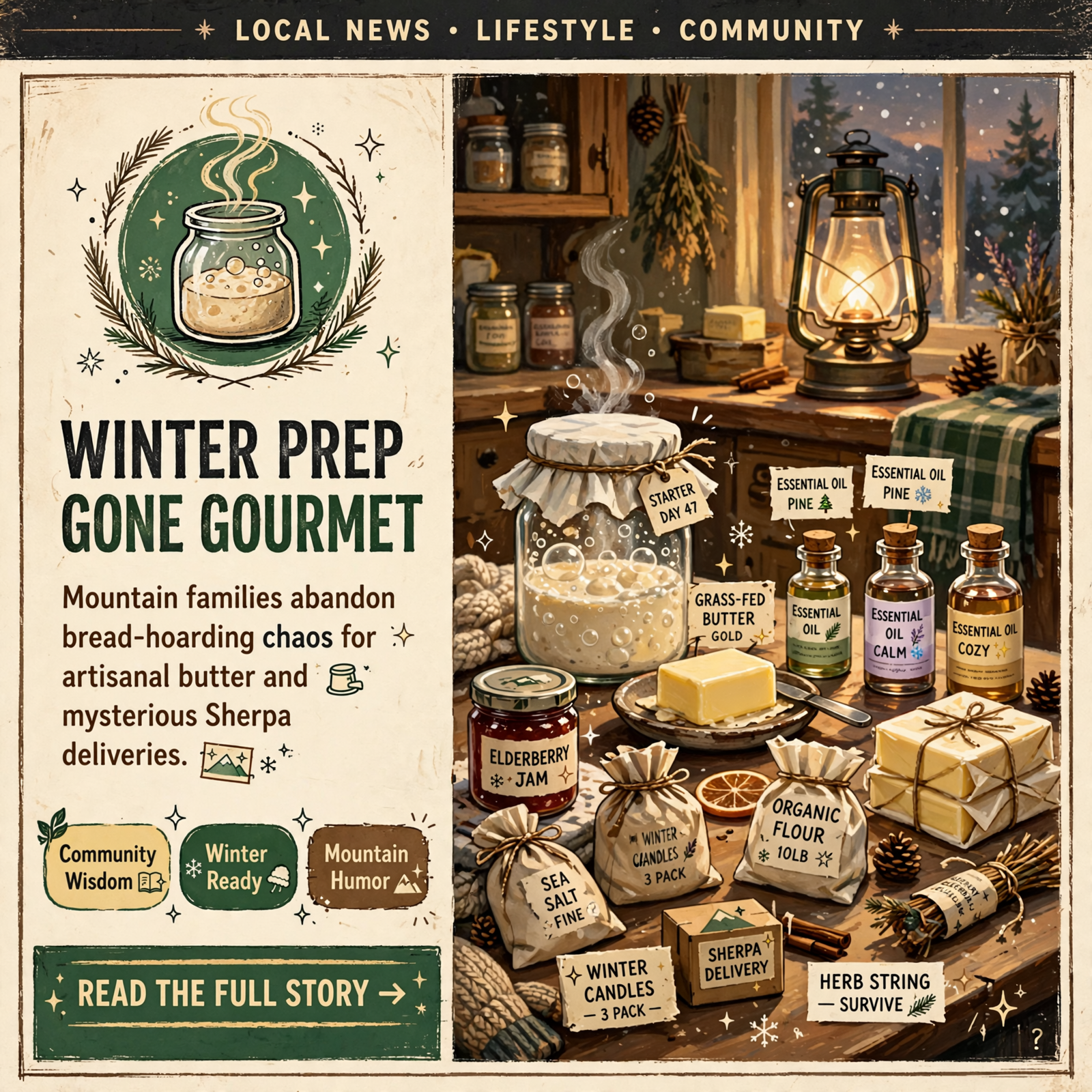
A sensible, completely ridiculous guide to winter preparedness, sourdough civilization, grass-fed butter, and the little-known Sherpa supply routes of Fredonia and Cagle Mountain.
There are certain laws of nature that no scientist has ever been able to explain.
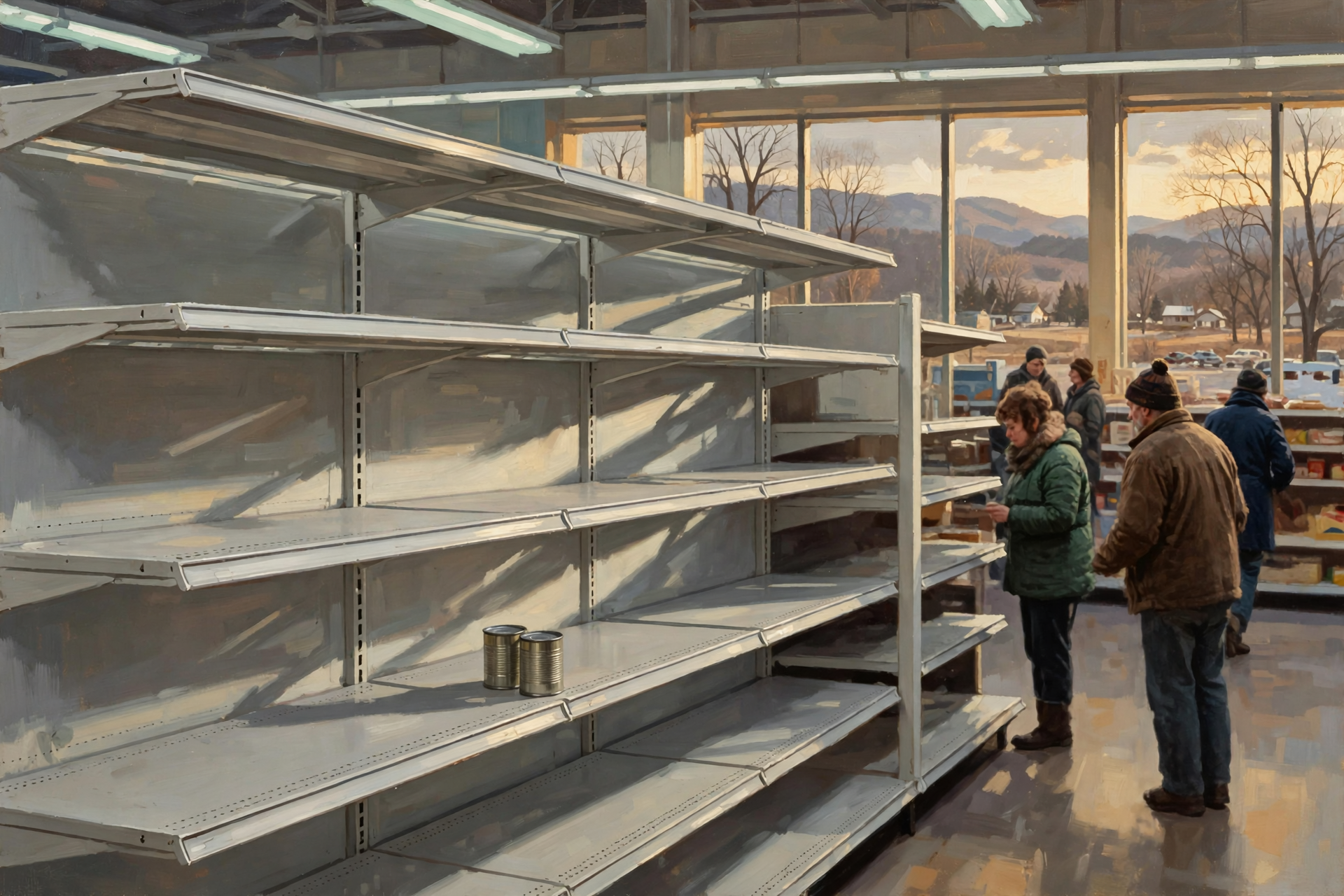
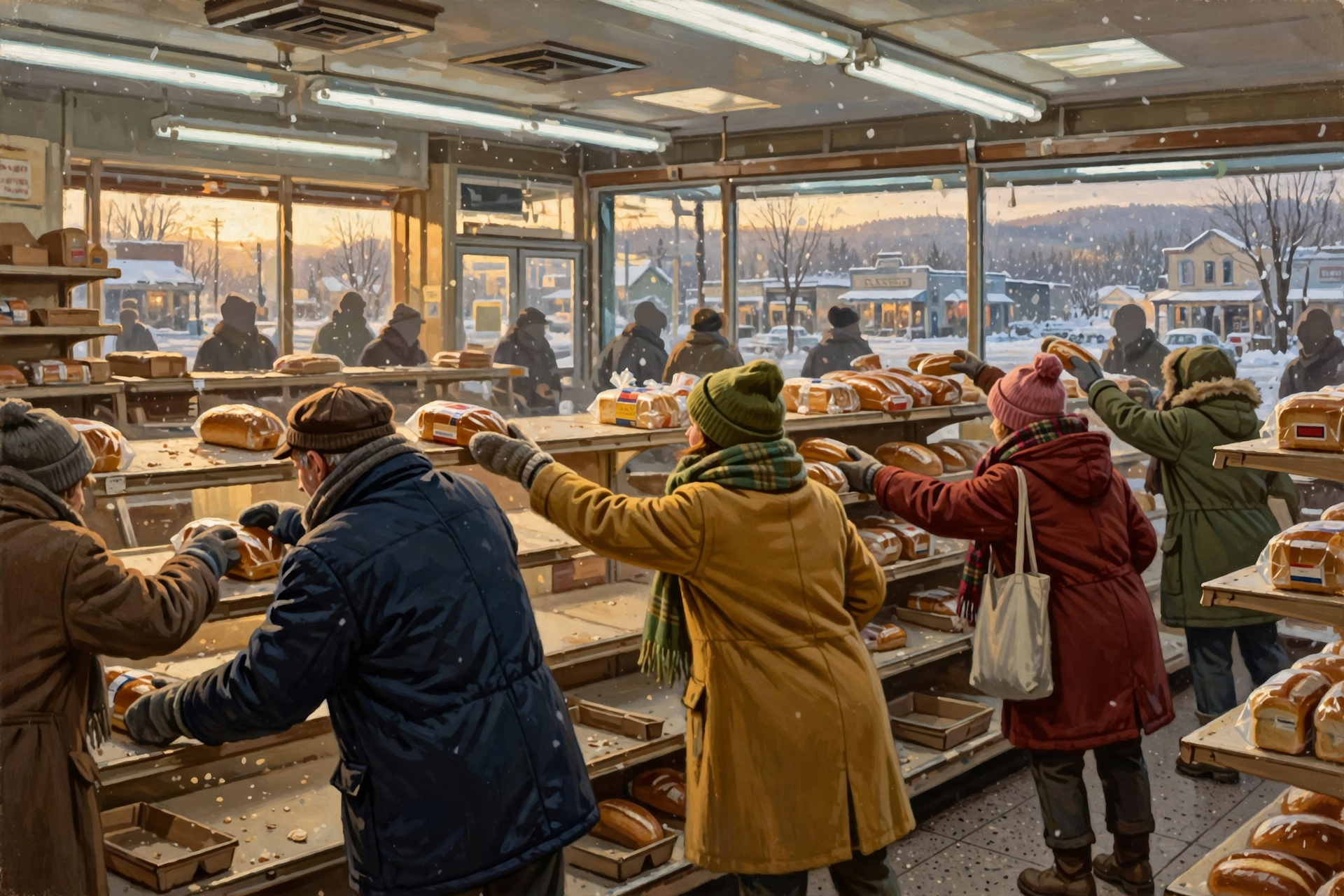
Water runs downhill. The sun rises in the east. And if a television weather forecaster mentions the possibility of one-quarter inch of snow within forty miles of Dunlap, the bread and toilet paper at Walmart disappear before the forecast is finished.
This happens with such remarkable regularity that I believe the National Weather Service ought to stop measuring snowfall in inches and begin measuring it in missing loaves.
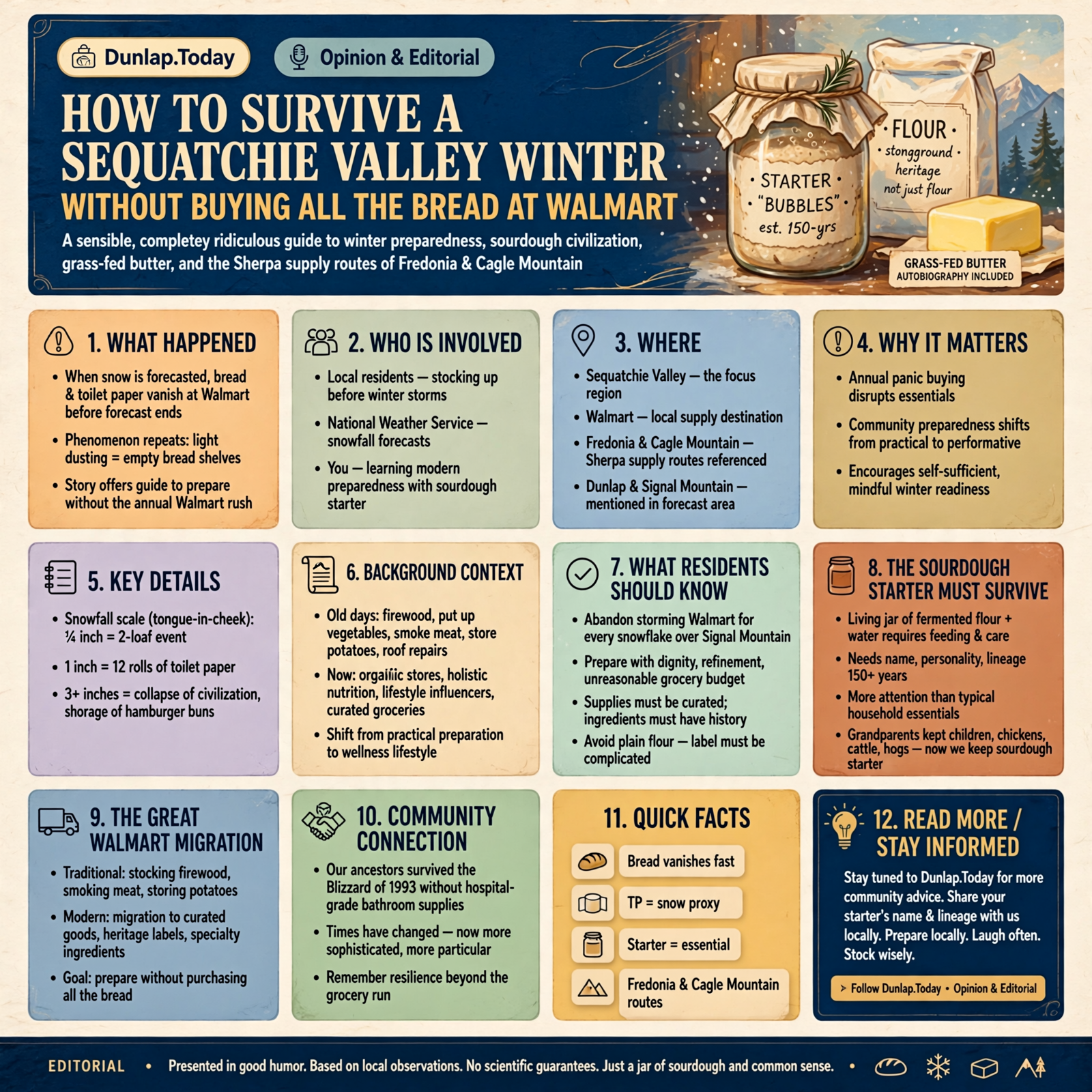
A light dusting would be a two-loaf event. An inch would require twelve rolls of toilet paper. Anything beyond three inches would trigger the immediate collapse of civilization, accompanied by a shortage of hamburger buns.
I have lived long enough to observe that the amount of bread a person purchases before a winter storm bears no reasonable relationship to the amount of bread that person can eat.
And I have never understood why snow apparently causes an emergency involving toilet paper. I am fairly certain that our ancestors survived the Blizzard of 1993 without purchasing enough bathroom supplies to equip a regional hospital.
But times have changed. We live in a more sophisticated age.
And I have recently learned that there is a much healthier way to prepare for winter.
The Great Walmart Migration
In the old days, mountain families prepared for winter by cutting firewood, putting up vegetables, smoking meat, storing potatoes, and making certain the roof did not leak.
This was a crude and primitive system, chiefly because nobody had thought to call it a wellness lifestyle.
Today, we know better.
We have organic grocery stores, holistic nutrition experts, lifestyle influencers, and people on the internet who can explain why a loaf of ordinary white bread is practically a declaration of war against the human digestive system.
I therefore propose that we abandon the embarrassing tradition of storming Walmart every time a snowflake appears over Signal Mountain.
Instead, we should prepare for winter with dignity, refinement, and an entirely unreasonable grocery budget.
Our supplies must be curated. Our ingredients must have a history. Our butter must have an autobiography.
And under no circumstances should we purchase anything that does not have a sufficiently complicated name.
If the label simply says “flour,” we have already failed.
The Sourdough Starter Must Survive
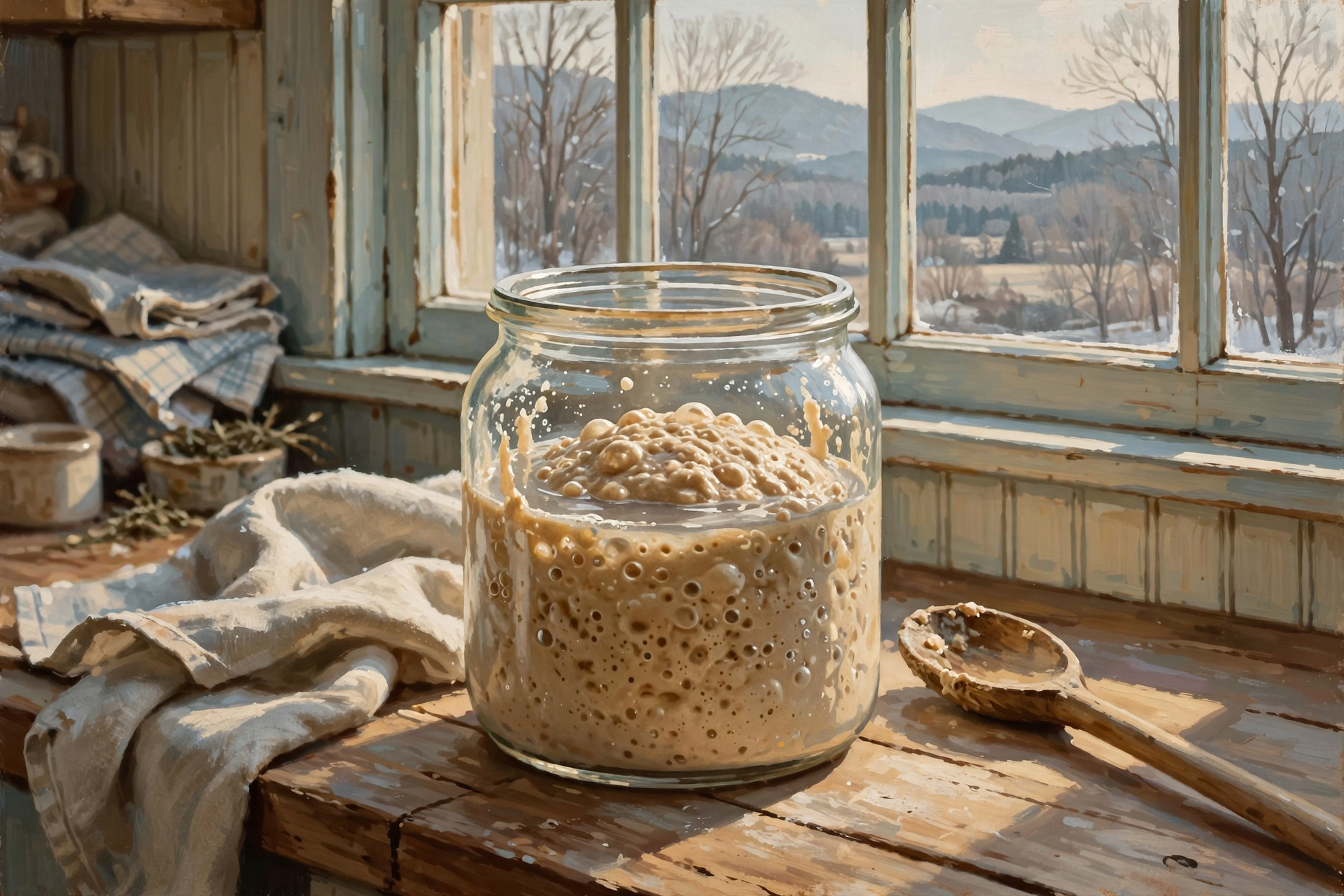
The first essential requirement of modern winter preparedness is a sourdough starter.
Not a loaf of sourdough bread, mind you. That would be much too practical.
We must possess a living jar of fermented flour and water which requires regular feeding, careful attention, and possibly a college education.
Our grandparents had children, chickens, cattle, and hogs to keep alive through the winter. We have added a jar of bubbling paste to the household census.
A proper sourdough starter should have a name, a personality, and a lineage reaching back at least three generations.
Some folks are especially proud to announce that their starter is 150 years old.
I have met families whose genealogical records are considerably less complete than those of their bread dough.
There are people who will drive across three counties to rescue a neglected sourdough starter but would not go next door to water their neighbor’s houseplants.
Nevertheless, it is important that every household acquire one before the first frost.
When the electricity fails and the roads become impassable, we shall take comfort in knowing that there is something else in the house demanding to be fed.
Grass-Fed Butter and Essential Oils
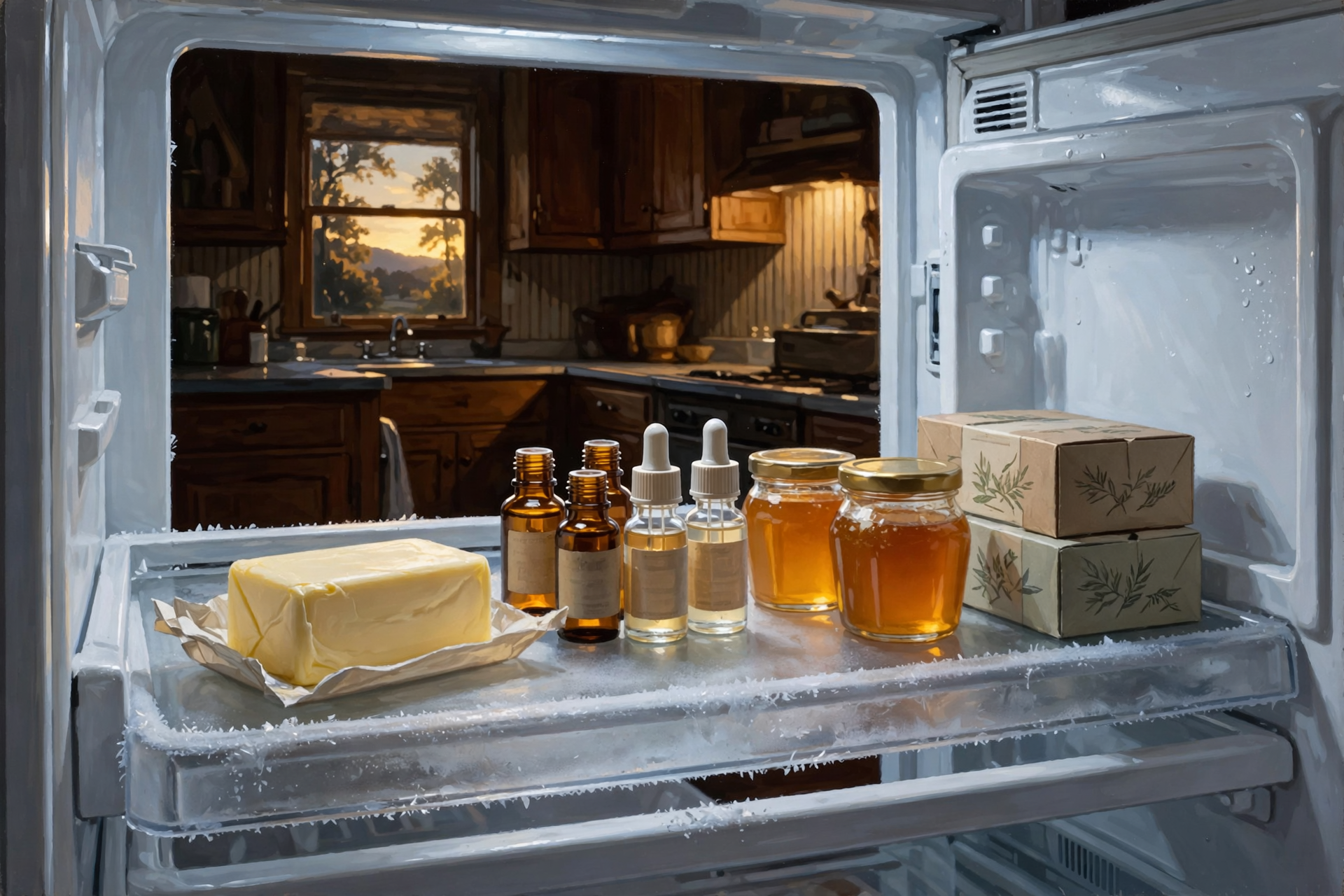
Next, we must obtain grass-fed butter.
Ordinary butter is no longer acceptable. It is essential that the cow responsible for our butter enjoyed a superior lifestyle, preferably involving rolling green hills, fresh mountain air, and a peaceful relationship with its neighbors.
I do not know whether the cow must have listened to classical music, but I suspect there is an additional charge if it did.
Grass-fed butter should be carefully stored in the refrigerator, where it may be admired whenever the power is working.
After this comes our supply of essential oils.
We shall require peppermint, eucalyptus, lavender, lemon, and at least one mysterious blend with a name suggesting that it was developed by a secret society of mountain herbalists.
Now, I have no objection to a pleasant smell. But I do suspect that during an actual emergency, a flashlight is going to be more useful than a bottle of something called Winter Harmony.
Still, we must maintain our standards.
When the roads ice over, there is great comfort in knowing that our living room smells like an expensive spa, even if the water pipes have frozen solid.
And let us not forget the herbal teas, organic honey, pasture-raised eggs, handcrafted soap, fermented vegetables, and the various ancient grains that nobody in the family knows how to cook.
All of these items are necessary for surviving what may turn out to be forty-five minutes of sleet.
The Sherpas of Fredonia and Cagle Mountain
At this point, I must make a confession.
My family is not merely recommending this superior method of winter preparedness.
We are already practicing it.
In fact, we have been so diligent about preparing for the approaching winter that we have ordered most of our supplies in advance.
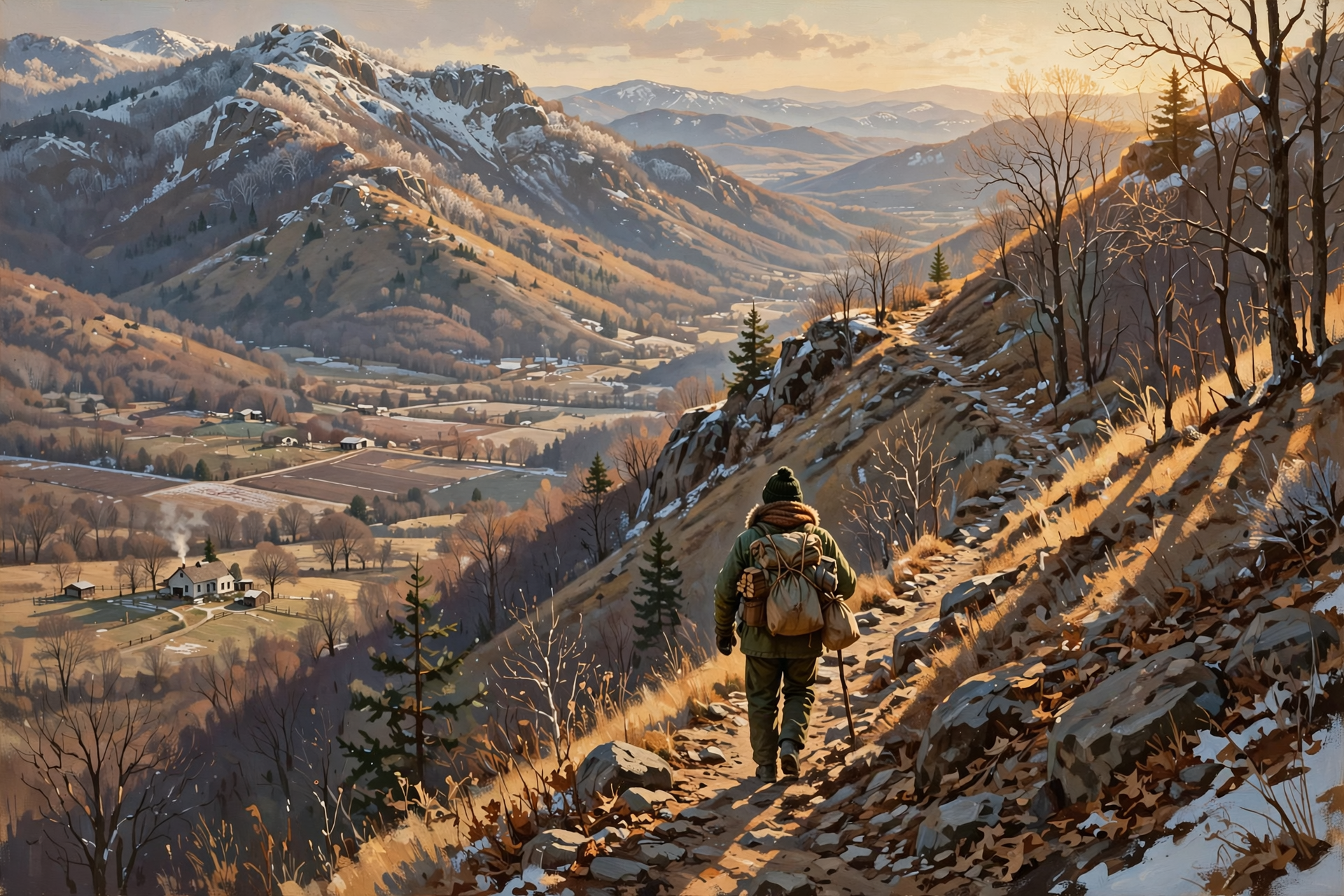
And naturally, we have arranged for delivery by Sherpas.
Now, some readers may be surprised to learn that there are Sherpas operating on Fredonia Mountain and Cagle Mountain.
I was surprised myself, particularly when I received the invoice.
But apparently the global economy has advanced considerably since the days when a man simply drove his pickup truck to the store.
Our Sherpas are responsible for transporting the finest provisions down the mountain trails, including artisanal sourdough flour, cultured butter, essential oils, organic honey, and several items whose names cannot be pronounced without consulting a nutritionist.
The Fredonia expedition is handling the flour and herbal supplements.
The Cagle Mountain expedition has been entrusted with the butter, which requires a somewhat more delicate transport arrangement.
I have instructed both expeditions to avoid unnecessary risks, particularly on steep terrain or in the event of an early frost.
There is no sense losing a good man over a twelve-dollar jar of fermented cabbage.
Our supplies are expected to arrive shortly before the first major winter storm, assuming the Sherpas can negotiate the mountain passes, locate our driveway, and agree upon a reasonable gratuity.
I considered employing helicopters, but the family felt this would be unnecessarily extravagant.
Besides, the sourdough starter gets nervous around loud machinery.
We have named it Clarence.
The Actual Secret to Surviving Winter
Of course, buried beneath all this expensive preparation is a small piece of wisdom worth remembering.
Winter in the Sequatchie Valley can be unpredictable.
Some years we get little more than cold rain and an occasional frosty windshield. Other years, ice and snow can make mountain roads dangerous, interrupt electricity, and leave families at home longer than expected.
A little preparation is therefore sensible.
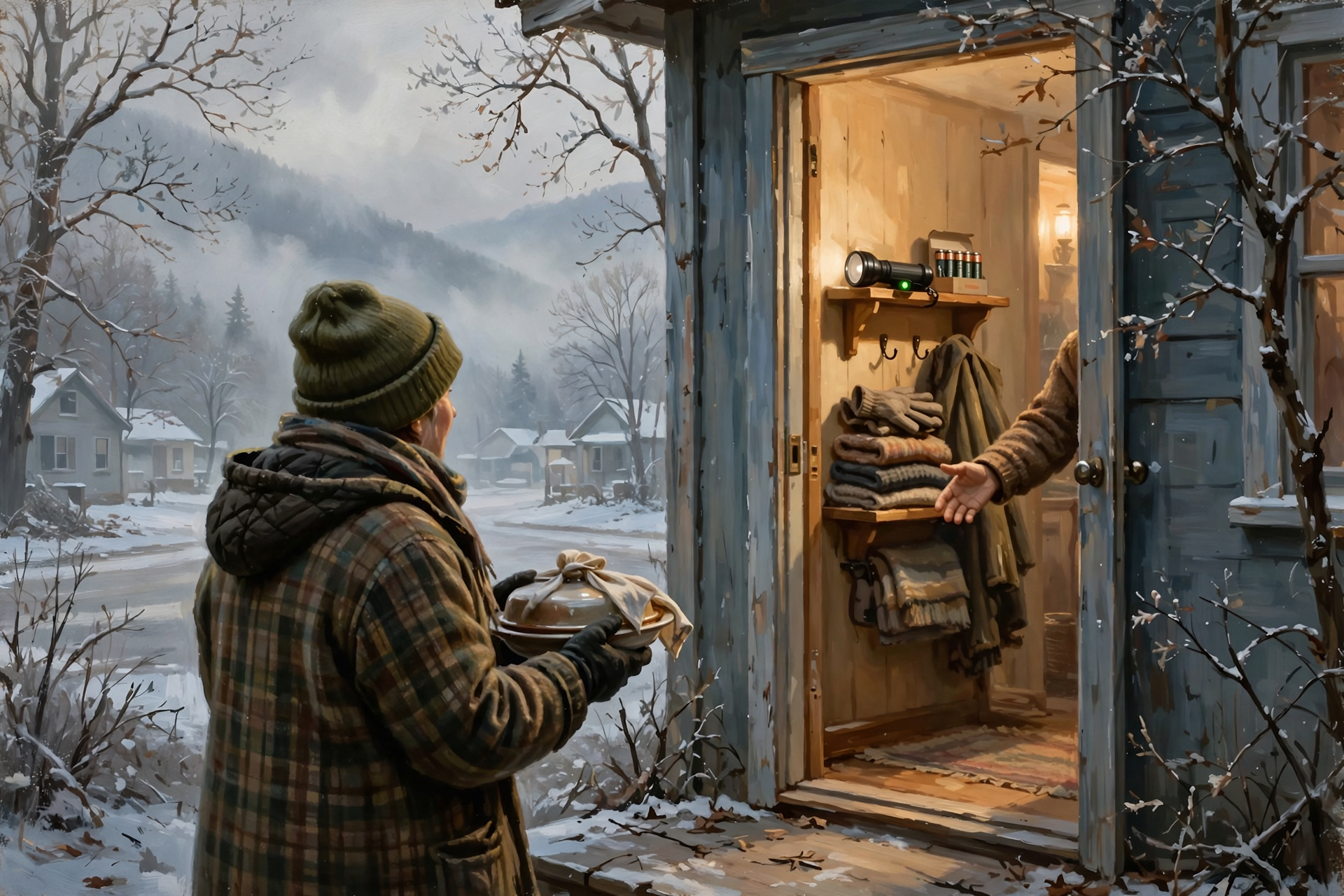
Keep enough ordinary food and drinking water on hand for several days. Have your necessary medications, flashlights, batteries, warm clothing, and a safe backup heating plan ready. Keep the phone charged, and check on neighbors who may need assistance.
And if you use a generator, keep it outside and well away from doors and windows. Carbon monoxide is one winter visitor that should never be invited indoors.
Our grandparents understood most of the important parts of this without subscribing to a single wellness newsletter.
They also understood something else.
In a small community, the most useful thing a person can possess is not a fifty-dollar bottle of lavender oil or a refrigerator full of premium butter.
It is a neighbor who notices when the lights have been off too long.
It is somebody with a chainsaw who can clear a fallen tree.
It is a family willing to share a warm meal.
And it is the common sense to stay home when the roads are covered in ice, regardless of how urgently the household believes it requires another loaf of bread.
These things do not photograph particularly well for social media, but they have kept mountain communities functioning for generations.
A Final Word Before the Snow Arrives
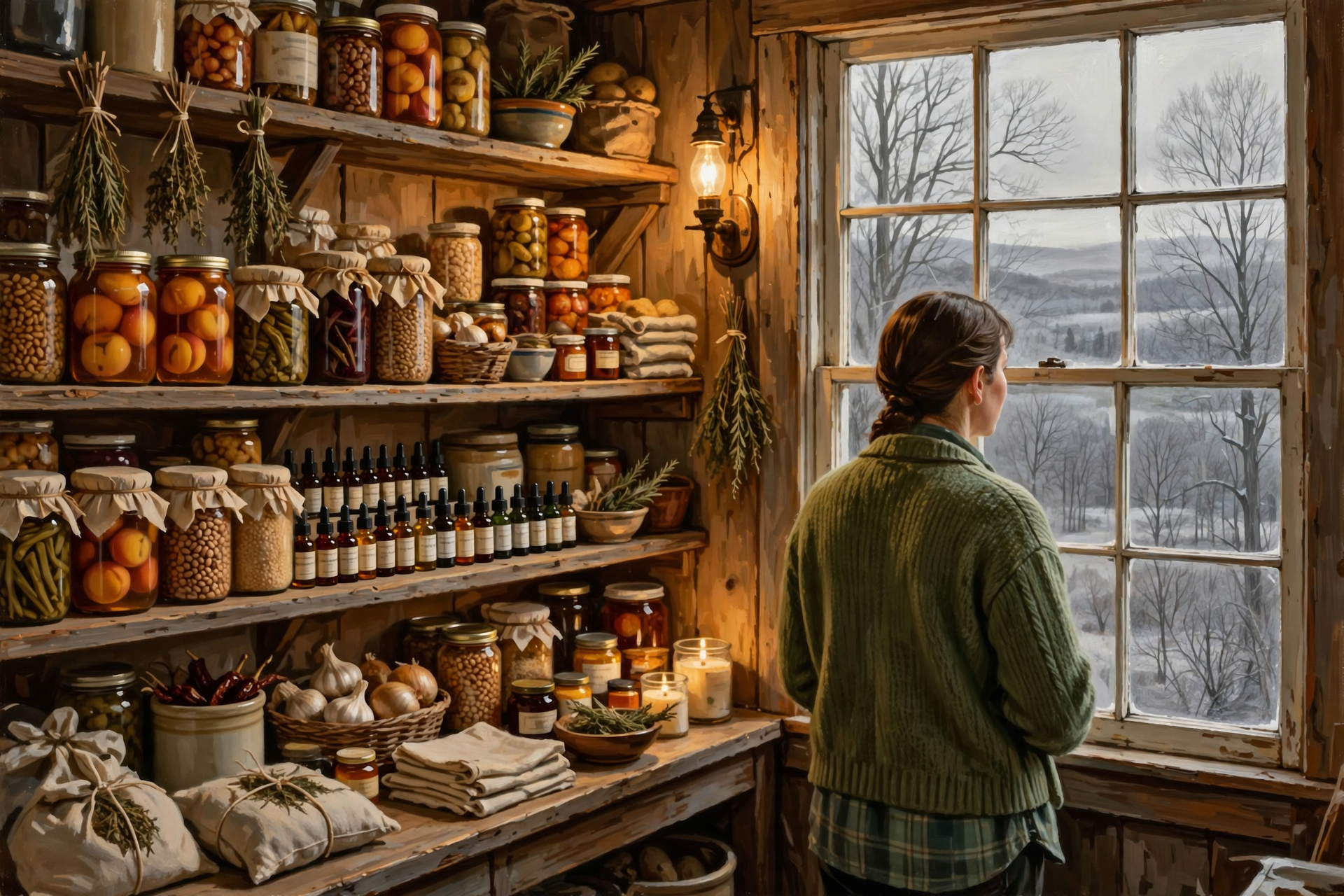
So, my fellow citizens of Dunlap, Fredonia, Cagle Mountain, and the surrounding Sequatchie Valley, I urge you to approach the coming winter with courage and restraint.
Do not rush to Walmart at the first mention of snow.
Do not wrestle your neighbor for the last package of hamburger buns.
Do not purchase enough toilet paper to survive a siege lasting longer than the Civil War.
Instead, prepare calmly and thoughtfully.
Lay in some groceries. Check your heating equipment. Make certain your family has what it needs.
And if you have not yet acquired a sourdough starter, you still have time to begin feeding one.
As for my family, I am pleased to report that we are practically ready for anything.
Our essential oils are organized alphabetically. Our grass-fed butter is on order. Clarence, the sourdough starter, is thriving and has recently doubled in size.
And somewhere up on Fredonia Mountain, a Sherpa is presumably making his way toward our house with a backpack full of organic provisions and a bill that would frighten a wealthy banker.
We are prepared for the worst.
Provided, of course, the electricity stays on, the refrigerator works, and Clarence survives the journey.
There is just one small problem.
We forgot to buy toilet paper.
I’ll see you at Walmart.
Editor’s Note: This article is satire. No sourdough starters were harmed in its preparation. No Sherpas are known to be operating commercial butter-delivery expeditions on Fredonia or Cagle Mountain, although we would be interested in hearing from any who are. The winter preparedness advice about food, water, heating safety, and checking on neighbors, however, is entirely serious.
Share a little mountain wisdom: If this story made you smile, share it with a friend or neighbor who has ever purchased six loaves of bread because the weather forecast mentioned a snowflake. And if you know somebody who needs help getting ready for winter, consider checking on them before the first storm arrives. That may be the healthiest winter preparation of all.
Know about an upcoming event or story in the Sequatchie Valley? Submit it here.




0 Comments