
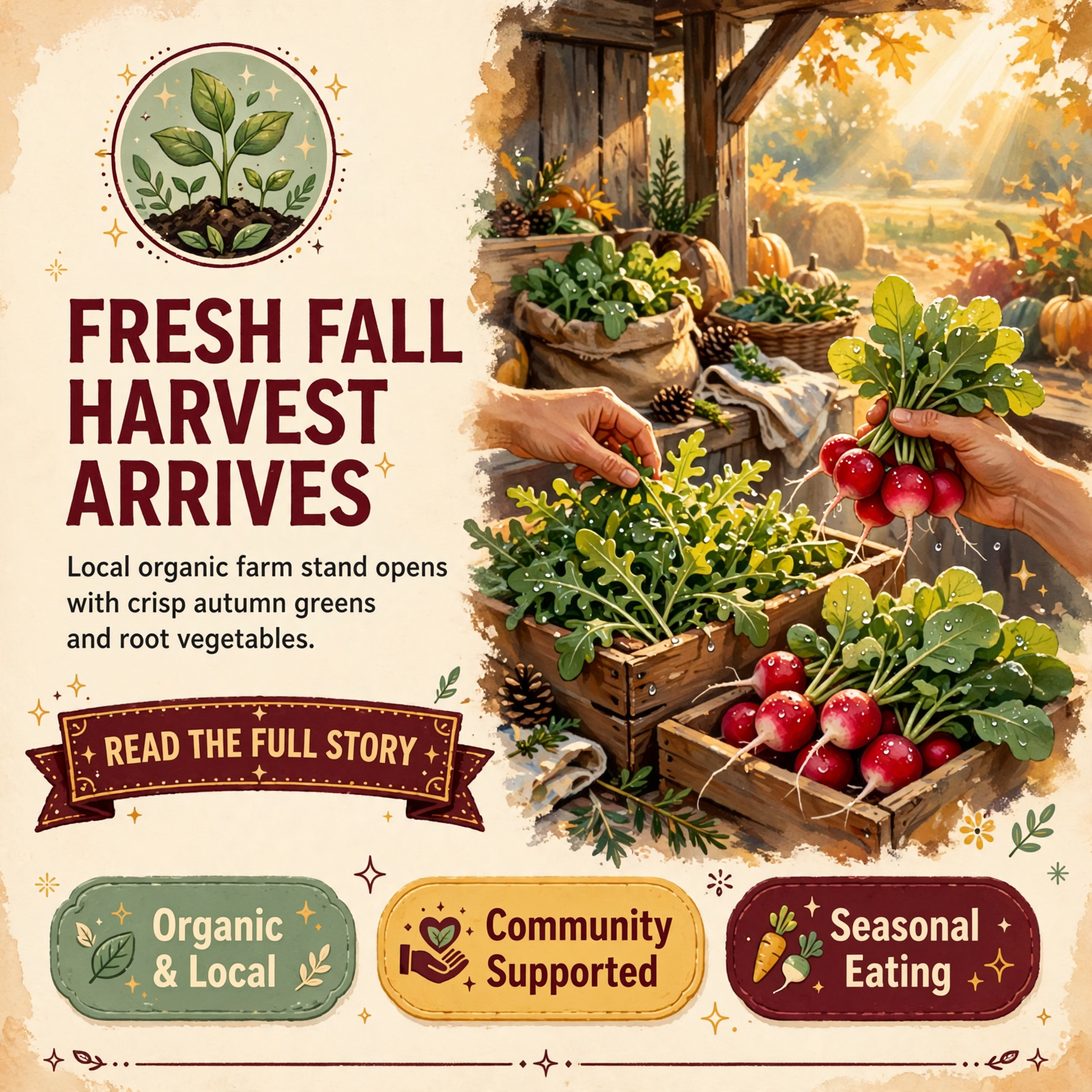
🥗 Fresh Fall Harvest Arrives at McCarty Farmstead Stand in Dunlap
As the growing season shifts toward autumn, McCarty Farmstead is bringing the first organic fall crops to its farm stand-a sign that local, seasonal eating is taking root in the region. For residents seeking fresh, locally grown produce, the arrival of these early-season greens and root vegetables marks the beginning of fall’s harvest cycle.
🌾 What’s Available Now
McCarty Farmstead is stocking its stand with organically grown arugula and radishes, available starting tomorrow morning between 6:30 and 7 a.m. The arugula-sold in 1-gallon bags at $4 each-will be kept in the cooler, while radishes are priced at $2 per cup. The farm notes that the arugula has been soft-rinsed and recommends a final rinse before use. Both items reflect the farm’s commitment to organic growing practices and seasonal production.
📍 Where to Find It
The farm stand is located at 168 Dempsey Rd in Dunlap, Sequatchie County. The early morning availability (6:30-7 a.m.) suggests the stand operates on a limited schedule during the harvest season-a detail worth confirming before your first visit if you’re planning to stop by.
💡 Why This Matters
The arrival of locally grown fall produce supports several community values. For families and home cooks, fresh arugula and radishes offer an alternative to grocery store produce, with the transparency of knowing exactly where the food was grown and how it was raised. For McCarty Farmstead, the successful harvest and sale of these crops validates the farm’s organic practices and helps sustain the operation through the season. For the broader Sequatchie Valley region, each local farm stand that thrives strengthens the local food network and keeps agricultural land in active production-a meaningful counterweight to development pressure and food system consolidation.
🤝 Community Connections
McCarty Farmstead joins a growing network of local farms and farm stands across the valley and nearby areas-including operations like Dar & Darryl’s Farmstand in Whitwell, Davis Family Farmstand in Whitwell, and Backyard Blessings Farm Stand in Whitwell-all working to meet local demand for fresh, sustainably grown food. These businesses create a web of relationships between growers, families, and the land itself. When residents choose to buy from McCarty Farmstead, they’re not just purchasing vegetables; they’re supporting a neighbor’s work and reinforcing the community’s capacity to feed itself.
❤️ Human Impact
For the McCarty family, the successful first fall harvest represents months of planning, planting, tending, and careful timing. The early morning stand hours reflect the realities of farm work-produce picked fresh and available before most people start their day. For customers, access to these vegetables means fresher food on the table, a direct connection to the grower, and the satisfaction of supporting local agriculture. For children and families new to seasonal eating, a farm stand like this becomes a touchpoint for understanding where food comes from and how the seasons shape what we eat.
🌱 Local Perspective
The Sequatchie Valley and surrounding Cumberland Plateau communities have a long agricultural heritage, but like many rural areas, local food production has faced pressure from consolidation and changing land use. The emergence of farm stands and CSA-style operations-including McCarty Farmstead‘s focus on organic practices-reflects a deliberate choice by some growers to serve local markets directly. This fall harvest is one small but meaningful sign that demand for local, organic produce is real enough to sustain farming operations in the region.
🎯 What Residents Should Know
- Availability: Tomorrow morning, 6:30-7 a.m. (confirm future hours with the farm)
- Location: 168 Dempsey Rd, Dunlap, Sequatchie County
- Products: Organic arugula ($4 per gallon bag) and radishes ($2 per cup)
- Preparation: Arugula should be rinsed again before use; radishes are ready to prepare
- Contact: Follow McCarty Farmstead on Facebook for updates on availability and seasonal offerings
📅 What Happens Next
As fall progresses, McCarty Farmstead will likely introduce additional seasonal crops-squash, greens, root vegetables, and other autumn staples typical of organic farms in the region. The early morning stand hours may shift as the season changes and daylight decreases. Residents interested in regular access to the farm’s produce should follow the farm’s social media for announcements about new items, hours, and any special offerings. The farm’s success with this first harvest will likely influence how much they expand production in future seasons.
💭 Community Questions Worth Considering
- How many households in your area currently buy from local farms or farm stands, and what barriers-if any-prevent more people from doing so?
- What role could local farms like McCarty Farmstead play in strengthening food security and resilience in the valley?
- How might regular access to fresh, local produce change eating habits and family food traditions over time?
- What support-whether customer loyalty, word-of-mouth, or community partnerships-helps small farms survive and thrive?
🌾 Long-Term Community Impact
If McCarty Farmstead and similar operations continue to grow and succeed, the long-term implications for the Sequatchie Valley could be significant. A thriving local food system can support agricultural employment, preserve farmland, improve food access and nutrition, strengthen community relationships, and create a sense of local identity and self-sufficiency. Over time, the cumulative effect of many families choosing local produce-even in small amounts-can shift economic activity, land use patterns, and how the community thinks about food, farming, and its own future.
🔗 Community Threads: The Farm-to-Table Relationship
At its heart, McCarty Farmstead‘s farm stand represents a direct relationship between grower and eater-a thread that has largely disappeared from modern food systems. When you buy arugula from McCarty Farmstead tomorrow morning, you’re participating in a centuries-old pattern of local commerce and trust. The farmer knows the land, the customer knows the grower, and both benefit from transparency and proximity. This thread strengthens when repeated: regular customers become familiar faces, the farm learns what people want, and the community develops confidence in local food sources. Over time, these individual transactions weave into a broader fabric of local resilience and mutual support.

0 Comments