
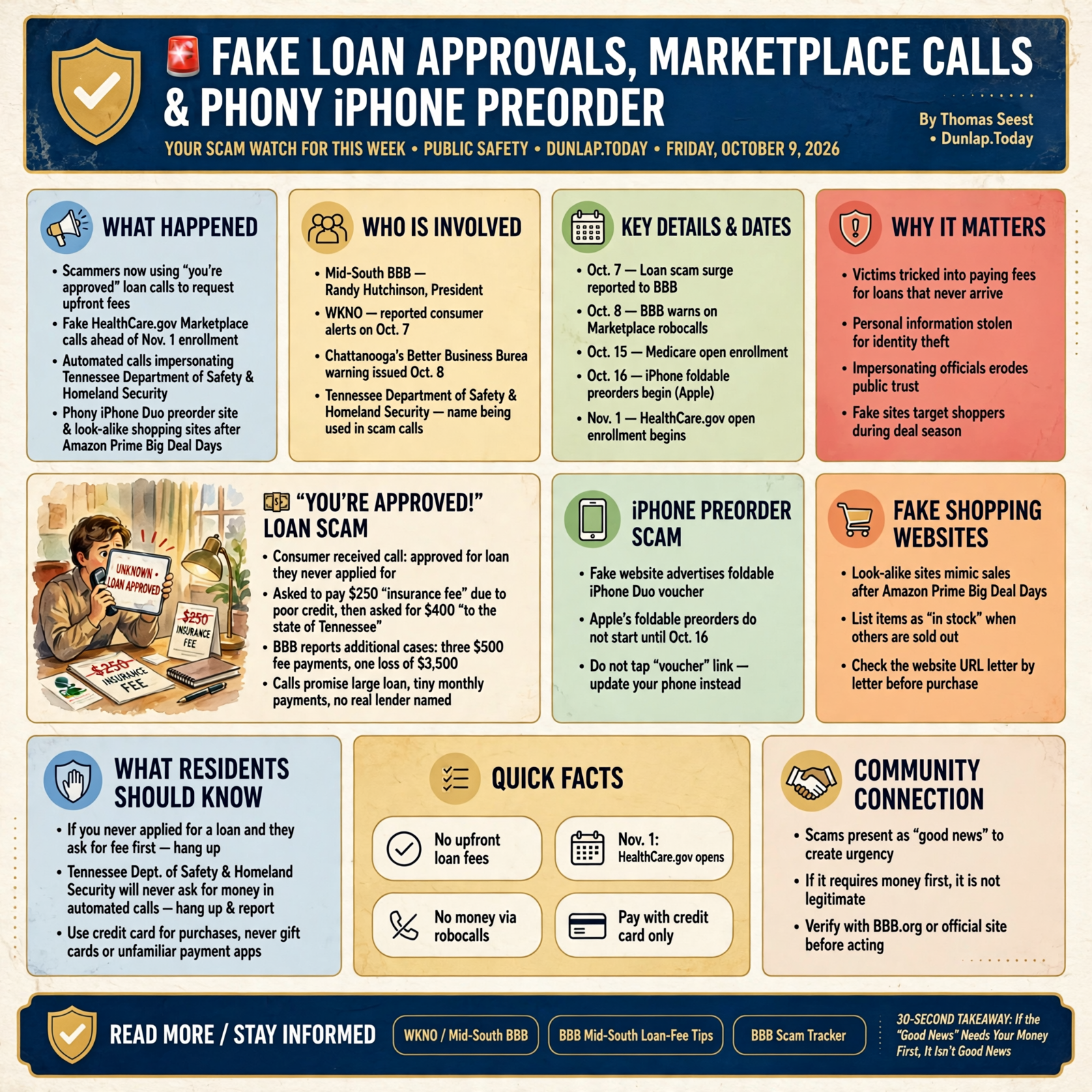
🚨 Fake Loan Approvals, Marketplace Calls and a Phony iPhone Preorder: Your Scam Watch for This Week

Or: If the “Good News” Needs Your Money First, It Isn’t Good News
A good scam works like a pecan shell game at the county fair. It doesn’t look like a trick. It looks like the prize you’ve been waiting for. This week the shells are dressed up as good news: a loan you “already won,” a cheaper health plan before open enrollment, a free foldable phone voucher and a shopping deal that somehow still has stock when nobody else does.
Here’s what’s on the line this week: fake “you’re approved” loan calls that ask for upfront fees, HealthCare.gov Marketplace tricks as Nov. 1 enrollment nears, an automated call scam using Tennessee Homeland Security’s name, a fake iPhone Duo preorder site that can poke at an outdated phone, and look-alike shopping websites still riding the wave after Amazon Prime Big Deal Days.
⏱️ What this means for you in 30 seconds
- Everyone: A loan you never applied for that asks for an “insurance” or processing fee first is a scam. Hang up.
- Marketplace shoppers: HealthCare.gov open enrollment starts Nov. 1. Type the site yourself. Real help won’t call you out of the blue and ask you to pay.
- Phone owners: Tennessee’s Department of Safety and Homeland Security will never ask for money through automated calls. Hang up and report it.
- iPhone folks: Apple’s foldable preorders don’t start until Oct. 16. Don’t tap a “voucher” link — update your phone instead.
- Online shoppers: Check the web address letter by letter. Pay with a credit card, not gift cards or weird payment apps.
💵 “You’re Approved!” for a Loan You Never Asked For

On Oct. 7, Mid-South BBB president Randy Hutchinson reported on WKNO that consumers are getting flooded with calls claiming they’ve been approved for loans they never applied for. Some are tricked into paying upfront fees for loans that never arrive. Others hand over personal details that can be used for identity theft.
One local consumer told BBB Scam Tracker they were “approved” but had to pay a $250 insurance fee because of poor credit. They paid it — then got asked for another $400 “to the state of Tennessee” because the loan was supposedly coming from out of state. That’s when the lightbulb went on. In a June BBB Mid-South column covering the same pattern, Hutchinson said other reports included three successive $500 fee payments and one loss of $3,500. Callers often leave voicemails with big loan amounts and tiny monthly payments, and they rarely name a real lender.
What it means for you: A real loan is like buying a used truck from a neighbor. You go looking for it. It doesn’t chase you down the driveway asking for cash before you’ve even kicked the tires. If you don’t remember applying, hang up. Don’t call unknown numbers back. Check any company at BBB.org, search the name with “scam” or “complaint,” and never share your Social Security number or bank info with an unsolicited caller. Real lenders don’t need a mystery “insurance” fee before they’ll talk to you.
👉 Read more (WKNO / Mid-South BBB) · BBB Mid-South loan-fee tips · BBB Scam Tracker
🏥 Marketplace Open Enrollment Starts Nov. 1. Let the Robocall Ring
Chattanooga’s Better Business Bureau reminded Valley readers on Oct. 8 that scammers gear up every open enrollment season. Medicare’s window still starts Oct. 15 (we covered that midweek), but here’s the piece that hasn’t gotten as much porch talk yet: HealthCare.gov Marketplace open enrollment begins Saturday, Nov. 1. Dec. 15 is the last day to enroll or change for coverage starting Jan. 1; Jan. 15 is the last day for coverage starting Feb. 1.
BBB Scam Tracker keeps seeing spoofed calls and texts that look like Medicare or a related agency. Some threatening robocalls claim to be from HealthCare.gov and say you must buy insurance or face a fine — then ask for personal information. One recent report described a text saying health benefits were “about to expire,” then a “representative” who wanted payment and bank verification. Another caller asked someone to dig out an old Medicare card and read numbers off it.
What it means for you: Shopping for a plan is like picking produce at the farmers market. You walk up to the booth you trust; you don’t follow a stranger who hollers from across the parking lot. Type HealthCare.gov yourself or call the Marketplace at 800-318-2596. Free, unbiased Marketplace “Assisters” won’t call you first and won’t charge you. Guard your Medicare number, Social Security number and bank info. Confirm any broker’s license with Tennessee’s Department of Commerce and Insurance before you share a thing.
👉 Read more (Chattanooga BBB via Times Free Press) · HealthCare.gov
📞 If Tennessee Homeland Security “Calls” Asking for Money, Hang Up

On Sept. 21, the Tennessee Department of Safety and Homeland Security (TDHS) warned Tennesseans about a new automated call scam using the department’s name. The department’s own message was plain: this is a scam, and TDHS will never ask for money through automated calls.
Advice from TDHS: don’t answer, don’t pay, hang up and report the caller. They pointed people to the FBI’s Internet Crime Complaint Center at ic3.gov.
What it means for you: Real state offices don’t run a bake sale over a robocall. If a recording says you owe the Department of Safety money, treat it like a coyote howling at the mailbox — noisy, not a dinner invitation. Hang up. Look up the department yourself if you’re worried about a real ticket or license issue. Then report the scam so the next neighbor gets fewer of these.
👉 Read more (TDHS alert via WSMV) · Report at IC3.gov
📱 A “Free” Foldable iPhone Voucher That Wants Into Your Phone
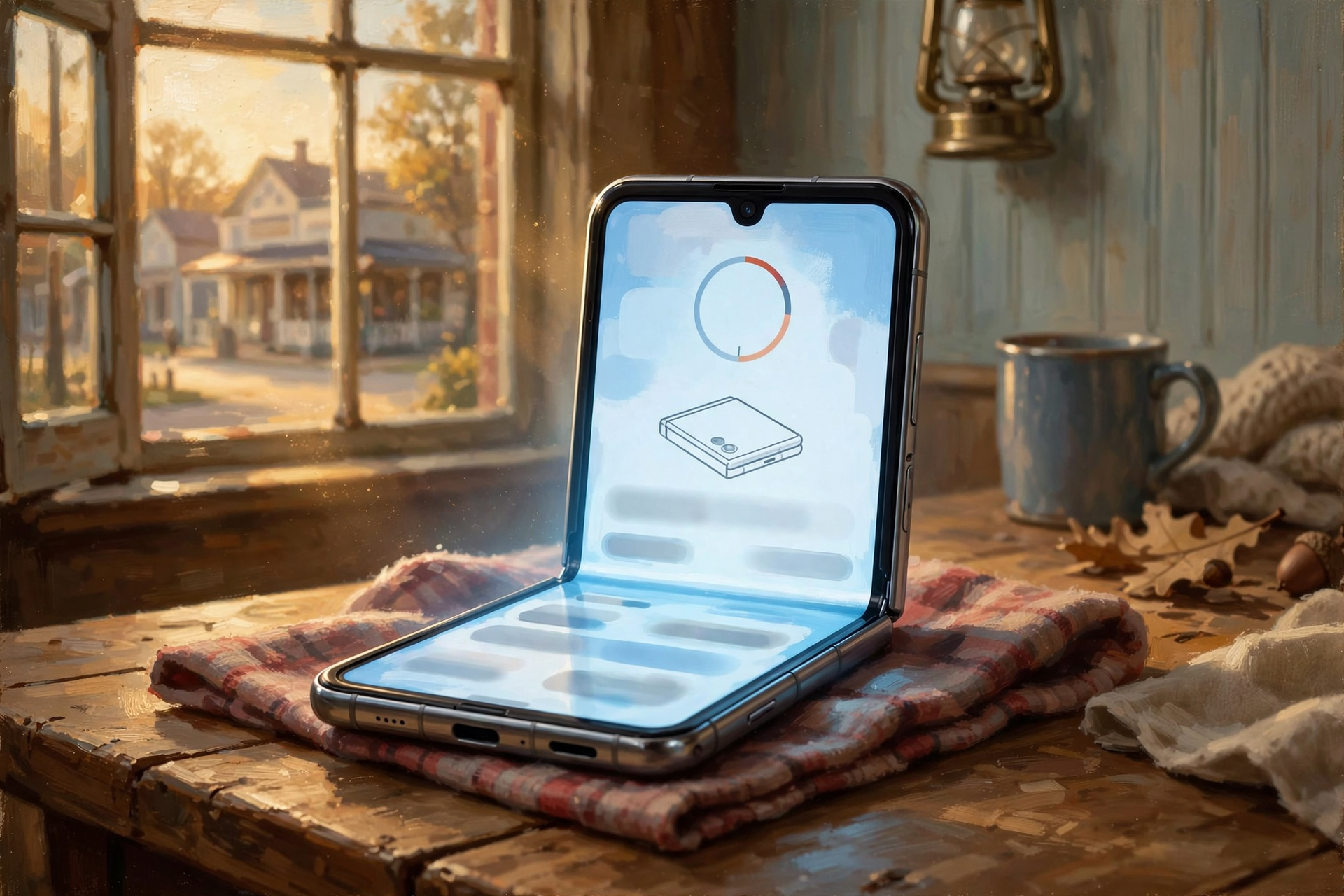
Apple’s first foldable phone, the iPhone Duo, doesn’t open for preorders until Oct. 16. But on Sept. 30, AARP warned about a fake website that already offers early orders, a $500 voucher and free AppleCare+. Cybersecurity firm Malwarebytes said the site copies Apple’s logo and copyright notice, uses a countdown clock to rush you and asks for a name, email and phone number.
Here’s the part that matters even if you never type a thing: Malwarebytes says hidden software can start trying to break into an iPhone as soon as the page opens if the phone is missing security updates. The attack tool, called DarkSword, targets weaknesses in older software and could reach saved passwords, notes, photos, messages and crypto wallet info. Apple says phones with up-to-date software are protected against the reported attacks. Malwarebytes examined the code but did not confirm that anyone’s information had already been stolen.
What it means for you: A free phone voucher from a stranger is like a “free” puppy that shows up with a bill for the kennel. Don’t tap the link. Open Settings → General → Software Update, install what’s waiting and turn on Automatic Updates. To learn about the Duo or order when preorders open, type apple.com yourself. If you already opened a shady page, update and restart the phone, change important passwords from a different device and turn on two-factor authentication.
👉 Read more (AARP: Watch Out for This New Apple iPhone Scam)
🛒 After the Big Sale Days, Double-Check Who You’re Buying From
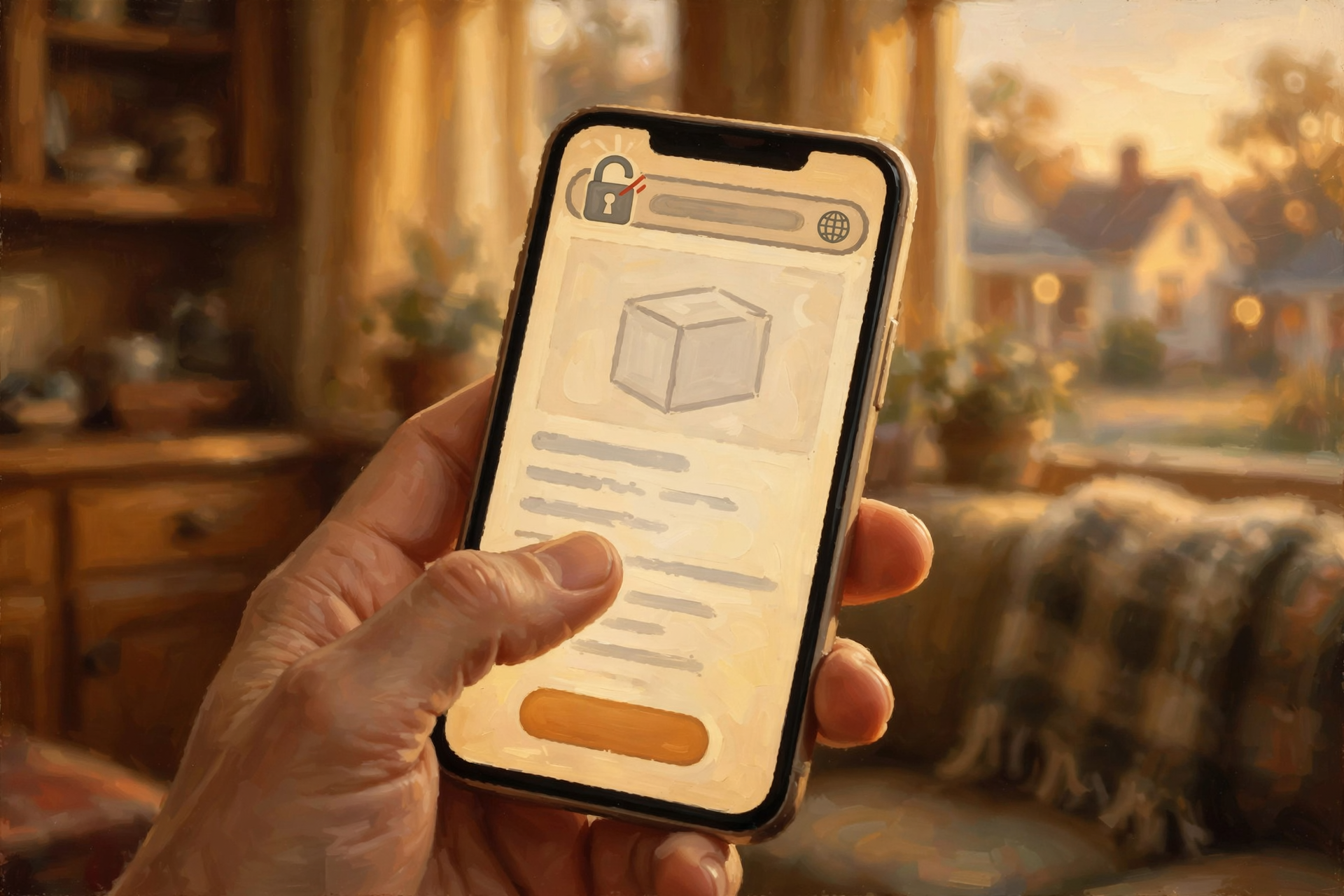
Amazon Prime Big Deal Days were Oct. 6–7, and the Better Business Bureau warned that online shopping scams are still the top local scam category for many communities. BBB Chicago’s Steve Bernas said scammers planned impostor Amazon websites timed to go live around the sale, hoping busy shoppers wouldn’t notice a hyphen, an extra letter or a slightly wrong domain name. Unsolicited texts and emails claiming to be from Amazon and asking for personal information are another common trick, along with phishing that pretends your card was compromised.
What it means for you: Shopping online after a big sale is like buying hay in a hurry before a freeze — fine if you know the farmer, risky if you follow a handmade sign into a ditch. Type the store address yourself. Look for https and the lock icon. Pay with a credit card so you can dispute a bad charge. Skip gift cards, prepaid cards and odd payment apps for strangers. If a site has the hottest item at half price when every store in Chattanooga is sold out, tip your hat and walk on.
👉 Read more (BBB shopping-scam tips) · BBB Scam Tracker
✅ Your Scam Watch Checklist for This Week

- ✅ Loan call you didn’t ask for? Hang up. Never pay an “insurance,” processing or “state” fee to get a loan.
- ✅ Don’t share your Social Security number or bank info with unsolicited callers.
- ✅ Marketplace shopping? Type HealthCare.gov or call 800-318-2596. Real Assisters don’t call first or charge you.
- ✅ Automated call claiming to be Tennessee Homeland Security and asking for money? Hang up. Report it at ic3.gov.
- ✅ iPhone Duo “voucher” or early preorder link? Don’t tap it. Update your phone and go to apple.com yourself after Oct. 16.
- ✅ Online shopping: check the URL letter by letter, use https, pay by credit card.
- ✅ Report scams to ReportFraud.ftc.gov, BBB.org/ScamTracker or Tennessee Consumer Affairs at 1-800-342-8385.
Practical rule: If the “good news” needs your money, your card number or your login before you even asked for help, it isn’t good news.
— Dunlap.Today
📚 Plain-English Scam Glossary

- Advance-fee loan scam: A crook promises a loan, then asks you to pay a fee first. The loan never comes.
- Impersonation scam: When someone pretends to be a government agency, bank, store or other trusted name.
- Marketplace (HealthCare.gov): The official website where people without Medicare or job-based coverage can shop for health insurance and check for savings.
- Open enrollment: The yearly window when you can sign up for or change certain health plans without a special reason.
- Assister / Navigator: A trained helper who can guide you through Marketplace enrollment for free. They won’t call you out of the blue asking for payment.
- Spoofed caller ID: When a scammer makes your phone show a fake name or number so the call looks local or official.
- Phishing: A fake text, email or website that tries to trick you into handing over passwords, card numbers or personal details.
- Software update: A free fix from Apple (or another company) that closes security holes on your phone.
- Two-factor authentication: An extra step — like a code texted to your phone — that helps stop someone who steals only your password.
- Impostor website: A look-alike site with a slightly wrong address that steals your money or login.
❓ Frequently Asked Questions

Would a real lender call to say I’m approved for a loan I never applied for?
Be very skeptical. Mid-South BBB says these “you’re approved” calls are a common scam pattern. If you didn’t apply, hang up. If you did apply somewhere, call the lender back using a number from their official website or your paperwork — not from the voicemail.
Is it ever OK to pay a fee before I get a loan?
BBB Mid-South warns that “insurance,” processing and similar upfront fees demanded by unsolicited callers are classic red flags. Walk away from anyone who says you must pay before the loan can be released.
When does HealthCare.gov open enrollment start?
Chattanooga BBB notes it begins Nov. 1. Dec. 15 is the last day for coverage starting Jan. 1; Jan. 15 is the last day for coverage starting Feb. 1. Use HealthCare.gov or call 800-318-2596.
Would Tennessee Homeland Security call me asking for money?
No. TDHS says it will never ask for money through automated calls. Hang up, don’t pay and report the caller at ic3.gov.
I opened a weird iPhone Duo page. What should I do?
Update your iPhone (Settings → General → Software Update), restart it, change important passwords from another device and turn on two-factor authentication. Report the scam at ic3.gov. AARP’s Fraud Watch Network Helpline is free at 877-908-3360.
How do I tell a real shopping site from a fake one?
Type the address yourself, check spelling carefully, look for https and a lock icon, and be wary of prices that are too good when every store is sold out. Prefer a credit card so you can dispute charges.
Who can I call to talk it over?
AARP’s Fraud Watch Network Helpline is free at 877-908-3360, Monday through Friday, 8 a.m. to 8 p.m. Eastern (7 a.m. to 7 p.m. Central). You can also call Tennessee Consumer Affairs at 1-800-342-8385 or your sheriff’s non-emergency line.
🔗 Other Resources

- HealthCare.gov: Official Marketplace enrollment
- FTC: Report a scam at ReportFraud.ftc.gov
- FBI Internet Crime Complaint Center (IC3.gov)
- BBB Scam Tracker: Look up and report scams
- Tennessee AG: Scams, Schemes & Swindles
- AARP Fraud Watch Network Helpline (877-908-3360)
- Apple.com: Official product and software update information
🌄 Take a Breath. Real Help Will Wait for You

Every scam on this week’s list has the same tell: it can’t stand to wait. The honest lender will still be there when you call them back. The real Marketplace Assister will still answer next week. Your phone will be safer after one quiet software update. Only the crook needs you to move fast.
Share this with someone shopping for insurance, hunting a deal online or ignoring a weird robocall. We’ll keep watch and bring you what’s new each week. Read Dunlap.Today and sign up for our newsletter for plain-English scam alerts and Valley news.



0 Comments