
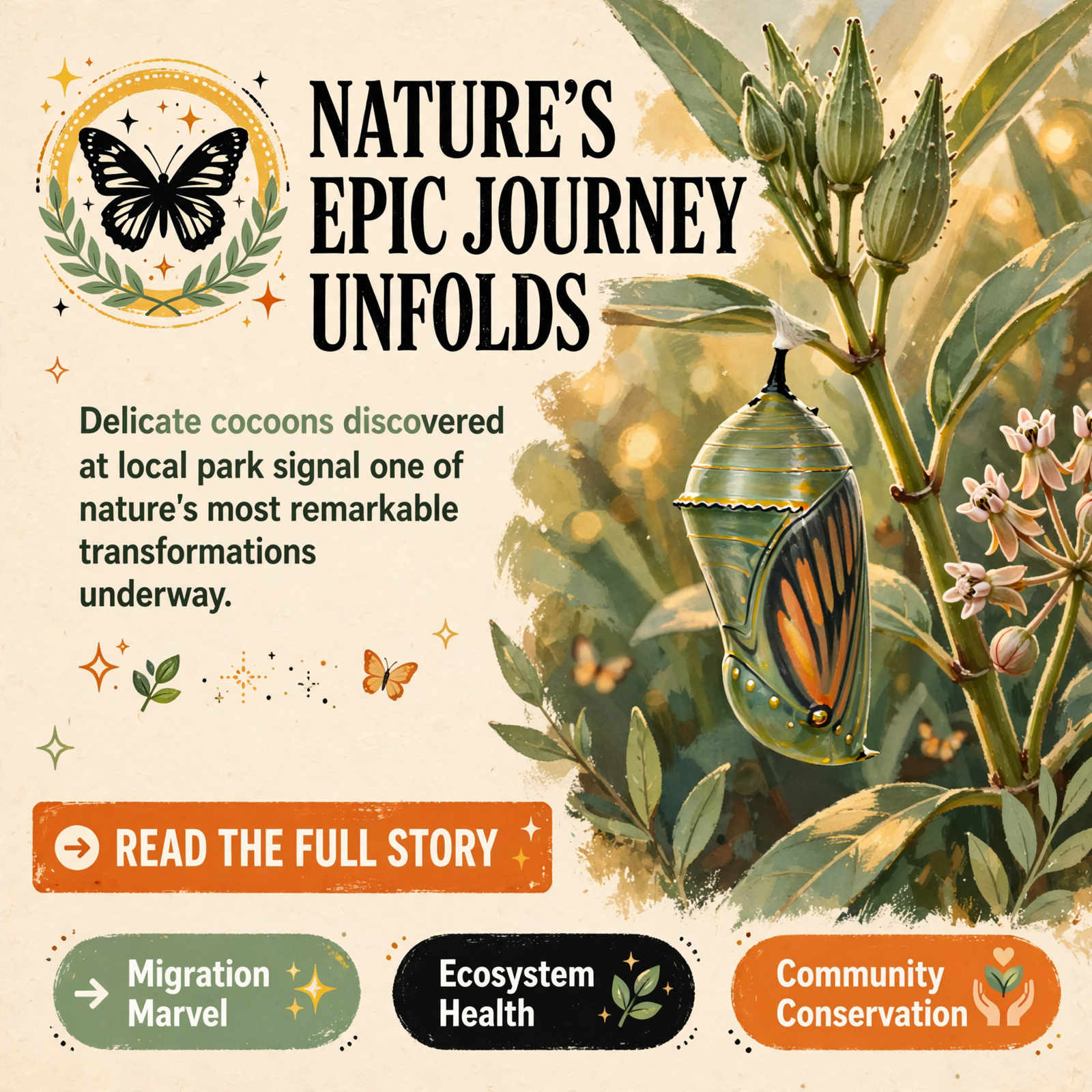
🦋 Eastern Monarch Cocoons Spotted at Harrison Bay State Park
Park staff at Harrison Bay State Park in Lake Crest have recently discovered Eastern Monarch cocoons on the grounds-a sign that one of nature’s most remarkable journeys is underway. As fall migration season peaks across East Tennessee, the park is hosting these delicate chrysalises as they prepare to emerge and continue their epic journey south.
📍 What’s Happening at the Park
This past week, Harrison Bay State Park staff noticed Eastern Monarch cocoons around the property. When these butterflies emerge from their chrysalises, they will join thousands of monarchs heading south for the winter. Their destination: the oyamel fir forests of Central Mexico, where the species waits out the cold months before returning north in spring. 🌲
The presence of these cocoons at Harrison Bay is a natural occurrence tied to the park’s location along Chickamauga Lake and its mix of native plants-exactly the kind of habitat monarchs need during their vulnerable transformation stages.
❤️ Why This Matters to the Community
Monarch butterflies are more than beautiful visitors-they’re an indicator of ecosystem health. Their presence at Harrison Bay suggests the park’s natural environment is supporting wildlife during a critical time. For residents and visitors who care about local conservation, this is encouraging news. The park’s role as a refuge for migrating monarchs connects the Sequatchie Valley region to a continental-scale natural phenomenon that links Tennessee to Central Mexico. 🌍
Monarchs face significant challenges during migration, including habitat loss, climate change, and pesticide use. Parks like Harrison Bay that maintain native plants and minimize chemical use become vital rest stops. When local outdoor spaces support these journeys, they strengthen the broader ecological network that benefits all wildlife-and ultimately, the communities that depend on healthy natural systems.
🔍 A Closer Look at Monarch Migration
The Eastern Monarch migration is one of nature’s most extraordinary animal behaviors. A single generation of monarchs born in late summer undertakes a multi-generational journey spanning thousands of miles. The butterflies spotted at Harrison Bay are part of this fall migration wave, moving south as temperatures drop and food sources become scarce in the north. Unlike most butterflies, these fall-generation monarchs live much longer-up to eight months-allowing them to survive the winter in Mexico and return to breed in spring. ✨
Park staff documented the cocoons and shared images with visitors, helping raise awareness about this natural cycle. By observing and reporting these sightings, Harrison Bay contributes to citizen science efforts that help researchers track monarch populations and migration patterns across the continent.
🌱 Community Connections and Opportunities
For visitors to Harrison Bay State Park, the presence of monarchs offers a chance to witness nature’s cycles firsthand. Families, photographers, naturalists, and outdoor enthusiasts can observe the park during peak migration season and learn about the delicate balance required to support these journeys. 📸
Local schools and nature education groups may find value in visiting the park during monarch season to teach students about migration, metamorphosis, and habitat conservation. The park’s documented cocoons provide a real, tangible example of ecological interconnection-something that resonates far beyond the classroom.
Residents interested in supporting monarchs year-round can also consider planting native milkweed and nectar plants in their own yards-the primary food sources monarchs depend on. This kind of individual action, multiplied across the community, strengthens the network of habitat that makes migration possible.
🗓️ What Residents Should Know
If you visit Harrison Bay State Park to observe the monarchs, keep these tips in mind: look for chrysalises on native plants and trees, especially milkweed species; observe from a distance to avoid disturbing the delicate transformation process; and take photos if you’d like to document what you see. Park staff welcome observations and may be interested in hearing about additional sightings. 📞
For more information about Harrison Bay State Park, its facilities, and seasonal activities, contact the park directly or visit the Tennessee State Parks website. The park offers camping, boating, fishing, and day-use recreation along Chickamauga Lake year-round.
🔮 What Happens Next
Over the coming weeks, the monarch cocoons at Harrison Bay will complete their transformation. Visitors may have the opportunity to witness butterflies emerging and preparing for their southbound flight. Park staff will likely continue monitoring and documenting these sightings, contributing to the broader scientific understanding of monarch migration patterns in Tennessee.
As winter approaches, the monarchs will depart for Mexico, and Harrison Bay will return to its quieter season. But the cycle will repeat next spring when a new generation of monarchs heads north, potentially passing through the park again on their way to breeding grounds across North America.
💭 Questions Worth Considering
- How can local residents and businesses support monarch habitat year-round, not just during migration season?
- What role can community parks and outdoor spaces play in broader conservation efforts across the region?
- How might climate change or habitat loss in the Sequatchie Valley and surrounding areas affect monarch migration patterns in the future?
- Are there opportunities for local schools or nature groups to partner with Harrison Bay on monarch education and citizen science projects?
🌍 Long-Term Community Impact
The monarch cocoons at Harrison Bay represent something larger than a single seasonal event. They reflect the park’s value as a conservation asset for the region and a living classroom for understanding ecological interconnection. As climate change and habitat loss threaten monarch populations globally, local parks that maintain healthy ecosystems become increasingly important. 🌿
For the Sequatchie Valley and surrounding communities, supporting these natural cycles strengthens local identity as a region that values outdoor recreation, wildlife, and environmental stewardship. It also creates opportunities for education, tourism, and community pride-all rooted in the simple act of protecting the natural spaces where monarchs and other wildlife can thrive.
🧵 Community Threads: The Park-Visitor-Nature Connection
The Park as Ecological Refuge: Harrison Bay State Park‘s role extends beyond recreation. By maintaining native plants and minimizing chemical use, the park becomes part of a continental network of habitats that monarchs depend on. This thread connects individual park visitors to a global conservation story-and reminds residents that their local outdoor spaces matter far beyond their immediate community.
Citizen Science and Shared Observation: When park staff document monarch cocoons and share their findings, they invite the community into the work of understanding and protecting wildlife. Visitors who observe and report sightings become part of a larger scientific effort. This thread strengthens the relationship between people and nature, turning casual park visits into meaningful participation in conservation.
Seasonal Rhythms and Community Awareness: The monarch migration connects the Sequatchie Valley to seasonal cycles that have shaped human and animal life for millennia. By paying attention to these natural events, residents deepen their connection to place and time-and to the broader web of life that sustains the region. This awareness often leads to greater care for local ecosystems and stronger community commitment to environmental stewardship.

0 Comments