
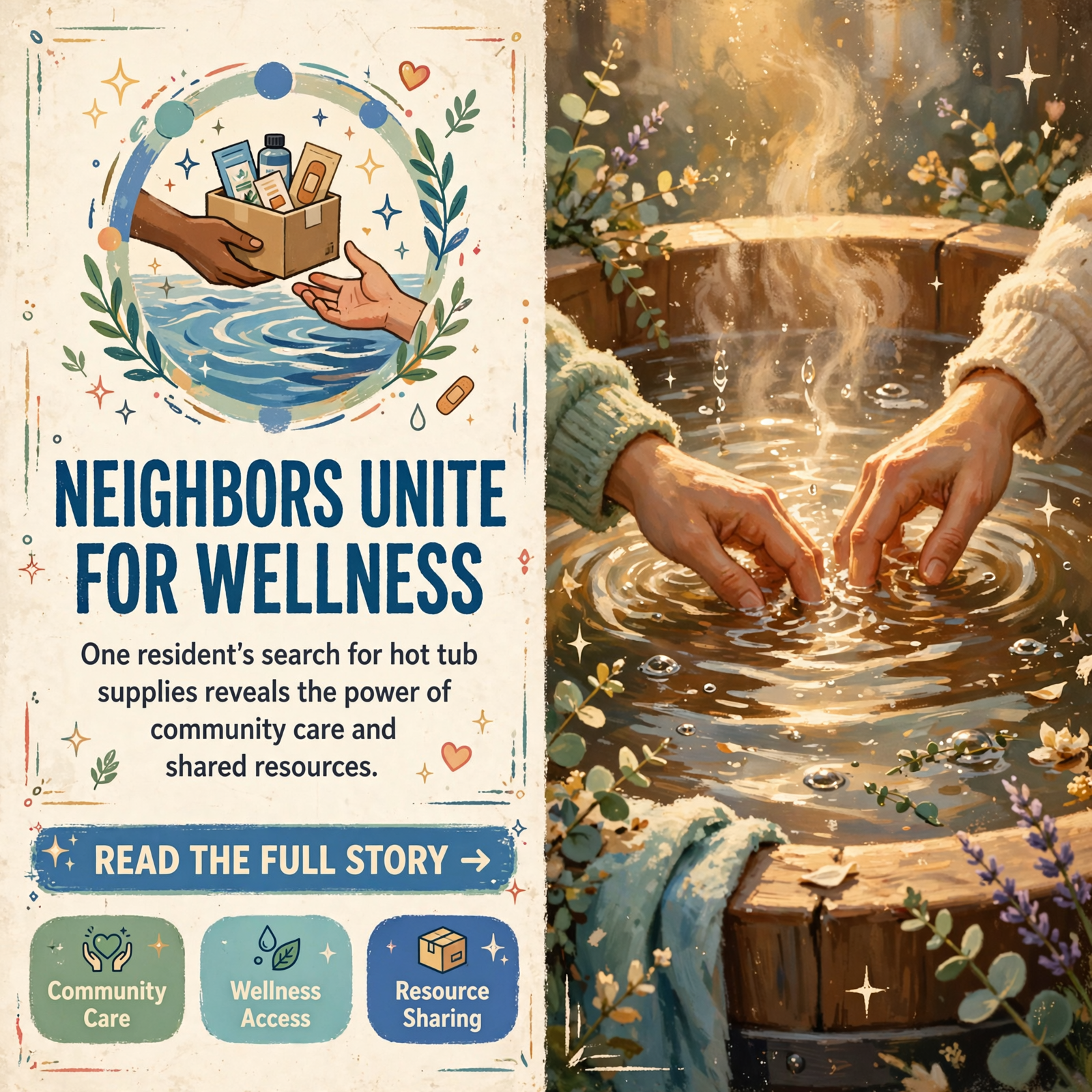
🛁 Community Member Seeks Hot Tub Supplies for Pain Therapy
A local resident is reaching out to neighbors for help setting up a free hot tub this weekend-one that will be used for pain therapy and wellness. The search highlights how community members often turn to local networks when they need practical support for health and wellness projects.
❤️ What’s Happening
Linsey Rhodes is looking for donated or unused hot tub chemicals, a 78-inch square hot tub cover, and salt supplies to convert the hot tub to a salt system with a salt generator. The hot tub itself is being given to her this weekend, and she hopes to have it ready for pain therapy use. She’s asking community members to share any supplies they no longer need.
💡 Why This Matters
Hot tub therapy is a recognized wellness practice for managing chronic pain, arthritis, muscle tension, and recovery from injury. For residents dealing with ongoing pain or mobility challenges, access to warm-water therapy can improve quality of life without requiring expensive spa memberships or medical interventions. When community members share resources and supplies, they make wellness more accessible to neighbors who might otherwise go without.
🤝 Community Connections
This request reflects a strong local tradition of neighbors helping neighbors solve practical problems. Community members in the area regularly share tools, supplies, and resources through local networks and social groups. The willingness to ask for and offer used items also supports sustainable practices-keeping supplies in use rather than in landfills-while building relationships across the community.
👥 Human Impact
For someone managing chronic pain or recovering from injury, a home hot tub can mean the difference between managing symptoms independently and seeking costly medical treatments. By pooling community resources, neighbors make wellness tools available to people who need them most. The effort also creates small moments of connection-someone learning that a neighbor cares enough to donate supplies, or a community member discovering they can help solve a real problem.
📍 Local Perspective
In rural and valley communities, where medical specialists and wellness facilities may be farther away, home-based wellness solutions become especially valuable. Community members often rely on shared knowledge and donated resources to fill gaps in local services. This kind of peer-to-peer support is a hallmark of how tight-knit communities adapt to distance and limited resources.
🔗 Community Threads
The Neighbor-to-Neighbor Resource Network: This post illustrates an invisible but vital thread in community life-the informal system through which neighbors share tools, supplies, and knowledge. When someone asks for hot tub chemicals or a cover, they’re not just seeking objects; they’re activating a network of people who know each other, trust each other, and believe in helping solve practical problems together. Understanding this thread helps residents see that community strength isn’t just about formal organizations; it’s about the everyday willingness to ask and offer.
Wellness and Self-Care as Community Values: The request also reveals how residents prioritize health and pain management within their own means. When community members support each other’s wellness goals-whether through shared resources, advice, or donated supplies-they strengthen the collective understanding that health matters and that neighbors care about each other’s wellbeing.
✨ What Residents Should Know
If you have unused hot tub chemicals, a 78-inch square cover, or salt supplies you’re willing to donate, reaching out through local community groups is an effective way to connect with people who need them. Posts like this one often generate responses from neighbors who are glad to see supplies find a good use. Community members interested in similar wellness projects may also benefit from knowing that neighbors are willing to share resources and advice.
🗓️ What Happens Next
The hot tub is expected to arrive this weekend, so timing is important for anyone who wants to contribute supplies. Community members who respond may help get the system up and running quickly. As the project develops, neighbors may learn what worked well-and what challenges arose-which could help others tackle similar projects in the future.
💭 Community Questions
- How often do community members in your area share resources and supplies through local networks, and what kinds of items circulate most?
- What wellness practices or health tools do you think more neighbors would benefit from if supplies and knowledge were more widely shared?
- Are there other ways your community could strengthen peer-to-peer support for health and wellness goals?
- What barriers prevent some residents from accessing wellness resources, and how might community sharing help bridge those gaps?
🌱 Long-Term Community Impact
When communities normalize sharing resources for wellness and health, they create a culture where people feel comfortable asking for help and offering support. Over time, this builds resilience-residents know they can rely on neighbors, and neighbors know their contributions matter. It also reduces waste and makes wellness more equitable, ensuring that people with limited budgets aren’t left out of practices that could improve their quality of life. Strong resource-sharing networks also create informal knowledge exchanges; as people help each other with projects, they learn from each other and build deeper relationships.
🤔Source
Linsey Rhodes – Looking for used hot tub chemicals, a 78-inch square hot tub cover, or salt hot tub supplies for pain therapy.



0 Comments