
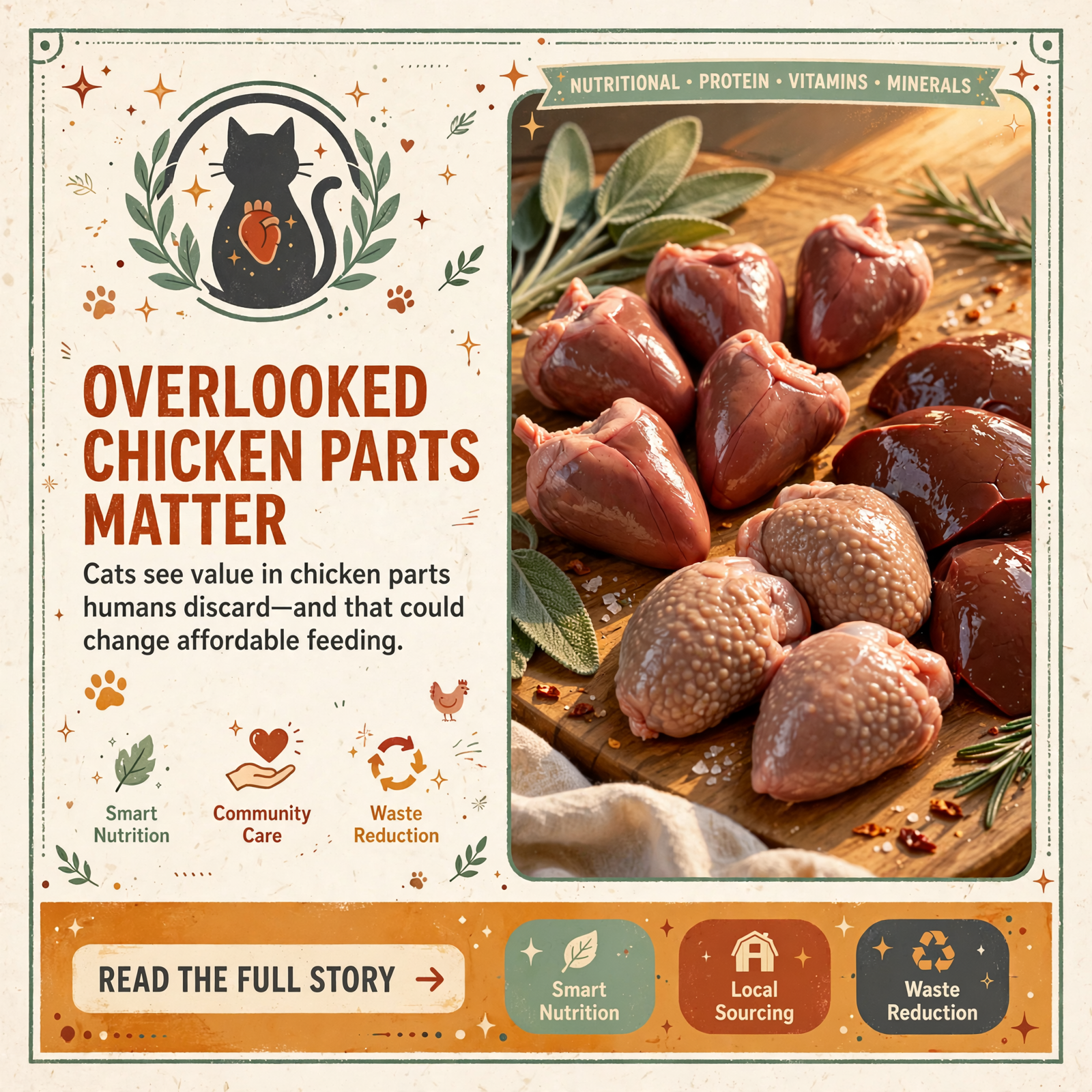
🐔 Why Your Cat Might Want the Parts of the Chicken You Don't
🐾 The Scaredy Cat Project — Article #5
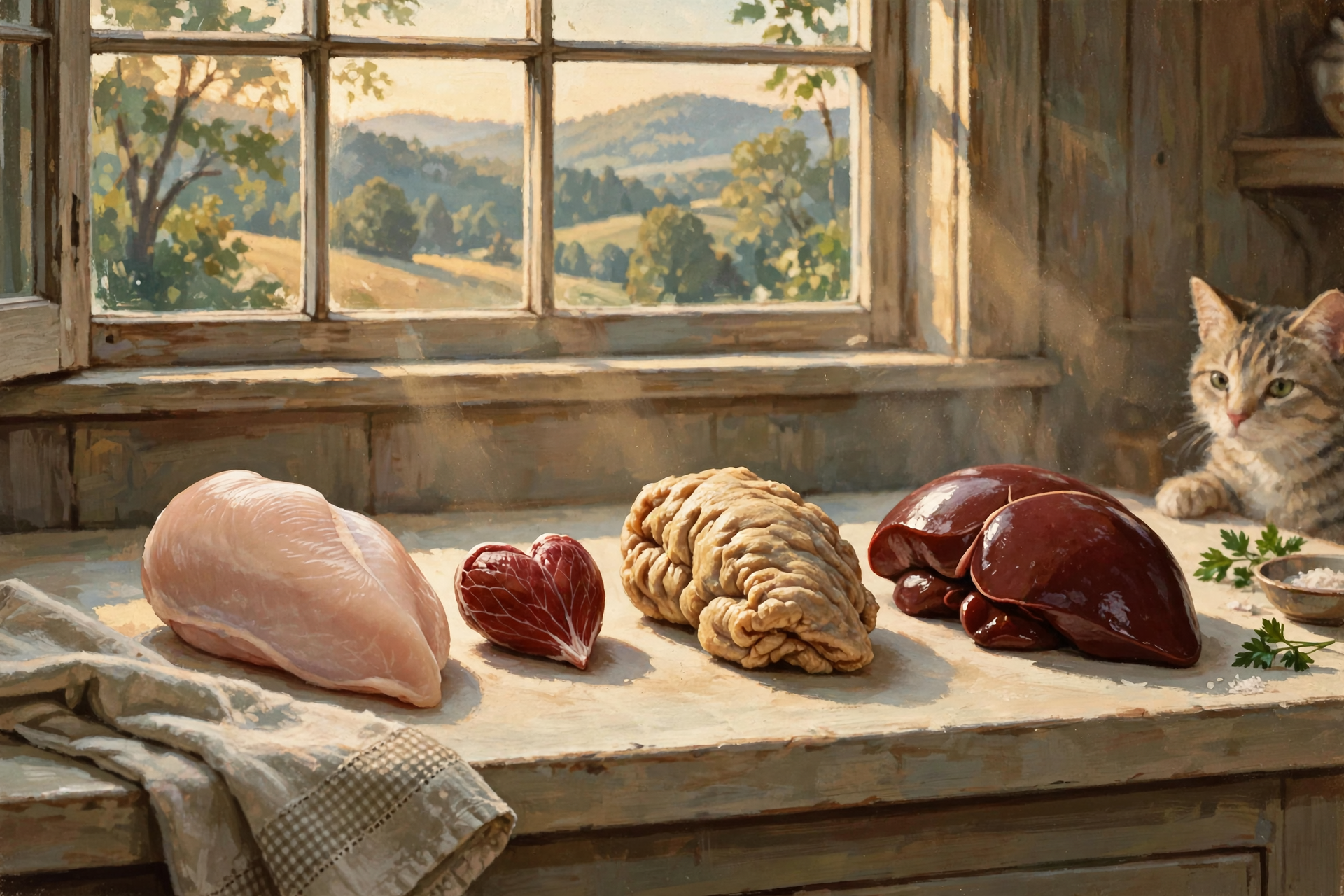
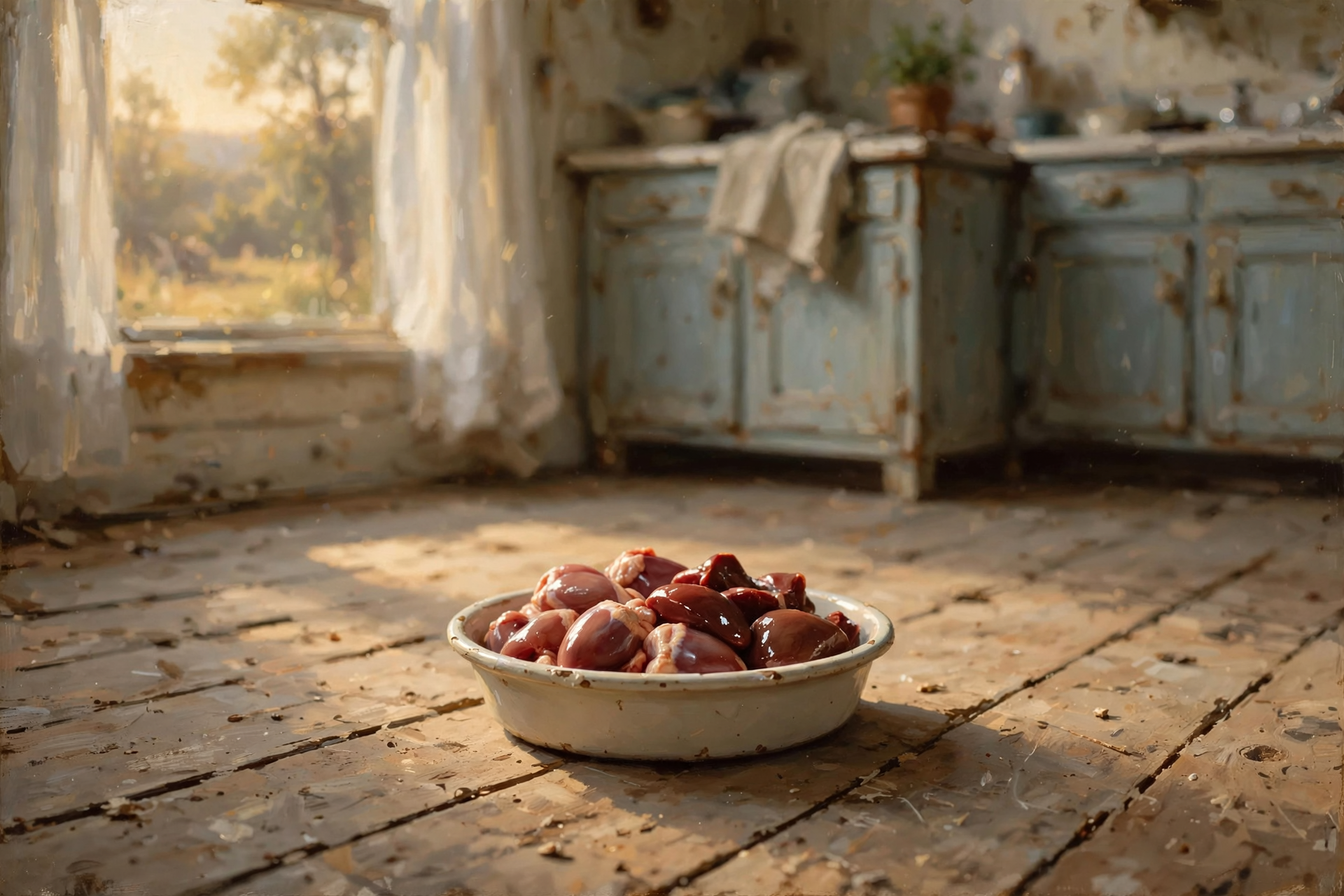
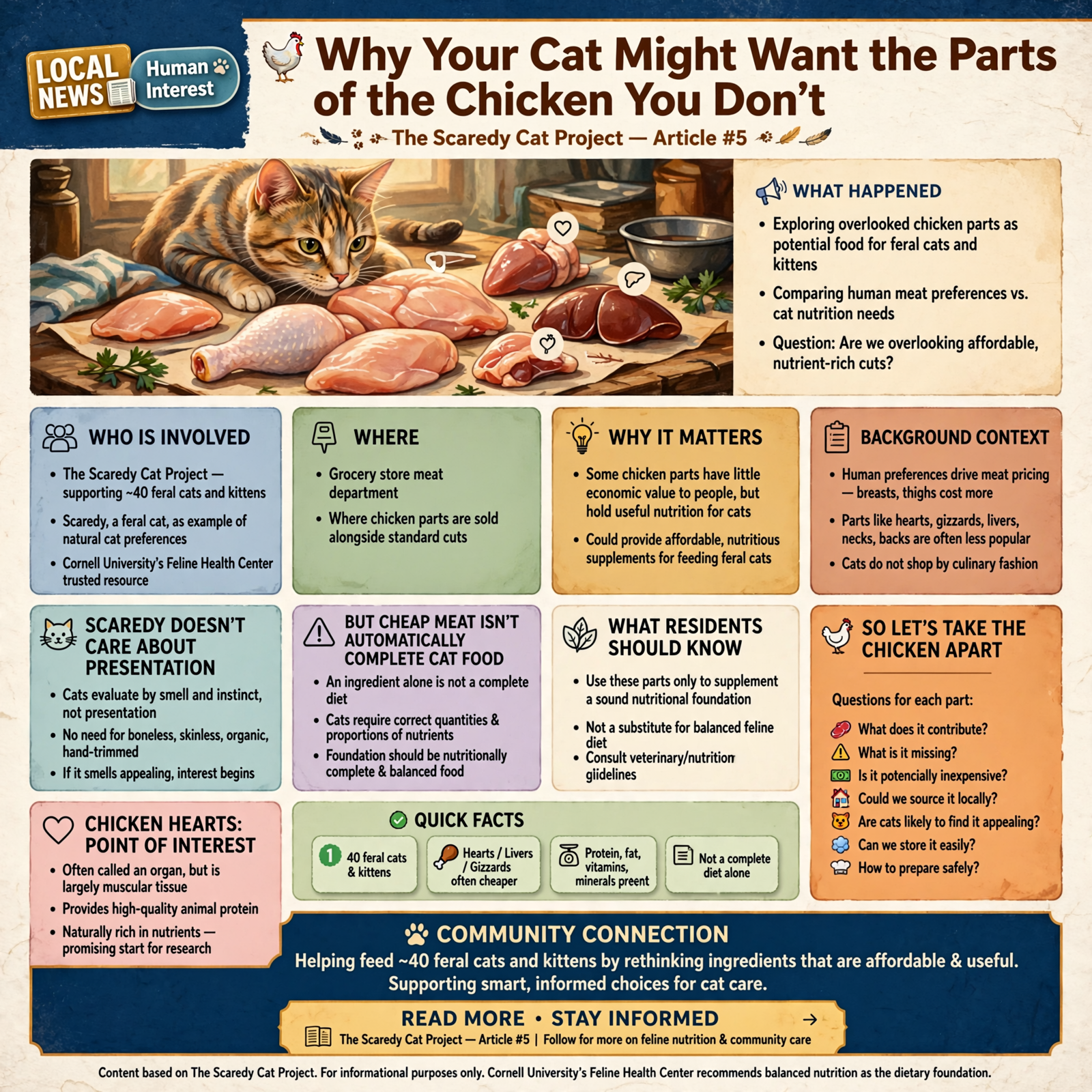
If you put a chicken breast, a chicken heart, a gizzard, and a liver on the kitchen counter, I suspect most people would have a pretty clear idea which one they would prefer for supper.
The cat may have an entirely different opinion.
That’s one of the things that makes this part of The Scaredy Cat Project so interesting.
Some of the parts of an animal that have relatively little economic value to people can still contain useful protein, fat, vitamins, minerals, and other nutrients.
That raises an obvious question for somebody trying to help feed roughly 40 feral cats and kittens:
Are we overlooking some of the most useful—and potentially affordable—parts of the chicken?
🥩 We Humans Have Some Expensive Preferences
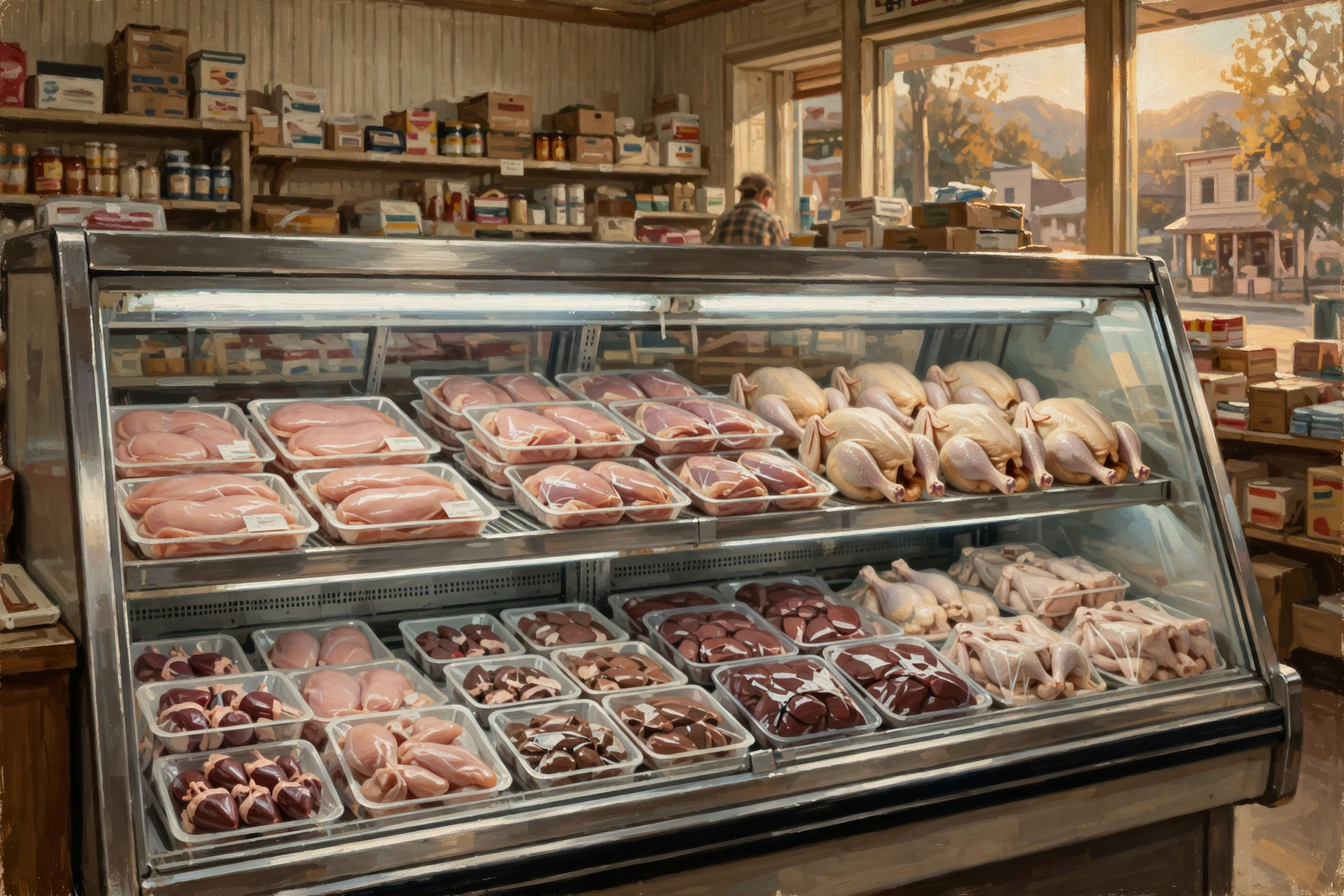
Walk through a grocery store meat department and you’ll see the economics of human preference everywhere.
Boneless skinless chicken breasts generally command one price.
Thighs another.
Whole chickens another.
Then somewhere nearby you may find packages containing:
- ❤️ Chicken hearts
- 🍗 Gizzards
- 🫀 Livers
- 🦴 Necks
- 🍖 Backs
Those parts aren’t necessarily inexpensive because they’re nutritionally worthless.
They’re often inexpensive because people don’t want them as much.
Cats don’t shop according to human culinary fashion.
And that difference might be useful.
🐱 Scaredy Doesn’t Care About Presentation
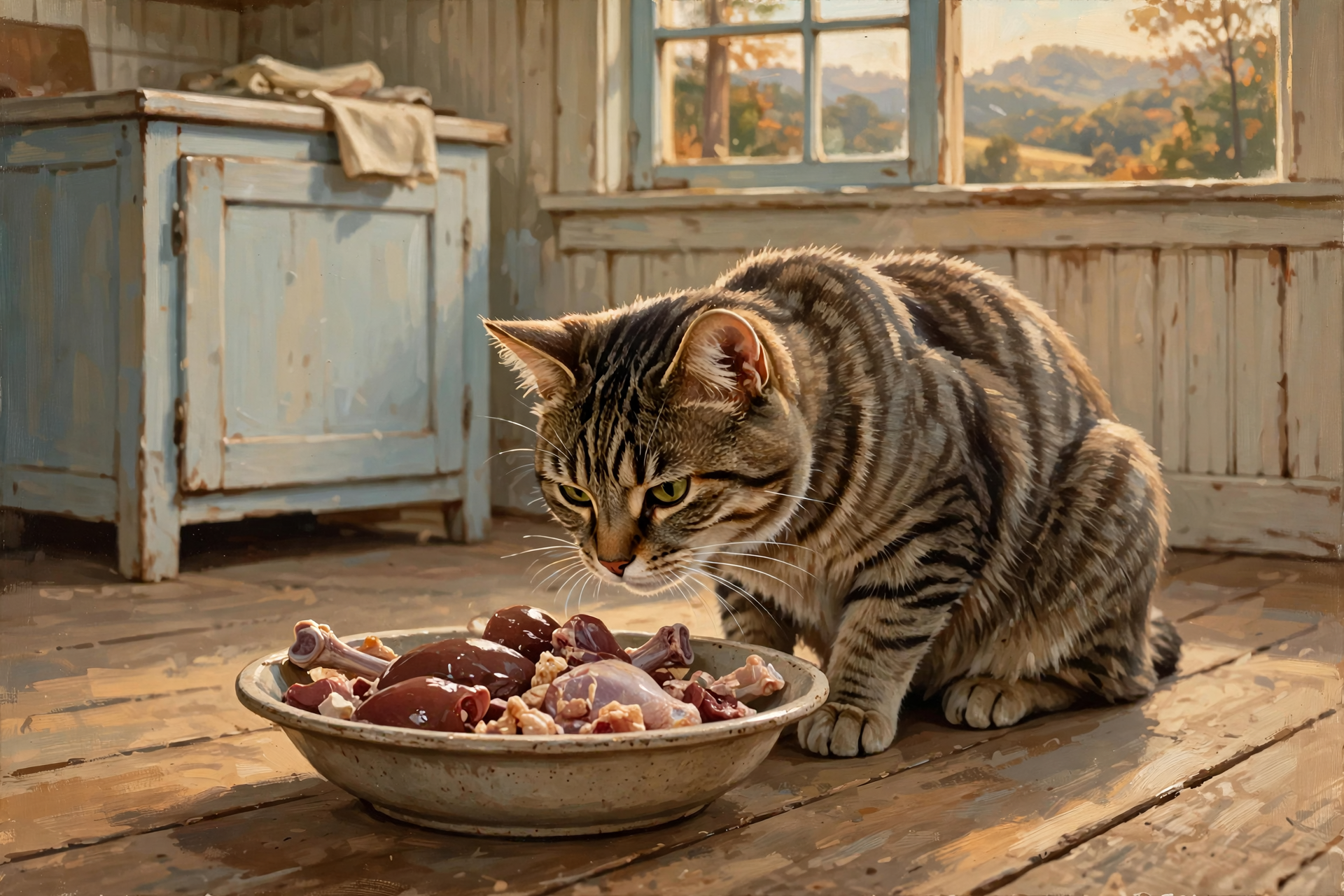
Scaredy has never once asked whether her meal was boneless, skinless, organic, air-chilled, hand-trimmed, or attractively arranged on a plate.
Her evaluation process appears considerably simpler.
Does it smell like something I want?
If yes, further investigation begins immediately.
This may give cats an economic advantage over us.
People frequently pay more for the parts of an animal that are easiest and most familiar to cook.
Cats may find value in parts we overlook.
⚠️ But Cheap Meat Isn’t Automatically Complete Cat Food
We established something important in the previous article.
A useful ingredient is not necessarily a complete diet.
Chicken hearts can be nutritious.
Chicken liver can be nutritious.
Gizzards can be nutritious.
Chicken thighs can be nutritious.
But none of those statements means we should dump one ingredient into a bowl every day and assume we’ve solved feline nutrition.
Cornell University’s Feline Health Center recommends nutritionally complete and balanced food as the dietary foundation because cats require the correct quantities and proportions of numerous nutrients.
That’s going to remain one of our basic rules throughout The Scaredy Cat Project:
We’re looking for ingredients that can intelligently supplement a sound nutritional foundation—not random foods that merely fill a stomach.
🐔 So Let’s Take the Chicken Apart
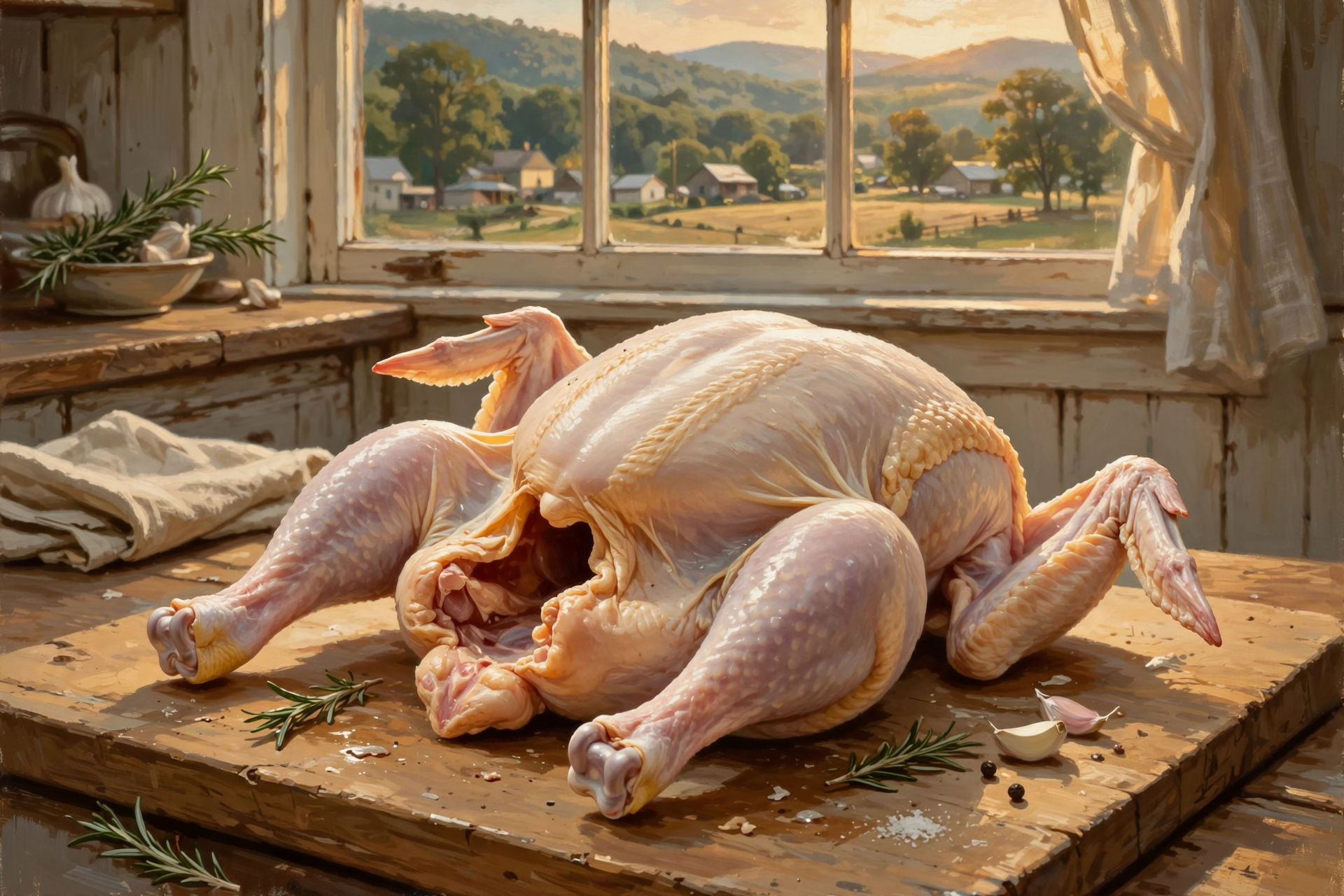
Not literally.
At least not yet.
But let’s look at the different parts and ask the same questions about each one:
- 🥩 What does it contribute?
- ⚠️ What does it not provide?
- 💵 Is it potentially inexpensive?
- 🏡 Could we source it locally?
- 😸 Are cats likely to find it appealing?
- 🧊 Can we store it easily?
- 🍳 How might we prepare it safely?
❤️ Chicken Hearts: Probably the Most Interesting Place to Start
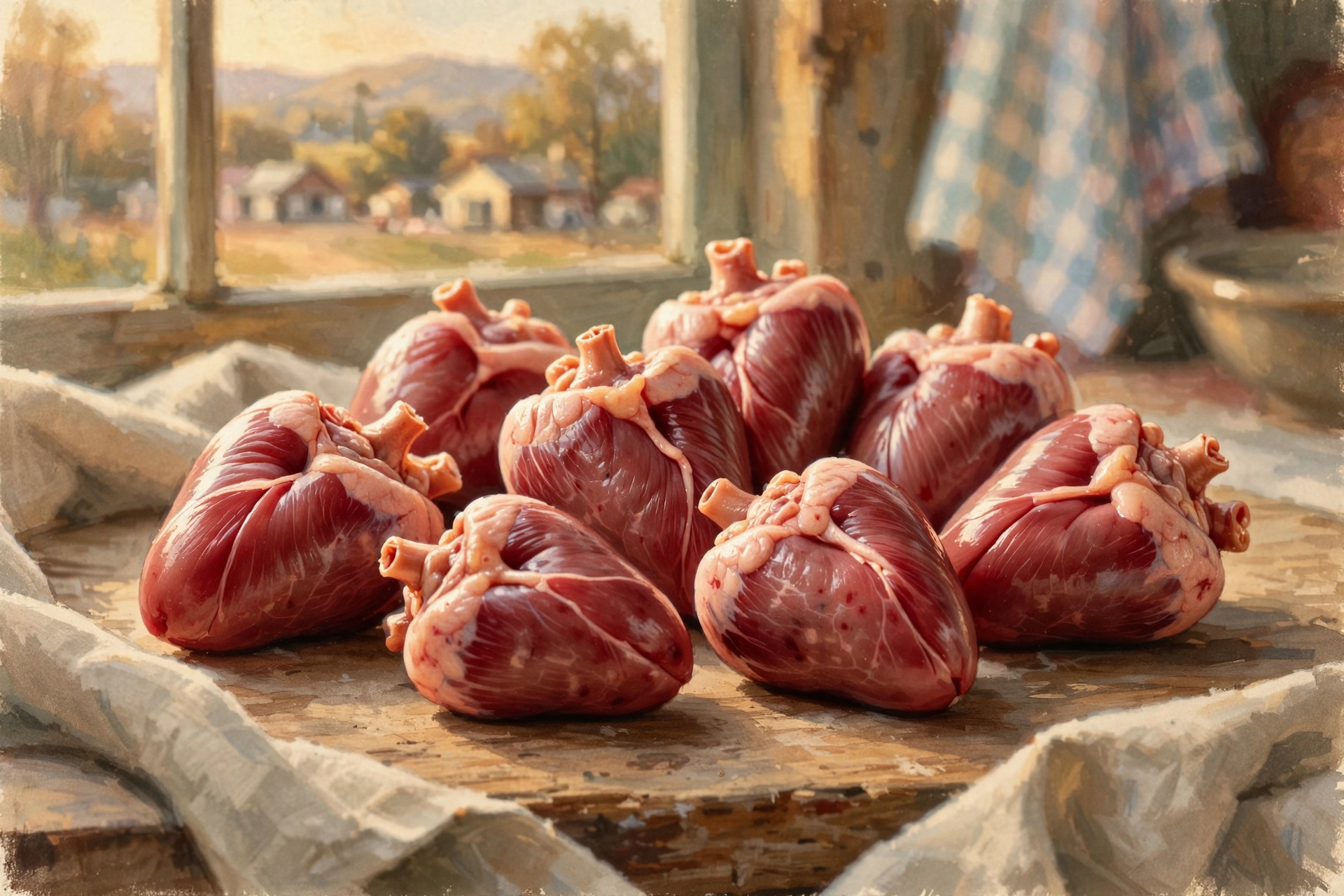
Chicken hearts immediately caught my attention when I started looking into this subject.
People commonly call the heart an organ.
Anatomically, of course, it is.
But nutritionally, heart is largely muscular tissue.
That’s useful because heart meat provides high-quality animal protein and naturally contains taurine.
❤️ Why Taurine Matters
Cats require taurine in their diets.
Long-term taurine deficiency can cause serious health problems, including damage to the heart and retina.
Animal tissues provide taurine, and heart tissue is one of the more interesting natural sources.
That doesn’t mean feeding chicken hearts guarantees adequate taurine in the entire diet.
Cooking, storage, preparation, quantities, and everything else the cat eats still matter.
But it does make hearts worth investigating.
💰 Why Hearts May Be Economically Interesting
Chicken hearts generally aren’t competing with boneless breasts for premium shelf space.
Depending on where we can obtain them, they may provide a reasonably inexpensive animal protein.
I’m especially interested in finding out whether local:
- 🐔 Poultry farms
- 🔪 Processors
- 🛒 Grocery stores
- 🍗 Restaurants
- 🏡 Backyard poultry owners
have access to hearts at prices that make sense when you’re feeding dozens of cats.
We’re going to investigate that rather than assume it.
🍗 Gizzards: The Chicken’s Little Muscle Grinder
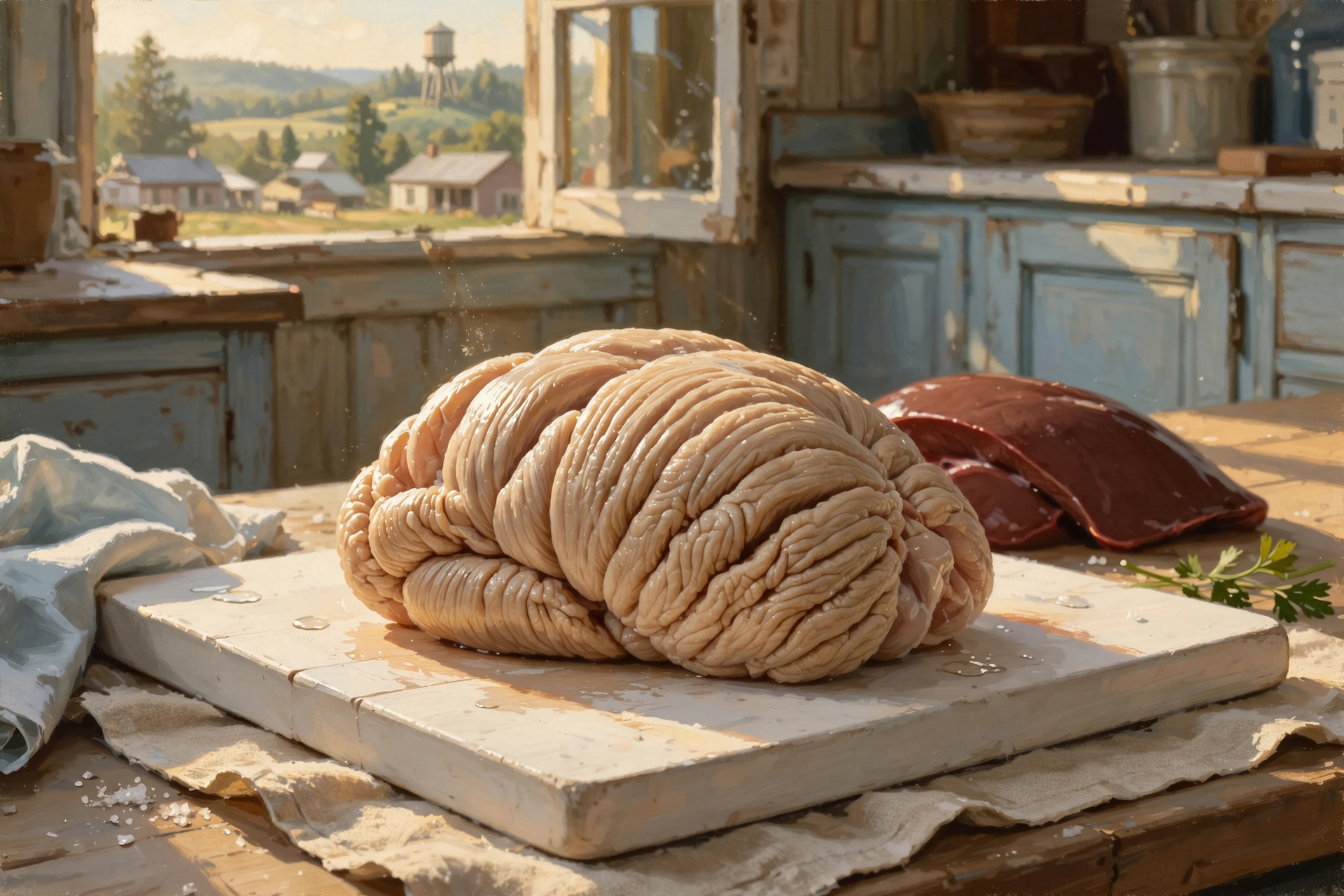
Gizzards are another inexpensive part of the chicken that deserves attention.
A gizzard is part of the bird’s digestive system, but structurally it is a powerful muscular organ.
That means nutritionally we’re largely dealing with another form of muscle meat.
Gizzards can provide:
- 🥩 Animal protein
- 🧬 Amino acids
- 💊 Various vitamins and minerals
- 😸 A chewy texture some cats may enjoy
⚠️ What Gizzards Don’t Do
This is where terminology can fool us.
Someone may hear “organ meat” and assume gizzards provide the same nutritional contribution as liver.
They don’t.
Different tissues have very different nutrient profiles.
A gizzard behaves much more like muscle meat nutritionally than like nutrient-dense liver.
That’s why we’re going to evaluate each part separately.
🫀 Chicken Liver: Nutritional Dynamite in a Small Package
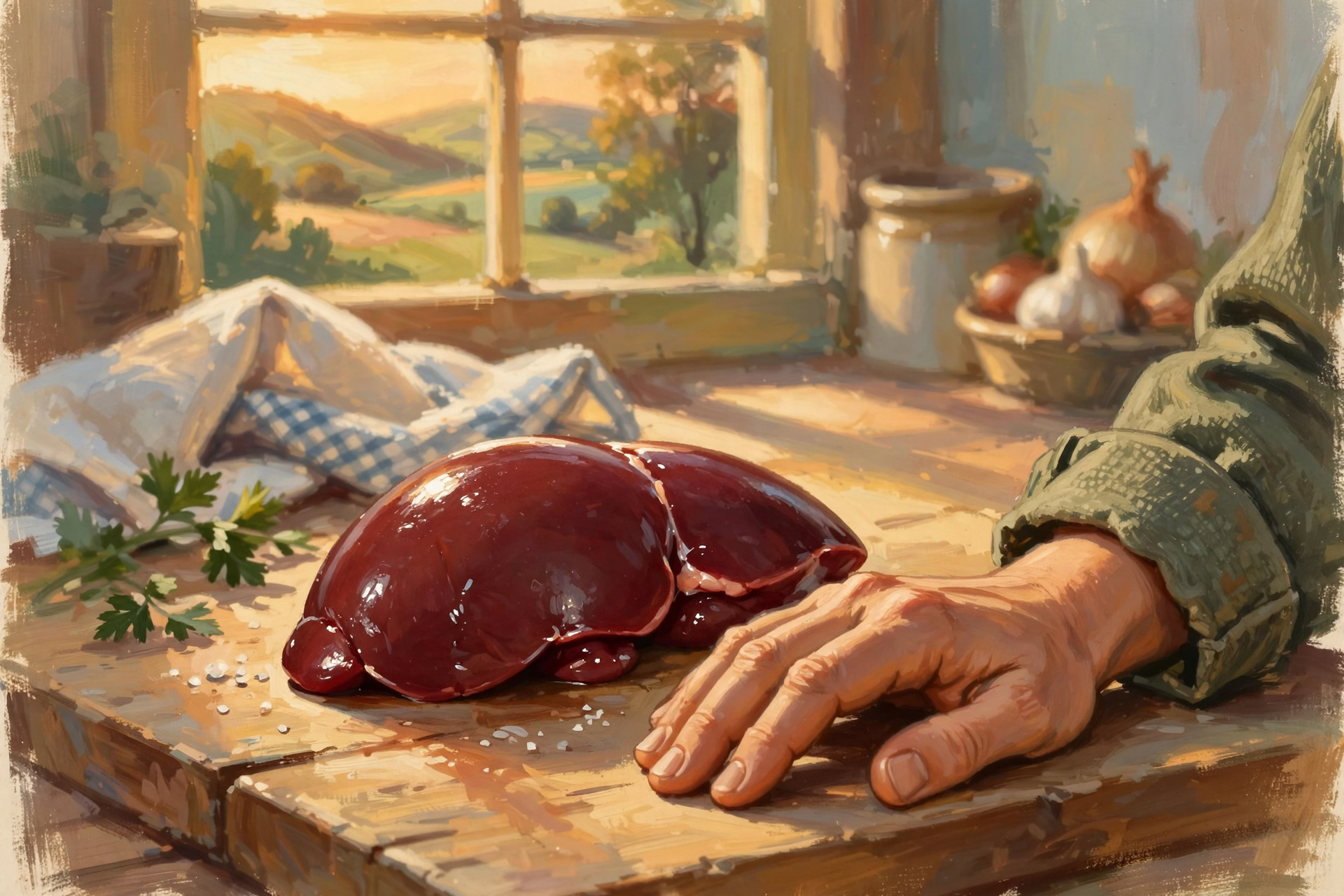
Liver is where this gets really interesting.
Chicken liver contains substantial amounts of nutrients, including:
- 🥩 Protein
- 🟠 Preformed vitamin A
- 🧬 B vitamins
- 🩸 Iron
- ⚙️ Copper
- 🧪 Numerous micronutrients
That sounds wonderful.
And it is.
Until you make the classic nutritional mistake:
If some is good, more must be better.
⚠️ Liver Is a Perfect Example of Why Balance Matters
Too much liver over time can provide excessive vitamin A.
Veterinary nutrition guidance specifically warns against diets containing excessive liver for this reason.
So liver may be extraordinarily useful as one part of a properly balanced diet.
It is not something I’d simply allow forty cats to eat without limit.
That’s a distinction we’re going to keep making throughout this series.
Nutrient-dense does not mean unlimited.
🍗 Chicken Thighs: Maybe More Interesting Than Breast
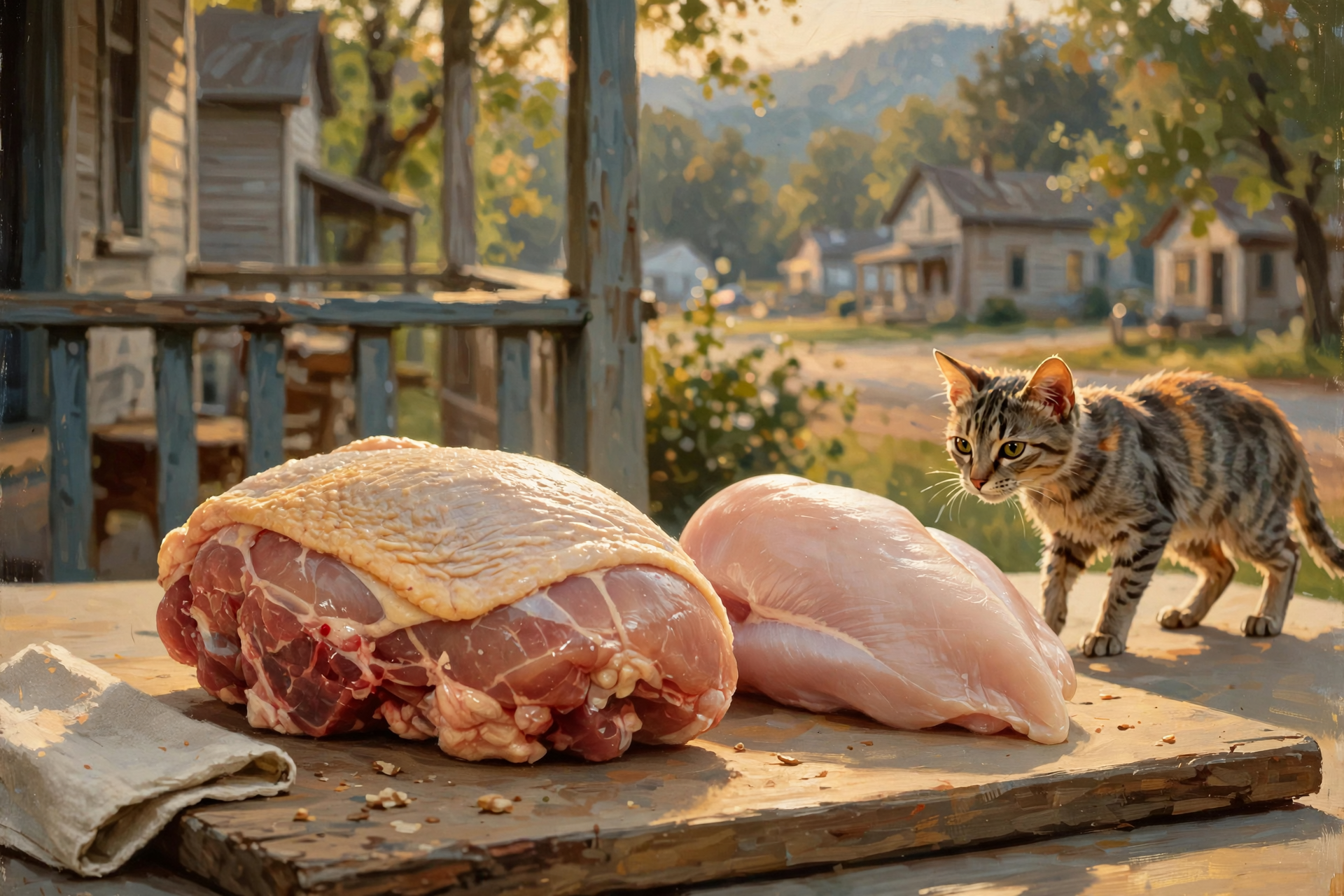
Chicken breast is the part many humans think of first when we hear “healthy chicken.”
But a cat doesn’t necessarily need our idea of diet food.
Chicken thighs generally contain more fat than breast meat.
That can mean more calories.
For an outdoor animal burning energy, particularly in cold weather, calories matter.
Thigh meat still provides high-quality animal protein while bringing more fat to the meal.
🔥 Fat Is Not Automatically the Enemy
People often hear the word “fat” and immediately think “bad.”
But fat is an essential nutrient.
It supplies energy.
It helps carry fat-soluble vitamins.
It contains important fatty acids.
The issue is not whether fat exists.
The issue is how much energy the animal needs and how the overall diet is balanced.
For a thin outdoor cat, that’s a different question than it would be for an overweight house cat sleeping 18 hours a day on the couch.
🐔 What About Chicken Breast?
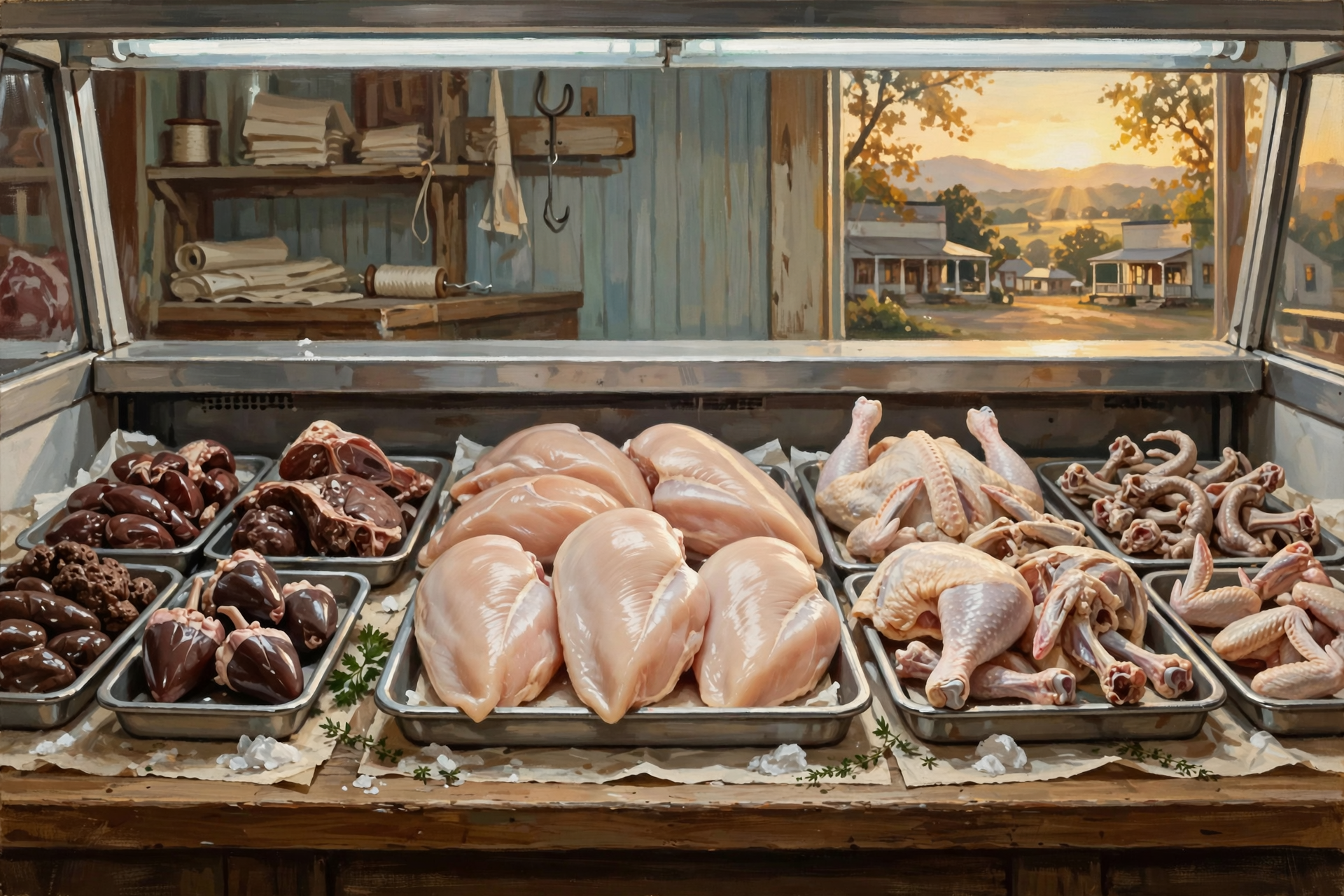
There’s certainly nothing wrong with chicken breast as an ingredient.
It’s excellent animal protein.
But economically, I’m not convinced it’s going to be the star of this project.
Humans value chicken breast highly.
That usually means we have to compete with humans for it.
The whole premise of our local-food investigation is to find places where:
the nutritional value to a cat may be higher than the economic value to a person.
Chicken breast may not give us much advantage there.
Hearts, gizzards, liver, backs, and other less popular portions might.
🍖 Chicken Skin: Calories in a Very Small Package
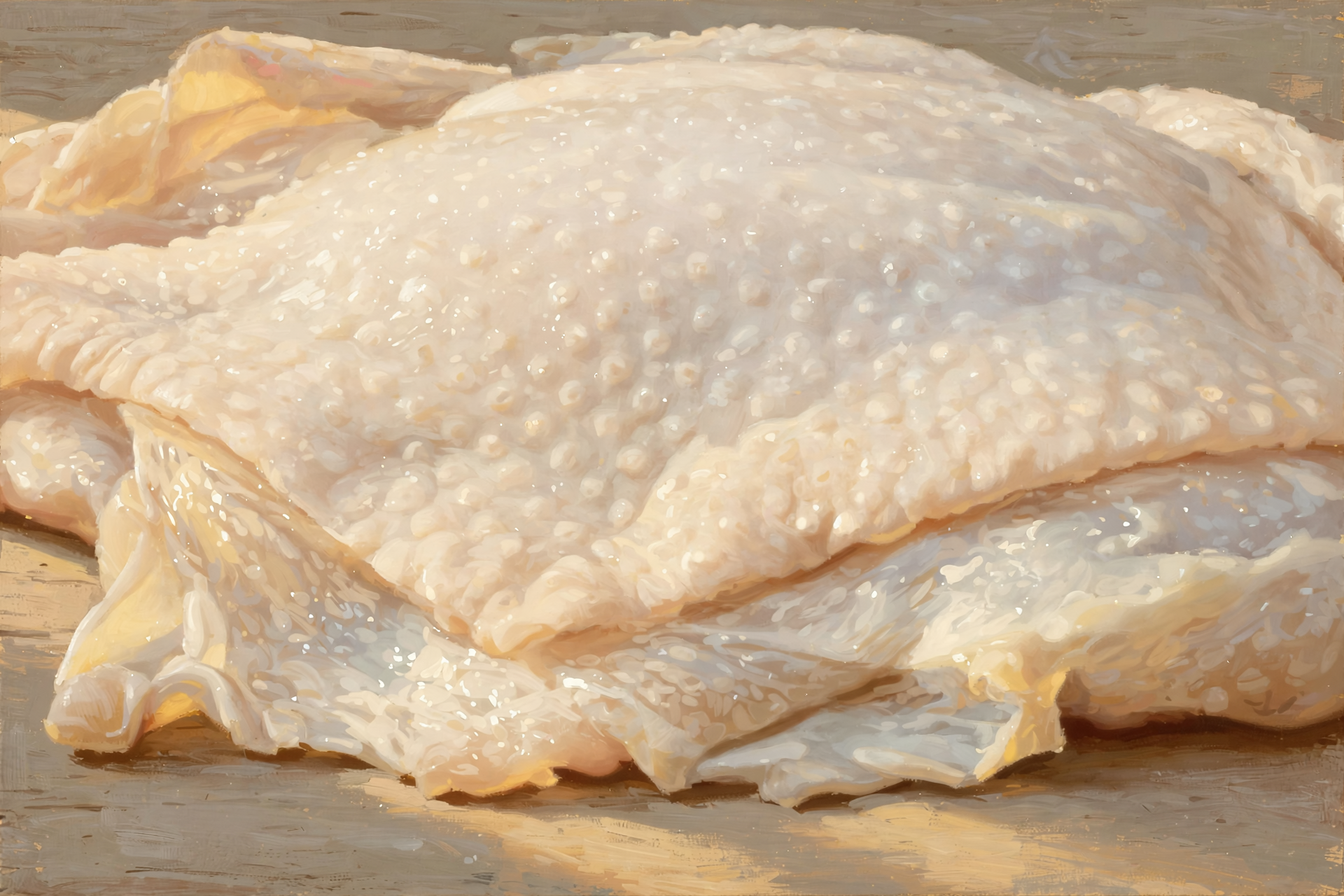
Chicken skin contains substantial fat.
That means substantial calories.
Again, that isn’t automatically good or bad.
It depends on the cat and the amount.
An underweight outdoor cat may benefit from additional calories.
An overweight indoor cat probably doesn’t need unlimited chicken skin as a hobby.
For our colony, the interesting question is whether small quantities of higher-fat animal material could help increase calorie density economically when needed.
That’s something worth testing carefully.
🦴 Chicken Necks: This Is Where Things Get More Complicated
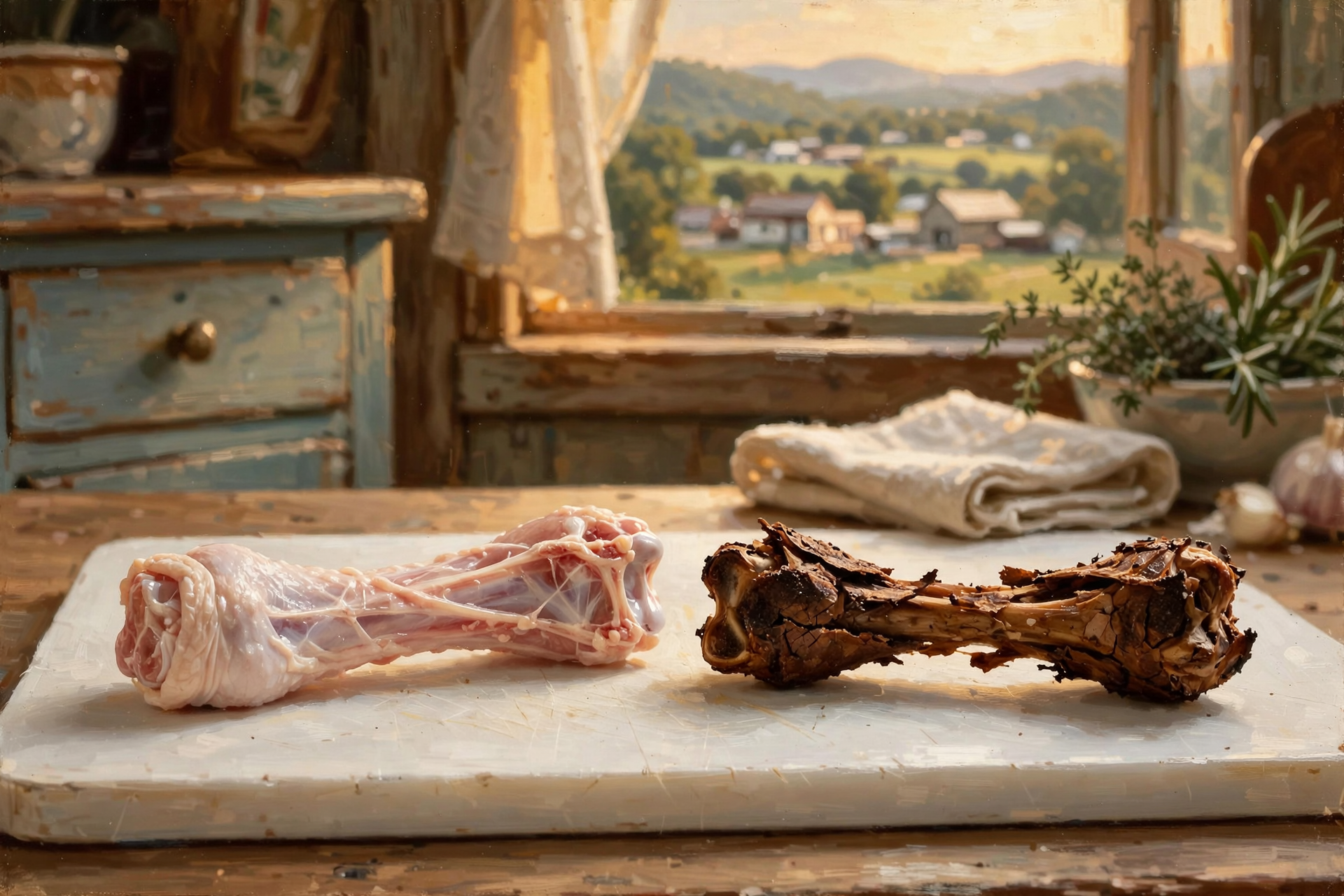
Chicken necks are interesting because they contain:
- 🥩 Meat
- 🦴 Bone
- 🧬 Connective tissue
- 🧈 Some fat
The presence of bone means they provide minerals such as calcium and phosphorus.
That sounds attractive because plain muscle meat tends to contain much more phosphorus than calcium.
But this is also where preparation and feeding method become much more important.
⚠️ Cooked Bones Are Not the Answer
Cooking changes bones and can make them brittle and prone to splintering.
For that reason, cooked chicken bones should not simply be handed to cats.
And raw feeding introduces its own food-safety considerations.
Cornell specifically notes that raw diets can carry bacteria, viruses, and parasites that may affect both cats and people, and Cornell does not recommend raw diets because clear health benefits have not been demonstrated while infectious risks remain.
So we’re not going to treat chicken necks as an easy shortcut to calcium.
This is an ingredient that deserves more careful investigation before we consider using it.
🦴 What About Chicken Backs and Frames?
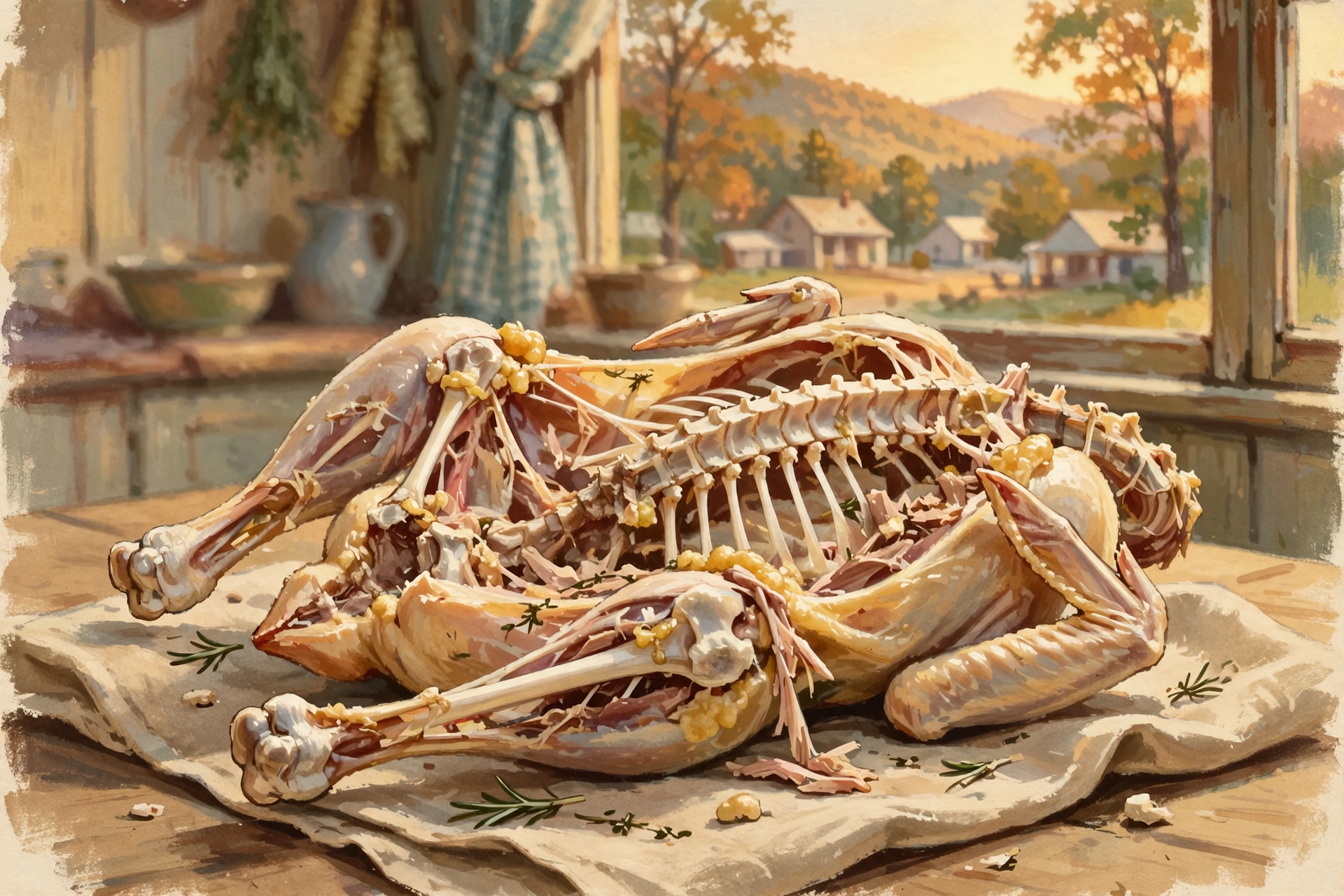
Once the premium cuts are removed from a chicken, the remaining frame may still contain:
- 🥩 Bits of meat
- 🧈 Fat
- 🧬 Connective tissue
- 🦴 Bone
From a waste-reduction perspective, that makes the frame interesting.
From a feeding perspective, however, the same bone-safety considerations apply.
We shouldn’t confuse:
“There’s nutrition left on this carcass”
with:
“Therefore I should hand the entire cooked carcass to a cat.”
Those are not the same conclusion.
🍲 What About Chicken Broth?
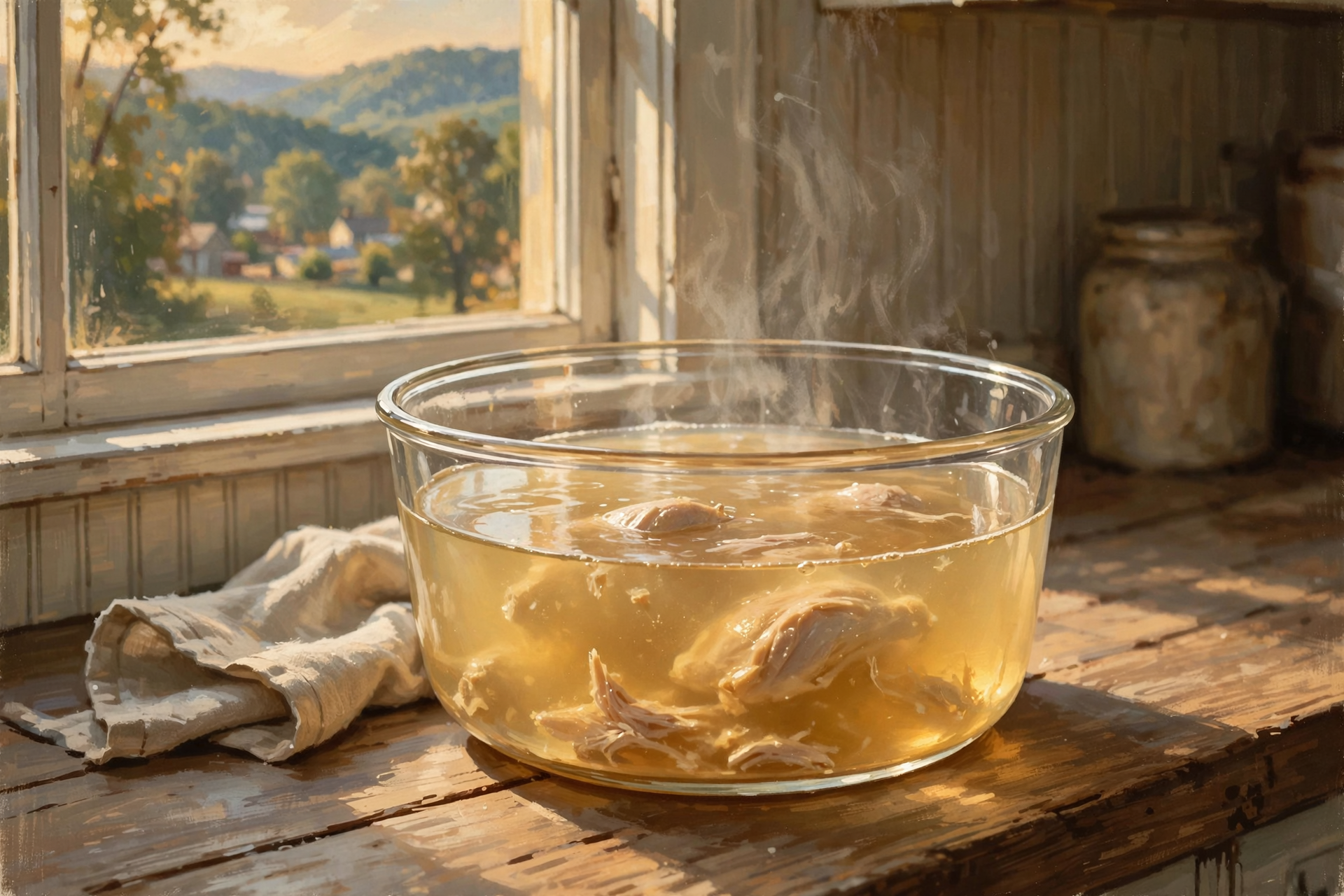
Broth immediately interests me because of hydration.
If you cook chicken in plain water, the resulting liquid may have enough aroma and flavor to encourage a cat to consume more moisture.
But there’s an important word in that sentence:
Plain.
🧅 Human Soup Isn’t Cat Broth
A normal soup recipe might contain:
- 🧅 Onion
- 🧄 Garlic
- 🧂 Large amounts of salt
- 🌿 Seasonings
- 🧈 Added fats
Some ingredients that are perfectly ordinary in human cooking are inappropriate for cats.
So if we experiment with broth, we’ll be talking about liquid prepared specifically with the cats in mind—not leftover heavily seasoned soup from Sunday dinner.
🍳 Raw or Cooked?
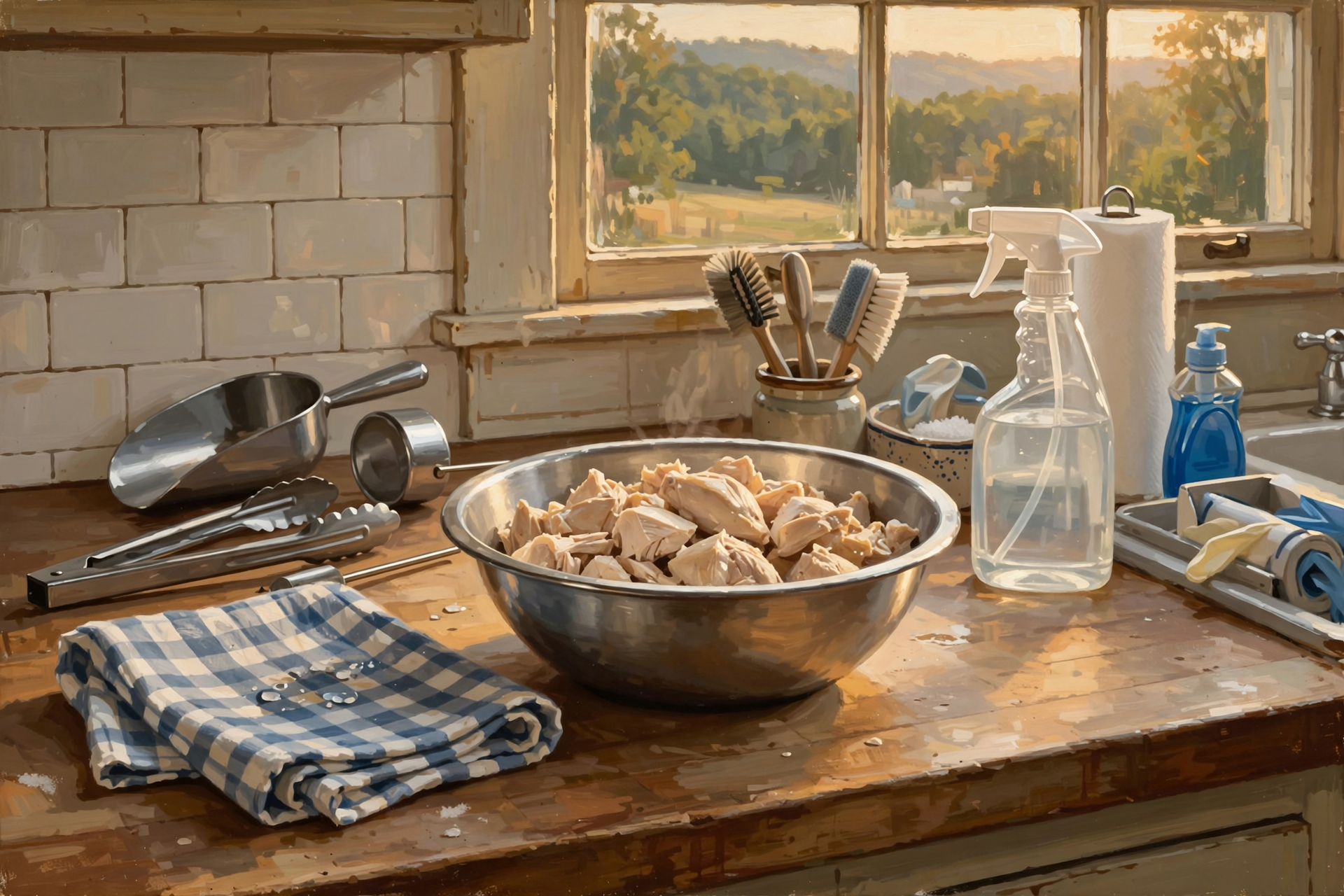
I know this question will come up repeatedly.
There are people who strongly prefer raw feeding.
Others cook everything.
For our project, we’re going to separate ideology from practical risk.
Raw animal products can contain organisms such as Salmonella and other pathogens.
That matters not only to the cat but also to the people handling bowls, food, utensils, and surfaces.
With a colony of roughly forty animals, sanitation becomes a logistical issue as much as a nutritional one.
Cornell currently advises against raw diets because of infectious risks and the lack of clear evidence showing superior health outcomes.
So when practical, cooked unseasoned animal ingredients are probably going to be our simplest starting point.
🧂 Seasoning Is for Us, Not the Cats
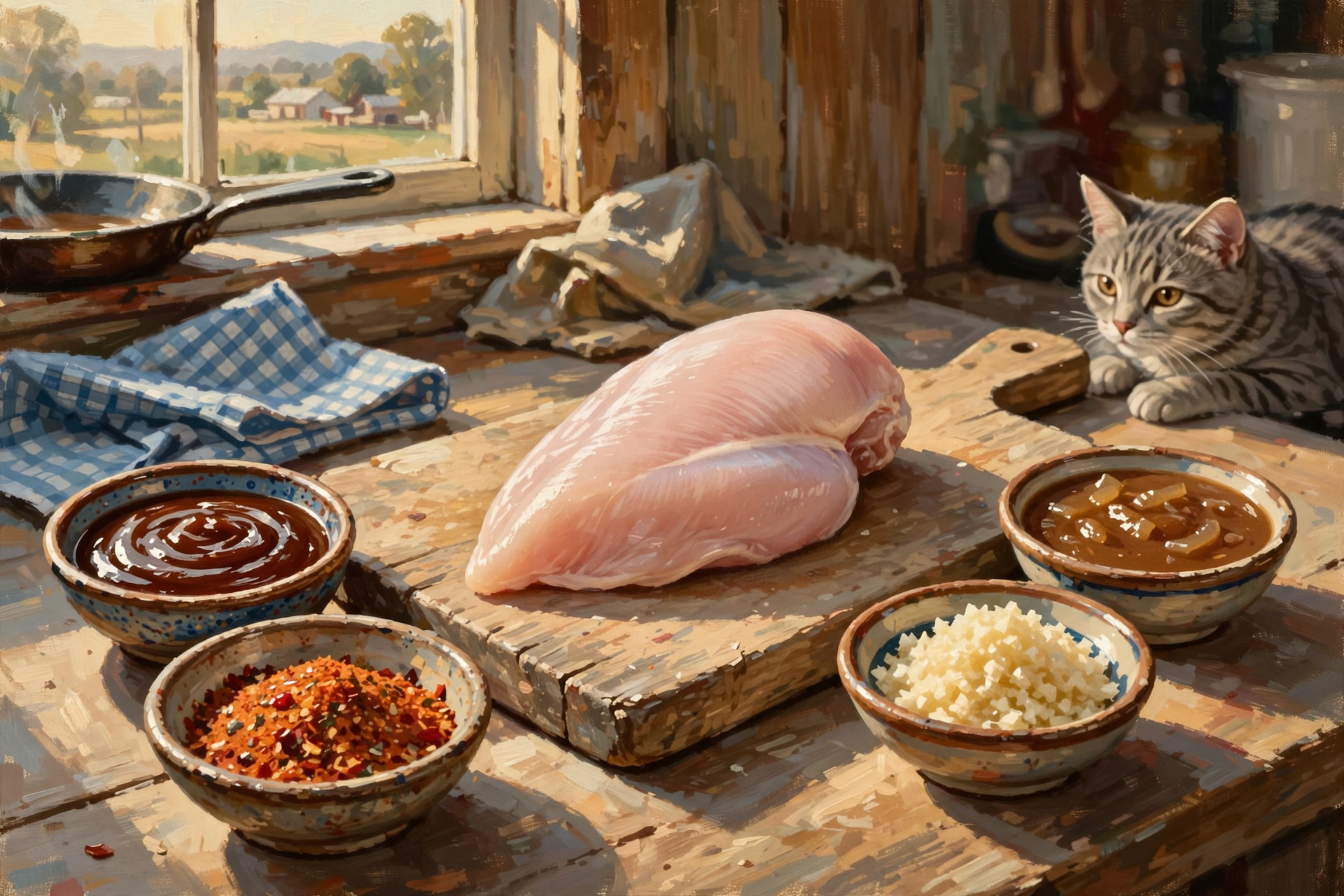
If we start using locally sourced chicken, another rule should be simple:
The cats don’t need our recipe.
We’re interested in the chicken.
Not barbecue sauce.
Not Cajun seasoning.
Not garlic butter.
Not onion gravy.
Not the leftover fried coating.
Plain preparation makes it much easier to understand what we’re actually feeding.
🥫 How Much Supplemental Food Is Too Much?
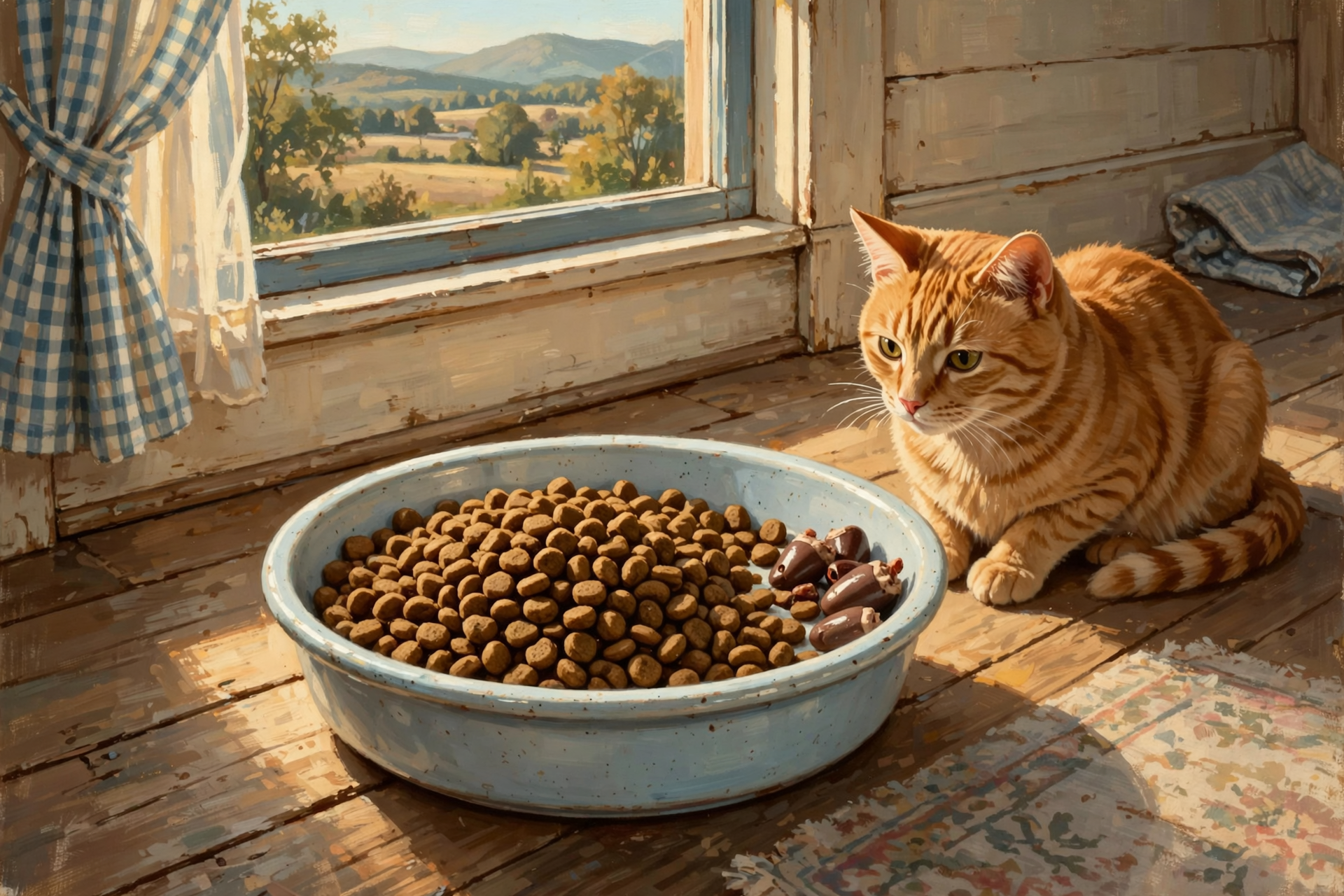
This may be one of the most important questions in the entire series.
Cornell offers a useful general rule for treats and supplemental foods: they should generally make up no more than about 10% to 15% of a cat’s daily calories when the remainder of the diet is nutritionally complete and balanced.
That gives us a sensible starting framework.
If we feed nutritionally complete cat food as the foundation and use chicken hearts, gizzards, egg, or other foods as supplements, we can experiment without immediately replacing large portions of the balanced diet.
That is very different from deciding:
“Chicken hearts are cheap, so from now on everybody eats chicken hearts.”
💰 Where the Economics Get Interesting
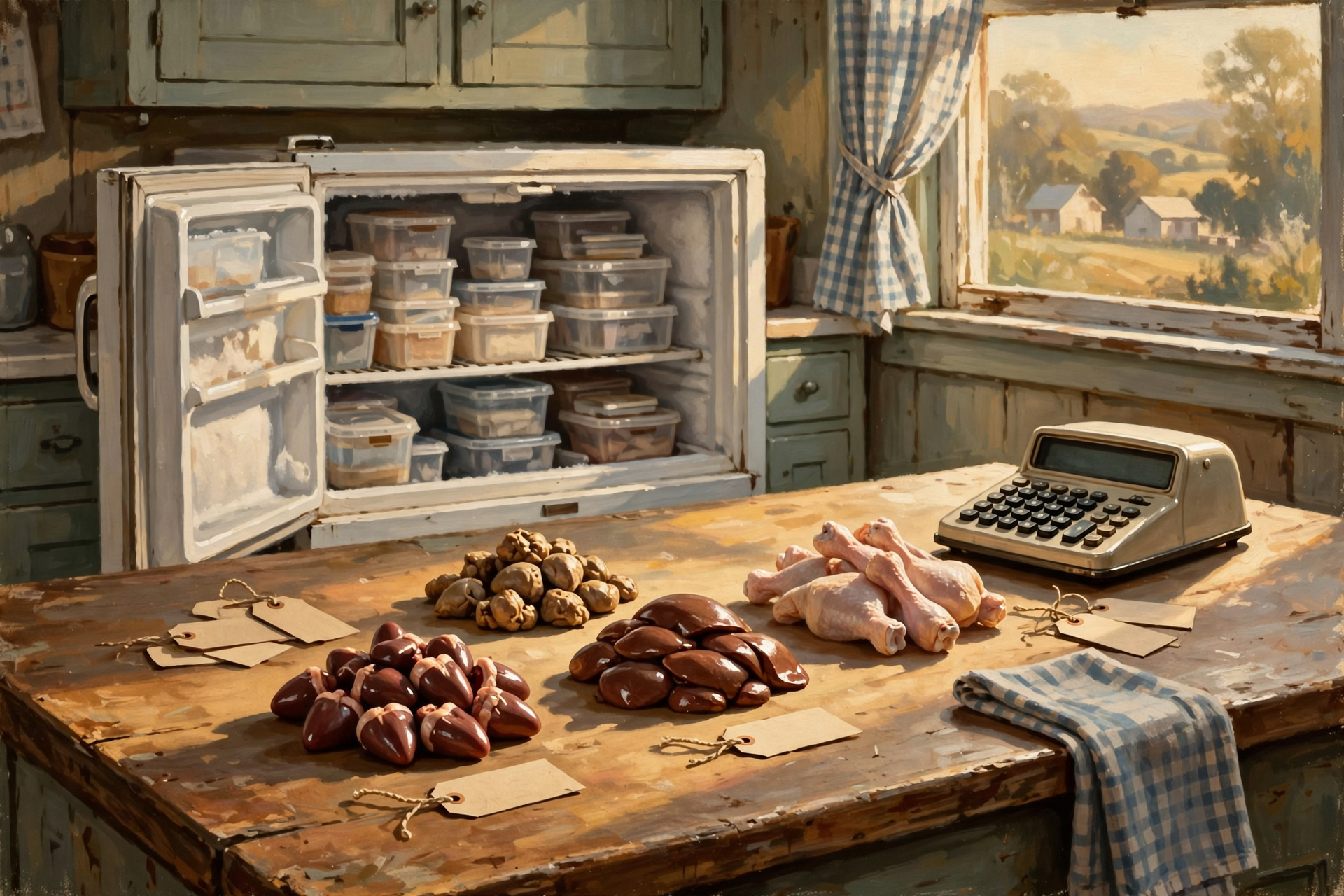
Imagine we find chicken hearts for $1.50 per pound.
That’s interesting.
Now imagine a local processor has them for 75 cents.
More interesting.
Now imagine a poultry operation has certain safe parts with little commercial market and would otherwise discard them.
Very interesting.
But price alone still isn’t enough.
We need to consider:
- 💵 Purchase cost
- 🚗 Transportation cost
- 🧊 Freezer space
- ⚡ Energy to store it
- 🍳 Preparation time
- 🔥 Cooking cost
- 🗑️ Waste
- 😸 Whether cats actually eat it
- 🥩 Nutritional value
A free ingredient that requires tremendous labor and half of it gets thrown away isn’t necessarily free.
🧊 Forty Cats Make Freezer Space Important
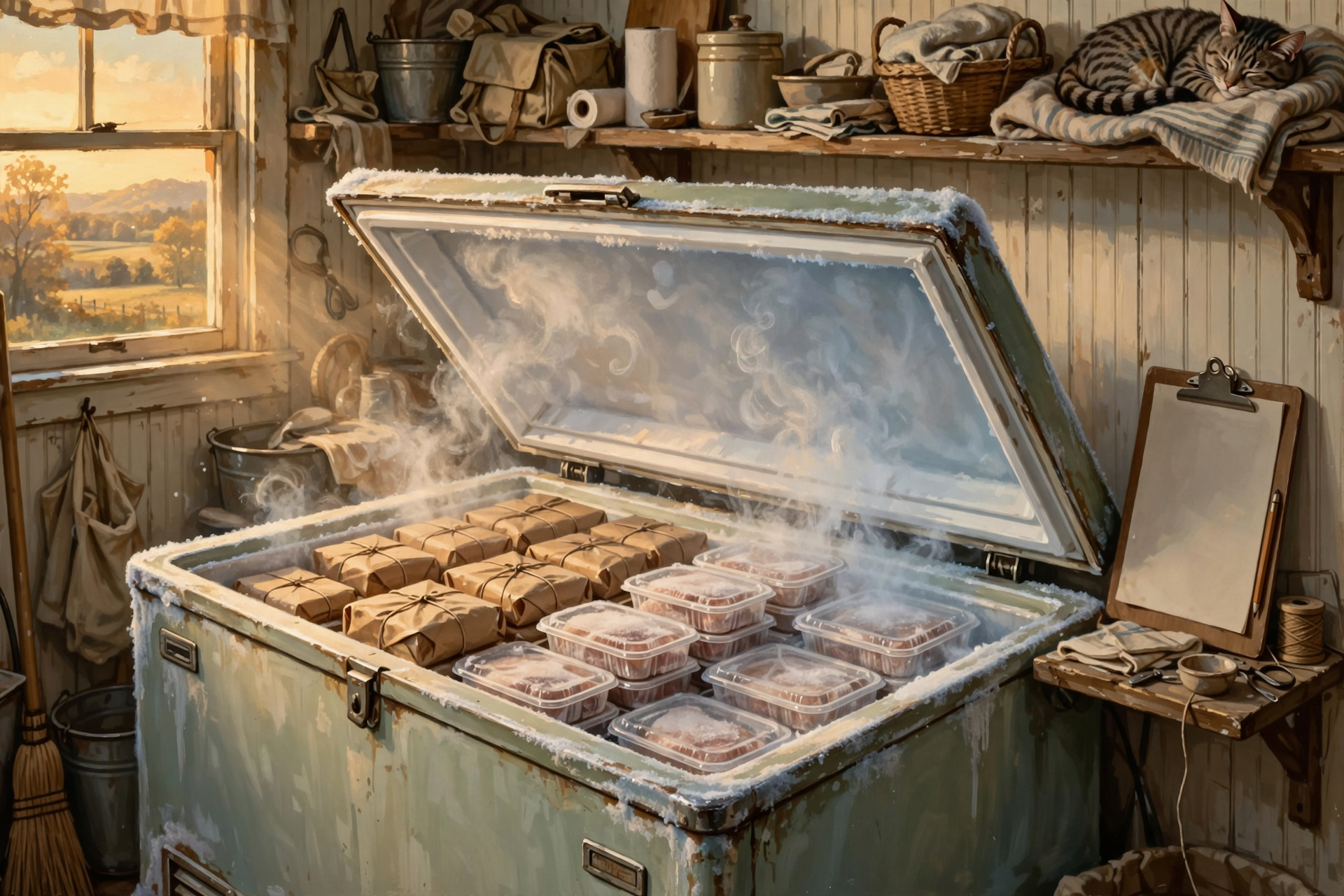
This is something I suspect people feeding one cat don’t think about very often.
At our scale, a bargain might involve 20, 40, or even 100 pounds of something.
That creates another problem.
Where do we put it?
If The Scaredy Cat Project eventually starts recovering locally sourced animal products, freezer capacity becomes part of the infrastructure.
That could mean:
- 🧊 Dedicated chest freezers
- 📦 Portioning food before freezing
- 📅 Dating packages
- 🔄 First-in, first-out rotation
- 🌡️ Safe thawing procedures
- 🧹 Sanitation
That’s not glamorous.
But it’s the difference between a food-recovery system and a pile of meat going bad.
🏡 Could Sequatchie County Supply Some of This?

This is where the project becomes local.
I want to find out where chicken parts actually go around here.
Do our grocery stores sell hearts and gizzards inexpensively?
Do local poultry growers process their own birds?
Are there small farms with products they don’t have much market for?
Are there processors with usable portions that aren’t economically valuable to their customers?
Are there freezer-burned but otherwise safe meats sitting unused in people’s freezers?
Could residents intentionally save plain, appropriate portions rather than throwing them away?
I don’t know yet.
That’s the investigation.
♻️ There’s a Difference Between Food Recovery and Feeding Garbage
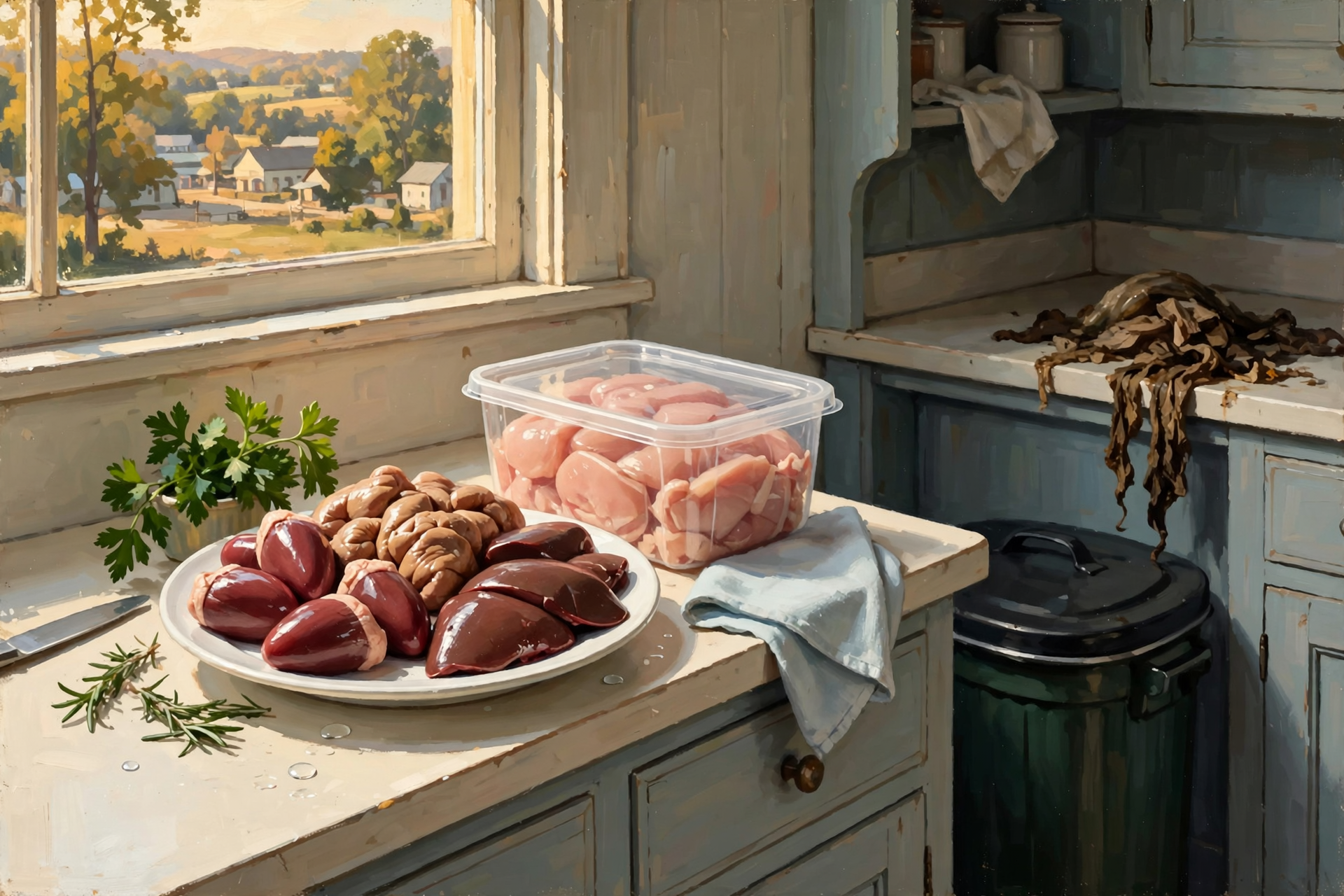
I want to be particularly clear about this.
When we talk about preventing waste, we’re talking about safe food that happens to have little human economic value.
We’re not talking about:
- 🤢 Spoiled meat
- 🦠 Questionable meat that’s been sitting warm
- 🗑️ Food pulled from garbage cans
- 🧅 Heavily seasoned leftovers
- 🦴 Cooked bones
- ⚠️ Anything we don’t know how to handle safely
The goal is better nutrition for community cats.
Not finding the cheapest possible way to dispose of scraps.
📊 I Think We Need a Scaredy Cat Ingredient Scorecard

As we investigate each ingredient, I’d like to start evaluating it the same way.
🐱 The Scaredy Cat Ingredient Scorecard
- 🥩 Protein value: How useful is it as animal protein?
- 🧬 Special nutrients: Taurine, vitamins, fatty acids, minerals, etc.
- 🔥 Calorie density: Lean or energy-dense?
- 💧 Moisture: Does it contribute hydration?
- ⚠️ Limitations: What is missing or potentially excessive?
- 🍳 Preparation: How should it be handled?
- 🧊 Storage: How easy is it to freeze and portion?
- 💵 Cost: What does it actually cost us?
- 🏡 Local availability: Can we get it in Sequatchie County?
- 😸 Scaredy Score: Will the cats actually eat it?
- 🥣 Complete diet? Almost always no when discussing a single ingredient.
That last line may become repetitive.
That’s okay.
It’s important enough to repeat.
📋 Our First Chicken Scorecard
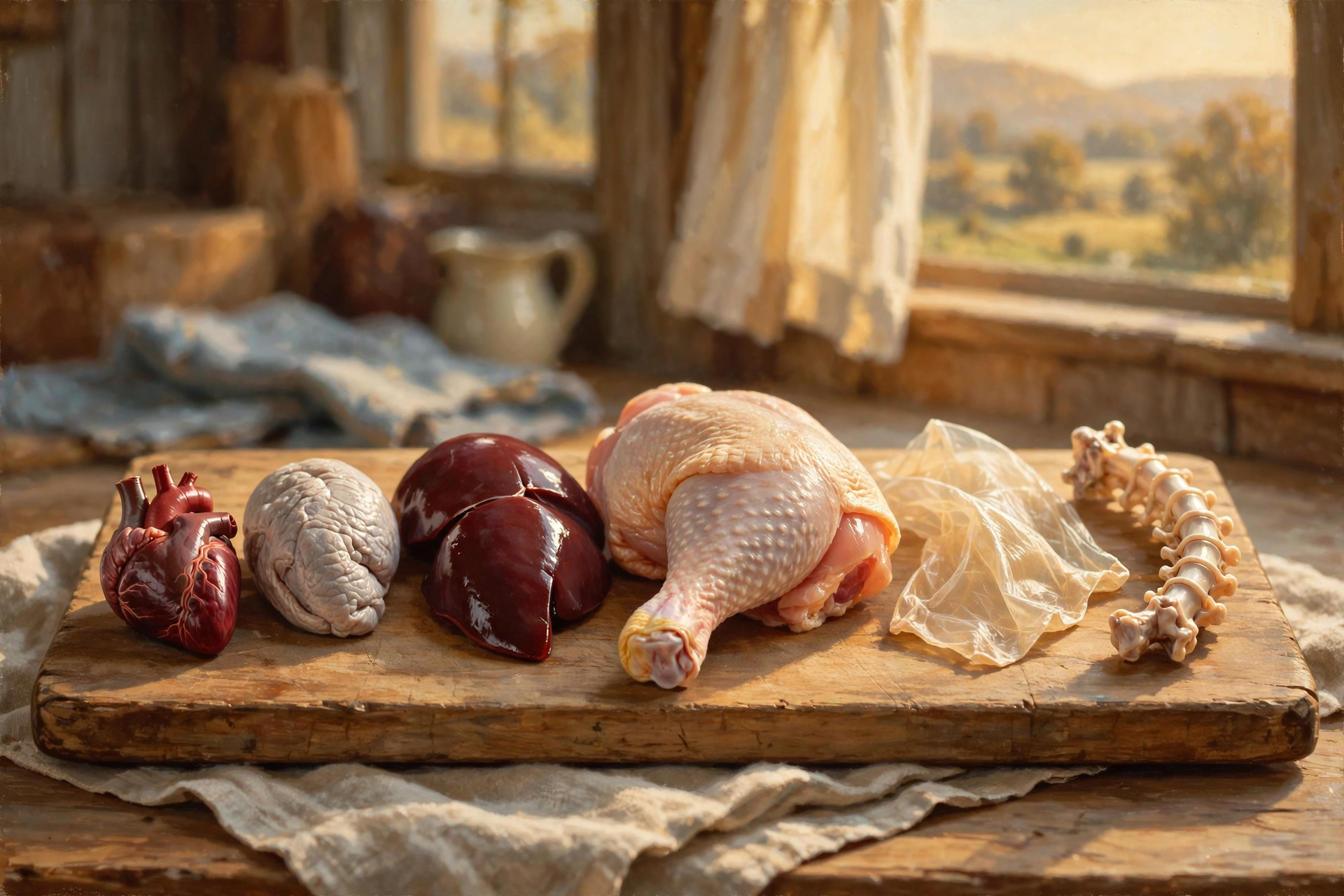
❤️ Chicken Heart
Protein: High
Interesting nutrients: Animal protein and natural taurine
Economic potential: High if sourced cheaply
Complete diet alone: No
Scaredy Cat Project interest level: Very high
🍗 Chicken Gizzard
Protein: High
Interesting nutrients: Animal protein and micronutrients
Economic potential: Potentially high
Complete diet alone: No
Scaredy Cat Project interest level: High
🫀 Chicken Liver
Protein: High
Interesting nutrients: Extremely nutrient-dense; vitamin A and many micronutrients
Main caution: Excessive vitamin A if overfed
Complete diet alone: Definitely not
Scaredy Cat Project interest level: High, but portion matters
🍗 Chicken Thigh
Protein: High
Fat: Higher than breast
Economic potential: Depends heavily on local price
Complete diet alone: No
Scaredy Cat Project interest level: Moderate to high
🍖 Chicken Skin
Protein: Some
Fat/calories: Very high relative to lean meat
Potential use: Small amounts where additional calories are useful
Complete diet alone: Absolutely not
Scaredy Cat Project interest level: Situational
🦴 Chicken Neck or Frame
Potential value: Meat, connective tissue, and bone minerals
Main challenge: Bone safety and food handling
Cooked bones: Not appropriate
Scaredy Cat Project interest level: Requires more research before experimentation
❤️ The Bigger Lesson May Have Nothing to Do With Chicken
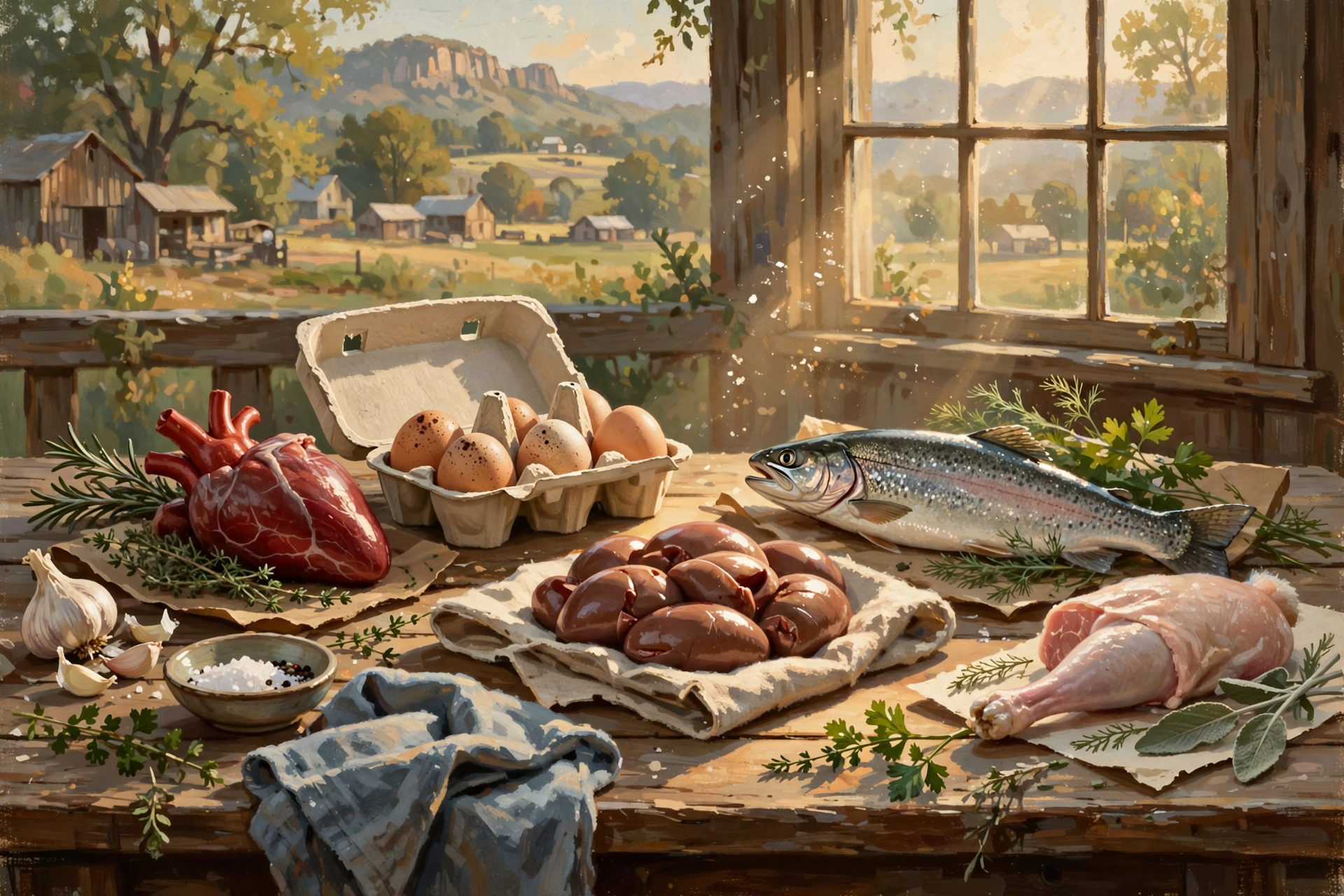
This project started because I wondered whether locally sourced food could help us feed community cats more affordably.
Chicken gives us our first real example of what that might look like.
The parts people want most tend to cost more.
The parts people want less may still contain considerable nutritional value.
That principle probably extends beyond chicken.
Beef heart.
Beef liver.
Venison.
Rabbit.
Fish.
Eggs.
Maybe other foods we haven’t even thought of yet.
The trick isn’t simply finding cheap ingredients.
It’s learning:
where cheap, safe, locally available ingredients fit inside a nutritionally sound feeding program.
🐱 Scaredy Has Already Approved the Research
I haven’t presented Scaredy with the complete experimental protocol.
She isn’t much for paperwork.
But I explained that future research may involve chicken.
I feel confident she’d approve.
Especially if the alternative is another day of Charlie failing to honor the tuna contract while I’m away.
🔜 Next: Chicken Hearts Deserve Their Own Story
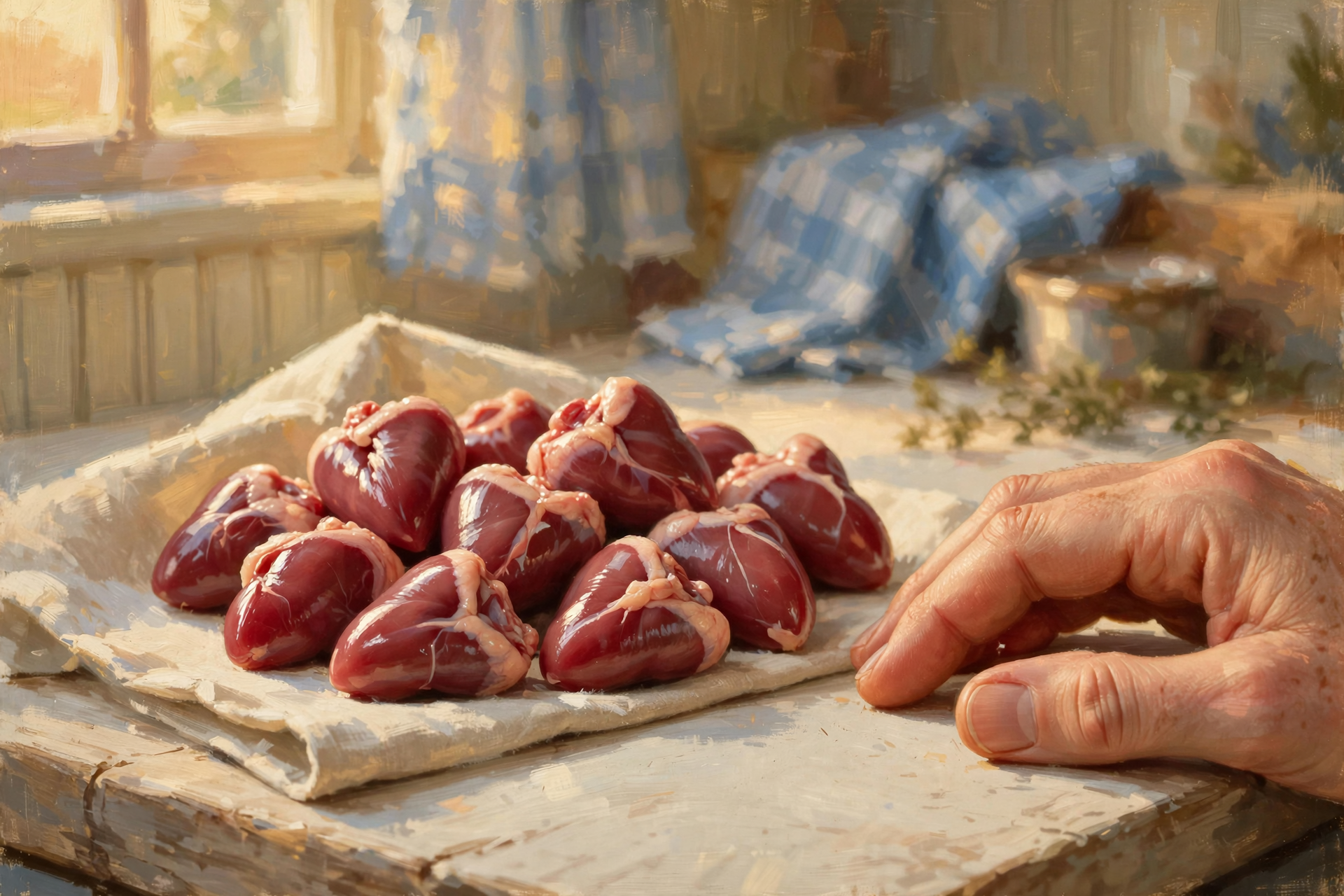
Of everything we’ve looked at in the chicken so far, hearts may be the ingredient I’m most curious about.
They’re animal protein.
They’re naturally associated with taurine.
They may be relatively inexpensive.
They freeze easily.
And they aren’t particularly fashionable human food.
That combination deserves a closer look.
So the next installment of The Scaredy Cat Project will ask:
Are chicken hearts one of the best inexpensive supplemental foods we can find for community cats?
📣 Do You Know a Local Chicken Source?
This is where we’d like some help from readers around Dunlap and Sequatchie County.
Do you raise chickens?
Process chickens?
Know where to buy hearts or gizzards inexpensively?
Have a local butcher or grocery store we should talk to?
Do you routinely have usable chicken parts that don’t have much market value?
Do your cats already eat hearts or gizzards?
We’d like to hear what you’re doing and what you’ve learned.
The more local information we collect, the more useful this project becomes.
❤️ Feed Them. Fix Them. Find Them Homes When We Can. Help the Rest Age Gracefully.
We’re not trying to create gourmet meals for forty cats.
We’re trying to become smarter about the resources we already have around us.
If a part of the chicken that people rarely want can safely help nourish an animal that needs food, that’s worth understanding.
If it saves money too, even better.
And if enough people around Sequatchie County start looking at unused food a little differently, perhaps we can eventually build something much bigger than Scaredy’s dinner bowl.
🐾 The Scaredy Cat Project
Feed them. Fix them. Find them homes when we can. Help the rest age gracefully.
🔎 Sources & Further Reading

- Cornell University College of Veterinary Medicine — Feline Health Center, “Feeding Your Cat”
- Merck Veterinary Manual — Proper Nutrition for Cats
- Merck Veterinary Manual — Dog and Cat Foods
Know about an upcoming event or story in the Dunlap, TN area? Submit it here.


0 Comments