
⏲️ Read the Meter: What This Week's AI News Means for the Valley

Or: An AI Company Buys Its Own Generators, Washington Talks Guardrails, a Tennessee County Packs a Meeting Room and Instagram Starts Guessing Ages
By Thomas Seest, Dunlap.Today · Monday, November 9, 2026
Every house in the Valley has a meter on the side wall, quietly turning. Most months we don’t think about it — until the bill comes. Reading the meter now and then isn’t worry. It’s just knowing what you’re using and who’s paying.
This week’s AI news is about reading the meter: what AI really costs, who ends up paying for it and how you can tell who made what you’re reading.
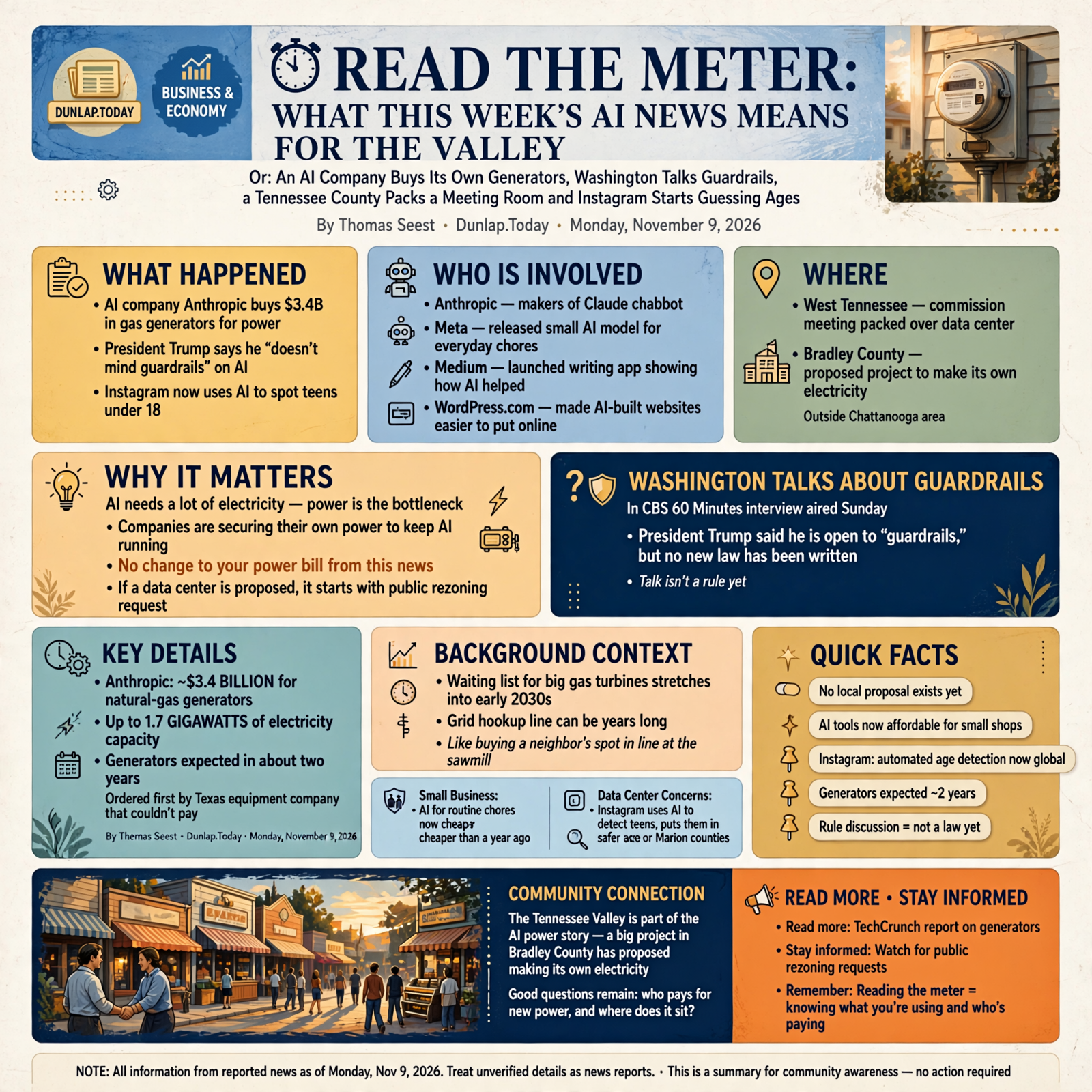
Here’s the roundup: AI company Anthropic reportedly bought $3.4 billion in gas generators because the line for power equipment is years long, President Trump said he “doesn’t mind guardrails” on AI, a crowd packed a West Tennessee commission meeting over a data center even after the request was withdrawn, Meta released a cheap, small AI model for everyday chores, Medium launched a writing app that lets authors show how AI helped, the company behind WordPress.com made AI-built websites easier to put online and Instagram began using AI worldwide to spot teens who claim to be adults. None of this calls for worry. Most of it comes down to reading the meter before you sign the bill.
⏱️ What this means for you in 30 seconds
- Wondering about your power bill? AI needs a lot of electricity, and big companies are scrambling for it. Nothing has changed on your bill because of this news.
- Hearing about AI rules from Washington? The President said he’s open to “guardrails,” but no new law has been written. Talk isn’t a rule yet.
- Worried a data center is coming? We’ve found no proposal in Sequatchie, Bledsoe or Marion counties. If one ever comes, it starts with a public rezoning request.
- Run a small business? AI for routine chores keeps getting cheaper. Small shops can afford more than they could a year ago.
- Got a teen on Instagram? Instagram will now use AI to spot teens and put them in safer accounts. Still worth checking their settings yourself.
⚡ The AI Companies Can’t Wait in Line for Power
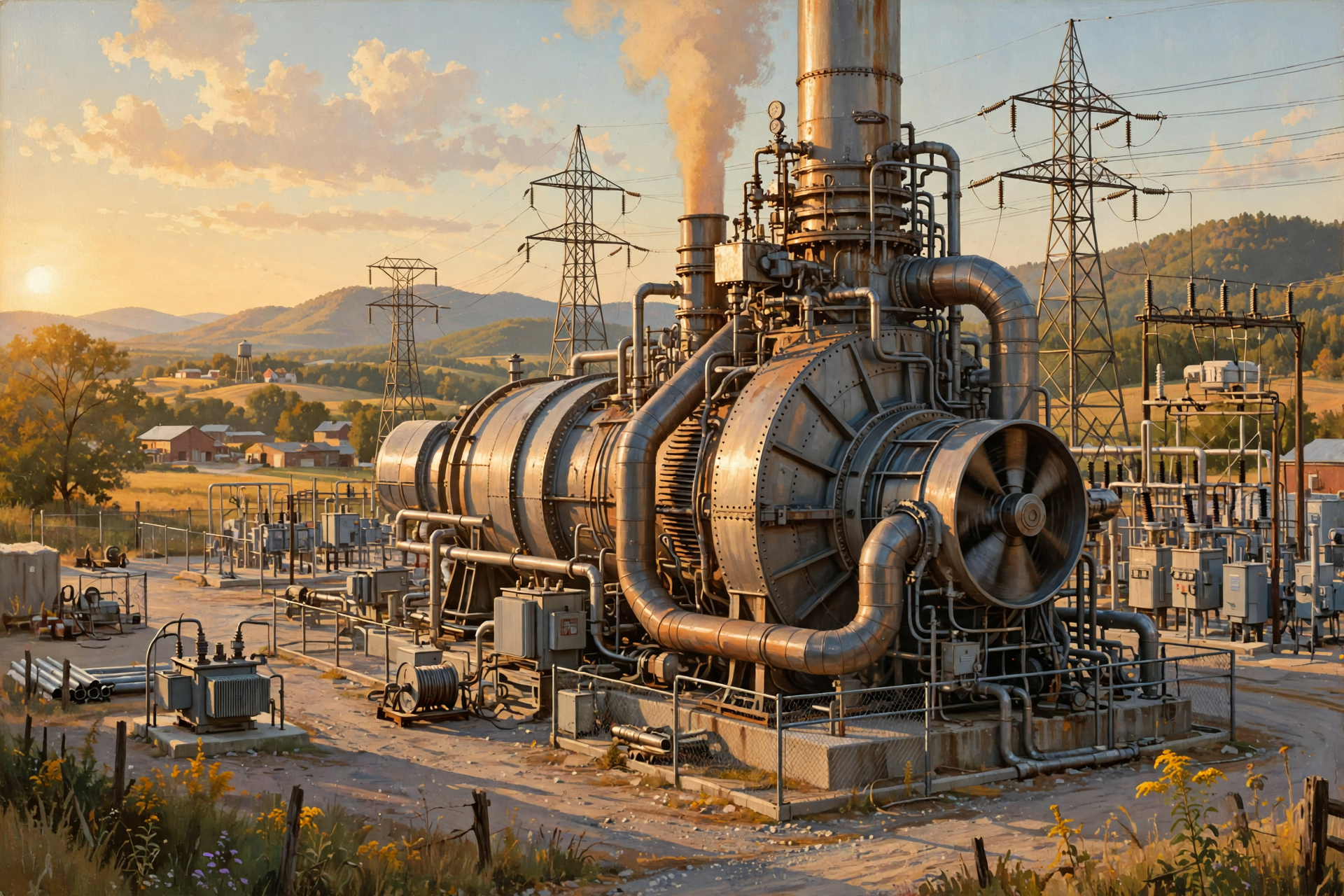
Anthropic, the company behind the Claude chatbot, agreed to spend about $3.4 billion on natural-gas generators that can make up to 1.7 gigawatts of electricity, according to a Financial Times report that TechCrunch and others picked up Monday. The generators were first ordered by a Texas equipment company that couldn’t pay for them, so Anthropic took over the order. The machines are expected in about two years, according to the report. The companies hadn’t publicly confirmed the details, so treat them as news reports.
Why? Power is the bottleneck for AI. TechCrunch notes the waiting list for big gas turbines stretches into the early 2030s, and the line to hook up to the electric grid can be just as long.
It’s like buying a neighbor’s spot in line at the sawmill — you get your boards sooner, but the logs still have to be cut somewhere.
What it means for you: Nothing changes on your power bill because of this news. But the Tennessee Valley is part of the AI power story — a big project in Bradley County, outside Chattanooga, has proposed making its own electricity. The good questions are the ones your electric co-op already asks: who pays for new power, and where does it sit?
🛣️ Washington Talks About Guardrails Again

In a CBS 60 Minutes interview that aired Sunday, President Trump said he would consider working with Democrats on AI safeguards. “I don’t mind guardrails,” he said, but he doesn’t want the U.S. to fall into “a deep second position” behind China. He also said AI’s risks can be managed. CFO Dive reported he didn’t name any specific safeguards.
It’s like the guardrail on a mountain switchback — nobody wants it slowing traffic, and everybody’s glad it’s there on the curve.
What it means for you: A change in tone is not a new law. Nothing about how you use your phone or computer changes this week. If you run a business, a simple habit helps no matter what Washington decides: write down which AI tools you use and who checks their work.
🏛️ A West Tennessee County Packs the Meeting Room
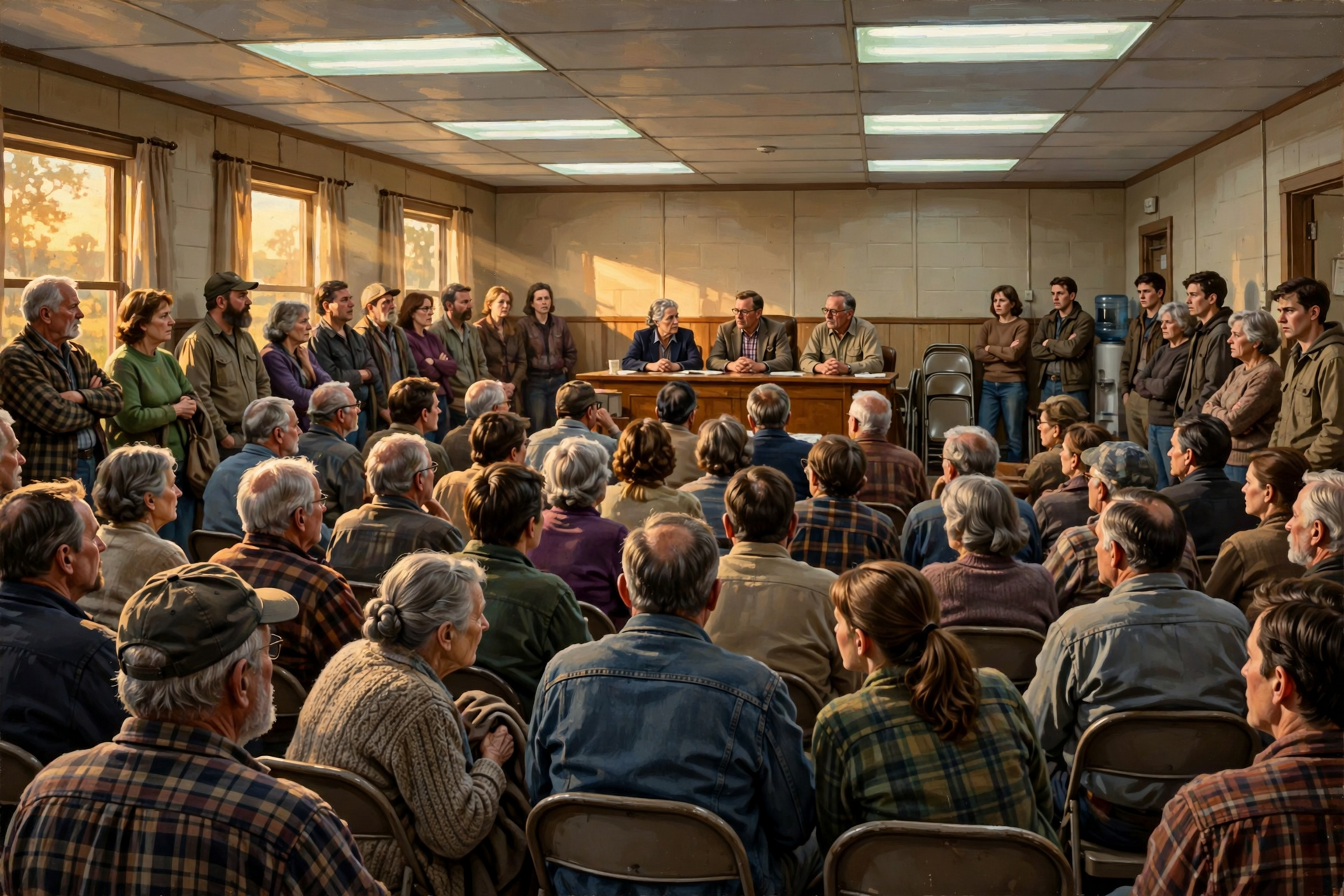
A big crowd showed up at Monday’s Gibson County Commission meeting in West Tennessee to speak against a proposed data center on about six acres of farmland near Milan, WBBJ reported. The twist: the landowners had already withdrawn their rezoning request back on Oct. 26, so there was no vote. Commissioners listened anyway. One resident worried about two nearby schools; the county’s economic development director said such projects can bring in tax money for schools.
Meanwhile, the Tennessean reported that data centers already make up 18% of TVA’s industrial electricity demand, a share TVA expects to double by 2030.
It’s like showing up to a farm auction after the place sold private — you still get to say your piece, and folks remember you came.
What it means for you: We’ve found no data-center proposal in Sequatchie, Bledsoe or Marion counties. If one ever came, it would almost certainly start the same way — with a rezoning request on a public agenda. That’s where neighbors have the most say, and it’s posted ahead of time.
🛻 A Cheap New AI for Everyday Chores

Meta, the company behind Facebook and Instagram, released Muse Ember on Monday — its smallest, cheapest AI model yet. It’s built for the repetitive jobs AI helpers do all day: sorting, pulling details out of documents and reading screenshots, scanned papers and voice memos. TechCrunch reports it costs 10 cents per million “tokens” (small chunks of text) going in. Meta claims it gives more for the money than rival models from Anthropic and OpenAI — that’s Meta’s claim.
You don’t haul one sack of feed in a dump truck. The pickup handles the everyday runs, and the big truck waits for the big jobs.
What it means for you: Most folks won’t use this directly. But it’s one more sign that AI for small, routine tasks keeps getting cheaper — things like turning a pile of receipts into a list or reading a flyer into a calendar. Small shops can afford tools that only big companies could a year or two ago. Still keep a person checking the results.
📝 “Who Wrote This?” Gets an Answer

The online publishing site Medium launched a free writing app called TK on Monday. Writers type “@TK” in the middle of a sentence to ask an AI helper a quick question or pull in something they wrote earlier. It also gives headline and editing feedback. The part we like most: authors can publish a note explaining how AI was used in their writing. Medium says writing in the AI era should be “clear, transparent, and inspectable.”
It’s like the note on a recipe card — “Mamaw’s, with my changes” — so you know whose it is and what got added.
What it means for you: You deserve to know how the news you read was made. Dunlap.Today uses AI to help gather and draft, and a person reviews and stands behind every story. Expect to see more “how this was made” notes from us and from others. If a story doesn’t say, it’s fair to ask.
🏚️ AI-Built Websites Get a Place to Live
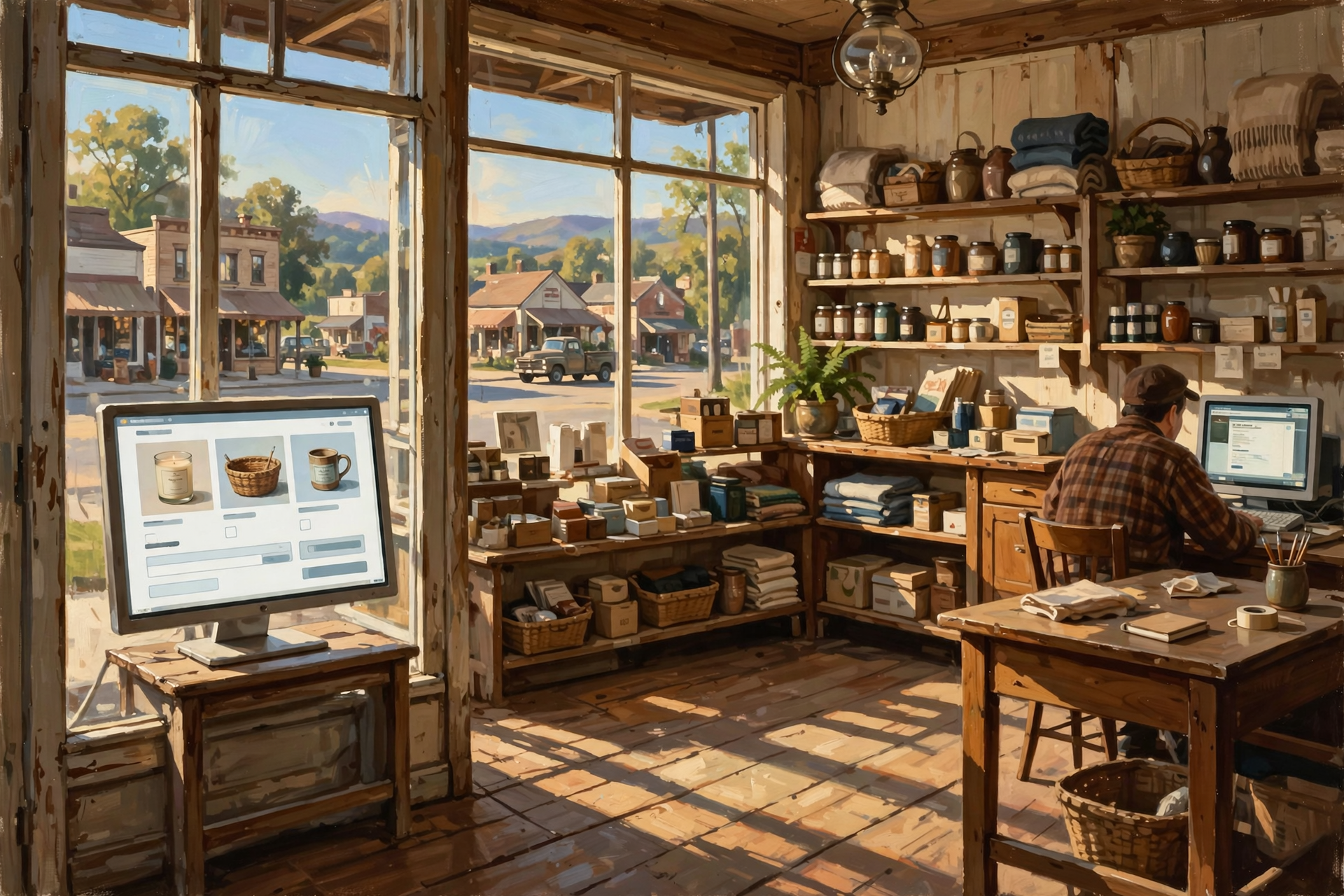
Automattic, the company that owns WordPress.com, launched Spacefast on Monday. It’s a service that puts websites and small apps built with AI helpers like ChatGPT or Claude online, with the behind-the-scenes pieces they need: logins, file uploads, email and visitor counts, TechCrunch reported.
It’s like a ready-built shed delivered on a trailer — mighty handy, but somebody still has to level the ground before it sets down.
What it means for you: More Main Street shops will make websites with AI, and putting them online keeps getting easier. The part that still needs a person: checking prices, hours, phone numbers, directions and the order button. Click through every page yourself before you tell customers about it.
🎡 Instagram Will Now Guess If Your Teen Is a Teen

Meta said Monday that Instagram is using AI worldwide to spot users it thinks are teens — even if they typed in an adult birthday — and move them into Teen Accounts. Those accounts are private by default, only get messages from people they follow or know, and hide harmful comments. TechCrunch reports the AI looks for clues like birthday posts, mentions of a school grade and cues in photos. U.S. parents will see a short video in their feed explaining it.
It’s like the ride operator at the county fair eyeballing whether a kid’s tall enough — usually right, but worth a second look.
What it means for you: This is mostly good news for families. But AI guesses can be wrong either way, so it’s still worth sitting down with your teen and looking at their account settings together — especially if a new phone shows up under the tree this year.
✅ Your Front-Porch AI Checklist

- ✅ Glance at your power bill each month. Know your usage so you’ll notice if rates ever change.
- ✅ Remember: talk about AI rules isn’t a law. Wait for the actual rule before changing anything.
- ✅ Big projects start with a rezoning request on a public agenda. That’s the meeting to watch.
- ✅ Small business? Try one cheap AI tool for one boring chore — and have a person check the results.
- ✅ When you read a story, look for who wrote it and how it was made. It’s fair to ask.
- ✅ Built a website with AI? Click every page, call the phone number and test the order button yourself.
- ✅ Sit down with your teen and check their Instagram settings together.
- ✅ Mark Tuesday, Nov. 10, 2:30 p.m. CT if you want to catch UTC’s public talk on the economic impact of AI.
Practical rule: Read the meter before you sign the bill — know what a tool costs, who pays for it and who checked the work.
— Dunlap.Today
📚 Plain-English AI Glossary
- Gigawatt: A billion watts of power — roughly what a large power plant puts out.
- Gas generator / turbine: A machine that burns natural gas to make electricity.
- Data center: A big building full of computers that run websites and AI.
- Rezoning: A public request to change what a piece of land can be used for, like farm to industrial.
- Guardrails (in AI): Rules or safety limits on what AI can do.
- AI model: The “brain” program behind a chatbot or AI helper.
- Token: A small chunk of text — about part of a word — that AI companies use to measure and charge for work.
- AI agent: A helper that can take actions — sort, send, fill in forms — not just answer questions.
- Vibe coding: Building a website or app by describing it to an AI in plain words.
- Teen Account: Instagram’s stricter, safer account type for users ages 13 to 17.
❓ Frequently Asked Questions

Will AI raise my electric bill?
Nothing in this week’s news changes your bill. Utilities and TVA are planning for more demand from data centers, and TVA already charges data centers a separate rate. We’ll keep watching and tell you if anything changes for Valley customers.
Did Anthropic confirm the $3.4 billion generator deal?
Not publicly when the story broke. The details come from a Financial Times report repeated by other outlets. Treat the numbers as reported, not confirmed.
Is there a new federal AI law?
No. The President said he’s open to AI “guardrails,” but he didn’t name specific ones and no new law has passed. Tennessee’s own AI laws, like the ELVIS Act protecting people’s voices, are still in place.
Is a data center coming to the Sequatchie Valley?
We haven’t found any data-center proposal in Sequatchie, Bledsoe or Marion counties. If that changes, we’ll tell you.
How would I know if one was proposed?
It would almost certainly show up as a rezoning request on a county planning commission or county commission agenda. Those meetings are public and posted ahead of time.
Do I need to do anything about Meta’s new Muse Ember model?
No. It’s a tool mostly for businesses and software builders. The takeaway is simply that AI for small chores keeps getting cheaper.
Should my business build its website with AI?
It can save time and money. Just check every page yourself — prices, hours, phone number, directions and any order button — before you share it.
Will Instagram’s age check lock my teen out?
No. It moves likely teens into Teen Accounts with safer settings. The AI can guess wrong, so it’s still worth checking settings together.
Does Dunlap.Today use AI?
Yes, to help gather information and draft. A person reviews what’s published and is responsible for every story. If you spot a mistake, tell us and we’ll fix it.
🔗 Other Resources

- TechCrunch: Anthropic buys $3.4B worth of turbines
- Data Center Dynamics: Anthropic’s 1.7GW generator deal
- CFO Dive: Trump signals openness to AI guardrails
- WBBJ: Crowd turns out over proposed Milan data center
- The Tennessean: Data centers are booming. Tennessee customers could bear the risk
- TechCrunch: Meta releases Muse Ember
- TechCrunch: Medium’s new TK app
- Medium: Introducing TK
- TechCrunch: Automattic debuts Spacefast
- Meta: Expanding Teen Account protections worldwide
🌄 Keep Learning, and Read the Meter

Nothing in this week’s news calls for fear. AI companies are hunting for electricity, and Tennessee communities are asking good questions about who pays. Washington is talking about guardrails, though nothing is written yet. AI for small chores is getting cheaper, websites are getting easier to build, writers are starting to show how AI helped, and Instagram is adding a safety net for teens.
Pick one small thing this week — maybe glancing at last month’s power bill, or checking your teen’s Instagram settings together — and save the rest for another morning. The more you learn, the more comfortable all of this becomes. We’ll keep watching what matters for the Sequatchie Valley so you don’t have to. Read Dunlap.Today and sign up for our newsletter for plain-English news from right here at home.
Sources
Know about an upcoming event or story in the Dunlap, TN area? Submit it here.


0 Comments