
Not All Data Centers Are the Same: From a Server Closet to an AI Mega-Campus
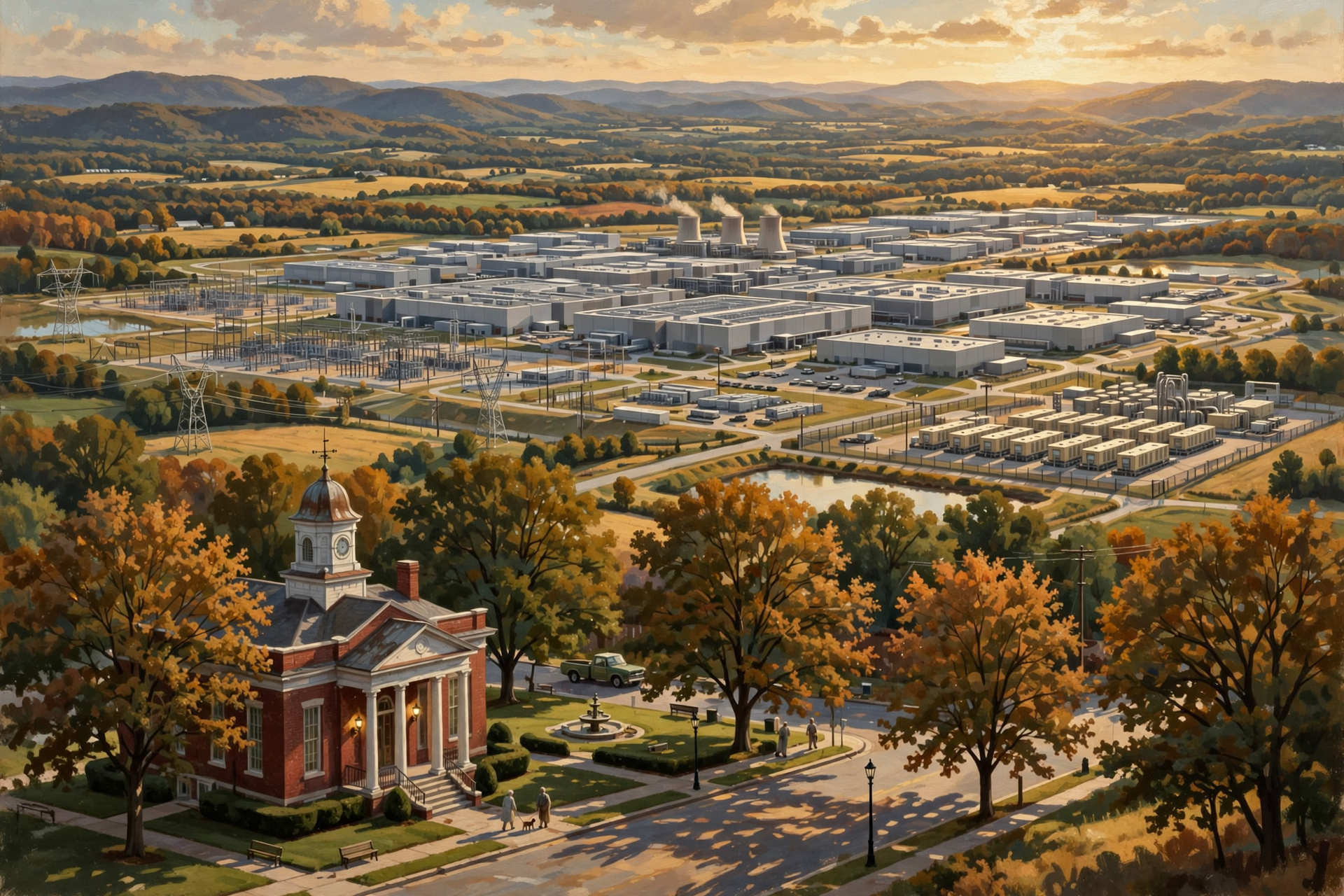
Suppose somebody walks into the courthouse and announces:
“They are building a farm.”
Your first question probably would not be:
“Are farms good or bad?”
You would probably ask:
“What kind of farm?”
Five acres of tomatoes?
Five hundred acres of corn?
A dairy?
A poultry operation?
A cattle farm?
A greenhouse?
Those are all farms.
They do not have the same land requirements, equipment, water needs, traffic, employment, buildings, smells, revenues or effects on their neighbors.
Now replace the word farm with data center.
We have exactly the same problem.
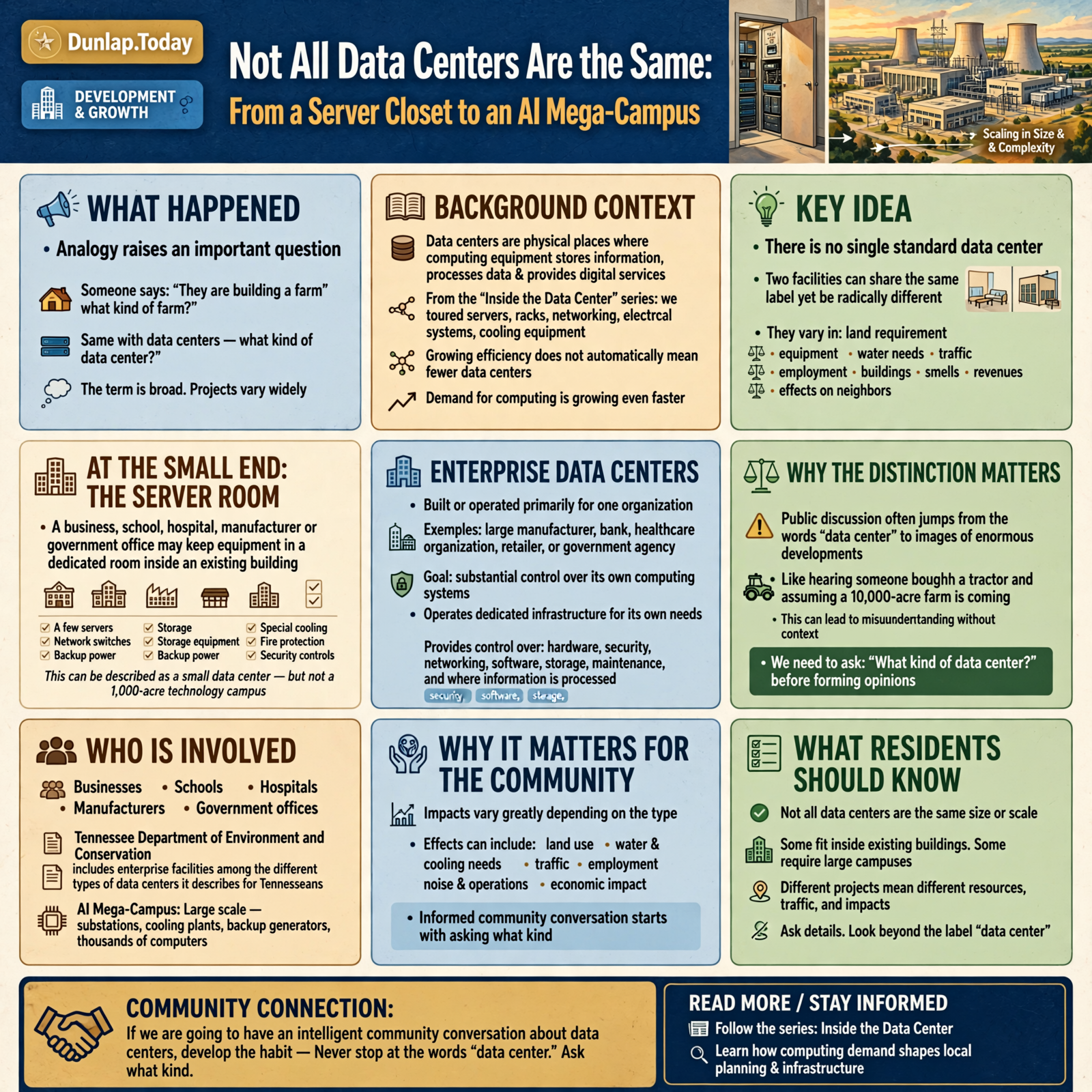
The term data center is so broad that two facilities can share the same label while being radically different projects.
One might fit inside an existing building.
Another might occupy an enormous campus with substations, cooling plants, backup generators and rows of buildings containing thousands of powerful computers.
If we are going to have an intelligent community conversation about data centers, one of the first habits we need to develop is this:
Never stop at the words “data center.” Ask what kind.
We Have Already Seen Why the Difference Matters
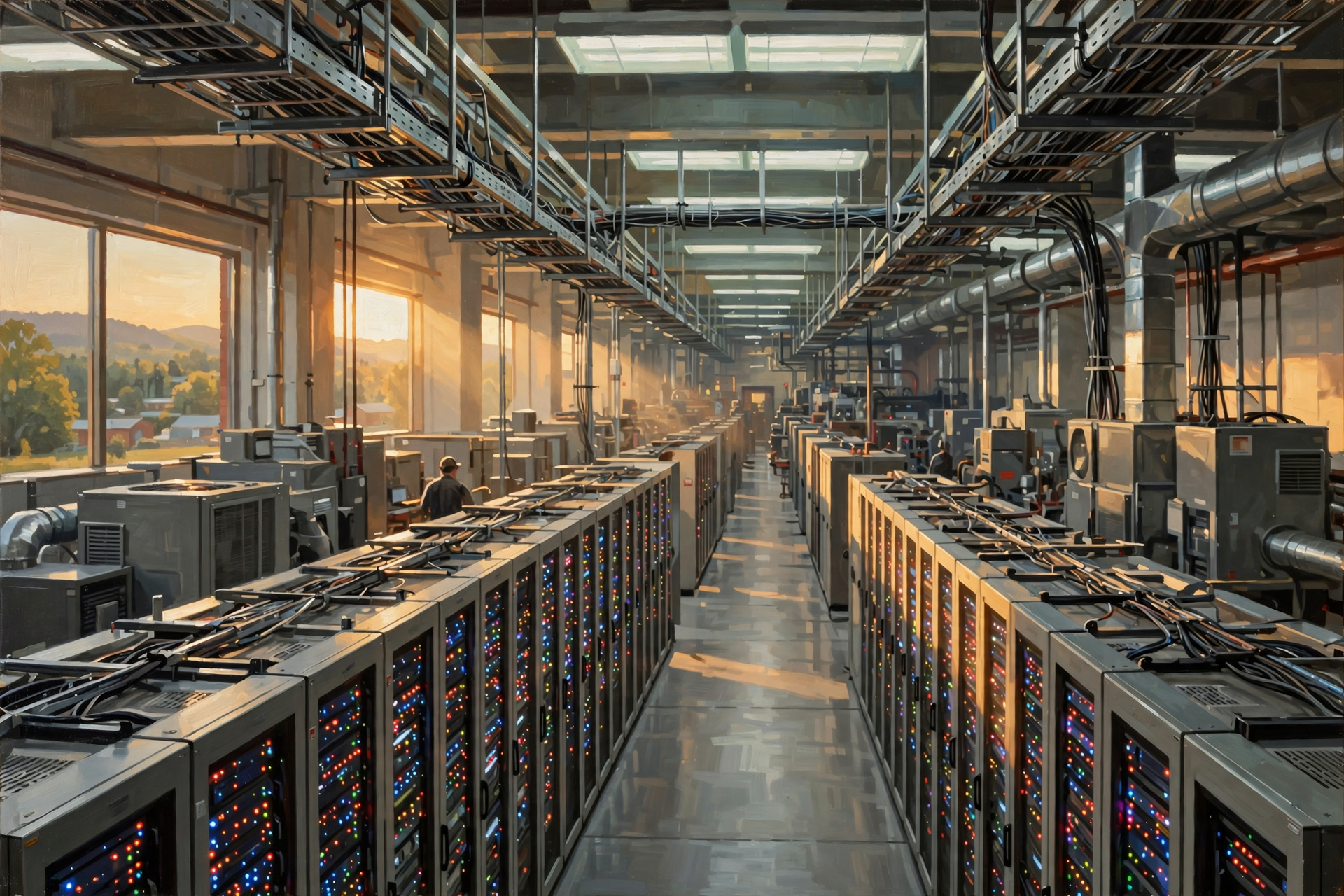
Earlier in our Inside the Data Center series, we learned that a data center is a physical place where computing equipment stores information, processes data and provides digital services.
We toured the servers, racks, networking, electrical systems and cooling equipment inside.
We compared the computer on your desk with the industrial-scale AI systems inside modern data centers.
And we looked at why growing efficiency does not automatically mean fewer data centers when demand for computing is growing even faster.
Now we need to add one more important piece:
There is no single standard data center.
At the Small End: The Server Room
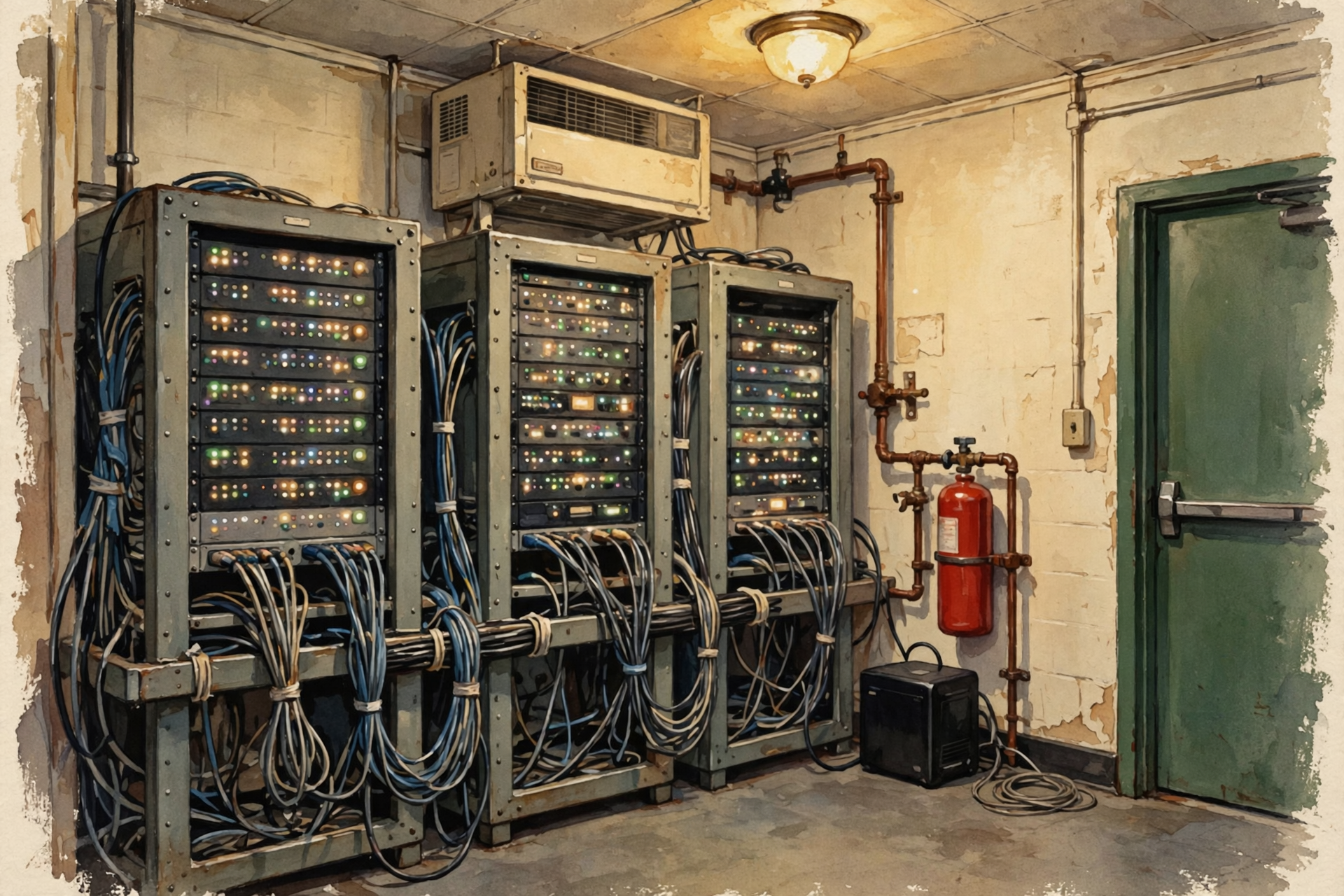
Let’s start with the smallest version.
A business, school, hospital, manufacturer or government office may keep some of its computing equipment in a dedicated room inside an existing building.
That room might contain:
- a few servers;
- network switches;
- storage equipment;
- backup power;
- special cooling;
- fire protection; and
- security controls.
You could reasonably describe this as a small data center.
But nobody is going to confuse it with a 1,000-acre technology campus.
The distinction matters because sometimes public discussion jumps immediately from the words “data center” to images of enormous developments.
That is like hearing somebody bought a tractor and immediately assuming a 10,000-acre farm is coming.
Enterprise Data Centers: One Organization, Its Own Computers
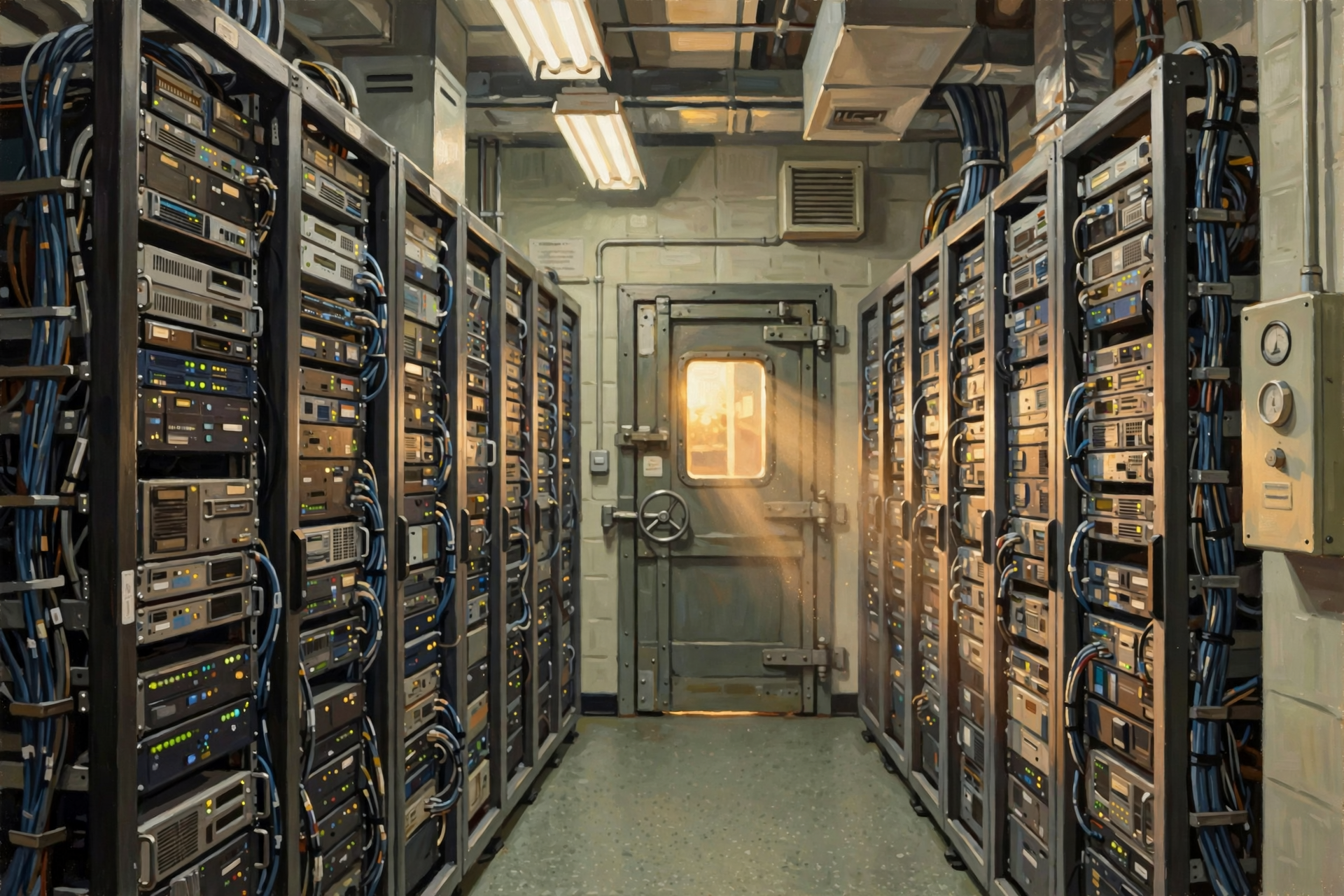
An enterprise data center is generally built or operated primarily for one organization.
Imagine a large manufacturer, bank, healthcare organization, retailer or government agency that wants substantial control over its own computing systems.
Instead of renting all its computing from somebody else, the organization may operate dedicated infrastructure for its own needs.
That can provide greater direct control over:
- hardware;
- security;
- networking;
- software;
- storage;
- maintenance; and
- where particular information is processed.
The Tennessee Department of Environment and Conservation includes enterprise facilities among the different types of data centers it describes for Tennesseans.
An enterprise data center can be substantial.
But its mission is generally different from a giant cloud facility designed to provide computing services to huge numbers of unrelated customers.
Colocation: Think Commercial Warehouse Space for Computers
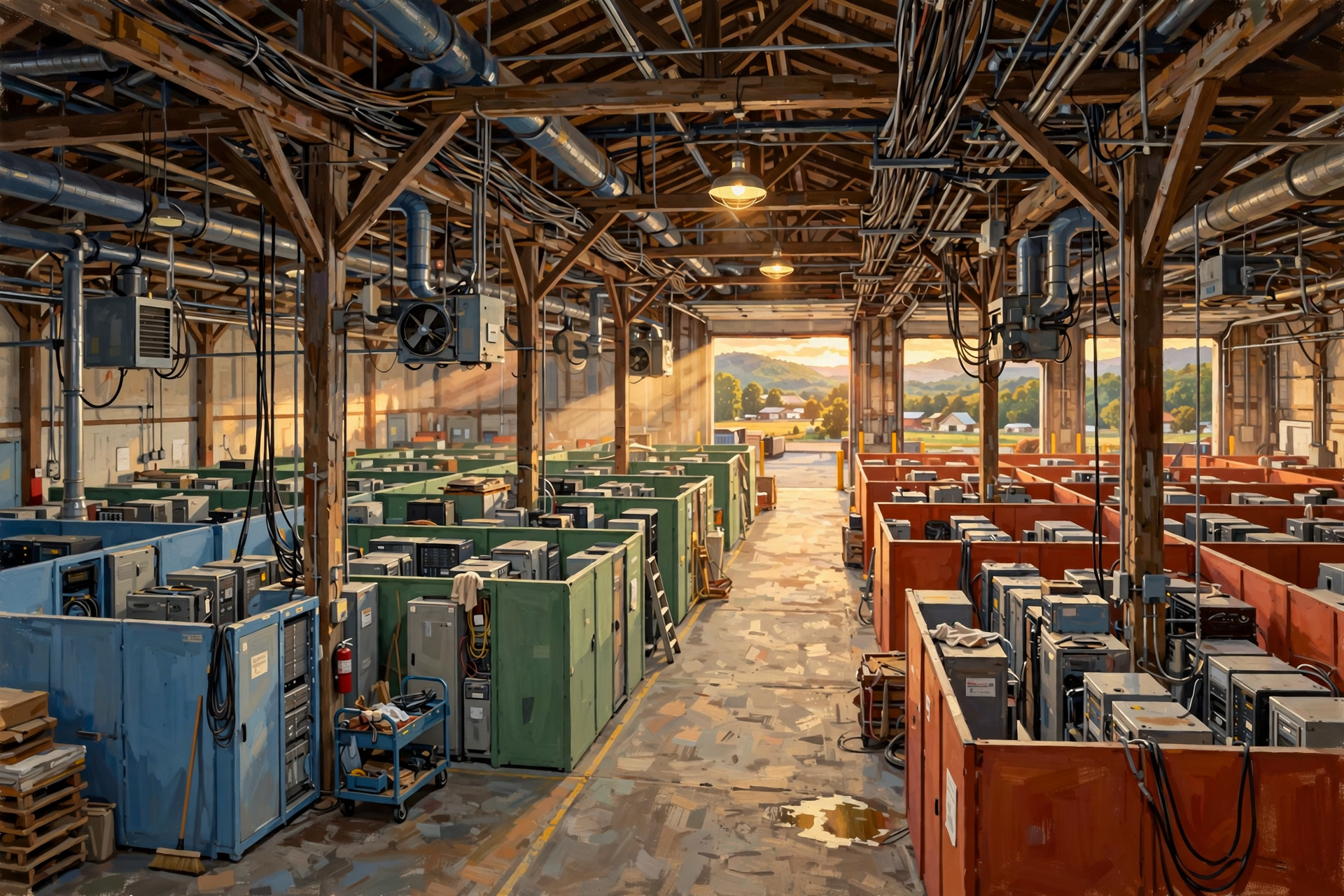
Now imagine a company needs serious computing infrastructure but does not want to construct and operate an entire data-center building.
Enter the colocation data center, often shortened to colo.
Colocation is somewhat like renting space in a well-equipped industrial building.
The data-center operator supplies things such as:
- the secure building;
- electrical infrastructure;
- cooling;
- network connections;
- backup systems; and
- physical security.
Customers rent space and install equipment according to the arrangement.
One building may therefore contain equipment belonging to many different organizations.
IBM’s overview of data-center types describes colocation as a model that lets organizations use professionally operated data-center facilities without building the entire physical environment themselves.
A useful analogy is a commercial kitchen.
You could build your own restaurant kitchen from the ground up.
Or you could rent time and space in a properly equipped facility.
You still make your product.
You simply do not own the entire building around the stove.
Edge Data Centers: Put the Computers Closer to the Work
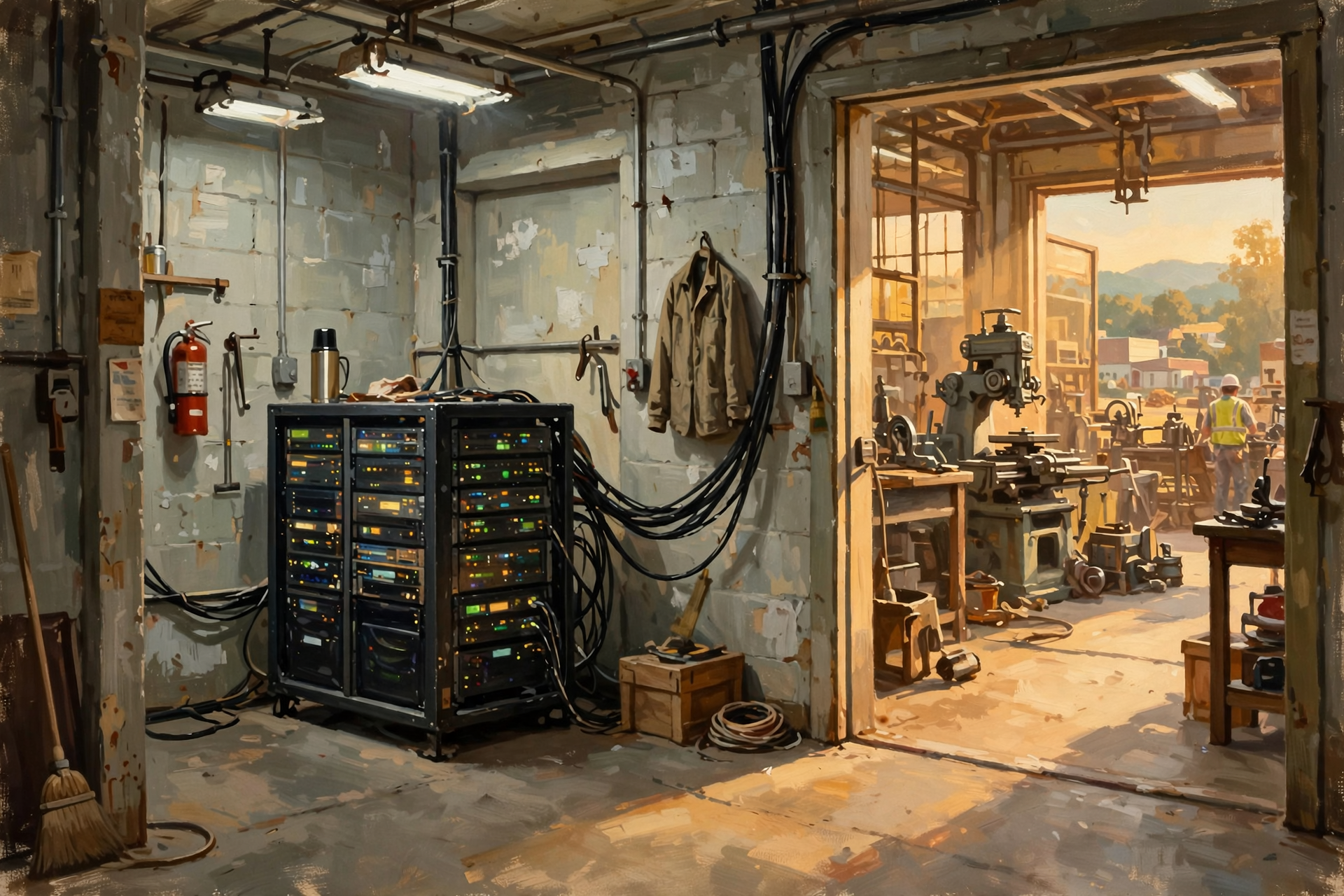
Not every computing task benefits from sending information hundreds or thousands of miles before anything happens.
Sometimes speed matters.
This is where edge computing comes in.
The idea is to move some storage and computing closer to the people, machines or devices producing and using the information.
Amazon Web Services describes edge computing as bringing computing and storage closer to the devices producing information and the users consuming it.
Why?
Because sometimes waiting for data to make a long round trip is undesirable.
Imagine:
- a factory robot needing to stop immediately when a hazard is detected;
- an autonomous machine making rapid decisions;
- a live online game reacting to a player’s movement;
- a camera analyzing video in real time;
- a telecommunications system processing nearby traffic; or
- a rural industrial site operating with limited connectivity.
An edge facility might be relatively small.
It might even consist of a modest collection of servers located near the operation they support.
Tennessee’s environmental guidance specifically notes that edge data centers can be small distributed facilities located closer to users.
Why Not Put Everything at the Edge?
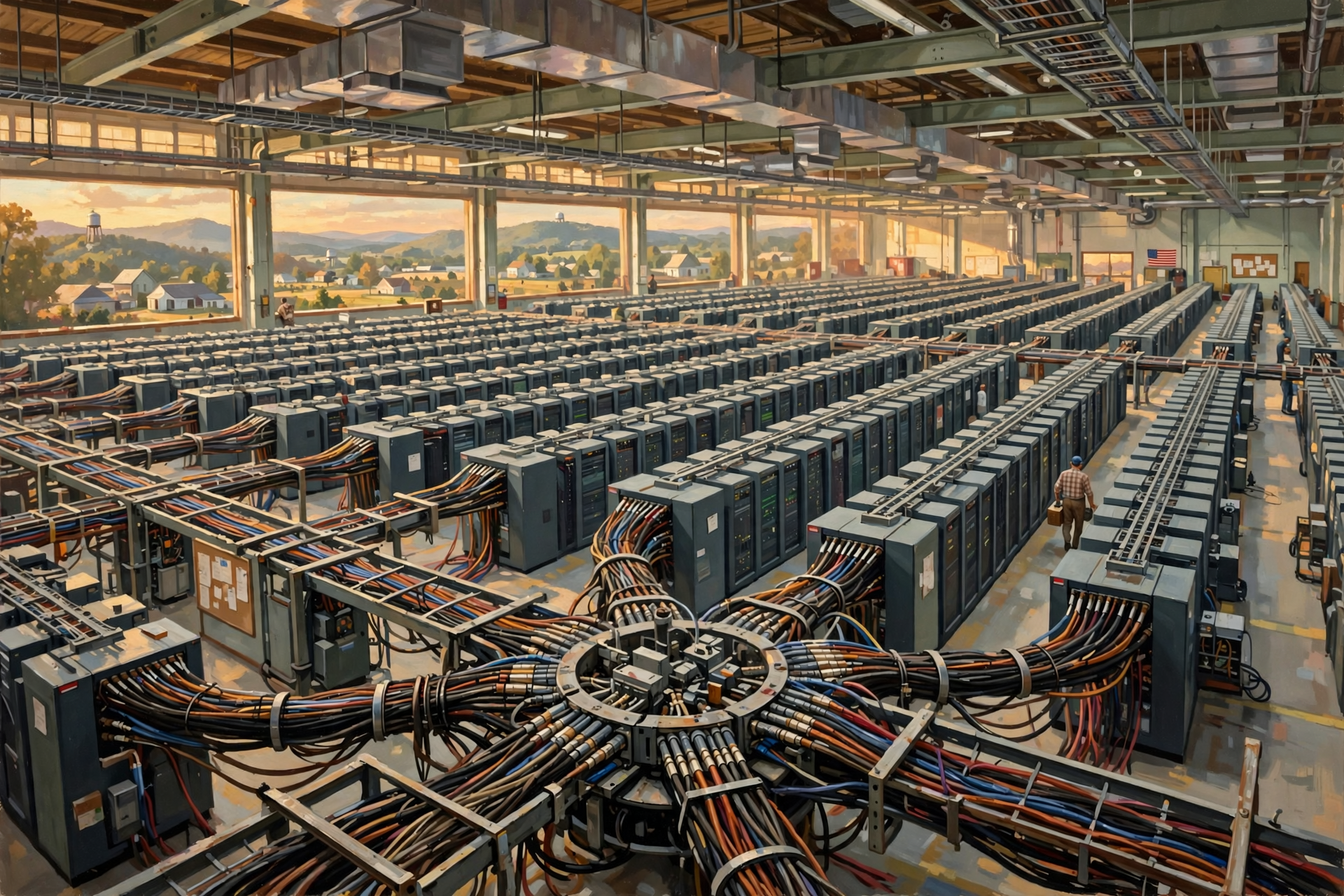
Because proximity is not the only thing that matters.
Centralized data centers can provide enormous economies of scale.
They can pool:
- computing;
- storage;
- networking;
- technical staff;
- security;
- electric infrastructure; and
- cooling.
Sometimes it makes sense to put computing near the user.
Sometimes it makes sense to put thousands of computers together in one large facility.
Increasingly, systems use both.
Some work happens close to the user.
Other work travels back to centralized data centers.
Cloud Data Centers: The Machinery Behind the Cloud
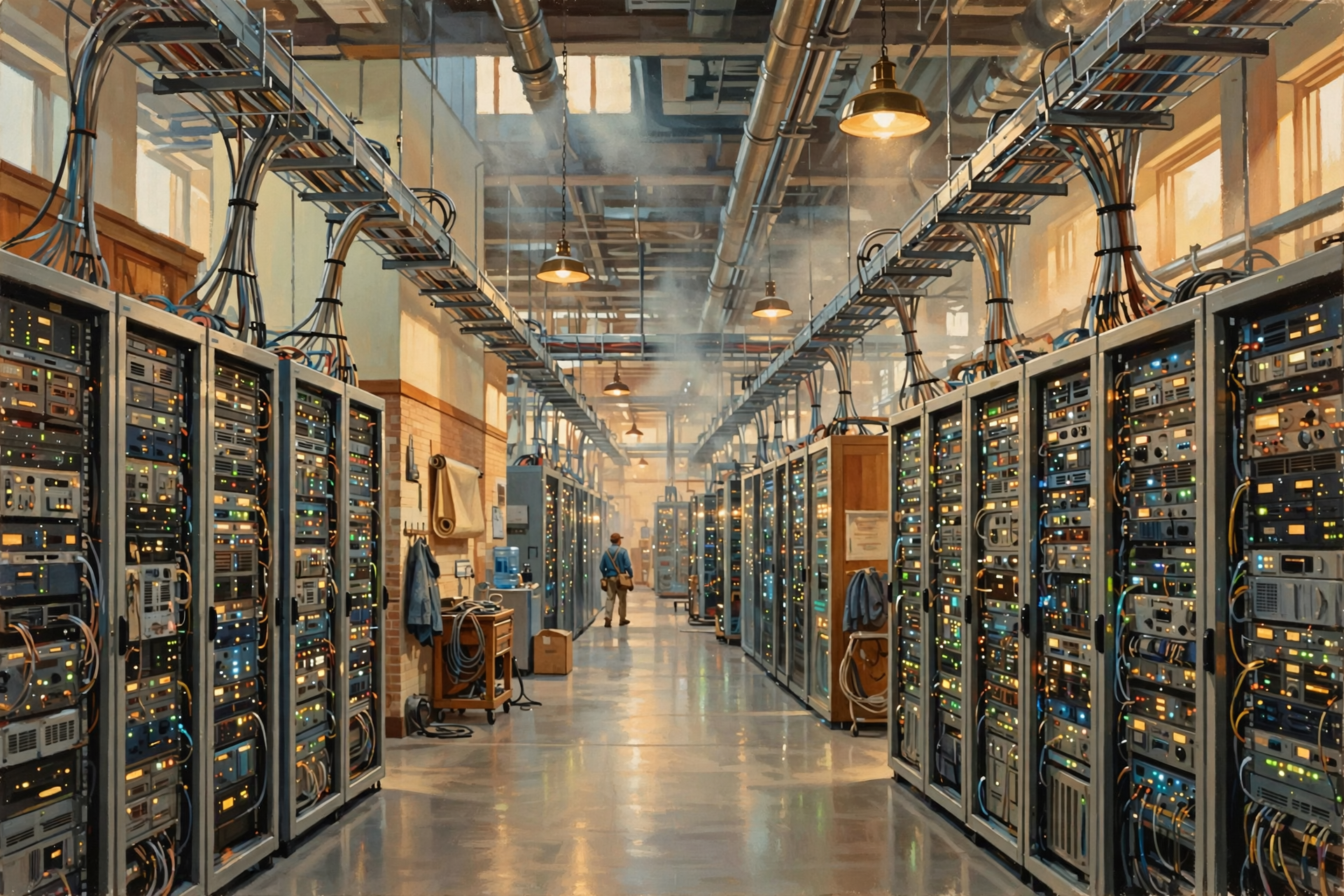
In an earlier article, we learned that “the cloud” is not a mysterious place floating above us.
Cloud computing allows customers to use computing resources without owning and maintaining all of the underlying hardware themselves.
Those physical resources still have to exist.
Cloud data centers contain the infrastructure supporting those services.
A large cloud provider can supply customers with:
- virtual servers;
- data storage;
- databases;
- website hosting;
- business applications;
- artificial-intelligence services;
- analytics;
- backup systems; and
- many other computing capabilities.
Instead of every business building its own computer facility, thousands or millions of customers can share enormous pools of professionally managed computing infrastructure.
That scale is one reason cloud providers operate some very large data centers.
Now We Arrive at Hyperscale
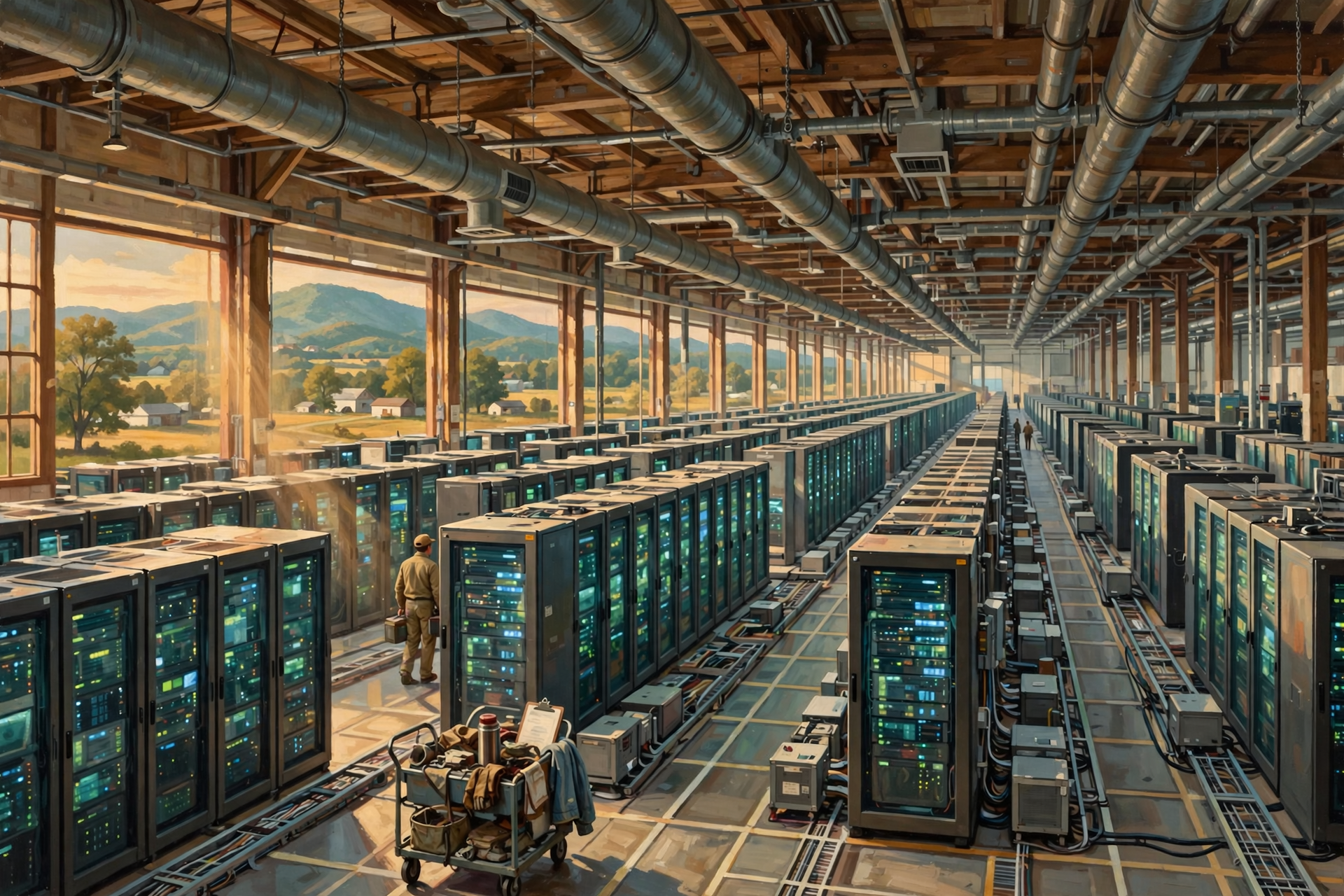
The word hyperscale sounds like it was invented by somebody in marketing who decided the word large was no longer trying hard enough.
But it describes a real architectural idea.
A hyperscale data center is designed to support computing infrastructure at enormous scale and to expand efficiently as demand grows.
The exact thresholds used to describe hyperscale facilities vary depending on the source and context, which is another reason not to judge a project from one label alone.
The important point is this:
Hyperscale facilities are built around very large computing workloads.
They may support:
- cloud computing;
- internet services;
- large storage systems;
- search engines;
- streaming services;
- large databases;
- artificial intelligence;
- business software; and
- global digital platforms.
Large cloud companies are among the most familiar operators of hyperscale infrastructure.
TDEC distinguishes hyperscale facilities from smaller data-center types and notes that they can be very large purpose-built facilities supporting enormous computing workloads.
A Hyperscale Data Center Is Not Automatically an AI Data Center
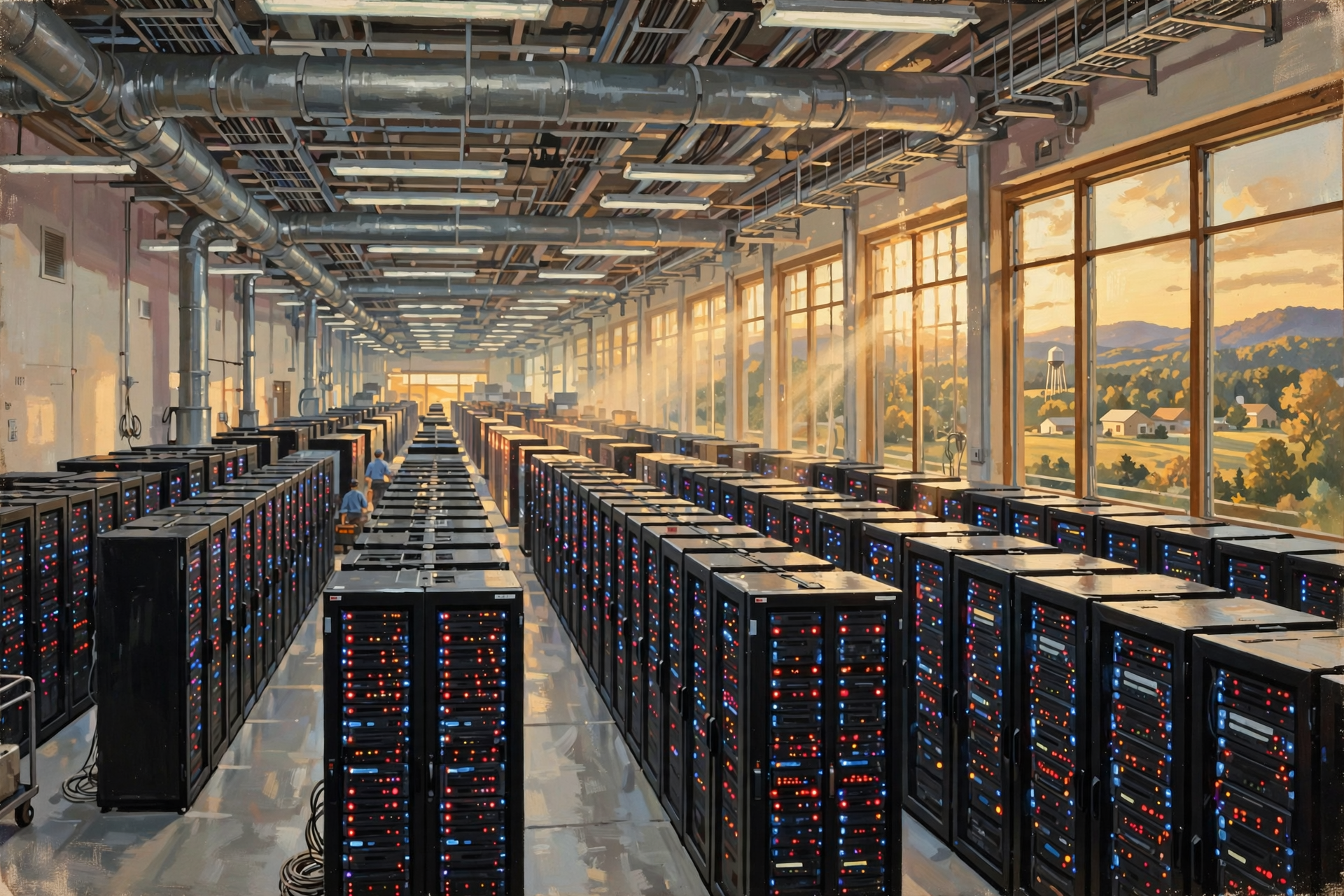
This distinction matters.
The words hyperscale and AI are sometimes used as though they mean the same thing.
They do not.
Hyperscale describes scale and architecture.
AI describes a type of computing workload.
A hyperscale facility can support cloud storage, business applications, streaming, search, databases and many other services in addition to artificial intelligence.
An AI-focused data center may also be hyperscale.
But the two labels answer different questions.
One tells us something about how large and scalable the infrastructure is.
The other tells us something about what the computers are doing.
So What Is an AI Data Center?
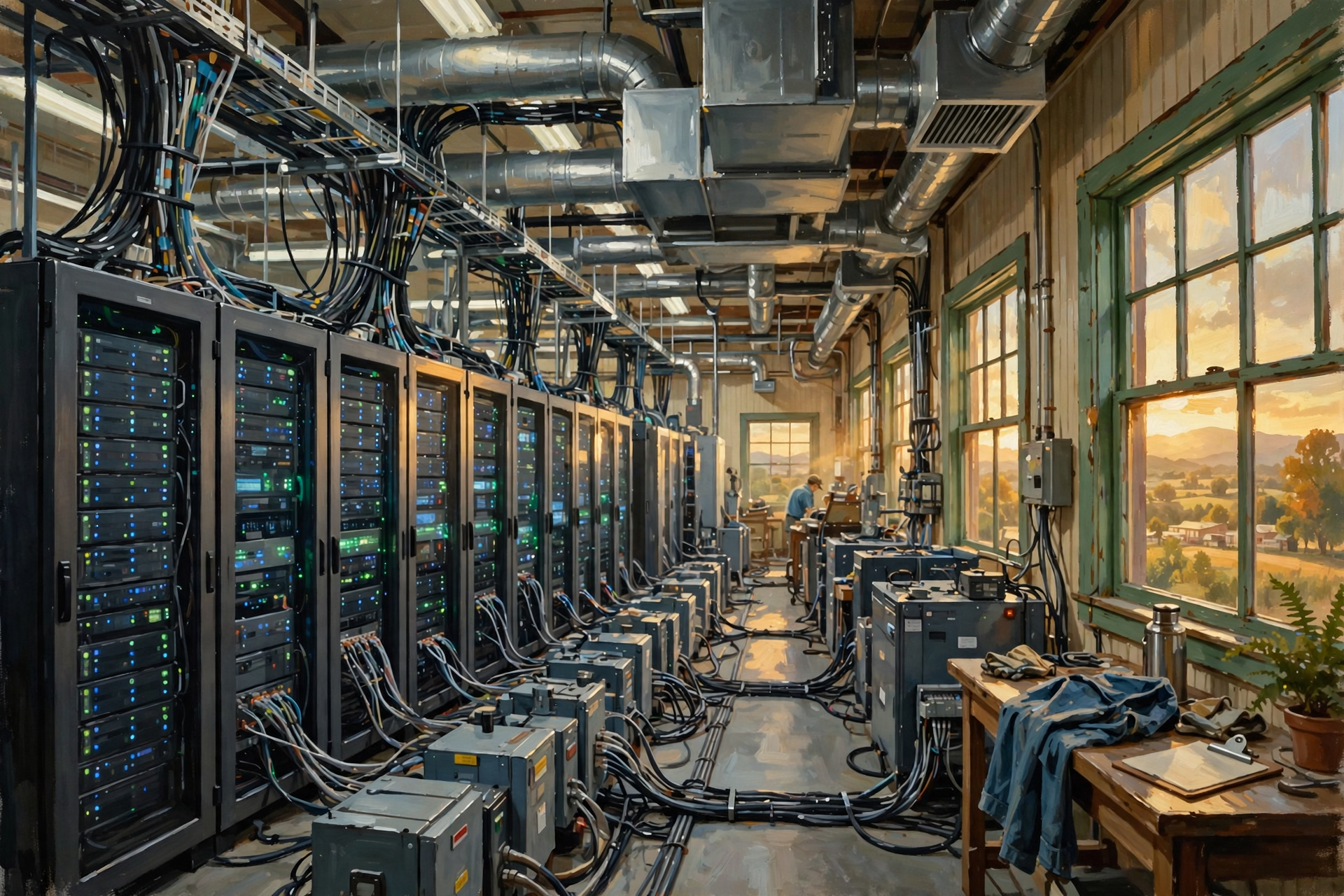
An AI data center is designed or equipped to handle substantial artificial-intelligence workloads.
That often changes what is inside.
Traditional computing has relied heavily on general-purpose CPUs.
Modern AI facilities can contain large quantities of GPUs and other specialized accelerators designed to perform enormous numbers of calculations in parallel.
As we discussed in the previous articles, that creates unusual demands for:
- high-speed memory;
- very fast communication between processors;
- extremely fast server-to-server networking;
- large electrical capacity;
- dense power distribution; and
- high-performance cooling.
IBM’s explanation of AI data centers emphasizes that AI workloads place different demands on processing, networking, storage and cooling than many traditional computing workloads.
This means two buildings with approximately the same square footage could have very different electrical and cooling requirements depending on the computers installed inside.
Square Footage Does Not Tell the Whole Story
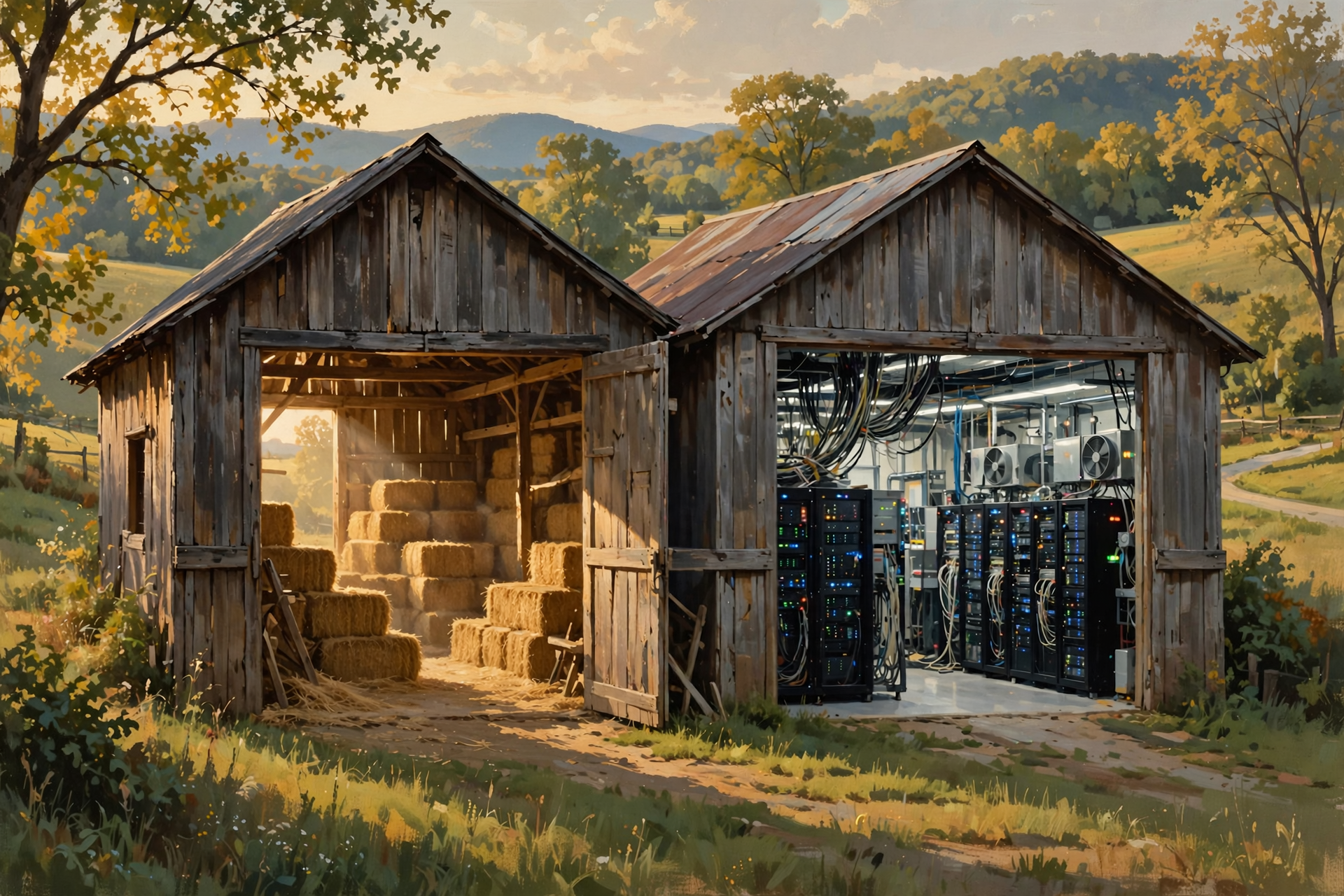
This is one of the most important lessons in today’s article.
Suppose somebody tells you:
“The proposed data center is 200,000 square feet.”
That is useful information.
It is not enough information.
Imagine two identical-looking barns.
One stores hay.
The other houses thousands of chickens.
The square footage may be identical.
The infrastructure and operating requirements most certainly are not.
Likewise, the important questions about a data center include:
- What equipment will be installed?
- How much electricity will it require?
- How densely packed will the computing be?
- What type of cooling will it use?
- What water will it require?
- How many backup generators will it have?
- How much fiber connectivity does it need?
- Will it operate at full capacity immediately or grow in phases?
Then There Are Data Center Campuses
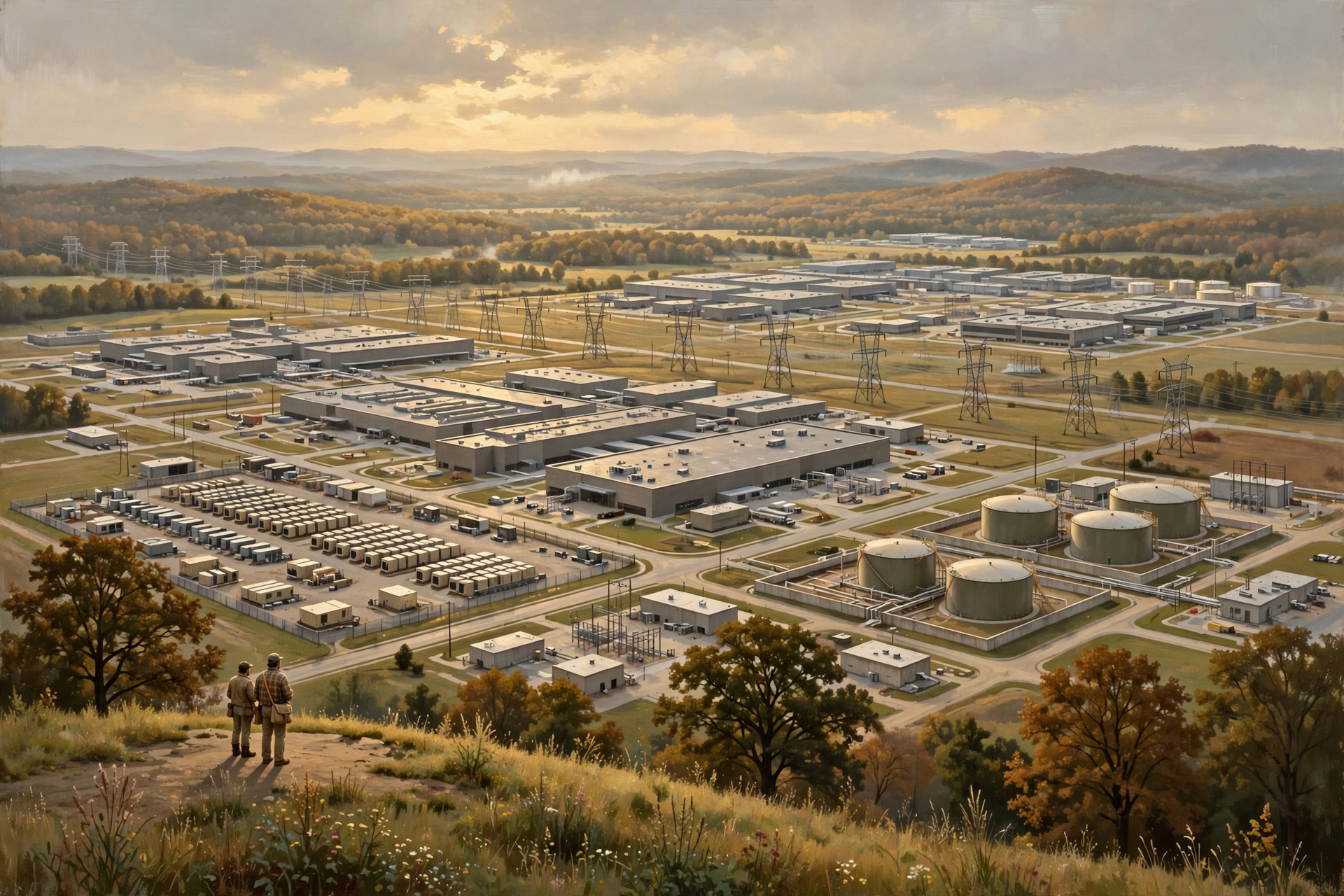
Sometimes what people call “a data center” is actually an entire data center campus.
Instead of one building, a project can include multiple computing buildings constructed over time.
The campus may also include:
- electrical substations;
- cooling infrastructure;
- administrative buildings;
- maintenance facilities;
- security buildings;
- fuel storage;
- generator yards;
- water infrastructure;
- fiber routes;
- internal roads; and
- large buffer areas.
This is important when communities hear an initial project announcement.
The first building may not represent the project’s eventual size.
One very useful question is:
What is the full buildout being planned—not just Phase One?
And Then Comes the AI Mega-Campus
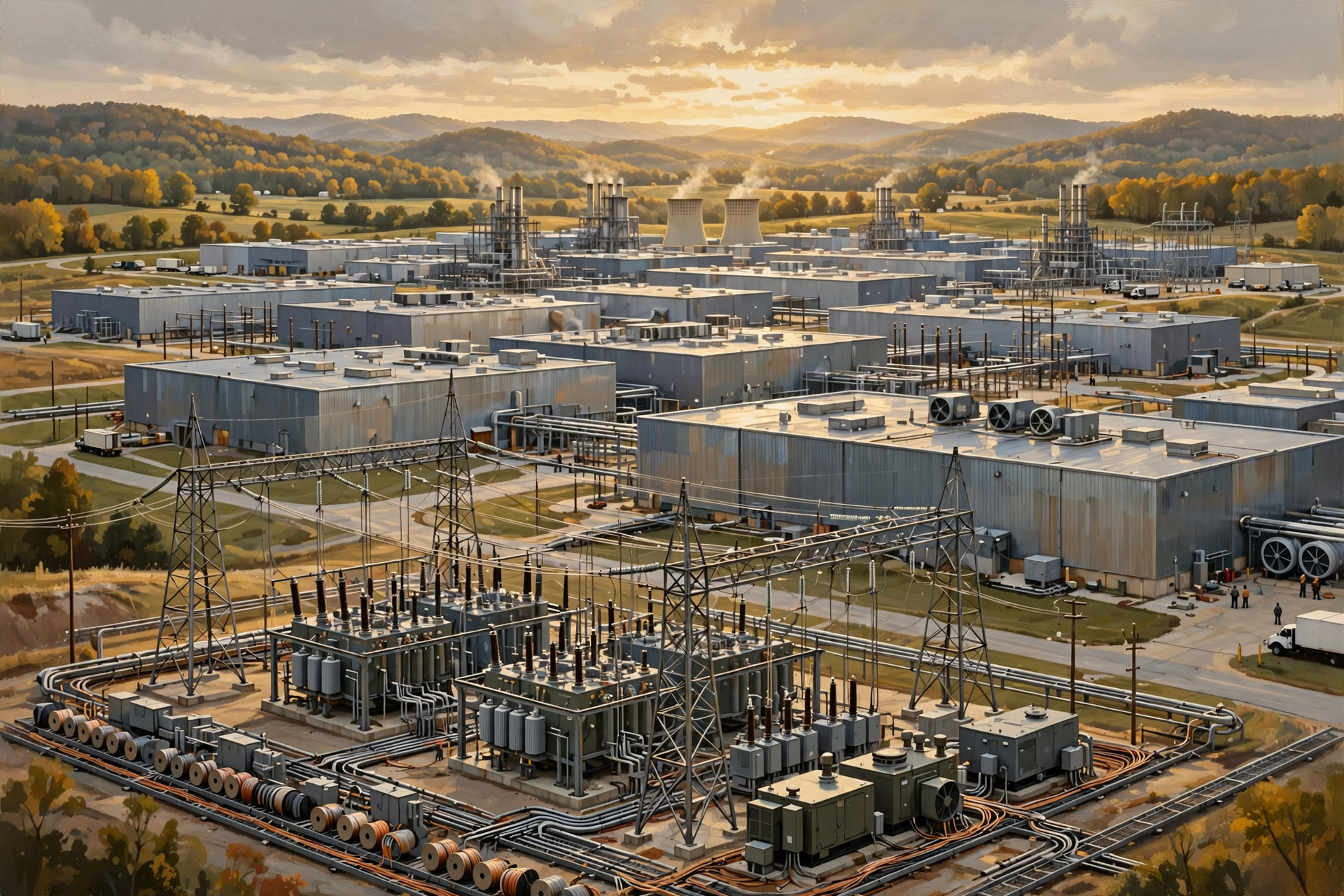
At the far end of the spectrum is what we might reasonably call an AI mega-campus.
That is not one universally standardized regulatory category.
It is a useful plain-English description for enormous developments built around industrial-scale AI computing.
These projects can involve multiple buildings and enormous quantities of specialized computing hardware.
At that point, the project begins to resemble a major industrial development as much as a conventional office technology project.
Electricity becomes one of the central design constraints.
Cooling becomes industrial infrastructure.
Fiber becomes essential transportation for information.
Substations become part of the project conversation.
Backup power becomes significant equipment.
And the relationship between the facility and the surrounding utility system becomes much more important.
Same Name, Radically Different Electrical Needs

Imagine four facilities:
Facility A: Ten racks of equipment supporting a local business.
Facility B: A regional colocation facility serving dozens of companies.
Facility C: A huge cloud facility containing thousands of servers.
Facility D: A dense AI campus full of power-hungry accelerators.
All four can legitimately be called data centers.
But asking, “How much electricity does a data center use?” without specifying which one is almost meaningless.
It is like asking:
How much fuel does a vehicle use?
A motorcycle?
A pickup?
A school bus?
A loaded tractor-trailer?
We need more information.
Same Problem With Water
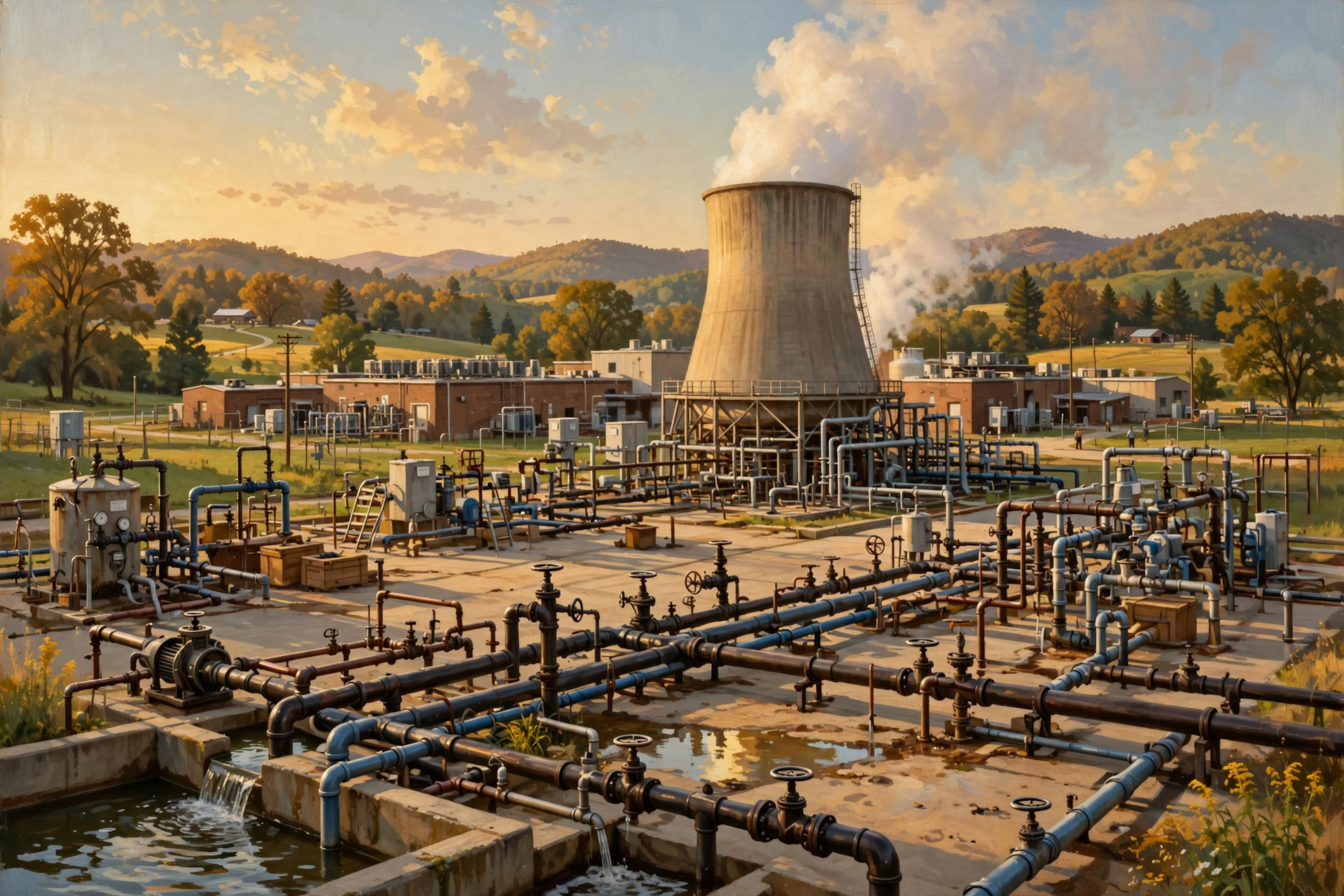
The same mistake appears in water discussions.
People sometimes see a large water-consumption number associated with one facility and assume it applies to every data center.
It does not.
Water requirements depend on factors including:
- cooling technology;
- climate;
- facility size;
- computing density;
- water source;
- operating conditions;
- how much heat must be removed; and
- whether the system consumes water or recirculates much of it.
TDEC specifically identifies cooling technology, water source and wastewater management as project-specific considerations when determining which environmental requirements may apply.
We will spend much more time on water later in this series because it deserves considerably more nuance than either “data centers use no water” or “data centers will drain the county dry.”
Same Problem With Jobs
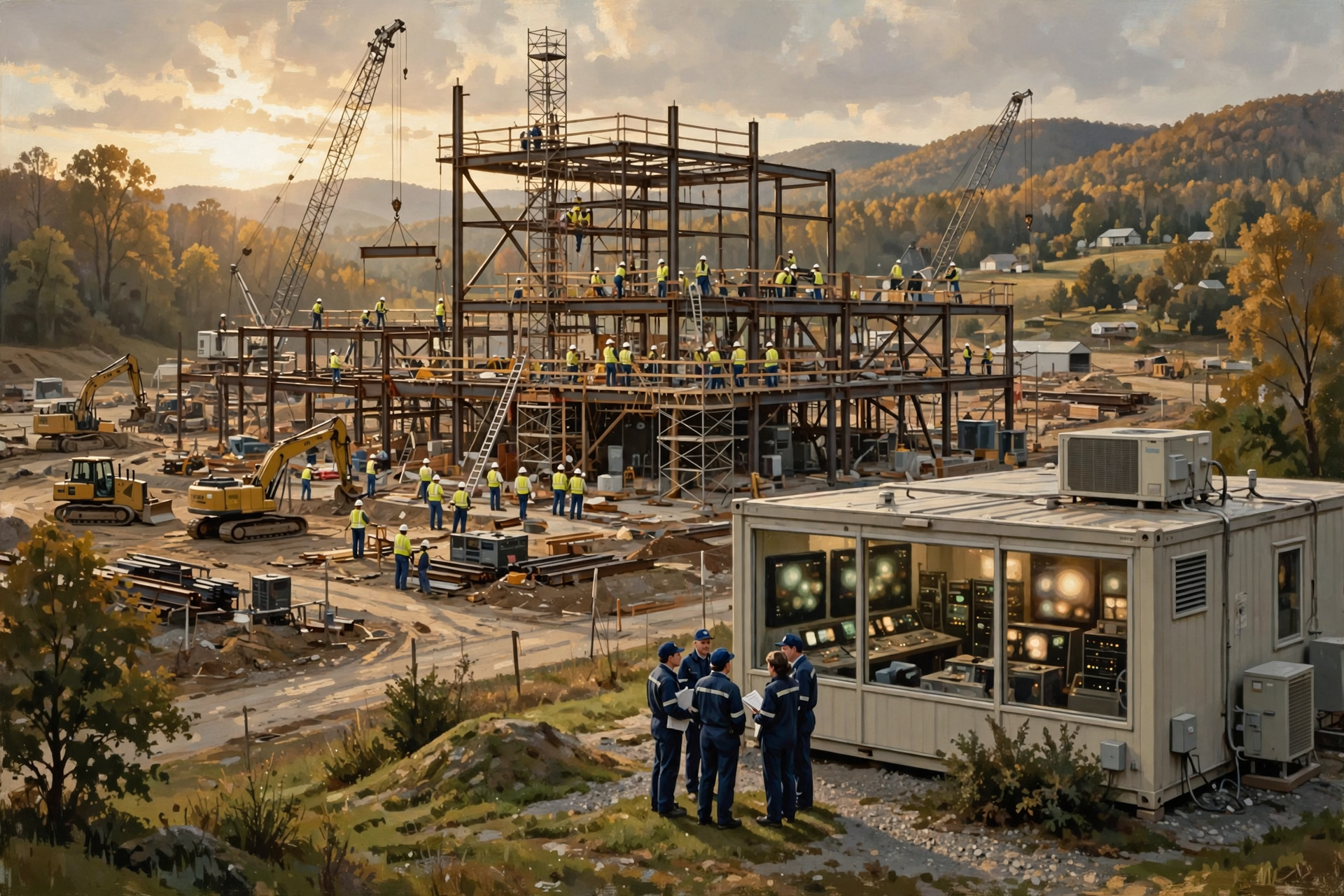
Ask how many people “a data center” employs and we run into the same problem again.
A small facility may require only a modest operating staff.
A large campus may create substantial construction employment during development but a much smaller permanent workforce once operating.
An enterprise facility, colocation operation and hyperscale campus can also require different kinds of employees.
And employment numbers can be presented in several ways:
- temporary construction jobs;
- permanent direct jobs;
- contractor positions;
- supplier jobs;
- indirect economic activity; and
- jobs created during later expansion phases.
So when somebody says:
“This data center will create 2,000 jobs.”
A useful follow-up is:
“Two thousand doing what, for how long?”
Same Problem With Tax Revenue

A small enterprise facility and a multi-billion-dollar campus obviously do not create the same potential tax base.
But even a huge announced investment does not automatically tell citizens how much local tax revenue will result.
The final answer may depend on:
- property valuation;
- equipment taxation;
- local tax structures;
- state incentives;
- local incentives;
- payment-in-lieu-of-tax arrangements;
- depreciation;
- ownership structures; and
- the timing of construction phases.
We will cover those issues separately later in this series.
The point today is simply that the words “data center” do not tell you what the economic deal looks like either.
Follow the Workload
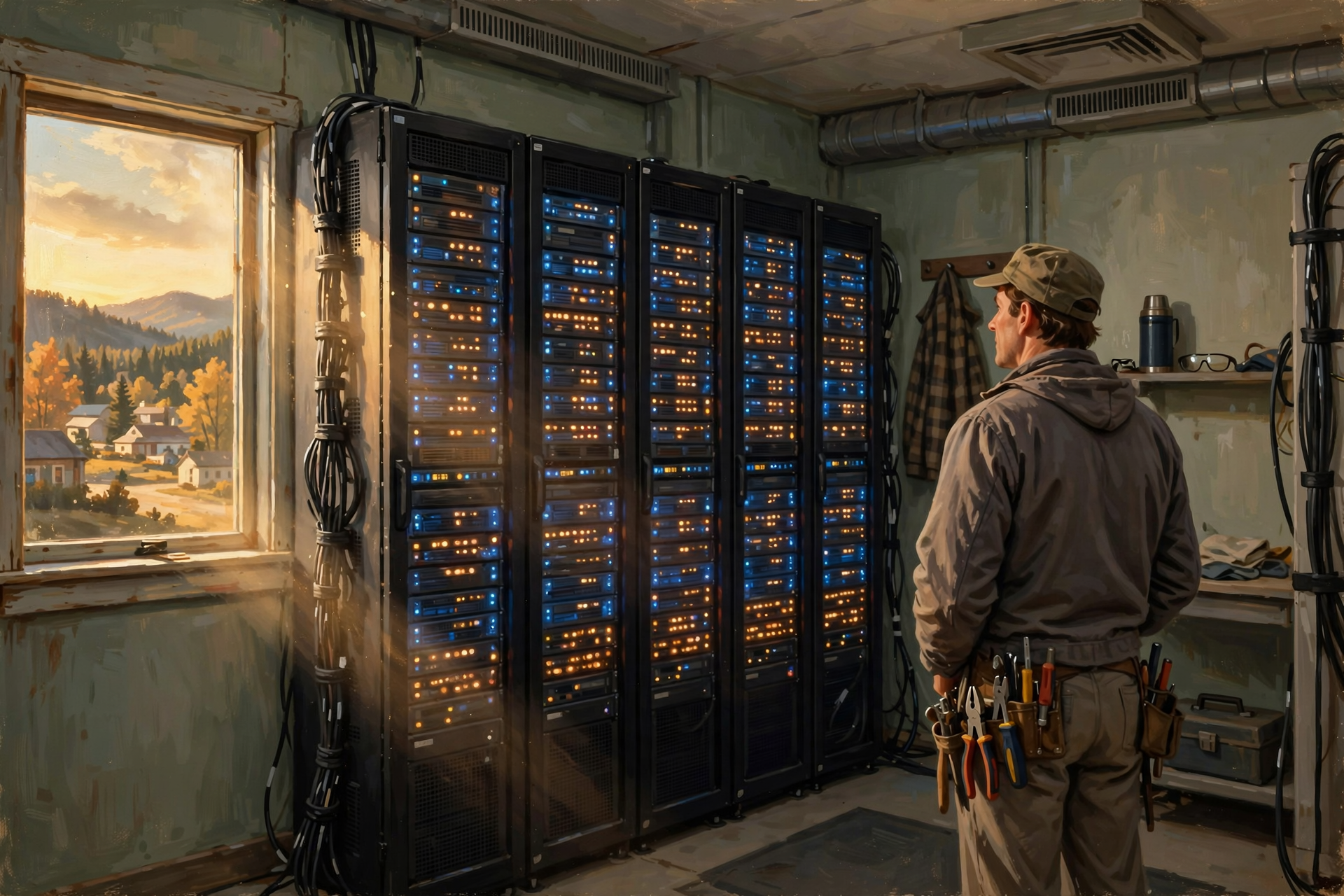
One of the best ways to understand a data center is to stop looking first at the building and ask:
What work are these computers supposed to perform?
Consider a few examples.
A Small Business Server Room
It might manage:
- company files;
- accounting databases;
- internal applications;
- security cameras; and
- employee systems.
An Edge Facility
It might process:
- telecommunications traffic;
- industrial sensors;
- streaming content;
- gaming traffic; or
- real-time local applications.
A Colocation Facility
It might contain infrastructure belonging to dozens or hundreds of separate organizations.
A Cloud Data Center
It might support:
- websites;
- business software;
- databases;
- cloud storage;
- virtual machines;
- analytics; and
- AI services.
An AI Facility
It might:
- train large AI models;
- serve AI models to customers;
- generate images and video;
- perform scientific simulations;
- run autonomous agents;
- analyze enormous datasets; or
- support other high-performance workloads.
The workload helps determine the infrastructure.
The Five Questions I Would Ask Before Anything Else

If somebody announced tomorrow that a data center was proposed somewhere in the Sequatchie Valley, I would start with five questions.
- What kind of data center is it?
- What is its planned full buildout—not merely the first phase?
- How much electrical capacity will the completed project require?
- What cooling system and water supply will it use?
- What will the computers actually be doing?
We would still have many questions after that.
But those five answers would immediately tell us considerably more than the phrase “a data center is coming.”
Hold On—Is That True? “Every Data Center Is a Giant AI Facility”
No.
Data centers supported businesses, banks, websites, communications and cloud computing long before today’s generative-AI boom.
AI is driving significant new demand for computing infrastructure, but many data centers perform other work.
Even facilities that support AI may also support cloud services, storage, databases and other workloads.
Hold On—Is That True? “Small Data Centers Don’t Matter”
They can matter quite a bit.
Smaller edge facilities can be important precisely because they are located closer to users and equipment.
A relatively small amount of nearby computing may dramatically improve performance for a time-sensitive application.
Bigger does not automatically mean more important.
It means bigger.
Hold On—Is That True? “Hyperscale Means AI”
No.
Hyperscale is primarily about operating computing infrastructure at enormous scale.
AI can be one of the workloads.
So can cloud storage, websites, databases, streaming and many other services.
A hyperscale facility can be heavily involved in AI without being exclusively an AI facility.
Why This Distinction Matters for Rural Tennessee

Imagine somebody proposes a 20-acre edge or enterprise facility.
Now imagine somebody proposes a multi-building AI campus eventually requiring an enormous amount of electrical capacity.
Calling both of those simply “a data center” hides almost everything the community actually needs to know.
The questions surrounding them could be radically different.
For a large project, residents may need to understand:
- land use;
- electrical generation;
- transmission;
- substations;
- water supply;
- wastewater;
- cooling;
- generator noise;
- air permits;
- traffic during construction;
- permanent employment;
- local tax revenue;
- tax incentives;
- road improvements;
- fiber construction; and
- future expansion plans.
The Tennessee Department of Environment and Conservation makes an important point for exactly this reason: data centers come in several different types, and the regulatory issues affecting an individual project depend on the details of that project.
There is no useful one-size-fits-all answer.
A Data Center Is a Category, Not a Verdict

This may be the most important sentence in today’s article.
“Data center” describes a category of infrastructure. It does not tell you whether a particular project is a good deal or a bad deal.
Imagine two proposals.
The first project fits comfortably on an appropriate industrial site, pays for its infrastructure, creates meaningful tax revenue, requires manageable utility capacity and causes little disruption to neighbors.
The second requires expensive public infrastructure, consumes scarce resources, receives enormous incentives, creates little permanent employment and sits in a poor location.
Both are data centers.
One might be an excellent project.
The other might be a terrible bargain.
Or the details could produce a conclusion somewhere between those extremes.
The label does not answer the question.
The deal does.
Plain-English Glossary

Server room: A dedicated room containing computing and networking equipment, often located inside another building.
Enterprise data center: A facility primarily operated for the computing needs of one organization.
Colocation data center: A shared facility where customers rent space, power, cooling and connectivity for computing equipment.
Edge data center: A relatively small computing facility located closer to users, devices or operations to reduce delay and improve local performance.
Cloud data center: A facility supporting computing resources that customers can obtain remotely as cloud services.
Hyperscale data center: Very large computing infrastructure designed to operate and expand at enormous scale.
AI data center: A facility designed or equipped to support substantial artificial-intelligence workloads, often using powerful GPUs or other specialized accelerators.
Data center campus: A larger development containing multiple data-center buildings and supporting infrastructure.
Latency: The delay between sending information and receiving a response.
Full buildout: The complete project envisioned after all planned phases are constructed, not merely the first building or phase.
FAQ

What is the smallest thing that can reasonably be called a data center?
There is no single universal minimum. Computing infrastructure can range from a dedicated server room or small edge installation to enormous purpose-built facilities.
Are cloud data centers and hyperscale data centers the same?
Not necessarily. Many large cloud providers operate hyperscale facilities, but “cloud” describes the computing-service model while “hyperscale” describes enormous scalable infrastructure.
Is every new data center being built for AI?
No. AI is an important driver of current growth, but data centers continue to support websites, cloud applications, storage, business systems, communications, streaming, databases and many other services.
Can one data center be several types at once?
Yes. The categories can overlap. A hyperscale facility can support cloud computing and AI. A cloud provider can also operate edge locations. A colocation facility can host equipment belonging to cloud companies or enterprises.
Why does the type matter to nearby residents?
Because size, workload and design can dramatically change the project’s electricity, water, cooling, land, noise, infrastructure and employment characteristics.
What is the most important number to ask for?
There is no single number that tells the whole story, but planned electrical capacity at full buildout is particularly useful because it provides an indication of the scale of computing the site is designed to support. It should still be considered alongside acreage, water, cooling design, employment, infrastructure and expansion plans.
Wisdom From the Front Porch

If somebody tells you they’re bringing a farm, you ask what they’re growing. If somebody tells you they’re bringing a data center, ask what they’re computing.
That simple habit can improve almost every conversation about this subject.
Do not debate the label.
Understand the project.
Ask about the workload.
Ask about the size.
Ask about full buildout.
Ask about electricity.
Ask about cooling and water.
Ask about jobs, taxes and infrastructure.
Only then are we really talking about the data center that might affect a community rather than an imaginary one assembled from headlines.
Want to Learn How to Tell One Data Center From Another?

If today’s article makes you realize that the phrase “data center” can leave out most of the information that actually matters, that is a useful place to begin.
The Van Buren Digital Frontier Symposium on November 19 is an opportunity to continue learning about the different kinds of data centers, artificial intelligence, digital infrastructure and the questions rural communities should understand before evaluating any particular development.
You do not need a computer-science degree to participate. In many ways, people who understand utilities, construction, land, farming, water systems, local government, education, emergency services and small business are exactly the people who should be part of the conversation, because a large data center eventually intersects with the physical community around it.
The goal is not to decide in advance that data centers are good or bad. It is to know enough to distinguish a small edge facility from a hyperscale cloud campus, an ordinary enterprise center from a high-density AI facility, and a good community agreement from a poor one.
For more information, visit the Van Buren Digital Frontier Symposium listing on Dunlap.Directory or the Van Buren Digital Frontier Symposium Facebook page. Either resource can be used for additional information and event updates.
Other Articles In This Data Center Series

- If AI Keeps Getting More Efficient, Why Do We Need More Data Centers?
- What Is the Difference Between My PC and an AI PC in a Data Center?
- What Is a Data Center—and What Does It Actually Do?
- A Tour Inside a Data Center: Servers, Racks, Cables and a Whole Lot of Air Conditioning
- Where Does “The Cloud” Actually Live? Inside Buildings Like These
- What Is a Data Center—and What Does It Actually Do?




0 Comments