
What Is a Data Center—and What Does It Actually Do?
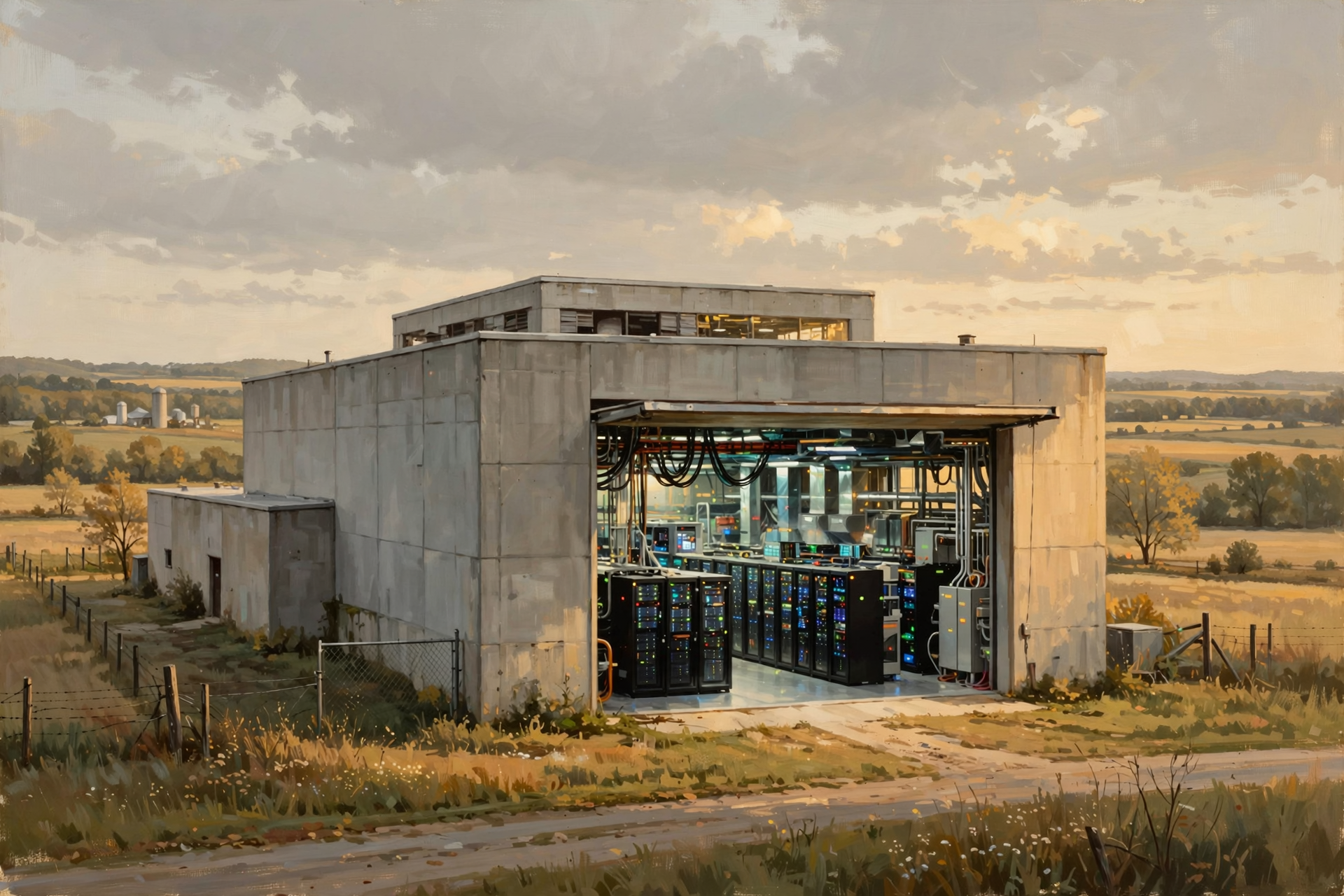
Imagine somebody tells you that your family photographs, business records, favorite television programs, online purchases, Facebook posts, bank transactions and artificial-intelligence conversations are all stored in “the cloud.”
That sounds rather peaceful.
You might picture your pictures floating gently above Tennessee somewhere between a thunderhead and the Pearly Gates.
They are not.
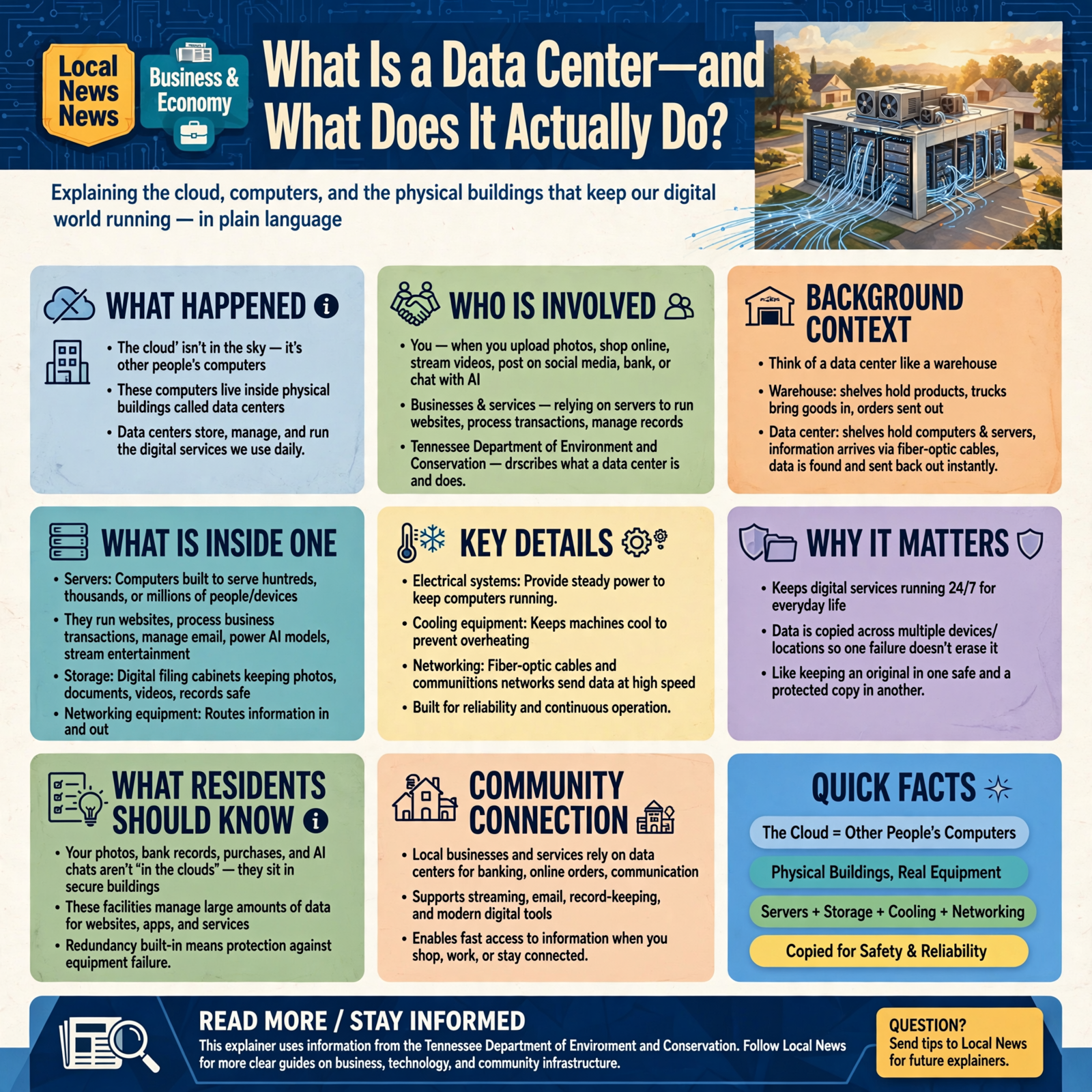
The cloud is mostly a nickname for other people’s computers, and those computers have to sit somewhere.
Very often, that somewhere is a data center.
A data center is a physical building—or sometimes part of a building—containing computers, data-storage equipment, networking equipment, electrical systems and cooling equipment designed to keep digital services running.
In the simplest possible terms, a data center is where a large amount of the modern digital world goes to work.
Start With Something Familiar: A Warehouse
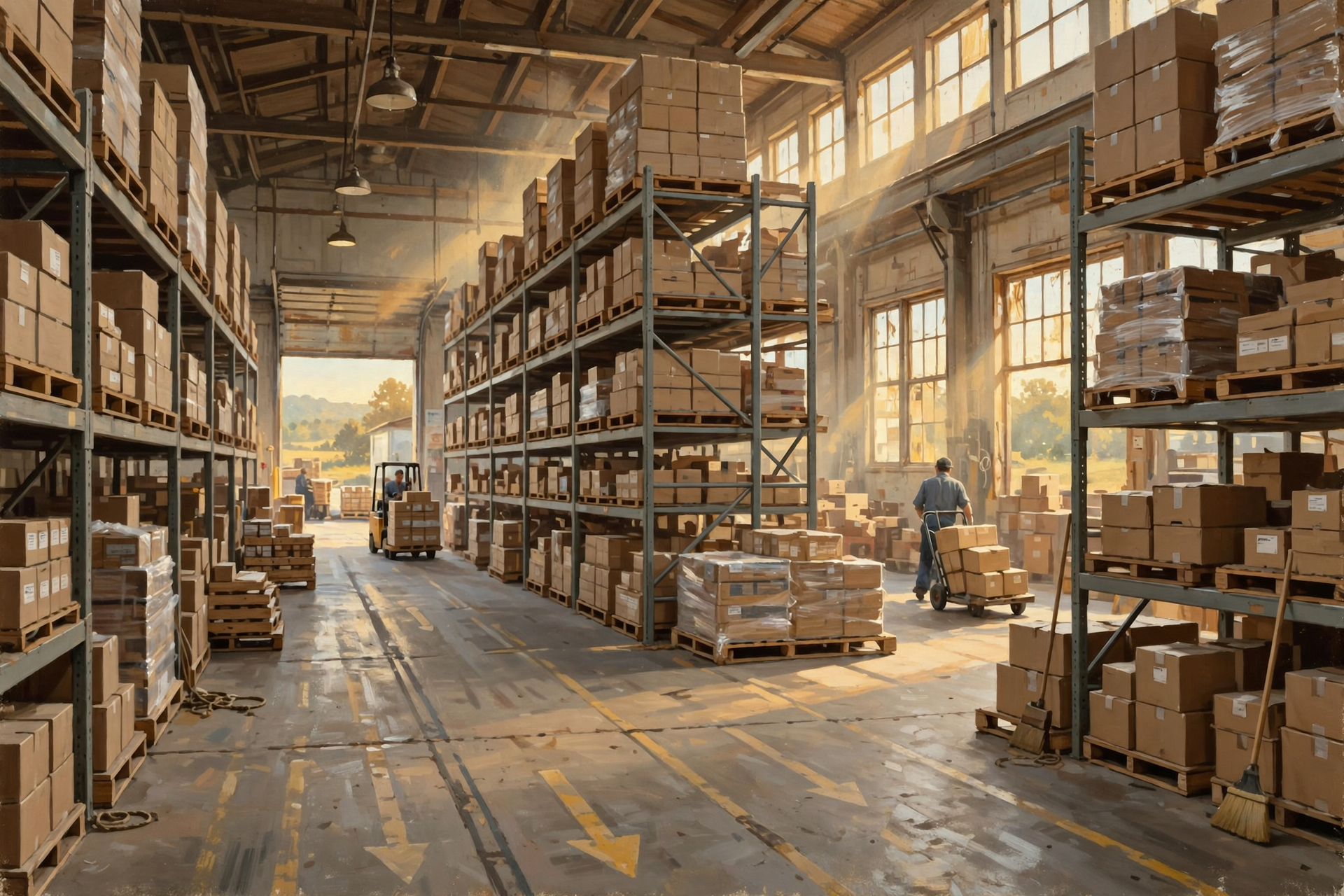
If you understand a warehouse, you already have a decent starting point for understanding a data center.
A traditional warehouse might contain shelves full of products. Trucks bring things in. Workers or machines organize them. Orders arrive. Products are located, packaged and sent back out.
A data center works somewhat similarly, except its shelves hold computers and its incoming and outgoing traffic is mostly information.
Instead of pallets arriving by tractor-trailer, information arrives through fiber-optic cables and communications networks.
Instead of forklifts finding a pallet of lawnmowers, computers locate a customer record, photograph, webpage, movie, database entry or piece of information.
And instead of loading the result onto a truck, the data center can send it back across a network in a fraction of a second.
That analogy is not perfect, but it gets us through the front door.
What Is Actually Inside One?
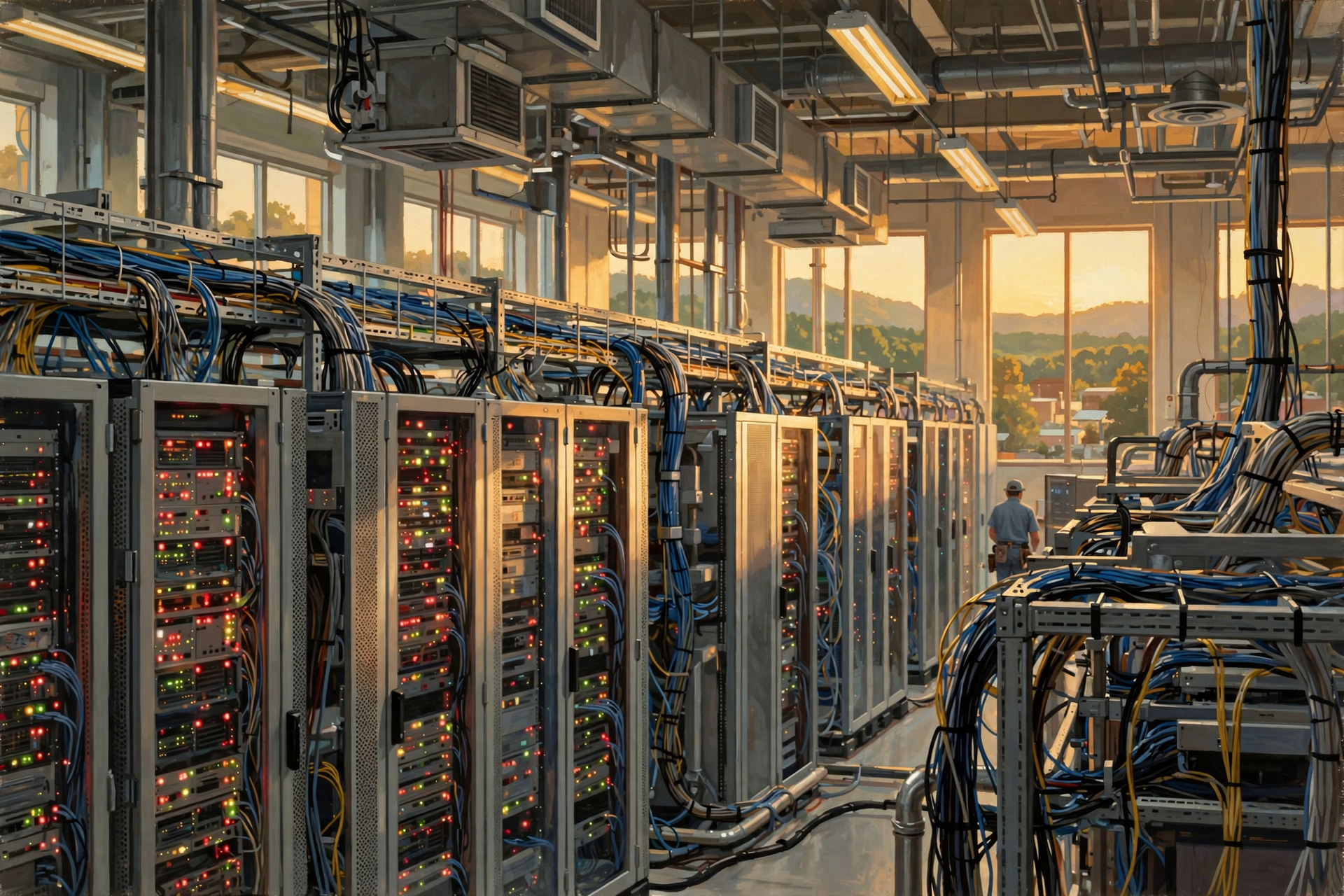
The Tennessee Department of Environment and Conservation describes a data center as a facility containing large computing systems, including servers, data-storage devices and networking equipment used to store, manage, process and transmit large amounts of data.
Those are the basic ingredients. Let us translate them into normal-human language.
Servers: The Computers Doing the Work
A server is a computer designed to provide information or computing services to other computers.
Your laptop is mostly built to serve you.
A server may be built to serve hundreds, thousands or even millions of people or devices, depending on what it is doing and how the larger system is designed.
One server might help operate a website. Another might process business transactions. Another might manage email. Others may work together to run an artificial-intelligence model or provide a streaming service.
Modern data centers can contain enormous numbers of these machines.
Storage: The Digital Filing Cabinets
Computers also need places to keep information.
Think of storage as a very sophisticated filing system.
Your photographs, databases, documents, videos and business records are represented as digital information stored on hardware designed to retain it and make it available when needed.
Important information may also be copied across multiple devices or locations so that one equipment failure does not necessarily mean the information disappears.
That is somewhat like keeping the original deed in one safe and another protected copy somewhere else—except computers can make and maintain those copies automatically.
Networking: The Roads Between Everything
A warehouse without roads would not be terribly useful.
Neither would a data center without networks.
Networking equipment directs information between computers inside the facility and connects the facility to the outside world.
If servers are buildings in a town, networking equipment is part traffic cop, part highway interchange and part postal service.
Its job is to help information get where it is supposed to go.
Power: Computers Don’t Run on Good Intentions
Every calculation ultimately requires energy.
That makes electricity one of the defining physical requirements of a data center.
A large facility may need substantial electrical infrastructure not only to run the computers but also to operate cooling equipment, pumps, networking systems, lighting, security systems and other supporting equipment.
Facilities that need very high reliability may also include batteries, uninterruptible power supplies and backup generators so that a brief utility outage does not immediately shut everything down.
The U.S. Department of Energy describes data centers as particularly energy-intensive buildings because of the amount of computing equipment they operate.
Electricity deserves an article of its own, and later in this series it will get one.
Cooling: The Part Nobody Sees in the Commercials
Computers produce heat.
One laptop on your kitchen table is not much of a problem.
Put thousands of powerful computers close together and you have created a heating problem that cannot be solved by opening a window and hoping for a good breeze off Fredonia Mountain.
Data centers therefore require cooling systems designed to remove heat and keep equipment within proper operating temperatures.
Different facilities can use very different cooling technologies, which becomes important when people begin discussing electricity and water consumption.
We will devote later articles to both subjects because saying “data centers use water” or “data centers use lots of electricity” does not tell you enough to evaluate a particular project.
What Does a Data Center Actually Do All Day?
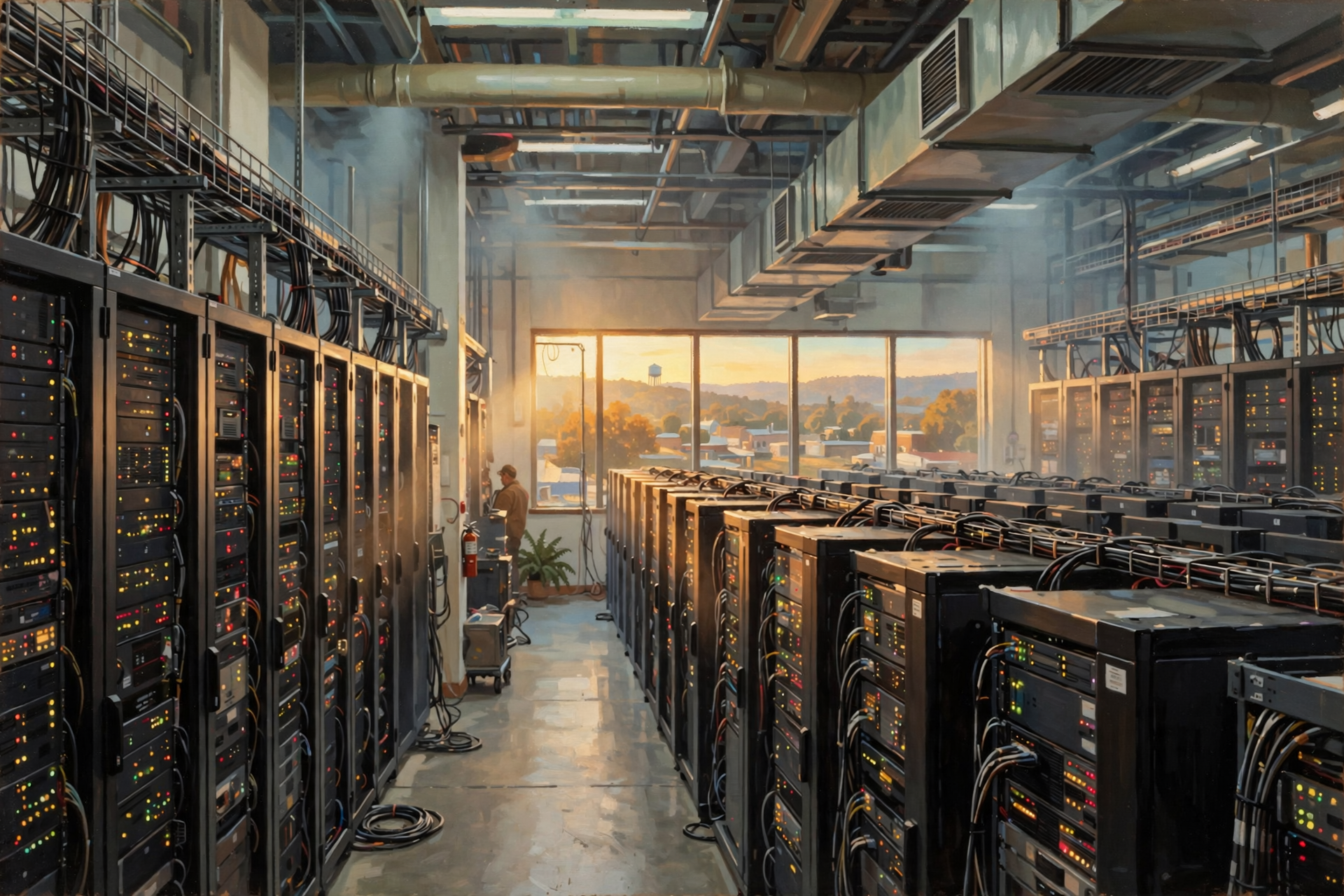
There is no single answer because data centers perform many different jobs.
They may:
- store photographs and videos;
- operate websites;
- process credit-card and banking transactions;
- host email;
- run business software;
- store company records and databases;
- deliver streaming movies and music;
- support online games;
- operate government and healthcare systems;
- provide cloud-computing services;
- process internet searches;
- run artificial-intelligence systems; and
- perform countless behind-the-scenes jobs most of us never see.
Data centers are not one single industry performing one single task.
They are infrastructure used by many industries.
Follow the Data: You Open a Website

Suppose you sit down in Dunlap, pick up your phone and visit a website.
You tap the link.
Then, in simplified form, something like this happens:
- Your phone sends a request through Wi-Fi or a cellular network.
- That request travels through internet infrastructure operated by one or more network providers.
- The request reaches computers responsible for serving the website.
- A server determines what information you requested.
- It may retrieve information from storage or a database.
- The server prepares a response.
- The information travels back across networks toward you.
- Your phone turns the received information into the webpage you see on the screen.
All of that can happen so quickly that you barely notice it.
But something physical happened.
Electrons moved. Light traveled through fiber. Computers performed calculations. Storage devices retrieved information. Network equipment routed traffic. Electricity was consumed. Heat was produced and removed.
The internet can feel almost magical because we usually see only the beginning and end of the process.
A data center is part of the machinery in the middle.
So Is a Data Center the Same Thing as “The Cloud”?
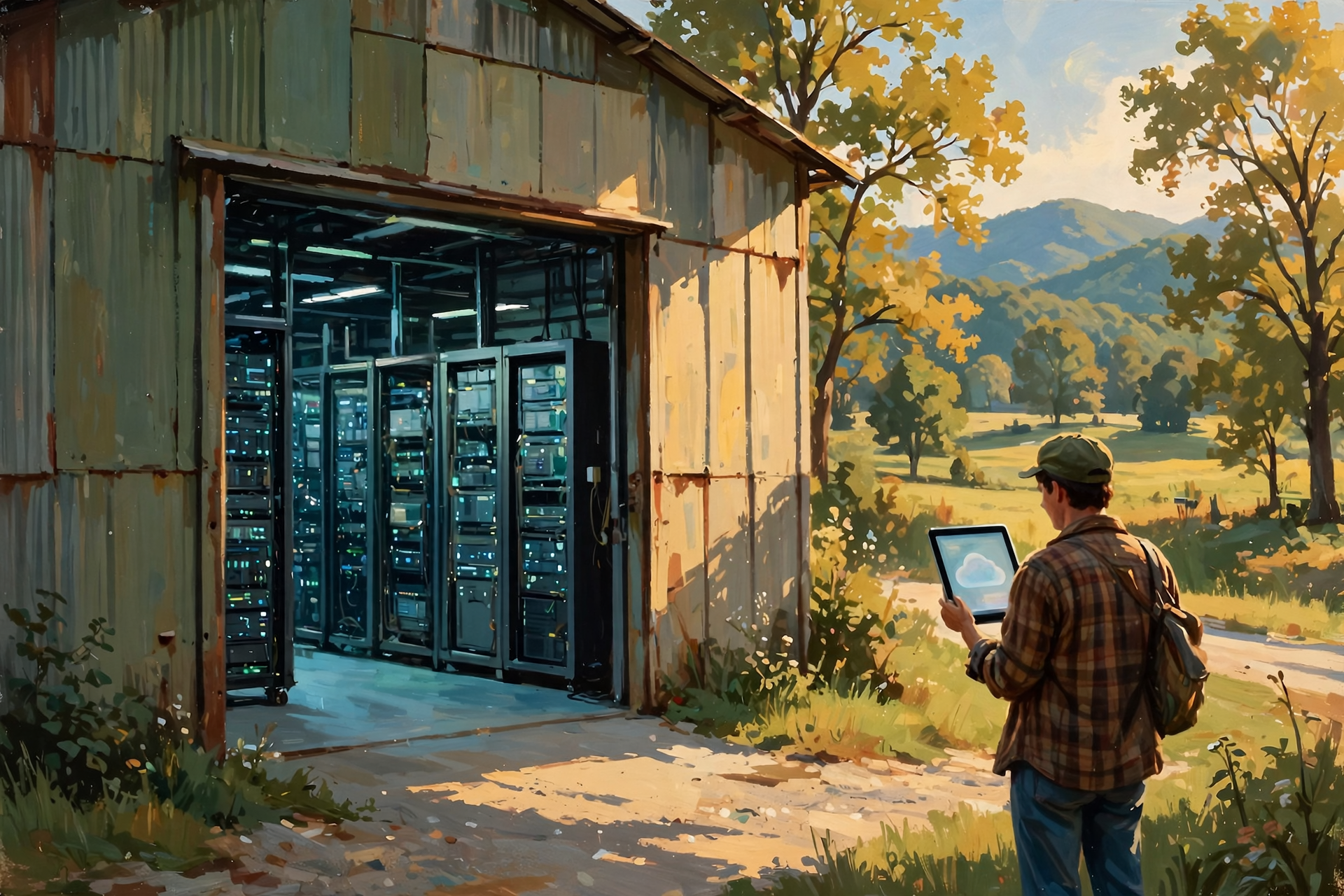
No.
This distinction will matter throughout this series.
A data center is physical infrastructure: buildings, computers, networks, power systems and cooling systems.
Cloud computing is a way of providing computing resources and services through networks so customers can use them without necessarily owning or operating the underlying physical machines themselves.
In other words, the cloud is a service concept.
The data center is one of the physical places making that service possible.
If somebody rents a storage unit across town, the rental arrangement is the service. The concrete building where the boxes are sitting is the physical infrastructure.
Similar idea.
Is a Data Center the Same Thing as Artificial Intelligence?
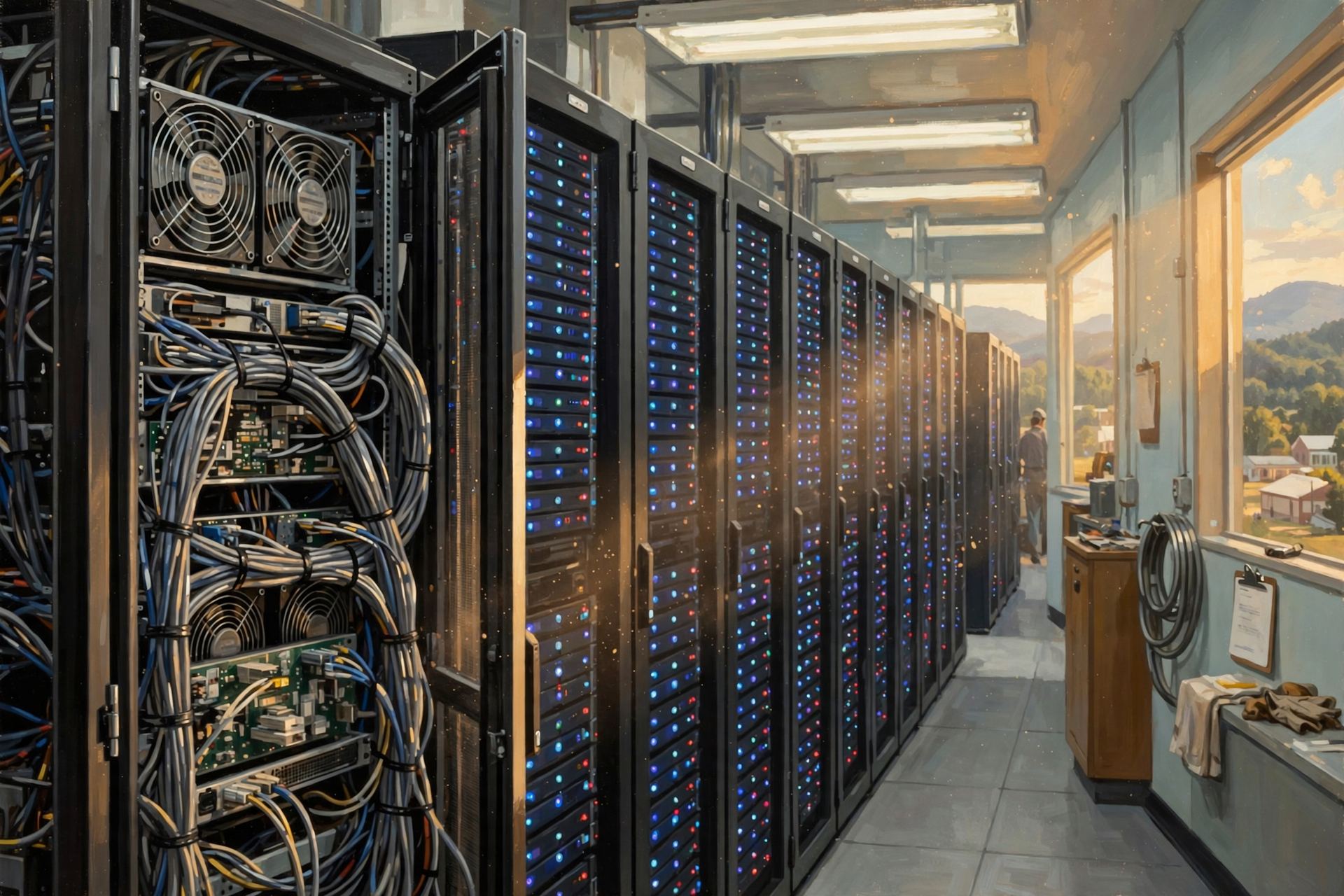
Also no.
Artificial intelligence is software and computation.
A data center is infrastructure that can run that software.
Data centers existed long before today’s generative-AI boom, and they support far more than AI.
But modern AI can require enormous amounts of computing power, particularly when large models are being trained or when very large numbers of people are using them.
That has created demand for facilities containing extremely powerful computing hardware.
So AI and data centers are increasingly discussed together, but they are not interchangeable terms.
Not Every Data Center Is a Giant Windowless Building
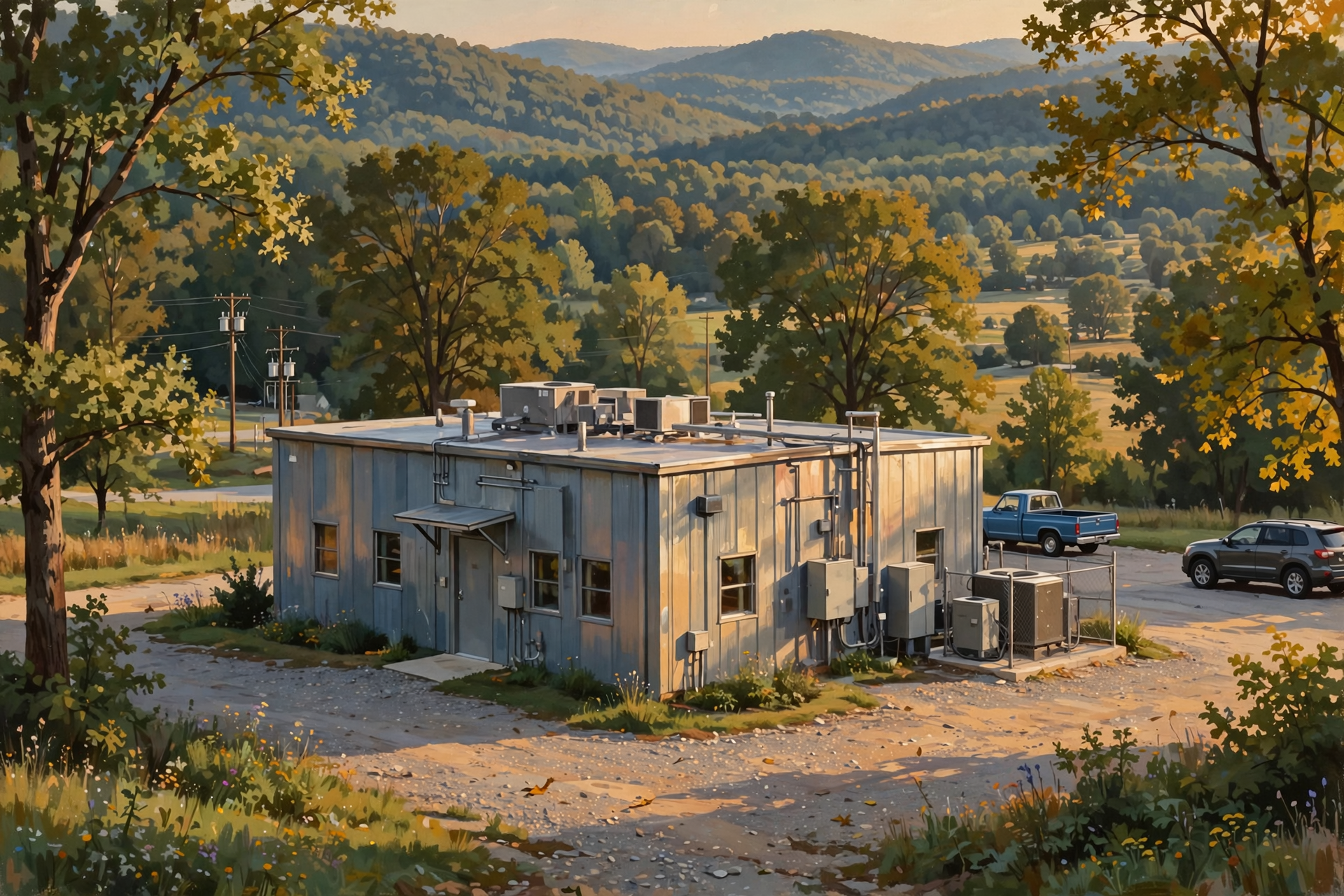
This is another distinction worth learning early.
The phrase data center can describe very different things.
Tennessee’s environmental agency identifies several categories, including smaller edge facilities, colocation facilities used by multiple customers, enterprise facilities operated by individual organizations, cloud data centers and enormous hyperscale facilities.
That means a conversation about “a data center” without discussing its size and purpose is a little like saying:
“They’re building a transportation facility.”
All right.
Are we talking about a two-pump gas station, a truck terminal or Hartsfield-Jackson Atlanta International Airport?
The details matter.
Later in this series, we will look specifically at the different kinds of data centers and why comparing them as though they were identical can create both unnecessary fear and unrealistic expectations.
Why Should Somebody in Rural Tennessee Care?
You do not need to own a technology company to depend on digital infrastructure.
A small contractor uses online banking.
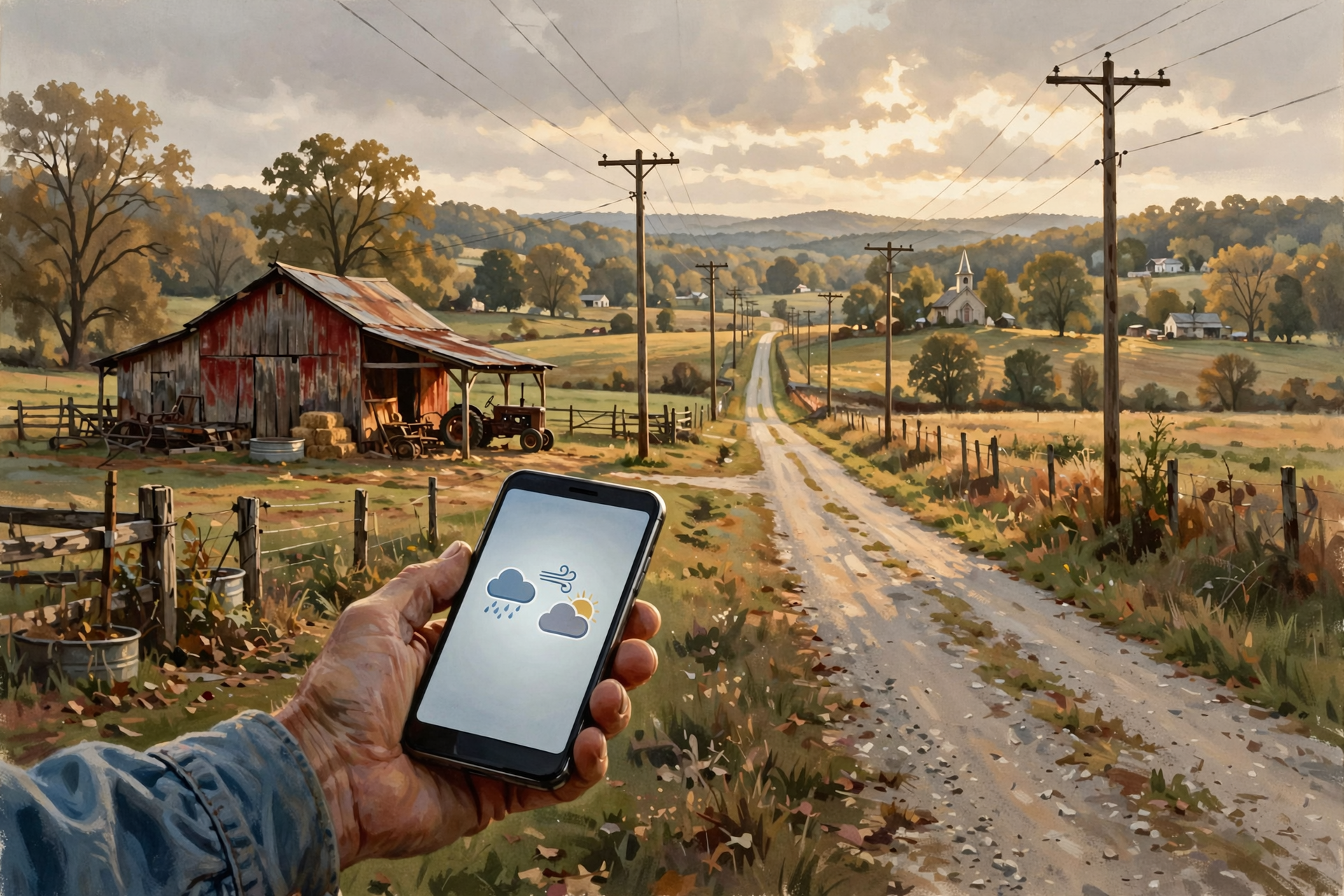
A farmer checks weather information and equipment systems.
A church streams a service.
A local store processes credit cards.
A doctor’s office accesses records.
A student uses an online classroom.
A grandparent stores photographs on a phone.
A manufacturer communicates with suppliers.
A county government maintains digital records.
A family watches television through a streaming service.
Somewhere behind each of those activities is physical computing and communications infrastructure.
There is another reason the subject matters locally.
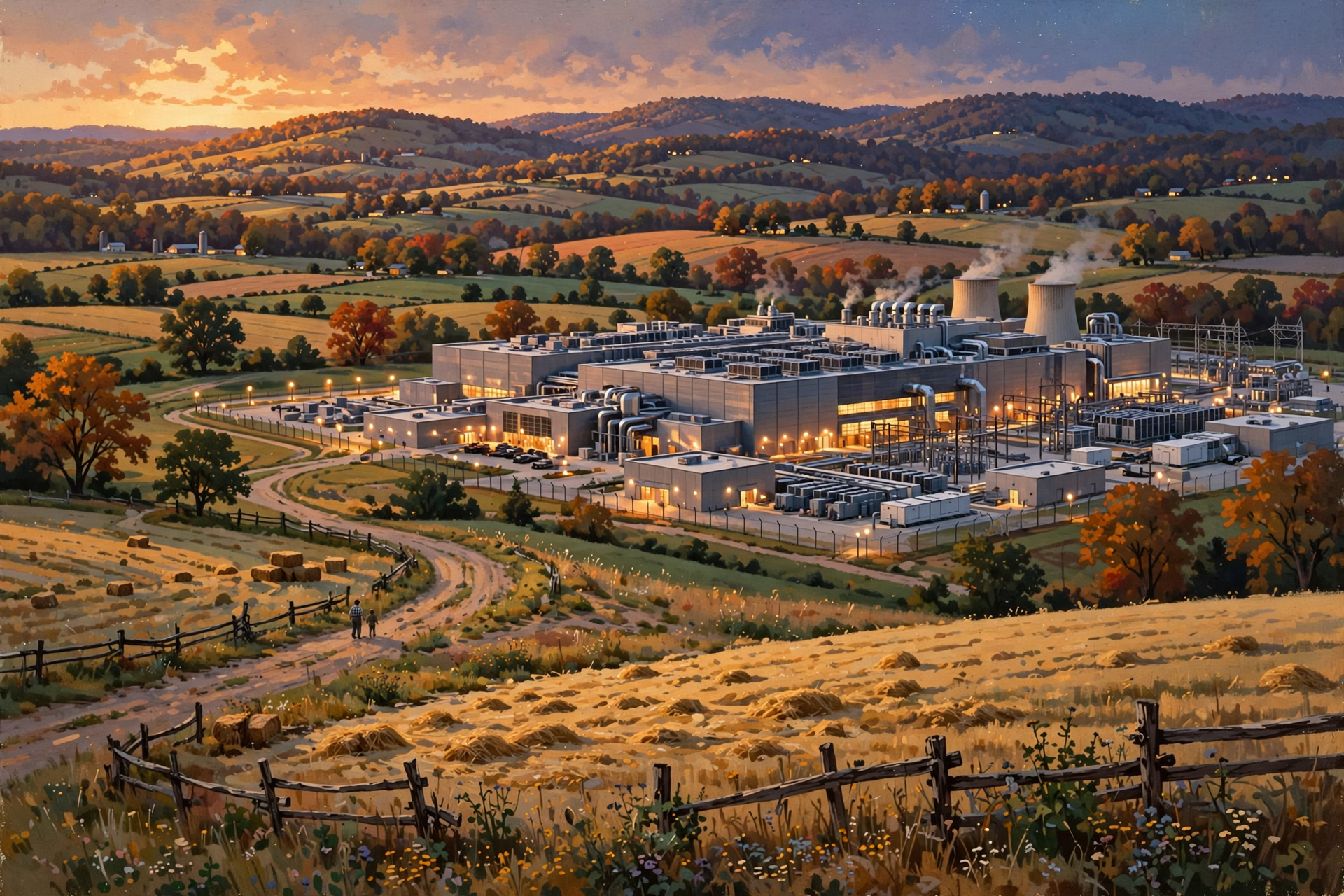
Tennessee says data-center operators are increasingly proposing facilities in the state. These projects can raise questions that have very little to do with whether somebody likes computers: land use, electricity, water, roads, taxes, noise, construction, jobs and infrastructure costs can all become community questions depending on the particular facility.
That does not make a data center automatically good or automatically bad.
It makes it something worth understanding.
Hold On—Is That True? “Data Centers Are Just Big Computer Warehouses”
Close, but incomplete.
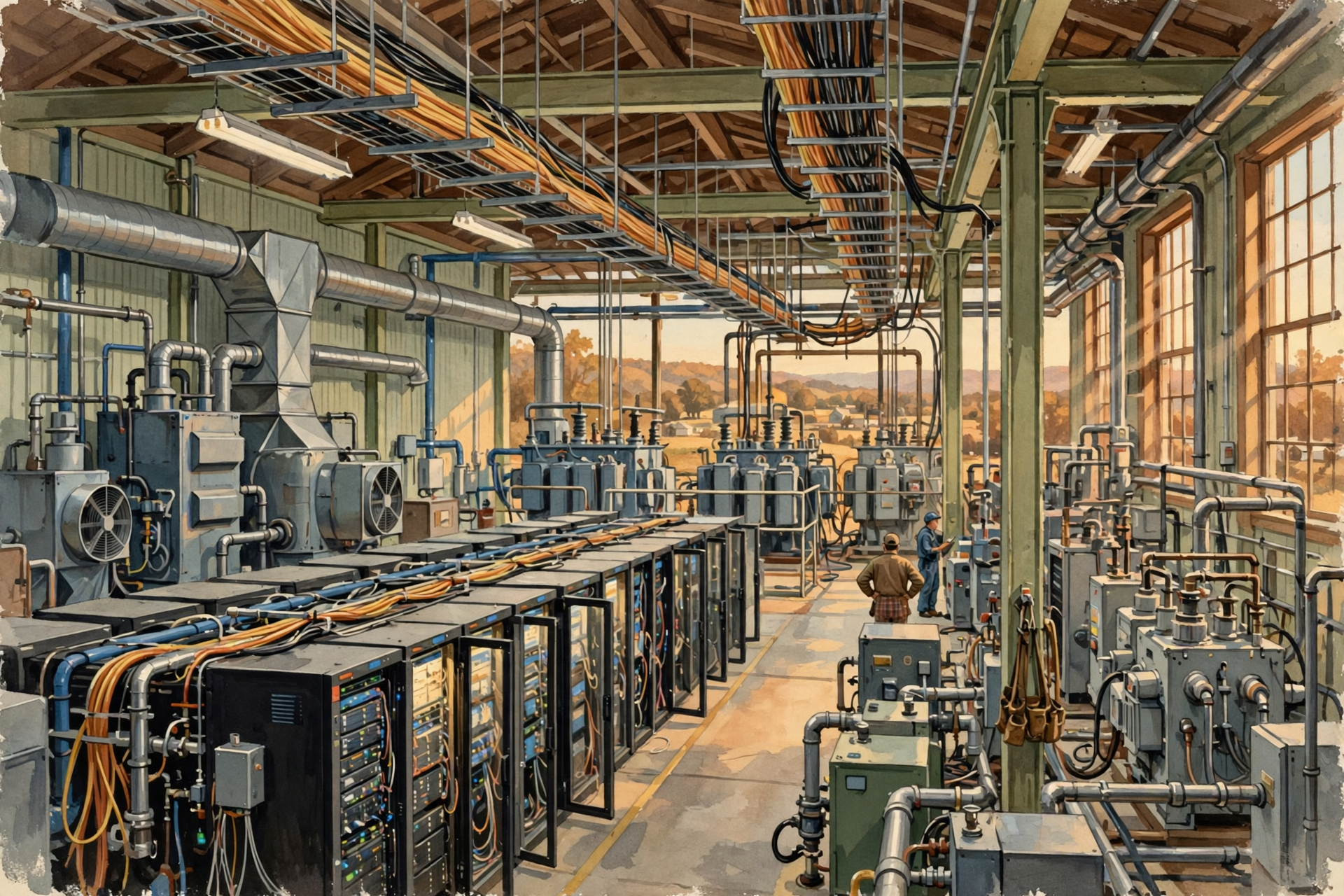
The warehouse analogy helps us understand the physical idea, but a functioning data center is more like a warehouse, electrical facility, communications hub and industrial cooling system combined.
Its value is not merely that computers are sitting inside the building.
The important part is that the computers can operate reliably, communicate rapidly, receive enough electricity, remain cool enough to function and stay available when people need their services.
That supporting infrastructure is why understanding the building itself matters.
Five Terms Worth Knowing Before We Continue
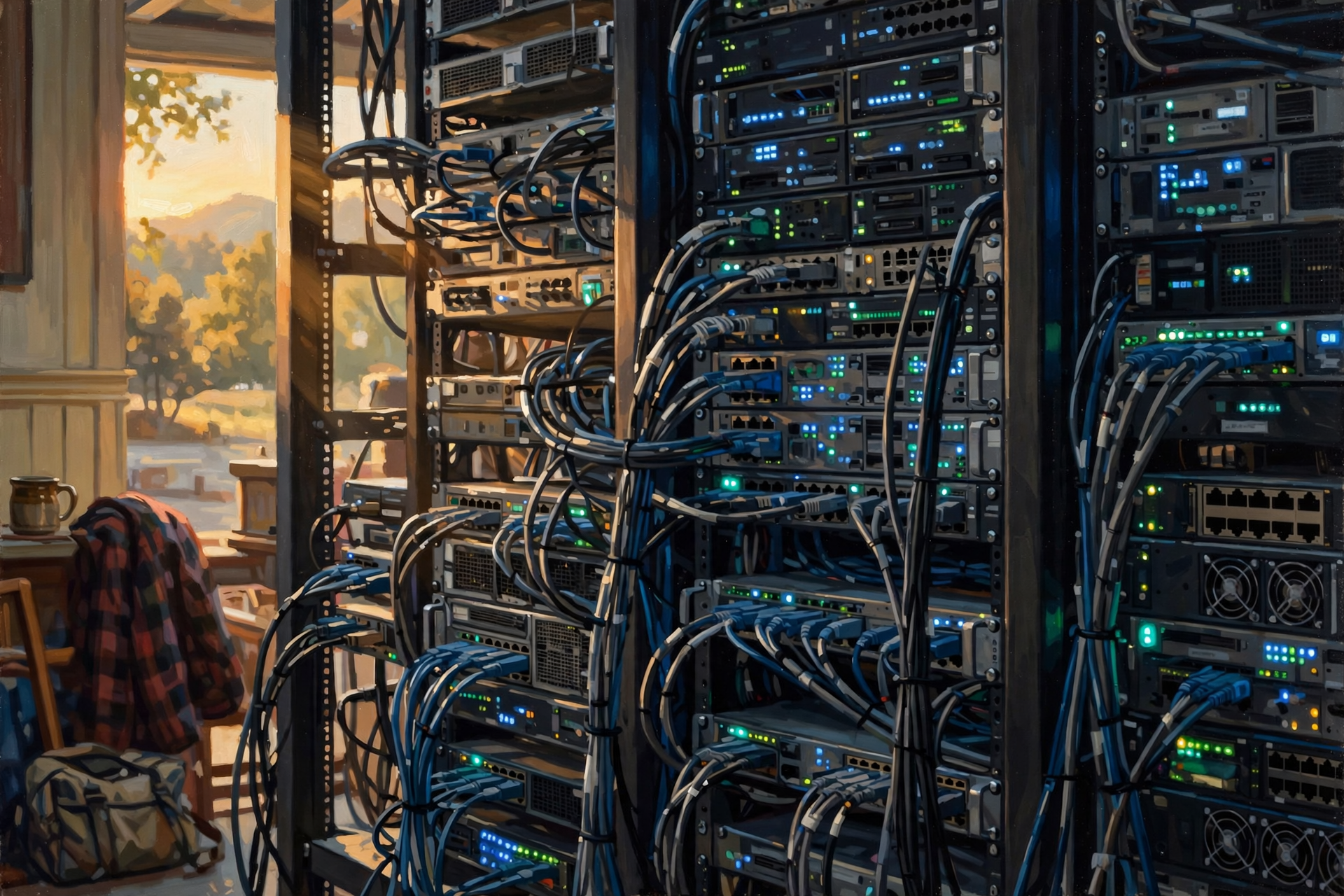
Data center: A physical facility containing computing, storage, networking and supporting infrastructure.
Server: A computer that provides data or computing services to other computers or users.
Storage: Hardware and systems used to retain digital information.
Network: The connections and equipment that allow computers to communicate and move information.
Cloud computing: Computing services delivered over networks rather than requiring the customer to operate all of the underlying hardware personally.
The Questions Get More Interesting From Here
Once we understand what a data center actually is, we can start asking better questions.
Why are some no bigger than a room while others occupy enormous campuses?
Why do they need so much electricity?
Why does cooling matter?
When do they use substantial amounts of water?
Why are artificial-intelligence companies building so much computing infrastructure?
How many people do these facilities employ?
What can they contribute to a community?
What infrastructure might a community have to provide?
Who pays for that infrastructure?
Who regulates them?
And if somebody proposes one in or near a rural Tennessee community, which numbers actually matter?
Those are much better questions than simply asking whether data centers are good or bad.
That is where this series is headed.
Want to Learn More About Data Centers?

If this subject has you curious about data centers, artificial intelligence and the digital infrastructure beginning to play a larger role in rural Tennessee, there is an opportunity to continue learning in person.
The Van Buren Digital Frontier Symposium is a free community educational event in Spencer designed for ordinary residents as well as community leaders, educators, business owners and people who work with infrastructure. Its purpose is education and conversation rather than selling technology or telling people what position they should take.
You do not need to know a server from a socket wrench before you walk through the door. In fact, people who understand farms, construction, utilities, local businesses, schools, government, land and everyday community life bring knowledge that matters when communities discuss new infrastructure.
The symposium is scheduled for Thursday, November 19, 2026, from 5:00 PM to 8:00 PM in Spencer, Tennessee, and admission is free. Come to learn, ask questions and better understand both the opportunities and the tradeoffs surrounding digital infrastructure.
For more information, visit the Van Buren Digital Frontier Symposium listing on Dunlap.Directory or the Van Buren Digital Frontier Symposium Facebook page. Either resource can be used to learn more about the event and follow updates.
Wisdom From the Front Porch

The cloud may sound like something floating over our heads, but somewhere there is a building, a power line, a cooling system and a whole mess of computers doing the work.
That may be the most important lesson in this first article.
Our digital world is still a physical world.
Once we understand that, the rest of the conversation becomes much easier.
Next, we will take a closer look at that mysterious word cloud and follow our information into the real buildings where cloud services actually live.




0 Comments