
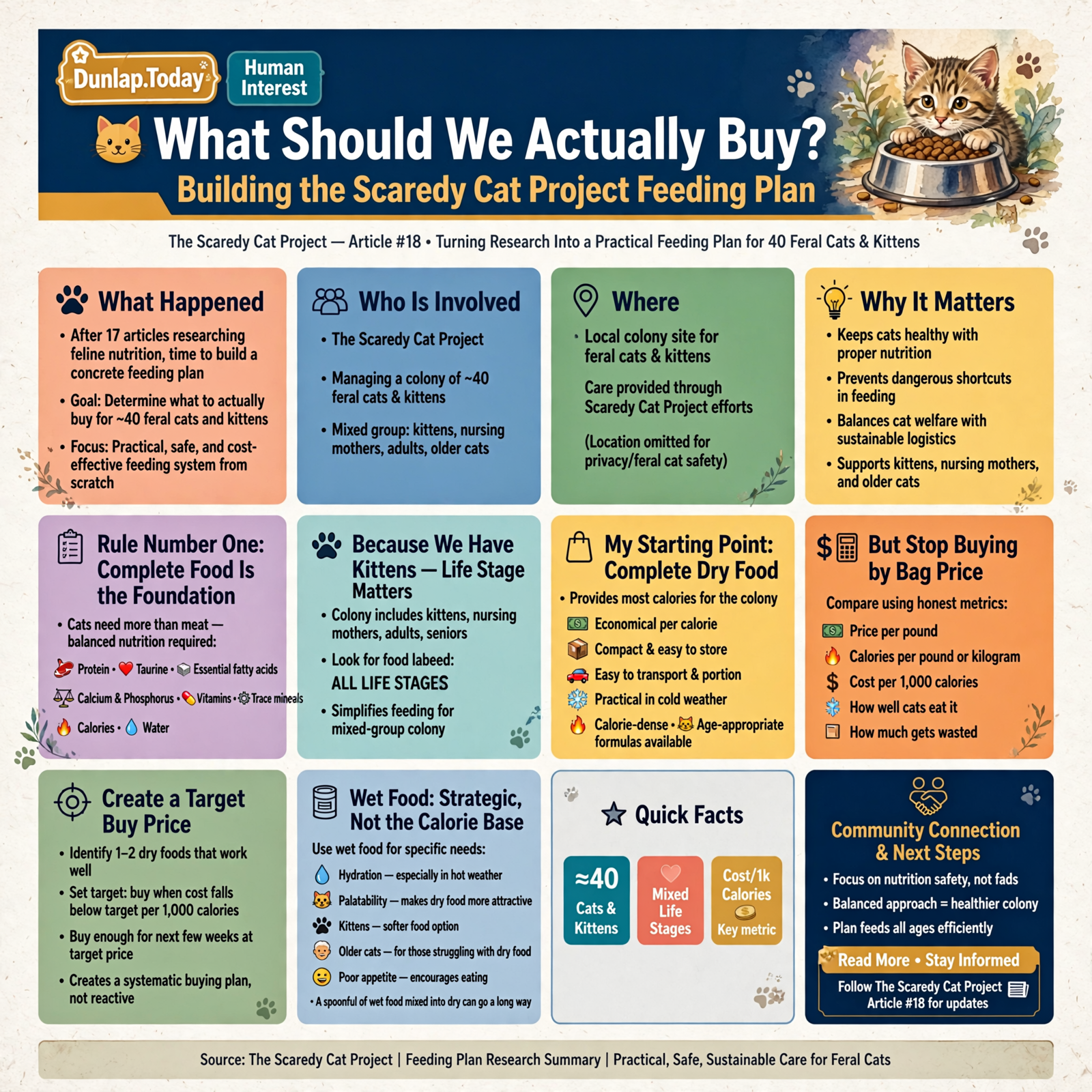
🐱 What Should We Actually Buy? Building the Scaredy Cat Project Feeding Plan
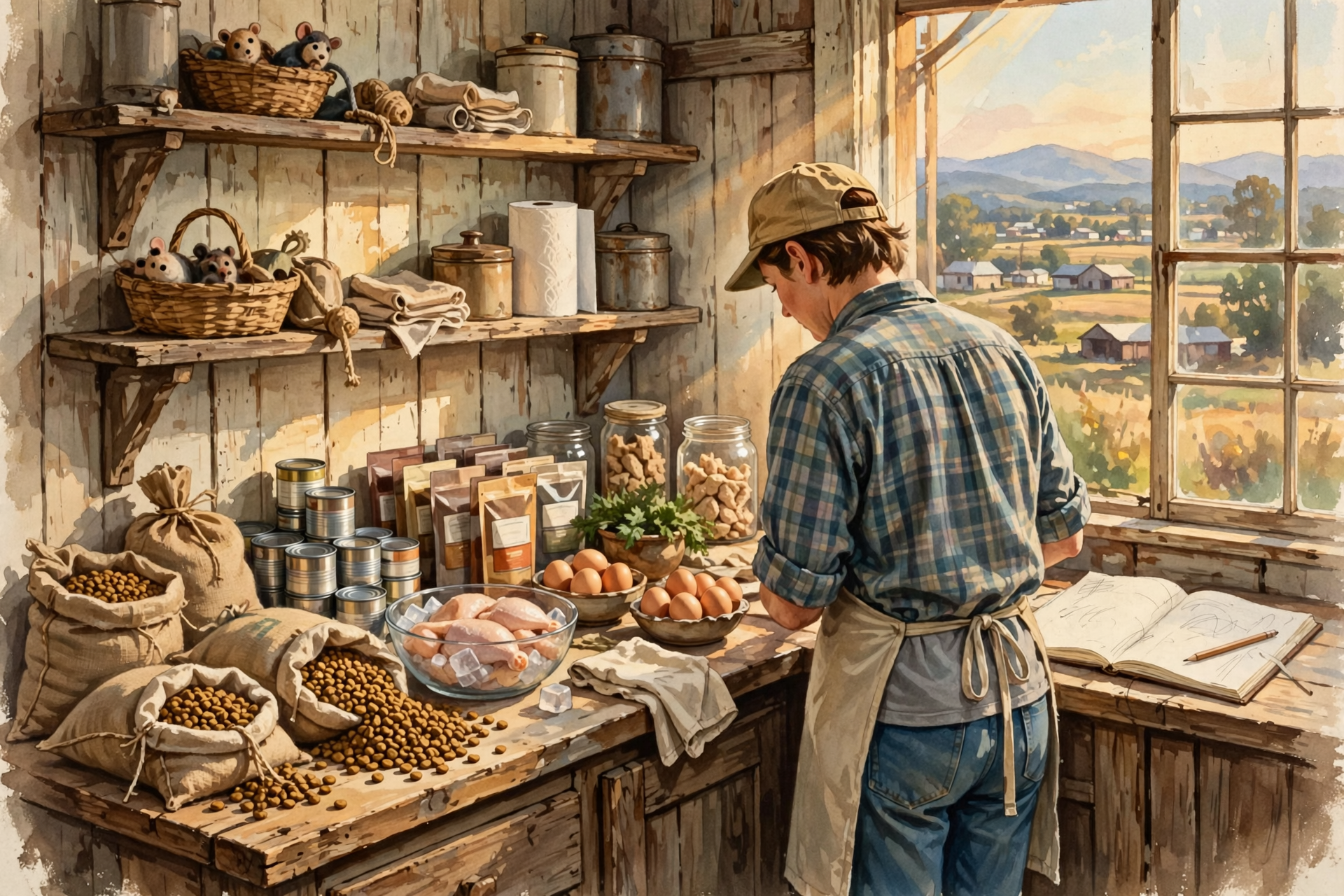
🐾 The Scaredy Cat Project — Article #18
At some point, research has to turn into a plan.
We’ve spent seventeen articles asking questions.
What do cats actually need?
What does “complete and balanced” mean?
Can chicken hearts help?
What about gizzards?
Liver?
Eggs?
Venison?
Rabbit?
Fish?
Beef heart?
Pork?
Chicken thighs?
Wet food?
Dry food?
What does any of it really cost?
I think we finally know enough to ask a more useful question:
If I were designing our feeding system for roughly 40 feral cats and kittens from scratch today, what would I actually buy?
🥣 Rule Number One: Complete Food Is Still the Foundation

After all this investigation into fresh ingredients, we have not discovered a magic shortcut around feline nutrition.
That’s actually a good result.
It keeps us from making a dangerous mistake.
Cats need more than meat.
They need the right balance of:
- 🥩 Protein
- ❤️ Taurine
- 🧈 Essential fatty acids
- ⚖️ Calcium and phosphorus
- 💊 Vitamins
- ⚙️ Trace minerals
- 🔥 Calories
- 💧 Water
So the first thing I would buy is still:
a nutritionally complete and balanced cat food appropriate for the cats we are feeding.
🐾 Because We Have Kittens, Life Stage Matters
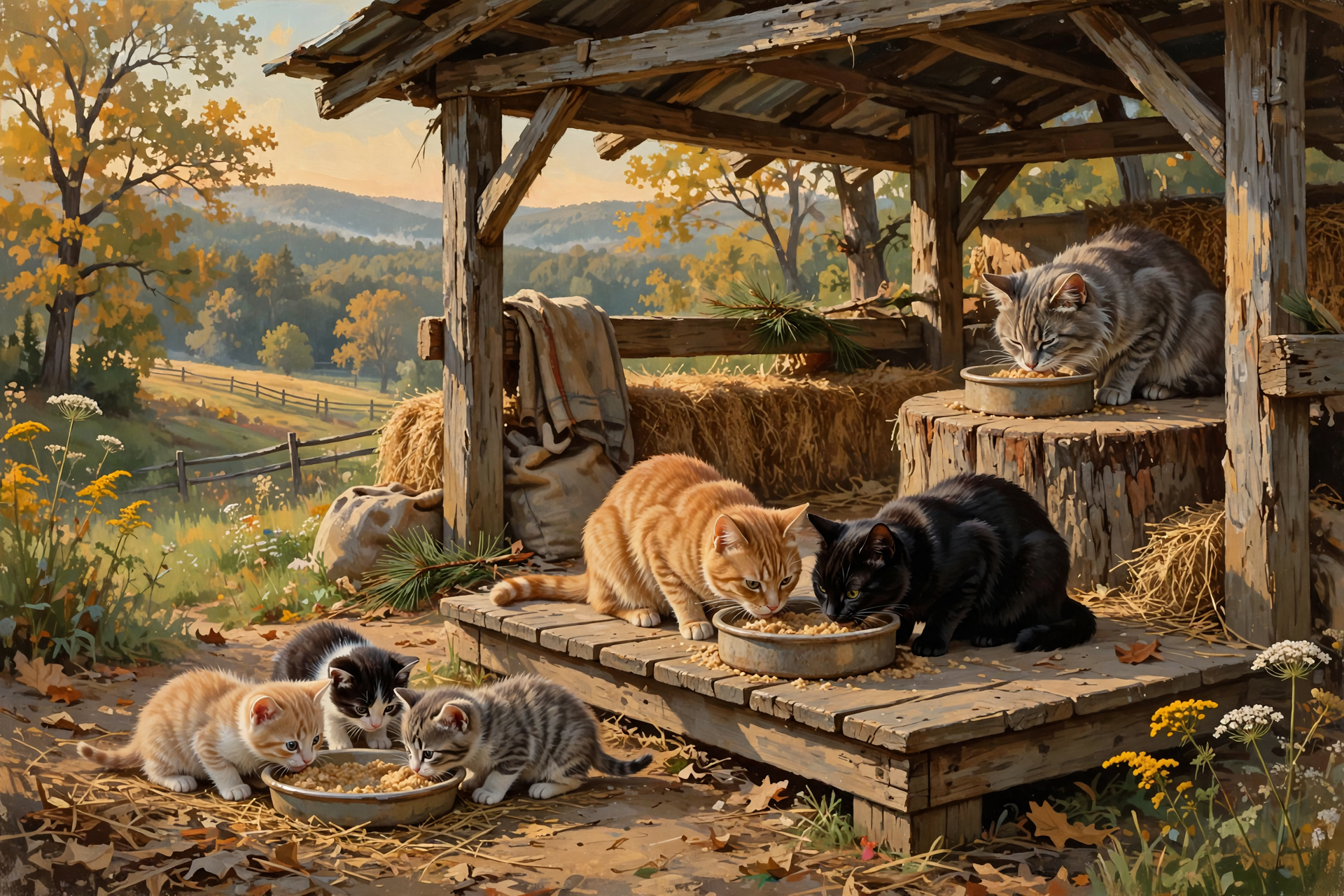
Our colony isn’t forty identical adult cats.
We have kittens.
We may have nursing mothers.
We have adults.
We may have older cats.
That makes life-stage labeling important.
If one affordable complete food labeled for all life stages works well for our mixed group, that may simplify operations considerably.
Not because “all life stages” is automatically perfect for every individual.
Because feeding forty animals is partly a logistics problem.
🥣 My Starting Point Would Be Complete Dry Food

If I were building the system today, complete dry food would probably provide most of the colony’s calories.
Why?
- 💵 Usually economical per calorie
- 📦 Compact to store
- 🚗 Easy to transport
- 🥣 Easy to portion
- ❄️ Practical in cold weather
- 🔥 Calorie-dense
- 🐱 Available in formulations for appropriate life stages
This isn’t because kibble is morally superior.
It’s because it solves several operational problems at once.
💵 But I Would Stop Buying Dry Food by Bag Price

The cheapest-looking bag isn’t necessarily the cheapest food.
I would compare candidate foods using:
- 💵 Price per pound
- 🔥 Calories per pound or kilogram
- 💰 Cost per 1,000 calories
- 😸 How well the cats eat it
- 🗑️ How much gets wasted
That gives us a much more honest comparison.
📊 I Would Create a Target Buy Price

Once we identify one or two complete dry foods that work well, I would establish a target price.
Something like:
“When this food falls below our target cost per 1,000 calories, buy enough for the next few weeks.”
That turns shopping into a system instead of a reaction.
🥫 Wet Food Would Be Strategic, Not Necessarily the Calorie Base
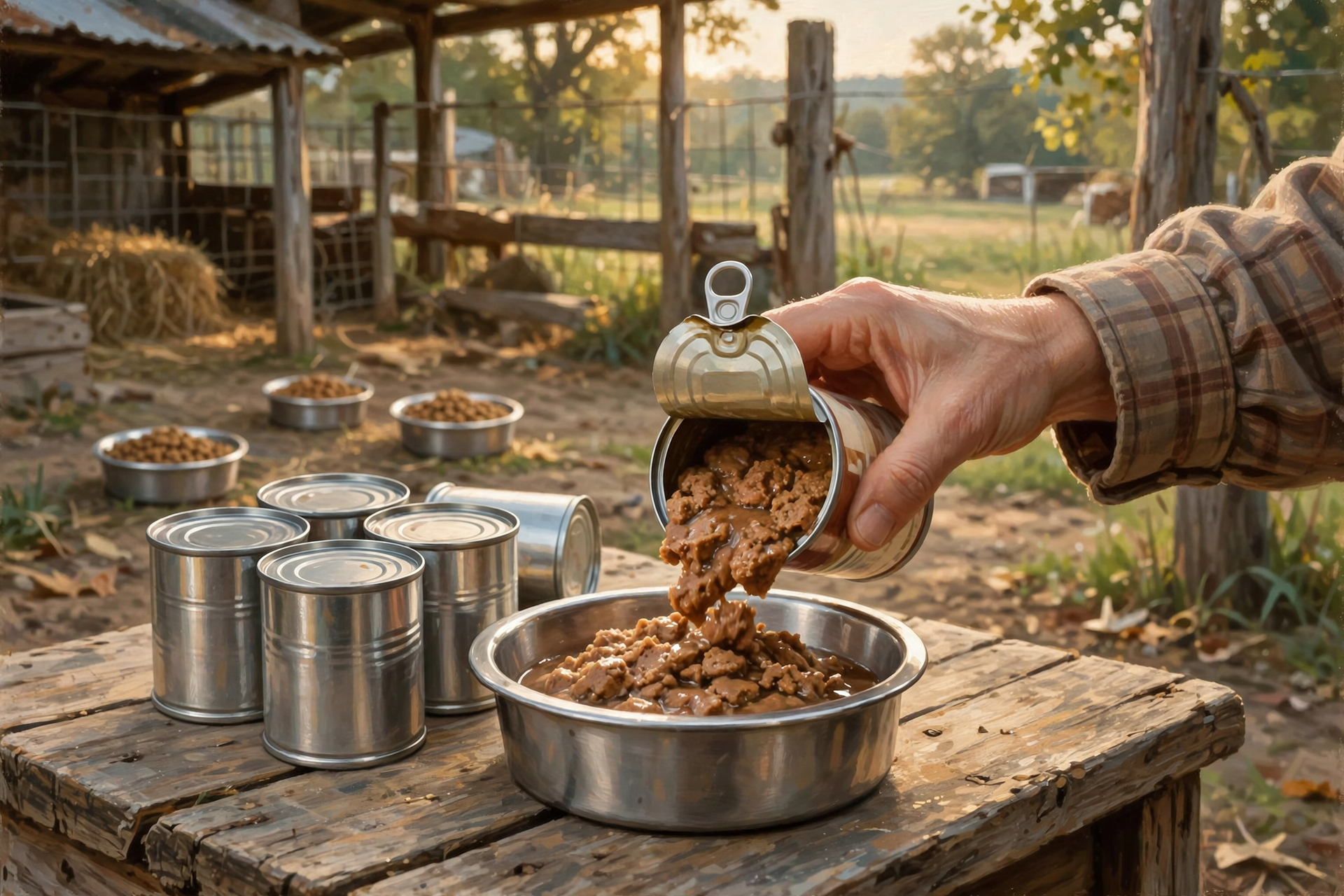
I would still keep complete wet food in the system.
But I wouldn’t necessarily try to provide every cat with a full canned meal every day.
For forty cats, that can become expensive very quickly.
Instead, wet food could do specific jobs.
💧 Hydration
Especially during hot weather.
😸 Palatability
For making dry food more attractive.
🐾 Kittens
When softer complete food is useful.
👴 Older Cats
For animals that struggle with harder food.
😿 Poor Appetite
For cats that need extra encouragement to eat.
🥄 A Little Wet Food May Go a Long Way
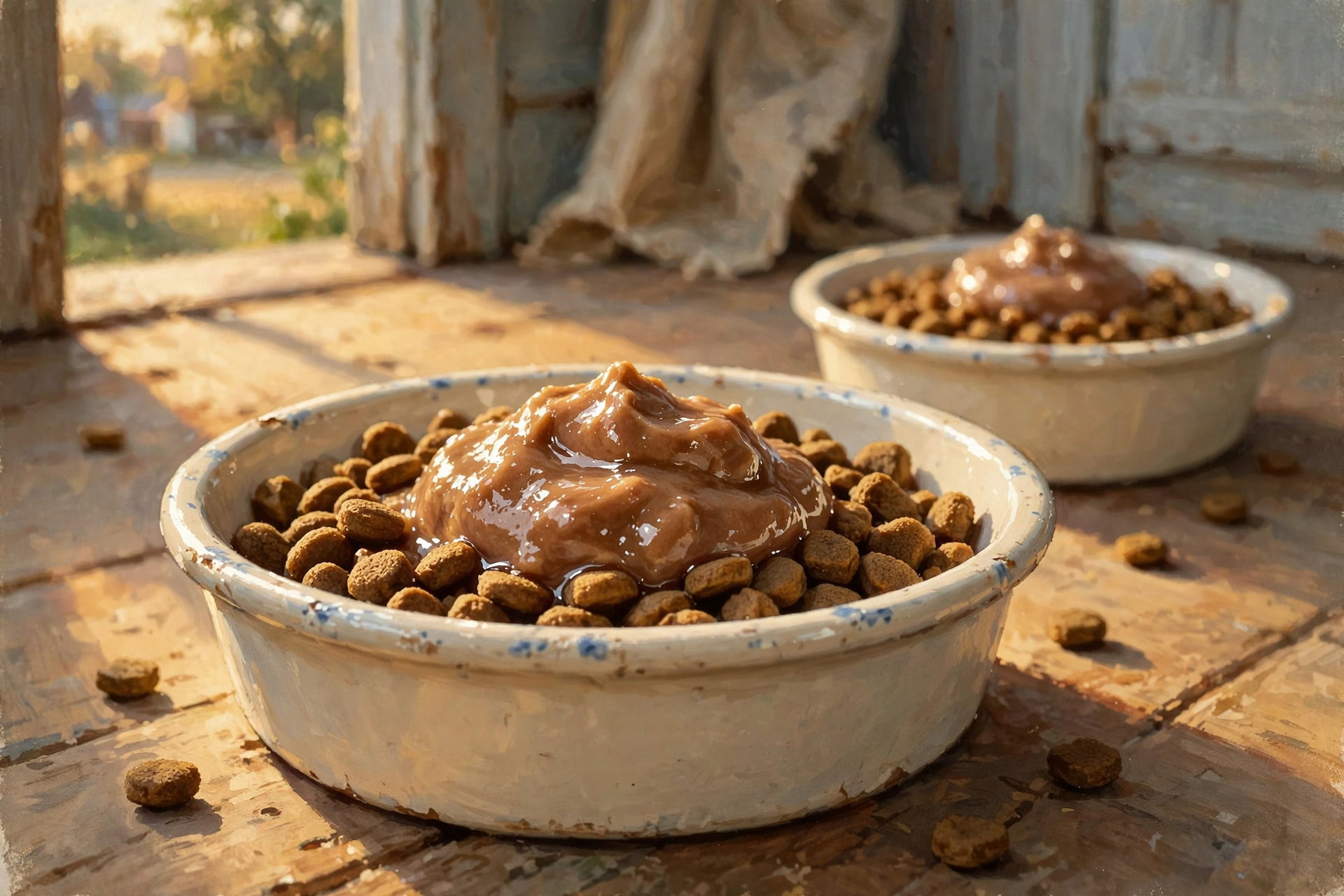
Suppose we add a spoonful of wet food to several bowls of complete dry food.
We may gain:
- 😸 Better acceptance
- 💧 More moisture
- 🥣 Less dry-food waste
without paying for forty full cans.
That seems like a useful experiment.
🍗 Local Ingredients Would Be Supplements, Not the Foundation

We’ve now studied enough individual foods to know where they belong.
Chicken hearts?
Useful.
Gizzards?
Useful.
Liver?
Useful in modest amounts.
Eggs?
Useful.
Venison?
Potentially useful.
Rabbit?
Potentially useful.
Fish?
Useful in the right form.
Beef heart?
Very interesting.
Pork?
Possibly useful if plain and cooked.
Chicken thighs?
Probably one of the most practical options.
But none of those replaces the nutritional foundation by itself.
📏 Extras Need a Ceiling

One danger of discovering ten useful supplemental foods is eventually allowing all ten to crowd out the complete food.
So I would set a simple rule:
supplemental foods remain a minority of total calories.
The exact mix may vary, but the principle should not.
❤️ Hearts Would Be One of My First Fresh-Food Tests

Chicken heart and beef heart both remain attractive because they combine:
- 🥩 Animal protein
- ❤️ Naturally occurring taurine
- 🧊 Excellent freezer storage
- 💵 Potentially good pricing
If we can find a good local source, hearts would probably earn regular rotation in small amounts.
🍗 Chicken Thighs Might Be the Practical Workhorse
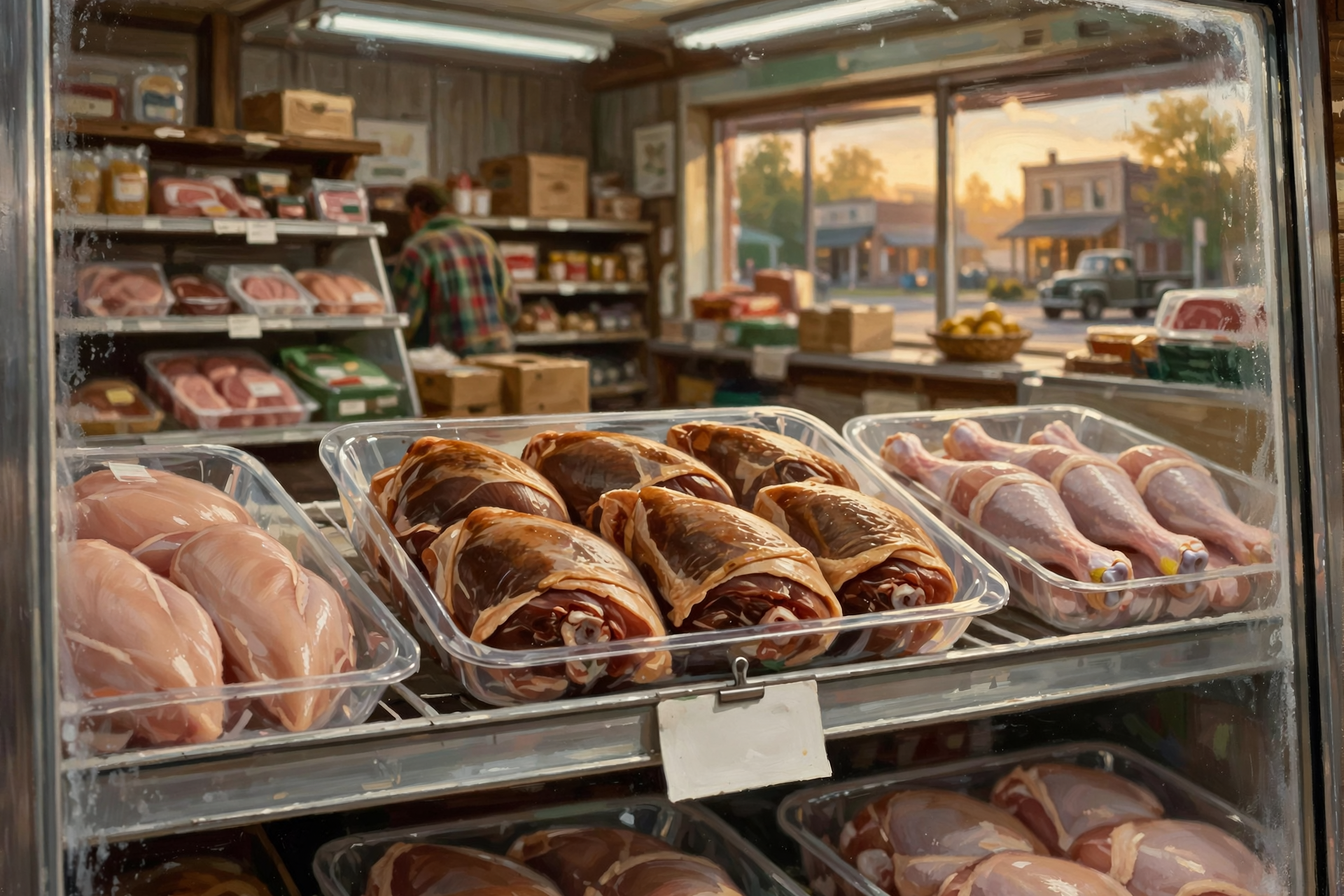
The more I think about it, the less glamorous chicken thigh looks increasingly useful.
It’s:
- 🛒 Easy to find
- 💵 Frequently discounted
- 🥩 High in animal protein
- 🔥 More calorie-dense than chicken breast
- 🧊 Easy to freeze
- 🍳 Easy to prepare
If sale pricing is good, chicken thighs could be more practical than chasing exotic ingredients all over the county.
🫀 Liver Would Be the “Little Goes a Long Way” Ingredient

Liver is not the food I would use heavily.
Its value is the opposite.
It is nutrient-dense enough that modest amounts can contribute meaningful vitamins and minerals.
That makes liver potentially inexpensive in practice because we don’t need much.
🥚 Eggs Would Be Opportunistic

I wouldn’t necessarily buy expensive retail eggs specifically for forty cats.
But locally donated surplus?
Odd sizes?
Extra production from backyard flocks?
Those become interesting.
Cook them plainly and use them modestly.
🦌 Venison Would Be a Seasonal Opportunity
I wouldn’t build the feeding plan around deer meat because supply is seasonal and variable.
But properly handled venison trimmings or safe freezer surplus could be valuable when available.
That puts venison in the category of:
use the opportunity when it makes sense, but don’t depend on it.
🐟 Fish Would Be More Useful as a Tool Than a Staple
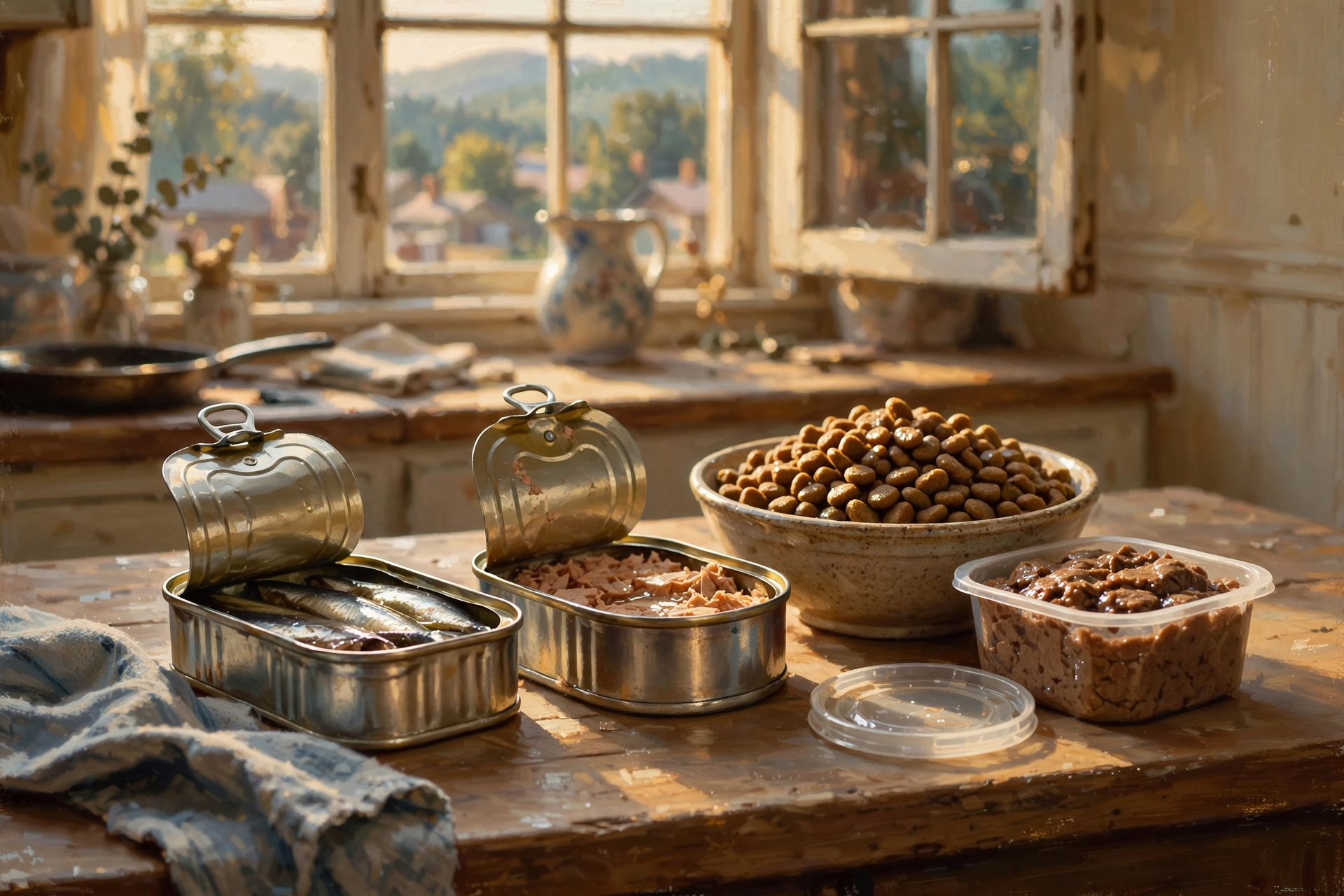
Tuna, sardines and other fish may have their best role as:
- 😸 Palatability boosters
- 💧 Moisture sources
- 🐟 Sources of useful fats in appropriate species
- 🥫 Occasional supplements
Scaredy will consider this policy unnecessarily restrictive.
Scaredy is not paying the grocery bill.
💧 Water Would Be Treated as Part of the Feeding System

Food gets all the attention.
Water deserves its own plan.
For forty outdoor cats, I would want:
- 🥣 Multiple water stations
- 🧹 Easy-to-clean bowls
- 🌳 Shade in summer
- ❄️ Freeze protection in winter
- 🔄 Regular refilling
If we feed mostly dry food, dependable water becomes even more important.
☀️ Summer and Winter Should Have Different Feeding Plans

I no longer think one static feeding plan makes sense all year.
☀️ Summer
More emphasis on:
- 💧 Water
- 🥫 Strategic wet food
- ⏱️ Short feeding windows
- 🪰 Fast cleanup
- 🌳 Shade
❄️ Winter
More emphasis on:
- 🔥 Calorie density
- 🥣 Dry food
- 🧈 Adequate fat
- 💧 Unfrozen water
- 🏡 Protected feeding areas
Seasonal flexibility is probably smarter than nutritional rigidity.
🏡 Feeding Stations Would Become Part of the Infrastructure

A good feeding system needs good physical setup.
I would want feeding stations that:
- 🌧️ Protect food from rain
- ☀️ Reduce direct sun exposure
- 🦝 Reduce wildlife access
- 🧹 Are easy to clean
- 🐱 Allow timid cats to eat
- 📊 Make food consumption easier to observe
That makes waste reduction much easier.
🍽️ I Would Use More Than One Feeding Location
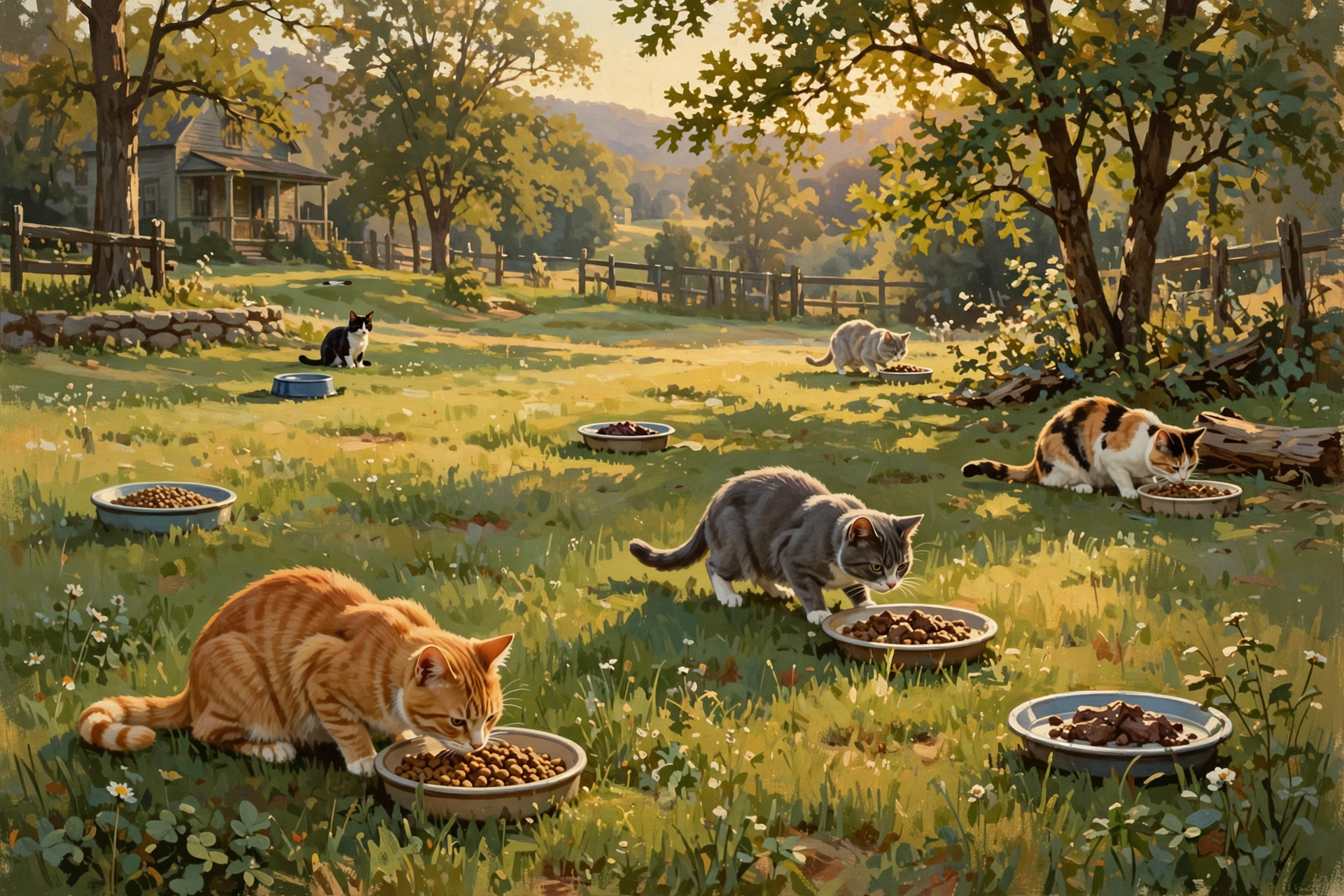
Forty cats around one bowl isn’t a feeding strategy.
It’s a sporting event.
Bold cats dominate.
Timid cats wait.
Kittens get pushed aside.
So I would use multiple feeding points.
That gives us:
- 🐾 Better access
- 🙀 Less intimidation
- 📊 Better observation
- 🥣 Less crowding
🧊 A Chest Freezer Would Become Part of the Food System
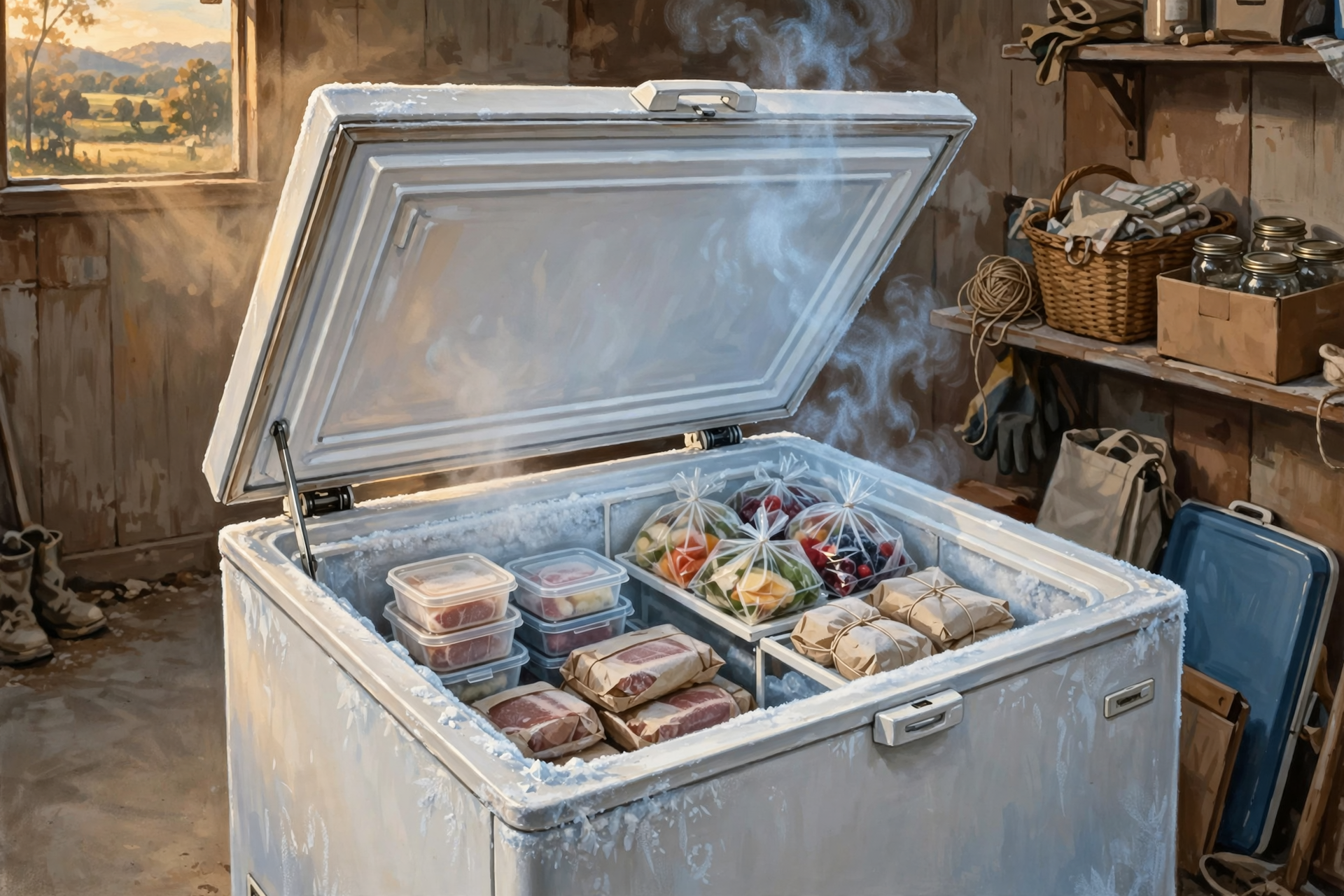
After this many articles, I think freezer capacity is no longer a side idea.
It’s infrastructure.
A freezer lets us:
- 🍗 Buy meat during deep sales
- ❤️ Store hearts and gizzards
- 🦌 Accept safe seasonal venison
- 🐟 Store fish
- 📦 Portion donated food
- ♻️ Intercept useful food before it becomes waste
That separates:
when food becomes available
from:
when the cats need to eat it.
That’s extremely valuable.
🏷️ But the Freezer Needs Rules
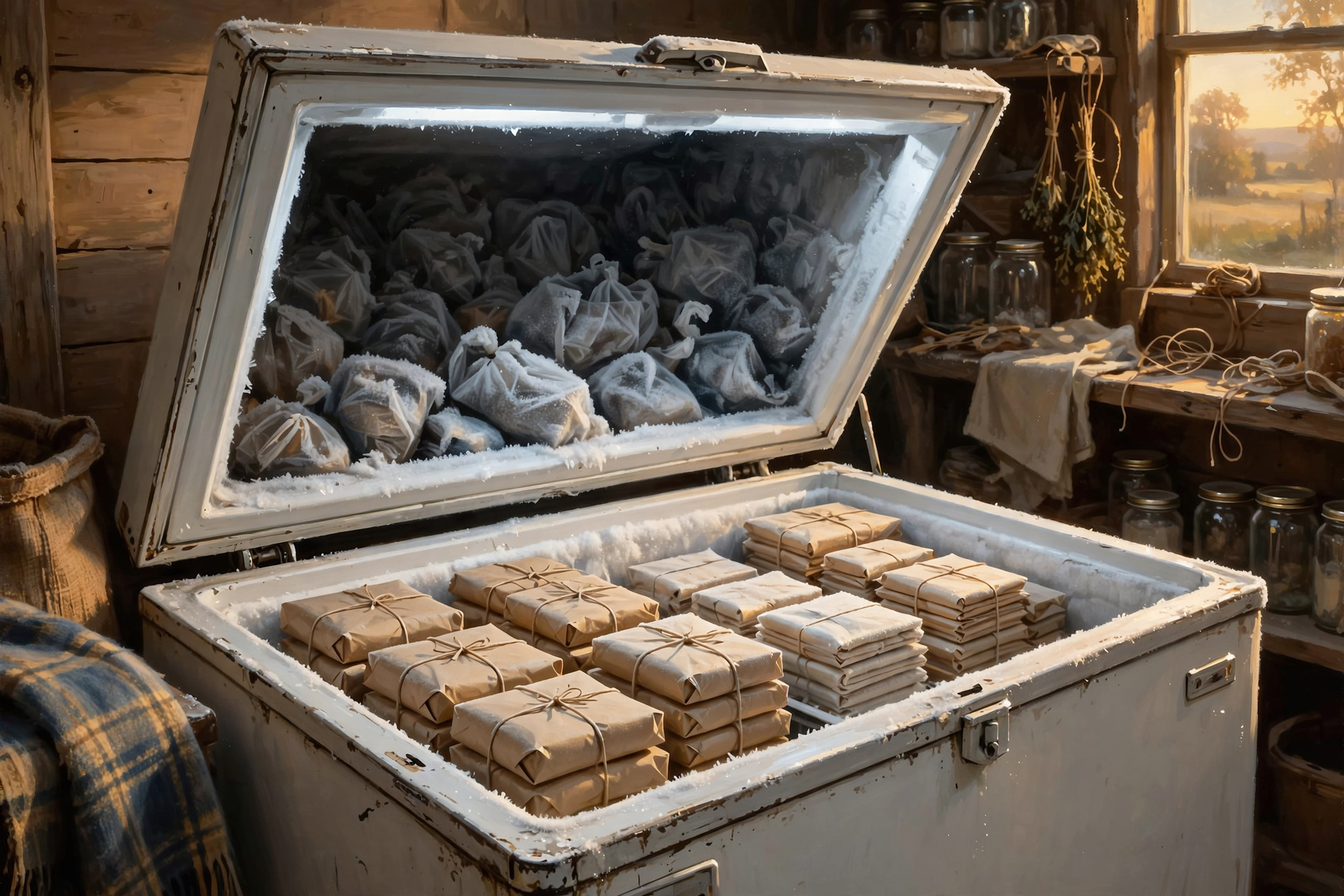
I would want every package labeled with:
- 📅 Date
- 🥩 Ingredient
- 🏡 Source
- ⚖️ Approximate amount
Then use first-in, first-out rotation.
A freezer full of anonymous bags is not inventory management.
It is a future episode of:
“What in the world is this?”
💰 I Would Track Cost Per Cat Per Day

This is the metric from the previous article that I think matters most operationally.
If we have 40 cats for 30 days:
1,200 cat-days.
If total feeding cost is $300:
$300 ÷ 1,200 = $0.25 per cat per day.
Now we have a number we can compare month to month.
🔥 I Would Also Track Cost Per 1,000 Calories

That’s how we compare complete foods fairly.
A cheaper bag may provide fewer calories.
A more expensive bag may provide more.
Cost per 1,000 calories tells us what we are actually buying.
🗑️ Waste Would Become a Formal Metric

Not an impression.
A metric.
If food remains after roughly 30 minutes, we’re probably serving too much or serving something the cats don’t particularly want.
That means we adjust.
📉 Lower Waste
Means lower effective cost.
🧹 Lower Waste
Means cleaner feeding stations.
🦝 Lower Waste
Means less wildlife attraction.
Waste reduction may be one of the cheapest improvements available to us.
🎁 Donations Would Be Tracked Separately

If somebody gives us a bag of cat food, wonderful.
If a farmer gives us eggs, wonderful.
If a hunter gives us properly handled venison, wonderful.
But I would track two numbers:
💵 Cash Cost
What came out of our pocket.
🎁 Total Resource Value
What the cats actually consumed regardless of who paid for it.
That tells us both:
how affordable the system is for us
and:
how much support the system really requires.
📋 The Scaredy Cat Project Feeding Plan — Version 1

🥣 Foundation
Complete and balanced dry cat food appropriate for the colony’s life stages.
This supplies most calories and provides nutritional consistency.
🥫 Strategic Wet Food
Complete canned food used where hydration, palatability or individual needs justify the added cost.
🍗 Local Supplemental Foods
Plain cooked animal foods used modestly when they offer nutritional or economic value.
Possible rotation:
- ❤️ Chicken or beef heart
- 🍗 Chicken thigh
- 🍗 Gizzard
- 🫀 Small amounts of liver
- 🥚 Cooked eggs
- 🦌 Safe venison
- 🐟 Appropriate fish
- 🐖 Plain cooked pork
- 🐇 Known-source rabbit
💧 Water
Multiple clean water sources maintained every day.
🧊 Storage
Sealed dry-food storage plus dedicated freezer capacity for bulk and donated ingredients.
📊 Measurement
Track:
- 🐱 Cat count
- 📦 Food used
- 💵 Cost
- 🔥 Calories
- 🗑️ Waste
- 🎁 Donations
- 🌡️ Weather
- ⚖️ General body condition
📅 What Would a Typical Day Look Like?

I would keep it simple.
🌅 Morning
Complete dry food distributed across multiple feeding stations.
Fresh water checked and replaced.
Small supplemental food used if available or useful.
🌇 Evening
Second measured feeding based on what was consumed earlier.
Wet food or fresh supplement used strategically.
Water refreshed.
Leftovers removed.
Any unusual cats observed.
👀 Feeding Time Is Also Health-Check Time
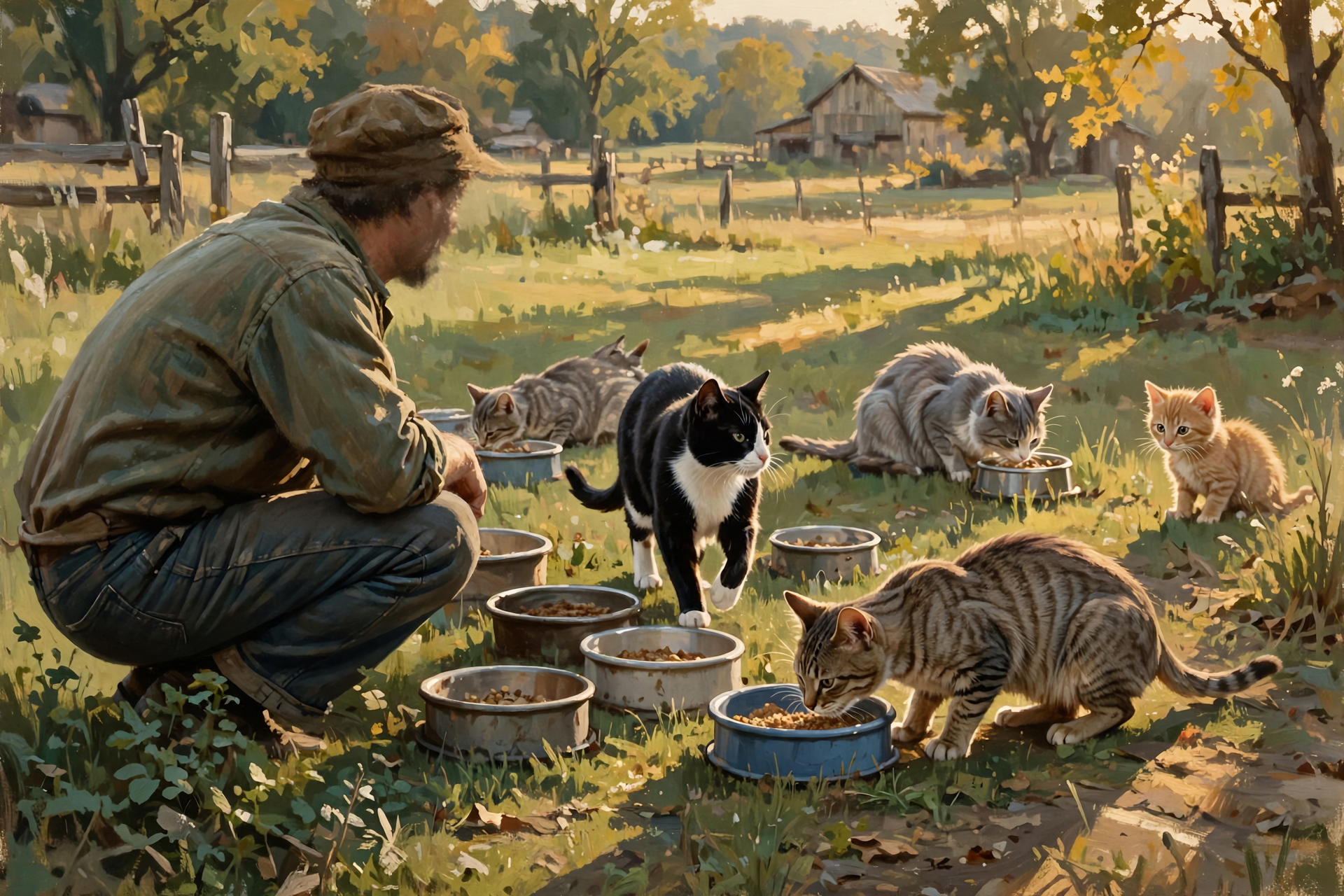
This may be another benefit of a consistent system.
When cats appear predictably at feeding time, we can observe them.
Is someone missing?
Is someone limping?
Is a cat suddenly thin?
Is one not eating?
Is there a new kitten?
Is a female obviously pregnant?
Feeding is not just nutrition.
It’s surveillance.
🐾 I Would Prioritize the Kittens and Nursing Mothers
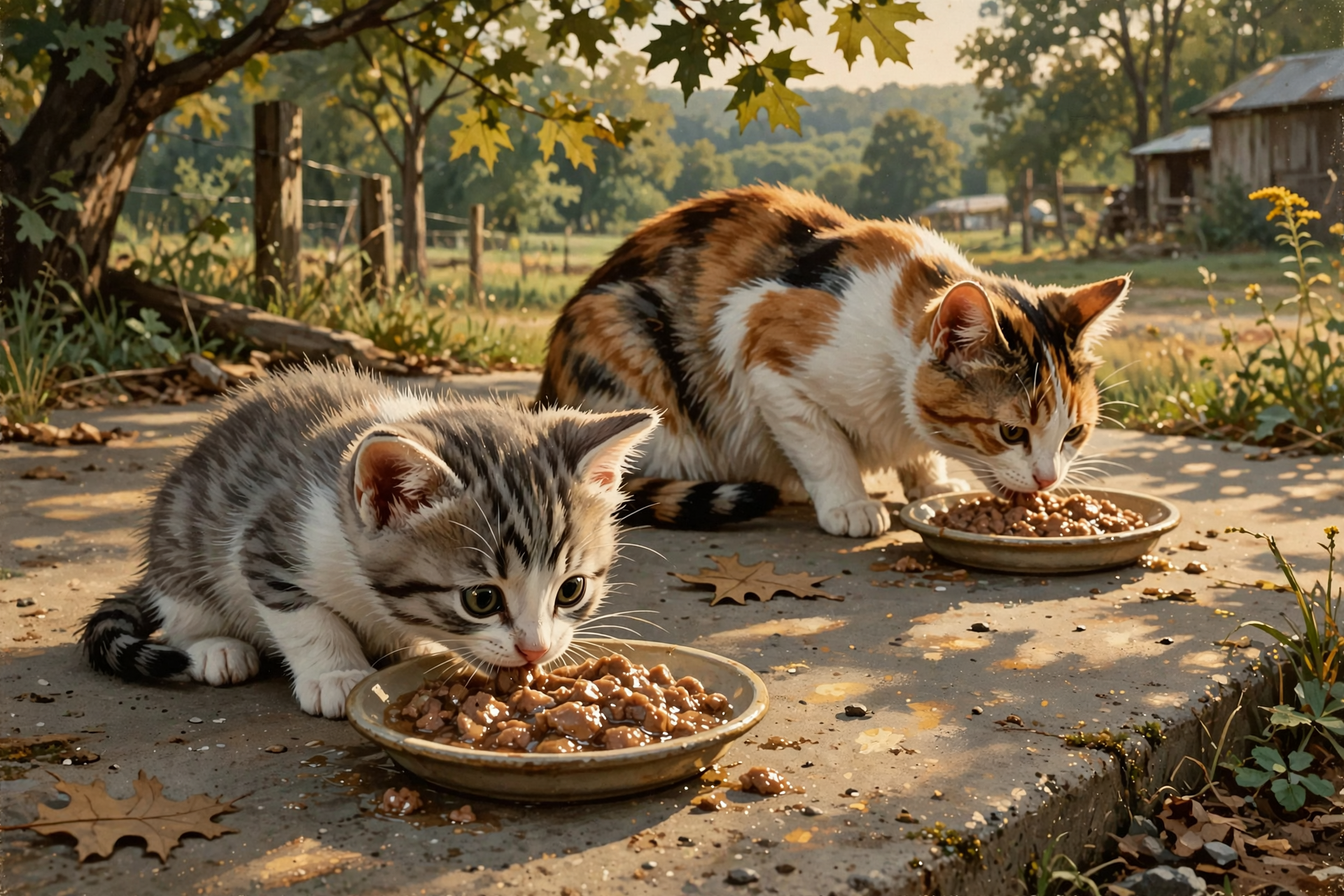
When food resources are tight, not every animal has exactly the same nutritional urgency.
Growing kittens and nursing mothers have high demands.
That means we may need targeted feeding stations or individual wet-food portions for those groups.
The whole colony can share a baseline.
Some cats may need more.
👴 Older and Vulnerable Cats May Need Their Own Plan Too
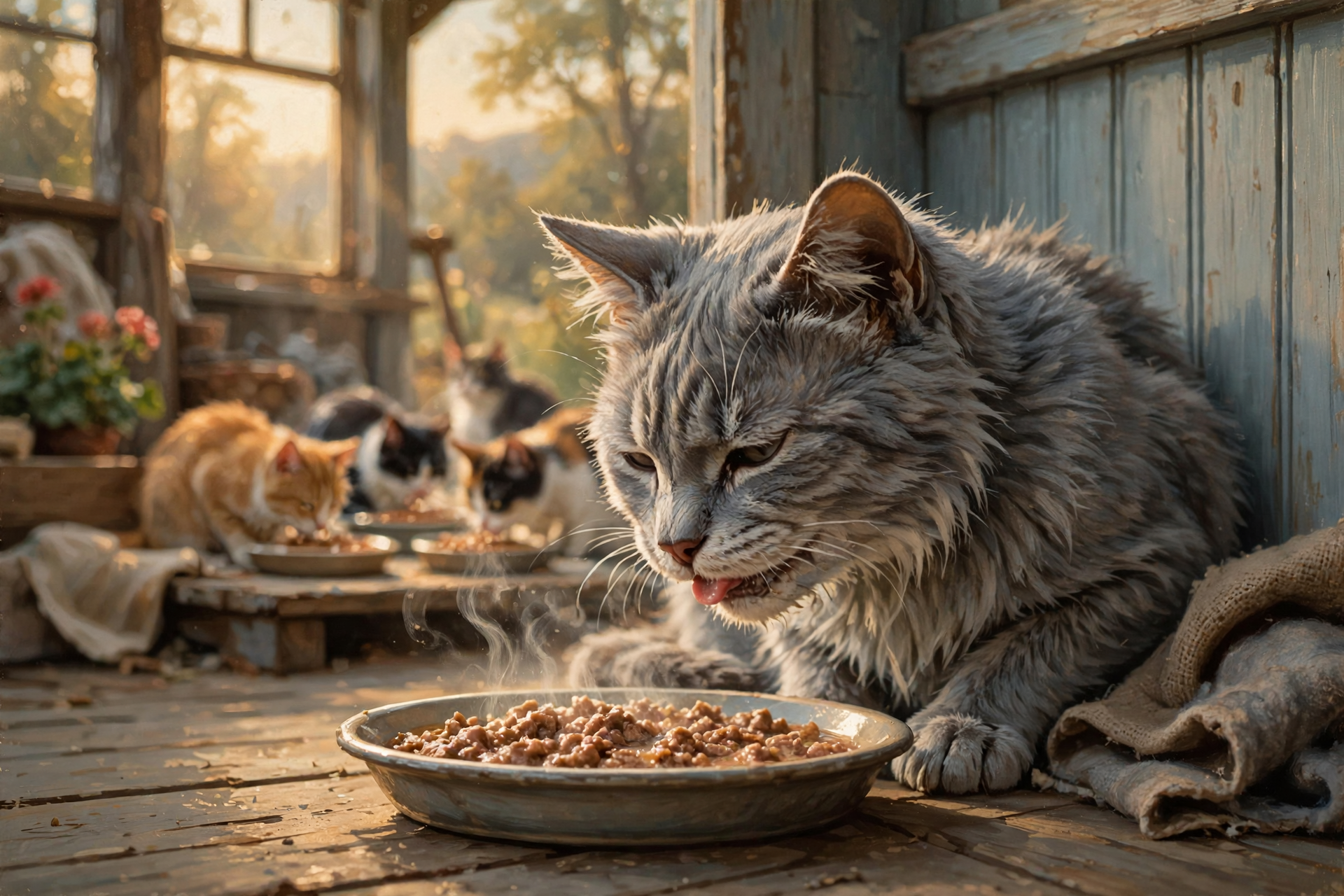
An older cat with worn teeth may struggle with dry food.
A recovering cat may need more palatable food.
A very timid cat may not compete successfully at a busy station.
So I would think of the feeding system as:
standard plan + individual exceptions.
That is probably the only realistic way to manage a mixed colony humanely.
💵 What Would I Spend Money on First?

If resources are limited, my order would look something like this:
1️⃣ Complete Food
Nutrition comes first.
2️⃣ Clean Water Infrastructure
Bowls, winter protection and easy cleaning.
3️⃣ Feeding Stations
Reduce weather exposure and waste.
4️⃣ Freezer Capacity
Only if enough low-cost or donated supplemental food becomes available to justify it.
5️⃣ Supplemental Foods
Buy or accept them when they improve the system economically or nutritionally.
But there is one other expense that belongs above almost everything long-term.
✂️ The Best Food-Budget Investment Is Still Spay and Neuter
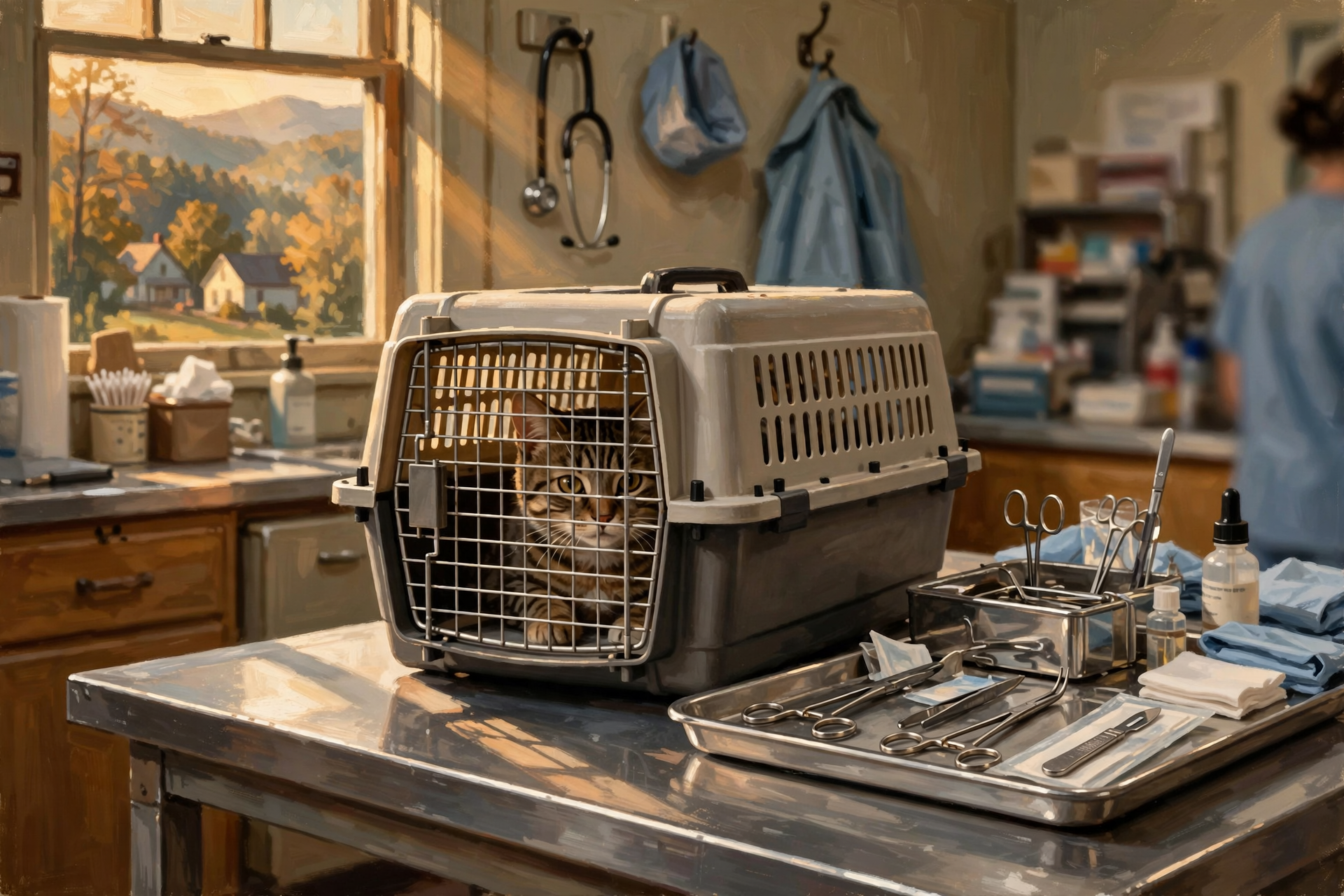
If the colony keeps growing, every feeding optimization eventually loses.
We can save 20 percent on food.
Then gain 20 new cats.
We lose.
So food and population control cannot be separate projects.
The real system is:
feed today’s cats while preventing tomorrow’s unwanted kittens.
🏡 Adoption Is Part of the Feeding Plan Too

Every friendly cat or socialized kitten that moves into a responsible home changes the colony permanently.
One less outdoor mouth.
One more animal receiving individual care.
More resources remaining for the cats that cannot be adopted.
So:
Find them homes when we can
is not merely sentimental.
It is operationally important.
🐱 What About Scaredy?

Scaredy would like the official feeding plan amended as follows:
Breakfast: Tuna.
Lunch: Tuna.
Dinner: Tuna.
Emergency snack: Tuna.
Her proposal has been received.
It has been referred to committee.
The committee consists of me.
The proposal is unlikely to pass.
❤️ The Point Is Not Perfection

We are never going to know exactly what every feral cat eats every day.
Some will hunt.
Some will visit other houses.
Some will eat more than others.
Some will disappear for a day.
Scaredy once disappeared for thirty-six.
This isn’t laboratory feeding.
It’s community-cat care.
The goal is not perfect control.
The goal is a system good enough to consistently improve the odds.
📈 Then We Improve It With Data

Version 1 does not need to be the final version.
In fact, it shouldn’t be.
We implement.
Measure.
Learn.
Adjust.
If one food produces too much waste, change it.
If another food saves money without hurting nutrition, use more of it.
If winter consumption rises, budget for it.
If a local source becomes available, test it.
That’s how the feeding plan becomes better over time.
🔜 Next: How Do We Know Whether the Cats Are Actually Doing Better?
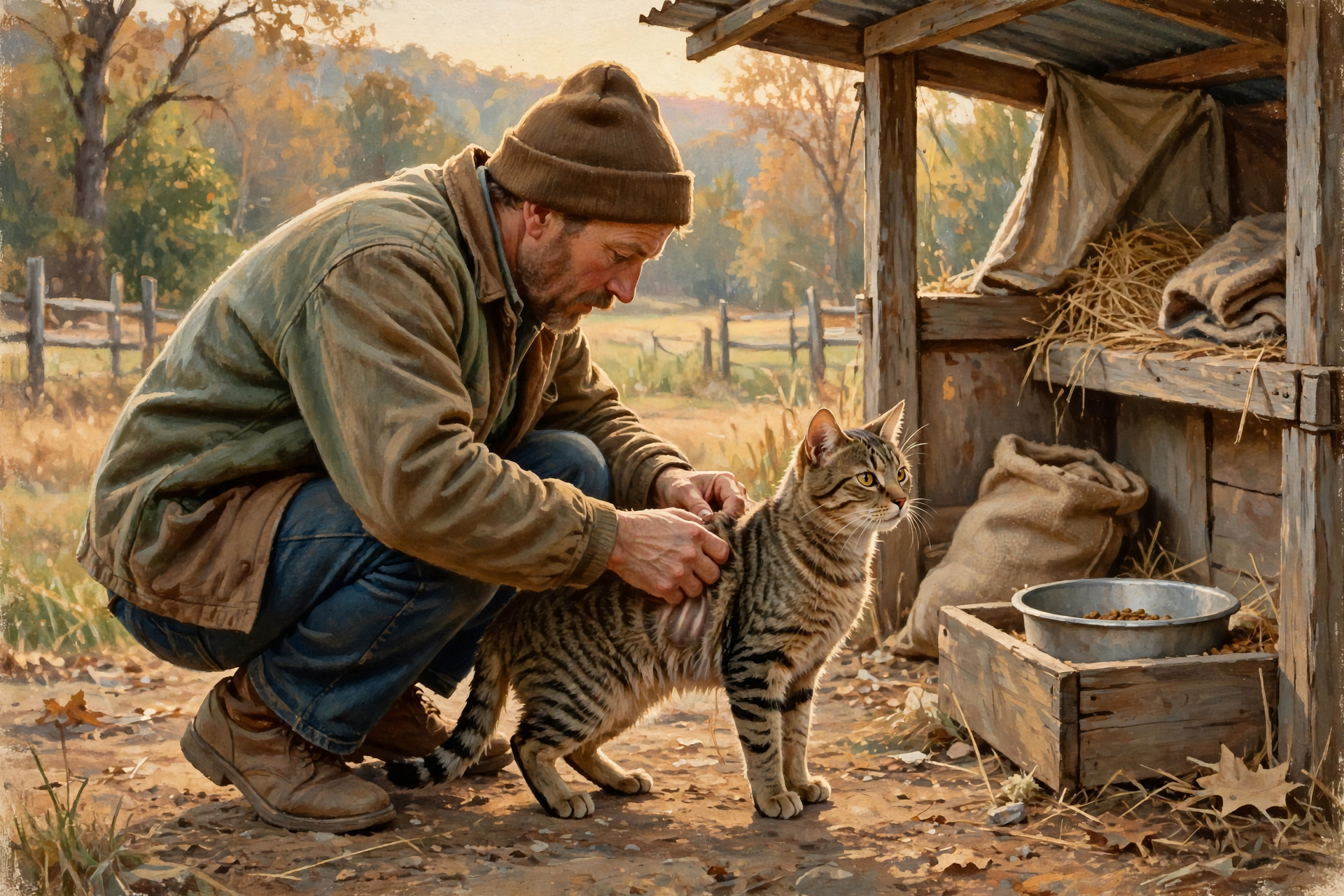
Once we have a feeding system, we need a way to judge the result.
Not just:
“The bowls were empty.”
We need to look at the cats.
The next article will examine practical signs ordinary caregivers can observe:
- ⚖️ Body condition
- ✨ Coat quality
- 👀 Eyes
- 😸 Activity
- 🥣 Appetite
- 💩 Stool changes
- 💧 Hydration clues
- 🐾 Kitten growth
- 👴 Changes in older cats
Because a cheaper feeding plan isn’t a success if the cats look worse.
The animals themselves are the real scoreboard.
📣 What Would Your Feeding Plan Look Like?

If you care for community cats around Dunlap or Sequatchie County, I’d like to compare systems.
What complete food do you use?
Do you mix wet and dry?
Do you use local meat or eggs?
How many feeding stations?
What works in winter?
What works in summer?
What do the cats waste?
What has saved you the most money without compromising care?
Those practical experiences can help improve this plan far more than theory alone.
❤️ Feed Them. Fix Them. Find Them Homes When We Can. Help the Rest Age Gracefully.
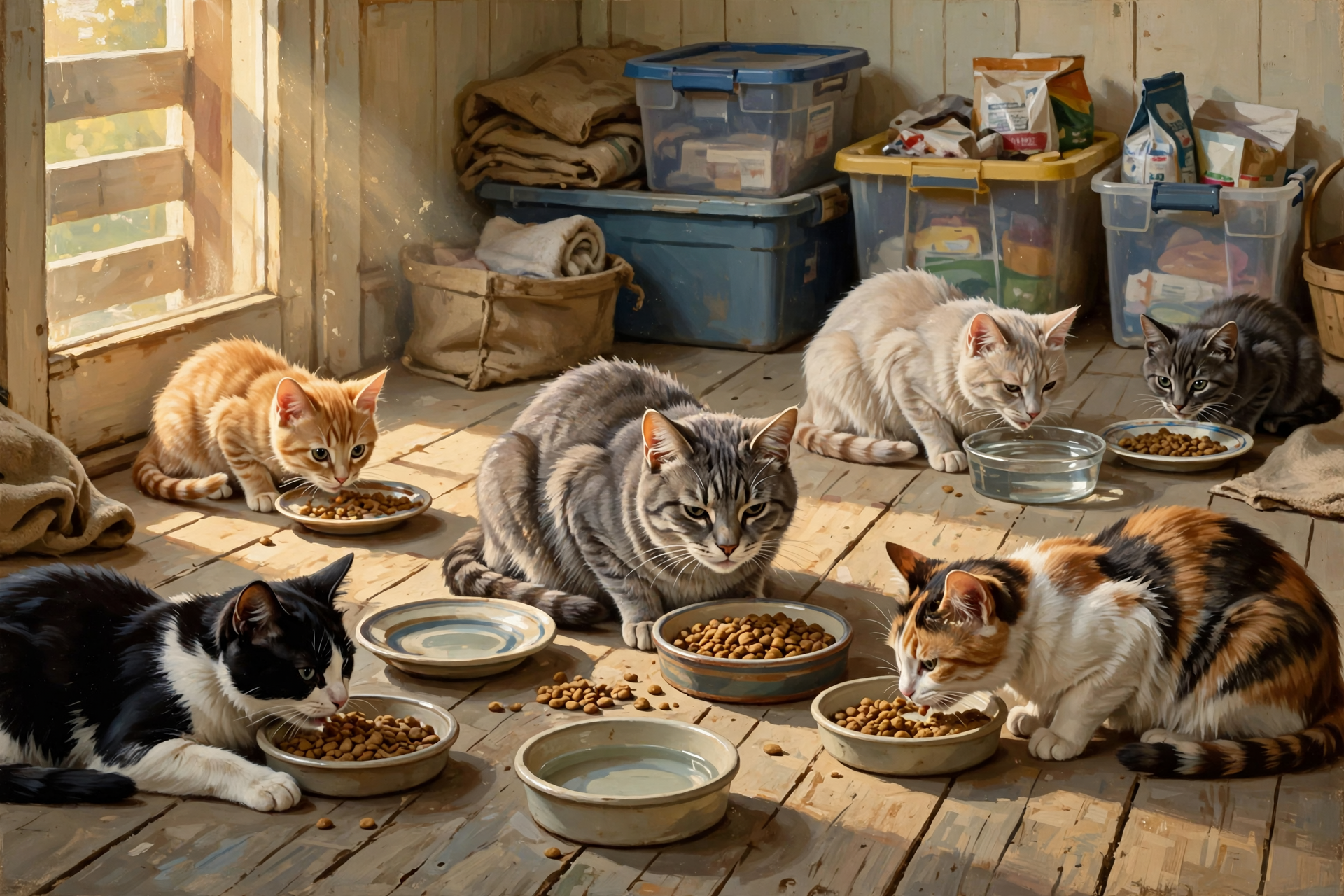
After eighteen articles, the feeding plan is actually becoming pretty simple.
Start with complete nutrition.
Use wet food strategically.
Add local foods intelligently.
Keep clean water available.
Reduce waste.
Buy when prices are good.
Store food properly.
Watch the cats.
Measure what matters.
Fix as many as we can.
Find homes where we can.
And keep improving the system.
That isn’t glamorous.
But neither is caring for forty cats every day.
It just has to work.
🐾 Feed them. Fix them. Find them homes when we can. Help the rest age gracefully.
🔎 Sources & Further Reading

- Cornell University College of Veterinary Medicine — Feline Health Center, Feeding Your Cat
- Alley Cat Allies — Community & Feral Cat Feeding Tips
- Alley Cat Allies — Best Practices: Community Cat Colony Care
- Association of American Feed Control Officials — Reading Labels
- Merck Veterinary Manual — Proper Nutrition for Cats
Know about an upcoming event or story in the Sequatchie Valley? Submit it here.



0 Comments