
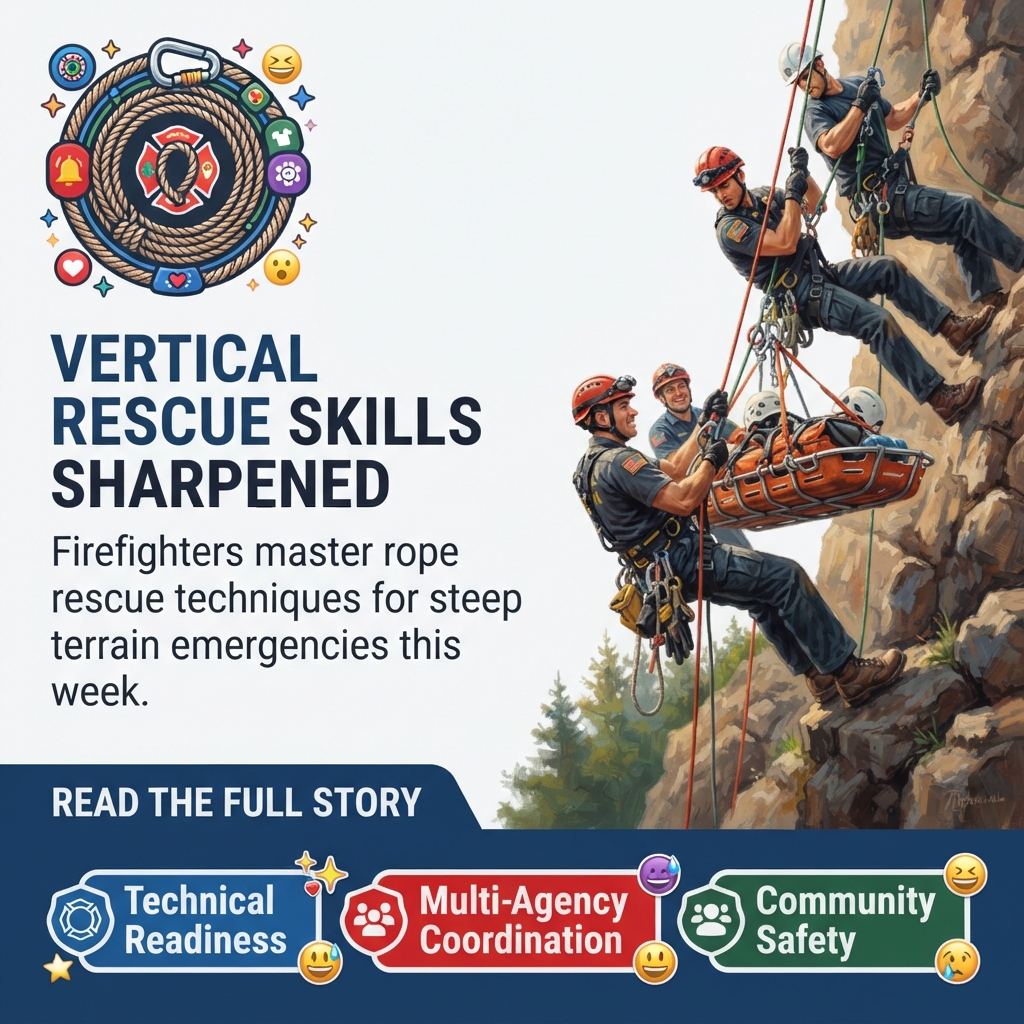
🪢 Signal Mountain Fire Department Trains in Rope Rescue for Steep Terrain Emergencies
This week, firefighters across Signal Mountain and neighboring departments are sharpening their technical rescue skills through intensive hands-on training designed specifically for the region’s challenging geography. The Chattanooga metro area’s steep slopes, cliff faces, and rugged backcountry terrain demand specialized expertise—and this coordinated training week ensures crews are ready when lives depend on it.
📍 Why This Matters
Signal Mountain’s distinctive landscape—with its elevation changes, wooded terrain, and natural drop-offs—creates real rescue challenges that standard firefighting training doesn’t address. A stranded hiker on a steep slope, a vehicle extraction from rough terrain, or a person injured in a backcountry area requires crews who understand vertical rescue, mechanical advantage systems, and patient safety in high-angle environments. When seconds count and terrain is unforgiving, the difference between adequate training and expert-level skill can mean the difference between a successful rescue and tragedy.
This week’s intensive curriculum isn’t theoretical. Firefighters are mastering knot-tying and rigging systems, building and operating complex pulley systems for hauling and lowering, and practicing the precise communication and safety protocols that keep rescuers and patients safe during high-stress vertical operations. The training aligns with national standards, including NFPA (National Fire Protection Association) guidelines, ensuring that local crews meet the same rigorous benchmarks as rescue teams across the country.
🤝 Community Connections and Multi-Agency Strength
One of the most important aspects of this training week is the regional partnership. Signal Mountain Fire Department is training alongside neighboring departments—a deliberate choice that builds what rescue professionals call “interoperability.” When a technical rescue call comes in, crews from different departments need to work seamlessly together, understanding each other’s signals, procedures, and communication styles. This week’s training ensures that when a multi-agency response is needed, there’s no confusion or delay.
That “stronger together” approach reflects a broader community reality: rescue operations often cross jurisdictional lines. A hiker lost on Signal Mountain’s terrain might need crews from multiple departments. A vehicle accident on a remote road could involve fire, rescue, and emergency medical personnel from different towns. Training together builds the trust and shared language that makes those coordinated responses possible.
👥 Human Impact: What This Means for Residents and Visitors
For residents and visitors to Signal Mountain, this training translates into a concrete safety benefit. Outdoor enthusiasts—hikers, trail runners, horseback riders, and others who enjoy the area’s natural terrain—can pursue their activities with greater confidence knowing that if an emergency occurs, the crews responding will have practiced extensively in the exact conditions they might face. Families living on Signal Mountain’s slopes know that their local fire department has invested in the specialized skills needed for their unique geography.
For the firefighters themselves, this training represents both professional development and a commitment to their community. Technical rope rescue is demanding, physically and mentally. Mastering these skills requires focus, teamwork, and a willingness to practice scenarios that could save lives. The crews participating in this week’s training are investing their time and energy in readiness—a tangible expression of their dedication to keeping the community safe.
🎯 What Residents Should Know
This training is happening this week and involves intensive, hands-on practice. Key skill areas include:
- Knot Tying & Rigging: Mastering rescue knots, anchor systems (BETH systems), and proper tensioning techniques.
- Mechanical Advantage Systems: Building and operating 3:1, 5:1, and complex pulley systems for efficient hauling and lowering operations.
- Patient Packaging & Litter Rigging: Safely securing patients into Stokes baskets for both low-angle and high-angle evacuations.
- Team Communication & Safety: Practicing strict command structures, edge safety protocols, and standardized signals required during high-stress vertical rescues.
The curriculum is rigorous and aligns with national standards. This isn’t a one-time refresher—it’s the kind of intensive, scenario-based training that builds muscle memory and decision-making ability under pressure.
🔄 What Happens Next
After this training week concludes, the crews will carry these skills forward into their regular operations. The knowledge and confidence they’ve built will remain part of their readiness toolkit. If a technical rescue call comes in—whether it’s a stranded hiker, a vehicle extraction from rough terrain, or any other vertical-environment emergency—the crews will respond with the training and interagency coordination they’ve practiced this week.
The multi-agency partnerships formed during this training also create ongoing relationships. Neighboring departments will have worked together, built trust, and established communication protocols that will serve them well in future coordinated responses.
💭 Community Questions Worth Considering
As residents reflect on this training initiative, a few questions may naturally arise:
- How often do technical rescue situations occur in Signal Mountain, and what types of emergencies are most common?
- Are there ways residents can support or learn more about the fire department’s training and readiness efforts?
- For those who enjoy outdoor activities in Signal Mountain’s terrain, what safety practices complement the fire department’s rescue readiness?
- How do neighboring departments coordinate beyond this training week, and what does that ongoing partnership look like?
🌄 Long-Term Community Impact
This training week represents an investment in Signal Mountain’s long-term safety culture. Communities with well-trained, interagency-coordinated emergency response teams experience better outcomes in rescue situations, faster response times, and greater confidence among residents and visitors. Over time, that reputation for preparedness and professionalism strengthens the community’s resilience.
Additionally, when fire departments maintain cutting-edge technical rescue skills, they often become regional resources. Neighboring communities and county-level emergency management agencies may call on Signal Mountain’s expertise during complex rescues. That expertise becomes part of the community’s identity and value to the broader region.
🔗 Community Threads: The Rescue-Ready Community
The Terrain-Training Connection: Signal Mountain’s distinctive geography—steep slopes, cliffs, and rugged backcountry—directly shapes the fire department’s training priorities. The landscape that makes the area beautiful and attractive to outdoor enthusiasts also creates the specific rescue challenges that crews must master. This week’s training is a direct response to that geographic reality. Residents who understand this connection gain appreciation for why their fire department invests in these particular skills.
The Multi-Agency Trust Network: When fire departments from different jurisdictions train together, they build relationships and shared understanding that extend far beyond the training week. Crews learn each other’s communication styles, trust each other’s judgment, and develop the kind of coordination that can only come from hands-on practice. That trust network becomes invisible infrastructure—residents don’t see it, but it’s there when emergencies happen. This week’s training strengthens that network for the entire region.
The Outdoor Recreation-Emergency Response Relationship: Signal Mountain attracts hikers, trail runners, horseback riders, and other outdoor enthusiasts who rely on the area’s natural terrain. That outdoor recreation culture creates the potential for technical rescue situations. The fire department’s training investment is, in a real sense, a response to the community’s lifestyle and values. It’s the department saying: “We see what you love about this place, and we’re preparing to keep you safe while you enjoy it.”


0 Comments