
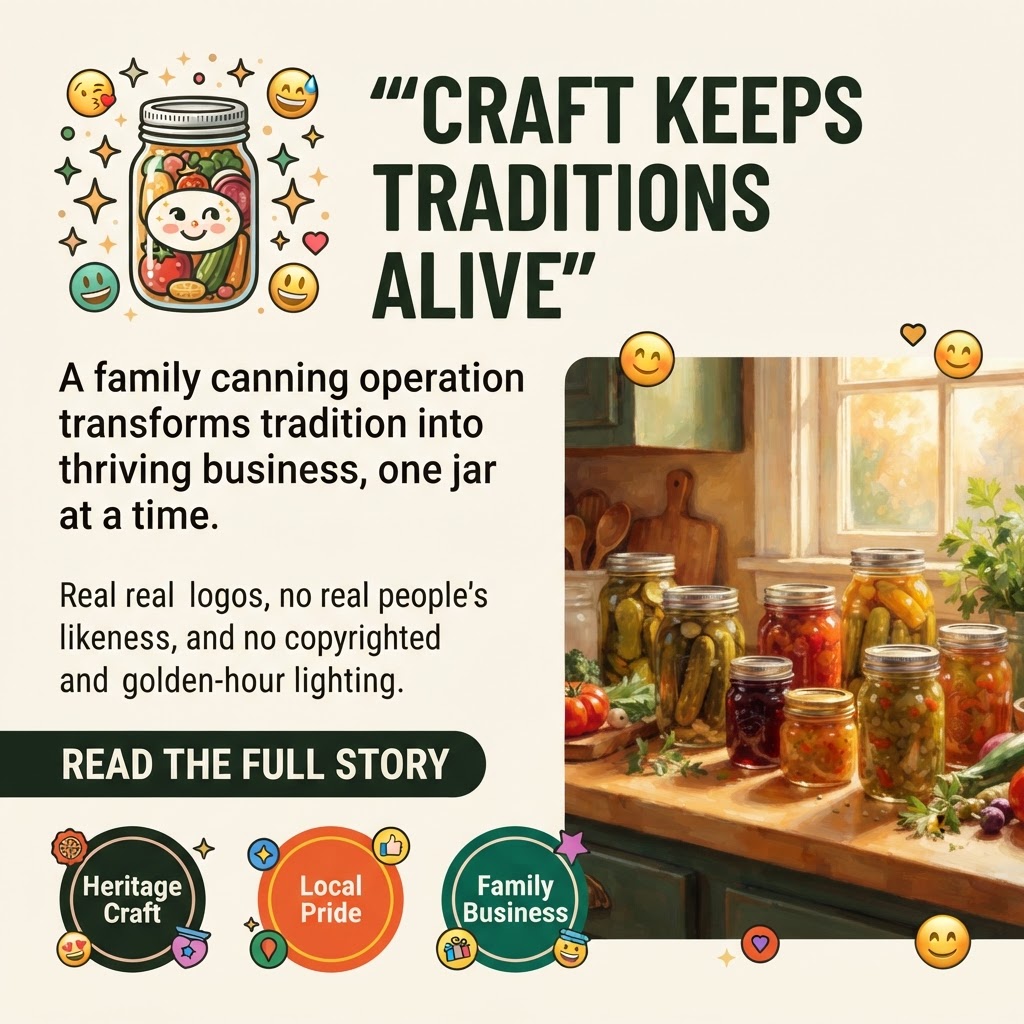
🥒 Family Canning Business Celebrates Craft and Community Support
In the Sequatchie Valley, where traditions often run deep and family enterprises form the backbone of local commerce, one canning operation is finding creative ways to keep a time-honored craft alive while building stronger connections with neighbors who value homemade, preserved goods.
❤️ A Labor of Love in an Evolving Marketplace
D.A.M GOOD, a family canning business, recently shared a heartfelt message with its community: “We love what we do. Canning is a labor of love, a dying art and we’re just trying to keep spreading memories one jar at a time.” 🫙 The post reflects both the passion that drives the operation and an honest acknowledgment of the challenges facing traditional food preservation in a modern economy. Canning—once a household necessity and a cornerstone of family food security—has become less common as commercial food production has expanded. Yet for those who practice it, the craft remains deeply personal, connecting people to their heritage, their families, and the seasons.
🏠 From Dining Room to Pantry: Adapting to Demand
The business has taken a practical and somewhat humorous approach to growth: the family’s dining room has been converted into a pantry and product display space. 😂 This adaptation speaks to real success—demand for their canned goods has grown enough to require additional retail space within the home itself. For a family operation, this kind of creative repurposing reflects both entrepreneurial flexibility and the genuine demand from local customers who value handmade, preserved products.
💡 Why This Matters to the Community
The survival and growth of small-scale canning operations like this one has ripple effects across the community. When families choose to buy locally canned goods, they support a neighbor’s livelihood, keep money circulating within the valley, and often gain access to products made with care and attention that mass production cannot replicate. For those interested in food heritage, sustainability, or simply supporting local enterprise, these businesses represent a tangible way to participate in the local economy. 🌱
🤝 Community Threads: Tradition, Family, and Local Pride
This story reveals several invisible connections worth understanding:
The Craft Preservation Thread: Canning represents a skill set that connects generations—grandmothers teaching mothers, mothers teaching children. When a family business keeps this art alive and visible in the community, it helps ensure the knowledge doesn’t disappear. Neighbors who purchase from D.A.M GOOD aren’t just buying jam or pickles; they’re participating in the continuation of a cultural practice.
The Local Food Network Thread: Family canning operations often connect to broader local food conversations—farmers markets, community gardens, food preservation workshops, and conversations about food security and self-sufficiency. This business may be a natural ally or resource for others interested in these topics.
The Family Business Thread: The post explicitly identifies this as a “family business,” which signals that multiple family members are likely involved in production, sales, and decision-making. This structure often means the business is deeply rooted in the community and makes decisions with long-term family and community impact in mind, not just quarterly profits.
🙏 Community Support and Gratitude
The business’s message explicitly thanks the community for support and for being “a special part of our family business.” This language suggests a genuine relationship between the business and its customers—not a transactional one. The 27 likes, 18 love reactions, and community engagement on the post reflect that sentiment being reciprocated. People aren’t just buying products; they’re rooting for neighbors they know.
❓ Questions Worth Considering
As you think about this story and its place in the community:
- What role do family-run food businesses play in your own food choices and community connections?
- Are there other traditional crafts or skills in the valley that feel like they’re fading, and how might community support help preserve them?
- How does buying from a neighbor’s home-based business feel different from buying from a larger retailer, and what value does that difference hold?
- What other local businesses or artisans might benefit from the same kind of community visibility and support?
📍 What Residents Should Know
D.A.M GOOD operates as a family canning business with products now available in an expanded home-based retail space (the converted dining room). The business actively engages with the community through social media and appears to welcome customer support and connection. Those interested in learning more or purchasing canned goods can connect with the business through its Facebook page.
🔮 What Happens Next
The business’s creative adaptation—converting living space into retail space—suggests continued growth and demand. Whether this leads to further expansion, additional product lines, or community events remains to be seen. Community members interested in supporting this work might watch for updates about new products, seasonal offerings, or opportunities to learn more about the canning process itself.
🌾 Long-Term Community Impact
When small family operations like this one thrive, they contribute to the valley’s identity as a place where traditional skills, family enterprise, and community relationships still matter. They also create a model for younger generations—showing that it’s possible to build a business around something you love, rooted in your community, and connected to your family’s values. Over time, these businesses help define what makes a region distinctive and worth living in.

0 Comments