
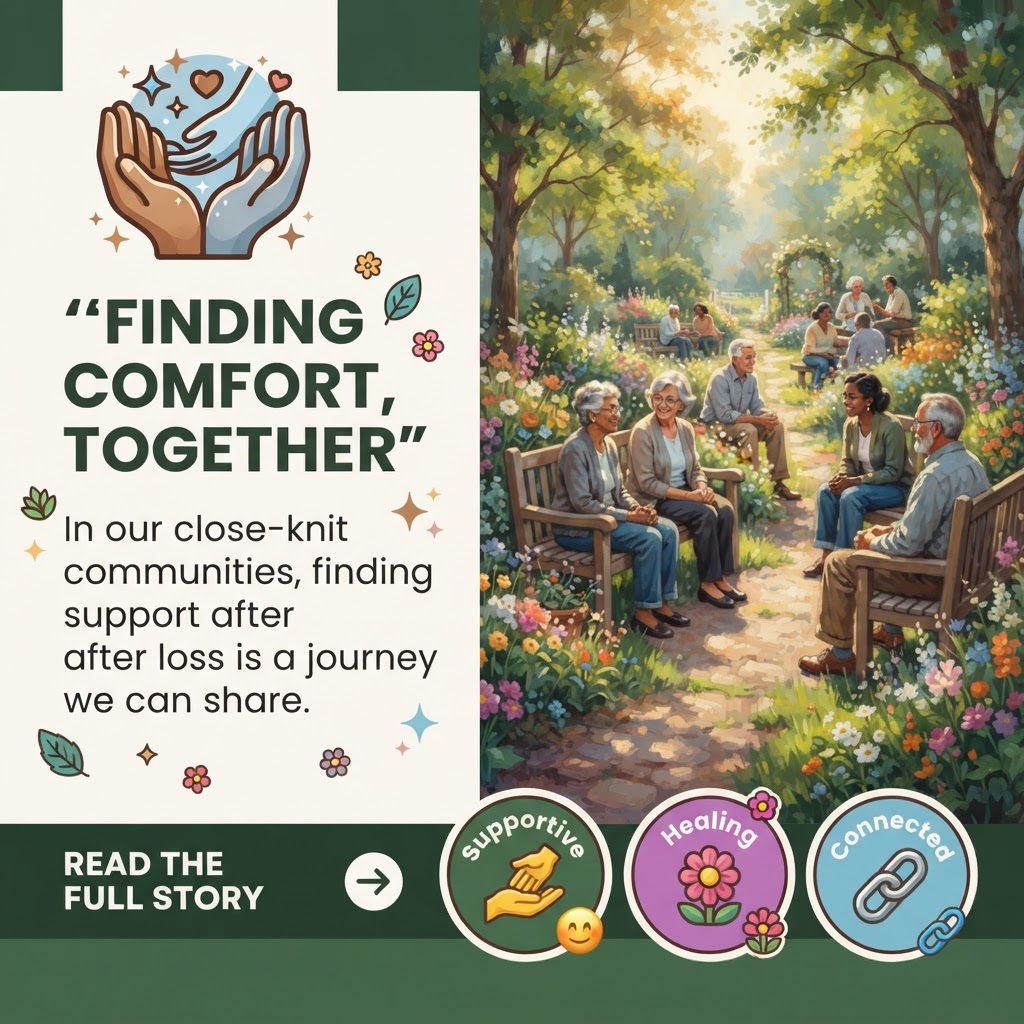
💔 Grieving in the Sequatchie Valley: Finding Support When You Lose a Loved One
The loss of a loved one can feel especially profound when it touches our close-knit communities, where bonds run deep and traditions shape daily life. In the quiet valleys and rolling hills of this region—where neighbors know each other’s stories and churches often become havens for healing—the absence of someone dear can leave a void that resonates beyond words. A recent question in Dunlap TN Grapevine highlights how many residents are searching not just for answers, but for connection: Does anyone know of a support group when you lose a loved one?
🌿 WHY THIS MATTERS
Grief doesn’t follow a timeline, and its weight can feel heavier in small towns where everyone knows your name. For many in the Sequatchie Valley—whether in Marion County’s rural crossroads or Bledsoe County’s tight-knit neighborhoods—the loss of a spouse, parent, sibling, or friend isn’t just personal; it’s felt collectively. The valley’s close-knit culture means that while some may turn to family or faith for comfort, others find themselves searching for structured support beyond their immediate circle.
Grief support groups can offer something invaluable: a space to be seen without judgment. In a region where privacy and modesty are often valued, these groups provide a safe place to share stories, laugh through tears, or simply sit in silence together. For families grieving a sudden loss, those who’ve experienced similar journeys, or even caregivers facing burnout, peer support can be a lifeline.
🤝 COMMUNITY CONNECTIONS
The Sequatchie Valley has long been a place where community threads weave through grief and healing. Local churches—from the historic sanctuaries of Sequatchie to the small chapels in Grundy County—often host bereavement groups, prayer circles, or memorial services that serve as informal support networks. Schools like Sequatchie Valley High School and Marion County Schools also host grief counseling for students after losses in the community.
Beyond faith-based groups, organizations like the Tennessee Suicide Prevention Network (which serves rural areas) or Compassionate Friends, a national nonprofit for families grieving children, have local chapters that align with this region’s values of resilience and neighborly care. Even local libraries—such as the Sequatchie County Library—sometimes host grief workshops or book discussions on coping with loss.
For those who prefer in-person connection, many residents already know the power of a shared meal or a quiet walk together. The valley’s natural beauty—whether along the Sequatchie River or atop Walden Ridge—often becomes a place for reflection, and some informal groups meet in parks or community gardens to honor loved ones.
👥 HUMAN IMPACT
Grief doesn’t discriminate by age, gender, or background. In this region, it might look like:
– A grandparent who’s been the backbone of a church youth group suddenly finding themselves alone after their spouse passes.
– A young parent in Grundy County who’s struggling to explain death to their child while managing work and household responsibilities.
– An elderly widow or widower in Marion County who’s used to being the caregiver but now needs someone to listen as they process their own loss.
– A caregiver in Van Buren County who’s exhausted from years of supporting a loved one and is now grieving the person they lost—and the role they’ve filled.
For many, the hardest part isn’t just the emotional weight but the isolation that comes with trying to navigate grief alone. A support group can help normalize feelings—whether it’s anger, guilt, or relief—that might otherwise feel overwhelming in a community where everyone “should be strong.”
🏡 LOCAL PERSPECTIVE
In rural Tennessee, grief often intersects with practical challenges: limited access to mental health resources, long drives to larger cities for counseling, and the stigma that can still surround talking openly about death. Yet this same landscape also offers unique strengths. The valley’s tight-knit communities mean that word of a support group—whether through a church bulletin, a library program, or even a quiet conversation at the grocery store—can spread quickly.
Similar situations have played out across the region before. After the 2015 flood in Sequatchie County, for example, informal grief circles formed among neighbors who’d lost homes and loved ones to the same disaster. More recently, the pandemic highlighted how even small towns needed spaces to process loss without shame. What’s different now is the growing recognition that grief isn’t a one-time event—it’s a journey, and many in this community are realizing they don’t have to walk it alone.
💡 OPPORTUNITIES FOR CONNECTION
If you or someone you know is searching for support, here are some avenues worth exploring:
Faith-Based Groups
Many local churches offer bereavement groups, memorial services, or one-on-one counseling. Examples include:
– Sequatchie Valley Baptist Church (Sequatchie, TN)
– Marion County Methodist Church (Lynchburg, TN)
– First United Methodist Church of Grundy Center (Grundy Center, TN)
Community Resources
– Tennessee Suicide Prevention Network: Offers rural outreach and grief support. 📞 Call 1-800-273-TALK
– Compassionate Friends: A national organization with local chapters that meet regularly. 🌐 <a href=”https://compassionatefriends.org” target=”_blank” rel=”noopener noreferrer”>compassionatefriends.org</a>
– Local Libraries: Check with the Sequatchie County Library or Marion County Public Library for grief workshops or book recommendations.
Informal Support
– Neighborhood Watch Groups: Many communities have WhatsApp groups or Facebook pages where residents share resources.
– YMCA or Recreation Centers: Some locations host grief support meetings (e.g., Sequatchie Valley YMCA).
– Outdoor Groups: Walking clubs, gardening circles, or fishing groups can become places to share memories of loved ones.
📅 WHAT RESIDENTS SHOULD KNOW
If you’re looking for a support group right now:
✔ Ask around. Many groups start informally—someone in your church, school, or neighborhood may already be part of one.
✔ Check local listings. Websites like Meetup.com or Facebook often list rural Tennessee grief support gatherings.
✔ Start small. Even a conversation with a trusted friend or clergy member can ease the first steps toward healing.
🌱 WHAT HAPPENS NEXT
The next steps depend on what kind of support you’re seeking:
– If you prefer structured groups, reach out to local churches or nonprofits for scheduled meetings.
– If you’d rather build community, consider starting an informal group with a few trusted neighbors—perhaps meeting monthly at a park or community center.
– If you’re caring for someone else, look into resources like the Tennessee Caregiver Support Program (📞 1-800-273-TALK) to avoid burnout.
❓ COMMUNITY QUESTIONS
As this conversation grows in our community, here are a few questions worth reflecting on:
– What kind of grief support would feel most helpful to you or someone you know?
– Are there local traditions (like memorial services, nature walks, or shared meals) that could be adapted into structured support groups?
– How can we better connect residents with existing resources—whether through libraries, churches, or community centers?
– For caregivers: What kind of practical or emotional support would make your journey easier?
– If you’ve found a grief group that worked for you, how can others in the valley learn about it?
🌿 LONG-TERM COMMUNITY IMPACT
Over time, accessible grief support could strengthen the Sequatchie Valley’s resilience in several ways:
✨ Stronger Community Bonds: When residents share their stories of loss and healing openly, it builds trust and reduces stigma.
🏡 Healthier Families: Children who see adults talking about grief learn healthy coping skills early.
🌱 Economic Stability: Reduced caregiver burnout means more people can stay in the community long-term.
🙏 Cultural Legacy: Grief groups can become a new tradition—like potlucks or holiday celebrations—that honors both the living and the lost.
🧵 COMMUNITY THREADS
This conversation reveals several invisible connections that tie our valley together:
1. The Role of Faith in Healing
Why it matters: Churches have always been pillars of support in rural Tennessee, but many residents may not realize how many offer grief-specific programs beyond memorial services.
How to engage: Ask your local pastor or rabbi about bereavement resources—they often know of groups that aren’t widely advertised.
2. The Power of Informal Networks
Why it matters: In tight-knit communities, word-of-mouth can be the fastest way to find support. Many grief groups start when a neighbor shares their experience with another.
How to engage: If you’ve found a helpful resource, share it in local Facebook groups or at community events.
3. Rural Tennessee’s Resource Gap
Why it matters: Unlike larger cities, the Sequatchie Valley doesn’t have easy access to grief counselors or support groups—but that doesn’t mean they don’t exist.
How to engage: Advocate for partnerships between local organizations (libraries, YMCAs) and national nonprofits to bring more resources here.
4. Intergenerational Grief
Why it matters: Elders who’ve lost spouses often feel isolated, while younger families grieve children or parents in ways that differ from past generations.
How to engage: Some churches host intergenerational grief groups where all ages can share—ask if your community could start one.
5. Nature as a Healing Space
Why it matters: The Sequatchie Valley’s landscapes—from the river to the ridges—are already places of reflection for many residents.
How to engage: A guided outdoor grief walk or memorial service in a local park could become a new tradition.




0 Comments