
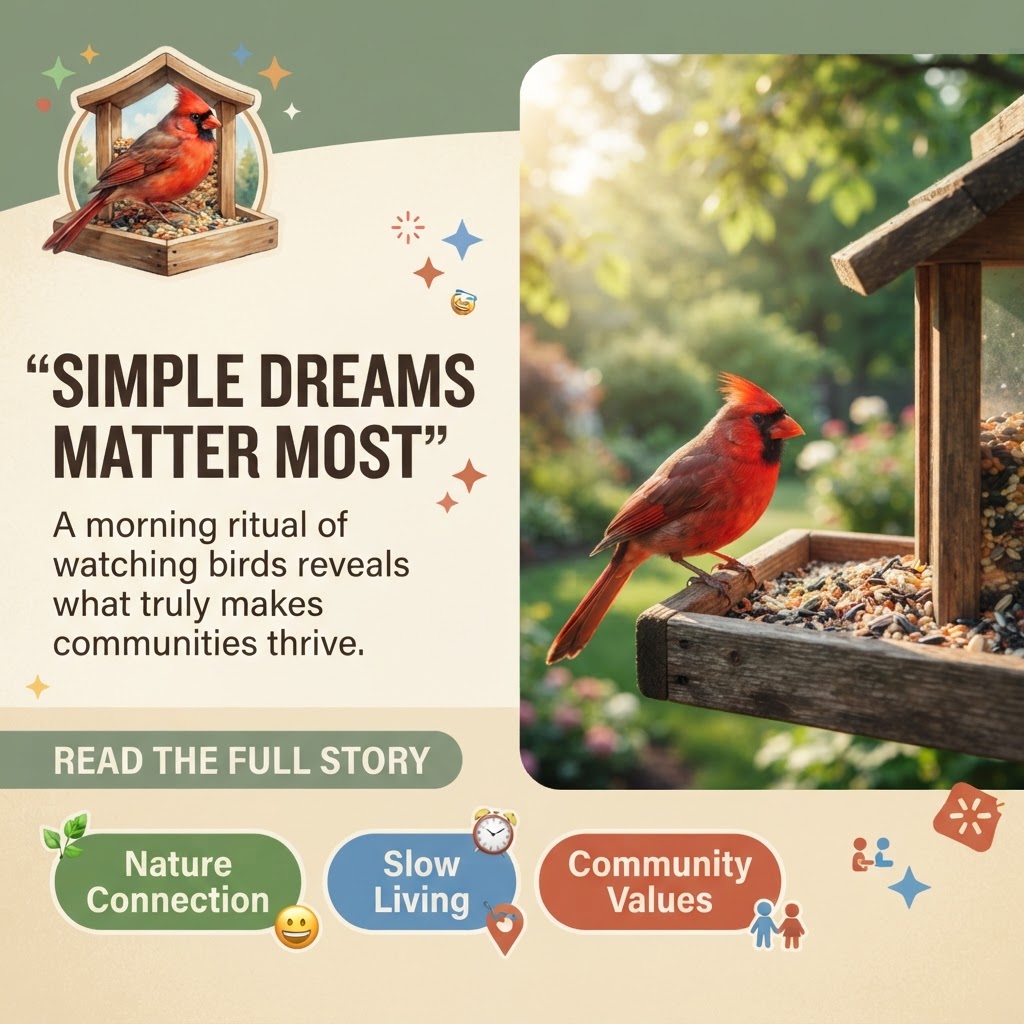
🐦 Simple Dreams: Why Backyard Birdwatching Resonates in the Valley
In a region where morning quiet and natural beauty define daily life, the simple act of filling a bird feeder and watching wildlife awaken carries real meaning. The Happy Birdwatcher Company recently shared a reflection on what makes those moments matter—and it speaks to something many Sequatchie Valley residents already understand about living close to nature.
🌅 Why This Matters
The post draws from Ann Patchett’s novel Whistler, capturing a character’s dream: “See some trees and grass first thing in the morning, see a squirrel, fill the bird feeders.” It’s a small vision, but it reflects something deeper about quality of life in communities like ours. For residents who chose to live in the Sequatchie Valley, that proximity to nature—the ability to step outside and encounter wildlife, trees, and open space—is often central to why they’re here. ✨
Backyard birdwatching isn’t just a hobby; it’s a daily ritual that connects people to their immediate environment and creates moments of calm before the day begins. In a region where many residents work, raise families, and navigate modern life, those morning moments matter. They’re restorative. They’re grounding. They’re accessible to nearly anyone with a window or a porch.
❤️ Human Impact
For families in the valley, birdwatching offers a low-cost way to engage children with nature and teach observation skills. For retirees, it provides daily purpose and connection to the seasons. For anyone managing stress or seeking quiet time, a bird feeder becomes an anchor—a reason to pause, look outside, and notice what’s happening in the natural world around them. 🪶
The appeal crosses age groups and backgrounds. A young parent watching a cardinal with their child, a neighbor noticing the return of migratory species in spring, an older resident tracking which birds visit their yard through the seasons—these are all ways that backyard birdwatching weaves into the fabric of daily life in a valley community.
🌿 Local Perspective
The Sequatchie Valley’s natural setting—with its forests, open spaces, and relatively low development density compared to urban areas—makes backyard birdwatching particularly accessible here. Residents don’t have to travel far to encounter wildlife. A squirrel, a blue jay, a hummingbird, or a songbird can appear in any backyard. The valley’s geography and ecology naturally support this kind of everyday nature connection. 🏞️
This resonates with a broader trend in the valley: the growing recognition that quality of life is tied to access to nature. Whether it’s hiking, fishing, gardening, or simply watching birds, many residents moved to or stayed in the Sequatchie Valley specifically for these opportunities. A post celebrating the simplicity of morning birdwatching taps into something locals already value.
💡 What This Reflects About Community Values
The Happy Birdwatcher Company’s choice to share this literary moment—rather than just promoting products—suggests an understanding of what their audience cares about. It’s not about consumption; it’s about experience. It’s not about status; it’s about presence. The business recognizes that people in this region are drawn to simplicity, nature, and the kind of contentment that comes from noticing the world around them. 🎯
This aligns with how many valley residents describe their lifestyle: slower-paced, more connected to seasons and wildlife, more intentional about how they spend their time. A morning ritual of watching birds and filling feeders fits that description perfectly.
🤝 Community Connections
Backyard birdwatching naturally connects to several existing community threads in the Sequatchie Valley:
- Local nature organizations and hiking groups that already engage residents in outdoor activities and environmental stewardship
- Garden clubs and horticultural communities that share knowledge about native plants that attract birds
- Schools and educational programs that use wildlife observation as a teaching tool
- Families and neighborhoods that bond over shared observations and seasonal changes
- Local businesses that support outdoor recreation and nature-based activities
These connections already exist in the valley. A post celebrating birdwatching simply names what’s already happening in many backyards and community spaces. 🌳
🔄 Community Threads: The Invisible Network
The nature-connection thread: The Sequatchie Valley has long attracted residents who prioritize access to natural spaces. Birdwatching is one expression of that shared value. When a local business celebrates this practice, it reinforces the community identity: we’re people who notice nature, who make time for it, who find meaning in it.
The slow-living thread: Many valley residents have chosen this region partly to escape the pace of larger cities. Morning birdwatching embodies that choice—it’s intentional slowness, deliberate attention, time carved out before the day accelerates. A post about this practice strengthens that cultural thread.
The intergenerational thread: Birdwatching is an activity that grandparents, parents, and children can share. It’s a way knowledge about local wildlife, seasons, and nature gets passed down. It’s also a way neighbors connect—sharing bird sightings, comparing notes about which species are visiting, recommending feeders or native plants.
The small-business-as-community-voice thread: When a local business like The Happy Birdwatcher Company shares a literary reflection rather than just a sales pitch, it positions itself as part of the community conversation about what matters. It’s not just selling products; it’s affirming values that residents already hold. 💬
📍 Opportunities for Connection
For residents interested in deepening their engagement with backyard birdwatching, several natural opportunities exist:
- Connect with local nature groups to learn more about bird species in the valley and best practices for attracting them
- Share observations with neighbors and create informal networks of backyard birdwatchers
- Engage children and grandchildren in bird identification and nature journaling
- Support local businesses that provide bird feeders, native plants, and related supplies
- Participate in citizen science projects like bird counts that contribute to broader environmental understanding
🤔 Questions Worth Considering
As you think about what this simple practice means in your community:
- How does access to nature—even in small, daily ways like birdwatching—affect your own sense of well-being and connection to the valley?
- What role do local businesses play in affirming and supporting the values that draw people to live here?
- How might backyard birdwatching become a bridge between neighbors, families, and generations in your community?
- What other “simple dreams” do valley residents share, and how do they shape community identity?
✨ Long-Term Community Impact
When a community celebrates and supports simple practices like backyard birdwatching, several longer-term benefits often follow:
Environmental stewardship: People who watch birds and attract wildlife often become more invested in native plants, habitat preservation, and local ecology. They notice when species change, when seasons shift, when the environment is healthy or stressed. 🌍
Mental health and resilience: Regular nature connection—even in small doses—is linked to reduced stress, improved mood, and greater sense of purpose. In a region where residents value quality of life, this matters.
Community cohesion: Shared practices and values strengthen social bonds. When neighbors recognize that they’re all doing similar things—watching birds, noticing seasons, finding peace in nature—it creates a sense of common purpose and belonging.
Local identity: Communities that celebrate what makes them distinctive—in this case, access to nature and a lifestyle centered on it—tend to be more resilient and intentional about their future. The Sequatchie Valley’s identity as a place where nature connection is central to daily life is a real asset. 🏔️
📝 What Residents Should Know
If you’re interested in starting or deepening a backyard birdwatching practice in the Sequatchie Valley:
- Local resources exist: Nature organizations, garden clubs, and community groups in the valley can provide guidance on bird species, native plants, and best practices.
- Timing matters: Spring and fall migrations bring different species; winter and summer have their own patterns. Learning the seasonal rhythm deepens the practice.
- Native plants attract birds: Consulting with local gardeners or native plant specialists about what grows well in the valley and attracts wildlife is a practical next step.
- Community knowledge is available: Neighbors, local businesses, and online valley communities often share bird sightings and recommendations.
🔮 What Happens Next
This post from The Happy Birdwatcher Company is part of a larger conversation happening in the valley about what makes life here meaningful. As more residents engage with nature-based practices—whether birdwatching, gardening, hiking, or simply spending time outdoors—community awareness of these shared values likely grows. Local businesses, organizations, and neighbors may continue to find ways to support and celebrate these practices. 🌱
The simple dream Eddie describes in Ann Patchett’s novel—seeing trees, grass, a squirrel, and filling bird feeders—isn’t just a personal aspiration. It’s a reflection of why many people choose to live in places like the Sequatchie Valley. As long as that choice remains possible and valued, practices like backyard birdwatching will continue to be woven into the fabric of community life.

0 Comments