
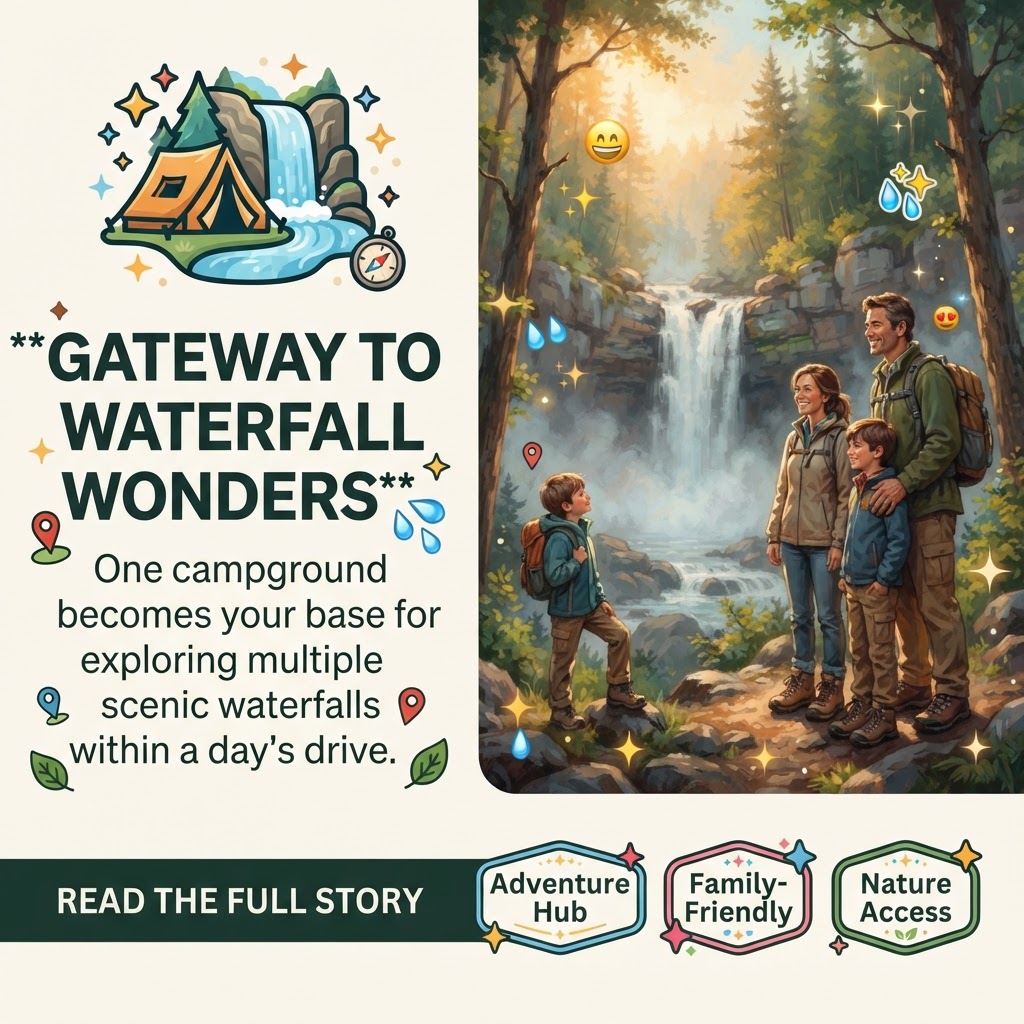
🏕️ Waterfall Hopping from a Campground Base – Stillwaters Creek Offers Gateway to Tennessee’s Scenic Treasures
For visitors planning a camping trip to Spencer, Tennessee, the appeal of a home base like Stillwaters Creek Campground + Cabins goes beyond the campfire and tent stakes. The real draw is proximity to some of the region’s most iconic natural attractions – a collection of waterfalls and scenic areas that make weekend getaways feel less like a single destination and more like a gateway to exploration.
🌲 Why This Matters
Campground and cabin operators in Tennessee’s outdoor recreation zones compete not just on amenities, but on location. Stillwaters Creek’s marketing strategy highlights a practical truth that resonates with families, outdoor enthusiasts, and travelers: staying at a well-positioned base camp allows visitors to experience multiple natural attractions without constant relocation. For the region’s tourism economy, this positioning strengthens the appeal of the entire area – not just one business, but a network of destinations within a short drive of each other.
The distances mentioned – Fall Creek Falls at 13 miles, Rock Island at 23 miles, and Burgess Falls at 29 miles – place these attractions within a realistic day-trip radius. That accessibility matters to families deciding where to spend a weekend, to retirees planning a longer stay, and to visitors weighing whether a camping trip is worth the travel time from Chattanooga or other nearby metro areas.
⭐ The Waterfall Triangle
The three destinations highlighted represent different scales and experiences of Tennessee’s waterfall landscape. Fall Creek Falls, the closest option, is part of a state park system that draws thousands of visitors annually. Rock Island and Burgess Falls offer their own distinct character – each with hiking trails, swimming holes, and photo opportunities that appeal to different visitor preferences and fitness levels. By positioning itself as a base for exploring all three, Stillwaters Creek taps into a broader travel trend: visitors increasingly seek “hub and spoke” vacation models where they settle in one comfortable location and venture out to multiple attractions.
❤️ Who Benefits
This positioning appeals to several visitor profiles. Families with young children benefit from a stable home base where they can return for meals, rest, and comfort between outdoor activities. Retirees and older adults appreciate the ability to explore at their own pace without the stress of packing and unpacking multiple times. Photographers and nature enthusiasts gain access to a variety of scenic locations within a manageable driving radius. Even casual tourists – those who might not identify as “campers” but are curious about Tennessee’s natural attractions – find the cabin option more approachable than traditional tent camping.
For the local economy, this model supports not just the campground itself, but the restaurants, gas stations, outdoor retailers, and other services that visitors use when they’re based in the area for multiple days.
🗓️ What Residents Should Know
For readers in the Sequatchie Valley and surrounding areas, Stillwaters Creek’s emphasis on nearby attractions serves as a reminder of the outdoor recreation assets within the region. Whether you’re hosting out-of-town guests, planning a staycation, or simply exploring what’s nearby, the waterfall circuit offers accessible outdoor experiences. The distances are manageable for a day trip or a long weekend – close enough that you’re not spending half your time driving, but far enough that each destination feels like a distinct adventure.
The mention of Spencer, Tennessee, in the post’s hashtags places Stillwaters Creek in Van Buren County, on the Cumberland Plateau – a region known for its natural beauty and outdoor recreation opportunities. This positioning connects the campground to a broader tourism narrative about the plateau’s appeal as a destination for waterfall enthusiasts and nature lovers.
💡 Opportunities for Connection
For visitors and local residents alike, this kind of marketing opens conversations about regional travel planning. Families might use this information to plan a camping trip they’ve been considering. Local residents might discover that attractions they’ve never visited are closer than they thought. Community groups – churches, scout troops, retirement organizations – might see an opportunity to organize group outings that combine camping with waterfall exploration.
For the campground itself, the strategy invites visitors to think beyond a single night’s stay. A weekend package that includes camping and guided waterfall tours, or a multi-day cabin rental with suggested itineraries, could extend visitor stays and increase spending in the local area.
🌄 Long-Term Community Impact
The growth of outdoor recreation tourism in Tennessee’s plateau and valley regions has broader implications. As more visitors discover these areas through campground marketing and social media, local infrastructure – roads, emergency services, waste management, and conservation efforts – faces both opportunity and pressure. Communities that successfully position themselves as gateways to natural attractions often see increased property values, new business development, and growing demand for services. At the same time, popular natural areas require stewardship to prevent overuse and environmental damage.
For the Sequatchie Valley and Cumberland Plateau region, the success of businesses like Stillwaters Creek in attracting visitors reinforces the economic value of conservation and outdoor recreation. It also raises questions about how to balance tourism growth with environmental protection and community character.
🤔 Community Questions Worth Considering
- How can campgrounds and outdoor recreation businesses help visitors practice responsible tourism – leaving no trace, respecting wildlife, and protecting natural areas?
- What role should local communities play in managing the growth of outdoor recreation tourism in the region?
- Are there opportunities for local schools, nonprofits, or civic groups to partner with campgrounds and outdoor businesses to create educational or volunteer experiences?
- How can the region ensure that tourism revenue benefits local residents and small businesses, not just larger operators?
- What infrastructure or services might communities need to support increased visitor traffic to nearby natural attractions?
📍 What Happens Next
For Stillwaters Creek and similar businesses, the next phase likely involves deepening the visitor experience – not just promoting proximity to attractions, but offering curated packages, local partnerships, and services that make the entire trip seamless. This might include partnerships with local guides, restaurants, or outdoor retailers; seasonal promotions tied to waterfall flow rates or wildflower blooms; or family packages that bundle camping with activities suitable for different age groups.
For the region, the continued growth of outdoor recreation tourism will likely prompt conversations about infrastructure, conservation, and community planning. Local governments, nonprofits, and businesses will need to work together to ensure that tourism growth strengthens rather than strains the communities and natural areas that make the region attractive in the first place.



0 Comments