
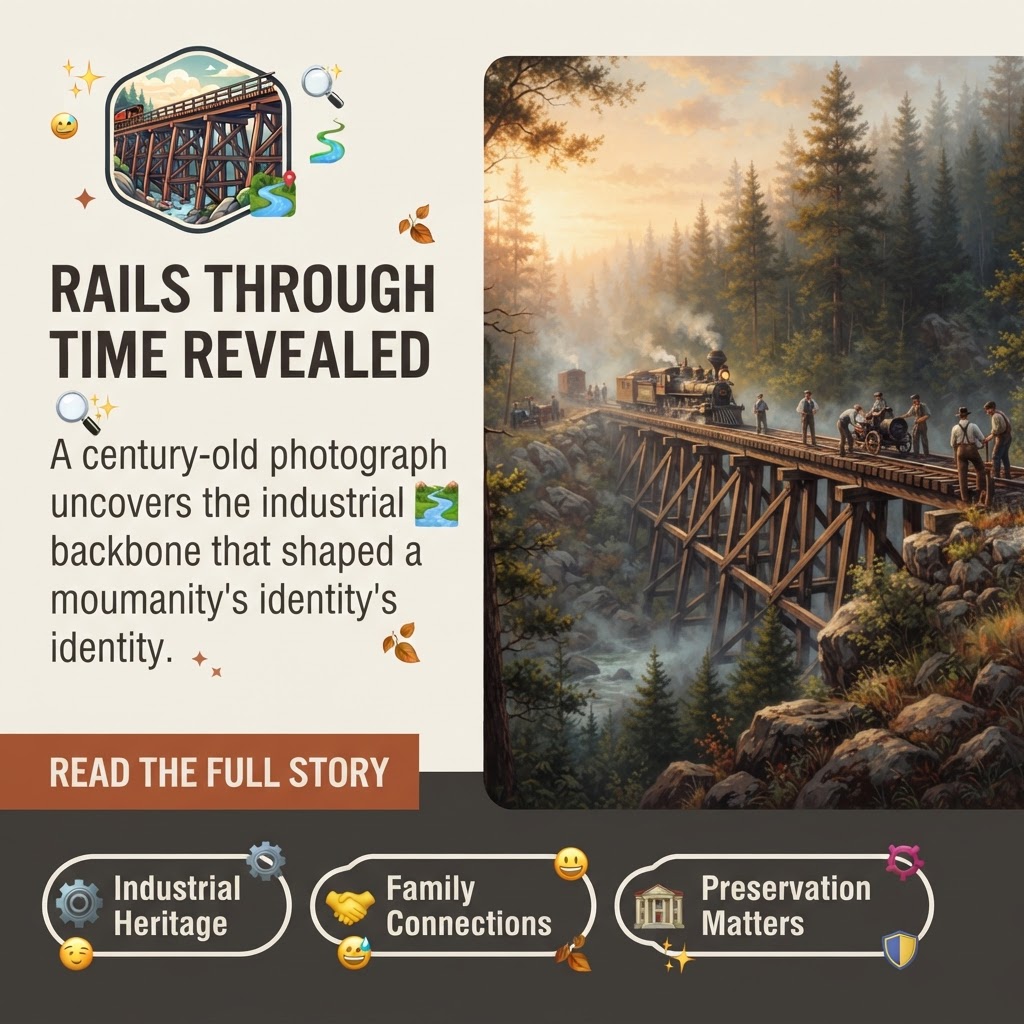
🚂 Historic Railroad Photo Reveals Dunlap’s Industrial Past Near Fredonia Mountain
A newly shared archival photograph captures a pivotal moment in Sequatchie County’s industrial history-the construction of the Little Brush Creek Railroad around 1916, a six-mile line that connected the Dunlap Coke Ovens to coal mines deeper in the mountains. The image, preserved in the Photo Archives of Sequatchie Valley Historical Association and now featured by the Dunlap Coke Ovens Coal Mining Museum and Park, shows the Hester Branch Trestle on the north side of Fredonia Mountain, a structure that once carried ore and coal through terrain that shaped the region’s economy for generations.
📸 What the Photo Reveals
The historic image documents the Chattanooga Iron & Coal Company’s ambitious railway project-a critical piece of infrastructure that moved raw materials from No. 5 mines on Farmers Branch near Little Brush Creek down to the processing facilities at the Dunlap Coke Ovens. The trestle itself, a wooden or steel bridge spanning the creek valley, represents the engineering ingenuity required to move heavy loads across difficult mountain terrain. For residents and visitors familiar with the quiet creeks and ridges around Dunlap today, the photo offers a tangible reminder that this landscape once hummed with industrial activity.
💡 Why This Matters
Local history is not abstract-it shapes how communities understand themselves and their place in the broader story of Tennessee and America. The Little Brush Creek Railroad was part of the infrastructure that made Sequatchie County a center of coal and iron production in the early 20th century. Understanding that history helps residents, business owners, and visitors appreciate why Dunlap exists where it does, why certain families settled here, and why the region’s economy and culture developed as they did. For families with ancestors who worked in the mines or on the railroad, the photograph may reconnect them to their heritage. For newer residents, it provides context for the landscape they now call home.
🏛️ Community Connections
The photograph is preserved and shared through the collaborative work of the Sequatchie Valley Historical Association and the Dunlap Coke Ovens Coal Mining Museum and Park-two organizations dedicated to keeping local history alive and accessible. These institutions rely on community members who donate photographs, documents, and stories, and on visitors who engage with exhibits and archives. The sharing of this image on social media extends that mission, inviting residents across the valley and beyond to see themselves in the region’s industrial past and to consider what stories from their own families might deserve preservation.
👥 Human Impact
Behind every railroad tie and trestle beam were workers-miners, laborers, engineers, and their families. The construction and operation of the Little Brush Creek Railroad represented jobs, income, and opportunity for people in Sequatchie County. For descendants of those workers, the photograph may spark conversations about family history: Did a grandparent work on this railroad? Did they live near Fredonia Mountain? What was daily life like during the construction era? For the broader community, the image is a reminder that the landscape was shaped by human effort and ambition, and that understanding that effort honors the people who came before.
📍 Local Perspective
Sequatchie County’s identity is deeply rooted in coal and iron production. The Dunlap Coke Ovens themselves-still visible as historic structures-are a testament to that era. The Little Brush Creek Railroad was one of several rail lines that connected mines, processing facilities, and markets throughout the region. Similar infrastructure projects occurred across the Cumberland Plateau and Sequatchie Valley during the same period, making this photograph part of a larger regional story. For residents near Dunlap, the image is a local anchor point in that broader narrative-a specific place, a specific year, a specific piece of engineering that connected their community to the wider industrial economy of the early 1900s.
🔍 What Residents Should Know
The photograph and its archival information are now accessible through the Dunlap Coke Ovens Coal Mining Museum and Park, which houses the Photo Archives of Sequatchie Valley Historical Association. Residents interested in learning more about local industrial history, family connections to the mining era, or the geography and infrastructure of early 20th-century Sequatchie County can visit the museum or contact the historical association. The image itself-labeled with the trestle name, location, company, and construction date-is a model of good archival practice, making it easier for researchers, genealogists, and curious community members to understand and contextualize what they are seeing.
🌄 Long-Term Community Impact
Historic photographs and documents are threads that connect past and present. As Sequatchie County evolves-with tourism, outdoor recreation, and new economic opportunities emerging alongside the legacy of mining-these images help residents and visitors understand the full story of the region. They prevent history from becoming abstract or forgotten. They create opportunities for education, tourism, and cultural pride. They also raise questions about how communities honor and preserve the work of previous generations, and how that work shapes the landscape and economy of today. For young people growing up in the area, access to images like this one can inspire interest in local history, genealogy, or heritage preservation.
🧵 Community Threads: The Archive-to-Community Connection
Historical Preservation and Public Memory: The journey of this photograph-from a moment captured in 1916, to archival preservation by the Sequatchie Valley Historical Association, to public sharing through the Dunlap Coke Ovens Coal Mining Museum and Park-illustrates how communities maintain collective memory. Each step depends on people who care enough to preserve, organize, and share. Residents who donate photographs, visit museums, or engage with local history strengthen this thread and ensure that future generations can see and understand their heritage.
Tourism and Economic Identity: Historic images and sites like the Dunlap Coke Ovens draw visitors interested in industrial heritage, railroad history, and Appalachian culture. As the region develops tourism infrastructure and experiences, these authentic historical resources become assets that distinguish Sequatchie County from other destinations. Visitors who see the photograph and visit the museum may stay longer, spend money at local businesses, and share their experience with others-creating economic benefit while also honoring the region’s past.
Family and Genealogy Networks: For residents with family ties to the mining and railroad era, photographs like this one are bridges to ancestors. They spark conversations, prompt research, and deepen connections to place and heritage. Community members who recognize family names, faces, or stories in archival materials often become advocates for preservation and sharing-strengthening the network of people invested in local history.
❓ Questions Worth Considering
- Do you or your family have connections to the mining or railroad era in Sequatchie County? What stories or photographs might be worth preserving?
- How does understanding the industrial past of the region change the way you see the landscape around Dunlap and Fredonia Mountain today?
- What role should local museums and historical associations play in keeping community history alive and accessible?
- Are there other historic photographs, documents, or artifacts from your family or community that deserve to be archived and shared?
📚 What Happens Next
The photograph will remain accessible through the Dunlap Coke Ovens Coal Mining Museum and Park and the Sequatchie Valley Historical Association’s archives. Community members interested in learning more, contributing their own historical materials, or supporting preservation efforts can connect with these organizations. As digital archiving and social media sharing continue to expand access to local history, more residents and visitors may discover and engage with images like this one-potentially sparking new research, donations, and conversations about Sequatchie County’s heritage.

0 Comments