
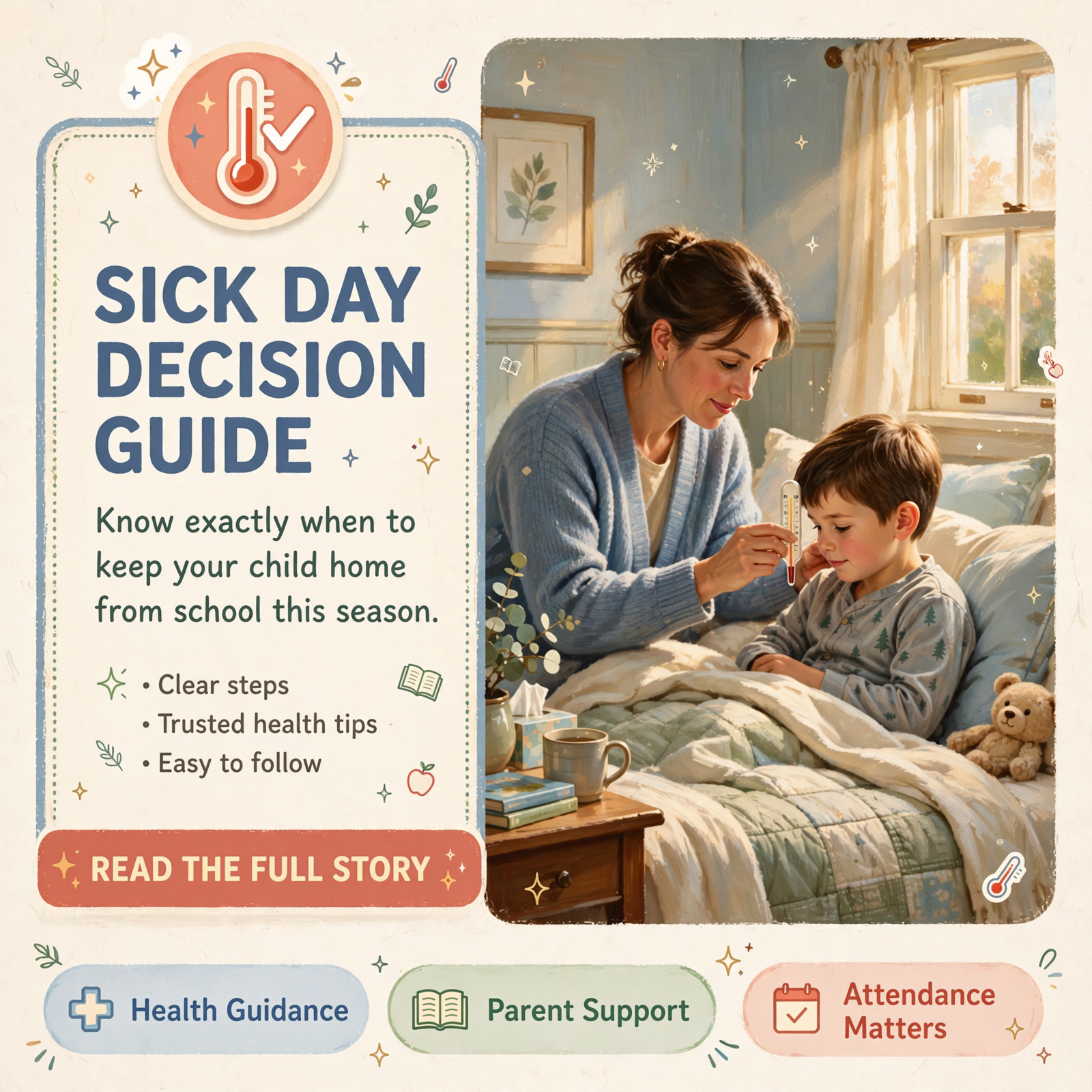
🏫 When Is Your Child Too Sick for School? A Parent's Guide from Mary V. Wheeler Elementary
As cold and flu season approaches, parents across Bledsoe County face a common question: should I keep my child home today? Mary V. Wheeler Elementary School in Pikeville is sharing practical guidance to help families make that decision and support regular school attendance.
📋 Understanding the Guidelines
Regular attendance is vital for your child’s learning and well-being, but knowing when illness warrants staying home can be tricky. 🤔 The school has shared clear benchmarks to help parents decide. Children with mild symptoms-like a runny nose or light cough with no fever-can typically attend school safely. Similarly, a mild stomach ache alone doesn’t necessarily mean a day at home, as long as your child hasn’t vomited and can keep liquids down.
✅ When to Send Your Child to School
According to the guidance, children are generally ready for school if they:
- Have a runny nose or mild cough with no other symptoms
- Have not had a fever overnight and have not taken fever-reducing medicine
- Have a mild stomach ache but no vomiting
- Have not thrown up overnight and can drink liquids without difficulty
- Have a mild rash with no other symptoms
- Have eye drainage without fever, eye pain, or eyelid redness
🛑 When to Keep Them Home
Children should stay home if they have a temperature higher than 100.4 degrees, have vomited two or more times in the past 24 hours, or have watery stool that may prevent them from making it to the bathroom in time. 🌡️ These symptoms suggest your child needs rest and recovery at home.
⚠️ When to Seek Medical Care
Some situations require professional medical attention. If your child has a fever above 100.4 degrees combined with ear pain, sore throat, rash, stomach ache, headache, or tooth pain, contact a health care provider. Other warning signs include stomach pain with fever, bloody or black stool, signs of dehydration, persistent cough or trouble breathing, eye swelling or injury, or a rash with blisters, drainage, or bruising. 💙
💬 When in Doubt, Ask
If you’re uncertain whether your child should attend school, have specific health concerns, or worry about spreading illness, the school encourages you to contact your child’s health care provider, a local urgent care center, or the school nurse. These guidelines are not meant to replace local health department or school district guidance on contagious illnesses such as COVID-19 and the flu.
Regular attendance supports your child’s academic progress and social development-and these clear guidelines help families make informed decisions that keep everyone healthy. 📚
🤔Source
Know about an upcoming event or story in the Sequatchie Valley? Submit it here.




0 Comments